



NADP
Based on 7 publication(s) in Google Scholar
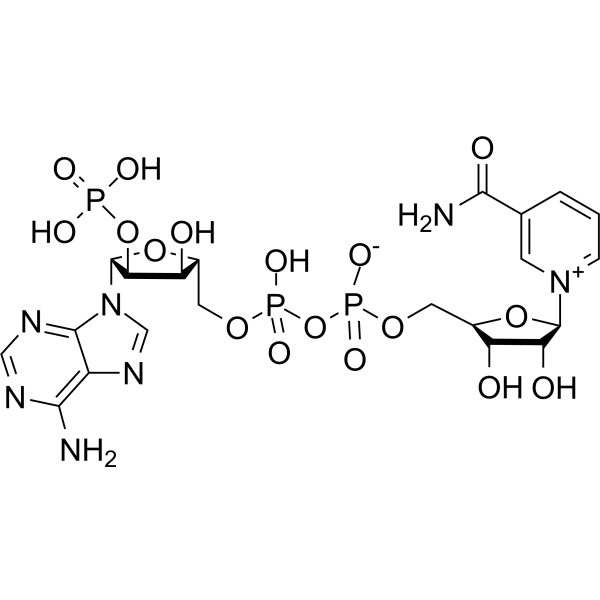
NADP is a coenzyme involved in cellular electron transfer reactions in biological metabolism, which is alternately oxidized (NADP+) and reduced (NADPH), and can maintain cellular redox homeostasis and regulate many biological events, including cellular metabolism. NADPH is a universal electron donor that provides reducing ability for synthetic metabolic reactions and redox balance. NADPH plays a multifunctional role in regulating inflammation, redox homeostasis, and synthetic metabolism processes.
Nur für Forschungszwecke. Wir verkaufen nicht an Patienten.
- Reinheit : 99.70%
- CAS. Nr.: 53-59-8
- Formel: C21H28N7O17P3
- Molecular Weight:743.41
-
Speicherung:
-20°C, sealed storage, away from moisture and light
* In solvent : -80°C, 6 months; -20°C, 1 month (sealed storage, away from moisture and light)

To place orders, for customer services and technical support, please contact: MedChemExpress USA
Tel: 609-228-6898 E-mail: [email protected] [email protected]


-
 Biologische Aktivität
-
Chemical Information
-
Lösungsmittel & Löslichkeit
- Protokoll
- Reinheit & Dokumentation
- Verweise
-
 Help & FAQs


-
HY-B0445
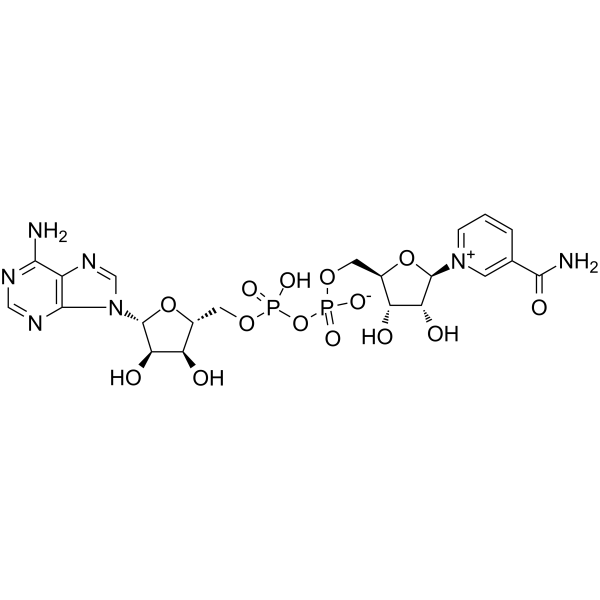
NAD+Endogenous Metabolite -

HY-113324
NADPHReducing Agent -
HY-F0001
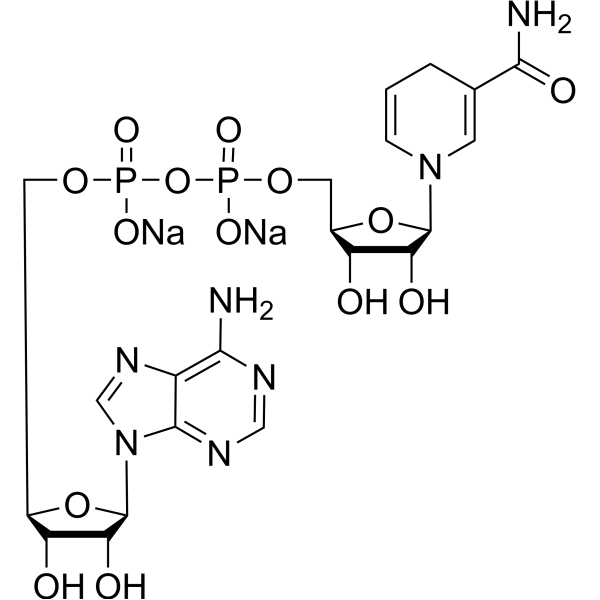
NADH disodium saltReduced Coenzyme -

HY-F0003R
NADPH tetrasodium salt (Standard)Standard of NADPH tetrasodium salt -
HY-F0003
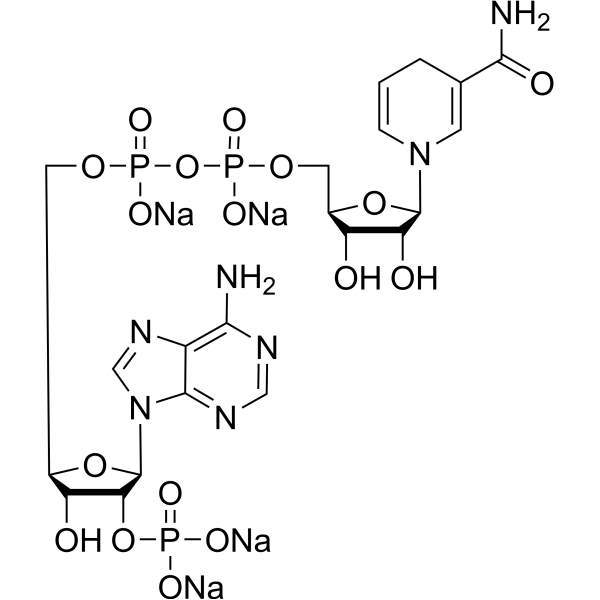
NADPH tetrasodium saltCofactor -
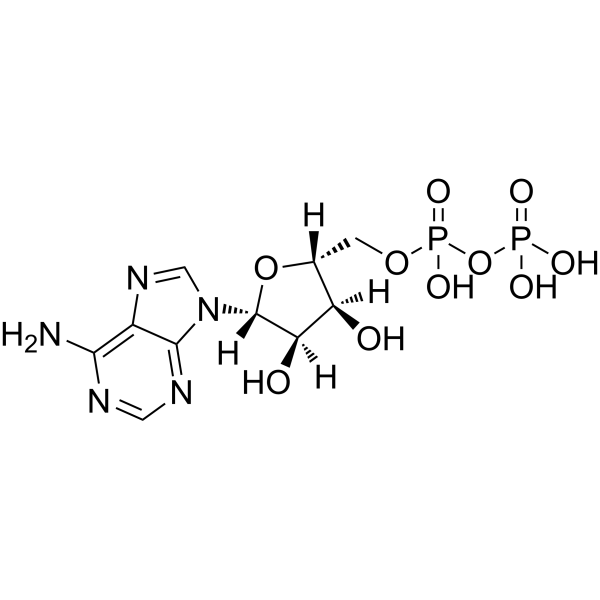
HY-W010918
Adenosine 5'-diphosphate -
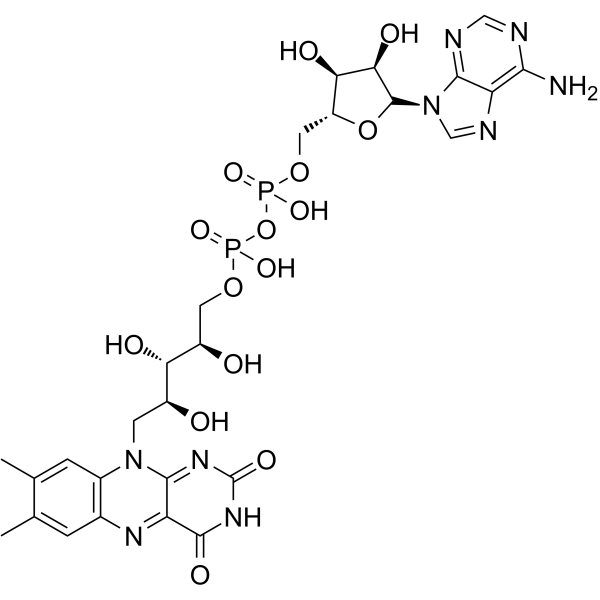
HY-B1654
Flavin adenine dinucleotideRedox Cofactor -
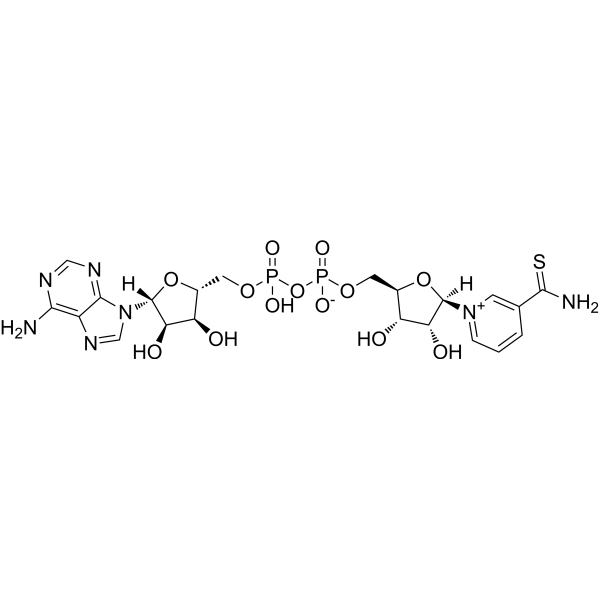
HY-131924
Thionicotinamide adenine dinucleotideNAD+ analogues -
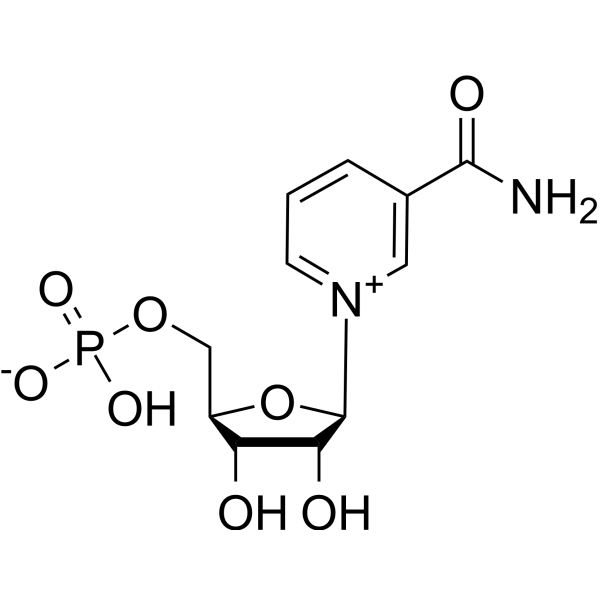
HY-F0004
FosribnicotinamideNAD+ Intermediate -
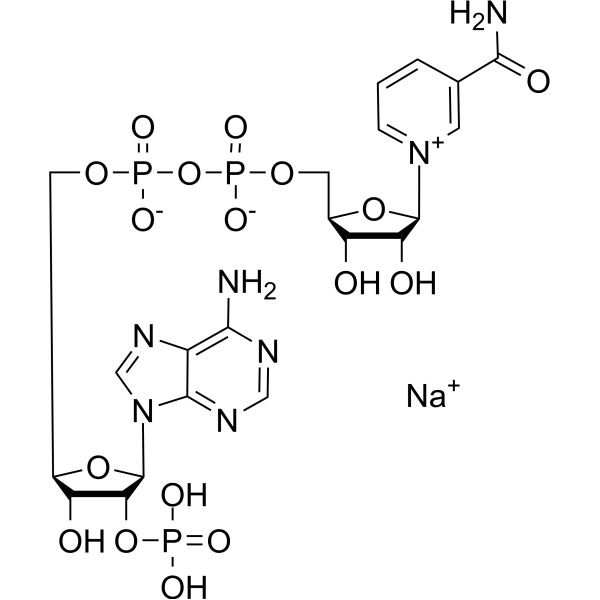
HY-F0002
NADP sodium saltRedox Coenzyme -

HY-F0002R
NADP sodium salt (Standard)Redox Coenzyme -
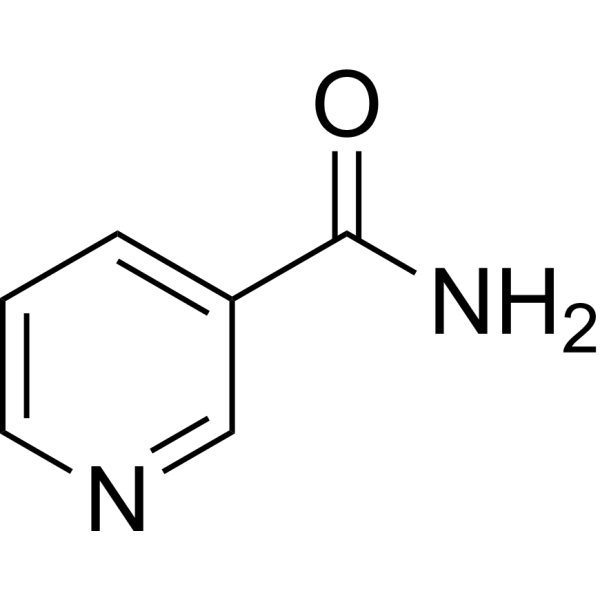
HY-B0150
NicotinamideSIRT Inhibitor
Publications Citing Use of MedChemExpress (MCE) NADP
More- J Adv Res. 2026 Apr 13:S2090-1232(26)00338-3. [Abstract]
- Cell Prolif. 2021 Apr;54(4):e13015. [Abstract]
- Cell Oncol (Dordr). 2023 Jun;46(3):761-776. [Abstract]
- Eur J Pharm Sci. 2023 Aug 1:187:106475. [Abstract]
- World J Microbiol Biotechnol. 2024 Oct 19;40(11):357. [Abstract]
- FASEB J. 2024 Jul 31;38(14):e23844. [Abstract]
- Insect Biochem Mol Biol. 2023 Jun:157:103958. [Abstract]
 Customer Validation & Images

-
Cell Proliferation/Viability Assay

-
Cell Proliferation/Viability Assay

Alle Endogenous Metabolite Isoform-spezifische Produkte anzeigen
More

Biologische Aktivität
Beschreibung
IC50 & Target
|
Human Endogenous Metabolite |
In Vitro
NADP can impair folate metabolism and nucleotide biosynthesis in HCT116 cells at high concentrations, leading to the cessation of proliferation and prioritizing cell survival[1]. NADP forms NAADP through IL-8-driven CD38 to mobilize Ca2+ and influence cell migration[2]. NADP de novo synthesis mediated by NADK upregulation provides power for anabolic reaction and antioxidant system to promote breast cancer metastasis[3]. NADP is upregulated in ROS generation mediated by hyperglycemia and IDPc induction, thereby protecting renal cells from oxidative stress[4].
MedChemExpress (MCE) has not independently confirmed the accuracy of these methods. They are for reference only.


Chemical Information
-
CAS. Nr. 53-59-8
-
Appearance Solid
-
Molecular Weight 743.41
-
Formel C21H28N7O17P3
-
Color White to off-white
-
SMILES
O=P(OC[C@@H]1[C@@H](O)[C@@H](O)[C@H]([N+]2=CC=CC(C(N)=O)=C2)O1)([O-])OP(OC[C@H]3O[C@@H](N4C5=NC=NC(N)=C5N=C4)[C@H](OP(O)(O)=O)[C@@H]3O)(O)=O
-
Structure Classification
-
Initial Source
-
Versand
Room temperature in continental US; may vary elsewhere.
-
Speicherung
-20°C, sealed storage, away from moisture and light
* In solvent : -80°C, 6 months; -20°C, 1 month (sealed storage, away from moisture and light)


Publications (7)
-
Journal Impact Factor
-
Most Recent
-
J Adv Res
A "DUBTAC" targeting GLUL deubiquitination promotes BMSC osteogenic differentiation and implant osseointegration in type 2 diabetes. [Abstract]2026 Apr 13:S2090-1232(26)00338-3. PMID: 41980623 -
Cell Prolif
TSP50 promotes hepatocyte proliferation and tumour formation by activating glucose-6-phosphate dehydrogenase (G6PD). [Abstract]2021 Apr;54(4):e13015. PMID: 33630390
NADP purchased from MedChemExpress. Usage Cited in: Cell Prolif. 2021 Apr;54(4):e13015. [Abstract]
NADP sodium salt (NADP+; 1, 5, 10 mM;24, 36, 48, 72 h) reversed the proliferative effect of TSP50 in L02 cells.
NADP purchased from MedChemExpress. Usage Cited in: Cell Prolif. 2021 Apr;54(4):e13015. [Abstract]
NADP sodium salt (NADP+; 1, 5, 10 mM; 24, 36, 48, 72 h) inhibited Huh7 and Bel7402 cell proliferation in a concentration dependent manner.
-
Cell Oncol (Dordr)
LncFALEC recruits ART5/PARP1 and promotes castration-resistant prostate cancer through enhancing PARP1-meditated self PARylation. [Abstract]2023 Jun;46(3):761-776. PMID: 36913068 -
Eur J Pharm Sci
Investigating the relevance of CYP2J2 inhibition for drugs known to cause intermediate to high risk torsades de pointes. [Abstract]2023 Aug 1:187:106475. PMID: 37225005 -
World J Microbiol Biotechnol
Molecular insights and functional analysis of isocitrate dehydrogenase in two gram-negative pathogenic bacteria. [Abstract]2024 Oct 19;40(11):357. PMID: 39425873 -
FASEB J
Desaminotyrosine is a redox-active microbial metabolite that bolsters macrophage antimicrobial functions while attenuating IL-6 production. [Abstract]2024 Jul 31;38(14):e23844. PMID: 39046365 -
Insect Biochem Mol Biol
Development of an efficient insecticide substrate and inhibitor screening system of insect P450s using fission yeast. [Abstract]2023 Jun:157:103958. PMID: 37182814


Lösungsmittel & Löslichkeit
In Vitro:
H2O : 125 mg/mL (168.14 mM; Need ultrasonic)
Please refer to the solubility information to select the appropriate solvent. Once prepared, please aliquot and store the solution to prevent product inactivation from repeated freeze-thaw cycles.
Storage method and period of stock solution: -80°C, 6 months; -20°C, 1 month (sealed storage, away from moisture and light). When stored at -80°C, please use it within 6 months. When stored at -20°C, please use it within 1 month.
* Note: If you choose water as the stock solution, please dilute it to the working solution, then filter and sterilize it with a 0.22 μm filter before use.
Please refer to the solubility information to select the appropriate solvent. Once prepared, please aliquot and store the solution to prevent product inactivation from repeated freeze-thaw cycles.
Storage method and period of stock solution: -80°C, 6 months; -20°C, 1 month (sealed storage, away from moisture and light). When stored at -80°C, please use it within 6 months. When stored at -20°C, please use it within 1 month.
* Note: If you choose water as the stock solution, please dilute it to the working solution, then filter and sterilize it with a 0.22 μm filter before use.
Konzentration (Stammlösung) × Volumen (Stammlösung) = Konzentration (Ziellösung) × Volumen (Ziellösung)
In Vivo:
For the following dissolution methods, please prepare the working solution directly:
It is recommended to prepare fresh solutions and use them promptly within a short period of time.
The percentages shown for the solvents indicate their volumetric ratio in the final prepared solution. If precipitation or phase separation occurs during preparation, heat and/or sonication can be used to aid dissolution.
Add each solvent one by one: PBS
Solubility: 100 mg/mL (134.52 mM); Clear solution; Need ultrasonic


Reinheit & Dokumentation
-
Data Sheet (280 KB)
-
SDS (393 KB)
- English - EN (393 KB)
- Français - FR (393 KB)
- Deutsch - DE (393 KB)
- Norwegian - NO (393 KB)
- Español - ES (393 KB)
- Swedish - SV (393 KB)
- Italian - IT (393 KB)
- Korean - KR (393 KB)
- Portuguese - PT (393 KB)
-
Handling Instructions (2659 KB)
Verweise
[1]. Chen L, et al. NADPH production by the oxidative pentose-phosphate pathway supports folate metabolism. Nat Metab. 2019 Mar;1:404-415. Epub 2019 Mar 11. PMID: 31058257; PMCID: PMC6489125. [Content Brief]
[2]. Nam TS, et al. Interleukin-8 drives CD38 to form NAADP from NADP+ and NAAD in the endolysosomes to mobilize Ca2+ and effect cell migration. FASEB J. 2020 Sep;34(9):12565-12576. [Content Brief]
[3]. Ilter D, et al. NADK-mediated de novo NADP(H) synthesis is a metabolic adaptation essential for breast cancer metastasis. Redox Biol. 2023 May;61:102627. [Content Brief]
[4]. Lee SH, et al. Upregulation of cytosolic NADP+-dependent isocitrate dehydrogenase by hyperglycemia protects renal cells against oxidative stress. Mol Cells. 2010 Feb 28;29(2):203-8. [Content Brief]


Complete Stock Solution Preparation Table
Please refer to the solubility information to select the appropriate solvent. Once prepared, please aliquot and store the solution to prevent product inactivation from repeated freeze-thaw cycles.
Storage method and period of stock solution: -80°C, 6 months; -20°C, 1 month (sealed storage, away from moisture and light). When stored at -80°C, please use it within 6 months. When stored at -20°C, please use it within 1 month.
| Optional Solvent | Concentration Solvent Mass | 1 mg | 5 mg | 10 mg | 25 mg |
|---|---|---|---|---|---|
| H2O | 1 mM | 1.3452 mL | 6.7258 mL | 13.4515 mL | 33.6288 mL |
| 5 mM | 0.2690 mL | 1.3452 mL | 2.6903 mL | 6.7258 mL | |
| 10 mM | 0.1345 mL | 0.6726 mL | 1.3452 mL | 3.3629 mL | |
| 15 mM | 0.0897 mL | 0.4484 mL | 0.8968 mL | 2.2419 mL | |
| 20 mM | 0.0673 mL | 0.3363 mL | 0.6726 mL | 1.6814 mL | |
| 25 mM | 0.0538 mL | 0.2690 mL | 0.5381 mL | 1.3452 mL | |
| 30 mM | 0.0448 mL | 0.2242 mL | 0.4484 mL | 1.1210 mL | |
| 40 mM | 0.0336 mL | 0.1681 mL | 0.3363 mL | 0.8407 mL | |
| 50 mM | 0.0269 mL | 0.1345 mL | 0.2690 mL | 0.6726 mL | |
| 60 mM | 0.0224 mL | 0.1121 mL | 0.2242 mL | 0.5605 mL | |
| 80 mM | 0.0168 mL | 0.0841 mL | 0.1681 mL | 0.4204 mL | |
| 100 mM | 0.0135 mL | 0.0673 mL | 0.1345 mL | 0.3363 mL |
* Note: If you choose water as the stock solution, please dilute it to the working solution, then filter and sterilize it with a 0.22 μm filter before use.


NADP Related Classifications
HY-113325 Related Classifications
 Powered by Bioz