



SBC-115076
Based on 5 publication(s) in Google Scholar
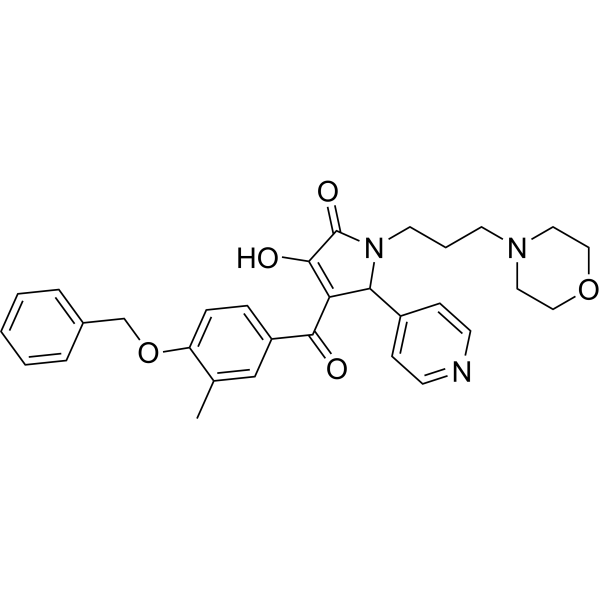
SBC-115076 is a potent proprotein convertase subtilisin/kexin type 9 (PCSK9) inhibitor. PCSK9 is a proprotein convertase, which plays a crucial role in LDL receptor metabolism.
Nur für Forschungszwecke. Wir verkaufen nicht an Patienten.
- Reinheit : 99.28%
- CAS. Nr.: 489415-96-5
- Formel: C31H33N3O5
- Molecular Weight:527.61
-
Speicherung:Powder -20°C, 3 years , 4°C, 2 years ; In solvent -80°C, 2 years , -20°C, 1 year

To place orders, for customer services and technical support, please contact: MedChemExpress USA
Tel: 609-228-6898 E-mail: [email protected] [email protected]


-
 Biologische Aktivität
-
Chemical Information
-
Lösungsmittel & Löslichkeit
- Reinheit & Dokumentation
- Verweise
-
 Help & FAQs


-
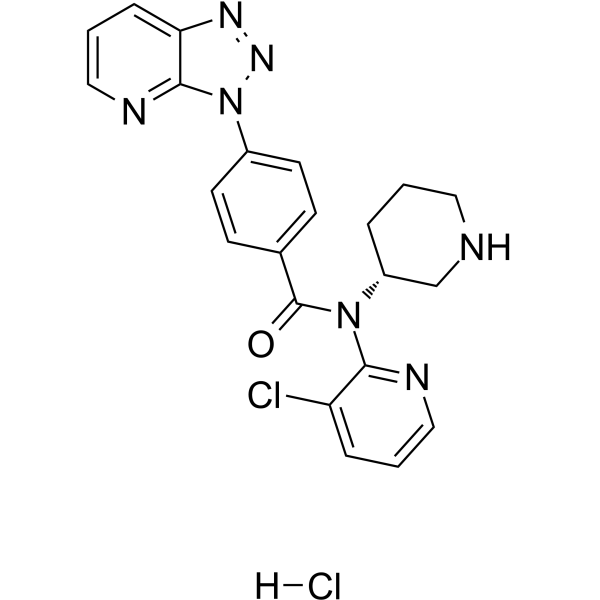
HY-120088A
PF-06446846 hydrochloridePCSK9 Inhibitor -
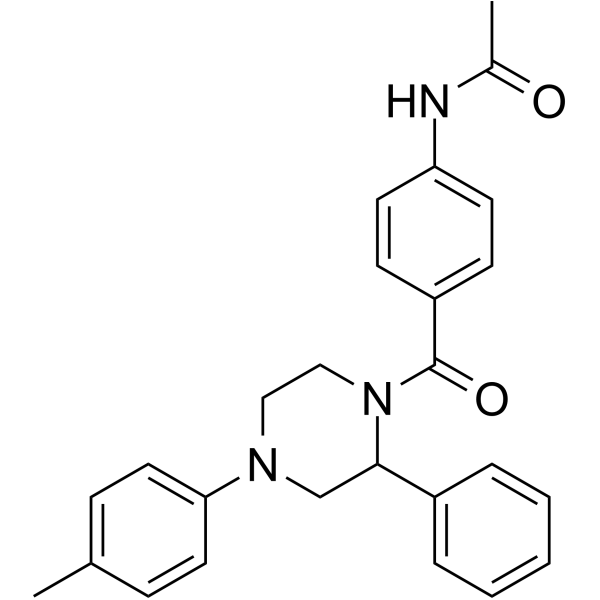
HY-101832
SBC-110736PCSK9 Inhibitor -
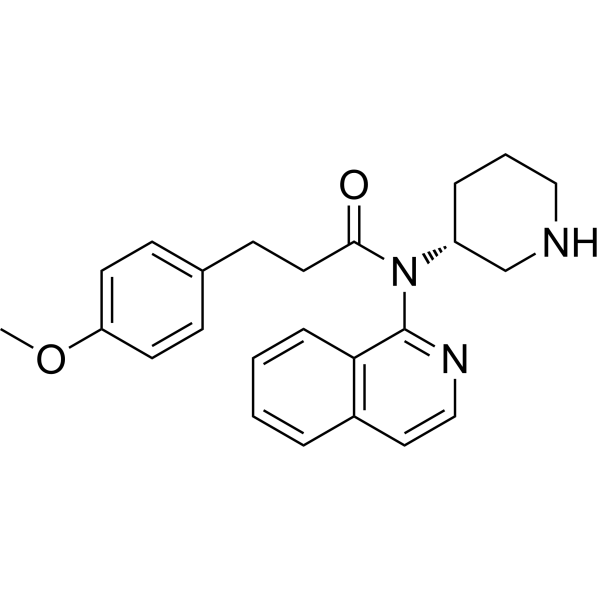
HY-101354
R-IMPPPCSK9 Inhibitor -
HY-148673
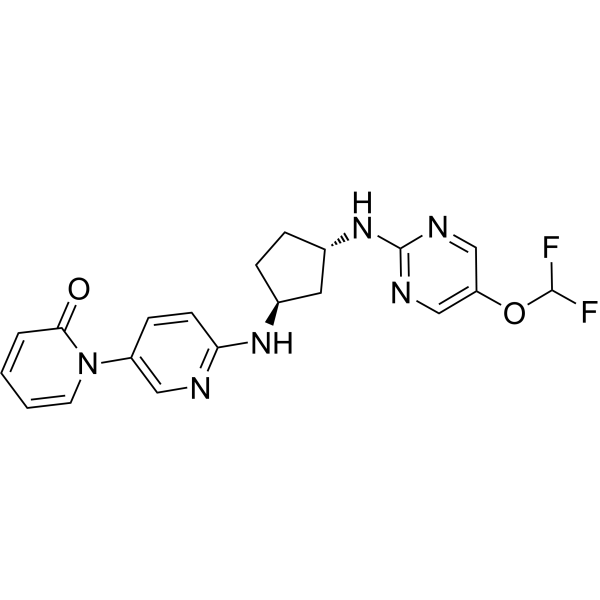
LaroprovstatPCSK9 Inhibitor -
HY-Y0873
PEG300Neutral Polymer -

HY-Y1891
Tween 80 -

HY-Y1888
Corn oil -

HY-P9905
CetuximabEGFR Inhibitor -
HY-17393
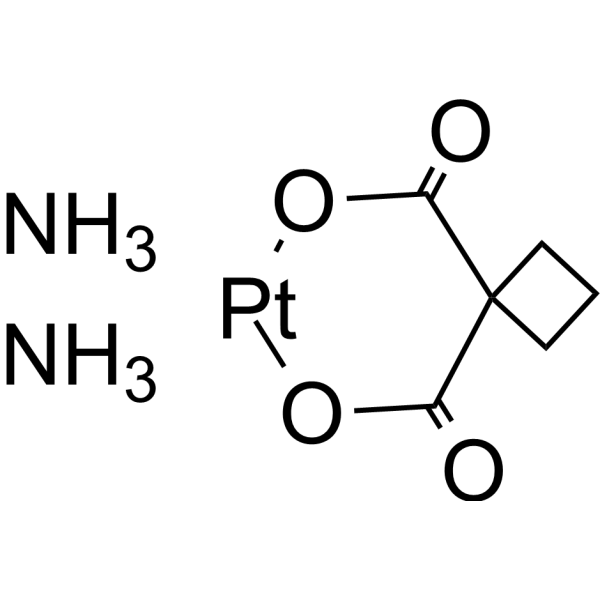
CarboplatinDNA Synthesis Inhibitor -

HY-P9930
EvolocumabPCSK9 Inhibitor -
HY-100626
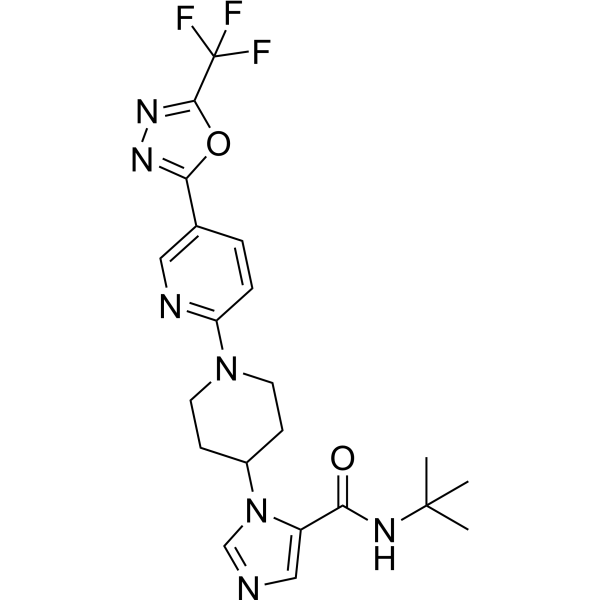
WNK463WNK Inhibitor -
HY-129571
BioE-1115PASK Inhibitor
Publications Citing Use of MedChemExpress (MCE) SBC-115076
More

Biologische Aktivität
Beschreibung
In Vivo
MedChemExpress (MCE) has not independently confirmed the accuracy of these methods. They are for reference only.
-
Animal Model:Female Wistar rats (high-fat diet (HFD)- fed)[1]
-
Dosage:4 mg/kg
-
Administration:S.c.; daily for 3 weeks
-
Result:Superior to atorvastatin in instigating weight loss, cholesterol reduction, and attenuation of mitochondrial oxidative stress in oxidative muscle fibers of obese female rats.


Chemical Information
-
CAS. Nr. 489415-96-5
-
Appearance Solid
-
Molecular Weight 527.61
-
Formel C31H33N3O5
-
Color White to off-white
-
SMILES
O=C1N(CCCN2CCOCC2)C(C3=CC=NC=C3)C(C(C4=CC=C(OCC5=CC=CC=C5)C(C)=C4)=O)=C1O
-
Versand
Room temperature in continental US; may vary elsewhere.
-
Speicherung
Powder -20°C 3 years 4°C 2 years In solvent -80°C 2 years -20°C 1 year


Publications (5)
-
Journal Impact Factor
-
Most Recent
-
Sci Signal
Glucose metabolism sustains aberrant STAT3 signaling in colorectal cancer through glycosylated local signaling factors. [Abstract]2026 Mar 3;19(927):eadz6443. PMID: 41774818 -
Pharmaceutics
Chimeric Peptide Engineered Nanomedicine for Synergistic Suppression of Tumor Growth and Therapy-Induced Hyperlipidemia by mTOR and PCSK9 Inhibition. [Abstract]2023 Sep 23;15(10):2377. PMID: 37896137 -
Sci Rep
Small-molecule PCSK9 inhibition enhances BBB amyloid-β clearance and suppresses microglial inflammation in Alzheimer's disease models. [Abstract]2026 Apr 2;16(1):15780. PMID: 41927877 -
IUBMB Life
Mechanism of PCSK9-Mediated Macrophage Activation via the CAP1/NF-κB Pathway in CAWS-Induced Kawasaki Disease Vasculitis. [Abstract]2026 Jun;78(6):e70119. PMID: 42276750 -
bioRxiv
Glucose Metabolism Sustains Aberrant STAT3 Signaling in Colorectal Cancer via Glycosylated Paracrine Factors. [Abstract]2025 Jul 26:2025.07.22.666143. PMID: 40777356


Lösungsmittel & Löslichkeit
In Vitro:
DMSO : ≥ 100 mg/mL (189.53 mM; Hygroscopic DMSO has a significant impact on the solubility of product, please use newly opened DMSO)
* "≥" means soluble, but saturation unknown.
Please refer to the solubility information to select the appropriate solvent. Once prepared, please aliquot and store the solution to prevent product inactivation from repeated freeze-thaw cycles.
Storage method and period of stock solution: -80°C, 2 years; -20°C, 1 year. When stored at -80°C, please use it within 2 years. When stored at -20°C, please use it within 1 year.
Please refer to the solubility information to select the appropriate solvent. Once prepared, please aliquot and store the solution to prevent product inactivation from repeated freeze-thaw cycles.
Storage method and period of stock solution: -80°C, 2 years; -20°C, 1 year. When stored at -80°C, please use it within 2 years. When stored at -20°C, please use it within 1 year.
Konzentration (Stammlösung) × Volumen (Stammlösung) = Konzentration (Ziellösung) × Volumen (Ziellösung)
In Vivo:
Select the appropriate dissolution method based on your experimental animal and administration route.
- For the following dissolution methods, please ensure to first prepare a clear stock solution using an In Vitro approach and then sequentially add co-solvents:
- To ensure reliable experimental results, the clarified stock solution can be appropriately stored based on storage conditions. As for the working solution for In Vivo experiments, it is recommended to prepare freshly and use it on the same day.
- The percentages shown for the solvents indicate their volumetric ratio in the final prepared solution. If precipitation or phase separation occurs during preparation, heat and/or sonication can be used to aid dissolution.
Add each solvent one by one: 10% DMSO 40% PEG300 5% Tween-80 45% Saline
Solubility: ≥ 2.5 mg/mL (4.74 mM); Clear solution
This protocol yields a clear solution of ≥ 2.5 mg/mL (saturation unknown).
Taking 1 mL working solution as an example, add 100 μL DMSO stock solution (25.0 mg/mL) to 400 μL PEG300, and mix evenly; then add 50 μL Tween-80 and mix evenly; then add 450 μL Saline to adjust the volume to 1 mL.
Preparation of Saline: Dissolve 0.9 g sodium chloride in ddH₂O and dilute to 100 mL to obtain a clear Saline solution.
Add each solvent one by one: 10% DMSO 90% (20% SBE-β-CD in Saline)
Solubility: ≥ 2.5 mg/mL (4.74 mM); Clear solution
This protocol yields a clear solution of ≥ 2.5 mg/mL (saturation unknown).
Taking 1 mL working solution as an example, add 100 μL DMSO stock solution (25.0 mg/mL) to 900 μL 20% SBE-β-CD in Saline, and mix evenly.
Preparation of 20% SBE-β-CD in Saline (4°C, storage for one week): 2 g SBE-β-CD powder is dissolved in 10 mL Saline, completely dissolve until clear.
In Vivo Dissolution Calculator
Please enter the basic information of animal experiments:
-
-
-
-
Recommended: Prepare an additional quantity of animals to account for potential losses during experiments.
Please enter your animal formula composition:
-
%DMSO +
Recommended: Keep the proportion of DMSO in working solution below 2% if your animal is weak.
-
%+
-
+%Tween-80 + +
-
%Saline +
The co-solvents required include: DMSO, . All of co-solvents are available by MedChemExpress (MCE). , Tween 80. All of co-solvents are available by MedChemExpress (MCE).
Working solution concentration: 0.22 mg/mL
Method for preparing stock solution: mg drug dissolved in μL DMSO. Stock solution concentration: mg/mL.
1. Take μL DMSO stock solution;
2. Add μL .
μL , mix evenly;
3. Then add μL Tween 80, mix evenly;
4. Then add μL
Please ensure that the stock solution in the first step is dissolved to a clear state, and add co-solvents in sequence. You can use ultrasonic heating (ultrasonic cleaner, recommended frequency 20-40 kHz), vortexing, etc. to assist dissolution.


Reinheit & Dokumentation
-
Data Sheet (275 KB)
-
SDS (393 KB)
- English - EN (393 KB)
- Français - FR (393 KB)
- Deutsch - DE (393 KB)
- Norwegian - NO (393 KB)
- Español - ES (393 KB)
- Swedish - SV (393 KB)
- Italian - IT (393 KB)
- Korean - KR (393 KB)
- Portuguese - PT (393 KB)
-
Handling Instructions (2659 KB)
Verweise
[1]. Chanisa Thonusin, et al. The comparative effects of high dose atorvastatin and proprotein convertase subtilisin/kexin type 9 inhibitor on the mitochondria of oxidative muscle fibers in obese-insulin resistant female rats. Toxicol Appl Pharmacol. 2019 Nov 1;382:114741. [Content Brief]
[2]. Wiciński M, et al. PCSK9 signaling pathways and their potential importance in clinical practice. EPMA J. 2017;8(4):391-402. Published 2017 Aug 14. [Content Brief]


Complete Stock Solution Preparation Table
Please refer to the solubility information to select the appropriate solvent. Once prepared, please aliquot and store the solution to prevent product inactivation from repeated freeze-thaw cycles.
Storage method and period of stock solution: -80°C, 2 years; -20°C, 1 year. When stored at -80°C, please use it within 2 years. When stored at -20°C, please use it within 1 year.
| Optional Solvent | Concentration Solvent Mass | 1 mg | 5 mg | 10 mg | 25 mg |
|---|---|---|---|---|---|
| DMSO | 1 mM | 1.8953 mL | 9.4767 mL | 18.9534 mL | 47.3835 mL |
| 5 mM | 0.3791 mL | 1.8953 mL | 3.7907 mL | 9.4767 mL | |
| 10 mM | 0.1895 mL | 0.9477 mL | 1.8953 mL | 4.7383 mL | |
| 15 mM | 0.1264 mL | 0.6318 mL | 1.2636 mL | 3.1589 mL | |
| 20 mM | 0.0948 mL | 0.4738 mL | 0.9477 mL | 2.3692 mL | |
| 25 mM | 0.0758 mL | 0.3791 mL | 0.7581 mL | 1.8953 mL | |
| 30 mM | 0.0632 mL | 0.3159 mL | 0.6318 mL | 1.5794 mL | |
| 40 mM | 0.0474 mL | 0.2369 mL | 0.4738 mL | 1.1846 mL | |
| 50 mM | 0.0379 mL | 0.1895 mL | 0.3791 mL | 0.9477 mL | |
| 60 mM | 0.0316 mL | 0.1579 mL | 0.3159 mL | 0.7897 mL | |
| 80 mM | 0.0237 mL | 0.1185 mL | 0.2369 mL | 0.5923 mL | |
| 100 mM | 0.0190 mL | 0.0948 mL | 0.1895 mL | 0.4738 mL |


SBC-115076 Related Classifications
HY-12402 Related Classifications
 Powered by Bioz