



AP39
Based on 6 publication(s) in Google Scholar
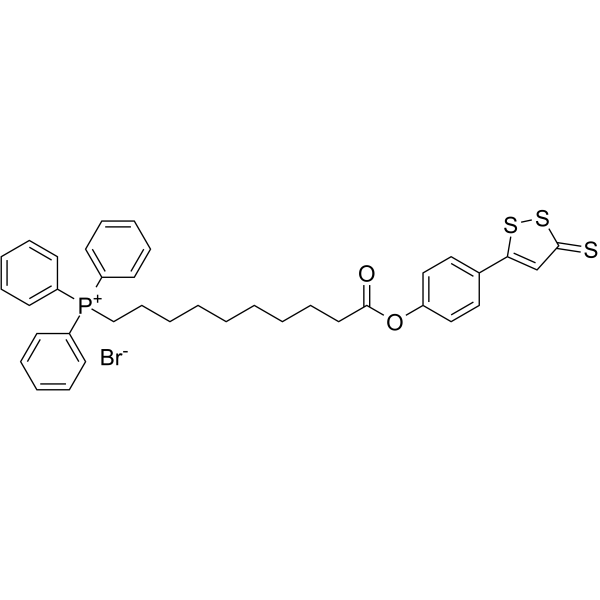
AP39 is a triphenylphosphonium derivatised anethole dithiolethione and mitochondria-targeting hydrogen sulfide (H2S) donor. AP39 increases intracellular H2S levels. AP39 exerts cytoprotective effects and maintains mitochondrial DNA integrity under oxidative stress conditions. AP39 protects against myocardial reperfusion injury in mice model and has the potential for Alzheimer's disease research.
Nur für Forschungszwecke. Wir verkaufen nicht an Patienten.
- Reinheit : 96.35%
- CAS. Nr.: 1429061-80-2
- Formel: C37H38BrO2PS3
- Molecular Weight:721.77
-
Speicherung:
-20°C, sealed storage, away from moisture
* In solvent : -80°C, 6 months; -20°C, 1 month (sealed storage, away from moisture)

To place orders, for customer services and technical support, please contact: MedChemExpress USA
Tel: 609-228-6898 E-mail: [email protected] [email protected]


-
 Biologische Aktivität
-
Chemical Information
-
Lösungsmittel & Löslichkeit
- Protokoll
- Reinheit & Dokumentation
- Verweise
-
 Help & FAQs



Publications Citing Use of MedChemExpress (MCE) AP39
More Customer Validation & Images

-
Cell Imaging/Staining
-
Bio/Physico-chemical Assay
-
In Vivo Efficacy Study
-
Histological Imaging/Staining
-
WB


Biologische Aktivität
Beschreibung
In Vitro
AP39 (25,100 nM; for 24 h) results in increase in cell viability in APP/PS1 neurons and has no effect on cell viability in WT neurons[1].
AP39 (100 nM) increases the levels of OPA1 and Mfn1 but not Mfn2. Moreover, AP39 decreases the levels of Fis1 but not Drp1[1].
AP39 (25-250 nM; 2 h) induces a concentration-dependent increase in H2S generation and in the fluorescence of the H2S-detecting dye AzMC[1].
AP39 (100 nM) significantly increases the basal respiratory rate and the OCR-linked maximal respiratory capacity of the APP/PS1 neurons. AP39 significantly increases the ATP production in WT and APP/PS1 neurons. AP39 significantly protects against mtDNA damage in APP/PS1 neurons by partially restoring mtDNA integrity[1].
AP39 consists of a mitochondria-targeting motif, triphenylphosphonium (TPP+), coupled to a H2S-donating moiety (dithiolethione) by an aliphatic linker.
AP39 (100 nM) reduces intracellular oxidative stress and in the meantime it consequently sustaines the cell viability, mitochondrial respiration and mitochondrial DNA integrity. These effects tend to be stimulatory at lower concentrations (30 and 100 nM), but tend to diminish or convert into inhibitory effects at a higher concentration (300 nM)[2].
MedChemExpress (MCE) has not independently confirmed the accuracy of these methods. They are for reference only.
In Vivo
AP39 (0.01, 0.1, 1 μmol/kg; iv; bolus 10 min before reperfusion) dose-dependently reduces infarct size anaesthetized by thiobutabarbital (200 mg/kg, i.p) in male Sprague Dawley rats, 300-350 g (9-11 weeks)[3].
MedChemExpress (MCE) has not independently confirmed the accuracy of these methods. They are for reference only.
-
Animal Model:12-month-old WT or APP/PS1 mice[1]
-
Dosage:100 nM/kg
-
Administration:IP; daily; for 6 weeks
-
Result:Reversed the spatial learning and memory deficits of the aged AD model mice.
Alleviated brain atrophy and ventricle asymmetryand inhibited Aβ plaque deposition in the brains in AD model mice.


Chemical Information
-
CAS. Nr. 1429061-80-2
-
Appearance Solid
-
Molecular Weight 721.77
-
Formel C37H38BrO2PS3
-
Color Orange to red
-
SMILES
S=C1SSC(C2=CC=C(OC(CCCCCCCCC[P+](C3=CC=CC=C3)(C4=CC=CC=C4)C5=CC=CC=C5)=O)C=C2)=C1.[Br-]
-
Versand
Room temperature in continental US; may vary elsewhere.
-
Speicherung
-20°C, sealed storage, away from moisture
* In solvent : -80°C, 6 months; -20°C, 1 month (sealed storage, away from moisture)


Publications (6)
-
Journal Impact Factor
-
Most Recent
-
ACS Appl Mater Interfaces
Three-Dimensional Printed Photo-Cross-Linked Gelatin Methacrylate Hydrogel Scaffold-Incorporated Mitochondria-Targeted Hydrogen Sulfide Donor-Loaded Liposomes for Spinal Cord Injury Repair. [Abstract]2026 Mar 11;18(9):13420-13436. PMID: 41758638
AP39 purchased from MedChemExpress. Usage Cited in: ACS Appl Mater Interfaces. 2026 Mar 11;18(9):13420-13436. [Abstract]
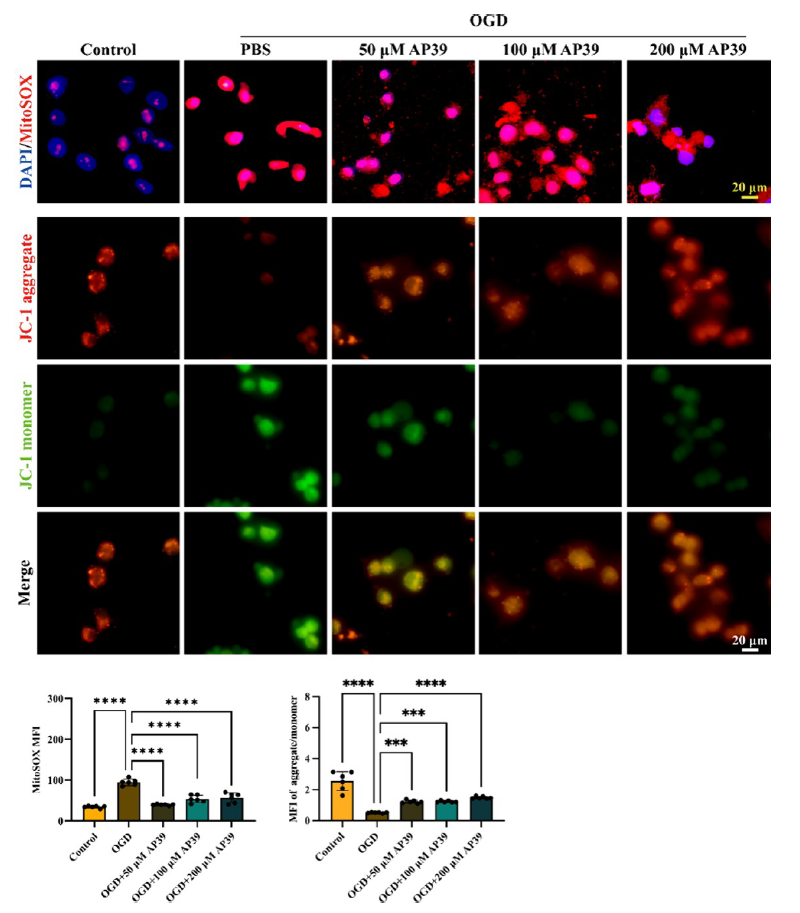
AP39 (50-200 μM; 8 h) significantly reduced mitochondrial superoxide levels and mitigated changes in mitochondrial membrane potential in PC12 cells under OGD conditions.
AP39 purchased from MedChemExpress. Usage Cited in: ACS Appl Mater Interfaces. 2026 Mar 11;18(9):13420-13436. [Abstract]
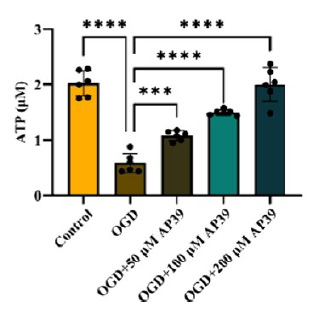
AP39 (50-200 μM; 8 h) exhibited significant protection against mitochondrial dysfunction in PC12 cells.
-
Antioxid Redox Signal
Insufficient S-Sulfhydration of Methylenetetrahydrofolate Reductase Contributes to the Progress of Hyperhomocysteinemia. [Abstract]2022 Jan;36(1-3):1-14. PMID: 34409847 -
ACS Biomater Sci Eng
Intranasal Administrations of AP39-Loaded Liposomes Selectively Deliver H2S to Neuronal Mitochondria to Protect Neonatal Hypoxia-Ischemia by Targeting ERK1/2 and Caspase-1. [Abstract]2025 Feb 10;11(2):1184-1197. PMID: 39841892
AP39 purchased from MedChemExpress. Usage Cited in: ACS Biomater Sci Eng. 2025 Feb 10;11(2):1184-1197. [Abstract]
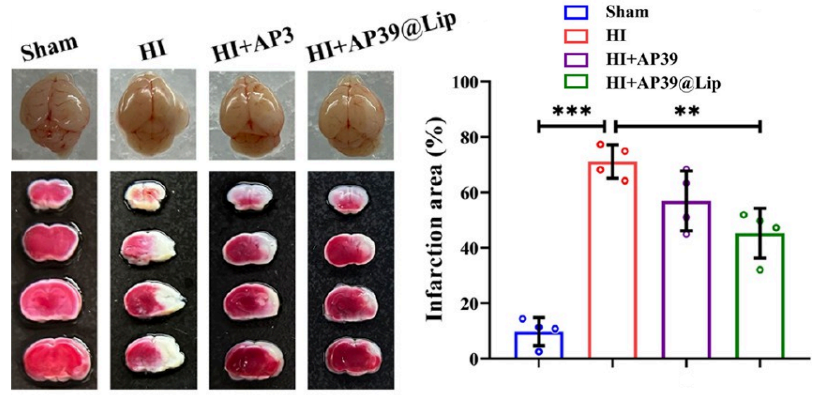
AP39 (0.09 mg/kg; i.p. to neonatal mice at 2, 24, and 48 h post-HI insult) reduced the cerebral infarct area induced by HI insult.
AP39 purchased from MedChemExpress. Usage Cited in: ACS Biomater Sci Eng. 2025 Feb 10;11(2):1184-1197. [Abstract]
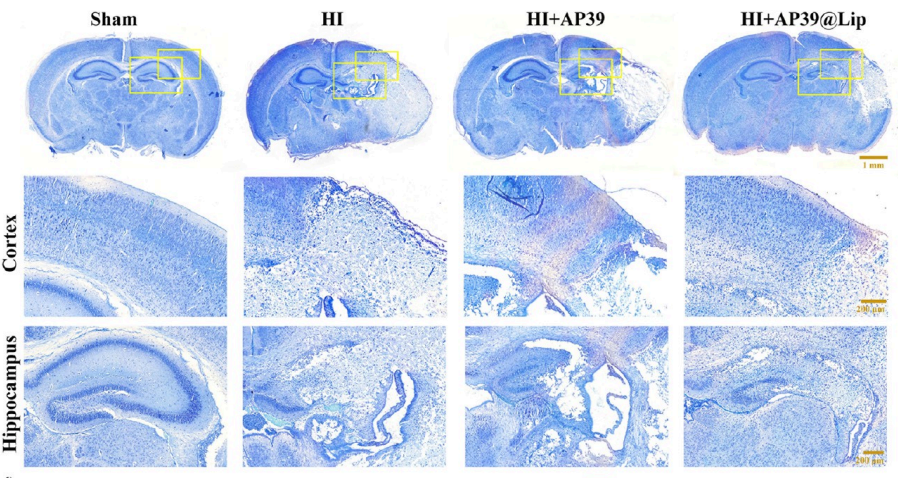
AP39 (0.09 mg/kg; i.p. to neonatal mice at 2, 24, and 48 h post-HI insult) could reverse the tissue loss (manifested as pyknosis and reduction of Nissl bodies) in the cerebral cortex and hippocampus induced by HI injury in mice.
AP39 purchased from MedChemExpress. Usage Cited in: ACS Biomater Sci Eng. 2025 Feb 10;11(2):1184-1197. [Abstract]
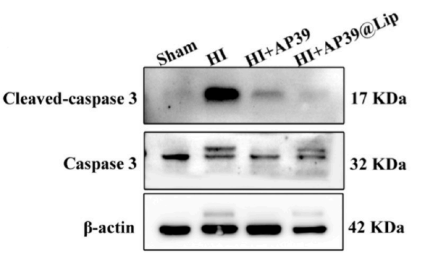
AP39 (0.09 mg/kg; i.p. to neonatal mice at 2, 24, and 48 h post-HI insult) prevented the upregulation of cleaved caspase-3 (p < 0.05).
-
Sci Rep
2025 Jan 10;15(1):1559. PMID: 39789174 -
Res Sq
2024 Jun 11:rs.3.rs-4487319. PMID: 38947096 -


Lösungsmittel & Löslichkeit
In Vitro:
DMSO : 100 mg/mL (138.55 mM; Need ultrasonic; Hygroscopic DMSO has a significant impact on the solubility of product, please use newly opened DMSO)
Please refer to the solubility information to select the appropriate solvent. Once prepared, please aliquot and store the solution to prevent product inactivation from repeated freeze-thaw cycles.
Storage method and period of stock solution: -80°C, 6 months; -20°C, 1 month (sealed storage, away from moisture). When stored at -80°C, please use it within 6 months. When stored at -20°C, please use it within 1 month.
Please refer to the solubility information to select the appropriate solvent. Once prepared, please aliquot and store the solution to prevent product inactivation from repeated freeze-thaw cycles.
Storage method and period of stock solution: -80°C, 6 months; -20°C, 1 month (sealed storage, away from moisture). When stored at -80°C, please use it within 6 months. When stored at -20°C, please use it within 1 month.
Konzentration (Stammlösung) × Volumen (Stammlösung) = Konzentration (Ziellösung) × Volumen (Ziellösung)
In Vivo:
Select the appropriate dissolution method based on your experimental animal and administration route.
- For the following dissolution methods, please ensure to first prepare a clear stock solution using an In Vitro approach and then sequentially add co-solvents:
- To ensure reliable experimental results, the clarified stock solution can be appropriately stored based on storage conditions. As for the working solution for In Vivo experiments, it is recommended to prepare freshly and use it on the same day.
- The percentages shown for the solvents indicate their volumetric ratio in the final prepared solution. If precipitation or phase separation occurs during preparation, heat and/or sonication can be used to aid dissolution.
Add each solvent one by one: 10% DMSO 40% PEG300 5% Tween-80 45% Saline
Solubility: ≥ 0.83 mg/mL (1.15 mM); Clear solution
This protocol yields a clear solution of ≥ 0.83 mg/mL (saturation unknown).
Taking 1 mL working solution as an example, add 100 μL DMSO stock solution (8.3 mg/mL) to 400 μL PEG300, and mix evenly; then add 50 μL Tween-80 and mix evenly; then add 450 μL Saline to adjust the volume to 1 mL.
Preparation of Saline: Dissolve 0.9 g sodium chloride in ddH₂O and dilute to 100 mL to obtain a clear Saline solution.
Add each solvent one by one: 10% DMSO 90% (20% SBE-β-CD in Saline)
Solubility: ≥ 0.83 mg/mL (1.15 mM); Clear solution
This protocol yields a clear solution of ≥ 0.83 mg/mL (saturation unknown).
Taking 1 mL working solution as an example, add 100 μL DMSO stock solution (8.3 mg/mL) to 900 μL 20% SBE-β-CD in Saline, and mix evenly.
Preparation of 20% SBE-β-CD in Saline (4°C, storage for one week): 2 g SBE-β-CD powder is dissolved in 10 mL Saline, completely dissolve until clear.
In Vivo Dissolution Calculator
Please enter the basic information of animal experiments:
-
-
-
-
Recommended: Prepare an additional quantity of animals to account for potential losses during experiments.
Please enter your animal formula composition:
-
%DMSO +
Recommended: Keep the proportion of DMSO in working solution below 2% if your animal is weak.
-
%+
-
+%Tween-80 + +
-
%Saline +
The co-solvents required include: DMSO, . All of co-solvents are available by MedChemExpress (MCE). , Tween 80. All of co-solvents are available by MedChemExpress (MCE).
Working solution concentration: 0.22 mg/mL
Method for preparing stock solution: mg drug dissolved in μL DMSO. Stock solution concentration: mg/mL. * In solvent : -80°C, 6 months; -20°C, 1 month (sealed storage, away from moisture)
1. Take μL DMSO stock solution;
2. Add μL .
μL , mix evenly;
3. Then add μL Tween 80, mix evenly;
4. Then add μL
Please ensure that the stock solution in the first step is dissolved to a clear state, and add co-solvents in sequence. You can use ultrasonic heating (ultrasonic cleaner, recommended frequency 20-40 kHz), vortexing, etc. to assist dissolution.


Reinheit & Dokumentation
-
Data Sheet (277 KB)
-
SDS (252 KB)
- English - EN (252 KB)
- Français - FR (252 KB)
- Deutsch - DE (252 KB)
- Norwegian - NO (252 KB)
- Español - ES (252 KB)
- Swedish - SV (252 KB)
- Italian - IT (252 KB)
- Korean - KR (252 KB)
- Portuguese - PT (252 KB)
-
Handling Instructions (2659 KB)
Verweise
[1]. Feng-Li Zhao, et al. AP39, a Mitochondria-Targeted Hydrogen Sulfide Donor, Supports Cellular Bioenergetics and Protects against Alzheimer's Disease by Preserving Mitochondrial Function in APP/PS1 Mice and Neurons. Oxid Med Cell Longev. 2016;2016:8360738. [Content Brief]
[2]. Bartosz Szczesny, et al. AP39, a novel mitochondria-targeted hydrogen sulfide donor, stimulates cellular bioenergetics, exerts cytoprotective effects and protects against the loss of mitochondrial DNA integrity in oxidatively stressed endothelial cells in vitro. Nitric Oxide. 2014 Sep 15;41:120-30. [Content Brief]
[3]. Qutuba G Karwi, et al. AP39, a mitochondria-targeting hydrogen sulfide (H 2 S) donor, protects against myocardial reperfusion injury independently of salvage kinase signaling. Br J Pharmacol. 2017 Feb;174(4):287-301. [Content Brief]


Complete Stock Solution Preparation Table
Please refer to the solubility information to select the appropriate solvent. Once prepared, please aliquot and store the solution to prevent product inactivation from repeated freeze-thaw cycles.
Storage method and period of stock solution: -80°C, 6 months; -20°C, 1 month (sealed storage, away from moisture). When stored at -80°C, please use it within 6 months. When stored at -20°C, please use it within 1 month.
| Optional Solvent | Concentration Solvent Mass | 1 mg | 5 mg | 10 mg | 25 mg |
|---|---|---|---|---|---|
| DMSO | 1 mM | 1.3855 mL | 6.9274 mL | 13.8548 mL | 34.6371 mL |
| 5 mM | 0.2771 mL | 1.3855 mL | 2.7710 mL | 6.9274 mL | |
| 10 mM | 0.1385 mL | 0.6927 mL | 1.3855 mL | 3.4637 mL | |
| 15 mM | 0.0924 mL | 0.4618 mL | 0.9237 mL | 2.3091 mL | |
| 20 mM | 0.0693 mL | 0.3464 mL | 0.6927 mL | 1.7319 mL | |
| 25 mM | 0.0554 mL | 0.2771 mL | 0.5542 mL | 1.3855 mL | |
| 30 mM | 0.0462 mL | 0.2309 mL | 0.4618 mL | 1.1546 mL | |
| 40 mM | 0.0346 mL | 0.1732 mL | 0.3464 mL | 0.8659 mL | |
| 50 mM | 0.0277 mL | 0.1385 mL | 0.2771 mL | 0.6927 mL | |
| 60 mM | 0.0231 mL | 0.1155 mL | 0.2309 mL | 0.5773 mL | |
| 80 mM | 0.0173 mL | 0.0866 mL | 0.1732 mL | 0.4330 mL | |
| 100 mM | 0.0139 mL | 0.0693 mL | 0.1385 mL | 0.3464 mL |


AP39 Related Classifications
HY-126124 Related Classifications
 Powered by Bioz