



DSPE-PEG 2000
Based on 20 publication(s) in Google Scholar
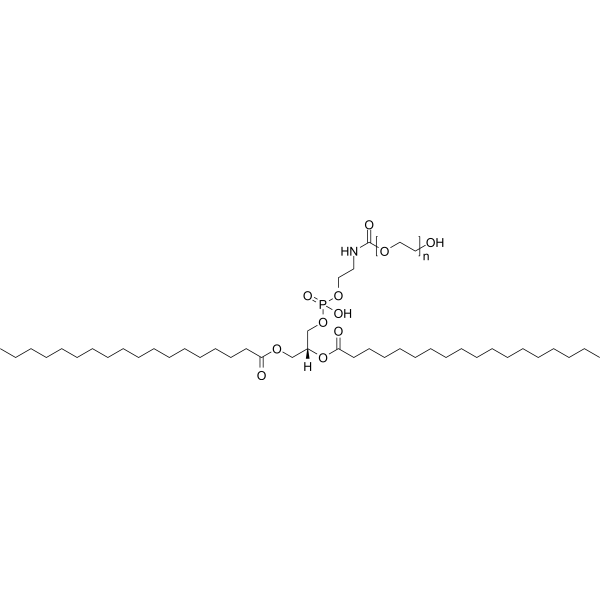
DSPE-PEG 2000 is a PEG polymer containing DSPE. DSPE-PEG 2000 can be used to form micelles as nanoparticles for drug delivery.
Nur für Forschungszwecke. Wir verkaufen nicht an Patienten.
- Reinheit : 99.37%
- CAS. Nr.: 892144-24-0
- Formel: (C2H4O)nC42H82NO10P
-
Speicherung:Powder -20°C, 3 years ; In solvent -80°C, 6 months , -20°C, 1 month

To place orders, for customer services and technical support, please contact: MedChemExpress USA
Tel: 609-228-6898 E-mail: [email protected] [email protected]


-
 Biologische Aktivität
-
Chemical Information
-
Lösungsmittel & Löslichkeit
- Reinheit & Dokumentation
- Verweise
-
 Help & FAQs


-
HY-112251
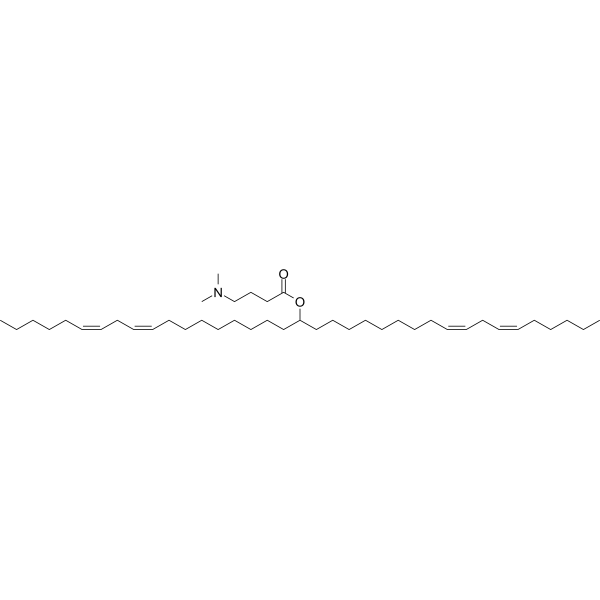
D-Lin-MC3-DMAsiRNA Delivery Vehicle -

HY-W040193
DSPCLiposome Compound -
HY-N0322
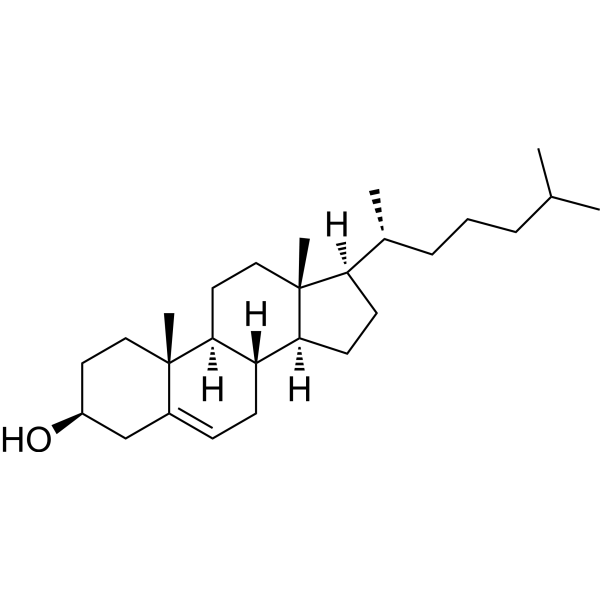
Cholesterol (from animal)ERRα Agonist -

HY-112754A
DOTAP chlorideCationic Lipid -
HY-112764
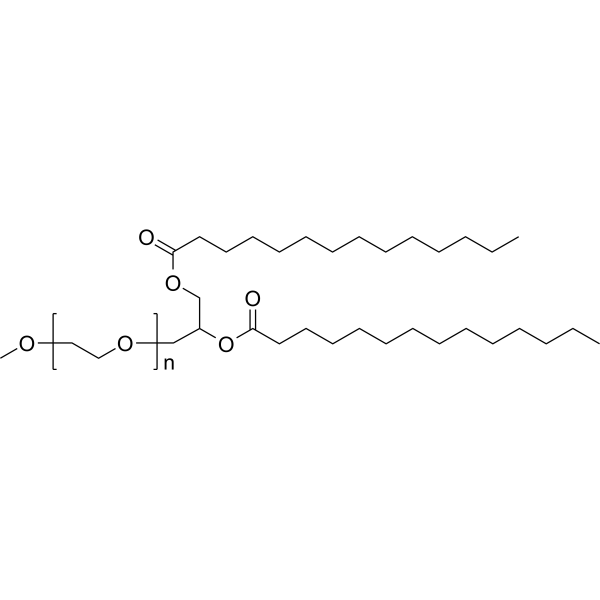
mPEG2000-DMGLiposome -
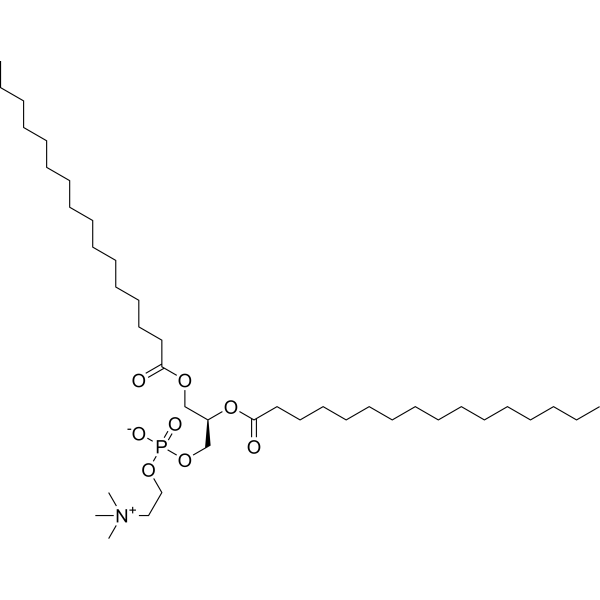
HY-109506
DPPCEndogenous Metabolite -
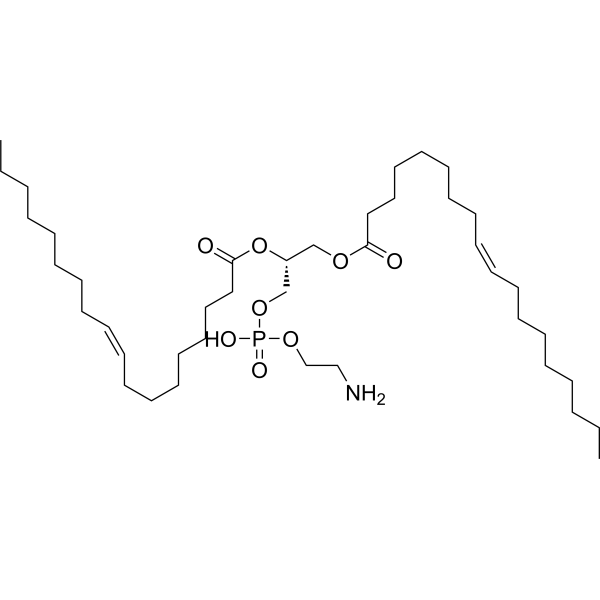
HY-112005
DOPEFerroptosis Inhibitor -

HY-42990
Hydrogenated soya phosphatidylcholinePhosphatidylcholine -

HY-134541
SM-102Ionizable Amino Lipid -

HY-138170
ALC-0315Lipid Nanoparticle Component -
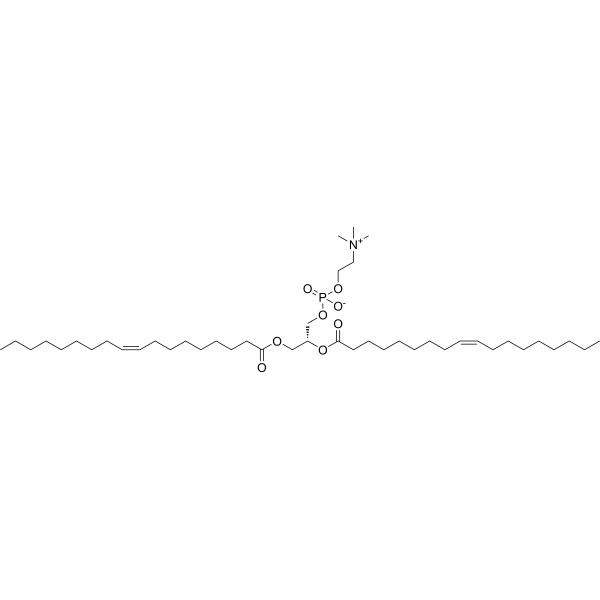
HY-113424A
1,2-Dioleoyl-sn-glycero-3-phosphocholinePhospholipid -
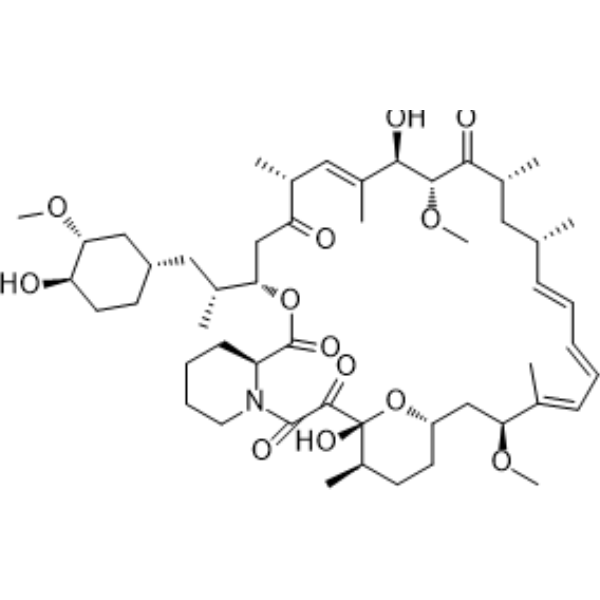
HY-10219
RapamycinmTOR Inhibitor
Publications Citing Use of MedChemExpress (MCE) DSPE-PEG 2000
More- J Nanobiotechnology. 2026 Aug 13;24(1):892.
- J Nanobiotechnology. 2024 Nov 27;22(1):733. [Abstract]
- MedComm (2020). 2026 Jun 13;7(6):e70828.
- Cell Rep Med. 2026 Aug 18;7(8):102980.
- Cell Rep Med. 2026 Feb 17;7(2):102580. [Abstract]
- Adv Healthc Mater. 2026 Jun;15(22):e05818. [Abstract]
- Acta Biomater. 2026 Jul:218:510-524. [Abstract]
- J Rare Earths. 2025 May 26.
- Apoptosis. 2025 Apr 26. [Abstract]
- Biomater Adv. 2026 Mar:180:214552. [Abstract]
- Polym Test. 2023 Dec 1, 108292.
- Colloids Surf B Biointerfaces. 2026 Aug 26:269:116114.
- Cancer Nanotechnol. 2023 Nov 13.
- Arab J Chem. 2025 Nov 14.
- J Drug Deliv Sci Technol. 2026 Jun 19;124:108580.
- J Drug Deliv Sci Technol. 2025 Sep.
- Microbiol Spectr. 2025 Nov 5;13(12):e0143825. [Abstract]
- Traditional Medicine Research. 2025;10(4):20.
- SSRN. 2025 Jul 8.
- SSRN. 2023 Jun 27.


Biologische Aktivität
Beschreibung
In Vitro
Guidelines (Following is our recommended protocol. This protocol only provides a guideline, and should be modified according to your specific needs).
Reparation of siRNALNPs[2]:
1.DSPE-PEG2000 (0.11 mg) in chloroform (3 mL), and transfer the lipid solution to a round bottom flask after ultrasonic treatment to fully dissolve it.
2.Steam under vacuum conditions for 30 min (75 r/min, room temperature) to allow the organic solvent to completely evaporate and obtain a homogeneous lipid film.
3.Hydrate with 3 mL of enzyme free water for 10 min (100 r/min) and then homogenize with ultrasound.
4.siRNA solution was mixed with LNPs by electrostatic interaction at a weight ratio of 1:30, and concentrated by centrifugation in a Macrosep Advance filtration device (MAP001C37) (3000g/min, 4 °C).
5.The molecular weight was cut off to 10 kDa to remove the unsealed drug.
MedChemExpress (MCE) has not independently confirmed the accuracy of these methods. They are for reference only.


Chemical Information
-
CAS. Nr. 892144-24-0
-
Appearance Solid
-
Formel (C2H4O)nC42H82NO10P
-
Color White to off-white
-
SMILES
O=C(NCCOP(O)(OC[C@](COC(CCCCCCCCCCCCCCCCC)=O)([H])OC(CCCCCCCCCCCCCCCCC)=O)=O)OCCO.[n]
-
Synonyms
(C2H4O)nC42H82NO10P
-
Versand
Room temperature in continental US; may vary elsewhere.
-
Speicherung
Powder -20°C 3 years In solvent -80°C 6 months -20°C 1 month


Publications (20)
-
Journal Impact Factor
-
Most Recent
-
-
J Nanobiotechnology
Sele-targeted siRNA liposome nanoparticles inhibit pathological scars formation via blocking the cross-talk between monocyte and endothelial cells: a preclinical study based on a novel mice scar model. [Abstract]2024 Nov 27;22(1):733. PMID: 39593088 -
-
-
Cell Rep Med
Synthetic cleavage-resistant TREM2 boosts macrophage efferocytosis to treat inflammatory diseases. [Abstract]2026 Feb 17;7(2):102580. PMID: 41616764 -
Adv Healthc Mater
Liposomal Quercetin-Loaded Biomimetic Scaffolds Manage Mechanical Overload in Maxillofacial Regeneration by Stabilizing the β-Actin/YAP Mechanosensing Axis. [Abstract]2026 Jun;15(22):e05818. PMID: 42027072 -
Acta Biomater
Strain-promoted click chemistry boosts microbubbles for targeted ultrasound imaging and cancer chemotherapy. [Abstract]2026 Jul:218:510-524. PMID: 42248283 -
-
Apoptosis
Targeted intervention in obesity-associated atrial fibrosis using nanoparticle-loaded fusion protein. [Abstract]2025 Apr 26. PMID: 40281309 -
Biomater Adv
PD-L1 nanobody-engineered bacterial outer membrane vesicles delivering cuproptosis micelles for potentiated cancer immunotherapy. [Abstract]2026 Mar:180:214552. PMID: 41092615 -
-
-
-
-
-
-
Microbiol Spectr
Lipid nanoparticle-delivered mRNA vaccine encoding the MOMP of Chlamydia psittaci elicits protective immune responses in BALB/c mice. [Abstract]2025 Nov 5;13(12):e0143825. PMID: 41190885 -
-
-


Lösungsmittel & Löslichkeit
In Vitro:
DMSO : 50 mg/mL (Need ultrasonic; Hygroscopic DMSO has a significant impact on the solubility of product, please use newly opened DMSO)
Ethanol : 25 mg/mL (ultrasonic and warming and heat to 60°C)
H2O : 25 mg/mL (ultrasonic and warming and heat to 60°C)
In Vivo:
Select the appropriate dissolution method based on your experimental animal and administration route.
- For the following dissolution methods, please ensure to first prepare a clear stock solution using an In Vitro approach and then sequentially add co-solvents:
- To ensure reliable experimental results, the clarified stock solution can be appropriately stored based on storage conditions. As for the working solution for In Vivo experiments, it is recommended to prepare freshly and use it on the same day.
- The percentages shown for the solvents indicate their volumetric ratio in the final prepared solution. If precipitation or phase separation occurs during preparation, heat and/or sonication can be used to aid dissolution.
Add each solvent one by one: 10% DMSO 40% PEG300 5% Tween-80 45% Saline
Solubility: ≥ 2.5 mg/mL; Clear solution
This protocol yields a clear solution of ≥ 2.5 mg/mL (saturation unknown).
Taking 1 mL working solution as an example, add 100 μL DMSO stock solution (25.0 mg/mL) to 400 μL PEG300, and mix evenly; then add 50 μL Tween-80 and mix evenly; then add 450 μL Saline to adjust the volume to 1 mL.
Preparation of Saline: Dissolve 0.9 g sodium chloride in ddH₂O and dilute to 100 mL to obtain a clear Saline solution.
Add each solvent one by one: 10% DMSO 90% (20% SBE-β-CD in Saline)
Solubility: ≥ 2.5 mg/mL; Clear solution
This protocol yields a clear solution of ≥ 2.5 mg/mL (saturation unknown).
Taking 1 mL working solution as an example, add 100 μL DMSO stock solution (25.0 mg/mL) to 900 μL 20% SBE-β-CD in Saline, and mix evenly.
Preparation of 20% SBE-β-CD in Saline (4°C, storage for one week): 2 g SBE-β-CD powder is dissolved in 10 mL Saline, completely dissolve until clear.
In Vivo Dissolution Calculator
Please enter the basic information of animal experiments:
-
-
-
-
Recommended: Prepare an additional quantity of animals to account for potential losses during experiments.
Working solution concentration: 0.22 mg/mL
This product has good water solubility, please refer to the measured solubility data in water/PBS/Saline for details.


Reinheit & Dokumentation
-
Data Sheet (272 KB)
-
SDS (394 KB)
- English - EN (394 KB)
- Français - FR (394 KB)
- Deutsch - DE (394 KB)
- Norwegian - NO (394 KB)
- Español - ES (394 KB)
- Swedish - SV (394 KB)
- Italian - IT (394 KB)
- Korean - KR (394 KB)
- Portuguese - PT (394 KB)
-
Handling Instructions (2659 KB)
Verweise

Calculators
Konzentration (Stammlösung) × Volumen (Stammlösung) = Konzentration (Ziellösung) × Volumen (Ziellösung)


DSPE-PEG 2000 Related Classifications
HY-142979 Related Classifications
 Powered by Bioz