



FR-171113
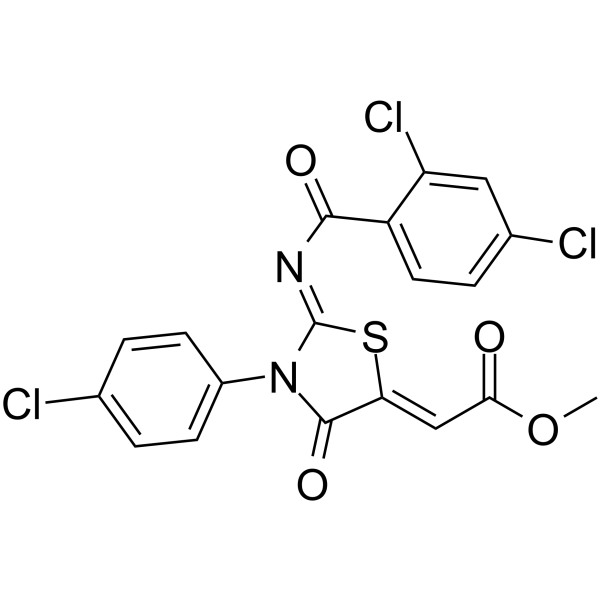
FR171113 is a specific and non-peptide thrombin receptor antagonist. FR171113 exhibits the antithrombotic effects of a PAR1 antagonist. FR171113 inhibits thrombin-induced platelet aggregation with an IC50 of 0.29 μM..
Nur für Forschungszwecke. Wir verkaufen nicht an Patienten.
- CAS. Nr.: 173904-50-2
- Formel: C19H11Cl3N2O4S
- Molecular Weight:469.73
-
Speicherung:
Please store the product under the recommended conditions in the Certificate of Analysis.

To place orders, for customer services and technical support, please contact: MedChemExpress USA
Tel: 609-228-6898 E-mail: [email protected] [email protected]


-
 Biologische Aktivität
-
Chemical Information
- Protokoll
- Reinheit & Dokumentation
- Verweise
-
 Help & FAQs


-
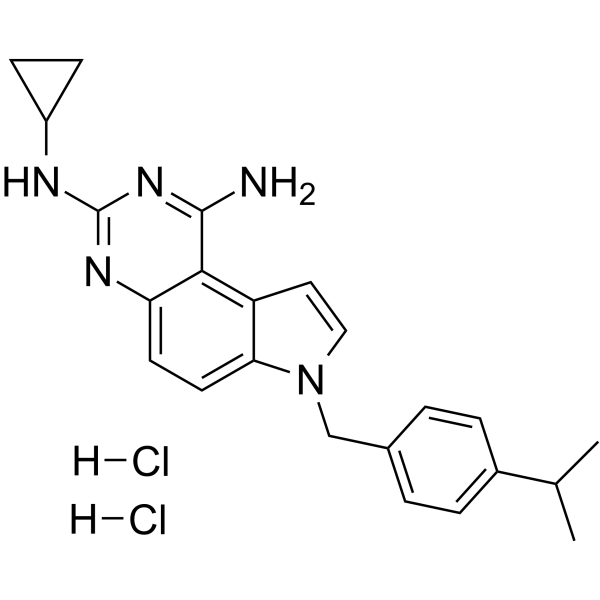
HY-14994
SCH79797 dihydrochloridePAR1 Antagonist -
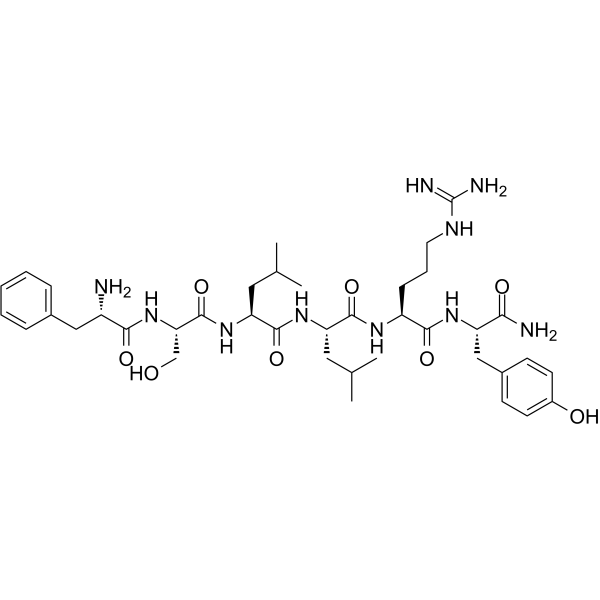
HY-P1260
FSLLRY-NH2PAR2 Inhibitor -
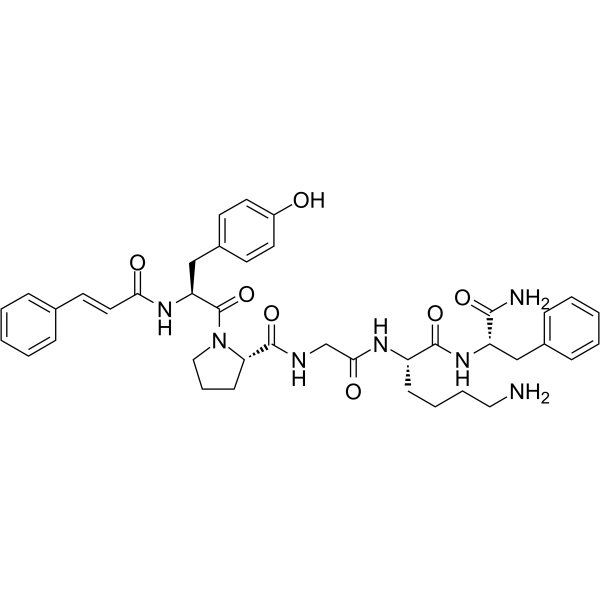
HY-P1263
tcY-NH2PAR4 Antagonist -
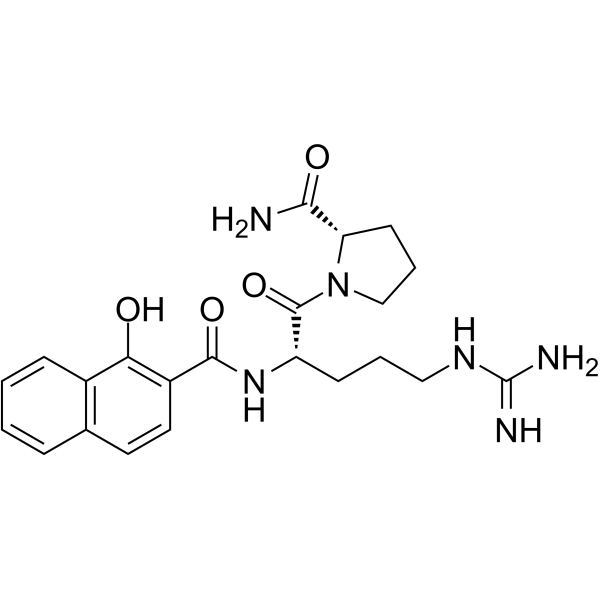
HY-105999
APC 366Mast Cell Tryptase Inhibitor -
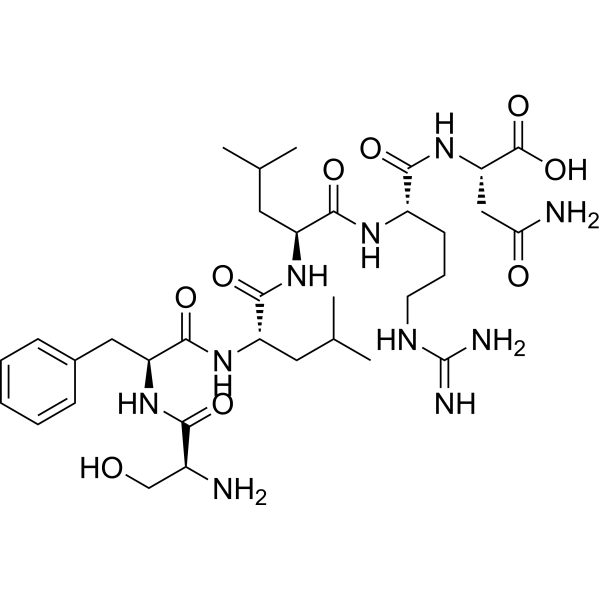
HY-P0078
TRAP-6PAR1 Agonist -
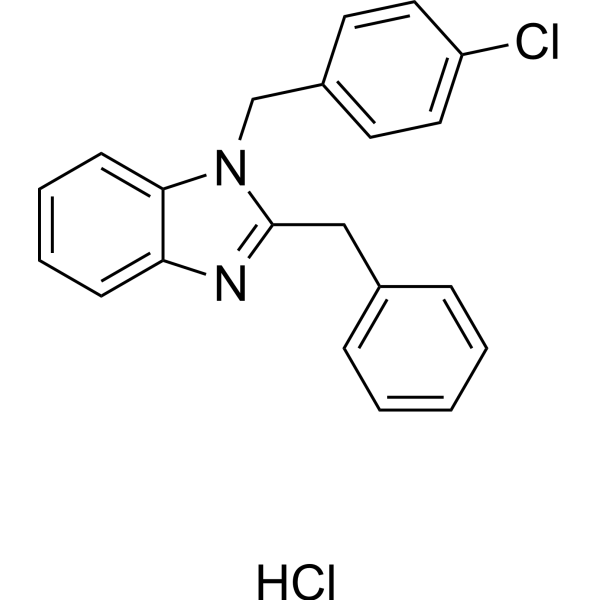
HY-108554
Q94 hydrochloridePAR1 Antagonist -
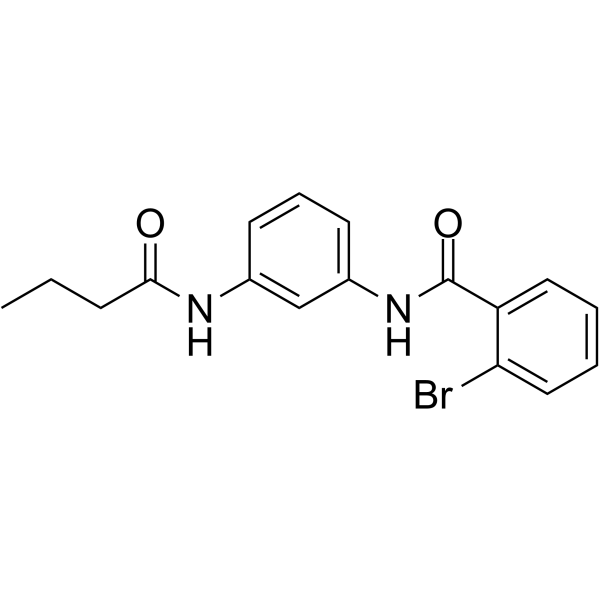
HY-13965
Parmodulin 2PAR1 Inhibitor -
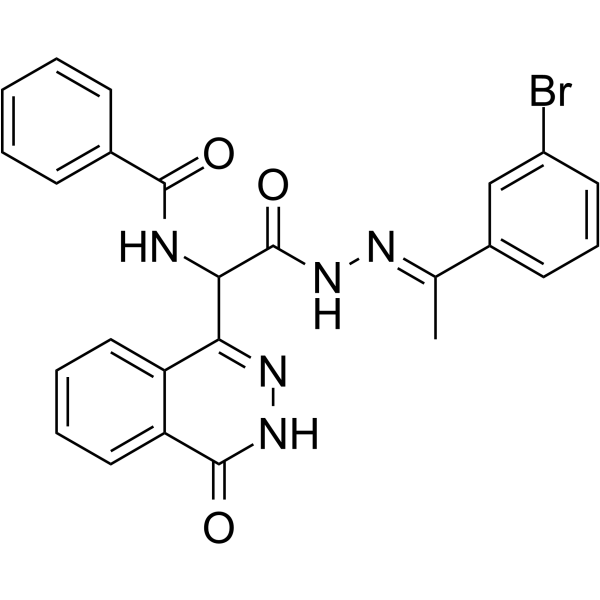
HY-14350
AC-55541PAR Agonist -
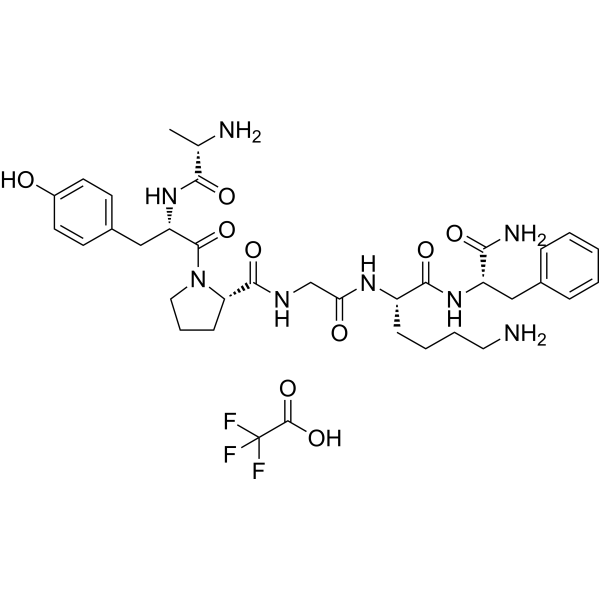
HY-P1309A
PAR-4 Agonist Peptide, amide TFAPAR-4 Agonist -
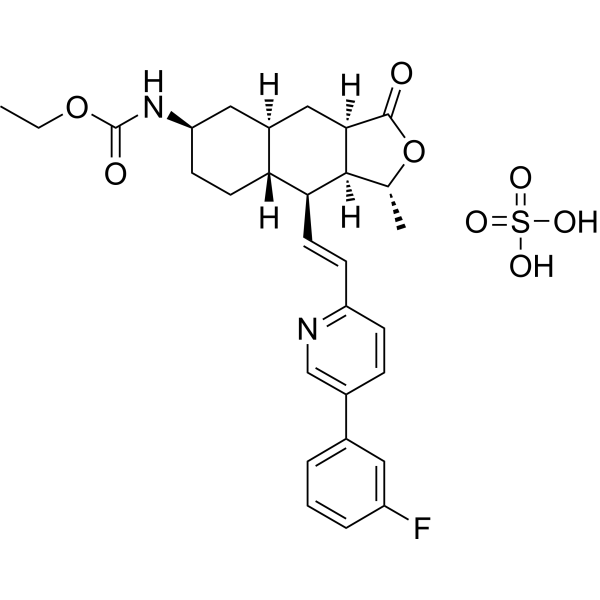
HY-10119A
Vorapaxar sulfatePAR-1 Antagonist -
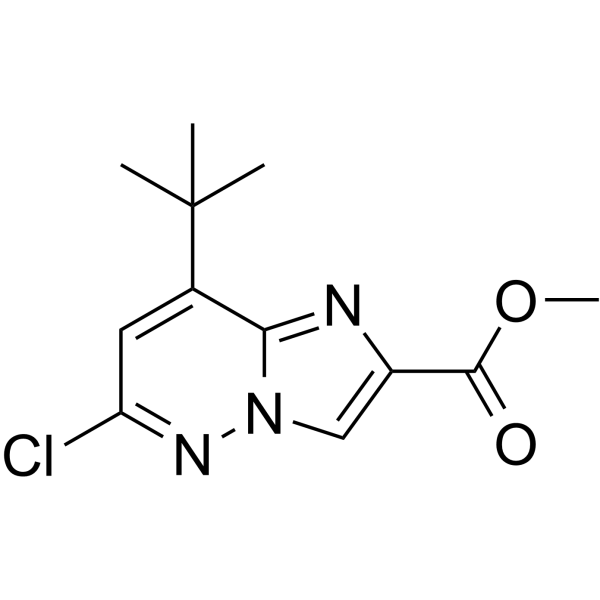
HY-138558
PAR-2-IN intermediate-1Drug Intermediate -
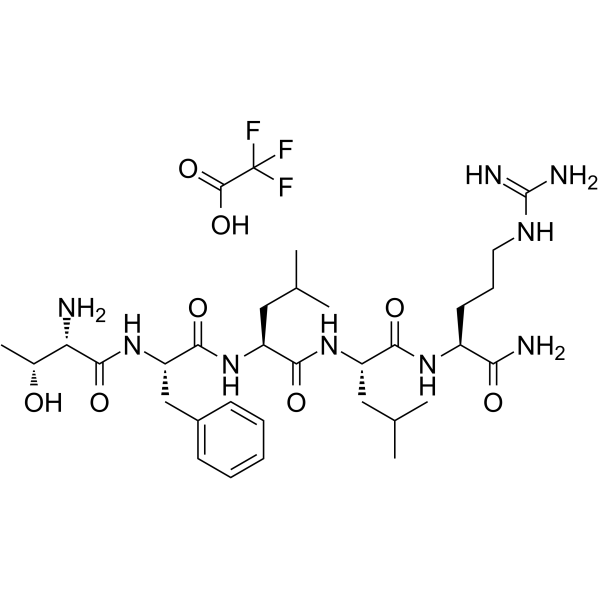
HY-P0226A
TFLLR-NH2TFAPAR1 Agonist


Biologische Aktivität
Beschreibung
IC50 & Target
|
PAR1 .29 μM (IC50) |
In Vitro
FR171113 shows antiplatelet effect on the aggregation of guinea pig platelets induced by PAR1 agonist peptide and thrombin in vitro with IC50s of 1.5 and 0.35 μM, respectively[2].
FR171113 (0.032-1 μM) dose-dependently inhibits platelet aggregation induced by both thrombin and TRAP-6[1].
FR171113 significantly prevents the plasma-elicited up-regulation of RAGE, MCP-1 and ICAM-1 mRNA levels in HUVECs[2].
FR171113 (1 μM; pretreatment for 30 minutes) inhibits thrombin- and SFLLRN (human PAR1 agonist peptide)-induced ERK activation, but not factor Xa- or SLIGKV (PAR2 agonist peptide)-induced ERK activation, indicating that activation of ERK by factor Xa is specifically mediated by PAR2 in mesangial cells[3].
MedChemExpress (MCE) has not independently confirmed the accuracy of these methods. They are for reference only. Further protocols information, click here.
-
Cell Line:Human washed platelets
-
Concentration:0.001, 0.01, 0.1, 1, 10, 100 μM
-
Incubation Time:
-
Result:The IC50 value for thrombin-induced platelet aggregation was 0.29 μM. The IC50 value for TRAP-6-induced platelet aggregation was 0.15 μM.
-
Cell Line:human umbilical vein endothelial cells (HUVECs)
-
Concentration:1 μM
-
Incubation Time:4 hours
-
Result:3% citrated human plasma-evoked ROS generation, RAGE, MCP-1 and ICAM-1 gene induction was significantly blocked.
-
Cell Line:Mesangial cells
-
Concentration:1 μM
-
Incubation Time:Pretreatment for 30 minutes
-
Result:Pretreatment inhibited thrombin (10 nM; for 5 minutes)- and SFLLRN(100 μM for 5 minutes)-induced ERK activation.
In Vivo
MedChemExpress (MCE) has not independently confirmed the accuracy of these methods. They are for reference only.
-
Animal Model:Male Hartley guinea pigs (650–950 g) were anesthetized with urethane (1.25 g/kg, i.p.)[4]
-
Dosage:0.32, 1.0, and 3.2 mg/kg
-
Administration:Administered subcutaneously (s.c.)
-
Result:Pretreatment with FR171113 prolonged this parameter in a dose-dependent manner. The time to thrombotic occlusion for 0.32, 1.0 and 3.2 mg/kg of FR171113 was 30.7±5.36, 44.7±8.41 and 92.6±9.79, respectively.


Chemical Information
-
CAS. Nr. 173904-50-2
-
Molecular Weight 469.73
-
Formel C19H11Cl3N2O4S
-
SMILES
O=C(OC)/C=C(S/C(N1C2=CC=C(Cl)C=C2)=N\C(C3=CC=C(Cl)C=C3Cl)=O)/C1=O
-
Versand
Room temperature in continental US; may vary elsewhere.
-
Speicherung
Please store the product under the recommended conditions in the Certificate of Analysis.

Protokoll
-
Cell Cytotoxicity Assay
Cytotoxicity assays are usually based on the assessment of cell membrane damage, which can also be indirectly detected by measuring cell viability. Detection methods include MTT assay, CKK-8 assay, LDH assay and ATP assay, etc.


Reinheit & Dokumentation
Verweise
[1]. Y Kato, et al. In vitro antiplatelet profile of FR171113, a novel non-peptide thrombin receptor antagonist. Eur J Pharmacol. 1999 Nov 19;384(2-3):197-202. [Content Brief]
[2]. Yuji Ishibashi, et al. Advanced glycation end products potentiate citrated plasma-evoked oxidative and inflammatory reactions in endothelial cells by up-regulating protease-activated receptor-1 expression. Cardiovasc Diabetol. 2014 Mar 13;13:60. [Content Brief]
[3]. Misa Tanaka, et al. Role of coagulation factor Xa and protease-activated receptor 2 in human mesangial cell proliferation. Kidney Int. 2005 Jun;67(6):2123-33. [Content Brief]
[4]. Yasuko Kato, et al. Inhibition of arterial thrombosis by a protease-activated receptor 1 antagonist, FR171113, in the guinea pig. Eur J Pharmacol. 2003 Jul 25;473(2-3):163-9. [Content Brief]

Calculators
Konzentration (Stammlösung) × Volumen (Stammlösung) = Konzentration (Ziellösung) × Volumen (Ziellösung)


FR-171113 Related Classifications
HY-108555 Related Classifications
 Powered by Bioz