



Rebaudioside A

Based on 1 Customer Validation
Rebaudioside A is an orally effective steviol glycoside with high sweetness. Rebaudioside A acts as an inhibitor of α-glucosidase with an IC50 value of 35.01 μg/mL. Rebaudioside A increases the ATP/ADP ratio in β cells in a glucose-dependent manner, thereby inhibiting KATP channels, leading to membrane depolarization, calcium influx, and ultimately stimulating insulin secretion. Rebaudioside A activates the SREBP signaling pathway by inhibiting HMGCR, the rate-limiting enzyme in cholesterol synthesis, resulting in increased expression of LDLR on the cell surface, thus promoting the uptake of LDL-C in the blood. Rebaudioside A can be used for studies on blood glucose and lipid regulation as well as anti-obesity.
Nos produits utilisent uniquement pour la recherche. Nous ne vendons pas aux patients.
- Pureté : 98.0%
- CAS No.: 58543-16-1
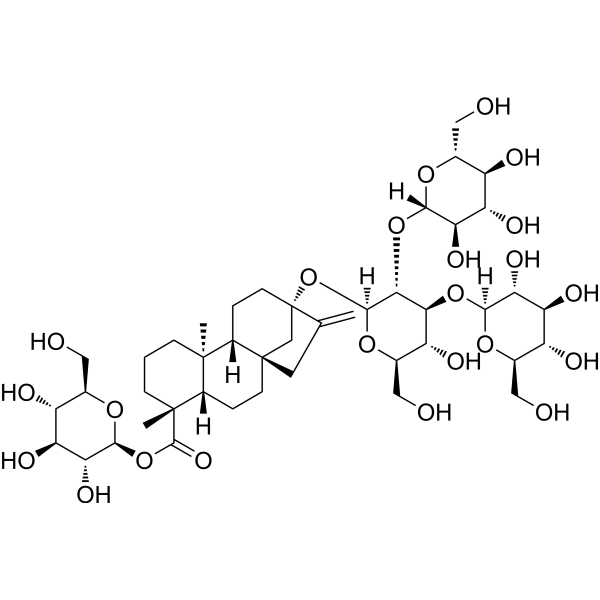
- Formule: C44H70O23
- Masse moléculaire:967.01
-
Stockage:Powder -20°C, 3 years , 4°C, 2 years ; In solvent -80°C, 2 years , -20°C, 1 year

To place orders, for customer services and technical support, please contact: MedChemExpress USA
Tel: 609-228-6898 E-mail: [email protected] [email protected]


-
 Activité biologique
-
Chemical Information
-
Solvant et solubilité
- Protocole
- Pureté et documentation
- Références
-
 Help & FAQs


-
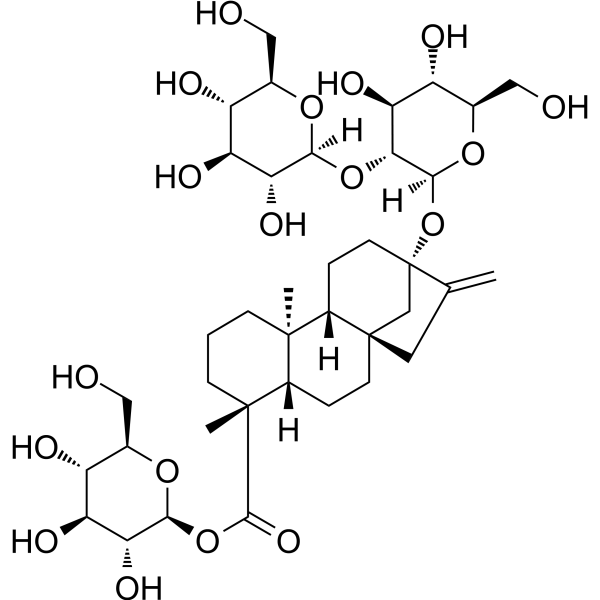
HY-N0669
Steviosidesweetener -
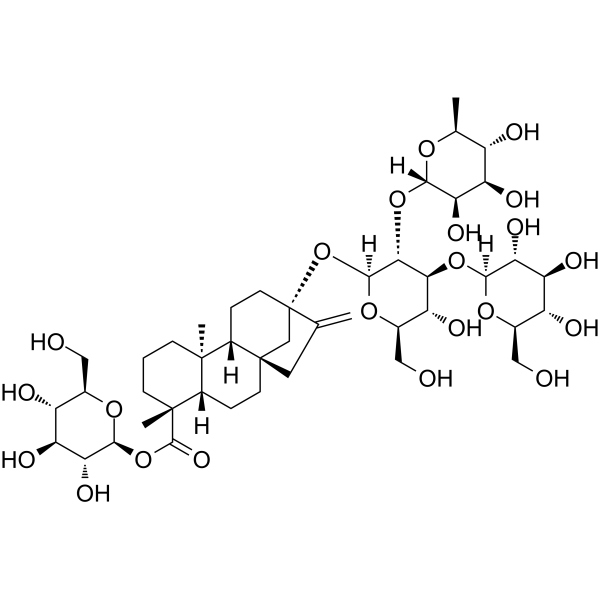
HY-N0467
Rebaudioside CTAS1R2/TAS1R3 Activator -
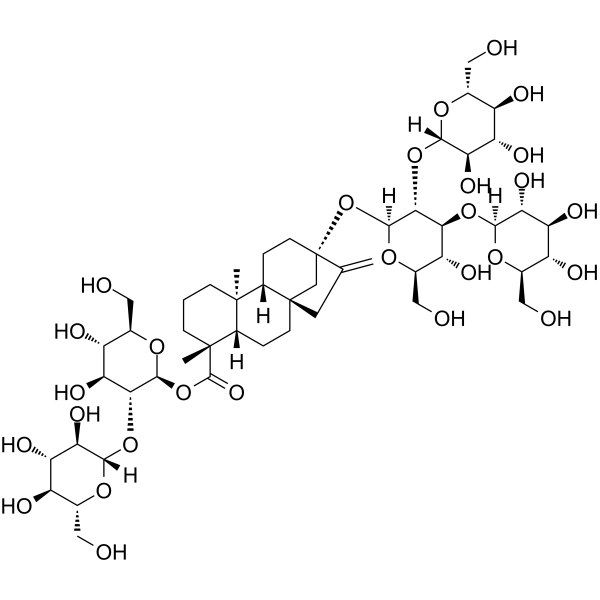
HY-N0468
Rebaudioside DFarnesoid X Receptor Activator -
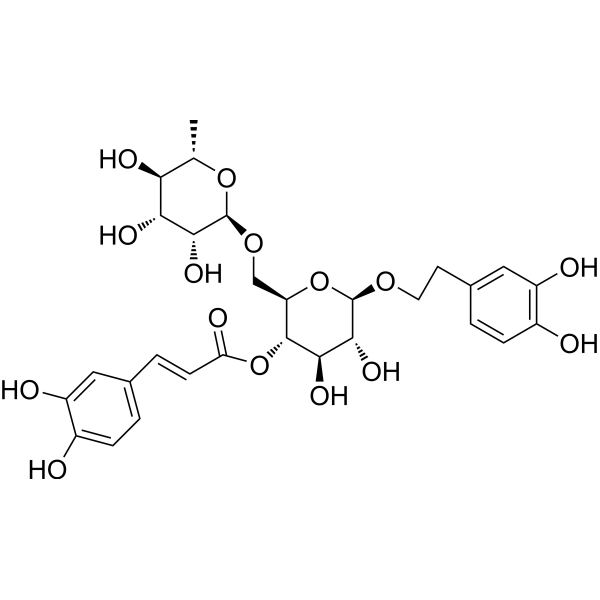
HY-N0028
Forsythiaside AAnti-Inflammatory Agent -
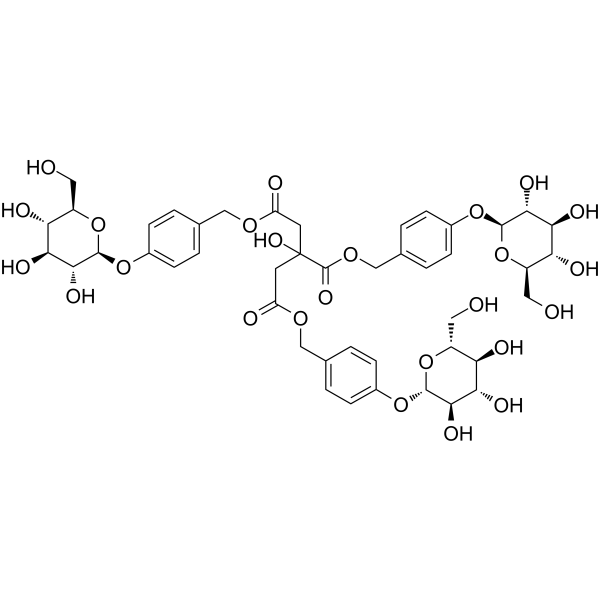
HY-N2031
ParishinSir2/Uth1/TOR Modulator -
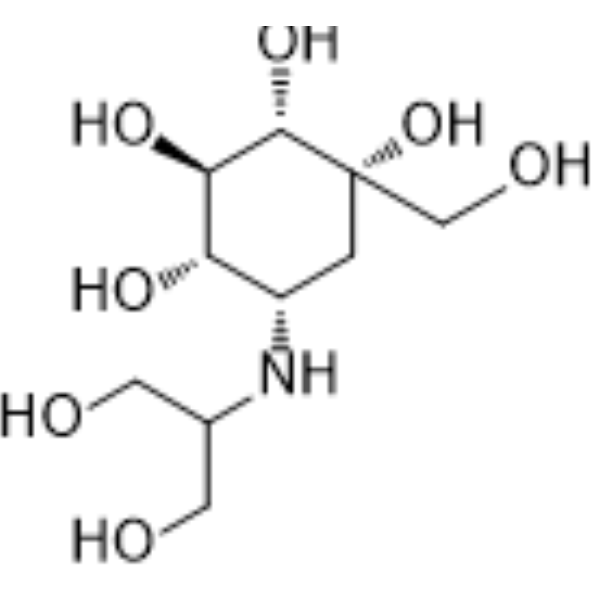
HY-B0025
VogliboseGlucosidase Inhibitor -
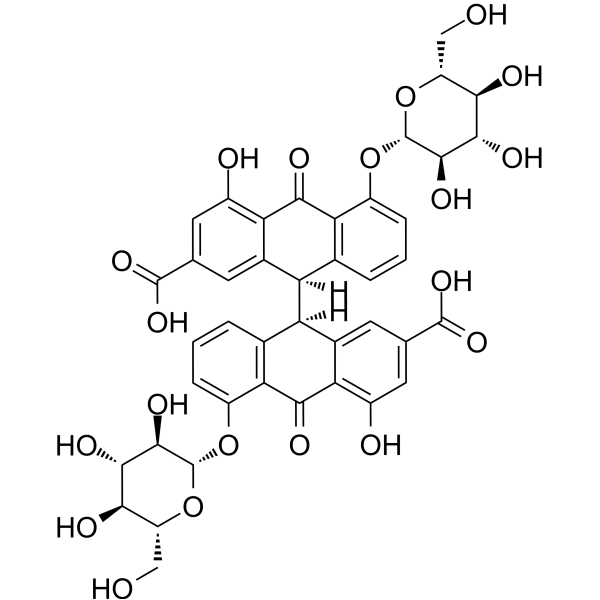
HY-N0365
Sennoside AHIV Inhibitor -
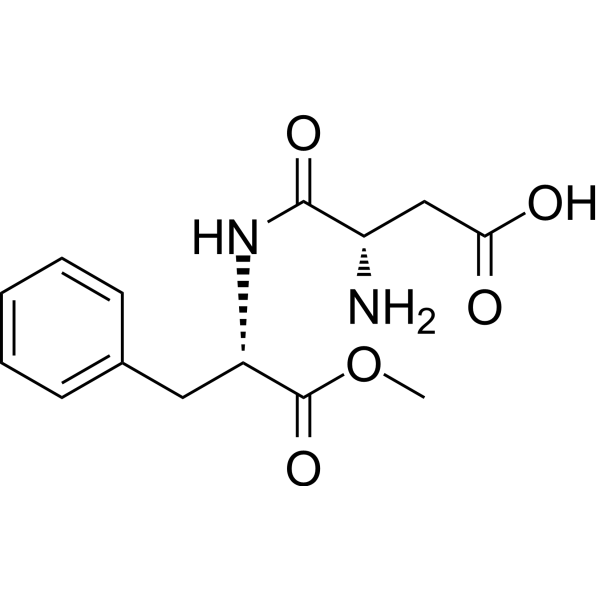
HY-B0361
AspartameSweetener -
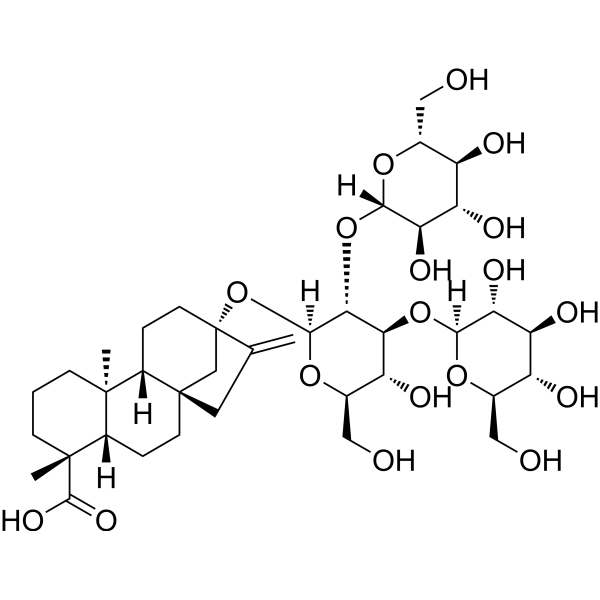
HY-N6808
Rebaudioside BSweetener -
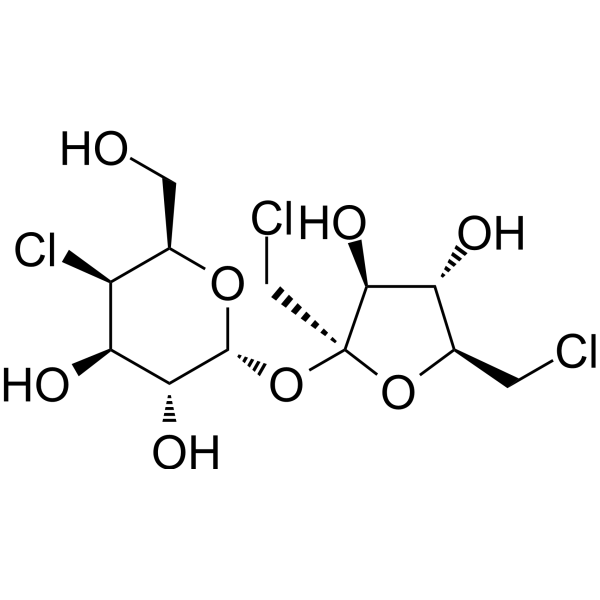
HY-N0614
SucraloseNon-Nutritive Sweetener -
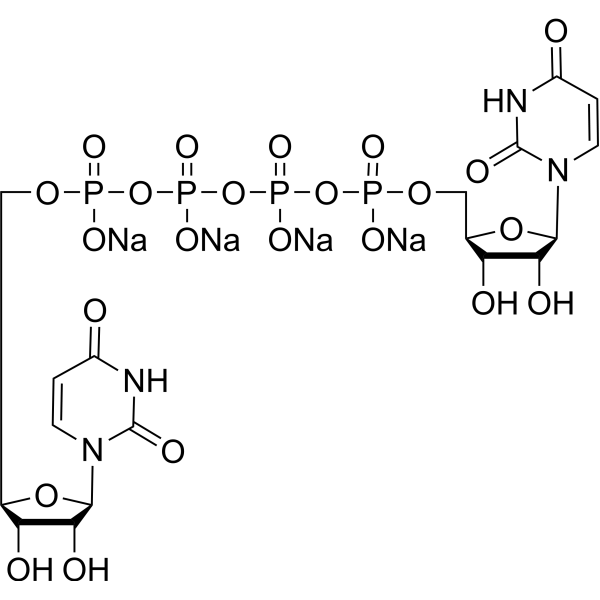
HY-B0606
Diquafosol tetrasodiumP2Y2 Receptor Agonist -
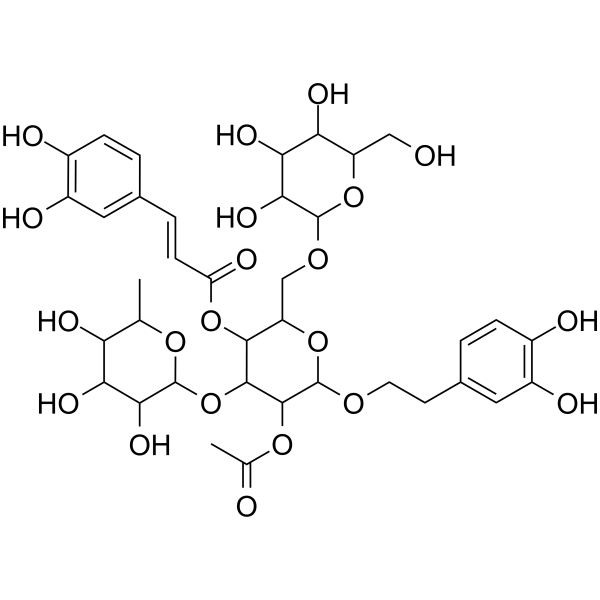
HY-N2155
Tubuloside AHepatoprotective Agent


Activité biologique
Description
In Vitro
Rebaudioside A (0.1 pM-0.1 μM; 1 h) stimulates insulin secretion from MIN6 cells in a glucose-dependent manner under the condition of 16.7 mM glucose[1].
Rebaudioside A (1 nM; 2 h) significantly increases the ATP/ADP ratio in isolated mouse islets under the condition of 16.7 mM glucose[1].
Rebaudioside A (1 nM) inhibits KATP channel conductance in dispersed mouse β-cells in a glucose-dependent manner, exerting significant inhibitory effects at a glucose concentration of 16.7 mM but showing no effect at 3.3 mM glucose[1].
Rebaudioside A (1-10 μM; 24 h) exhibits dose-dependent cytotoxicity in HepG2 cells, with an IC50 of 27.72 μM[3].
Rebaudioside A (1-5 μM; 24 h) increases the total cellular cholesterol level in HepG2 cells treated with 5 μM lipid stimulant[3].
Rebaudioside A (1-5 μM; 24 h) upregulates LDLR expression and enhances lipid droplet formation in HepG2 cells treated with lipid stimulants, with a more potent effect observed at 5 μM than at 1 μM[3].
Rebaudioside A (1-5 μM; 24 h) significantly regulates cholesterol-regulating genes in HepG2 cells by downregulating HMGCR and upregulating LDLR and ACAT2, with a more potent effect observed at 5 μM than at 1 μM[3].
MedChemExpress (MCE) has not independently confirmed the accuracy of these methods. They are for reference only. Further protocols information, click here.
-
Cell Line:HepG2
-
Concentration:0, 1, 2, 2.5, 5, 10 μM
-
Incubation Time:24 h
-
Result:Decreased cell viability dose-dependently, with viability; reached an IC50 of 27.72 μM.
-
Cell Line:HepG2
-
Concentration:1 μM (LRA); 5 μM (HRA)
-
Incubation Time:24 h
-
Result:Up-regulated LDLR expression on the cell surface at 5 μM, leading to higher intracellular lipid mobilization and storage in lipid droplets; showed LDLR expression in the order 5 μM > 1 μM > positive control (simvastatin), with no expression in base and negative controls.
-
Cell Line:HepG2
-
Concentration:1 μM (LRA); 5 μM (HRA)
-
Incubation Time:24 h
-
Result:Down-regulated HMGCR expression; up-regulated LDLR expression; up-regulated ACAT2 expression.
In Vivo
MedChemExpress (MCE) has not independently confirmed the accuracy of these methods. They are for reference only.
-
Animal Model:C57BL/6 J-ob/ob (male, 5 weeks old, 23-29 g, monogenic obesity model with homozygous leptin gene mutation)[4]
-
Dosage:50 mg/kg body weight
-
Administration:p.o.; 5 days per week; 4 weeks
-
Result:Reduced final body weight to 35.39 g; lowered body weight gain to 4.96 g; decreased food efficiency ratio to 3.20%. Reduced total adipose tissue weight by 21.87%; decreased perirenal adipose tissue weight to 0.83 g.
Reduced perirenal adipocyte area by 8.9%; lowered serum GOT levels.
Caused a non-significant downward trend in hepatic triglyceride levels.
Significantly downregulated Mcpt1 gene expression in the liver.
Did not alter gut microbiota structure.
Essai clinique
| NCT Number | Sponsor | Condition | Start Date |
Phase

|
|---|---|---|---|---|
| NCT01329991 | Plexxikon| | 2011-05 | PHASE1 |


Chemical Information
-
CAS No. 58543-16-1
-
Appearance Solid
-
Masse moléculaire 967.01
-
Formule C44H70O23
-
Color White to off-white
-
SMILES
C[C@]12[C@@]3([H])[C@@](C4)(CC[C@]1([H])[C@@](C)(CCC2)C(O[C@@H]5O[C@@H]([C@@H](O)[C@H](O)[C@H]5O)CO)=O)C[C@@](C4=C)(O[C@@]6([H])[C@@H]([C@H]([C@H](O)[C@@H](CO)O6)O[C@]7([H])O[C@@H]([C@@H](O)[C@H](O)[C@H]7O)CO)O[C@]8([H])O[C@@H]([C@@H](O)[C@H](O)[C@H]8O)CO)CC3
-
Structure Classification
-
Livraison
Room temperature in continental US; may vary elsewhere.
-
Stockage
Powder -20°C 3 years 4°C 2 years In solvent -80°C 2 years -20°C 1 year


Solvant et solubilité
In Vitro:
DMSO : ≥ 100 mg/mL (103.41 mM; Hygroscopic DMSO has a significant impact on the solubility of product, please use newly opened DMSO)
* "≥" means soluble, but saturation unknown.
Please refer to the solubility information to select the appropriate solvent. Once prepared, please aliquot and store the solution to prevent product inactivation from repeated freeze-thaw cycles.
Storage method and period of stock solution: -80°C, 2 years; -20°C, 1 year. When stored at -80°C, please use it within 2 years. When stored at -20°C, please use it within 1 year.
Please refer to the solubility information to select the appropriate solvent. Once prepared, please aliquot and store the solution to prevent product inactivation from repeated freeze-thaw cycles.
Storage method and period of stock solution: -80°C, 2 years; -20°C, 1 year. When stored at -80°C, please use it within 2 years. When stored at -20°C, please use it within 1 year.
Concentration (start) × Volume (start) = Concentration (final) × Volume (final)
In Vivo:
Select the appropriate dissolution method based on your experimental animal and administration route.
- For the following dissolution methods, please ensure to first prepare a clear stock solution using an In Vitro approach and then sequentially add co-solvents:
- To ensure reliable experimental results, the clarified stock solution can be appropriately stored based on storage conditions. As for the working solution for In Vivo experiments, it is recommended to prepare freshly and use it on the same day.
- The percentages shown for the solvents indicate their volumetric ratio in the final prepared solution. If precipitation or phase separation occurs during preparation, heat and/or sonication can be used to aid dissolution.
Add each solvent one by one: 10% DMSO 40% PEG300 5% Tween-80 45% Saline
Solubility: ≥ 2.5 mg/mL (2.59 mM); Clear solution
This protocol yields a clear solution of ≥ 2.5 mg/mL (saturation unknown).
Taking 1 mL working solution as an example, add 100 μL DMSO stock solution (25.0 mg/mL) to 400 μL PEG300, and mix evenly; then add 50 μL Tween-80 and mix evenly; then add 450 μL Saline to adjust the volume to 1 mL.
Preparation of Saline: Dissolve 0.9 g sodium chloride in ddH₂O and dilute to 100 mL to obtain a clear Saline solution.
Add each solvent one by one: 10% DMSO 90% (20% SBE-β-CD in Saline)
Solubility: ≥ 2.5 mg/mL (2.59 mM); Clear solution
This protocol yields a clear solution of ≥ 2.5 mg/mL (saturation unknown).
Taking 1 mL working solution as an example, add 100 μL DMSO stock solution (25.0 mg/mL) to 900 μL 20% SBE-β-CD in Saline, and mix evenly.
Preparation of 20% SBE-β-CD in Saline (4°C, storage for one week): 2 g SBE-β-CD powder is dissolved in 10 mL Saline, completely dissolve until clear.
In Vivo Dissolution Calculator
Please enter the basic information of animal experiments:
-
-
-
-
Recommended: Prepare an additional quantity of animals to account for potential losses during experiments.
Please enter your animal formula composition:
-
%DMSO +
Recommended: Keep the proportion of DMSO in working solution below 2% if your animal is weak.
-
%+
-
+%Tween-80 + +
-
%Saline +
The co-solvents required include: DMSO, . All of co-solvents are available by MedChemExpress (MCE). , Tween 80. All of co-solvents are available by MedChemExpress (MCE).
Working solution concentration: 0.22 mg/mL
Method for preparing stock solution: mg drug dissolved in μL DMSO. Stock solution concentration: mg/mL.
1. Take μL DMSO stock solution;
2. Add μL .
μL , mix evenly;
3. Then add μL Tween 80, mix evenly;
4. Then add μL
Please ensure that the stock solution in the first step is dissolved to a clear state, and add co-solvents in sequence. You can use ultrasonic heating (ultrasonic cleaner, recommended frequency 20-40 kHz), vortexing, etc. to assist dissolution.

Protocole
-
RNA extraction experimental
By lysing cells, releasing RNA, and removing impurities such as proteins and DNA, high-purity RNA products are finally obtained. The commonly used traditional method is the guanidine isothiocyanate/phenol/chloroform method (Trizol), which is suitable for a variety of animal materials including animal tissues, microorganisms, cultured cells, etc., and most plant materials.
-
Research Protocol for Endocrine Diseases
Endocrine diseases often arise from disrupted hormone production, hormone signaling, or target-tissue responsiveness; for diabetes-focused endocrine disease models, insulin signaling regulates glucose uptake, hepatic glucose output, lipid metabolism, and β-cell compensation. Type 2 diabetes develops through interacting defects in insulin resistance, β-cell dysfunction, adipose inflammation, hepatic glucose overproduction, altered incretin signaling, and ectopic lipid metabolism. A major unresolved question is whether endocrine dysfunction is driven primarily by target-tissue insulin resistance, intrinsic β-cell failure, immune/inflammatory stress, or combined multi-organ failure that differs by disease stage.
-
Fluorescent plasma-membrane potential dye assay
Fluorescent plasma-membrane potential dye assays measure changes in cell membrane potential using voltage-sensitive dyes whose fluorescence changes when cells depolarize or hyperpolarize. Anionic bis-oxonol dyes such as DiBAC4(3) enter depolarized cells more readily and show increased fluorescence after intracellular binding, while hyperpolarization reduces dye accumulation and fluorescence. FMP/FLIPR membrane-potential dyes are used for faster, homogeneous microplate assays of ion-channel or receptor-mediated membrane-potential changes.
-
Human Islet Cell Culture
The method of preserving islets in vitro, with purified reduced immunogenicity. The steps are islet isolation, islet cell purification, in vitro determination of islet function and islet cell culture.
-
Ca2+ Staining Technique
Ca2+ staining is an experimental technique that utilizes specific fluorescent probes (such as Fluo-4 AM, Fura-2, etc.) to qualitatively or quantitatively detect dynamic changes in intracellular Ca2+ concentrations; this is achieved by monitoring the changes in fluorescent signals generated when these probes bind to free intracellular calcium ions. The underlying principle relies primarily on the presence of chelating groups within the probe's molecular structure that possess high affinity for calcium ions.
-
Research Protocol for Metabolic Diseases
AMP-activated protein kinase, AMPK, is a conserved cellular energy sensor that responds to reduced cellular energy status and coordinates metabolism by increasing ATP-generating catabolic pathways while suppressing ATP-consuming anabolic processes. In metabolic disease research, the AMPK pathway is experimentally relevant because it regulates hepatic lipid synthesis, fatty acid oxidation, glucose production, skeletal-muscle glucose disposal, mTORC1-linked biosynthesis, autophagy, mitochondrial homeostasis, and whole-body energy balance. The central pathway logic is that energy stress, metformin, exercise-like stimulation, or direct AMPK activators increase AMPKα Thr172 phosphorylation and downstream substrate phosphorylation, including ACC and RAPTOR. Phosphorylation of ACC suppresses lipogenesis and supports fatty acid oxidation, whereas phosphorylation of RAPTOR suppresses mTORC1 signaling and links cellular energy status to growth and protein synthesis control. The pathway is linked


Pureté et documentation
-
Fiche technique (284 KB)
-
SDS (393 KB)
- English - EN (393 KB)
- Français - FR (393 KB)
- Deutsch - DE (393 KB)
- Norwegian - NO (393 KB)
- Español - ES (393 KB)
- Swedish - SV (393 KB)
- Italian - IT (393 KB)
- Korean - KR (393 KB)
- Portuguese - PT (393 KB)
-
Instruction de manipulation (2659 KB)
Références
[1].
Abudula R, et al. Rebaudioside A directly stimulates insulin secretion from pancreatic beta cells: a glucose-dependent action via inhibition of ATP-sensitive K-channels. Diabetes Obes Metab. 2008 Nov;10(11):1074-85.
[Content Brief]
[2]. Wang Y, et al. Natural and low-caloric rebaudioside A as a substitute for dietary sugars: A comprehensive review. Compr Rev Food Sci Food Saf. 2023;22(1):615-642. [Content Brief]
[3]. Ilias AN, et al. Rebaudioside A Enhances LDL Cholesterol Uptake in HepG2 Cells via Suppression of HMGCR Expression. Rep Biochem Mol Biol. 2021;10(3):477-487. [Content Brief]
[4]. Kim Y, et al. A combination of rebaudioside A and neohesperidin dihydrochalcone suppressed weight gain by regulating visceral fat and hepatic lipid metabolism in ob/ob mice. Food Sci Biotechnol. 2023;33(4):913-923. Published 2023 Aug 26. [Content Brief]
[5]. Adari BR et al. Synthesis of rebaudioside-A by enzymatic transglycosylation of stevioside present in the leaves of Stevia rebaudiana Bertoni. Food Chem. 2016 Jun 1;200:154-8. [Content Brief]


Complete Stock Solution Preparation Table
Please refer to the solubility information to select the appropriate solvent. Once prepared, please aliquot and store the solution to prevent product inactivation from repeated freeze-thaw cycles.
Storage method and period of stock solution: -80°C, 2 years; -20°C, 1 year. When stored at -80°C, please use it within 2 years. When stored at -20°C, please use it within 1 year.
| Optional Solvent | Concentration Solvent Mass | 1 mg | 5 mg | 10 mg | 25 mg |
|---|---|---|---|---|---|
| DMSO | 1 mM | 1.0341 mL | 5.1706 mL | 10.3412 mL | 25.8529 mL |
| 5 mM | 0.2068 mL | 1.0341 mL | 2.0682 mL | 5.1706 mL | |
| 10 mM | 0.1034 mL | 0.5171 mL | 1.0341 mL | 2.5853 mL | |
| 15 mM | 0.0689 mL | 0.3447 mL | 0.6894 mL | 1.7235 mL | |
| 20 mM | 0.0517 mL | 0.2585 mL | 0.5171 mL | 1.2926 mL | |
| 25 mM | 0.0414 mL | 0.2068 mL | 0.4136 mL | 1.0341 mL | |
| 30 mM | 0.0345 mL | 0.1724 mL | 0.3447 mL | 0.8618 mL | |
| 40 mM | 0.0259 mL | 0.1293 mL | 0.2585 mL | 0.6463 mL | |
| 50 mM | 0.0207 mL | 0.1034 mL | 0.2068 mL | 0.5171 mL | |
| 60 mM | 0.0172 mL | 0.0862 mL | 0.1724 mL | 0.4309 mL | |
| 80 mM | 0.0129 mL | 0.0646 mL | 0.1293 mL | 0.3232 mL | |
| 100 mM | 0.0103 mL | 0.0517 mL | 0.1034 mL | 0.2585 mL |


Rebaudioside A Related Classifications
HY-N0466 Related Classifications
 Powered by Bioz