



Vanillin
Based on 7 publication(s) in Google Scholar
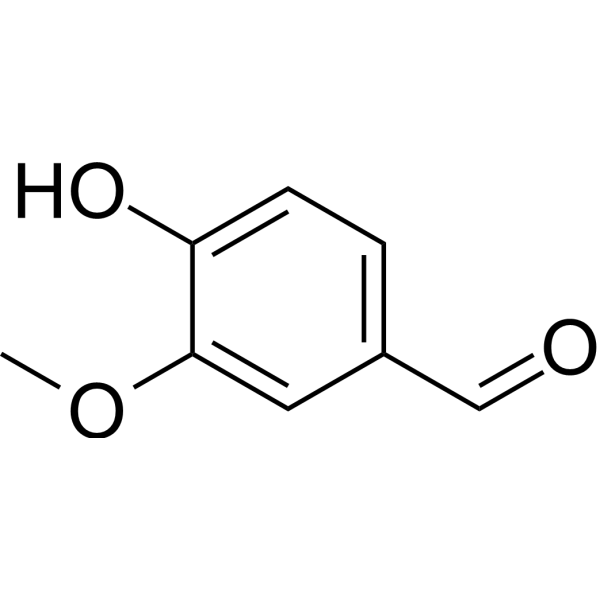
Vanillin (p-Vanillin) is a single molecule extracted from vanilla beans and also a popular odor used widely in perfume, food and medicine.
Nos produits utilisent uniquement pour la recherche. Nous ne vendons pas aux patients.
- Pureté : 99.96%
- CAS No.: 121-33-5
- Formule: C8H8O3
- Masse moléculaire:152.15
-
Stockage:
4°C, stored under nitrogen
* In solvent : -80°C, 6 months; -20°C, 1 month (stored under nitrogen)

To place orders, for customer services and technical support, please contact: MedChemExpress USA
Tel: 609-228-6898 E-mail: [email protected] [email protected]


-
 Activité biologique
-
Chemical Information
-
Solvant et solubilité
- Pureté et documentation
- Références
-
 Help & FAQs


-
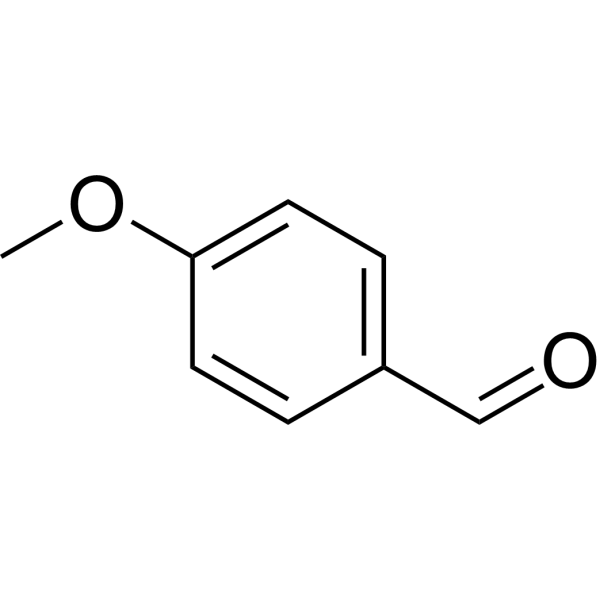
HY-Y0740
4-MethoxybenzaldehydePhenol -
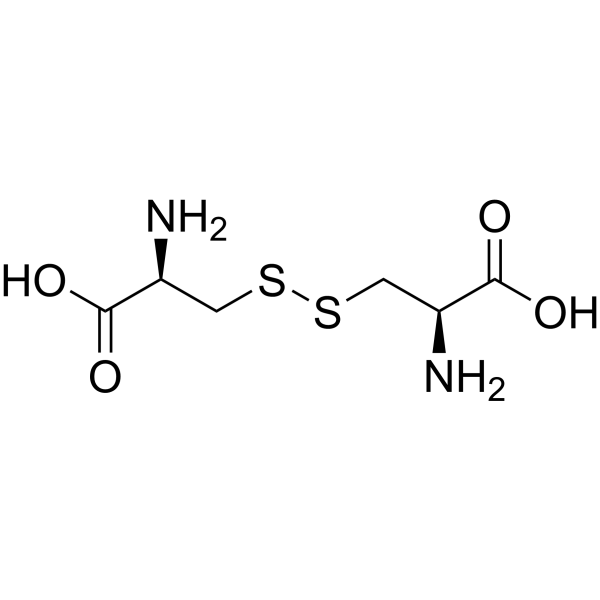
HY-N0394
L-CystineNrf2 Activator/ROS Inhibitor -
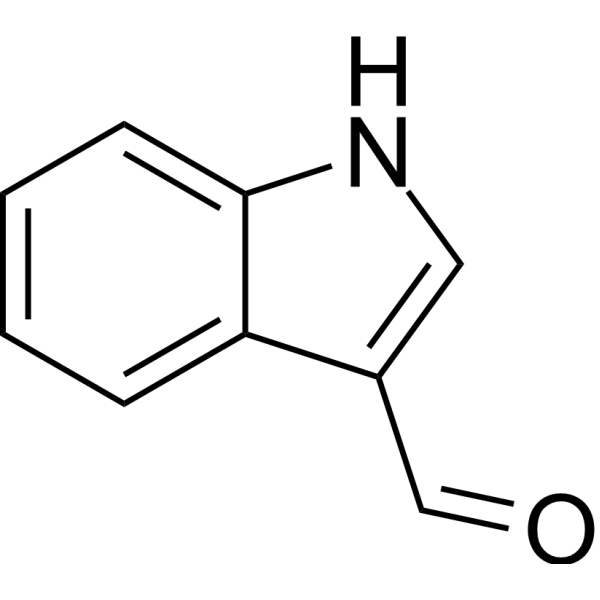
HY-W007376
Indole-3-carboxaldehydeEndogenous Metabolite -
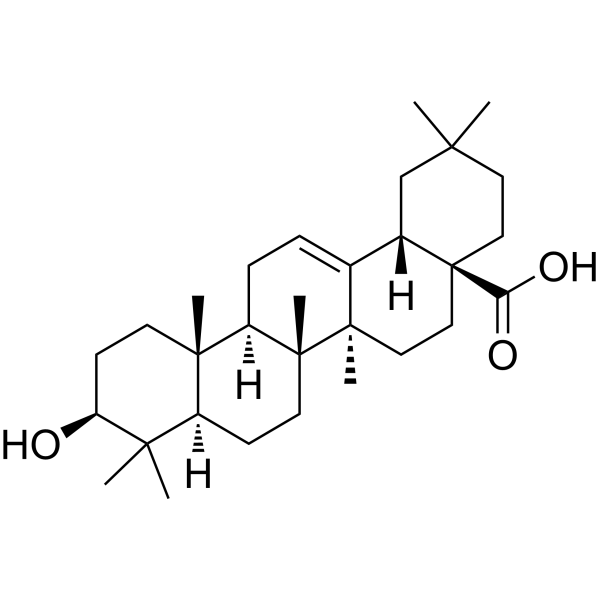
HY-N0156
Oleanolic acidAutophagy Inducer -
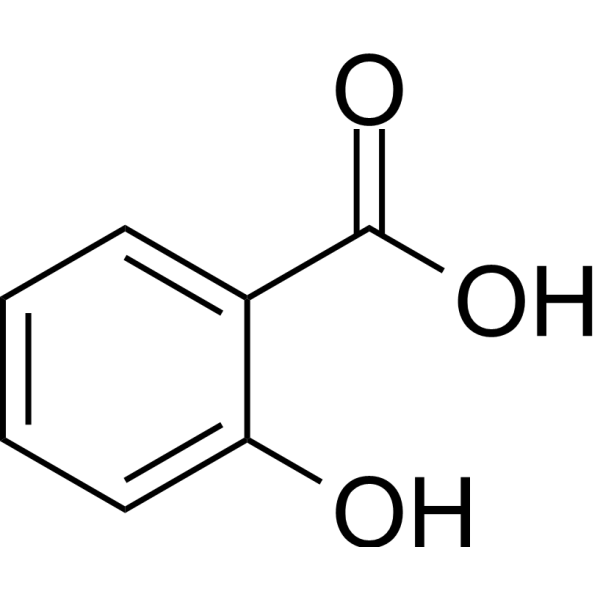
HY-B0167
Salicylic acidCOX-2 Inhibitor -
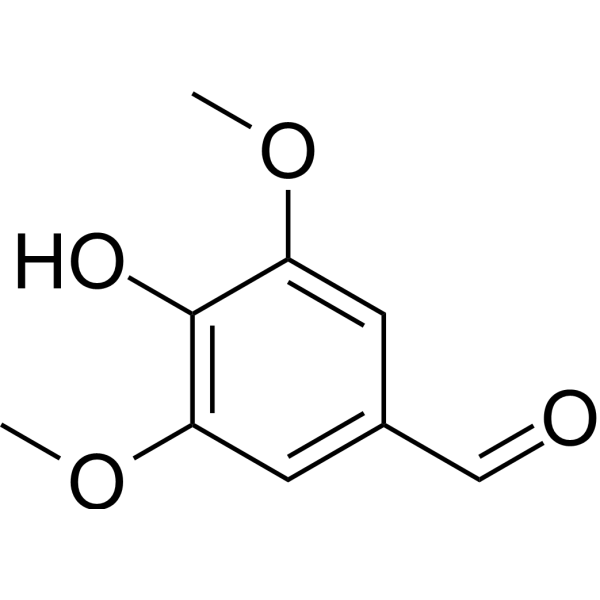
HY-N1390
SyringaldehydeCOX-2 Inhibitor -
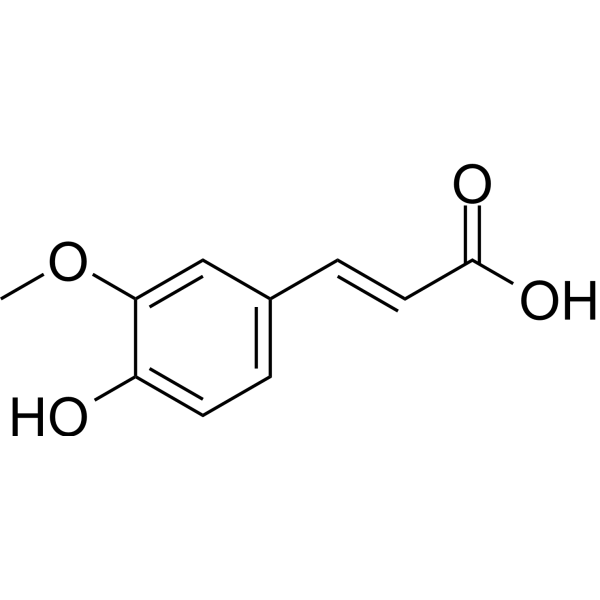
HY-N0060
Ferulic acidFGFR1 Inhibitor -
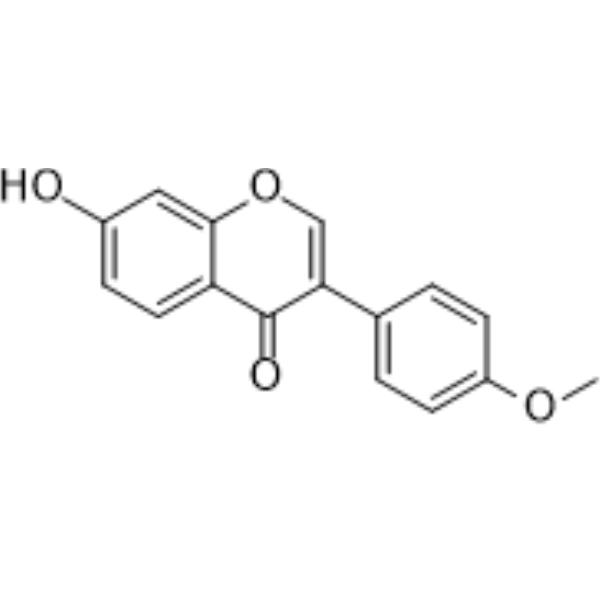
HY-N0183
FormononetinFGFR2 Inhibitor -
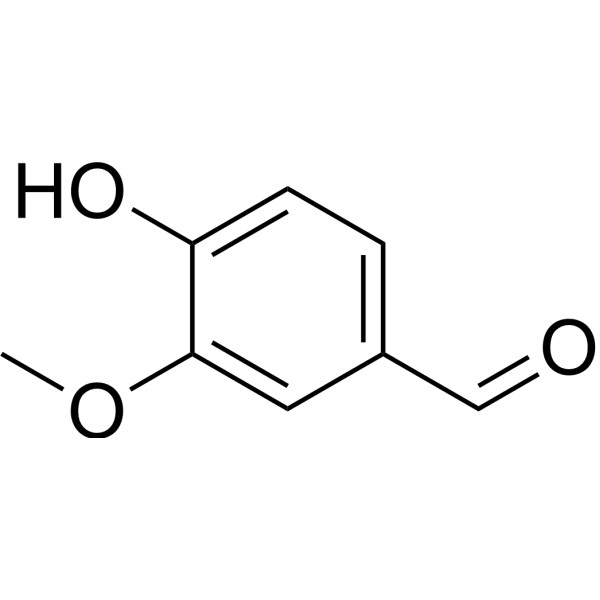
HY-N0098R
Vanillin (Standard) -
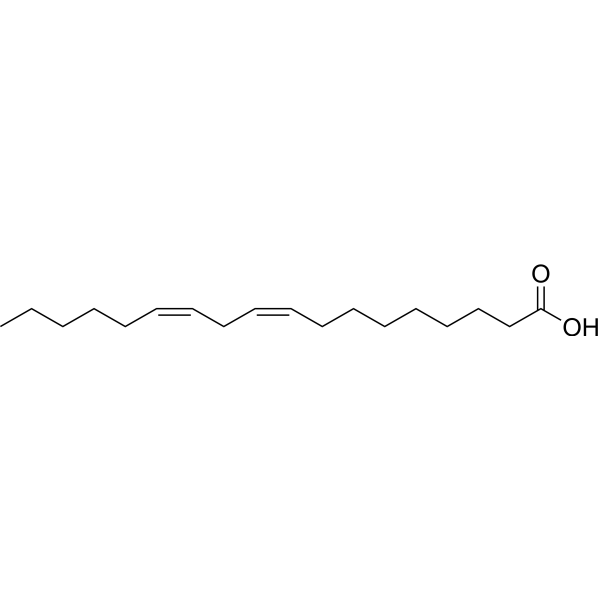
HY-N0729
Linoleic acidHuman Endogenous Metabolite -
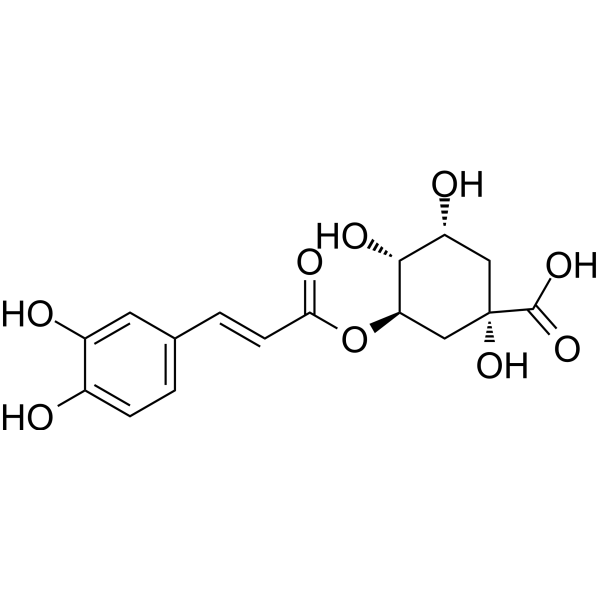
HY-N0055
Chlorogenic acidAntioxidant -
HY-N0005
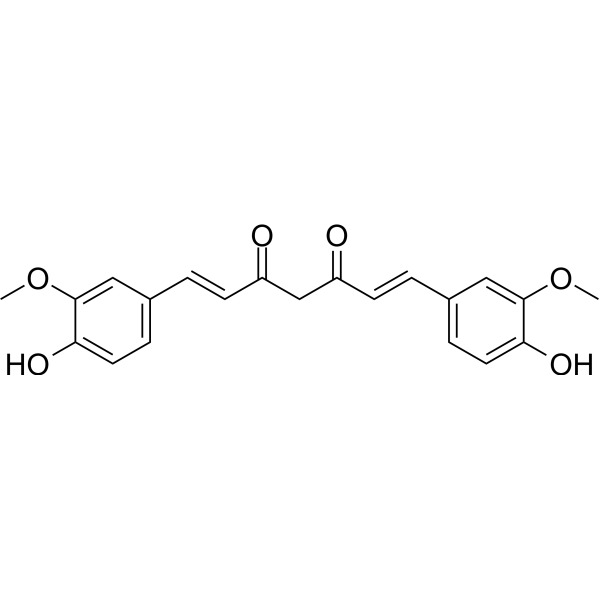
Curcuminp300 Histone Acetylatransferase Inhibitor
Publications Citing Use of MedChemExpress (MCE) Vanillin
More- Phytomedicine. 2025 Oct:146:157153. [Abstract]
- Int Immunopharmacol. 2026 May 1:176:116468. [Abstract]
- ACS Omega. 2024 Feb 28;9(10):11870-11882. [Abstract]
- Neuroscience. 2022 May 21:491:65-74. [Abstract]
- Gene. 2026 Sep 20:1005:150258. [Abstract]
- Cytotechnology. 2025 Aug;77(4):154. [Abstract]
- AAPS Open. 2023;9(1):9. [Abstract]
 Customer Validation & Images

-
WB

-
IF

-
IP

-
Cell Proliferation/Viability Assay
-
Others
Voir tous les produits spécifiques à Isoform Endogenous Metabolite
More

Activité biologique
Description
Cellular Effect
|
Cell Line

|
Type | Value | Description | References |
|---|---|---|---|---|
| A549 | IC50 |
16.42 μg/mL
Compound: Vanillin
|
Cytotoxicity against human A549 cells after 3 days by MTT assay
Cytotoxicity against human A549 cells after 3 days by MTT assay
|
[PMID: 19691312] |
| B16-4A5 | IC50 |
49.2 μM
Compound: 4-Hydroxy-3-methoxybenzaldehyde
|
Antimelanogenic activity in theophylline-stimulated mouse B16-4A5 cells assessed as inhibition of melanogenesis after 72 hrs relative to control
Antimelanogenic activity in theophylline-stimulated mouse B16-4A5 cells assessed as inhibition of melanogenesis after 72 hrs relative to control
|
[PMID: 27756508] |
| Ca9-22 | IC50 |
>20 μg/mL
Compound: Vanillin
|
Cytotoxicity against human Ca9-22 cells after 3 days by MTT assay
Cytotoxicity against human Ca9-22 cells after 3 days by MTT assay
|
[PMID: 19691312] |
| H9 | IC50 |
>100 μg/mL
Compound: 6
|
Cytotoxicity against human H9 cells
Cytotoxicity against human H9 cells
|
[PMID: 11678650] |
| Hep 3B2 | IC50 |
>20 μg/mL
Compound: Vanillin
|
Cytotoxicity against human Hep3B cells after 3 days by MTT assay
Cytotoxicity against human Hep3B cells after 3 days by MTT assay
|
[PMID: 19691312] |
| HepG2 | IC50 |
>20 μg/mL
Compound: Vanillin
|
Cytotoxicity against human HepG2 cells after 3 days by MTT assay
Cytotoxicity against human HepG2 cells after 3 days by MTT assay
|
[PMID: 19691312] |
| MCF7 | IC50 |
>50 μM
Compound: 19
|
Cytotoxicity against human MCF7 cells after 72 hrs by MTS reduction assay
Cytotoxicity against human MCF7 cells after 72 hrs by MTS reduction assay
|
[PMID: 20704331] |
| MCF7 | IC50 |
15.69 μg/mL
Compound: Vanillin
|
Cytotoxicity against human MCF7 cells after 3 days by MTT assay
Cytotoxicity against human MCF7 cells after 3 days by MTT assay
|
[PMID: 19691312] |
| MDA-MB-231 | IC50 |
>20 μg/mL
Compound: Vanillin
|
Cytotoxicity against human MDA-MB-231 cells after 3 days by MTT assay
Cytotoxicity against human MDA-MB-231 cells after 3 days by MTT assay
|
[PMID: 19691312] |
| NCI-H460 | IC50 |
>50 μM
Compound: 19
|
Cytotoxicity against human NCI-H460 cells after 72 hrs by MTS reduction assay
Cytotoxicity against human NCI-H460 cells after 72 hrs by MTS reduction assay
|
[PMID: 20704331] |
| RAW264.7 | IC50 |
>50 μM
Compound: 32
|
Antiinflammatory activity in mouse RAW264.7 assessed as inhibition of LPS-induced NO production preincubated for 30 mins followed by LPS stimulation measured after 24 hrs by Griess reagent based assay
Antiinflammatory activity in mouse RAW264.7 assessed as inhibition of LPS-induced NO production preincubated for 30 mins followed by LPS stimulation measured after 24 hrs by Griess reagent based assay
|
[PMID: 33939429] |
| SF-268 | IC50 |
>50 μM
Compound: 19
|
Cytotoxicity against human SF268 cells after 72 hrs by MTS reduction assay
Cytotoxicity against human SF268 cells after 72 hrs by MTS reduction assay
|
[PMID: 20704331] |
In Vitro
Vanillin recovers UVA-induced reduction of proliferation in a dose dependent manner. Vanillin has no apoptotic effects at the tested concentrations. In addition, the reduced expression levels of OCT4, NANOG, and SOX2 caused by UVA irradiation are all increased by Vanillin treatment, suggesting that Vanillin attenuates the effects of UVA irradiation on hAMSCs. Based on a luciferase reporter assay, Vanillin increases the reduced activity of HRE-luciferase reporter caused by UVA irradiation. In addition, treatment with Vanillin attenuates the reduced expression of HIF-1α caused by UVA irradiation. The results reveal that treatment of hAMSCs with Vanillin results in significant decrease in the production of PGE2 and cAMP when compare to UVA-irradiated controls[1].
MedChemExpress (MCE) has not independently confirmed the accuracy of these methods. They are for reference only.
In Vivo
MedChemExpress (MCE) has not independently confirmed the accuracy of these methods. They are for reference only.


Chemical Information
-
CAS No. 121-33-5
-
Appearance Solid
-
Masse moléculaire 152.15
-
Formule C8H8O3
-
Color White to off-white
-
SMILES
O=CC1=CC=C(O)C(OC)=C1
-
Synonyms
p-Vanillin; m-Methoxy-p-hydroxybenzaldehyde; p-Hydroxy-m-methoxybenzaldehyde
-
Structure Classification
-
Initial Source
-
Livraison
Room temperature in continental US; may vary elsewhere.
-
Stockage
4°C, stored under nitrogen
* In solvent : -80°C, 6 months; -20°C, 1 month (stored under nitrogen)


Publications (7)
-
Journal Impact Factor
-
Most Recent
-
Phytomedicine
Lianweng formula restores intestinal barrier function in ulcerative colitis through the β-arrestin 1/NF-κB signaling axis. [Abstract]2025 Oct:146:157153. PMID: 40815948
Vanillin purchased from MedChemExpress. Usage Cited in: Phytomedicine. 2025 Oct:146:157153. [Abstract]
Vanillin (VA: 200 μM). The protein expression levels of Arrb1, NLRP3, tmTNF-α (transmembrane TNF-α), sTNF-α (soluble TNF-α), pro-IL-1β, and secreted IL-1β in each compound-treated group were analyzed by Western blotting.
Vanillin purchased from MedChemExpress. Usage Cited in: Phytomedicine. 2025 Oct:146:157153. [Abstract]
Vanillin (VA: 100-200 μM). Representative immunofluorescence images of p65 nuclear translocation in each treatment group.
Vanillin purchased from MedChemExpress. Usage Cited in: Phytomedicine. 2025 Oct:146:157153. [Abstract]
Competitive binding experiments of Vanillin (VA: 40/80 μM) with increasing concentrations of VA (0.5x and 1x).
-
Int Immunopharmacol
Minimolide F alleviates inflammatory diseases by specifically targeting STING and blocking IRF3 recruitment. [Abstract]2026 May 1:176:116468. PMID: 41819671 -
ACS Omega
Identification of New Modulators and Inhibitors of Palmitoyl-Protein Thioesterase 1 for CLN1 Batten Disease and Cancer. [Abstract]2024 Feb 28;9(10):11870-11882. PMID: 38496939
Vanillin purchased from MedChemExpress. Usage Cited in: ACS Omega. 2024 Feb 28;9(10):11870-11882. [Abstract]
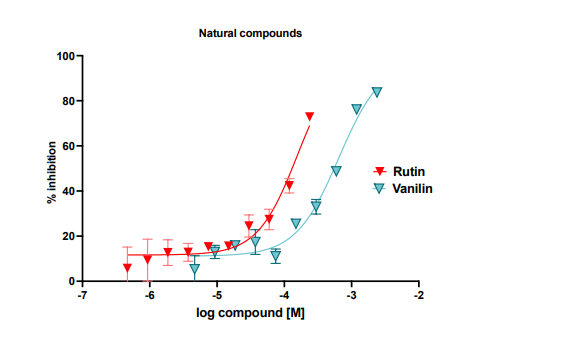
Rutin trihydrate showed and IC50 156 (88 μM -204 μM) and Vanillin showed an IC50 647 μM (434 μM – 819 μM).
-
Neuroscience
Vanillin Attenuates Proinflammatory Factors in a tMCAO Mouse Model via Inhibition of TLR4/NF-kB Signaling Pathway. [Abstract]2022 May 21:491:65-74. PMID: 35276304 -
Gene
Ethanol extract of Vanilla planifolia stem induces autophagy and alters transcriptome networks in pancreatic ductal adenocarcinoma cells. [Abstract]2026 Sep 20:1005:150258. PMID: 42242329 -
Cytotechnology
Vanillin restrains proliferation of triple negative breast cancer cells by inducing ferroptosis via mediating the KLF2/GPX4 axis. [Abstract]2025 Aug;77(4):154. PMID: 40741604
Vanillin purchased from MedChemExpress. Usage Cited in: Cytotechnology. 2025 Aug;77(4):154. [Abstract]
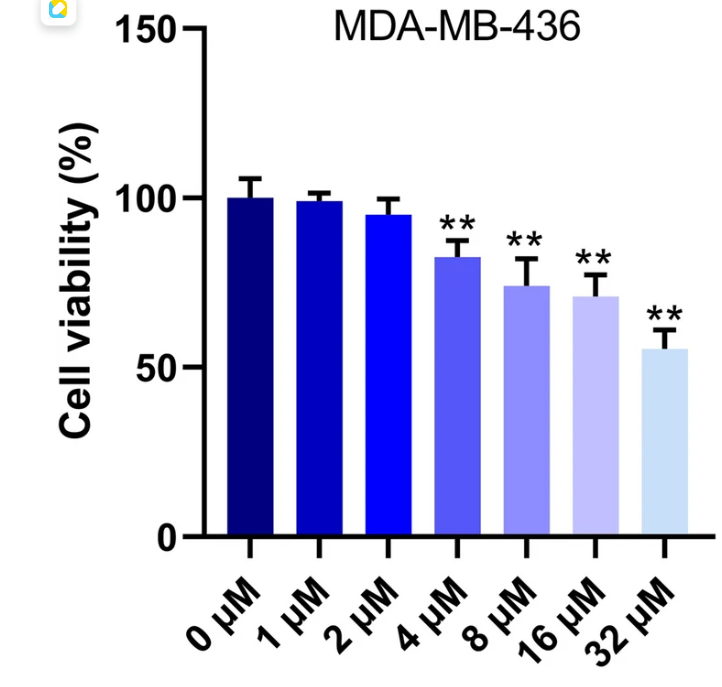
Effects of Vanillin on the viability of triple-negative breast cancer (TNBC) cell lines. TNBC cell line (MDA-MB-436) was incubated with different concentrations of Vanillin (0, 1, 2, 4, 8, 16, and 32 μM) for 24 hours. Cell viability was determined using the CCK-8 assay.
-
AAPS Open
Extraction of niclosamide from commercial approved tablets into aqueous buffered solution creates potentially approvable oral and nasal sprays against COVID-19 and other respiratory infections. [Abstract]2023;9(1):9. PMID: 37073302


Solvant et solubilité
In Vitro:
DMSO : 100 mg/mL (657.25 mM; Need ultrasonic; Hygroscopic DMSO has a significant impact on the solubility of product, please use newly opened DMSO)
H2O : 25 mg/mL (164.31 mM; ultrasonic and warming and heat to 60°C)
Please refer to the solubility information to select the appropriate solvent. Once prepared, please aliquot and store the solution to prevent product inactivation from repeated freeze-thaw cycles.
Storage method and period of stock solution: -80°C, 6 months; -20°C, 1 month (stored under nitrogen). When stored at -80°C, please use it within 6 months. When stored at -20°C, please use it within 1 month.
* Note: If you choose water as the stock solution, please dilute it to the working solution, then filter and sterilize it with a 0.22 μm filter before use.
Please refer to the solubility information to select the appropriate solvent. Once prepared, please aliquot and store the solution to prevent product inactivation from repeated freeze-thaw cycles.
Storage method and period of stock solution: -80°C, 6 months; -20°C, 1 month (stored under nitrogen). When stored at -80°C, please use it within 6 months. When stored at -20°C, please use it within 1 month.
* Note: If you choose water as the stock solution, please dilute it to the working solution, then filter and sterilize it with a 0.22 μm filter before use.
Concentration (start) × Volume (start) = Concentration (final) × Volume (final)
In Vivo:
Select the appropriate dissolution method based on your experimental animal and administration route.
- For the following dissolution methods, please ensure to first prepare a clear stock solution using an In Vitro approach and then sequentially add co-solvents:
- To ensure reliable experimental results, the clarified stock solution can be appropriately stored based on storage conditions. As for the working solution for In Vivo experiments, it is recommended to prepare freshly and use it on the same day.
- The percentages shown for the solvents indicate their volumetric ratio in the final prepared solution. If precipitation or phase separation occurs during preparation, heat and/or sonication can be used to aid dissolution.
Add each solvent one by one: 10% DMSO 40% PEG300 5% Tween-80 45% Saline
Solubility: ≥ 2.5 mg/mL (16.43 mM); Clear solution
This protocol yields a clear solution of ≥ 2.5 mg/mL (saturation unknown).
Taking 1 mL working solution as an example, add 100 μL DMSO stock solution (25.0 mg/mL) to 400 μL PEG300, and mix evenly; then add 50 μL Tween-80 and mix evenly; then add 450 μL Saline to adjust the volume to 1 mL.
Preparation of Saline: Dissolve 0.9 g sodium chloride in ddH₂O and dilute to 100 mL to obtain a clear Saline solution.
Add each solvent one by one: 10% DMSO 90% (20% SBE-β-CD in Saline)
Solubility: ≥ 2.5 mg/mL (16.43 mM); Clear solution
This protocol yields a clear solution of ≥ 2.5 mg/mL (saturation unknown).
Taking 1 mL working solution as an example, add 100 μL DMSO stock solution (25.0 mg/mL) to 900 μL 20% SBE-β-CD in Saline, and mix evenly.
Preparation of 20% SBE-β-CD in Saline (4°C, storage for one week): 2 g SBE-β-CD powder is dissolved in 10 mL Saline, completely dissolve until clear.
In Vivo Dissolution Calculator
Please enter the basic information of animal experiments:
-
-
-
-
Recommended: Prepare an additional quantity of animals to account for potential losses during experiments.
Working solution concentration: 0.22 mg/mL
This product has good water solubility, please refer to the measured solubility data in water/PBS/Saline for details.


Pureté et documentation
-
Fiche technique (281 KB)
-
SDS (393 KB)
- English - EN (393 KB)
- Français - FR (393 KB)
- Deutsch - DE (393 KB)
- Norwegian - NO (393 KB)
- Español - ES (393 KB)
- Swedish - SV (393 KB)
- Italian - IT (393 KB)
- Korean - KR (393 KB)
- Portuguese - PT (393 KB)
-
Instruction de manipulation (2659 KB)
Références
[1]. Lee SY, et al. Vanillin attenuates negative effects of ultraviolet A on the stemness of human adipose tissue-derived mesenchymal stem cells. Food Chem Toxicol. 2016 Oct;96:62-9. [Content Brief]
[2]. Xu J, et al. Vanillin-induced amelioration of depression-like behaviors in rats by modulating monoamine neurotransmitters in the brain. Psychiatry Res. 2015 Feb 28;225(3):509-14. [Content Brief]


Complete Stock Solution Preparation Table
Please refer to the solubility information to select the appropriate solvent. Once prepared, please aliquot and store the solution to prevent product inactivation from repeated freeze-thaw cycles.
Storage method and period of stock solution: -80°C, 6 months; -20°C, 1 month (stored under nitrogen). When stored at -80°C, please use it within 6 months. When stored at -20°C, please use it within 1 month.
| Optional Solvent | Concentration Solvent Mass | 1 mg | 5 mg | 10 mg | 25 mg |
|---|---|---|---|---|---|
| H2O / DMSO | 1 mM | 6.5725 mL | 32.8623 mL | 65.7246 mL | 164.3115 mL |
| 5 mM | 1.3145 mL | 6.5725 mL | 13.1449 mL | 32.8623 mL | |
| 10 mM | 0.6572 mL | 3.2862 mL | 6.5725 mL | 16.4312 mL | |
| 15 mM | 0.4382 mL | 2.1908 mL | 4.3816 mL | 10.9541 mL | |
| 20 mM | 0.3286 mL | 1.6431 mL | 3.2862 mL | 8.2156 mL | |
| 25 mM | 0.2629 mL | 1.3145 mL | 2.6290 mL | 6.5725 mL | |
| 30 mM | 0.2191 mL | 1.0954 mL | 2.1908 mL | 5.4771 mL | |
| 40 mM | 0.1643 mL | 0.8216 mL | 1.6431 mL | 4.1078 mL | |
| 50 mM | 0.1314 mL | 0.6572 mL | 1.3145 mL | 3.2862 mL | |
| 60 mM | 0.1095 mL | 0.5477 mL | 1.0954 mL | 2.7385 mL | |
| 80 mM | 0.0822 mL | 0.4108 mL | 0.8216 mL | 2.0539 mL | |
| 100 mM | 0.0657 mL | 0.3286 mL | 0.6572 mL | 1.6431 mL |
* Note: If you choose water as the stock solution, please dilute it to the working solution, then filter and sterilize it with a 0.22 μm filter before use.


Vanillin Related Classifications
HY-N0098 Related Classifications
 Powered by Bioz