



PA-8
Based on 2 publication(s) in Google Scholar
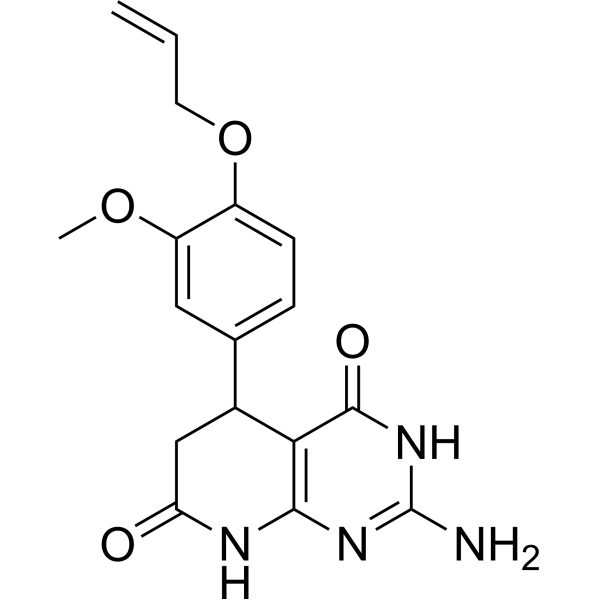
PA-8 is a potent, selective and orally active PACAP type I (PAC1) receptor antagonist. PA-8 inhibits the phosphorylation of CREB induced by PACAP in PAC1-, but not VPAC1- or VPAC2-receptor. PA-8 also inhibits PACAP-induced cAMP elevation with an IC50 of 2 nM.
Nos produits utilisent uniquement pour la recherche. Nous ne vendons pas aux patients.
- Pureté : 97.00%
- CAS No.: 878437-15-1
- Formule: C17H18N4O4
- Masse moléculaire:342.35
-
Stockage:Powder -20°C, 3 years , 4°C, 2 years ; In solvent -80°C, 6 months , -20°C, 1 month

To place orders, for customer services and technical support, please contact: MedChemExpress USA
Tel: 609-228-6898 E-mail: [email protected] [email protected]


-
 Activité biologique
-
Chemical Information
-
Solvant et solubilité
- Protocole
- Pureté et documentation
- Références
-
 Help & FAQs


-
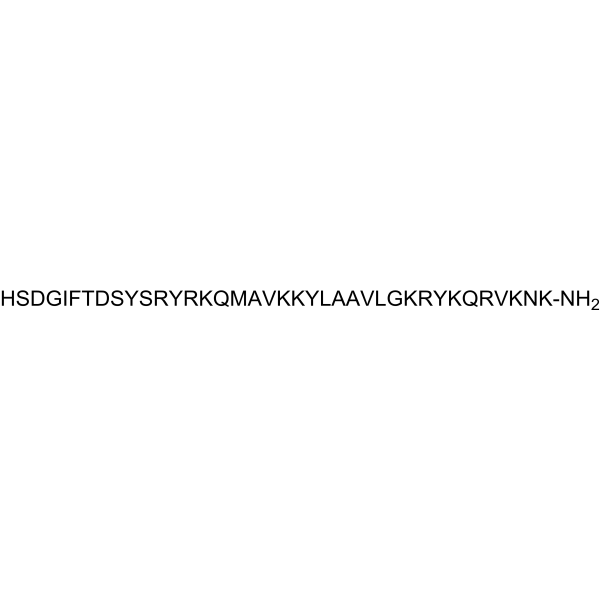
HY-P0221
PACAP (1-38), human, ovine, ratPACAP Agonist -
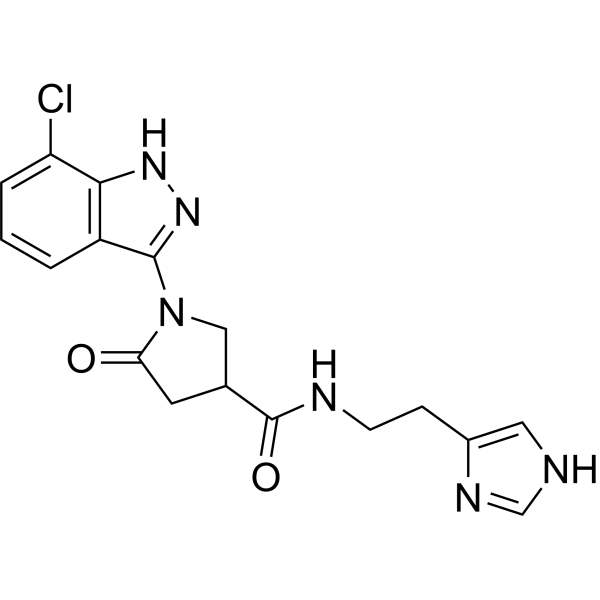
HY-147557
PA-915PAC1 Receptor Inhibitor -
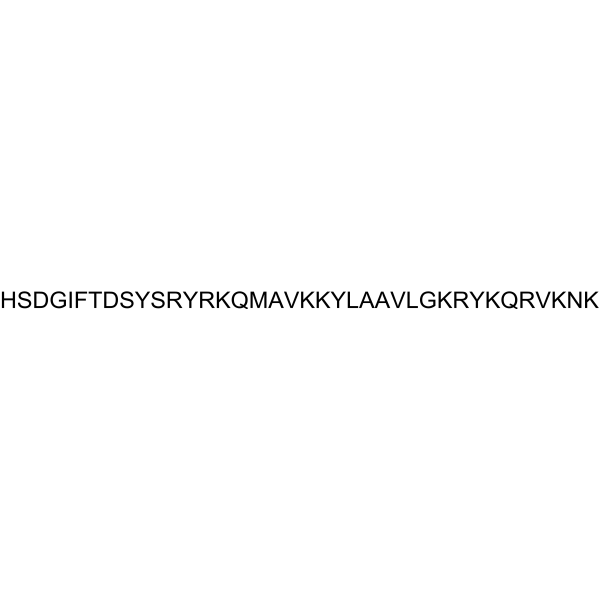
HY-P0221C
PACAP (1-38) free acidEndogenous Neuropeptide -
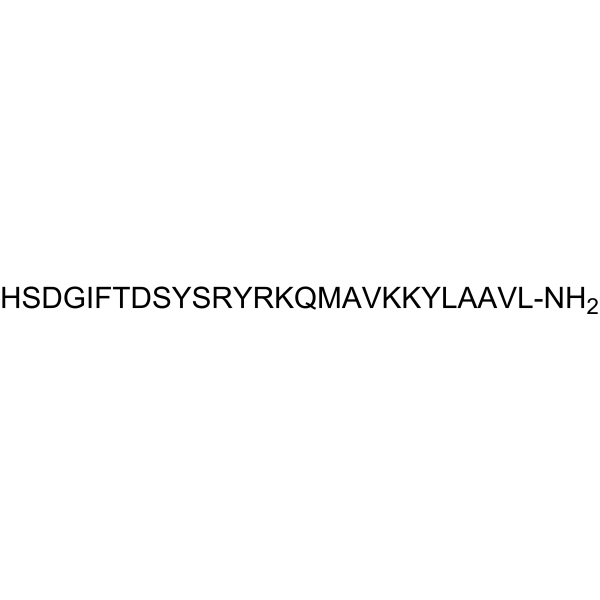
HY-P0176
PACAP (1-27), human, ovine, ratPACAP Receptor Agonist -
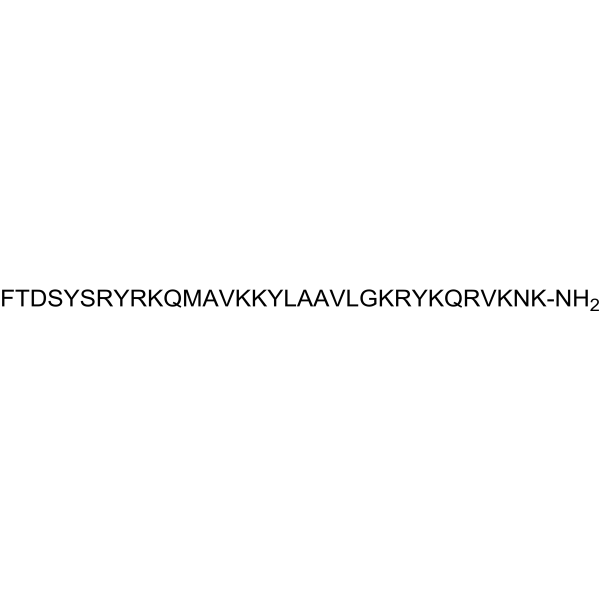
HY-P0220
PACAP (6-38), human, ovine, ratPACAP Receptor Antagonist -
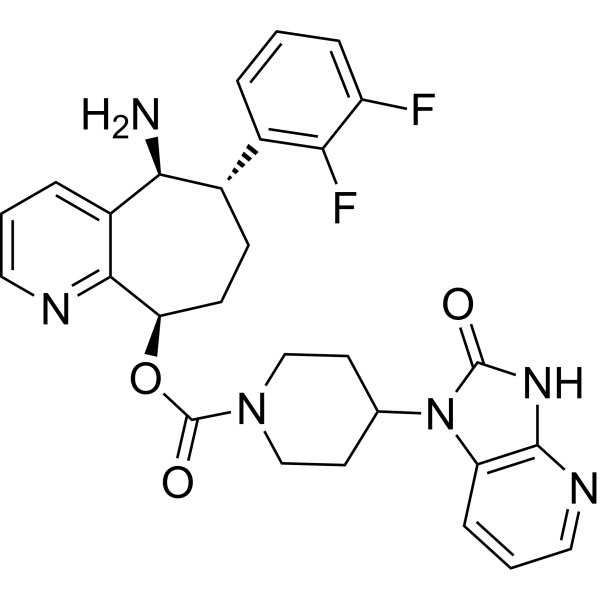
HY-15498
RimegepantCGRP/AMY1 Receptor Antagonist -
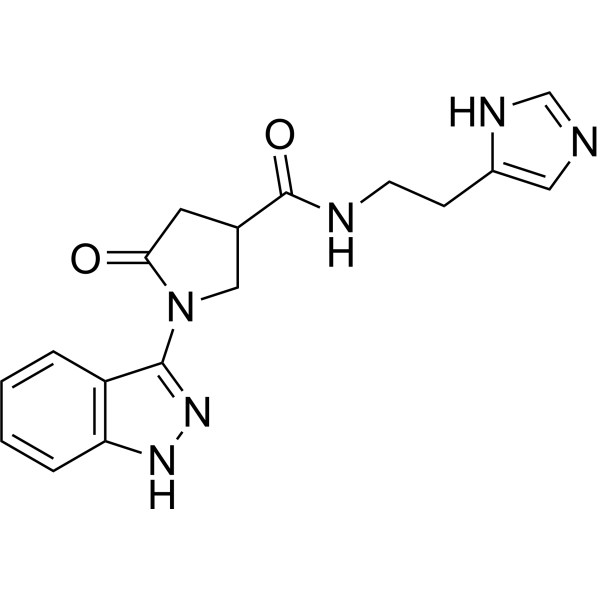
HY-129421
PA-9PAC1 Receptor Antagonist -
HY-P1817
PACAP-38 (16-38), human, mouse, ratPAC/VPAC Receptor Ligand
Publications Citing Use of MedChemExpress (MCE) PA-8
MoreVoir tous les produits spécifiques à Isoform PACAP Receptor
More

Activité biologique
Description
In Vitro
In PAC1/CHO cells, PA-8 (10 pM to 10 nM; 30 minutes) dose dependently inhibits PACAP (1 nM)-induced CREB phosphorylation. In VPAC1/CHO and VPAC2/CHO cells, PACAP (1 nM) also induced CREB phosphorylation; however, PA-8 (10 pM to 10 nM) does not inhibit PACAP (1 nM)-induced CREB phosphorylation[1].
MedChemExpress (MCE) has not independently confirmed the accuracy of these methods. They are for reference only.
In Vivo
? PA-8 (3-30 mg/kg, p.o.) treatment results in the dose-dependent attenuation of the second phase of formalin-induced nociceptive responses. PA-8 also inhibits c-fos upregulation in the ipsilateral dorsal horn of the spinal cord[2].
MedChemExpress (MCE) has not independently confirmed the accuracy of these methods. They are for reference only.
-
Animal Model:Male ddY mice (6 weeks old) injected with PACAP (100 pmol)[1]
-
Dosage:100 pmol/5 µL
-
Administration:Intrathecal injection; once
-
Result:Inhibited PACAP-induced aversive responses and mechanical allodynia in vivo.


Chemical Information
-
CAS No. 878437-15-1
-
Appearance Solid
-
Masse moléculaire 342.35
-
Formule C17H18N4O4
-
Color White to yellow
-
SMILES
O=C1C(C(C2=CC=C(OCC=C)C(OC)=C2)CC(N3)=O)=C3N=C(N)N1
-
Livraison
Room temperature in continental US; may vary elsewhere.
-
Stockage
Powder -20°C 3 years 4°C 2 years In solvent -80°C 6 months -20°C 1 month


Publications (2)
-
Journal Impact Factor
-
Most Recent
-
Arch Biochem Biophys
PACAP/PAC1R activation promotes group 2 innate lymphoid cells-dependent allergic rhinitis via ERK pathway. [Abstract]2025 Oct:772:110564. PMID: 40713003 -
bioRxiv
Design of peptide-based PAC1 antagonists combining molecular dynamics simulations and a biologically relevant cell-based assay. [Abstract]2025 May 9:2025.04.16.649181. PMID: 40568092


Solvant et solubilité
In Vitro:
DMSO : 25 mg/mL (73.02 mM; ultrasonic and warming and heat to 60°C; Hygroscopic DMSO has a significant impact on the solubility of product, please use newly opened DMSO)
Please refer to the solubility information to select the appropriate solvent. Once prepared, please aliquot and store the solution to prevent product inactivation from repeated freeze-thaw cycles.
Storage method and period of stock solution: -80°C, 6 months; -20°C, 1 month. When stored at -80°C, please use it within 6 months. When stored at -20°C, please use it within 1 month.
Please refer to the solubility information to select the appropriate solvent. Once prepared, please aliquot and store the solution to prevent product inactivation from repeated freeze-thaw cycles.
Storage method and period of stock solution: -80°C, 6 months; -20°C, 1 month. When stored at -80°C, please use it within 6 months. When stored at -20°C, please use it within 1 month.
Concentration (start) × Volume (start) = Concentration (final) × Volume (final)
In Vivo:
Select the appropriate dissolution method based on your experimental animal and administration route.
- For the following dissolution methods, please ensure to first prepare a clear stock solution using an In Vitro approach and then sequentially add co-solvents:
- To ensure reliable experimental results, the clarified stock solution can be appropriately stored based on storage conditions. As for the working solution for In Vivo experiments, it is recommended to prepare freshly and use it on the same day.
- The percentages shown for the solvents indicate their volumetric ratio in the final prepared solution. If precipitation or phase separation occurs during preparation, heat and/or sonication can be used to aid dissolution.
Add each solvent one by one: 10% DMSO 40% PEG300 5% Tween-80 45% Saline
Solubility: ≥ 2.5 mg/mL (7.30 mM); Clear solution
This protocol yields a clear solution of ≥ 2.5 mg/mL (saturation unknown).
Taking 1 mL working solution as an example, add 100 μL DMSO stock solution (25.0 mg/mL) to 400 μL PEG300, and mix evenly; then add 50 μL Tween-80 and mix evenly; then add 450 μL Saline to adjust the volume to 1 mL.
Preparation of Saline: Dissolve 0.9 g sodium chloride in ddH₂O and dilute to 100 mL to obtain a clear Saline solution.
In Vivo Dissolution Calculator
Please enter the basic information of animal experiments:
-
-
-
-
Recommended: Prepare an additional quantity of animals to account for potential losses during experiments.
Please enter your animal formula composition:
-
%DMSO +
Recommended: Keep the proportion of DMSO in working solution below 2% if your animal is weak.
-
%+
-
+%Tween-80 + +
-
%Saline +
The co-solvents required include: DMSO, . All of co-solvents are available by MedChemExpress (MCE). , Tween 80. All of co-solvents are available by MedChemExpress (MCE).
Working solution concentration: 0.22 mg/mL
Method for preparing stock solution: mg drug dissolved in μL DMSO. Stock solution concentration: mg/mL.
1. Take μL DMSO stock solution;
2. Add μL .
μL , mix evenly;
3. Then add μL Tween 80, mix evenly;
4. Then add μL
Please ensure that the stock solution in the first step is dissolved to a clear state, and add co-solvents in sequence. You can use ultrasonic heating (ultrasonic cleaner, recommended frequency 20-40 kHz), vortexing, etc. to assist dissolution.


Pureté et documentation
-
Fiche technique (276 KB)
-
SDS (393 KB)
- English - EN (393 KB)
- Français - FR (393 KB)
- Deutsch - DE (393 KB)
- Norwegian - NO (393 KB)
- Español - ES (393 KB)
- Swedish - SV (393 KB)
- Italian - IT (393 KB)
- Korean - KR (393 KB)
- Portuguese - PT (393 KB)
-
Instruction de manipulation (2659 KB)
Références
[1]. Ichiro Takasaki, et al. In Silico Screening Identified Novel Small-molecule Antagonists of PAC1 Receptor. J Pharmacol Exp Ther. 2018 Apr;365(1):1-8. [Content Brief]
[2]. Ichiro Takasaki, et al. The novel small-molecule antagonist of PAC1 receptor attenuates formalin-induced inflammatory pain behaviors in mice. J Pharmacol Sci. 2019 Feb;139(2):129-132. [Content Brief]


Complete Stock Solution Preparation Table
Please refer to the solubility information to select the appropriate solvent. Once prepared, please aliquot and store the solution to prevent product inactivation from repeated freeze-thaw cycles.
Storage method and period of stock solution: -80°C, 6 months; -20°C, 1 month. When stored at -80°C, please use it within 6 months. When stored at -20°C, please use it within 1 month.
| Optional Solvent | Concentration Solvent Mass | 1 mg | 5 mg | 10 mg | 25 mg |
|---|---|---|---|---|---|
| DMSO | 1 mM | 2.9210 mL | 14.6049 mL | 29.2099 mL | 73.0247 mL |
| 5 mM | 0.5842 mL | 2.9210 mL | 5.8420 mL | 14.6049 mL | |
| 10 mM | 0.2921 mL | 1.4605 mL | 2.9210 mL | 7.3025 mL | |
| 15 mM | 0.1947 mL | 0.9737 mL | 1.9473 mL | 4.8683 mL | |
| 20 mM | 0.1460 mL | 0.7302 mL | 1.4605 mL | 3.6512 mL | |
| 25 mM | 0.1168 mL | 0.5842 mL | 1.1684 mL | 2.9210 mL | |
| 30 mM | 0.0974 mL | 0.4868 mL | 0.9737 mL | 2.4342 mL | |
| 40 mM | 0.0730 mL | 0.3651 mL | 0.7302 mL | 1.8256 mL | |
| 50 mM | 0.0584 mL | 0.2921 mL | 0.5842 mL | 1.4605 mL | |
| 60 mM | 0.0487 mL | 0.2434 mL | 0.4868 mL | 1.2171 mL |


PA-8 Related Classifications
HY-133529 Related Classifications
 Powered by Bioz