



Rolofylline

Based on 1 Customer Validation
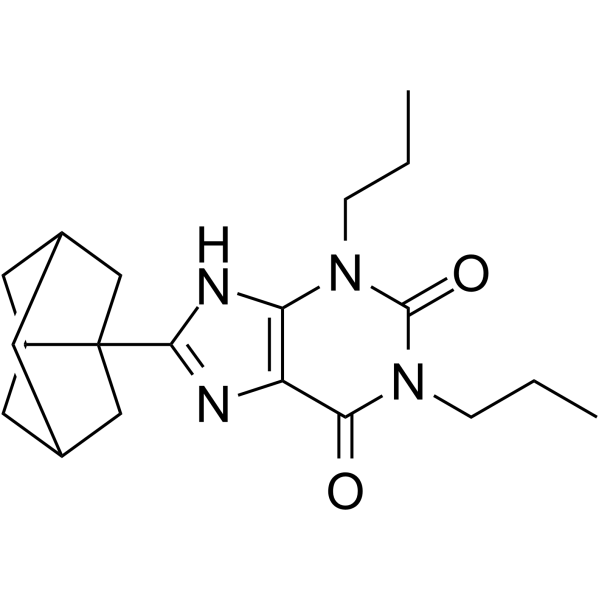
Rolofylline (KW-3902) is a potent, selective adenosine A1 receptor antagonist that is under development for the treatment of patients with acute congestive heart failure and renal impairment. Rolofylline is metabolized primarily to the pharmacologically active M1-trans and M1-cis metabolites by cytochrome P450 (CYP450). Rolofylline is alleviating the presynaptic dysfunction and restores neuronal activity as well as dendritic spine levels in vitro, is an interesting candidate to combat the hypometabolism and neuronal dysfunction associated with Tau-induced neurodegenerative diseases.
Nos produits utilisent uniquement pour la recherche. Nous ne vendons pas aux patients.
- Pureté : 99.68%
- CAS No.: 136199-02-5
- Formule: C20H28N4O2
- Masse moléculaire:356.46
-
Stockage:Powder -20°C, 3 years ; In solvent -80°C, 6 months , -20°C, 1 month

To place orders, for customer services and technical support, please contact: MedChemExpress USA
Tel: 609-228-6898 E-mail: [email protected] [email protected]


-
 Activité biologique
-
Chemical Information
-
Solvant et solubilité
- Protocole
- Pureté et documentation
- Références
-
 Help & FAQs


-
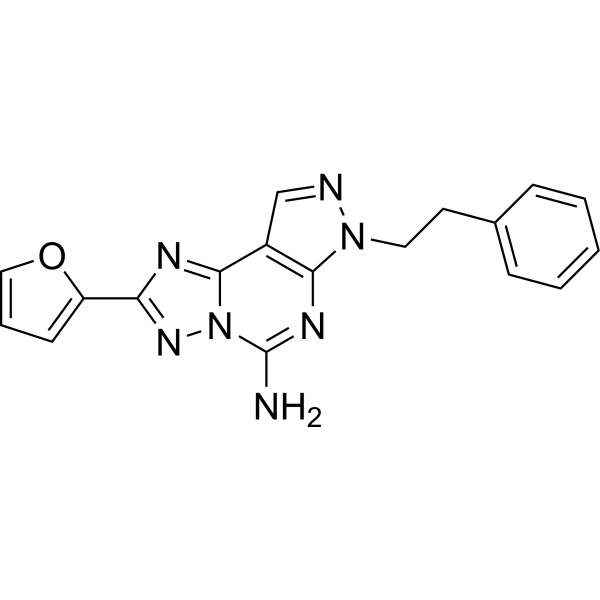
HY-19533
SCH 58261A2A Receptor Antagonist -
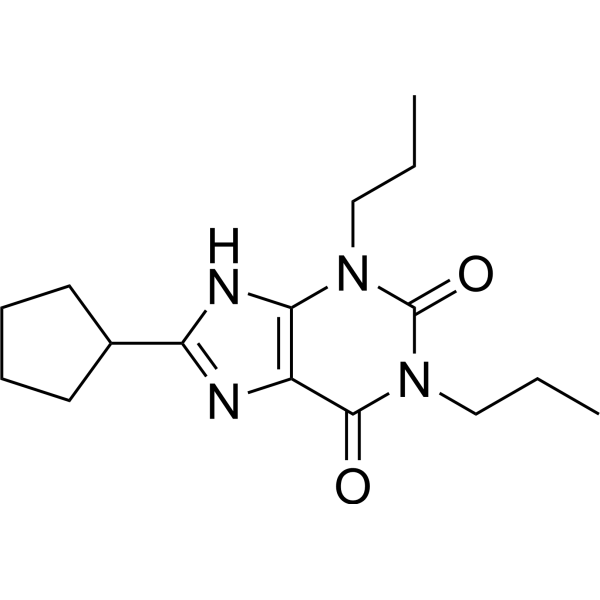
HY-100937
DPCPXA1 Receptor Antagonist -
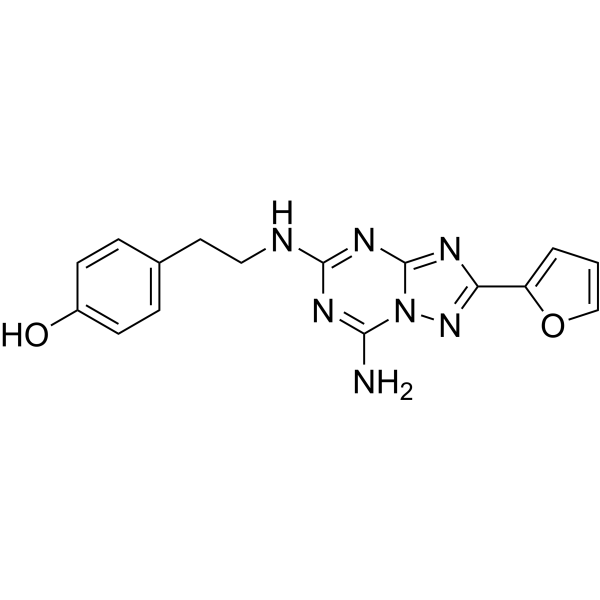
HY-19532
ZM241385A2A Receptor Antagonist -
HY-103173
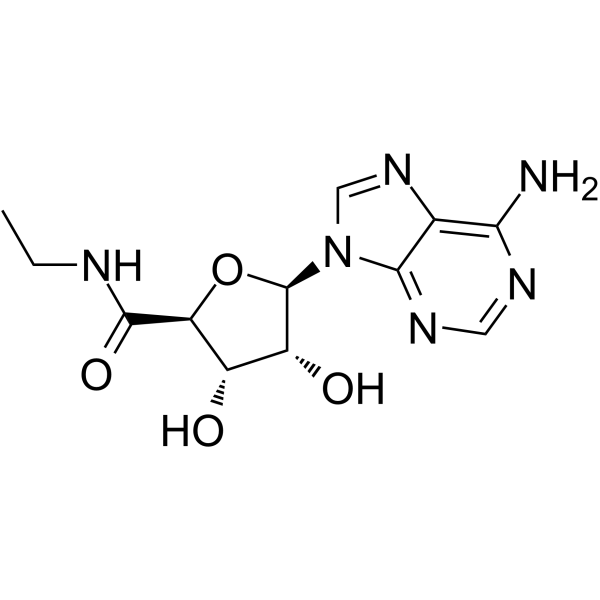
5'-N-EthylcarboxamidoadenosineAdenosine Receptor Agonist -
HY-103181
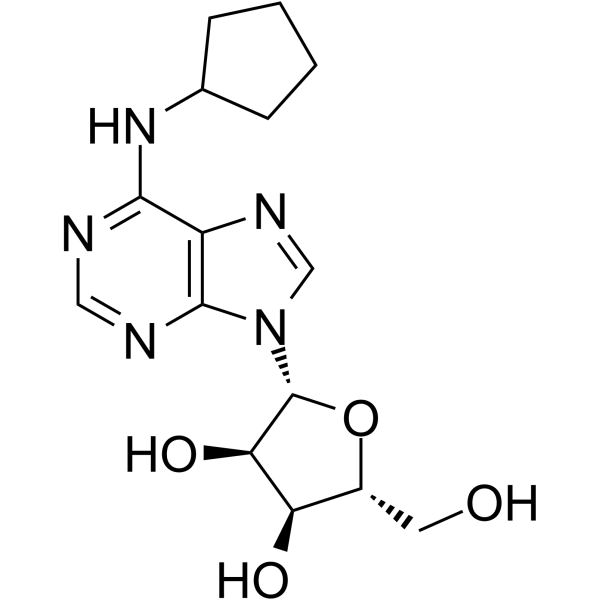
N6-CyclopentyladenosineAdenosine A1 Receptor Agonist -
HY-10888
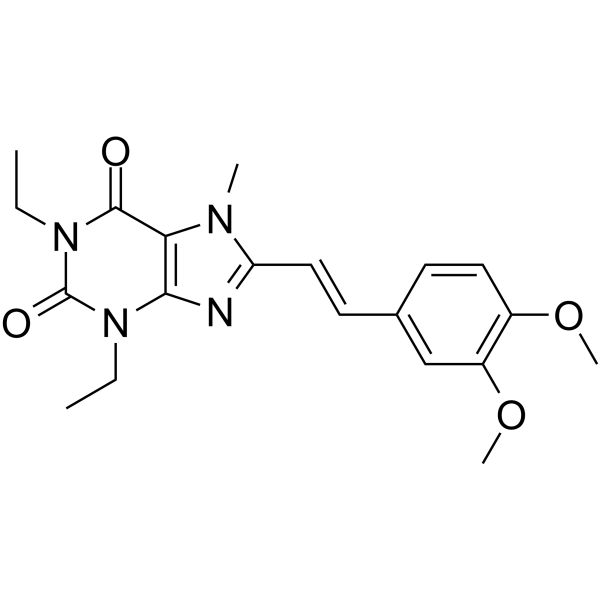
IstradefyllineAdenosine A2A Receptor Antagonist -
HY-A0168
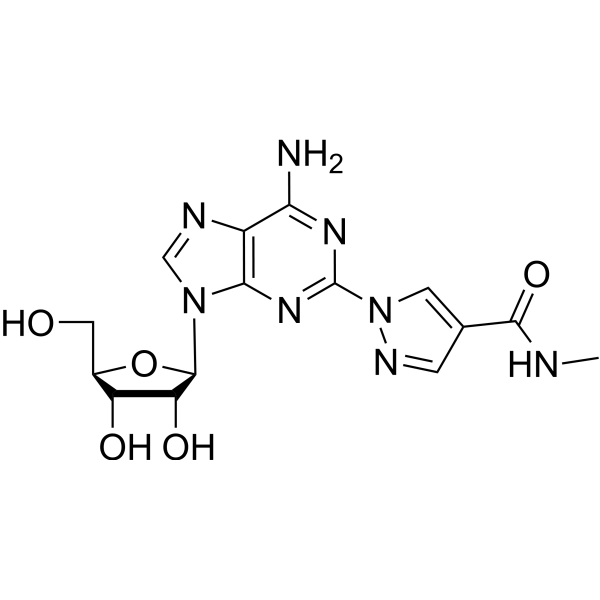
RegadenosonVasodilator/A2A Adenosine Receptor Agonist -
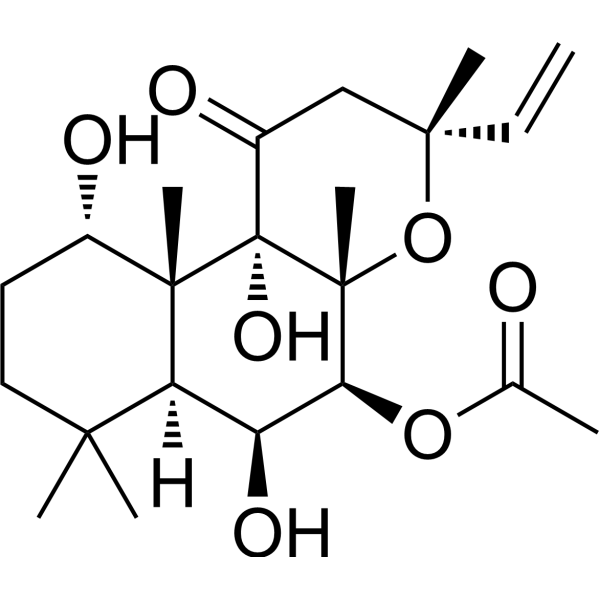
HY-15371
ForskolinAdenylate Cyclase Activator -
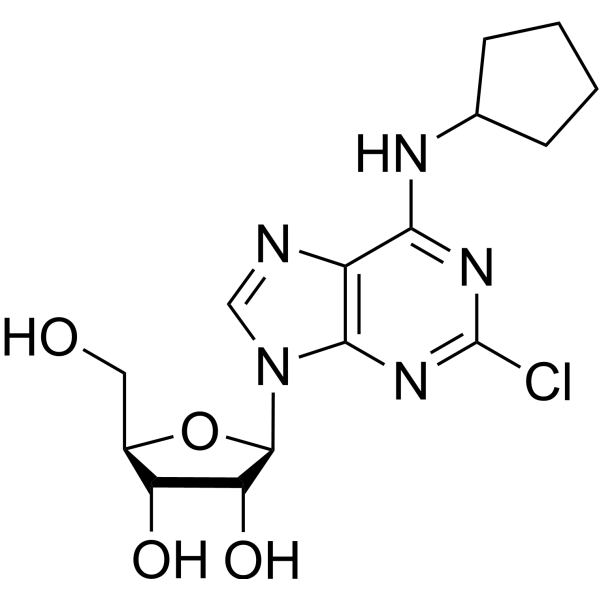
HY-103185
CCPAA1 Adenosine Receptor Agonist -
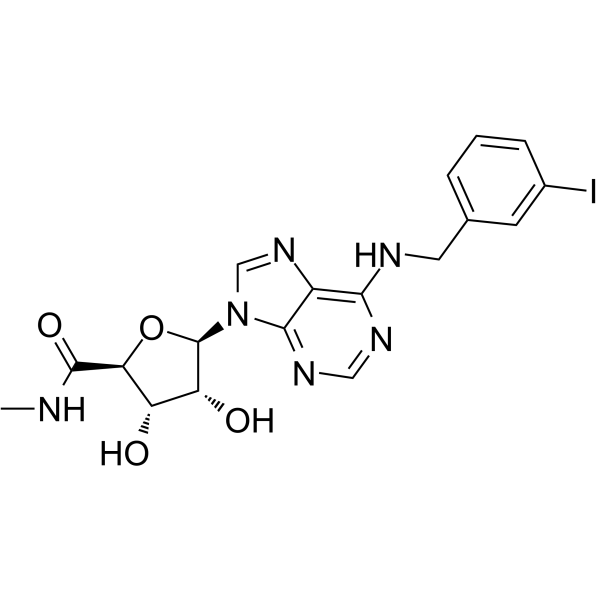
HY-13591
PiclidenosonA3AR Agonist -
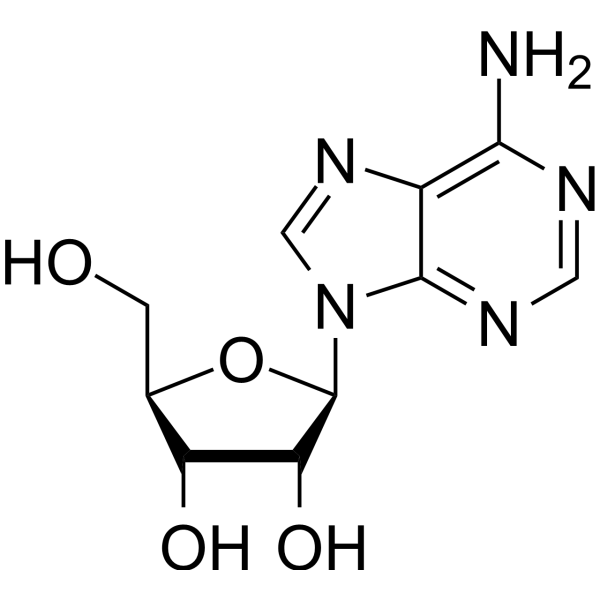
HY-B0228
AdenosineEndogenous Autacoid -
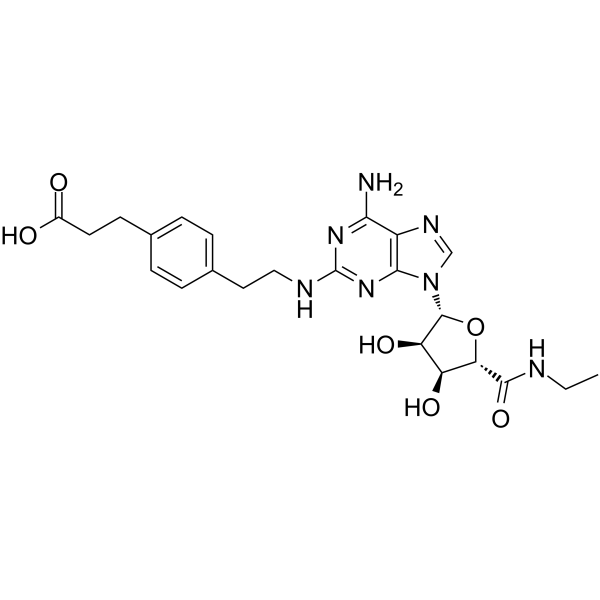
HY-13201
CGS 21680
Voir tous les produits spécifiques à Isoform Adenosine Receptor
More

Activité biologique
Description
Essai clinique
| NCT Number | Sponsor | Condition | Start Date |
Phase

|
|---|---|---|---|---|
| NCT01329991 | Plexxikon| | 2011-05 | PHASE1 |


Chemical Information
-
CAS No. 136199-02-5
-
Appearance Solid
-
Masse moléculaire 356.46
-
Formule C20H28N4O2
-
Color White to off-white
-
SMILES
O=C(N1CCC)N(CCC)C2=C(N=C(C34CC(C5)CC3CC5C4)N2)C1=O
-
Synonyms
KW-3902
-
Livraison
Room temperature in continental US; may vary elsewhere.
-
Stockage
Powder -20°C 3 years In solvent -80°C 6 months -20°C 1 month


Solvant et solubilité
In Vitro:
DMSO : 20 mg/mL (56.11 mM; Need ultrasonic; Hygroscopic DMSO has a significant impact on the solubility of product, please use newly opened DMSO)
Please refer to the solubility information to select the appropriate solvent. Once prepared, please aliquot and store the solution to prevent product inactivation from repeated freeze-thaw cycles.
Storage method and period of stock solution: -80°C, 6 months; -20°C, 1 month. When stored at -80°C, please use it within 6 months. When stored at -20°C, please use it within 1 month.
Please refer to the solubility information to select the appropriate solvent. Once prepared, please aliquot and store the solution to prevent product inactivation from repeated freeze-thaw cycles.
Storage method and period of stock solution: -80°C, 6 months; -20°C, 1 month. When stored at -80°C, please use it within 6 months. When stored at -20°C, please use it within 1 month.
Concentration (start) × Volume (start) = Concentration (final) × Volume (final)


Pureté et documentation
-
Fiche technique (274 KB)
-
SDS (393 KB)
- English - EN (393 KB)
- Français - FR (393 KB)
- Deutsch - DE (393 KB)
- Norwegian - NO (393 KB)
- Español - ES (393 KB)
- Swedish - SV (393 KB)
- Italian - IT (393 KB)
- Korean - KR (393 KB)
- Portuguese - PT (393 KB)
-
Instruction de manipulation (2659 KB)
Références
[1]. Stroh M, et al. Simultaneous pharmacokinetic model for rolofylline and both M1-trans and M1-cis metabolites. AAPS J. 2013 Apr;15(2):498-504. [Content Brief]
[2]. Dennissen FJ, et al. Adenosine A1 receptor antagonist rolofylline alleviates axonopathy caused by human Tau ΔK280. Proc Natl Acad Sci U S A. 2016 Oct 11;113(41):11597-11602. Epub 2016 Sep 26. [Content Brief]


Complete Stock Solution Preparation Table
Please refer to the solubility information to select the appropriate solvent. Once prepared, please aliquot and store the solution to prevent product inactivation from repeated freeze-thaw cycles.
Storage method and period of stock solution: -80°C, 6 months; -20°C, 1 month. When stored at -80°C, please use it within 6 months. When stored at -20°C, please use it within 1 month.
| Optional Solvent | Concentration Solvent Mass | 1 mg | 5 mg | 10 mg | 25 mg |
|---|---|---|---|---|---|
| DMSO | 1 mM | 2.8054 mL | 14.0268 mL | 28.0536 mL | 70.1341 mL |
| 5 mM | 0.5611 mL | 2.8054 mL | 5.6107 mL | 14.0268 mL | |
| 10 mM | 0.2805 mL | 1.4027 mL | 2.8054 mL | 7.0134 mL | |
| 15 mM | 0.1870 mL | 0.9351 mL | 1.8702 mL | 4.6756 mL | |
| 20 mM | 0.1403 mL | 0.7013 mL | 1.4027 mL | 3.5067 mL | |
| 25 mM | 0.1122 mL | 0.5611 mL | 1.1221 mL | 2.8054 mL | |
| 30 mM | 0.0935 mL | 0.4676 mL | 0.9351 mL | 2.3378 mL | |
| 40 mM | 0.0701 mL | 0.3507 mL | 0.7013 mL | 1.7534 mL | |
| 50 mM | 0.0561 mL | 0.2805 mL | 0.5611 mL | 1.4027 mL |


Rolofylline Related Classifications
HY-10965 Related Classifications
 Powered by Bioz