



RSVA405 (Standard)
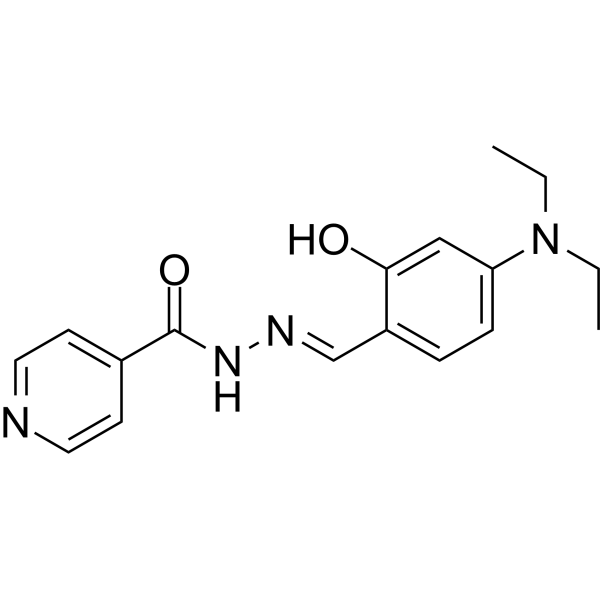
RSVA405 (Standard) is the analytical standard of RSVA405 (HY-103238). This product is intended for research and analytical applications. RSVA405 is a potent, orally active activator of AMPK, with an EC50 of 1 μM. RSVA405 facilitates CaMKKβ-dependent activation of AMPK, inhibits mTOR, and promotes autophagy to increase Aβ degradation. RSVA405 has anti-inflammatory effects through the inhibition of STAT3 function. RSVA405 can also be used for the research of obesity.
Nos produits utilisent uniquement pour la recherche. Nous ne vendons pas aux patients.
- CAS No.: 140405-36-3
- Formule: C17H20N4O2
- Masse moléculaire:312.37
-
Stockage:
Please store the product under the recommended conditions in the Certificate of Analysis.


To place orders, for customer services and technical support, please contact: MedChemExpress USA
Tel: 609-228-6898 E-mail: [email protected] [email protected]


-
 Product Information
-
Chemical Information
- Pureté et documentation
-
 Help & FAQs


-
HY-103238
RSVA405AMPK Activator -
HY-13417
AICARAMPK Activator -
HY-100548
GSK621AMPK Activator -
HY-13418A
DorsomorphinAMPK Inhibitor -
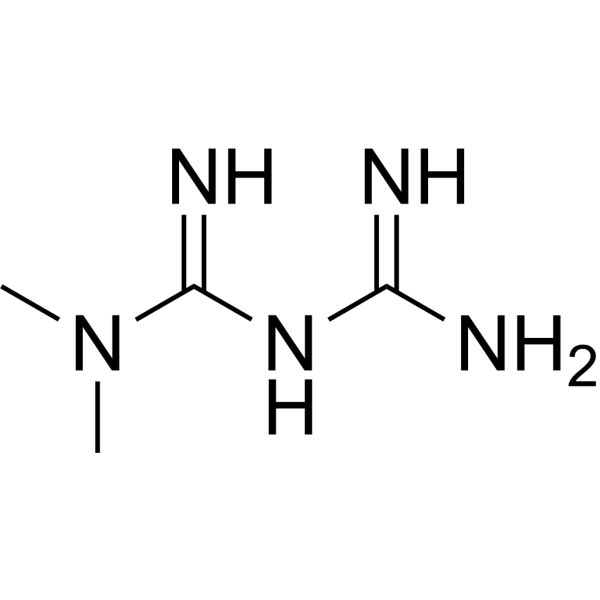
HY-B0627
MetforminAntihyperglycemic Agent -
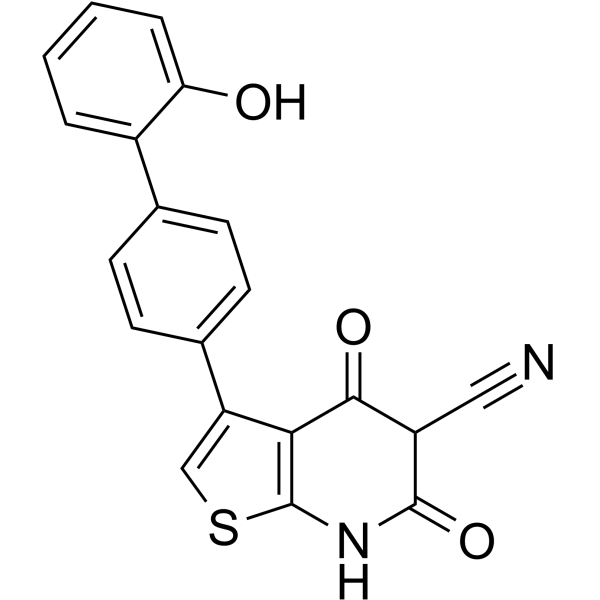
HY-50662
A-769662AMPK Activator -
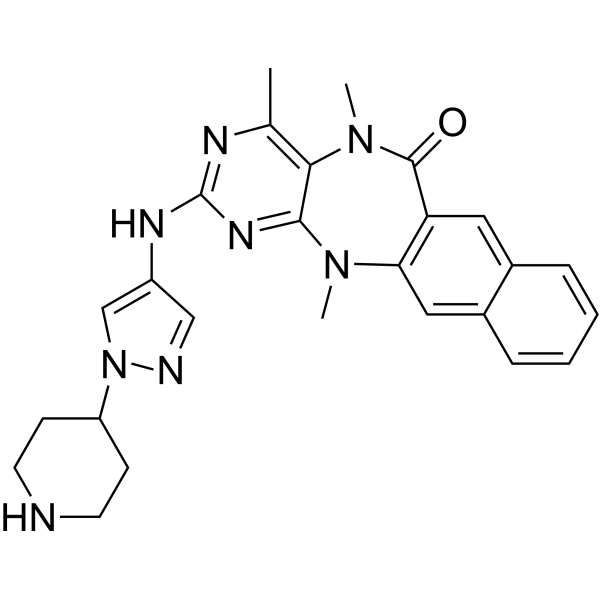
HY-12334
HTH-01-015NUAK1/ARK5 Inhibitor -
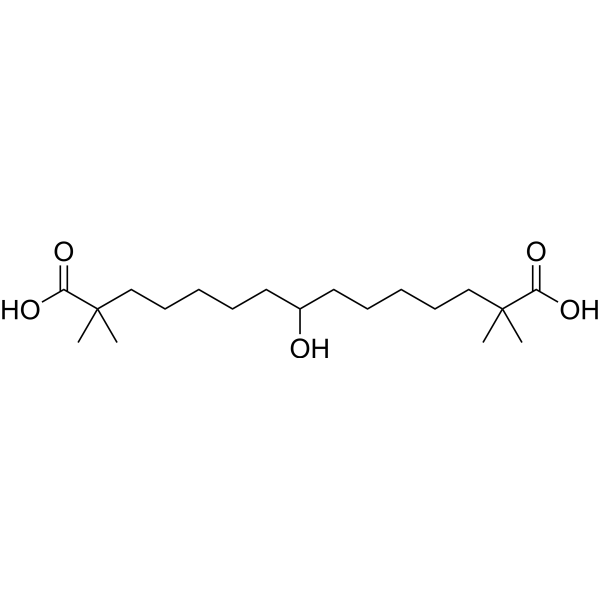
HY-12357
Bempedoic acidACL Inhibitor/AMPK Activator -
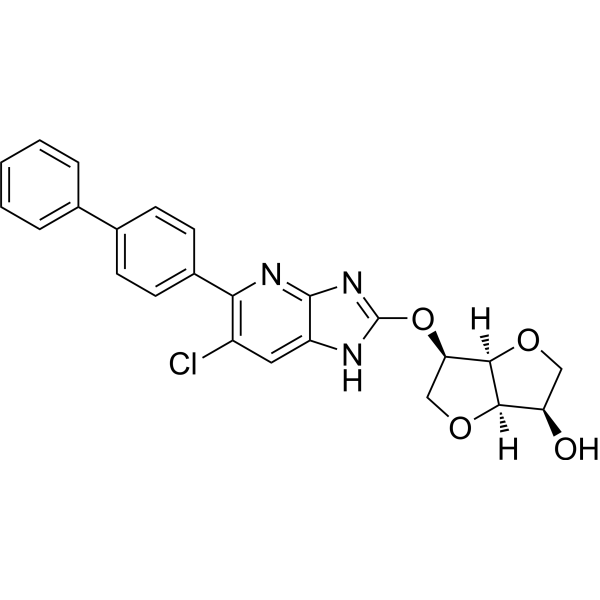
HY-111363
MK8722AMPK Activator -
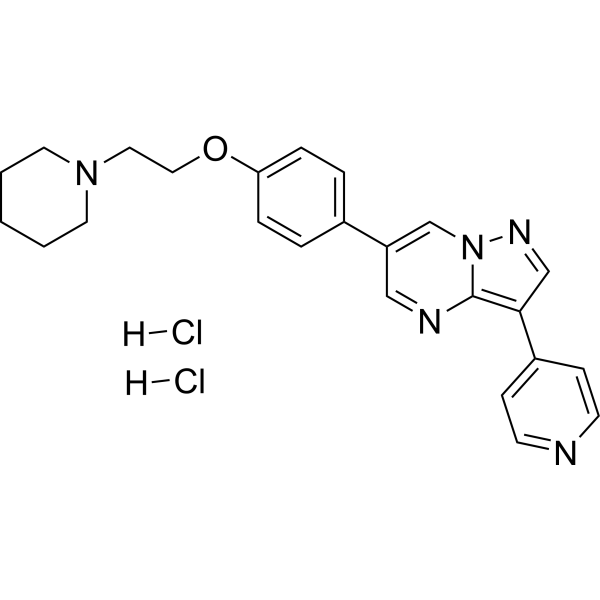
HY-13418
Dorsomorphin dihydrochlorideAMPK Inhibitor -
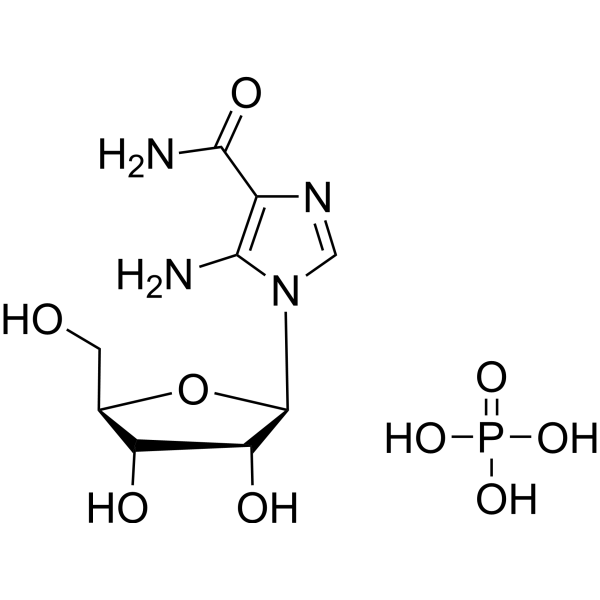
HY-13417A
AICAR phosphateEndogenous Metabolite -
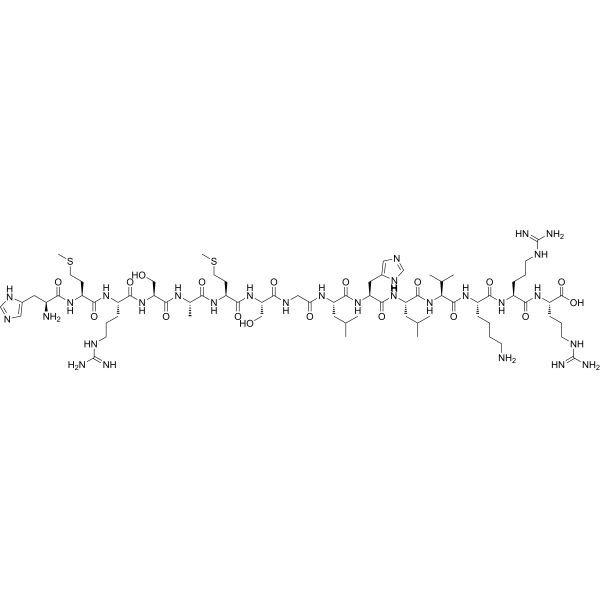
HY-P0136
SAMSAMPK Substrate


Product Information
Information
Application
The compound is the grade of analytical standard, which is the reference standard supplied assay. It is commonly used in qualitative, quantitative and methodological research experiments in HPLC, GC and MS.


Chemical Information
-
CAS No. 140405-36-3
-
Masse moléculaire 312.37
-
Formule C17H20N4O2
-
SMILES
O=C(C1=CC=NC=C1)N/N=C/C2=CC=C(N(CC)CC)C=C2O
-
Livraison
Room temperature in continental US; may vary elsewhere.
-
Stockage
Please store the product under the recommended conditions in the Certificate of Analysis.


Pureté et documentation
Références
[1]. Khader A, et, al. Novel resveratrol analogues attenuate renal ischemic injury in rats. J Surg Res. 2015 Feb;193(2):807-15. [Content Brief]
[2]. Vingtdeux V, et, al. Small-molecule activators of AMP-activated protein kinase (AMPK), RSVA314 and RSVA405, inhibit adipogenesis. Mol Med. Sep-Oct 2011;17(9-10):1022-30. [Content Brief]
[3]. Capiralla H, et, al. Identification of potent small-molecule inhibitors of STAT3 with anti-inflammatory properties in RAW 264.7 macrophages. FEBS J. 2012 Oct;279(20):3791-9. [Content Brief]
[4]. Vingtdeux V, et, al. Novel synthetic small-molecule activators of AMPK as enhancers of autophagy and amyloid-β peptide degradation. FASEB J. 2011 Jan;25(1):219-31. [Content Brief]

Calculators
Concentration (start) × Volume (start) = Concentration (final) × Volume (final)


RSVA405 (Standard) Related Classifications
HY-103238R Related Classifications
 Powered by Bioz