



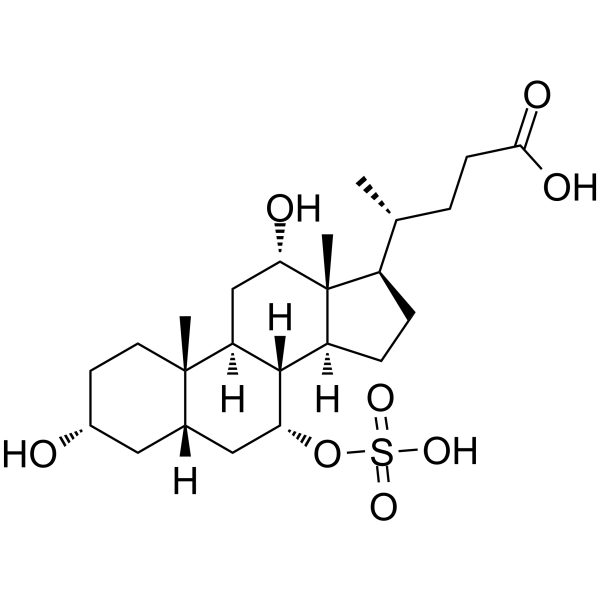
Cholic acid 7-sulfate
Based on 1 publication(s) in Google Scholar
Cholic acid 7-sulfate (7-Sulfocholic acid) is a selective agonist targeting TGR5 (EC50=0.17 μM) and a ligand for MHC class I-related protein (MR1). As a gut-restricted TGR5 agonist, cholic acid 7-sulfate binds to TGR5 on enteroendocrine L cells, induces GLP-1 secretion, and improves glucose tolerance in a TGR5-dependent manner. Cholic acid 7-sulfate also acts as an endogenous ligand for MR1, promoting the survival of mucosal-associated invariant T cells MAIT and the expression of homeostatic gene signatures, affecting MAIT cell development and function. Cholic acid 7-sulfate is mainly used in the research of diabetes and MAIT cell-related immune regulation.
For research use only. We do not sell to patients.
- Purity : 99.92%
- CAS No.: 60320-05-0
- Formula: C24H40O8S
- Molecular Weight:488.63
-
Storage:Powder -20°C, 3 years ; In solvent -80°C, 6 months , -20°C, 1 month

To place orders, for customer services and technical support, please contact: MedChemExpress USA
Tel: 609-228-6898 E-mail: [email protected] [email protected]


-
 Biological Activity
-
Chemical Information
-
Solvent & Solubility
- Protocols
- Purity & Documentation
- References
-
 Help & FAQs


-
HY-N0324
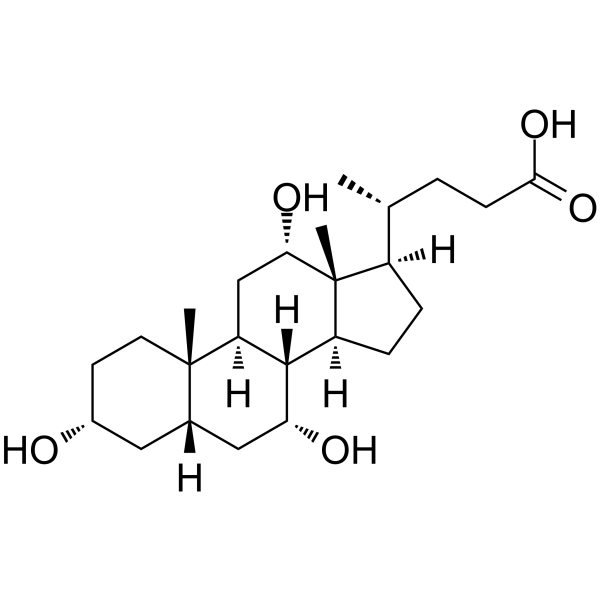
Cholic acidEndogenous Metabolite -
HY-113478
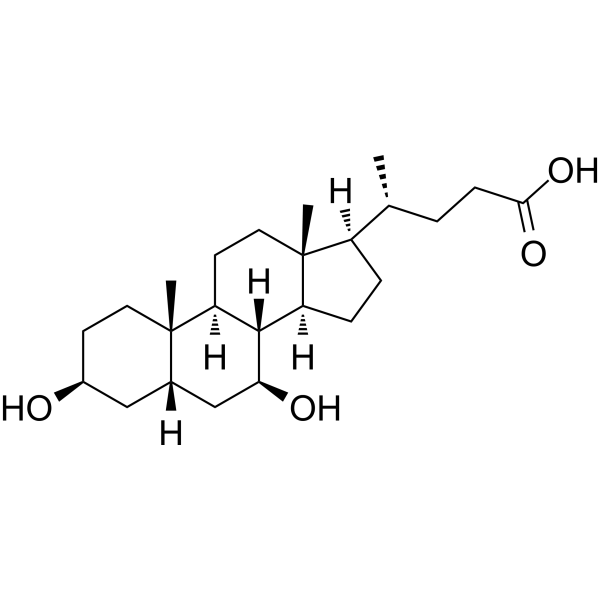
3β-Ursodeoxycholic acidBile Acid -
HY-133707
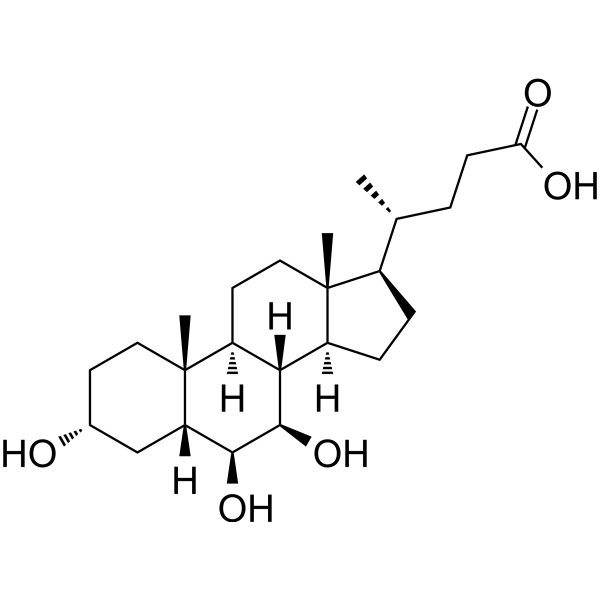
β-Muricholic acidBiliary Cholesterol-Desaturating Agent -
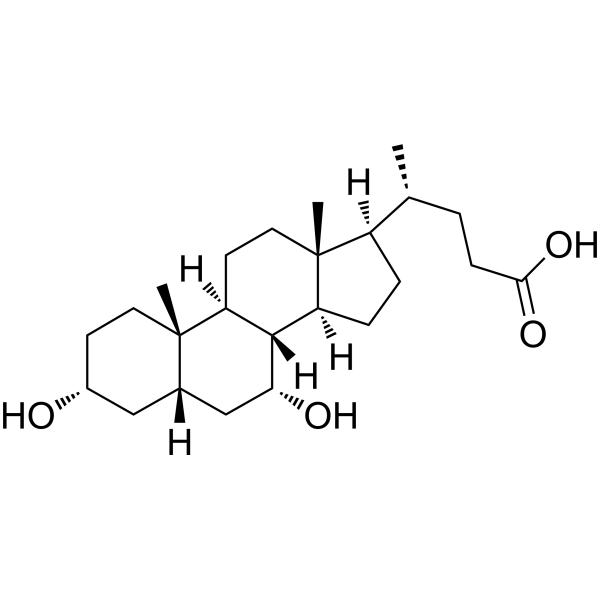
HY-76847
Chenodeoxycholic AcidEndogenous Metabolite -
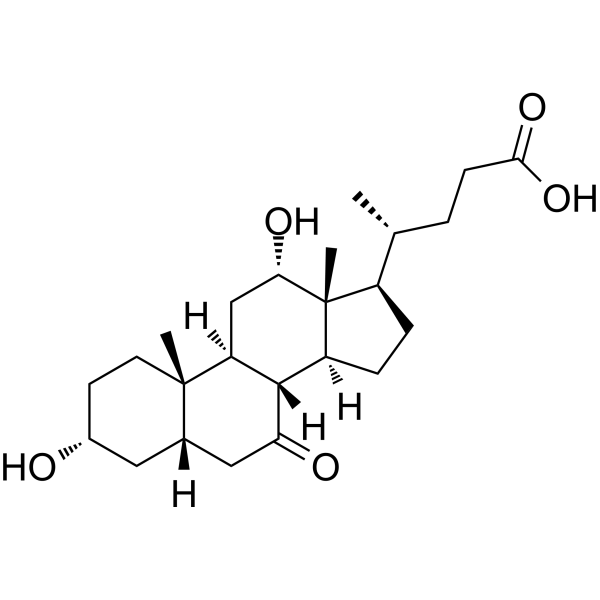
HY-41324
7-keto-Deoxycholic acidBile Acid -
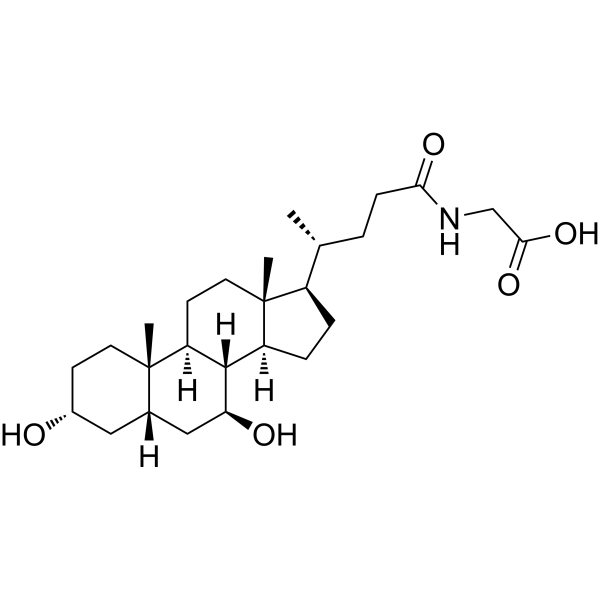
HY-N1424
Glycoursodeoxycholic acidEndogenous Metabolite -
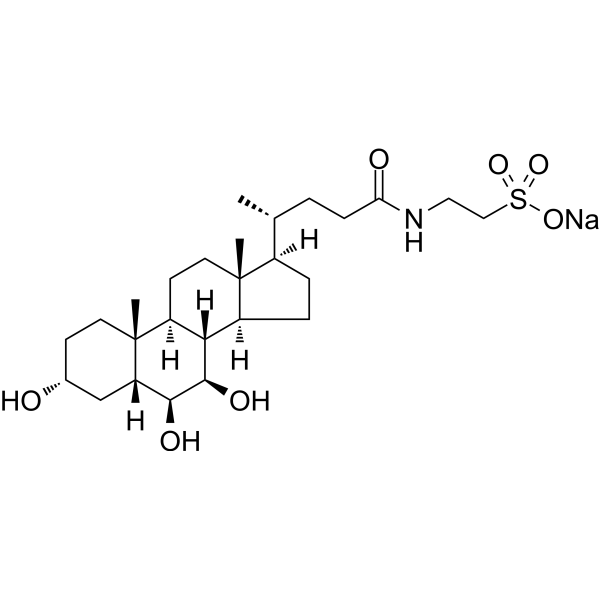
HY-135103
Tauro-β-muricholic acid sodiumFXR Antagonist -
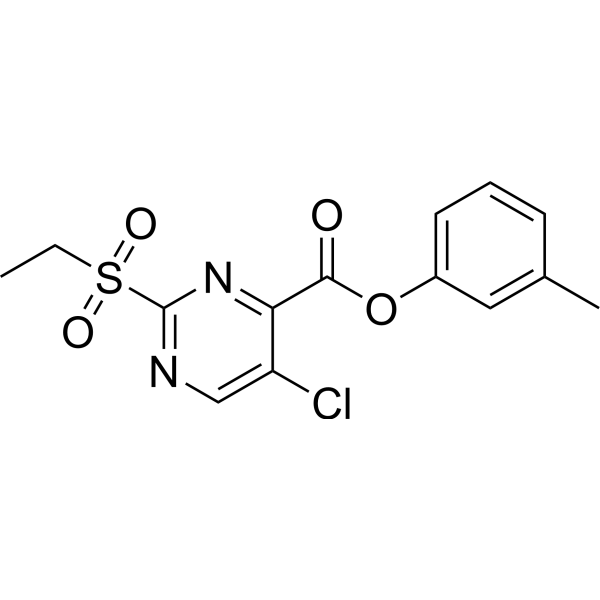
HY-111534
SBI-115TGR5 (GPCR19) Antagonist -

HY-41324R
7-keto-Deoxycholic acid (Standard)Bile Acid -

HY-W747072
3-Sulfo-taurocholic Acid Disodium SaltMetabolite -
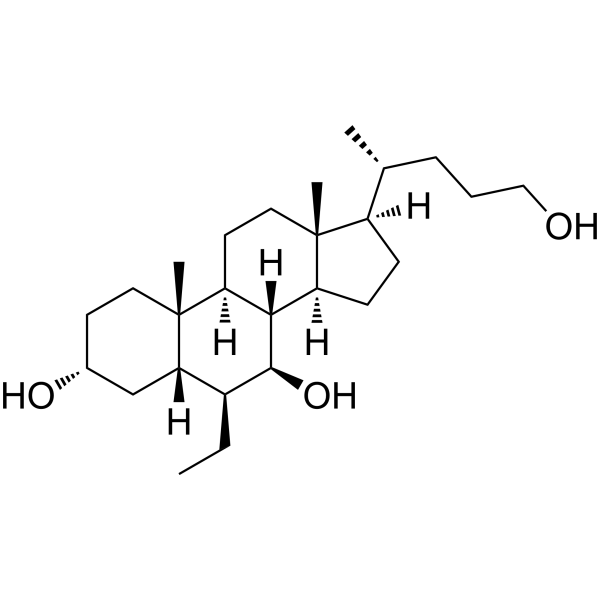
HY-101274
BAR501GPBAR1 Agonist -
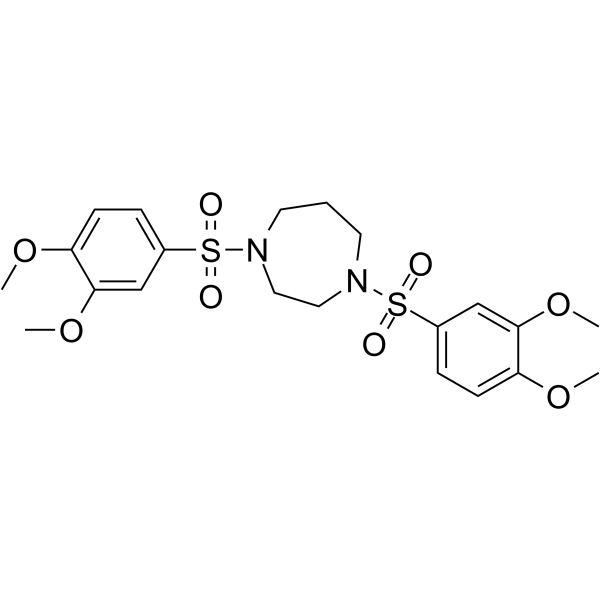
HY-102016
SB756050TGR5 Agonist
Publications Citing Use of MedChemExpress (MCE) Cholic acid 7-sulfate
More

Biological Activity
Description
IC50 & Target
TGR[1]
In Vitro
Cholic acid 7-sulfate activates human TGR5 in a dose-dependent manner and induces GLP-1 secretion from NCI-H716 cells (EC50=0.17 μM), and this effect can be inhibited by TGR5 siRNA knockdown[1].
Cholic acid 7-sulfate (1 mM; 6 d) promotes MAIT cell survival and induces CXCR4 and IL7R expression when stimulated with human PBMCs, without causing cell proliferation or CD69 upregulation[2].
MedChemExpress (MCE) has not independently confirmed the accuracy of these methods. They are for reference only. Further protocols information, click here.
-
Cell Line:PBMCs
-
Concentration:1 mM
-
Incubation Time:6 days
-
Result:Promotes MAIT cell survival.
In Vivo
MedChemExpress (MCE) has not independently confirmed the accuracy of these methods. They are for reference only.


Chemical Information
-
CAS No. 60320-05-0
-
Appearance Solid
-
Molecular Weight 488.63
-
Formula C24H40O8S
-
Color White to off-white
-
SMILES
C[C@H](CCC(O)=O)[C@H]1CC[C@@]2([H])[C@]3([H])[C@H](OS(=O)(O)=O)C[C@]4([H])C[C@H](O)CC[C@]4(C)[C@@]3([H])C[C@H](O)[C@]12C
-
Synonyms
7-Sulfocholic acid
-
Shipping
Room temperature in continental US; may vary elsewhere.
-
Storage
Powder -20°C 3 years In solvent -80°C 6 months -20°C 1 month


Publications (1)
-
Journal Impact Factor
-
Most Recent


Solvent & Solubility
In Vitro:
H2O : ≥ 100 mg/mL (204.65 mM)
DMF : 1 mg/mL (2.05 mM; Need ultrasonic and warming)
* "≥" means soluble, but saturation unknown.
Please refer to the solubility information to select the appropriate solvent. Once prepared, please aliquot and store the solution to prevent product inactivation from repeated freeze-thaw cycles.
Storage method and period of stock solution: -80°C, 6 months; -20°C, 1 month. When stored at -80°C, please use it within 6 months. When stored at -20°C, please use it within 1 month.
* Note: If you choose water as the stock solution, please dilute it to the working solution, then filter and sterilize it with a 0.22 μm filter before use.
Please refer to the solubility information to select the appropriate solvent. Once prepared, please aliquot and store the solution to prevent product inactivation from repeated freeze-thaw cycles.
Storage method and period of stock solution: -80°C, 6 months; -20°C, 1 month. When stored at -80°C, please use it within 6 months. When stored at -20°C, please use it within 1 month.
* Note: If you choose water as the stock solution, please dilute it to the working solution, then filter and sterilize it with a 0.22 μm filter before use.
Concentration (start) × Volume (start) = Concentration (final) × Volume (final)

Protocols
-
RNA extraction experimental
By lysing cells, releasing RNA, and removing impurities such as proteins and DNA, high-purity RNA products are finally obtained. The commonly used traditional method is the guanidine isothiocyanate/phenol/chloroform method (Trizol), which is suitable for a variety of animal materials including animal tissues, microorganisms, cultured cells, etc., and most plant materials.
-
Research Protocol for Metabolic Diseases
AMP-activated protein kinase, AMPK, is a conserved cellular energy sensor that responds to reduced cellular energy status and coordinates metabolism by increasing ATP-generating catabolic pathways while suppressing ATP-consuming anabolic processes. In metabolic disease research, the AMPK pathway is experimentally relevant because it regulates hepatic lipid synthesis, fatty acid oxidation, glucose production, skeletal-muscle glucose disposal, mTORC1-linked biosynthesis, autophagy, mitochondrial homeostasis, and whole-body energy balance. The central pathway logic is that energy stress, metformin, exercise-like stimulation, or direct AMPK activators increase AMPKα Thr172 phosphorylation and downstream substrate phosphorylation, including ACC and RAPTOR. Phosphorylation of ACC suppresses lipogenesis and supports fatty acid oxidation, whereas phosphorylation of RAPTOR suppresses mTORC1 signaling and links cellular energy status to growth and protein synthesis control. The pathway is linked


Purity & Documentation
-
Data Sheet (278 KB)
-
SDS (251 KB)
- English - EN (251 KB)
- Français - FR (251 KB)
- Deutsch - DE (251 KB)
- Norwegian - NO (251 KB)
- Español - ES (251 KB)
- Swedish - SV (251 KB)
- Italian - IT (251 KB)
- Korean - KR (251 KB)
- Portuguese - PT (251 KB)
-
Handling Instructions (2659 KB)
References


Complete Stock Solution Preparation Table
Please refer to the solubility information to select the appropriate solvent. Once prepared, please aliquot and store the solution to prevent product inactivation from repeated freeze-thaw cycles.
Storage method and period of stock solution: -80°C, 6 months; -20°C, 1 month. When stored at -80°C, please use it within 6 months. When stored at -20°C, please use it within 1 month.
| Optional Solvent | Concentration Solvent Mass | 1 mg | 5 mg | 10 mg | 25 mg |
|---|---|---|---|---|---|
| DMF / H2O | 1 mM | 2.0465 mL | 10.2327 mL | 20.4654 mL | 51.1635 mL |
| H2O | 5 mM | 0.4093 mL | 2.0465 mL | 4.0931 mL | 10.2327 mL |
| 10 mM | 0.2047 mL | 1.0233 mL | 2.0465 mL | 5.1163 mL | |
| 15 mM | 0.1364 mL | 0.6822 mL | 1.3644 mL | 3.4109 mL | |
| 20 mM | 0.1023 mL | 0.5116 mL | 1.0233 mL | 2.5582 mL | |
| 25 mM | 0.0819 mL | 0.4093 mL | 0.8186 mL | 2.0465 mL | |
| 30 mM | 0.0682 mL | 0.3411 mL | 0.6822 mL | 1.7054 mL | |
| 40 mM | 0.0512 mL | 0.2558 mL | 0.5116 mL | 1.2791 mL | |
| 50 mM | 0.0409 mL | 0.2047 mL | 0.4093 mL | 1.0233 mL | |
| 60 mM | 0.0341 mL | 0.1705 mL | 0.3411 mL | 0.8527 mL | |
| 80 mM | 0.0256 mL | 0.1279 mL | 0.2558 mL | 0.6395 mL | |
| 100 mM | 0.0205 mL | 0.1023 mL | 0.2047 mL | 0.5116 mL |
* Note: If you choose water as the stock solution, please dilute it to the working solution, then filter and sterilize it with a 0.22 μm filter before use.


Cholic acid 7-sulfate Related Classifications
HY-126855 Related Classifications
 Powered by Bioz