



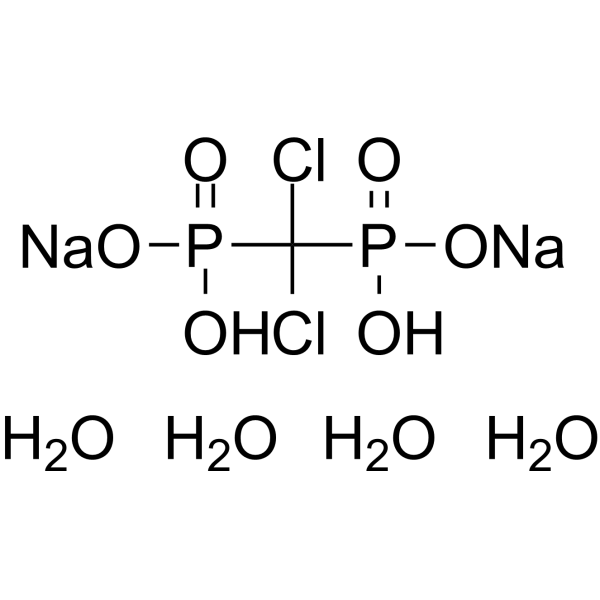
Clodronate disodium tetrahydrate
Based on 5 publication(s) in Google Scholar
Clodronate disodium tetrahydrate (Disodium clodronate tetrahydrate) is first-generation bisphosphonate, with anti-osteoporotic, anti-inflammatory and analgesic effects. Clodronate disodium tetrahydrate is a selective, potent, reversible and Cl- competitive vesicular nucleotide transporter (VNUT) inhibitor, with an IC50 of 15.6 nM. Clodronate disodium tetrahydrate inhibits vesicular ATP release from neurons and reduces chronic neuropathic and inflammatory pain.
For research use only. We do not sell to patients.
- Purity : 99.86%
- CAS No.: 88416-50-6
- Formula: CH10Cl2Na2O10P2
- Molecular Weight:360.92
-
Storage:
4°C, sealed storage, away from moisture
* In solvent : -80°C, 6 months; -20°C, 1 month (sealed storage, away from moisture)

To place orders, for customer services and technical support, please contact: MedChemExpress USA
Tel: 609-228-6898 E-mail: [email protected] [email protected]


-
 Biological Activity
-
Chemical Information
-
Solvent & Solubility
- Protocols
- Purity & Documentation
- References
-
 Help & FAQs


-

HY-107794R
Clodronate disodium tetrahydrate (Standard)Antiresorptive -
HY-11101
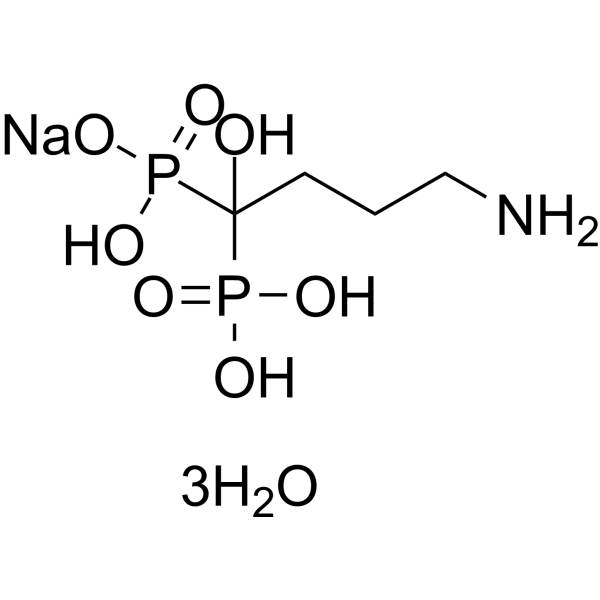
Alendronate sodium hydrateNitrogen-Containing Bisphosphonate -

HY-W008951
Ethylenediaminetetra(methylenephosphonic acid)Bone-targeting Ligand -
HY-A0003
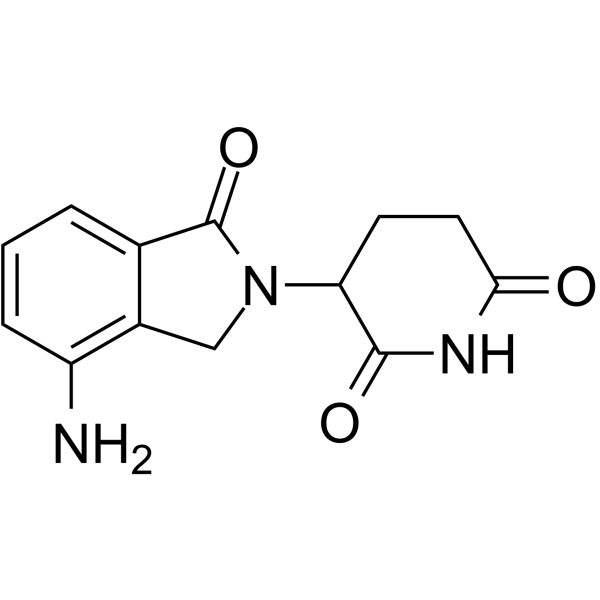
LenalidomideImmunomodulator -

HY-Y0006
XPhosBiochemical Reagent -
HY-W011500
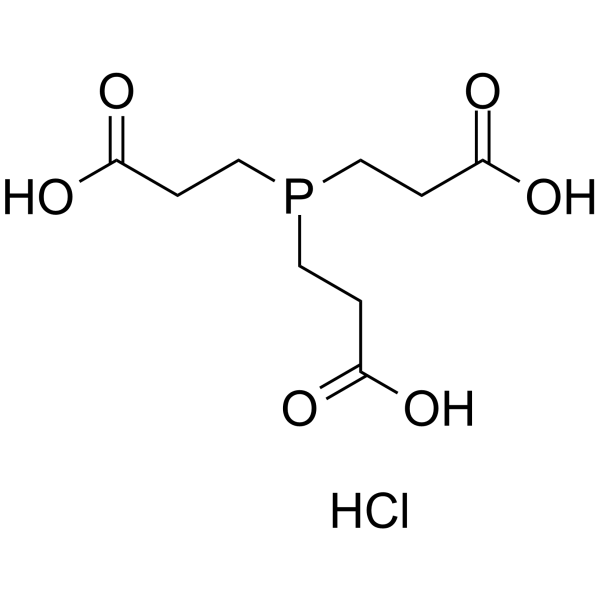
TCEP hydrochlorideNon-Thiol Reducing Agent -
HY-Y0003
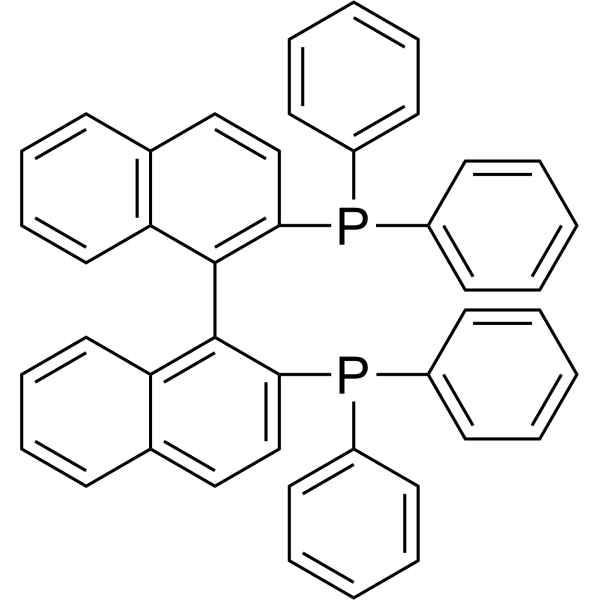
(Rac)-BINAPIsomer -
HY-B0302A
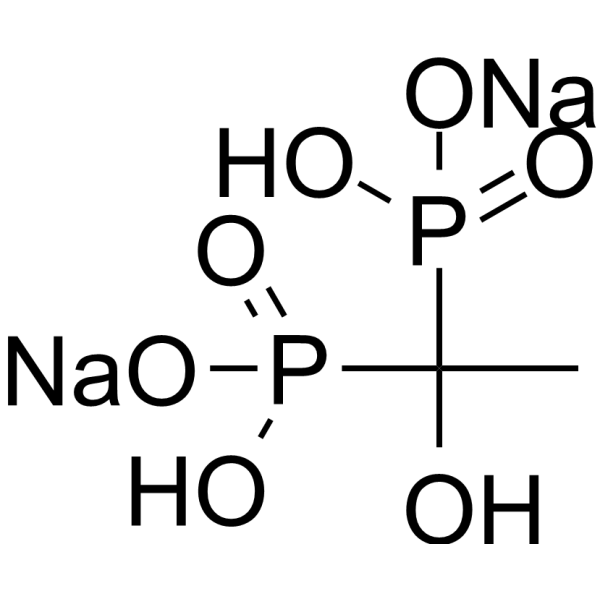
Etidronic acid disodiumApoptosis Inducer -

HY-W008548
Di(adamantan-1-yl)phosphine -
HY-B0302
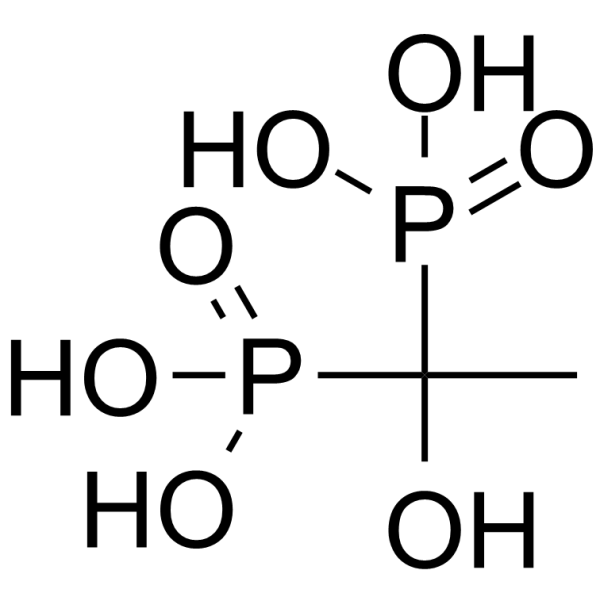
Etidronic acid -
HY-W002849
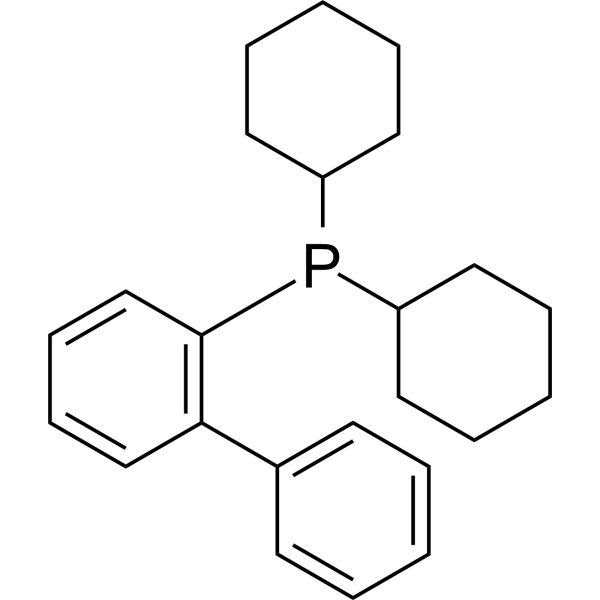
CyjohnphosOrganophosphine Ligand -
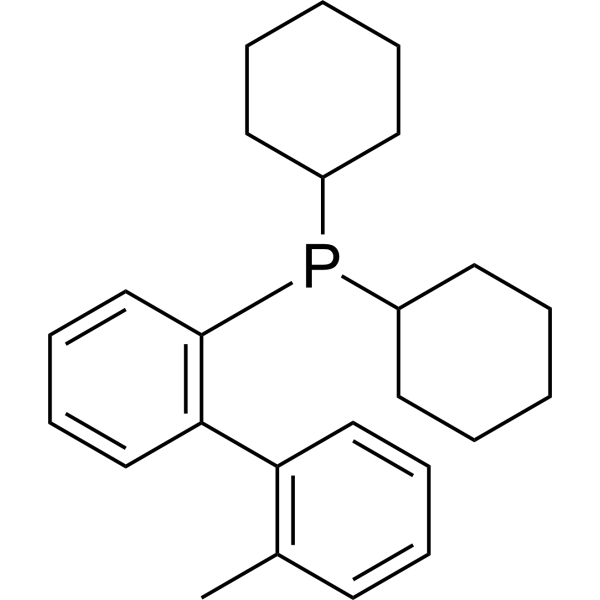
HY-W009062
MePhoso-BPP Ligand
Publications Citing Use of MedChemExpress (MCE) Clodronate disodium tetrahydrate
More

Biological Activity
Description
IC50 & Target
vesicular ATP release[1]
In Vitro
Clodronate disodium tetrahydrate, a first-generation bisphosphonate, significantly attenuates neuropathic and inflammatory pain unrelated to bone abnormalities via inhibition of VNUT, a key molecule for the initiation of purinergic chemical transmission [1].
Clodronate disodium tetrahydrate is an allosteric modulator of VNUT Cl- dependence [1].
Clodronate disodium tetrahydrate acts as antiresorptive in osteoporosis[2].
MedChemExpress (MCE) has not independently confirmed the accuracy of these methods. They are for reference only. Further protocols information, click here.
In Vivo
Clodronate disodium tetrahydrate attenuates inflammation via VNUT inhibition [1].
MedChemExpress (MCE) has not independently confirmed the accuracy of these methods. They are for reference only.
-
Animal Model:C57BL/6 mice (22-30 g)[1]
-
Dosage:10 mg/kg
-
Administration:Intravenous injection
-
Result:Attenuated carrageenan- or complete Freund’s adjuvant (CFA)-evoked inflammatory pain.


Chemical Information
-
CAS No. 88416-50-6
-
Appearance Solid
-
Molecular Weight 360.92
-
Formula CH10Cl2Na2O10P2
-
Color White to off-white
-
SMILES
O=P(C(Cl)(Cl)P(O)(O[Na])=O)(O)O[Na].O.O.O.O
-
Synonyms
Disodium clodronate tetrahydrate
-
Shipping
Room temperature in continental US; may vary elsewhere.
-
Storage
4°C, sealed storage, away from moisture
* In solvent : -80°C, 6 months; -20°C, 1 month (sealed storage, away from moisture)


Publications (5)
-
Journal Impact Factor
-
Most Recent
-
Nat Neurosci
Spatiotemporally selective astrocytic ATP dynamics encode injury information sensed by microglia following brain injury in mice. [Abstract]2024 Aug;27(8):1522-1533. PMID: 38862791 -
ACS Nano
Localized Depletion of Macrophages by Abdominal Cavity Retention Nanoparticles as a Potential Therapy for Peritoneal Metastasis. [Abstract]2026 Jun 16;20(23):16987-17000. PMID: 42225301 -
J Adv Res
Dual regulation of phaseol on osteoclast formation and osteoblast differentiation by targeting TAK1 kinase for osteoporosis treatment. [Abstract]2024 Dec 9:S2090-1232(24)00565-4. PMID: 39662728 -
Phytomedicine
Glycyrol alleviates osteoporosis through dual modulation on osteoclastogenesis and osteogenesis by targeting Syk signaling pathway. [Abstract]2025 Mar:138:156429. PMID: 39939034 -
Cell Rep Methods
RECOVER identifies synergistic drug combinations in vitro through sequential model optimization. [Abstract]2023 Oct 23;3(10):100599. PMID: 37797618


Solvent & Solubility
In Vitro:
H2O : 116.67 mg/mL (323.26 mM; Need ultrasonic)
Please refer to the solubility information to select the appropriate solvent. Once prepared, please aliquot and store the solution to prevent product inactivation from repeated freeze-thaw cycles.
Storage method and period of stock solution: -80°C, 6 months; -20°C, 1 month (sealed storage, away from moisture). When stored at -80°C, please use it within 6 months. When stored at -20°C, please use it within 1 month.
* Note: If you choose water as the stock solution, please dilute it to the working solution, then filter and sterilize it with a 0.22 μm filter before use.
Please refer to the solubility information to select the appropriate solvent. Once prepared, please aliquot and store the solution to prevent product inactivation from repeated freeze-thaw cycles.
Storage method and period of stock solution: -80°C, 6 months; -20°C, 1 month (sealed storage, away from moisture). When stored at -80°C, please use it within 6 months. When stored at -20°C, please use it within 1 month.
* Note: If you choose water as the stock solution, please dilute it to the working solution, then filter and sterilize it with a 0.22 μm filter before use.
Concentration (start) × Volume (start) = Concentration (final) × Volume (final)
In Vivo:
For the following dissolution methods, please prepare the working solution directly:
It is recommended to prepare fresh solutions and use them promptly within a short period of time.
The percentages shown for the solvents indicate their volumetric ratio in the final prepared solution. If precipitation or phase separation occurs during preparation, heat and/or sonication can be used to aid dissolution.
Add each solvent one by one: PBS
Solubility: 25 mg/mL (69.27 mM); Clear solution; Need ultrasonic and warming

Protocols
-
Cell Cytotoxicity Assay
Cytotoxicity assays are usually based on the assessment of cell membrane damage, which can also be indirectly detected by measuring cell viability. Detection methods include MTT assay, CKK-8 assay, LDH assay and ATP assay, etc.
-
Formalin-Induced Paw Inflammation/Nociceptive Inflammation
The formalin-induced paw inflammation/nociceptive test is a chemical persistent pain model in rodents in which subcutaneous injection of formalin into the hind paw produces spontaneous nocifensive behaviors such as flinching and licking. The response is classically biphasic, consisting of an early acute phase (Phase I) reflecting direct activation of peripheral nociceptors (particularly C-fiber afferents), followed by a later prolonged phase (Phase II) associated with central sensitization in the spinal dorsal horn driven by sustained afferent input and inflammatory signaling. This model is widely used to evaluate analgesic and anti-inflammatory interventions because it captures both peripheral nociception and central sensitization processes within a single assay system.
-
Research Protocol for Inflammation-related Diseases
The NLRP3 inflammasome is a cytosolic innate immune signaling platform that integrates priming signals and danger-signal activation to promote caspase-1 activation, maturation of IL-1β and IL-18, and gasdermin D-mediated pyroptotic cell death. The core experimental logic is to determine whether inflammatory disease phenotypes are driven by increased NLRP3 expression, ASC-containing inflammasome assembly, caspase-1 cleavage, GSDMD cleavage, and extracellular release of IL-1β/IL-18 rather than by nonspecific cell injury alone. The pathway is strongly linked to inflammation-related disease phenotypes because monosodium urate crystals activate NALP3/NLRP3 inflammasome signaling in gout-like crystal inflammation, cholesterol crystals activate NLRP3 inflammasomes in atherogenesis models, and DSS-induced intestinal inflammation has been reported to involve NLRP3 inflammasome activity. However, experimental colitis studies also show context-dependent protective effects of NLRP3 inflammasome co


Purity & Documentation
-
Data Sheet (279 KB)
-
SDS (701 KB)
- English - EN (701 KB)
- Français - FR (701 KB)
- Deutsch - DE (701 KB)
- Norwegian - NO (701 KB)
- Español - ES (701 KB)
- Swedish - SV (701 KB)
- Italian - IT (701 KB)
- Korean - KR (701 KB)
- Portuguese - PT (701 KB)
-
Handling Instructions (2659 KB)
References
[1]. Kato Y, et al. Identification of a vesicular ATP release inhibitor for the treatment of neuropathic and inflammatory pain. Proc Natl Acad Sci U S A. 2017 Aug 1;114(31):E6297-E6305. [Content Brief]
[2]. Moriyama Y, et al. Clodronate: A Vesicular ATP Release Blocker. Trends Pharmacol Sci. 2018 Jan;39(1):13-23. [Content Brief]


Complete Stock Solution Preparation Table
Please refer to the solubility information to select the appropriate solvent. Once prepared, please aliquot and store the solution to prevent product inactivation from repeated freeze-thaw cycles.
Storage method and period of stock solution: -80°C, 6 months; -20°C, 1 month (sealed storage, away from moisture). When stored at -80°C, please use it within 6 months. When stored at -20°C, please use it within 1 month.
| Optional Solvent | Concentration Solvent Mass | 1 mg | 5 mg | 10 mg | 25 mg |
|---|---|---|---|---|---|
| H2O | 1 mM | 2.7707 mL | 13.8535 mL | 27.7070 mL | 69.2674 mL |
| 5 mM | 0.5541 mL | 2.7707 mL | 5.5414 mL | 13.8535 mL | |
| 10 mM | 0.2771 mL | 1.3853 mL | 2.7707 mL | 6.9267 mL | |
| 15 mM | 0.1847 mL | 0.9236 mL | 1.8471 mL | 4.6178 mL | |
| 20 mM | 0.1385 mL | 0.6927 mL | 1.3853 mL | 3.4634 mL | |
| 25 mM | 0.1108 mL | 0.5541 mL | 1.1083 mL | 2.7707 mL | |
| 30 mM | 0.0924 mL | 0.4618 mL | 0.9236 mL | 2.3089 mL | |
| 40 mM | 0.0693 mL | 0.3463 mL | 0.6927 mL | 1.7317 mL | |
| 50 mM | 0.0554 mL | 0.2771 mL | 0.5541 mL | 1.3853 mL | |
| 60 mM | 0.0462 mL | 0.2309 mL | 0.4618 mL | 1.1545 mL | |
| 80 mM | 0.0346 mL | 0.1732 mL | 0.3463 mL | 0.8658 mL | |
| 100 mM | 0.0277 mL | 0.1385 mL | 0.2771 mL | 0.6927 mL |
* Note: If you choose water as the stock solution, please dilute it to the working solution, then filter and sterilize it with a 0.22 μm filter before use.


Clodronate disodium tetrahydrate Related Classifications
HY-107794 Related Classifications
 Powered by Bioz