



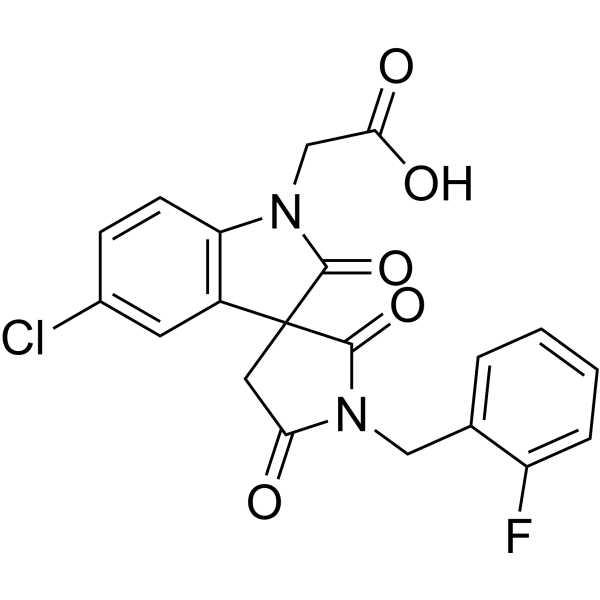
CRTh2 antagonist 4
CRTh2 antagonist 4 (compound 58) is an inhibitor (IC50: 212 nM) of TH2 lymphocyte (CRTH2 or DP2) receptor with high binding affinity (Ki= 37 nM). CRTh2 antagonist 4 can be used in the study of severe allergic diseases.
For research use only. We do not sell to patients.
- CAS No.: 916046-55-4
- Formula: C20H14ClFN2O5
- Molecular Weight:416.79
-
Storage:
Please store the product under the recommended conditions in the Certificate of Analysis.

To place orders, for customer services and technical support, please contact: MedChemExpress USA
Tel: 609-228-6898 E-mail: [email protected] [email protected]


-
 Biological Activity
-
Chemical Information
- Protocols
- Purity & Documentation
- References
-
 Help & FAQs


-
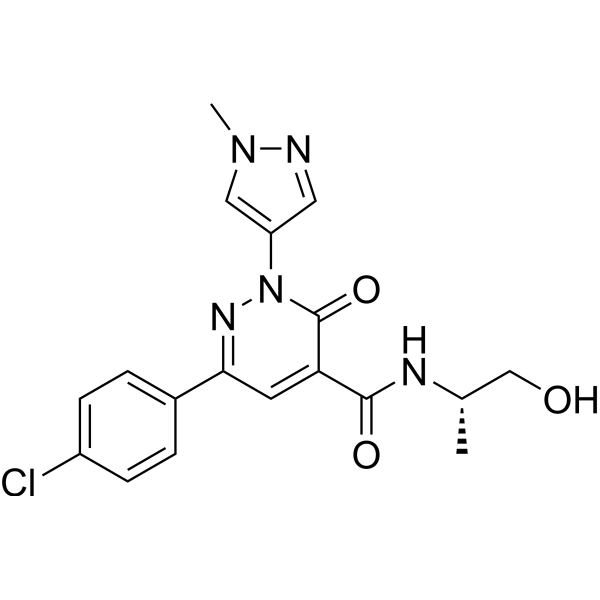
HY-135829
BAY 2416964AHR Antagonist -
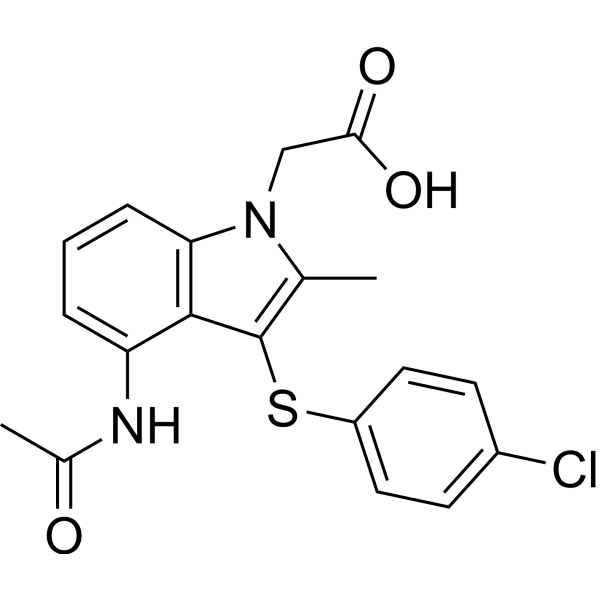
HY-15950
AZD1981GPR44 Antagonist -
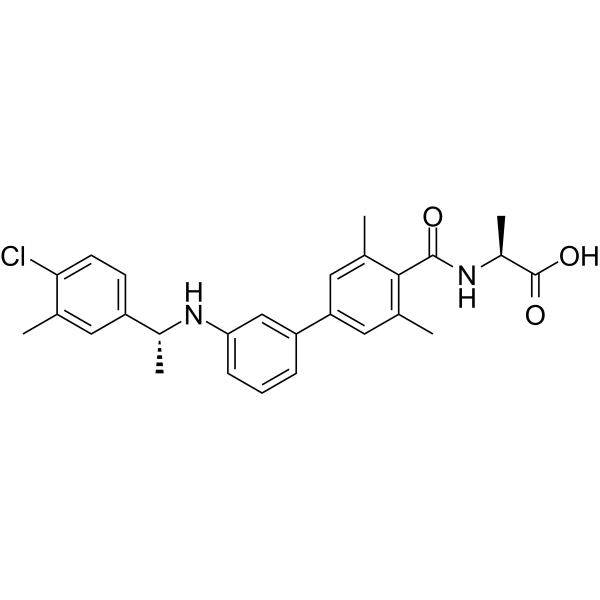
HY-18166
NIBR0213S1P1 Antagonist -
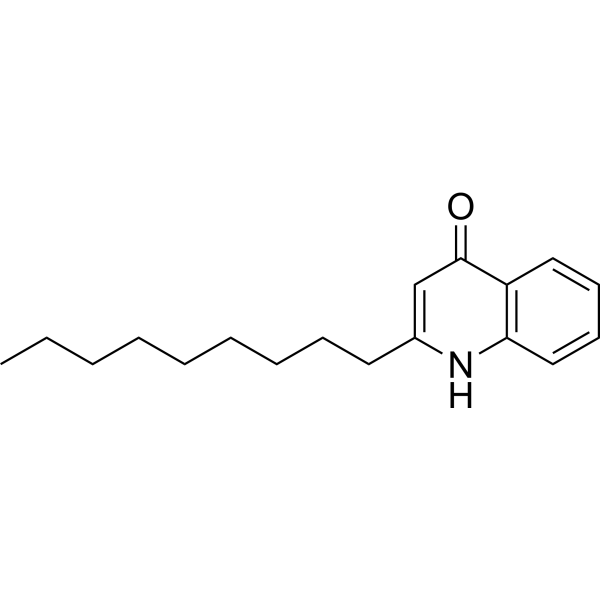
HY-W555382
Pseudane IXHCV Inhibitor -

HY-104069
S1P1 agonist 1 -

HY-15950R
AZD1981 (Standard)GPR44 Antagonist -
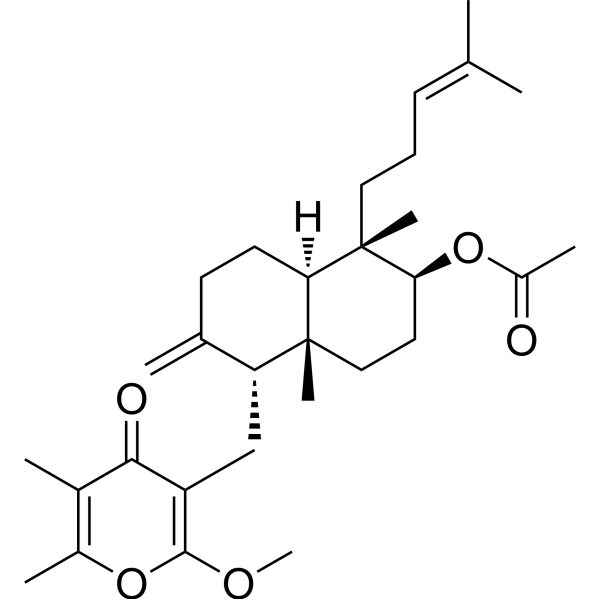
HY-N8372
NalanthalideKv1.3 Blocker -

HY-104069R
S1P1 agonist 1 (Standard)Reference Standard


Biological Activity
Description
Cellular Effect
|
Cell Line

|
Type | Value | Description | References |
|---|---|---|---|---|
| CHO | IC50 |
212 nM
Compound: 58
|
Antagonist activity at human CRTH2 receptor expressed in CHO cell membrane by [35S]GTP-gamma-S binding assay
Antagonist activity at human CRTH2 receptor expressed in CHO cell membrane by [35S]GTP-gamma-S binding assay
|
[PMID: 18318469] |


Chemical Information
-
CAS No. 916046-55-4
-
Molecular Weight 416.79
-
Formula C20H14ClFN2O5
-
SMILES
O=C(O)CN1C(C2(C(N(CC3=CC=CC=C3F)C(C2)=O)=O)C4=C1C=CC(Cl)=C4)=O
-
Shipping
Room temperature in continental US; may vary elsewhere.
-
Storage
Please store the product under the recommended conditions in the Certificate of Analysis.

Protocols
-
Cell Cytotoxicity Assay
Cytotoxicity assays are usually based on the assessment of cell membrane damage, which can also be indirectly detected by measuring cell viability. Detection methods include MTT assay, CKK-8 assay, LDH assay and ATP assay, etc.
-
Naïve CD4+ T-cell subset differentiation/polarization
Naïve CD4+ T-cell subset differentiation/polarization is an in vitro assay in which purified naïve CD4+ T cells are activated through TCR and CD28 costimulation and cultured with defined cytokines and neutralizing antibodies to generate Th0, Th1, Th2, Th17, or induced Treg-like populations. Differentiation is detected by subset-associated cytokines and transcription factors: IFN-γ/T-bet for Th1, IL-4/GATA3 for Th2, IL-17A/RORγt for Th17, and Foxp3 for induced Treg cells. The assay readout is usually generated by intracellular cytokine staining after restimulation, transcription-factor staining by flow cytometry, ELISA of secreted cytokines, or gene-expression analysis. The result reflects cytokine-directed lineage commitment or polarization rather than antigen-specific immune protection by itself.


Purity & Documentation
References

Calculators
Concentration (start) × Volume (start) = Concentration (final) × Volume (final)


CRTh2 antagonist 4 Related Classifications
HY-116890 Related Classifications
 Powered by Bioz