



RANTES/CCL5 Protein, Human
Based on 7 publication(s) in Google Scholar
RANTES/CCL5 Protein is a secreted protein located outside the cell membrane and is a key pro-inflammatory chemokine and immune regulatory molecule in the CC chemokine family. RANTES/CCL5 Protein sends signals through its specific G protein-coupled receptors (GPCR) CCR1, CCR3, and CCR5, mediating inflammatory immune responses, viral infections, and tumor development. RANTES/CCL5 Protein can promote endothelial cell migration, proliferation, and angiogenesis in rats. RANTES/CCL5 Protein is useful for research into tumors, autoimmune diseases, and atherosclerosis. RANTES/CCL5 Protein, Human is a recombinant human CCL5 (S24-S91) protein expressed by E. coli.
- Species: Human
- Source: E. coli
-
Almacenamiento:Stored at -20°C for 2 years from date of receipt. After reconstitution, it is stable at 4°C for 1 week or -20°C for longer (with carrier protein). It is recommended to freeze aliquots at -20°C or -80°C for extended storage.


To place orders, for customer services and technical support, please contact: MedChemExpress USA
Tel: 609-228-6898 E-mail: [email protected] [email protected]


-
 Actividad biológica
-
Technical Parameters
-
Product Properties
- Documentación
- Referencias
- Help & FAQs


-

HY-P70469
SDF-1 alpha/CXCL12 Protein, Human -
HY-13004
Maraviroc -
HY-P700861
RANTES/CCL5 Protein, Human (Biotinylated, His-Avi) -
HY-P7237
MCP-1/CCL2 Protein, Human -
HY-P7226
IP-10/CXCL10 Protein, Human -
HY-P7282
RANTES/CCL5 Protein, Human (HEK293) -
HY-P7028
IL-1 beta Protein, Human -
HY-P7044
IL-6 Protein, Human -
HY-P7058
TNF-alpha/TNFSF2 Protein, Human -
HY-P7036
IL-17A Protein, Human -
HY-P7224
IL-8/CXCL8 Protein, Human -
HY-P71890
RANTES/CCL5 Protein, Mouse


Actividad biológica
Descripciòn
RANTES/CCL5 Protein is a secreted protein located outside the cell membrane and is a key pro-inflammatory chemokine and immune regulatory molecule in the CC chemokine family. RANTES/CCL5 Protein sends signals through its specific G protein-coupled receptors (GPCR) CCR1, CCR3, and CCR5, mediating inflammatory immune responses, viral infections, and tumor development. RANTES/CCL5 Protein can promote endothelial cell migration, proliferation, and angiogenesis in rats. RANTES/CCL5 Protein is useful for research into tumors, autoimmune diseases, and atherosclerosis. RANTES/CCL5 Protein, Human is a recombinant human CCL5 (S24-S91) protein expressed by E. coli[1][2].
Background
CCL5, also known as RANTES (Regulated upon Activation, Normal T Cell Expressed and Secreted), is part of the CC subfamily of chemokines. The CCL5 gene is located in the q11.2-q12 region of human chromosome 17 and encodes a CCL5 protein with a molecular weight of 8 kDa[1]. RANTES/CCL5 Protein can be secreted by many cell types, such as platelets, endothelial cells, smooth muscle cells, macrophages, and activated T cells[1]. RANTES/CCL5 Protein can induce the expression of MMP-1 and MMP-13 in human rheumatoid arthritis synovial fibroblasts by utilizing heparan sulfate proteoglycans (HSPGs) and/or selectively activating PKCδ, JNK, and ERK proteins in the PKCδ-JNK/ERK pathway, ultimately leading to collagen degradation[3]. RANTES/CCL5 Protein promotes angiogenesis by binding to GPCR, CCR1, and CCR5, as well as to its proteoglycan receptors SDC-1, SDC-4, and CD-44, and it partially relies on VEGF secreted by endothelial cells[1]. RANTES/CCL5 Protein is induced by the relevant cytokine IL-13 in mice infected with RSV, leading to airway hyperreactivity (AHR) and worsening airway diseases[4]. RANTES/CCL5 Protein interacts with CCR5, increasing the phosphorylation of MEK and ERK in the MEK/ERK pathway, activating NF-κB, leading to the activation of αvβ3 integrin and promoting the migration of human osteosarcoma cells[5]. The oligomeric form of RANTES/CCL5 Protein is important for some of its functions. RANTES/CCL5 Protein can form larger aggregates in neutral pH environments, while it forms smaller aggregates when the pH is lowered[6]. RANTES/CCL5 Protein is associated with various pathological processes, including viral infections, atherosclerosis, inflammatory diseases, autoimmune diseases, and tumors[1].
In Vitro
RANTES/CCL5 Protein (1 or 10 nM, 25 days) induces angiogenesis in a rat intervertebral disc angiogenesis model[1]. RANTES/CCL5 Protein (100 ng/mL, 24 h) can activate the expression of MMP-1 and MMP-13 in human rheumatoid arthritis synovial fibroblasts, thereby inducing collagen degradation[3]. RANTES/CCL5 Protein (3 ng/mL, 24 h) can promote the expression of α v β 3 integrin and cell migration in human osteosarcoma cells[6]. Reduced mTOR activity in RANTES/CCL5 Protein expression-deficient Rantes KO stem/progenitor cells results in a younger haematopoietic stem cell phenotype[7].
In Vivo
RANTES/CCL5 Protein is induced to produce in primary respiratory syncytial virus infected mice, exacerbating airway diseases[4]. Lack of expression of RANTES/CCL5 Protein in Rantes gene knockout (KO) mice can lead to a decrease in myeloid biased HSCs and myeloid progenitor cells, as well as an increase in T cells and lymphoid biased HSCs[7].
Verified Bioactivity
1.Fully biologically active when compared to standard. The biological activity determined by a chemotaxis bioassay using human peripheral blood monocytes is in a concentration range of 1.0-10.0 ng/mL.
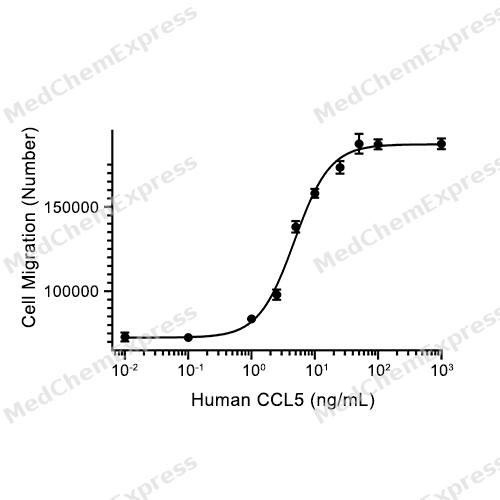
2.Measured by its ability to chemoattract THP-1 cells. The ED50 for this effect is 2.640-4.751 ng/mL.
3. Measured by its ability to chemoattract BaF3 mouse pro-B cells transfected with human CCR5. The ED50 for this effect is 1.0-10.0 ng/mL.
MCE Validation Data
-
Purity - SDS-PAGE
Purity - SDS-PAGE
-
Bioactivity - Cell-Based Assay
Bioactivity - Cell-Based Assay


Publications (7)
-
Journal Impact Factor
-
Most Recent
-
-
Adv Sci (Weinh)
The CXCL10-CXCR3 Axis Induces Tumor-Associated Neutrophils to Interfere with CTLs-Mediated Antitumor Activity in EBV-Associated Epithelial Cancers. [Abstract]2025 Jul 21:e00950. PMID: 40686457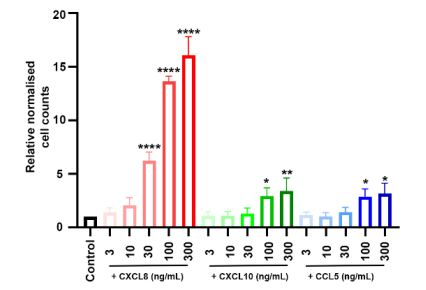
RANTES/CCL5 Protein, Human purchased from MedChemExpress. Usage Cited in: Adv Sci (Weinh). 2025 Jul 21:e00950. [Abstract]
RANTES/CCL5 Protein, Human (CCL5; 3,10, 30, 100, 300 ng/mL; 4 h) exhibited chemotactic effect on neutrophils when its concentration reached ng/mL. Freshly isolated neutrophils were suspended in serum-free medium and placed to the 3 µm upper chamber and the different medium were placed into the lower chamber. After 4 hours, the recruited neutrophils in lower chamber were collected and counted.
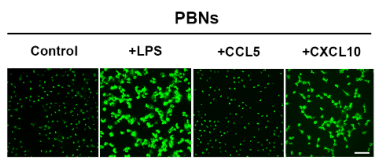
RANTES/CCL5 Protein, Human purchased from MedChemExpress. Usage Cited in: Adv Sci (Weinh). 2025 Jul 21:e00950. [Abstract]
Neutrophils freshly isolated from healthy donors were cultured in RPMI 1640 with or without LPS (5 µg/mL),RANTES/CCL5 Protein, Human (CCL5; 200 ng/mL) or CXCL10 (200 ng /mL) for 4 h, and stained with SYTOX Green (green) to evaluate Nets.
-
Cell Death Dis
Cancer associated fibroblast-derived CCL5 promotes hepatocellular carcinoma metastasis through activating HIF1α/ZEB1 axis. [Abstract]2022 May 20;13(5):478. PMID: 35589690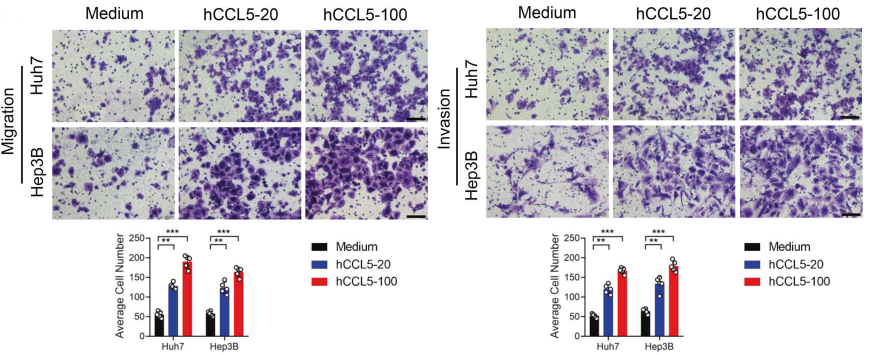
RANTES/CCL5 Protein, Human purchased from MedChemExpress. Usage Cited in: Cell Death Dis. 2022 May 20;13(5):478. [Abstract]
RANTES/CCL5 Protein, Human (CCL5; 20, 50 ng/mL; 48 h) increased both migration and invasion abilities of Huh7 and Hep3B cells.
RANTES/CCL5 Protein, Human purchased from MedChemExpress. Usage Cited in: Cell Death Dis. 2022 May 20;13(5):478. [Abstract]
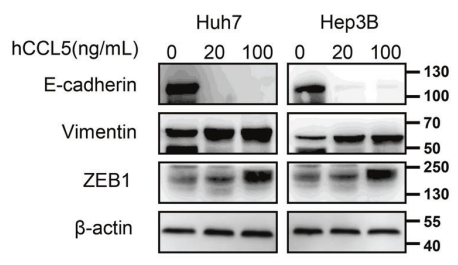
The expression of EMT markers in Huh7 and Hep3B cells treated with RANTES/CCL5 Protein, Human (hCCL5; 20, 100 ng/ml; 48 h) was examined by western blotting.
RANTES/CCL5 Protein, Human purchased from MedChemExpress. Usage Cited in: Cell Death Dis. 2022 May 20;13(5):478. [Abstract]
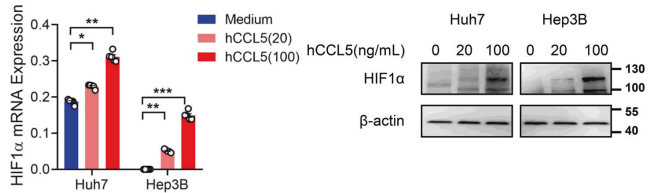
The expression of HIF1α in Huh7 and Hep3B cells treated with RANTES/CCL5 Protein, Human (hCCL5; 20, 100 ng/ml; 48 h) was detected by RT-PCR and western blotting.
-
Phytomedicine
EGCG inhibits tobacco smoke-promoted proliferation of lung cancer cells through targeting CCL5. [Abstract]2025 Apr:139:156512. PMID: 40010030 -
Phytother Res
Diallyl Trisulfide Suppresses Tumor-Associated Macrophage M2-Like Polarization and Recruitment and Improves the Tumor Microenvironment Through Blocking CCL5/STAT3 Signaling Pathway Against Lung Cancer. [Abstract]2025 Nov 26. PMID: 41297133 -
Mol Ther Nucleic Acids
MSCs act as biopatches for blood-retinal barrier preservation to enhance functional recovery after retinal I/R. [Abstract]2025 Jan 2;36(1):102445. PMID: 39967853 -
Am J Reprod Immunol
Altered T lymphocyte subtypes and cytokine profiles in follicular fluid associated with diminished ovary reserve. [Abstract]2022 Apr;87(4):e13522. PMID: 35006631


Technical Parameters
-
Species Human
-
Source E. coli
-
Tag Tag Free
-
Accession
P13501 (S24-S91)
-
Molecular Construction
-
N-term
-
CCL5 (S24-S91)
Accession # P13501 -
C-term
-
-
Protein Length
Full Length of C-C motif chemokine 5 Chain
-
Synonyms
CCL5; T-Cell Specific Protein P288; Prev. D17S136E; C-C Motif Chemokine 5; Prev. SCYA5; MGC17164; TCP228; EoCP; SIS-Delta; Small Inducible Cytokine A5 (RANTES); RANTES; T-Cell Specific RANTES Protein; SISd; T-Cell-Specific Protein RANTES; Regulated Upon Activation, Normally T-Expressed, And Presumably Secreted; T Cell-Specific Protein P228; Small Inducible Cytokine Subfamily A (Cys-Cys), Member 5; Small-Inducible Cytokine A5; Eosinophil Chemotactic Cytokine; C-C Motif Chemokine; Chemokine (C-C Motif) Ligand 5; C-C Motif Chemokine Ligand 5; Beta-Chemokine RANTES
-
AA Sequence
SPYSSDTTPCCFAYIARPLPRAHIKEYFYTSGKCSNPAVVFVTRKNRQVCANPEKKWVREYINSLEMS
-
Predicted Molecular Mass
7.8 kDa
-
Peso molecular
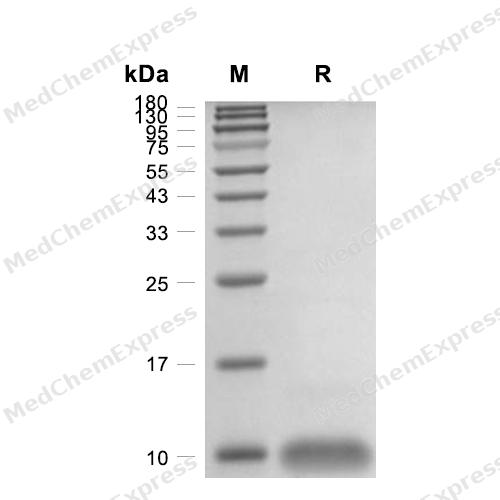
Approximately 9-12 kDa, based on SDS-PAGE under reducing conditions.
-
Pureza
≥ 95%, as determined by reducing SDS-PAGE.


Product Properties
Lyophilized powder
1.Lyophilized from a 0.22 μm filtered solution of 20 mM Citrate, 6% trehalose, 4% mannitol, 0.05% Tween 80, pH 4.0.
2.Lyophilized from a 0.22 μm filtered solution of PBS, pH 7.4, 8% trehalose.
Please refer to the lot-specific COA for specific buffer information.
<1 EU/μg, determined by LAL method.
It is not recommended to reconstitute to a concentration less than 100 μg/mL in ddH2O. For long term storage it is recommended to add a carrier protein (0.1% BSA, 5% HSA, 10% FBS or 5% Trehalose).
Stored at -20°C for 2 years from date of receipt. After reconstitution, it is stable at 4°C for 1 week or -20°C for longer (with carrier protein). It is recommended to freeze aliquots at -20°C or -80°C for extended storage.
Room temperature in continental US; may vary elsewhere.


Documentación
-
Ficha de datos (265 KB)
-
SDS (254 KB)
- English - EN (254 KB)
- Français - FR (254 KB)
- Deutsch - DE (254 KB)
- Norwegian - NO (254 KB)
- Español - ES (254 KB)
- Swedish - SV (254 KB)
- Italian - IT (254 KB)
- Korean - KR (254 KB)
- Portuguese - PT (254 KB)
-
Instrucciones de manejo (2659 KB)


Referencias
[1]. Suffee N, et al. RANTES/CCL5-induced pro-angiogenic effects depend on CCR1, CCR5 and glycosaminoglycans. Angiogenesis. 2012 Dec;15(4):727-44. [Content Brief]
[2]. Maillard L, et al. RANTES/CCL5 mediated-biological effects depend on the syndecan-4/PKCα signaling pathway. Biol Open. 2014 Sep 26;3(10):995-1004. [Content Brief]
[3]. Agere SA, et al. RANTES/CCL5 Induces Collagen Degradation by Activating MMP-1 and MMP-13 Expression in Human Rheumatoid Arthritis Synovial Fibroblasts. Front Immunol. 2017 Oct 18;8:1341. [Content Brief]
[4]. Tekkanat KK, et al. RANTES (CCL5) production during primary respiratory syncytial virus infection exacerbates airway disease. Eur J Immunol. 2002 Nov;32(11):3276-84. [Content Brief]
[5]. Wang SW, et al. CCL5 and CCR5 interaction promotes cell motility in human osteosarcoma. PLoS One. 2012;7(4):e35101. [Content Brief]
[6]. Wang X, et al. Oligomeric structure of the chemokine CCL5/RANTES from NMR, MS, and SAXS data. Structure. 2011 Aug 10;19(8):1138-48. [Content Brief]
[7]. Ergen AV, et al. Rantes/Ccl5 influences hematopoietic stem cell subtypes and causes myeloid skewing. Blood. 2012 Mar 15;119(11):2500-9. [Content Brief]

Calculators
Concentration (start) × Volume (start) = Concentration (final) × Volume (final)


 Powered by Bioz

