



IFN-gamma Protein, Mouse
Based on 54 publication(s) in Google Scholar
IFN-gamma Protein is a cytokine belonging to the interferon family, secreted by activated immune cells such as T cells and NK cells. IFN-gamma Protein plays a key role in the immune system, exerting activities including regulating immune responses, antiviral effects, and antitumor effects. IFN-gamma Protein, Mouse is a recombinant IFN-gamma protein expressed by E. coli without any tag.
- Species: Mouse
- Source: E. coli
-
Storage:Stored at -20°C for 2 years from date of receipt. After reconstitution, it is stable at 4°C for 1 week or -20°C for longer (with carrier protein). It is recommended to freeze aliquots at -20°C or -80°C for extended storage.


To place orders, for customer services and technical support, please contact: MedChemExpress USA
Tel: 609-228-6898 E-mail: [email protected] [email protected]


-
 Biological Activity
-
Technical Parameters
-
Product Properties
- Documentation
- References
- Help & FAQs


-

HY-D1056
Lipopolysaccharides, from E. coli O55:B5 -

HY-P7080
IL-4 Protein, Mouse (CHO) -
HY-P70460
IL-13 Protein, Mouse -
HY-P7025
IFN-gamma Protein, Human -
HY-P7090
TNF-alpha/TNFSF2 Protein, Mouse (156a.a) -
HY-18739
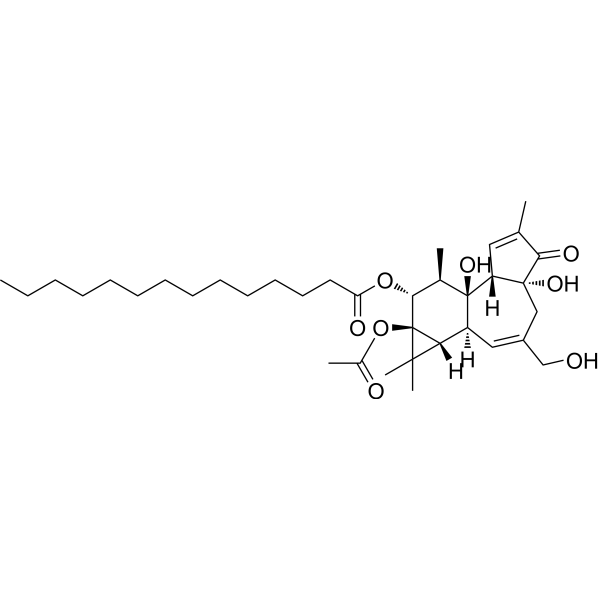
Phorbol 12-myristate 13-acetate -
HY-P70644
IL-4 Protein, Mouse -
HY-P7085
M-CSF Protein, Mouse -
HY-P70653
IL-4 Protein, Mouse (HEK293, His) -
HY-P7073
IL-1 beta Protein, Mouse -
HY-P70445
IL-4 Protein, Human -
HY-P7063
IL-6 Protein, Mouse


Biological Activity
Description
IFN-gamma Protein is a cytokine belonging to the interferon family, secreted by activated immune cells such as T cells and NK cells. IFN-gamma Protein plays a key role in the immune system, exerting activities including regulating immune responses, antiviral effects, and antitumor effects. IFN-gamma Protein, Mouse is a recombinant IFN-gamma protein expressed by E. coli without any tag[1][2][3][4].
Background
IFN-gamma is a cytokine with immunomodulatory, antitumor, and antiviral properties. IFN-gamma can activate macrophages and NK cells, regulate T-cell differentiation, and participate in inflammatory responses. IFN-gamma induces antiviral proteins to inhibit viral replication and enhances the immune recognition of infected cells. IFN-gamma also exerts antitumor effects by suppressing tumor cell proliferation, activating immune cells, and inhibiting tumor angiogenesis. Meanwhile, IFN-gamma promotes the expression of MHC molecules to improve the efficiency of immune cells in recognizing pathogens and abnormal cells. Additionally, IFN-gamma is involved in regulating the differentiation and maturation of bone marrow hematopoietic stem cells[1][2][3][4].
In Vitro
IFN-gamma Protein (Mouse; 10 ng/mL; 24 h) can upregulate the expression of MHC-I and PD-L1 in tumor cell line MC38, and the effect is better when used in combination with Nintedanib (HY-50904)[5].
In Vivo
IFN-gamma Protein (Mouse; 10 ng; intranasal administration; on days 1, 3, and 5 post-infection) after primary respiratory syncytial virus (RSV) infection in mice significantly alleviates airway hyperresponsiveness (AHR) and inflammation upon reinfection[6].
IFN-gamma Protein (Mouse; 50,000 U/animal; intravenous injection; 3 times/week; 4 weeks) exhibits antitumor activity and reduces the number of lung metastatic foci in a mouse melanoma tumor model[7].
Verified Bioactivity
1. Determined by its ability to inhibit the proliferation of murine WEHI-279 cells. The expected ED50 is < 1 ng/mL.
2. Measured by its ability to inhibit the proliferation of HT-29 human coloncancer cells. The ED50 for this effect is ≤0.7283 ng/mL, corresponding to a specific activity is ≥1.37×10⁶ Unit/mg.
3.Measured by its binding ability in a functional ELISA. When Recombinant Mouse IFN gamma is used at 10 μg/mL can bind Biotinylated Mouse CD119 (HY-P72611). The ED50 for this effect is <135 ng/mL.
4. Measured by its binding abiity in a functional ELISA. Immobilized Mouse IFN gamma at 10 μg/ml (100 μL/well) can bind Mouse CD119 (HY-P72611). The ED50 for this effect is <100 ng/mL.
MCE Validation Data
-
Purity - SDS-PAGE
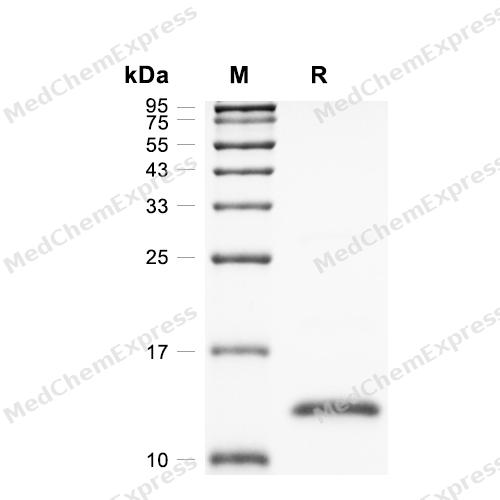
Purity - SDS-PAGE
-
Bioactivity - Cell-Based Assay
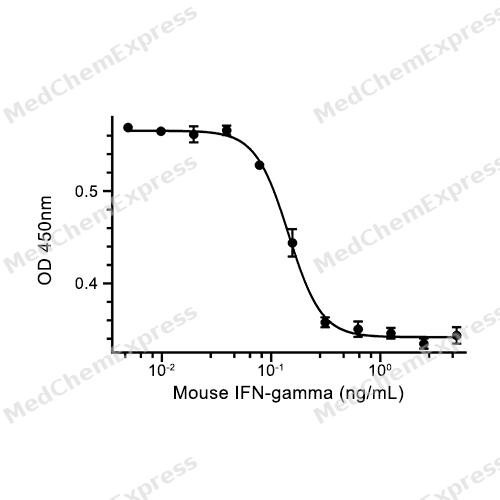
Bioactivity - Cell-Based Assay
-
Bioactivity - ELISA
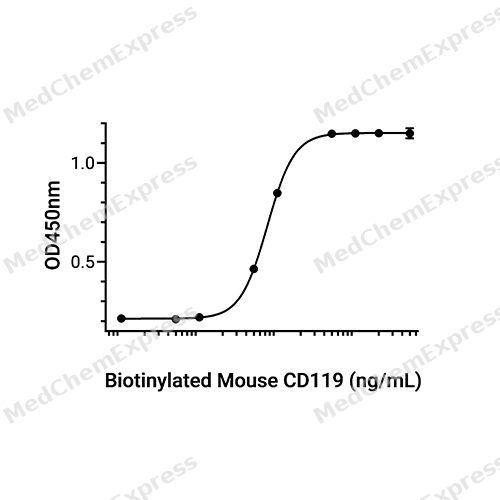
Bioactivity - ELISA


Publications (54)
-
Journal Impact Factor
-
Most Recent
-
Cancer Cell
2025 Dec 8;43(12):2282-2297.e9. PMID: 41202810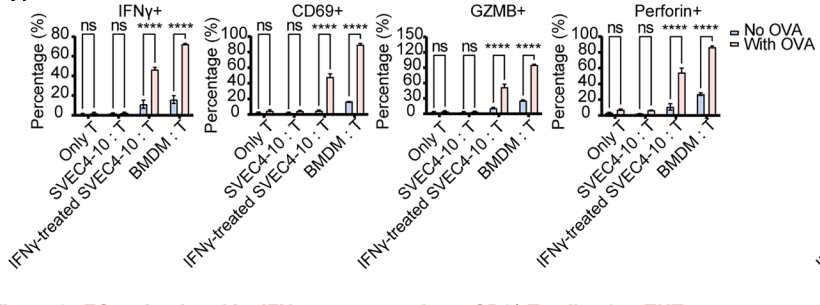
IFN-gamma Protein, Mouse purchased from MedChemExpress. Usage Cited in: Cancer Cell. 2025 Dec 8;43(12):2282-2297.e9. [Abstract]
Naive CD8+ T cells were cultured in medium alone or cocultured with SVEC4-10 cells, IFNγ (500 ng/mL; 72 h) -treated SVEC4-10 cells, or BMDMs, respectively, ± OVA 257-264 at 2:1 ratio for 72 h. Percentages of IFNγ+, CD69+, GZMB+, and Perforin+ were detected by FACS.
-
Cancer Commun (Lond)
Radiotherapy-resistant prostate cancer cells escape immune checkpoint blockade through the senescence-related ataxia telangiectasia and Rad3-related protein. [Abstract]2025 Mar;45(3):218-244. PMID: 39698847 -
Cancer Res
2025 Nov 11. PMID: 41218148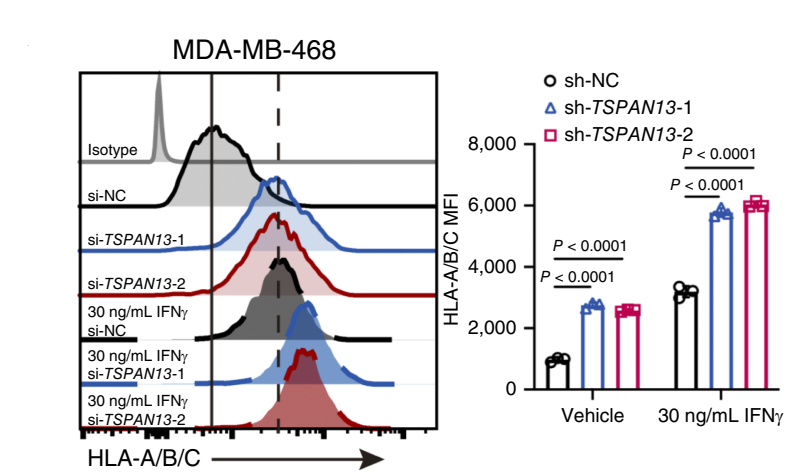
IFN-gamma Protein, Mouse purchased from MedChemExpress. Usage Cited in: Cancer Res. 2025 Nov 11. [Abstract]
Flow cytometry was used to assess the surface expression levels of MHC-I in MDA-MB-468 cells under different TSPAN13 expression levels, with or without IFNγ(30 ng/mL; 24 h) stimulation.
-
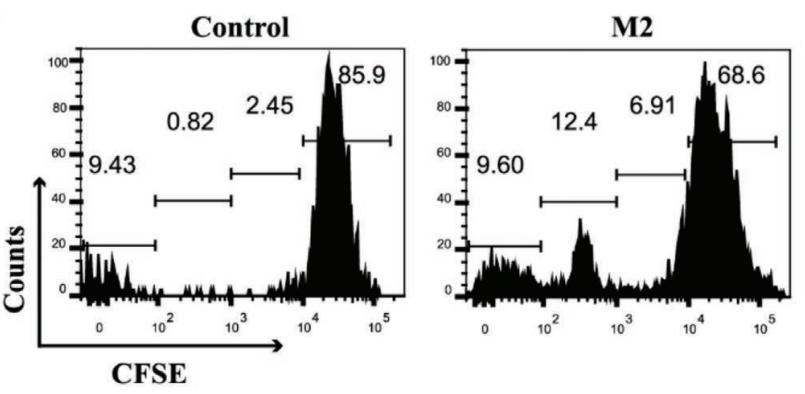
IFN-gamma Protein, Mouse purchased from MedChemExpress. Usage Cited in: Adv Funct Mater. 10 March 2022.
Quantification of T cell proliferation with the supernatant from BMDM treated with LPS (50 ng/mL)/IFN-γ (20 ng/mL) for 48 h by flow cytometry.
-
ACS Nano
An Engineered Bionic Nanoparticle Sponge as a Cytokine Trap and Reactive Oxygen Species Scavenger to Relieve Disc Degeneration and Discogenic Pain. [Abstract]2024 Jan 30;18(4):3053-3072. PMID: 38237054 -
J Nanobiotechnology
MSCs-EVs harboring OA immune memory reprogram macrophage phenotype via modulation of the mt-ND3/NADH-CoQ axis for OA treatment. [Abstract]2025 Feb 25;23(1):140. PMID: 40001168 -
Theranostics
Nintedanib enhances the efficacy of PD-L1 blockade by upregulating MHC-I and PD-L1 expression in tumor cells. [Abstract]2022 Jan 1;12(2):747-766. PMID: 34976211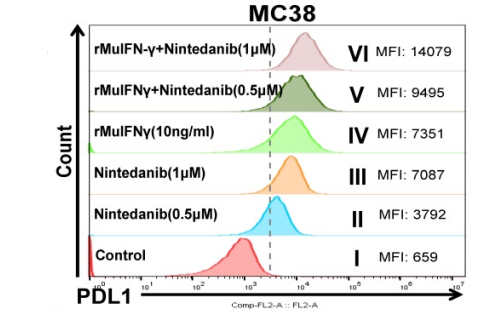
IFN-gamma Protein, Mouse purchased from MedChemExpress. Usage Cited in: Theranostics. 2022 Jan 1;12(2):747-766. [Abstract]
PD-L1 expression after IFN-γ (10 ng/ml; 24 h ) treatment in MC38 cells.
-
Adv Sci (Weinh)
IL-3 Modulates Microglia Polarization and Attenuates Neuroinflammation in Traumatic Brain Injury. [Abstract]2026 May;13(29):e04511. PMID: 41915872 -
Cell Rep Med
A senescent tumor cell-derived nanovesicle directly primes splenic T cells to potentiate cancer radiotherapy. [Abstract]2026 Apr 21;7(4):102709. PMID: 41916293 -
Cell Rep Med
Ultrabright ratiometric Raman-guided epilepsy surgery by intraoperatively visualizing proinflammatory microglia. [Abstract]2025 Jun 17;6(6):102155. PMID: 40449482 -
Biomaterials
Conjugated polymer intrachain donor-acceptor reconfiguration-tailored off-on NIR-II photoacoustic probes with ultralow background for high-fidelity imaging of immunotherapy-associated macrophage reprogramming. [Abstract]2026 Aug:331:124126. PMID: 41830766 -
J Control Release
Metabolic reprogramming mediated PD-L1 depression and hypoxia reversion to reactivate tumor therapy. [Abstract]2022 Dec:352:793-812. PMID: 36343761 -
Cell Death Dis
PRAS40-driven pro-inflammatory macrophage polarization is required for inflammatory bowel disease. [Abstract]2026 Jun 8. PMID: 42259776 -
Cancer Lett
Targeting C/EBPβ/SCD1/C16:1 loop-driven macrophage M2 polarization by Bruceine D improves anti-PD-1 immunotherapy in colorectal cancer. [Abstract]2026 Sep 28:656:218655. PMID: 42250753 -
J Pharm Anal
Ginkgolic acid inhibits CD8+ T cell activation and induces ferroptosis by lactate dehydrogenase A to exert immunosuppressive effect. [Abstract]2025 Jul;15(7):101233. PMID: 40727944 -
Acta Pharmacol Sin
Norcantharidin promotes M1 macrophage polarization and suppresses colorectal cancer growth. [Abstract]2025 May 20. PMID: 40394236 -
J Transl Med
2025 Oct 14;23(1):1096. PMID: 41088135 -
Int J Surg
Regulation of macrophage plasticity by circCCDC719-13 through HSP90 inhibition suppresses prostate cancer progression and metastasis: a translational study. [Abstract]2025 Jun 27. PMID: 40576192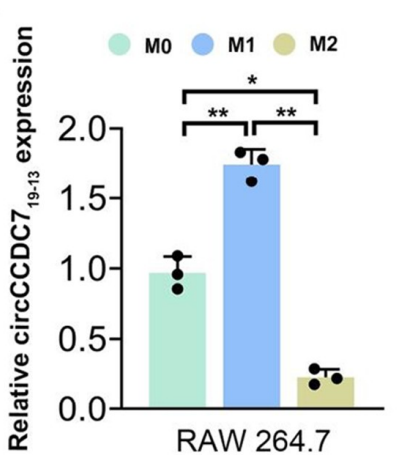
IFN-gamma Protein, Mouse purchased from MedChemExpress. Usage Cited in: Int J Surg. 2025 Jun 27. [Abstract]
IFN-γ (20 ng/mL; 48 h). Relative expression levels of circCCDC719-13 in THP-1 macrophages under different polarization states: M0 (unpolarized), M1 (classically activated), and M2 (alternatively activated).
-
Int J Biol Macromol
FES suppresses macrophage-mediated inflammation and atherosclerotic plaque formation by modulating the PU.1/Arg1 axis. [Abstract]2026 Jun 26:373:153133. PMID: 42361942 -
Cell Rep
Adoptive macrophages suppress glioblastoma growth by reversing immunosuppressive microenvironment through programmed phenotype repolarization. [Abstract]2025 Sep 26;44(10):116350. PMID: 41014558 -
Cell Rep
2025 Apr 9;44(4):115542. PMID: 40215166 -
J Ethnopharmacol
Total saponins of Trillium tschonoskii Maxim. mitigate locomotor deficits associated with cerebral ischemia by facilitating microglial phenotype switching through the Jagged1/Notch1/Hes5 signaling pathway. [Abstract]2026 May 15:121866. PMID: 42142551 -
JCI Insight
Klf9 promotes the repair of myocardial infarction by regulating macrophage recruitment and polarization. [Abstract]2025 Apr 8;10(9):e187072. PMID: 40198141 -
J Ethnopharmacol
Astragaloside IV promotes cerebral tissue restoration through activating AMPK- mediated microglia polarization in ischemic stroke rats. [Abstract]2024 Nov 15:334:118532. PMID: 38972527 -
Biochem Pharmacol
ATF5 activates LPAR5 to enhance macrophage pro-inflammatory responses to exacerbate rheumatoid arthritis. [Abstract]2026 May:247:117804. PMID: 41690415 -
Life Sci
Berberine mitigates high glucose-induced podocyte apoptosis by modulating autophagy via the mTOR/P70S6K/4EBP1 pathway. [Abstract]2020 Feb 15:243:117277. PMID: 31926252 -
Food Funct
Cyanidin-3- O-glucoside promotes late-stage venous thrombus resolution in mice, accompanied by reduced macrophage M1-associated inflammation and attenuated HIF-1α-linked signaling. [Abstract]2026 Mar 23;17(6):2718-2735. PMID: 41734240 -
Inflamm Res
Splenic T lymphocytes induce the formation of immunosuppressive neutrophils through IFN-γ in sepsis. [Abstract]2022 Jan;71(1):81-91. PMID: 34841450 -
Commun Biol
2025 Nov 18;8(1):1596. PMID: 41254278 -
Eur J Pharmacol
Blockade of KCa3.1 ameliorates rheumatoid arthritis by suppressing macrophage M1 polarization via the NLRP3 inflammasome signaling pathway. [Abstract]2026 Mar 28:1019:178738. PMID: 41794275 -
Respir Res
CRISPR/Cas9-mediated B2m knockout paves the way for allogeneic basal cell transplantation. [Abstract]2026 Feb 28;27(1):109. PMID: 41764471 -
Int Immunopharmacol
Multifunctional micelles-mediated macrophage modulation for dual suppression of inflammation and bone Erosion in rheumatoid arthritis. [Abstract]2026 Feb 1:170:116103. PMID: 41468794 -
Int Immunopharmacol
Periprosthetic osteolysis is mediated by the m6A-dependent regulation of CEMIP via YTHDF2. [Abstract]2026 Jan 1;168(Pt 2):115895. PMID: 41308363 -
Neurochem Int
Tetramethylpyrazine promotes axonal remodeling and modulates microglial polarization via JAK2-STAT1/3 and GSK3-NFκB pathways in ischemic stroke. [Abstract]2023 Nov:170:105607. PMID: 37657766 -
Inflammation
Esaxerenone Inhibits Interferon-γ Induced Pyroptosis of Macrophages in the Lungs of Aldosterone-treated Mice. [Abstract]2024 Dec;47(6):2145-2158. PMID: 38713304 -
Food Sci Nutr
Octanoic Acid-Rich Enteral Nutrition Regulates Intestinal M1/M2 Macrophage Polarization via the PPARγ/STAT-1/STAT-6 Pathway to Alleviate Inflammatory Bowel Disease. [Abstract]2025 Nov 17;13(11):e71234. PMID: 41256230 -
ACS Chem Neurosci
Intraventricular Creatine Treatment Attenuates Alzheimer's Disease-Related Neuropathological Changes and Memory Impairment via Inhibiting STAT1 Phosphorylation. [Abstract]2025 Oct 1;16(19):3790-3800. PMID: 40968664 -
Drug Dev Res
Polydatin Protects Against the Formation of PPE-Induced Abdominal Aortic Aneurysms in Mice by Activating Nuclear Factor Erythroid 2-Related Factor 2. [Abstract]2026 Feb;87(1):e70223. PMID: 41486502 -
Cell Cycle
M2 macrophages promote PKM2 production in fibroblasts to alleviate UVB-induced photoaging. [Abstract]2025 Mar-Apr;24(5-8):86-102. PMID: 40474370 -
J Biomed Mater Res A
Hyaluronic Acid-Chitosan Nanoparticles Encapsulating Gal-9 Alleviate Severe Acute Pancreatitis by Promoting M2 Macrophage Polarization. [Abstract]2025 Dec;113(12):e70006. PMID: 41307175 -
J Pharm Pharmacol
Oleanolic acid ameliorates podocyte injury by increasing autophagy to attenuate diabetic nephropathy. [Abstract]2026 Mar 5;78(3):rgag014. PMID: 41790500 -
Hum Exp Toxicol
Rhynchophylline promotes microglia phenotypic transformation and repair of cerebral ischaemic injury through the JAK2/STAT3 pathway. [Abstract]2025 Jan-Dec:44:9603271251324582. PMID: 40014666 -
-
Biomed Res Int
Carnosine Protects Mouse Podocytes from High Glucose Induced Apoptosis through PI3K/AKT and Nrf2 Pathways. [Abstract]2019 May 28:2019:4348973. PMID: 31275971 -
Technol Cancer Res Treat
Combining Radiation and anti-PD-L1 Enhances the Antitumor Activity in Colorectal Cancer via IFN-γ-Dependent Activation of STAT1. [Abstract]2025 Jan-Dec:24:15330338251406931. PMID: 41406067 -
Biochem Biophys Res Commun
ITGAX downregulation activates NLRP3 inflammasome and ameliorates LPS-induced acute liver injury by regulating macrophage M1 polarization and the DNMT1/PPAR-γ axis. [Abstract]2025 Nov 28:791:152858. PMID: 41206992 -
Med Sci Monit
Gasdermin D Protects Mouse Podocytes Against High-Glucose-Induced Inflammation and Apoptosis via the C-Jun N-Terminal Kinase (JNK) Pathway. [Abstract]2021 Mar 9:27:e928411. PMID: 33690262 -
-
-
-
-
bioRxiv
RHOA Loss of Function Impairs the IFNγ Response and Promotes CD19 Antigen Escape to Drive CAR-T Resistance in Diffuse Large B-cell Lymphoma. [Abstract]2025 Mar 4:2025.02.27.640687. PMID: 40093149 -
-
Aging (Albany NY)
Synergistic inflammatory signaling by cGAS may be involved in the development of atherosclerosis. [Abstract]2021 Feb 11;13(4):5650-5673. PMID: 33589571


Technical Parameters
-
Species Mouse
-
Source E. coli
-
Tag Tag Free
-
Accession
P01580 (H23-C155)
-
Molecular Construction
-
N-term
-
IFN-gamma (H23-C155)
Accession # P01580 -
C-term
-
-
Protein Length
Full Length of Mature Protein
-
Synonyms
IFNG; IMD69; Interferon Gamma; IFG; IFN-Gamma; IFI; Immune Interferon
-
AA Sequence
HGTVIESLESLNNYFNSSGIDVEEKSLFLDIWRNWQKDGDMKILQSQIISFYLRLFEVLKDNQAISNNISVIESHLITTFFSNSKAKKDAFMSIAKFEVNNPQVQRQAFNELIRVVHQLLPESSLRKRKRSRC
-
Predicted Molecular Mass
15.5 kDa
-
Molecular Weight
Approximately 14-15 kDa, based on SDS-PAGE under reducing conditions, due to the glycosylation.
-
Purity
≥ 95%, as determined by reducing SDS-PAGE.


Product Properties
Lyophilized powder
1.Lyophilized from a 0.22 μm filtered solution of PBS, pH 7.4.
2.Lyophilized from a 0.22 μm filtered solution of PBS, pH 7.4, 8% trehalose.
Please refer to the lot-specific COA for specific buffer information.
<1 EU/μg, determined by LAL method.
It is not recommended to reconstitute to a concentration less than 100 μg/mL in ddH2O. For long term storage it is recommended to add a carrier protein (0.1% BSA, 5% HSA, 10% FBS or 5% Trehalose).
Stored at -20°C for 2 years from date of receipt. After reconstitution, it is stable at 4°C for 1 week or -20°C for longer (with carrier protein). It is recommended to freeze aliquots at -20°C or -80°C for extended storage.
Room temperature in continental US; may vary elsewhere.


Documentation
-
Data Sheet (263 KB)
-
SDS (252 KB)
- English - EN (252 KB)
- Français - FR (252 KB)
- Deutsch - DE (252 KB)
- Norwegian - NO (252 KB)
- Español - ES (252 KB)
- Swedish - SV (252 KB)
- Italian - IT (252 KB)
- Korean - KR (252 KB)
- Portuguese - PT (252 KB)
-
Handling Instructions (2659 KB)


References
[1]. Fam CM, et al. PEGylation improves the pharmacokinetic properties and ability of interferon gamma to inhibit growth of a human tumor xenograft in athymic mice. J Interferon Cytokine Res. 2014 Oct;34(10):759-68. [Content Brief]
[2]. Kursunel MA, et al. The untold story of IFN-γ in cancer biology. Cytokine Growth Factor Rev. 2016 Oct;31:73-81. [Content Brief]
[3]. Chesler DA, et al. The role of IFN-gamma in immune responses to viral infections of the central nervous system. Cytokine Growth Factor Rev. 2002 Dec;13(6):441-54. [Content Brief]
[4]. Goedhart M, et al. Interferon-Gamma Impairs Maintenance and Alters Hematopoietic Support of Bone Marrow Mesenchymal Stromal Cells. Stem Cells Dev. 2018 May 1;27(9):579-589. [Content Brief]
[5]. Tu J, et al. Nintedanib enhances the efficacy of PD-L1 blockade by upregulating MHC-I and PD-L1 expression in tumor cells. Theranostics. 2022 Jan 1;12(2):747-766. [Content Brief]
[6]. Lee YM, et al. IFN-gamma production during initial infection determines the outcome of reinfection with respiratory syncytial virus. Am J Respir Crit Care Med. 2008 Jan 15;177(2):208-18. [Content Brief]
[7]. Talmadge JE, et al. Immunomodulatory and immunotherapeutic properties of recombinant gamma-interferon and recombinant tumor necrosis factor in mice. Cancer Res. 1987 May 15;47(10):2563-70. [Content Brief]

Calculators
Concentration (start) × Volume (start) = Concentration (final) × Volume (final)


 Powered by Bioz

