



Diallyl tetrasulfide
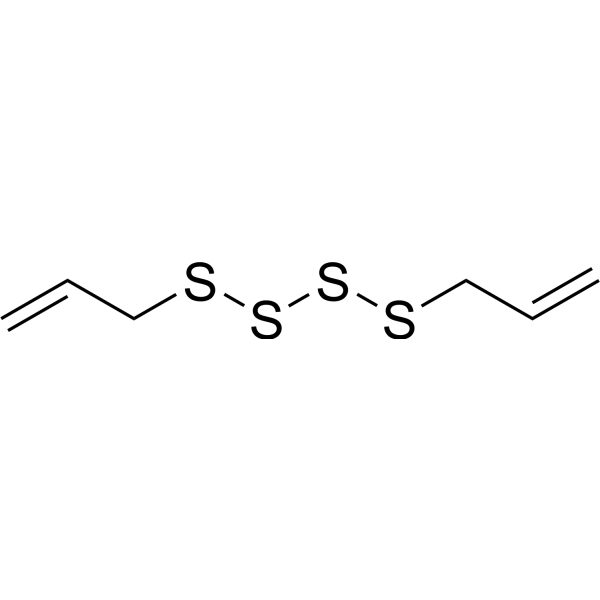
Diallyl tetrasulfide is an orally active diallyl tetrasulfide. Diallyl tetrasulfide ameliorates cadmium-induced changes in acetylcholinesterase and adenosine triphosphatase activities as well as oxidative stress injury in the brain of rats. Diallyl tetrasulfide inhibits lipid peroxidation in rat liver microsomes. Diallyl tetrasulfide ameliorates cadmium-induced oxidative liver injury in rats. Diallyl tetrasulfide protects cells against cadmium-induced loss of cell viability, reduces apoptosis rate and ROS production. Diallyl tetrasulfide is applicable to research related to cadmium-induced neurotoxicity and cadmium-induced oxidative liver injury.
Nur für Forschungszwecke. Wir verkaufen nicht an Patienten.
- CAS. Nr.: 2444-49-7
- Formel: C6H10S4
- Molecular Weight:210.40
-
Speicherung:
Please store the product under the recommended conditions in the Certificate of Analysis.

To place orders, for customer services and technical support, please contact: MedChemExpress USA
Tel: 609-228-6898 E-mail: [email protected] [email protected]


-
 Biologische Aktivität
-
Chemical Information
- Protokoll
- Reinheit & Dokumentation
- Verweise
-
 Help & FAQs


-
HY-N8411
AromadendreneAntibacterial Agent -
HY-124379
TPCKSerine Protease Inhibitor -
HY-N8518
Malabaricone CSphingomyelin Synthase Inhibitor -

HY-N8411R
Aromadendrene (Standard)Reference Standard -

HY-W743654
Capsorubin -
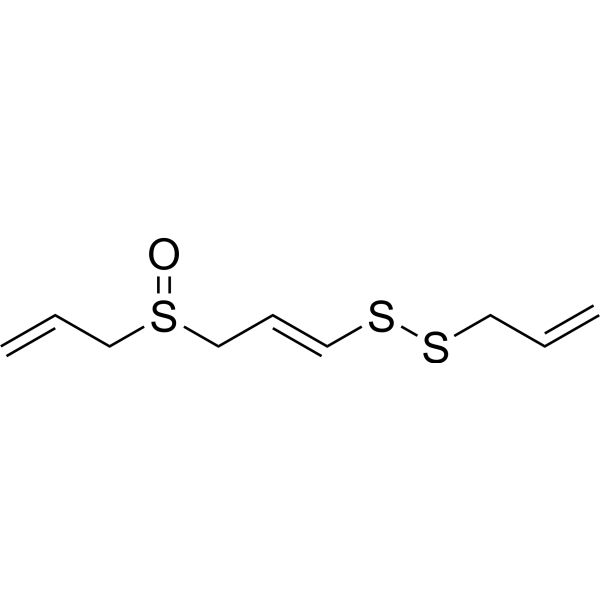
HY-106784A
(E)-AjoeneNeuroprotective Agent -
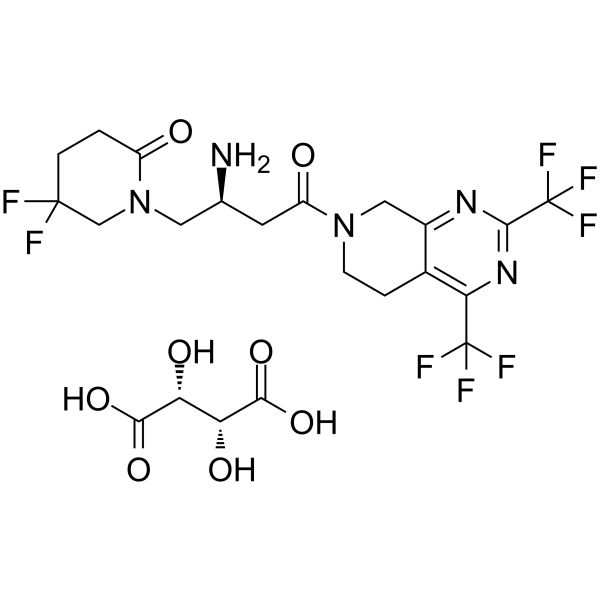
HY-14892A
Gemigliptin tartrateDPP-4 Inhibitor -

HY-127020
DeoxyenterocinBacterial Metabolite -
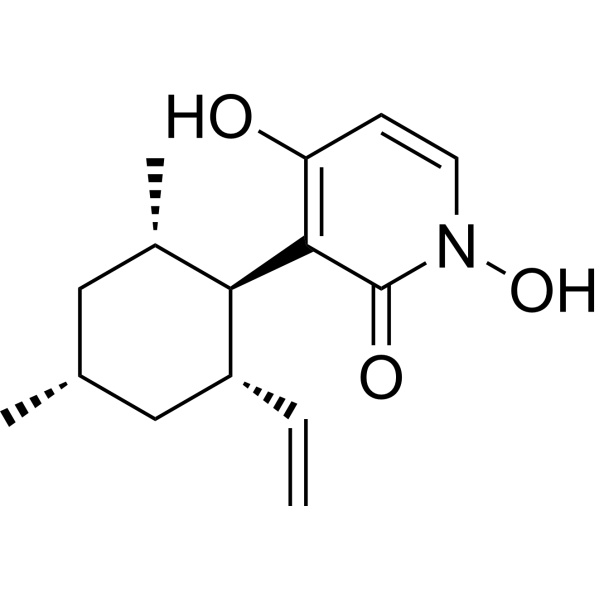
HY-125568
PyridoxatinFree Radical Scavenger -
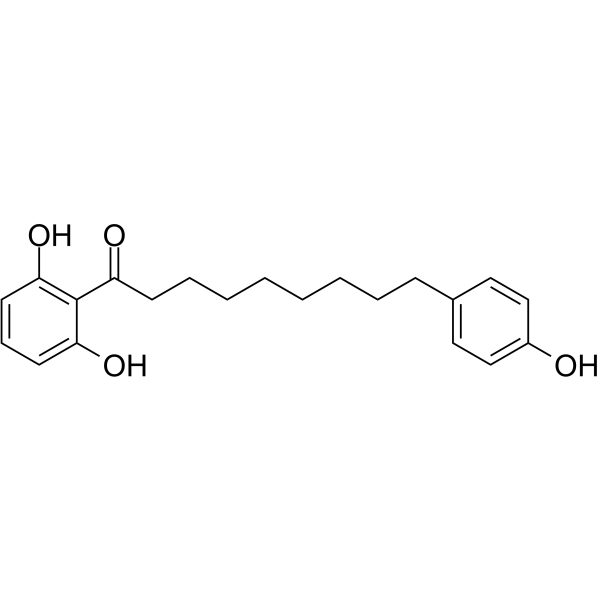
HY-N8517
Malabaricone Bα-Glucosidase Inhibitor -

HY-N8518R
Malabaricone C (Standard)Sphingomyelin Synthase Inhibitor -

HY-W743654R
Capsorubin (Standard)


Biologische Aktivität
Beschreibung
In Vitro
Diallyl tetrasulfide (25 μg/mL; 3 h) inhibits lipid peroxidation when co-incubated with rat liver microsomes treated with ascorbic acid/Fe2+[2].
Diallyl tetrasulfide (5-50 μg/mL; 18 h) dose-dependently protects Vero cells against cadmium-induced loss of cell viability[4].
Diallyl tetrasulfide (40 μg/mL; 18 h) reduces the cadmium-induced apoptosis rate of Vero cells by 75%, decreases the intracellular accumulation of superoxide anions and hydrogen peroxide, and protects cells from cadmium-induced loss of mitochondrial membrane potential[4].
Diallyl tetrasulfide (10-40 μg/mL; 30 min) significantly reduces cadmium-induced intracellular ROS production in Vero cells[4].
MedChemExpress (MCE) has not independently confirmed the accuracy of these methods. They are for reference only.
-
Cell Line:Vero cells
-
Concentration:5, 10, 20, 30, 40, 50 μg/mL
-
Incubation Time:18 h
-
Result:Attenuated cadmium-induced suppression of cell viability in a dose-dependent manner.
Reached 87% cell survival rate at 50 μg/mL.
Showed a highly significant increase to 86% viability at 40 μg/mL.
Did not affect cell viability when used alone at 50 μg/mL.
-
Cell Line:Vero cells
-
Concentration:40 μg/mL
-
Incubation Time:18 h
-
Result:Prevented cadmium-induced apoptotic nuclear changes (condensed or fragmented nuclei).
Reduced cadmium-induced apoptosis by 75% relative to cadmium-only treated cells.
Showed intact, healthy nuclei with no significant increase in apoptosis compared to control when used alone at 40 μg/mL.
In Vivo
MedChemExpress (MCE) has not independently confirmed the accuracy of these methods. They are for reference only.
-
Animal Model:Wistar rats (male, initial body weight 170-200 g, cadmium-induced neurotoxicity/Liver oxidative damage model)[1]
-
Dosage:10 mg/kg; 20 mg/kg; 40 mg/kg
-
Administration:p.o.; daily; 3 weeks
-
Result:Reversed brain acetylcholinesterase activity to near normal levels.
Reduced brain lipid peroxidation markers to 14.10 μmol/g tissue (TBARS) and 1.20 mmol/g tissue (LOOH).
Reduced brain protein carbonyl levels to 4.25 nmol/mg protein.
Increased brain reduced glutathione levels to 2.65 μg/mg protein and total sulphydryl groups to 7.06 μg/mg protein.
Restored brain superoxide dismutase activity to 8.24 units, catalase activity to 3.79 μmol H2O2 consumed/min, glutathione peroxidase activity to 3.05 μg glutathione consumed/min/mg protein, and glutathione-S-transferase activity to 5.78 μmol CDNB-GSH conjugate formed/min/mg protein.
Restored brain total ATPases activity to 1.35 μg Pi liberated/min/mg protein, Na+K+-ATPase activity to 0.36 μg Pi liberated/min/mg protein, Ca2+-ATPase activity to 0.384 μg Pi liberated/min/mg protein, and Mg2+-ATPase activity to 0.28 μg Pi liberated/min/mg protein.
Normalized serum activities of hepatic marker enzymes (aspartate transaminase, alanine transaminase, alkaline phosphatase, lactate dehydrogenase) in a dose-dependent manner, with greater efficacy at 40 mg/kg than 10 mg/kg and 20 mg/kg.
Reduced liver cadmium accumulation from 500 μg/g wet tissue to 200 μg/g wet tissue.
Decreased liver thiobarbituric acid reactive substances to 0.125 nmol/mg protein, hydroperoxides to 0.96 mmol/g tissue, and protein carbonyl levels to 3.19 nmol/mg protein.
Restored liver non-enzymic antioxidant levels: reduced glutathione to 3.03 μg/mg protein, total thiols to 13.65 μg/mg protein, vitamin C to 1.20 μmol/mg tissue, and vitamin E to 0.61 μmol/mg tissue.
Restored liver enzymic antioxidant and glutathione metabolising enzyme activities: superoxide dismutase to 6.30 U/mg protein, catalase to 72.86 U/mg protein, glutathione peroxidase to 5.43 U/mg protein, glutathione-S-transferase to 6.07 U/mg protein, glutathione reductase to 0.43 U/mg protein, and glucose-6-phosphate dehydrogenase to 1.88 U/mg protein.
Improved liver histopathology, resulting in normal hepatocytes with mild portal inflammation.
- Neurotoxicity Study
- Detection of Apoptosis
- TUNEL staining for apoptotic DNA fragmentation
- Cell Cytotoxicity Assay
- Mammalian live/dead viability and cytotoxicity staining
- Annexin V plus membrane-impermeant dye apoptosis staining
- ROS/oxidative-stress fluorescent staining
- Apoptosis Solutions
- CCK-8/WST-8 Cell Proliferation Assay
- Ferroptosis Solutions
- MTT Cell Proliferation Assay
- Cell Viability Determination by MTT Colorimetric Assay


Chemical Information
-
CAS. Nr. 2444-49-7
-
Molecular Weight 210.40
-
Formel C6H10S4
-
SMILES
C=CCSSSSCC=C
-
Structure Classification
-
Initial Source
-
Versand
Room temperature in continental US; may vary elsewhere.
-
Speicherung
Please store the product under the recommended conditions in the Certificate of Analysis.


Reinheit & Dokumentation
Verweise
[1]. Pari L, et al. Diallyl tetrasulfide improves cadmium induced alterations of acetylcholinesterase, ATPases and oxidative stress in brain of rats. Toxicology. 2007;234(1-2):44-50. [Content Brief]
[3]. Murugavel P, et al. Effects of diallyl tetrasulfide on cadmium-induced oxidative damage in the liver of rats. Hum Exp Toxicol. 2007;26(6):527-534. [Content Brief]
[4]. Murugavel P, et al. Cadmium induced mitochondrial injury and apoptosis in vero cells: protective effect of diallyl tetrasufide from garlic. Int J Biochem Cell Biol. 2007;39(1):161-170. [Content Brief]

Calculators
Konzentration (Stammlösung) × Volumen (Stammlösung) = Konzentration (Ziellösung) × Volumen (Ziellösung)


Diallyl tetrasulfide Related Classifications
HY-N9515 Related Classifications
 Powered by Bioz