



DIDS
Based on 23 publication(s) in Google Scholar
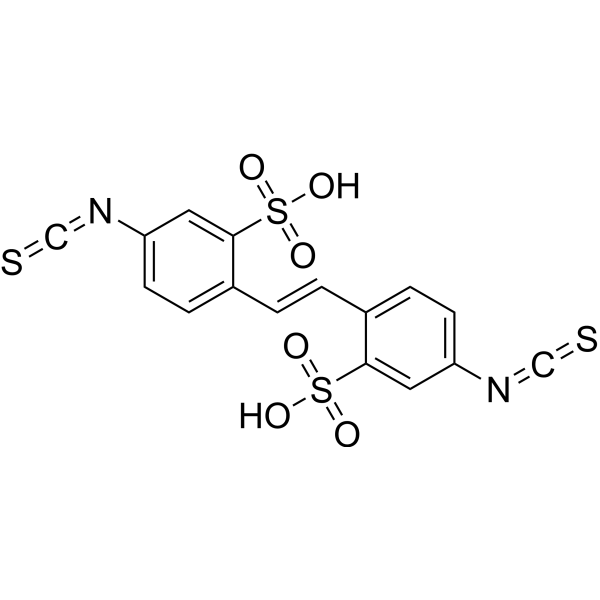
DIDS is a dual inhibitor of ABCA1 and VDAC1. DIDS also inhibits RAD51, inhibiting RAD51-mediated homologous pairing and strand exchange reactions. DIDS inhibits anion exchange and binding to red blood cell membranes, inhibits the activation of caspase-3 and -9, and can be used in cancer research.
For research use only. We do not sell to patients.
- CAS No.: 53005-05-3
- Formula: C16H10N2O6S4
- Molecular Weight:454.52
-
Storage:
Please store the product under the recommended conditions in the Certificate of Analysis.

To place orders, for customer services and technical support, please contact: MedChemExpress USA
Tel: 609-228-6898 E-mail: [email protected] [email protected]


-
 Biological Activity
-
Chemical Information
- Protocols
- Purity & Documentation
- References
-
 Help & FAQs


Publications Citing Use of MedChemExpress (MCE) DIDS
More- Autophagy. 2021 Nov;17(11):3592-3606. [Abstract]
- Adv Sci (Weinh). 2021 Nov;8(21):e2101936. [Abstract]
- Cell Death Dis. 2024 Nov 9;15(11):811. [Abstract]
- Phytomedicine. 2024 Jul 25:130:155785. [Abstract]
- Cell Death Discov. 2023 Jul 8;9(1):234. [Abstract]
- Proc Natl Acad Sci U S A. 2025 Oct 7;122(40):e2502841122. [Abstract]
- Br J Pharmacol. 2025 Aug;182(16):3923-3951. [Abstract]
- Mol Cancer Ther. 2026 Jul 15:10.1158/1535-7163.MCT-26-0182.
- Virulence. 2025 Dec;16(1):2490208. [Abstract]
- CNS Neurosci Ther. 2025 Apr;31(4):e70410. [Abstract]
- Life Sci. 2020 Oct 15:259:118390. [Abstract]
- Front Pharmacol. 2023 Jun 26:14:1191692. [Abstract]
- Cancer Sci. 2020 Nov;111(11):4288-4302. [Abstract]
- Cancers (Basel). 2025 Dec 27;18(1):92. [Abstract]
- J Cell Mol Med. 2021 Jun;25(11):5238-5249. [Abstract]
- J Virol. 2026 Mar 24;100(3):e0220025. [Abstract]
- FEBS Open Bio. 2022 Feb;12(2):516-522. [Abstract]
- Biochem Biophys Res Commun. 2021 Jun 30:560:52-58. [Abstract]
- bioRxiv. 2026 Apr 7:2026.04.04.716514. [Abstract]
- Sci Total Environ. 2024 Oct 10:946:174246. [Abstract]
- bioRxiv. 2024 July 10.
- SSRN. 2023 Nov 14.
- bioRxiv. 2023 Jul 3.
 Customer Validation & Images

-
WB
-
Cell Proliferation/Viability Assay
-
Flow Cytometry
-
IF
-
Cell Proliferation/Viability Assay


Biological Activity
Description
IC50 & Target
|
VDAC1 |
Cellular Effect
|
Cell Line

|
Type | Value | Description | References |
|---|---|---|---|---|
| Erythrocyte | IC50 |
31 μM
Compound: DIDS
|
Inhibition of erythrocyte anion transport protein
Inhibition of erythrocyte anion transport protein
|
[PMID: 18078758] |
In Vitro
DIDS (0-10 μM) inhibits RAD51-mediated strand exchange[1].
DIDS (0-20 μM) inhibits DNA binding by RAD51[1].
DIDS (10 μM; 0-60 min) stimulates the ATP hydrolyzing activity of RAD51 in the absence of DNA[1].
DIDS (50-400 μM) prevents effect on ALA-SDT-induced cell death, while dose at 50 μM has no inhibition effect, and dose at 400 μM insifnificantly decreases the cell viability[2].
DIDS (100 μM) clearly inhibits caspase-3 and caspase-9 activation[2].
MedChemExpress (MCE) has not independently confirmed the accuracy of these methods. They are for reference only. Further protocols information, click here.


Chemical Information
-
CAS No. 53005-05-3
-
Molecular Weight 454.52
-
Formula C16H10N2O6S4
-
SMILES
O=S(C1=CC(N=C=S)=CC=C1/C=C/C2=CC=C(C=C2S(=O)(O)=O)N=C=S)(O)=O
-
Synonyms
MDL101114ZA free base
-
Shipping
Room temperature in continental US; may vary elsewhere.
-
Storage
Please store the product under the recommended conditions in the Certificate of Analysis.


Publications (23)
-
Journal Impact Factor
-
Most Recent
-
Autophagy
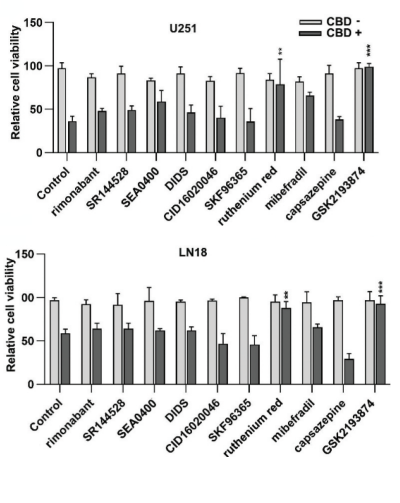
Cannabidiol inhibits human glioma by induction of lethal mitophagy through activating TRPV4. [Abstract]2021 Nov;17(11):3592-3606. PMID: 33629929
DIDS purchased from MedChemExpress. Usage Cited in: Autophagy. 2021 Nov;17(11):3592-3606. [Abstract]
Effect of DIDS (10 μM, 1 h-pretreatment) on CBD-induced glioma cell death. U251 or LN18 cells were pretreated with DIDS and then treated with CBD (30 μM) for 48 h. Cell viability was determined by the MTT assay.
-
Adv Sci (Weinh)
A Novel Mechanism of Endoplasmic Reticulum Stress- and c-Myc-Degradation-Mediated Therapeutic Benefits of Antineurokinin-1 Receptor Drugs in Colorectal Cancer. [Abstract]2021 Nov;8(21):e2101936. PMID: 34605226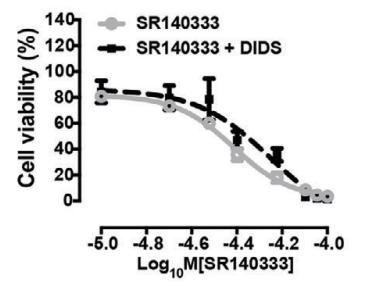
DIDS purchased from MedChemExpress. Usage Cited in: Adv Sci (Weinh). 2021 Nov;8(21):e2101936. [Abstract]
HCT116 cells were pretreated with DIDS (20 μM) for 1 h, followed by SR140333 treatment for 24 h.
-
Cell Death Dis
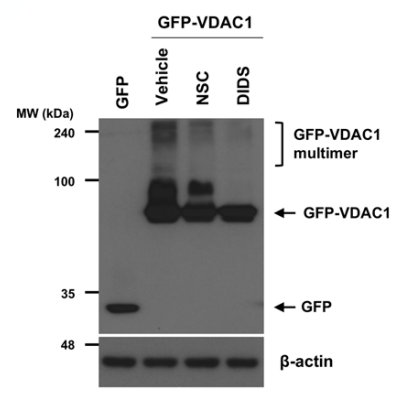
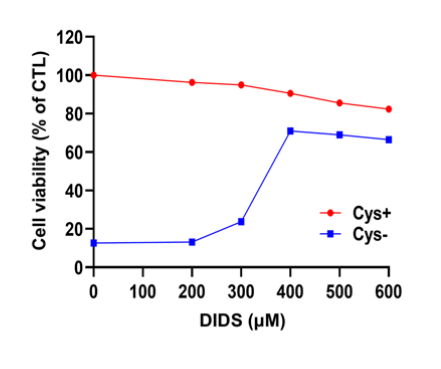
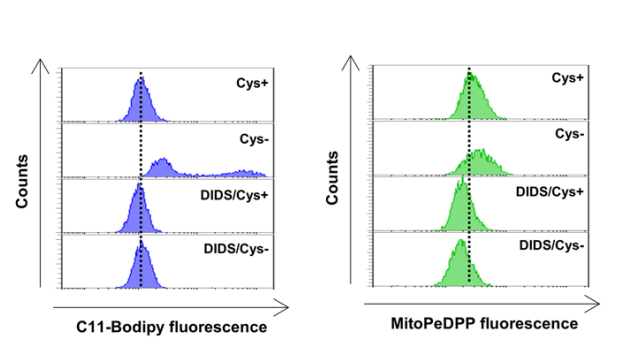
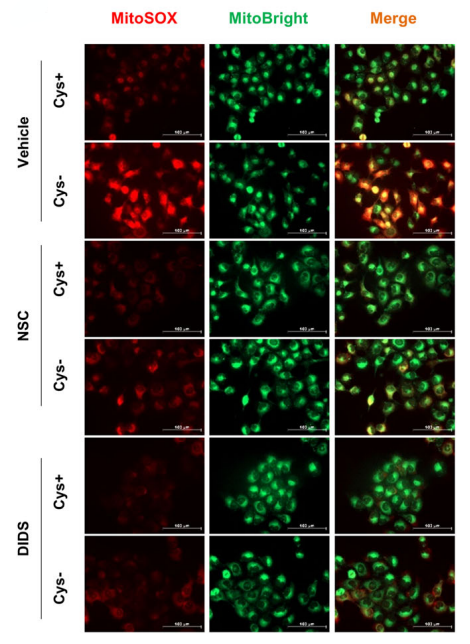
Inhibition of VDAC1 oligomerization blocks cysteine deprivation-induced ferroptosis via mitochondrial ROS suppression. [Abstract]2024 Nov 9;15(11):811. PMID: 39521767
DIDS purchased from MedChemExpress. Usage Cited in: Cell Death Dis. 2024 Nov 9;15(11):811. [Abstract]
H1299 cells were transfected with GFP or GFP-VDAC1 for 18 h and subsequently treated with 100 μM NSC15364 or 400 μM DIDS for 12 h.
DIDS purchased from MedChemExpress. Usage Cited in: Cell Death Dis. 2024 Nov 9;15(11):811. [Abstract]
H1299 cells were incubated in a control or cysteine-deprived medium with or without DIDS for the indicated concentration for 24 h.
DIDS purchased from MedChemExpress. Usage Cited in: Cell Death Dis. 2024 Nov 9;15(11):811. [Abstract]
H1299 cells were incubated in a control or cysteine-deprived medium with or without 400 μM DIDS for 12 h.
DIDS purchased from MedChemExpress. Usage Cited in: Cell Death Dis. 2024 Nov 9;15(11):811. [Abstract]
H1299 cells were incubated in a control or cysteine-deprived medium with or without 100 μM NSC15364 or 400 μM DIDS for 12 h. A representative fluorescence microscopy image of MitoSOX red staining. The green fluorescence of MitoBright LT green shows the location of mitochondria (scale bar = 100 μm).
-
Phytomedicine
Ginseng total saponin improves red blood cell oxidative stress injury by regulating tyrosine phosphorylation and glycolysis in red blood cells. [Abstract]2024 Jul 25:130:155785. PMID: 38823342 -
Cell Death Discov
SCP2 mediates the transport of lipid hydroperoxides to mitochondria in chondrocyte ferroptosis. [Abstract]2023 Jul 8;9(1):234. PMID: 37422468 -
Proc Natl Acad Sci U S A
Mitochondrial ROS triggers mitophagy through activating the DNA damage response signaling pathway. [Abstract]2025 Oct 7;122(40):e2502841122. PMID: 41026812 -
Br J Pharmacol
A mitochondria-targeting and G-quadruplex structure-binding ligand inducing calcium overload and ferroptosis in human cancer cells. [Abstract]2025 Aug;182(16):3923-3951. PMID: 40344208 -
-
Virulence
2025 Dec;16(1):2490208. PMID: 40202859 -
CNS Neurosci Ther
VDAC1 Inhibition Protects Against Noise-Induced Hearing Loss via the PINK1/Parkin Pathway. [Abstract]2025 Apr;31(4):e70410. PMID: 40285415 -
Life Sci
2020 Oct 15:259:118390. PMID: 32896556 -
Front Pharmacol
HECT, UBA and WWE domain containing 1 represses cholesterol efflux during CD4+ T cell activation in Sjögren's syndrome. [Abstract]2023 Jun 26:14:1191692. PMID: 37435494 -
Cancer Sci
System biology analysis reveals the role of voltage-dependent anion channel in mitochondrial dysfunction during non-alcoholic fatty liver disease progression into hepatocellular carcinoma. [Abstract]2020 Nov;111(11):4288-4302. PMID: 32945042 -
Cancers (Basel)
Synthesis and Biological Evaluation of a Caffeic Acid Phenethyl Ester Derivatives as Anti-Hepatocellular Carcinoma Agents via Inhibition of Mitochondrial Respiration and Disruption of Cellular Metabolism. [Abstract]2025 Dec 27;18(1):92. PMID: 41514605 -
J Cell Mol Med
Photobiomodulation therapy promotes the ATP-binding cassette transporter A1-dependent cholesterol efflux in macrophage to ameliorate atherosclerosis. [Abstract]2021 Jun;25(11):5238-5249. PMID: 33951300 -
J Virol
DIDS modulates VDAC1 oligomerization to suppress intrinsic apoptosis and attenuates in vitro and in vivo RSV infection. [Abstract]2026 Mar 24;100(3):e0220025. PMID: 41670372 -
FEBS Open Bio
VDAC1 oligomerization may enhance DDP-induced hepatocyte apoptosis by exacerbating oxidative stress and mitochondrial DNA damage. [Abstract]2022 Feb;12(2):516-522. PMID: 34967508 -
Biochem Biophys Res Commun
VDAC1 as a target in cisplatin anti-tumor activity through promoting mitochondria fusion. [Abstract]2021 Jun 30:560:52-58. PMID: 33971568 -
bioRxiv
2026 Apr 7:2026.04.04.716514. PMID: 41993559 -
Sci Total Environ
Voltage-dependent anion channel 1 mediates mitochondrial fission and glucose metabolic reprogramming in response to ionizing radiation. [Abstract]2024 Oct 10:946:174246. PMID: 38955266 -
-
-

Protocols
-
Apoptosis Solutions
Apoptosis is a regulated, generally non-lytic cell-death pathway that removes unwanted, damaged, infected, or abnormal cells through coordinated morphological changes, caspase activation, DNA fragmentation, and membrane remodeling. The intrinsic apoptosis pathway is controlled mainly by mitochondrial outer membrane permeabilization, BCL-2 family proteins, cytochrome c release, apoptosome formation, caspase-9 activation, and downstream executioner caspase-3/7 activation. The extrinsic apoptosis pathway is initiated by death receptors such as Fas, TNFR, and TRAIL receptors, which recruit adaptor proteins and activate caspase-8 before engaging executioner caspases or mitochondrial amplification through BID cleavage. Apoptosis is linked to many phenotypes, including cancer cell killing, tissue homeostasis, immune regulation, neurodegeneration, infection response, and treatment-induced cytotoxicity; unresolved questions include how apoptosis interacts with necroptosis, pyroptosis, ferroptos


Purity & Documentation
References
[1]. Ishida T, et, al. DIDS, a chemical compound that inhibits RAD51-mediated homologous pairing and strand exchange. Nucleic Acids Res. 2009 Jun;37(10):3367-76. [Content Brief]
[2]. Lepke S, et, al. A study of the relationship between inhibition of anion exchange and binding to the red blood cell membrane of 4,4'-diisothiocyano stilbene-2,2'-disulfonic acid (DIDS) and its dihydro derivative (H2DIDS). J Membr Biol. 1976 Oct 20;29(1-2):147-77. [Content Brief]

Calculators
Concentration (start) × Volume (start) = Concentration (final) × Volume (final)


DIDS Related Classifications
HY-121693 Related Classifications
 Powered by Bioz