



Diisopropyl phthalate
Based on 1 publication(s) in Google Scholar
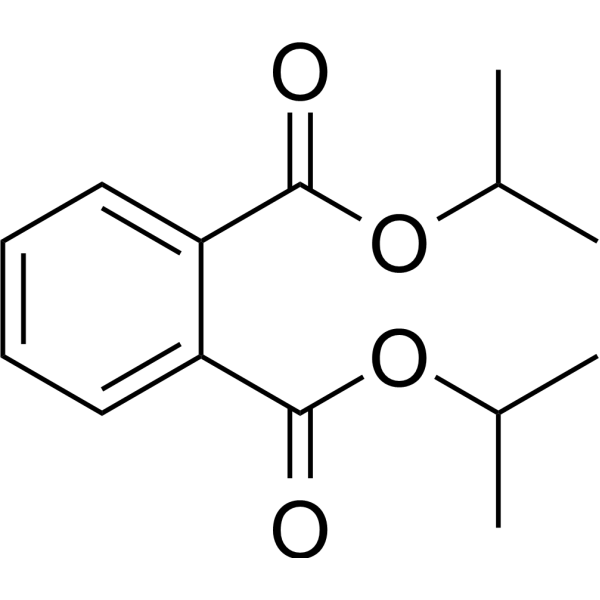
Diisopropyl phthalate (DiPP) is a phthalate diester, which is widely used as an additive in plastics and consumer products. Diisopropyl phthalate has a weak binding ability to the recombinant human estrogen receptor, with an IC50 of 41000 μM.
For research use only. We do not sell to patients.
- Purity : 99.37%
- CAS No.: 605-45-8
- Formula: C14H18O4
- Molecular Weight:250.29
-
Storage:Pure form -20°C, 3 years , 4°C, 2 years ; In solvent -80°C, 6 months , -20°C, 1 month

To place orders, for customer services and technical support, please contact: MedChemExpress USA
Tel: 609-228-6898 E-mail: [email protected] [email protected]


-
 Biological Activity
-
Chemical Information
- Protocols
- Purity & Documentation
- References
-
 Help & FAQs


-

HY-W140401
Dimethyl nonanedioateEster Product -

HY-W011926R
Diisopropyl phthalate (Standard)Standard of Diisopropyl phthalate -
HY-N2582
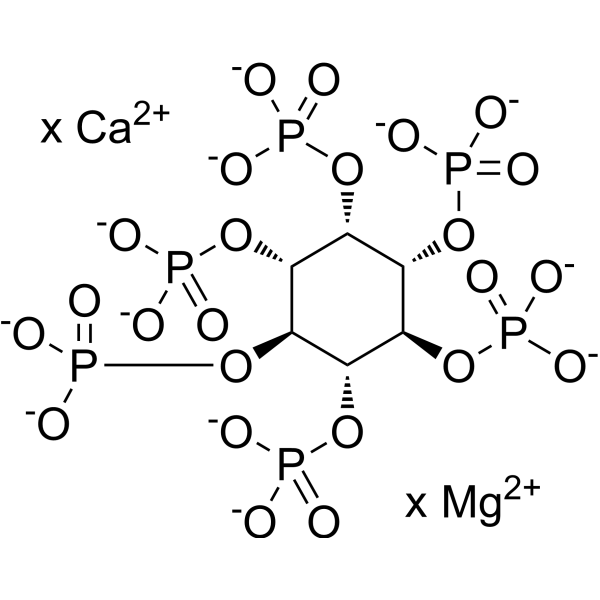
Calcium PhytateNatural product -

HY-116439
Diisononyl phthalateACE/AT1R Enhancer -
HY-134098
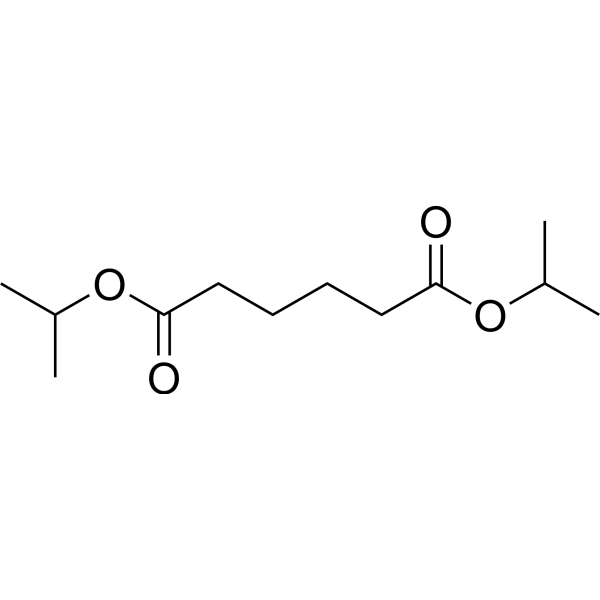
Diisopropyl adipateTRPA1 Activator -

HY-W098047
Dimethyl octadecanedioateEster Product -

HY-W098048
Dimethyl hexadecanedioateEster Product -

HY-134098R
Diisopropyl adipate (Standard)TRPA1 Activator -

HY-122983
Diisobutyl adipateplasticizer -

HY-W140401R
Dimethyl nonanedioate (Standard)Ester Product
Publications Citing Use of MedChemExpress (MCE) Diisopropyl phthalate
More

Biological Activity
Description
In Vitro
Diisopropyl phthalate can be detected in honey and royal jelly[2].
MedChemExpress (MCE) has not independently confirmed the accuracy of these methods. They are for reference only. Further protocols information, click here.
Clinical Trial
| NCT Number | Sponsor | Condition | Start Date |
Phase

|
|---|---|---|---|---|
| NCT01329991 | Plexxikon| | 2011-05 | PHASE1 |


Chemical Information
-
CAS No. 605-45-8
-
Appearance Liquid (Density: 1.063 g/cm3)
-
Molecular Weight 250.29
-
Formula C14H18O4
-
Color Colorless to light yellow
-
SMILES
CC(OC(C1=CC=CC=C1C(OC(C)C)=O)=O)C
-
Synonyms
DiPP
-
Shipping
Room temperature in continental US; may vary elsewhere.
-
Storage
Pure form -20°C 3 years 4°C 2 years In solvent -80°C 6 months -20°C 1 month


Publications (1)
-
Journal Impact Factor
-
Most Recent

Protocols
-
Cell Cytotoxicity Assay
Cytotoxicity assays are usually based on the assessment of cell membrane damage, which can also be indirectly detected by measuring cell viability. Detection methods include MTT assay, CKK-8 assay, LDH assay and ATP assay, etc.
-
Research Protocol for Endocrine Diseases
Endocrine diseases often arise from disrupted hormone production, hormone signaling, or target-tissue responsiveness; for diabetes-focused endocrine disease models, insulin signaling regulates glucose uptake, hepatic glucose output, lipid metabolism, and β-cell compensation. Type 2 diabetes develops through interacting defects in insulin resistance, β-cell dysfunction, adipose inflammation, hepatic glucose overproduction, altered incretin signaling, and ectopic lipid metabolism. A major unresolved question is whether endocrine dysfunction is driven primarily by target-tissue insulin resistance, intrinsic β-cell failure, immune/inflammatory stress, or combined multi-organ failure that differs by disease stage.


Purity & Documentation
-
Data Sheet (272 KB)
-
SDS (557 KB)
- English - EN (557 KB)
- Français - FR (557 KB)
- Deutsch - DE (557 KB)
- Norwegian - NO (557 KB)
- Español - ES (557 KB)
- Swedish - SV (557 KB)
- Italian - IT (557 KB)
- Korean - KR (557 KB)
- Portuguese - PT (557 KB)
-
Handling Instructions (2659 KB)
References
[1]. Bradley EL, et al. Determination of phthalate diesters in foods. Food Addit Contam Part A Chem Anal Control Expo Risk Assess. 2013;30(4):722-34. [Content Brief]
[2]. Zhou J, et al. Simultaneous determination of trace migration of phthalate esters in honey and royal jelly by GC-MS. J Sep Sci. 2014 Mar;37(6):650-7. [Content Brief]
[3]. Nakai M, et al. Binding characteristics of dialkyl phthalates for the estrogen receptor. Biochem Biophys Res Commun. 1999 Jan 19;254(2):311-4. [Content Brief]

Calculators
Concentration (start) × Volume (start) = Concentration (final) × Volume (final)


Diisopropyl phthalate Related Classifications
HY-W011926 Related Classifications
 Powered by Bioz