



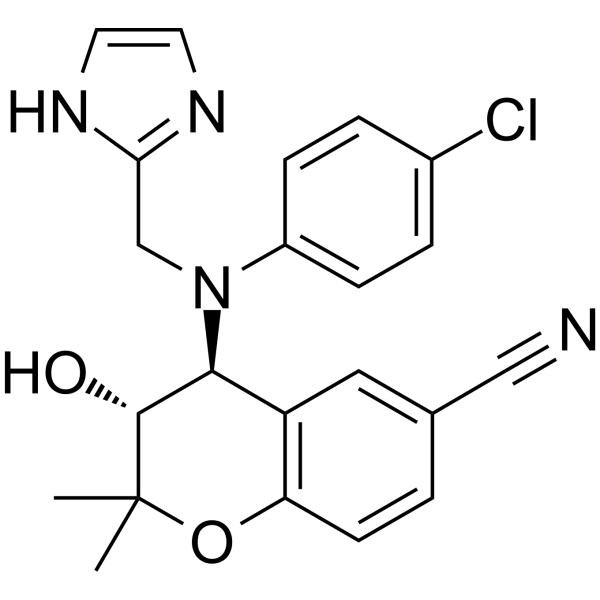
BMS-191095
Based on 1 publication(s) in Google Scholar
BMS-191095 is a selective activator of mitochondrial ATP-sensitive potassium (mitoKATP) channels. BMS-191095 inhibits human platelet aggregation by opening mitochondrial K(ATP) channels.
Para uso exclusivo en investigación. No vendemos a pacientes.
- Pureza : 98.01%
- No. CAS: 166095-21-2
- Fòrmula: C22H21ClN4O2
- Peso molecular:408.88
-
Almacenamiento:Powder -20°C, 3 years , 4°C, 2 years ; In solvent -80°C, 2 years , -20°C, 1 year

To place orders, for customer services and technical support, please contact: MedChemExpress USA
Tel: 609-228-6898 E-mail: [email protected] [email protected]


-
 Actividad biológica
-
Chemical Information
-
Solvente y solubilidad
- Pureza y Documentación
- Referencias
-
 Help & FAQs


-
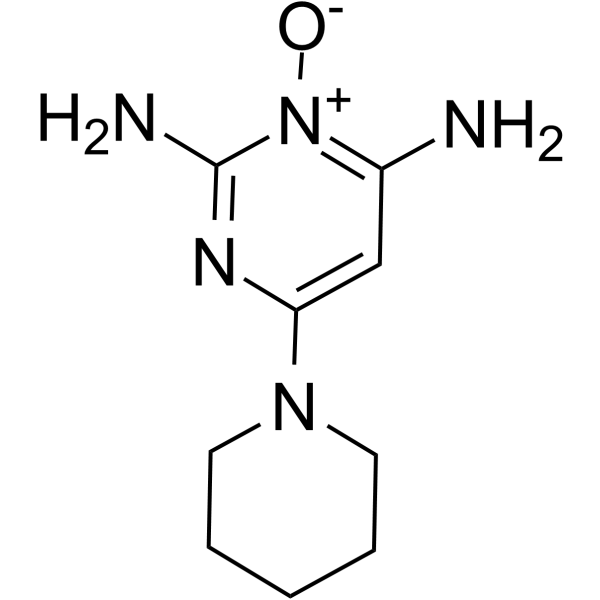
HY-B0112
MinoxidilEndogenous Metabolite -
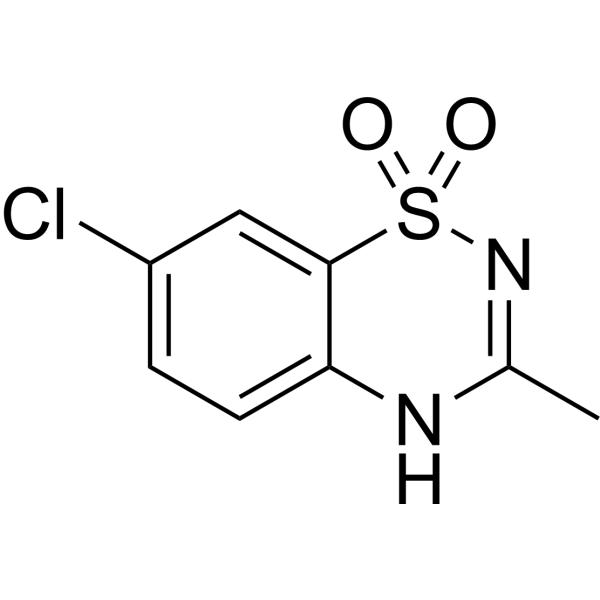
HY-B1140
DiazoxideAutophagy Inducer -

HY-B1140R
Diazoxide (Standard)Autophagy Inducer -
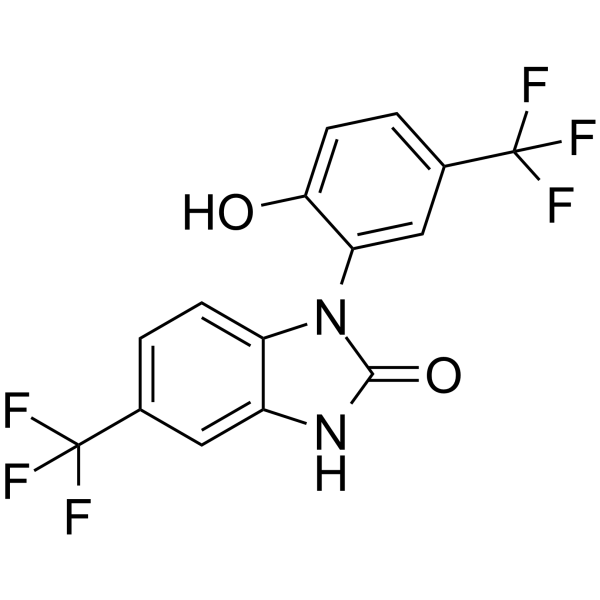
HY-12496
NS-1619BK Channel Opener -
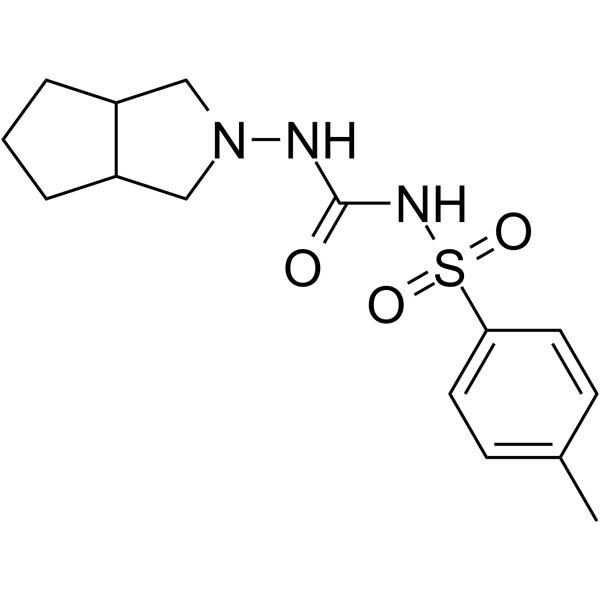
HY-B0753
GliclazidePotassium Currents Blocker -

HY-B0112R
Minoxidil (Standard)Endogenous Metabolite -
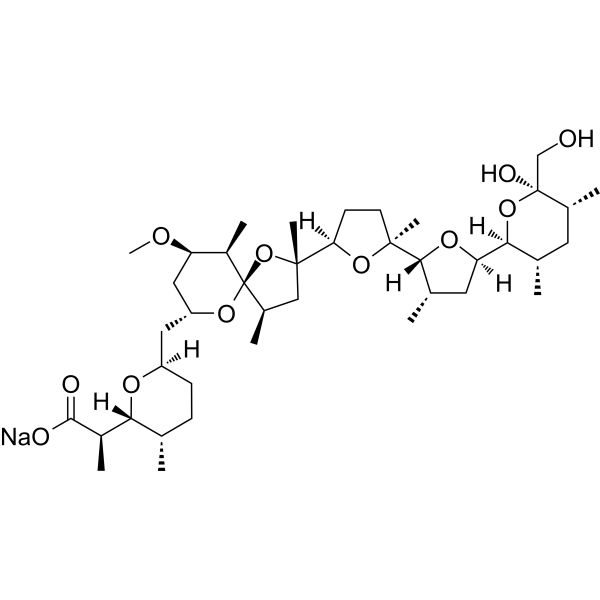
HY-100381
Nigericin sodium saltNLRP3 Activator -
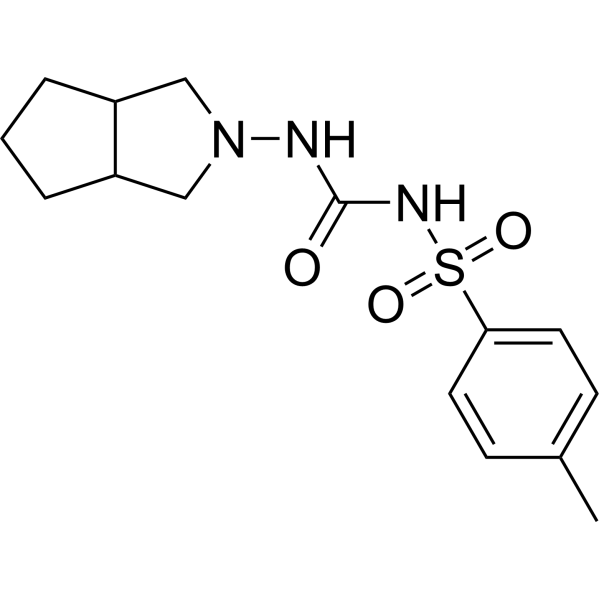
HY-B0753R
Gliclazide (Standard) -
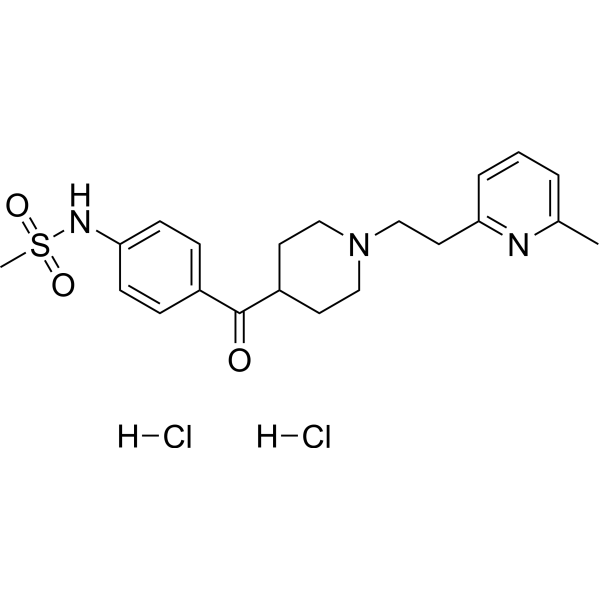
HY-15551
E-4031hERG Channels Blocker -
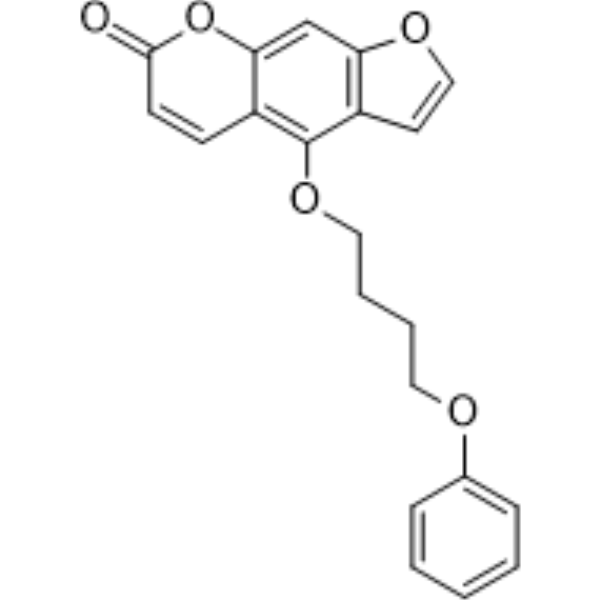
HY-10015
PAP-1Kv1.3 Blocker -
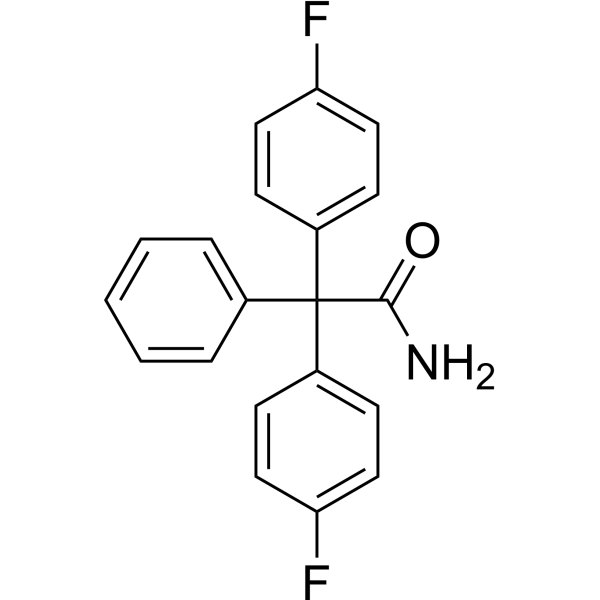
HY-50694
SenicapocGardos Channel Blocker -
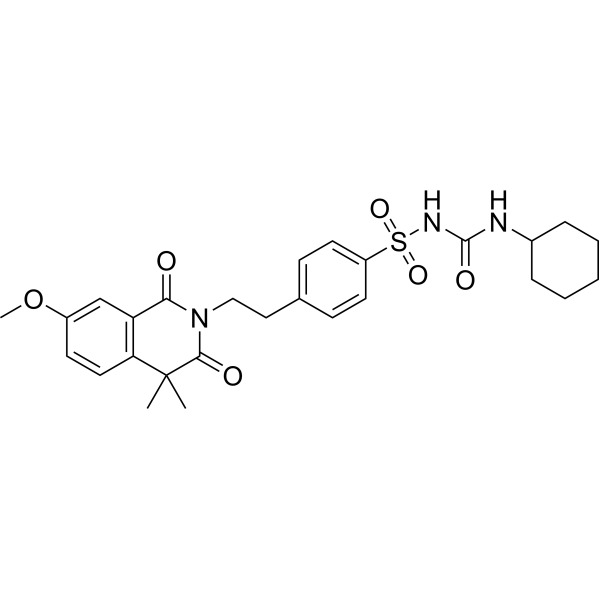
HY-B1114
GliquidoneAnti-Diabetic Drug
Publications Citing Use of MedChemExpress (MCE) BMS-191095
More

Actividad biológica
Descripciòn
In Vitro
BMS-191095 (50 μmol/L) induces mitochondrial depolarization of vascular smooth muscle (VSM) cells from SD rats[1]. BMS-191095 (10-100 μmol/L) dose-dependently induces vasodilation in endothelium denuded cerebral arteries[1]. BMS-191095 (50 μmol/L) increases the frequency of calcium sparks in VSM cells[1]. BMS-191095 (0-1500 μM) inhibits human platelet aggregation induced by collagen and thrombin with IC50 values of 63.9 and 104.8 μM, respectively[2].
MedChemExpress (MCE) has not independently confirmed the accuracy of these methods. They are for reference only. .
In Vivo
MedChemExpress (MCE) has not independently confirmed the accuracy of these methods. They are for reference only.
-
Animal Model:Male Wistar rats with the induction of ischemia induced by middle cerebral artery occlusion (MCAO)[3]
-
Dosage:2.5 or 25 μg
-
Administration:Intraventricular infusion; 30 min/60 min/24 hours before the induction of ischemia, once
-
Result:Reduced total infarct volume in rats with of pretreat dose of 25 mg and 24 h before MCA. Induced a rapid mitochondrial depolarization.


Chemical Information
-
No. CAS 166095-21-2
-
Appearance Solid
-
Peso molecular 408.88
-
Fòrmula C22H21ClN4O2
-
Color White to off-white
-
SMILES
CC(O1)(C)[C@H](O)[C@@H](N(CC2=NC=CN2)C3=CC=C(Cl)C=C3)C4=C1C=CC(C#N)=C4
-
Envío
Room temperature in continental US; may vary elsewhere.
-
Almacenamiento
Powder -20°C 3 years 4°C 2 years In solvent -80°C 2 years -20°C 1 year


Publications (1)
-
Journal Impact Factor
-
Most Recent
-
Pharmaceuticals (Basel)
Pharmacological Profiling of KATP Channel Modulators: An Outlook for New Treatment Opportunities for Migraine. [Abstract]2023 Feb 1;16(2):225. PMID: 37259373


Solvente y solubilidad
In Vitro:
DMSO : 100 mg/mL (244.57 mM; Need ultrasonic; Hygroscopic DMSO has a significant impact on the solubility of product, please use newly opened DMSO)
Please refer to the solubility information to select the appropriate solvent. Once prepared, please aliquot and store the solution to prevent product inactivation from repeated freeze-thaw cycles.
Storage method and period of stock solution: -80°C, 2 years; -20°C, 1 year. When stored at -80°C, please use it within 2 years. When stored at -20°C, please use it within 1 year.
Please refer to the solubility information to select the appropriate solvent. Once prepared, please aliquot and store the solution to prevent product inactivation from repeated freeze-thaw cycles.
Storage method and period of stock solution: -80°C, 2 years; -20°C, 1 year. When stored at -80°C, please use it within 2 years. When stored at -20°C, please use it within 1 year.
Concentration (start) × Volume (start) = Concentration (final) × Volume (final)
In Vivo:
Select the appropriate dissolution method based on your experimental animal and administration route.
- For the following dissolution methods, please ensure to first prepare a clear stock solution using an In Vitro approach and then sequentially add co-solvents:
- To ensure reliable experimental results, the clarified stock solution can be appropriately stored based on storage conditions. As for the working solution for In Vivo experiments, it is recommended to prepare freshly and use it on the same day.
- The percentages shown for the solvents indicate their volumetric ratio in the final prepared solution. If precipitation or phase separation occurs during preparation, heat and/or sonication can be used to aid dissolution.
Add each solvent one by one: 10% DMSO 40% PEG300 5% Tween-80 45% Saline
Solubility: 2.5 mg/mL (6.11 mM); Suspended solution; Need ultrasonic
This protocol yields a suspended solution of 2.5 mg/mL. Suspended solution can be used for oral and intraperitoneal injection.
Taking 1 mL working solution as an example, add 100 μL DMSO stock solution (25.0 mg/mL) to 400 μL PEG300, and mix evenly; then add 50 μL Tween-80 and mix evenly; then add 450 μL Saline to adjust the volume to 1 mL.
Preparation of Saline: Dissolve 0.9 g sodium chloride in ddH₂O and dilute to 100 mL to obtain a clear Saline solution.
Add each solvent one by one: 10% DMSO 90% (20% SBE-β-CD in Saline)
Solubility: 2.5 mg/mL (6.11 mM); Suspended solution; Need ultrasonic
This protocol yields a suspended solution of 2.5 mg/mL. Suspended solution can be used for oral and intraperitoneal injection.
Taking 1 mL working solution as an example, add 100 μL DMSO stock solution (25.0 mg/mL) to 900 μL 20% SBE-β-CD in Saline, and mix evenly.
Preparation of 20% SBE-β-CD in Saline (4°C, storage for one week): 2 g SBE-β-CD powder is dissolved in 10 mL Saline, completely dissolve until clear.
In Vivo Dissolution Calculator
Please enter the basic information of animal experiments:
-
-
-
-
Recommended: Prepare an additional quantity of animals to account for potential losses during experiments.
Please enter your animal formula composition:
-
%DMSO +
Recommended: Keep the proportion of DMSO in working solution below 2% if your animal is weak.
-
%+
-
+%Tween-80 + +
-
%Saline +
The co-solvents required include: DMSO, . All of co-solvents are available by MedChemExpress (MCE). , Tween 80. All of co-solvents are available by MedChemExpress (MCE).
Working solution concentration: 0.22 mg/mL
Method for preparing stock solution: mg drug dissolved in μL DMSO. Stock solution concentration: mg/mL.
1. Take μL DMSO stock solution;
2. Add μL .
μL , mix evenly;
3. Then add μL Tween 80, mix evenly;
4. Then add μL
Please ensure that the stock solution in the first step is dissolved to a clear state, and add co-solvents in sequence. You can use ultrasonic heating (ultrasonic cleaner, recommended frequency 20-40 kHz), vortexing, etc. to assist dissolution.


Pureza y Documentación
-
Ficha de datos (281 KB)
-
SDS (251 KB)
- English - EN (251 KB)
- Français - FR (251 KB)
- Deutsch - DE (251 KB)
- Norwegian - NO (251 KB)
- Español - ES (251 KB)
- Swedish - SV (251 KB)
- Italian - IT (251 KB)
- Korean - KR (251 KB)
- Portuguese - PT (251 KB)
-
Instrucciones de manejo (2659 KB)
Referencias
[1]. Katakam PV, et al. Diversity of mitochondria-dependent dilator mechanisms in vascular smooth muscle of cerebral arteries from normal and insulin-resistant rats. Am J Physiol Heart Circ Physiol. 2014 Aug 15;307(4):H493-503. [Content Brief]
[2]. Cho MR, et al. BMS-191095, a cardioselective mitochondrial K(ATP) opener, inhibits human platelet aggregation by opening mitochondrial K(ATP) channels. Arch Pharm Res. 2005 Jan;28(1):61-7. [Content Brief]
[3]. Mayanagi K, et al. The mitochondrial K(ATP) channel opener BMS-191095 reduces neuronal damage after transient focal cerebral ischemia in rats. J Cereb Blood Flow Metab. 2007 Feb;27(2):348-55. [Content Brief]


Complete Stock Solution Preparation Table
Please refer to the solubility information to select the appropriate solvent. Once prepared, please aliquot and store the solution to prevent product inactivation from repeated freeze-thaw cycles.
Storage method and period of stock solution: -80°C, 2 years; -20°C, 1 year. When stored at -80°C, please use it within 2 years. When stored at -20°C, please use it within 1 year.
| Optional Solvent | Concentration Solvent Mass | 1 mg | 5 mg | 10 mg | 25 mg |
|---|---|---|---|---|---|
| DMSO | 1 mM | 2.4457 mL | 12.2285 mL | 24.4571 mL | 61.1426 mL |
| 5 mM | 0.4891 mL | 2.4457 mL | 4.8914 mL | 12.2285 mL | |
| 10 mM | 0.2446 mL | 1.2229 mL | 2.4457 mL | 6.1143 mL | |
| 15 mM | 0.1630 mL | 0.8152 mL | 1.6305 mL | 4.0762 mL | |
| 20 mM | 0.1223 mL | 0.6114 mL | 1.2229 mL | 3.0571 mL | |
| 25 mM | 0.0978 mL | 0.4891 mL | 0.9783 mL | 2.4457 mL | |
| 30 mM | 0.0815 mL | 0.4076 mL | 0.8152 mL | 2.0381 mL | |
| 40 mM | 0.0611 mL | 0.3057 mL | 0.6114 mL | 1.5286 mL | |
| 50 mM | 0.0489 mL | 0.2446 mL | 0.4891 mL | 1.2229 mL | |
| 60 mM | 0.0408 mL | 0.2038 mL | 0.4076 mL | 1.0190 mL | |
| 80 mM | 0.0306 mL | 0.1529 mL | 0.3057 mL | 0.7643 mL | |
| 100 mM | 0.0245 mL | 0.1223 mL | 0.2446 mL | 0.6114 mL |


BMS-191095 Related Classifications
HY-14256 Related Classifications
 Powered by Bioz