



FABPs ligand 6
Based on 2 publication(s) in Google Scholar
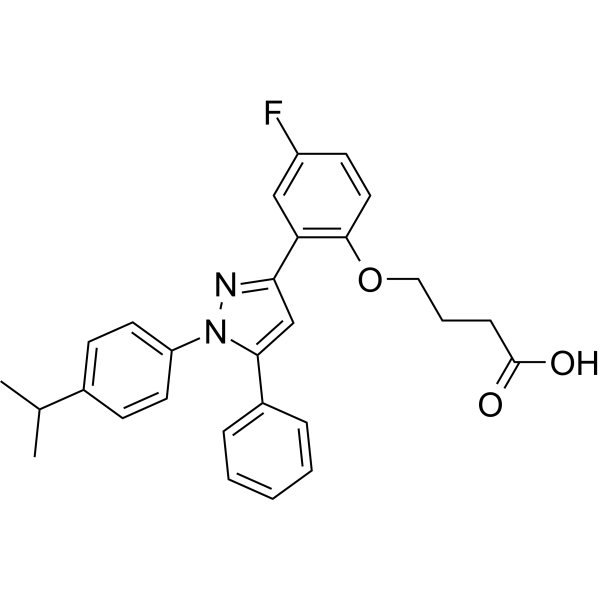
FABPs ligand 6 (MF6) is an FABP5 and FABP7 inhibitor with KD values of 874 nM and 20 nM, respectively. FABPs ligand 6 can be used for multiple sclerosis research.
For research use only. We do not sell to patients.
- Purity : 99.86%
- CAS No.: 2988135-14-2
- Formula: C28H27FN2O3
- Molecular Weight:458.52
-
Storage:
4°C, protect from light
* In solvent : -80°C, 6 months; -20°C, 1 month (protect from light)

To place orders, for customer services and technical support, please contact: MedChemExpress USA
Tel: 609-228-6898 E-mail: [email protected] [email protected]


-
 Biological Activity
-
Chemical Information
-
Solvent & Solubility
- Purity & Documentation
- References
-
 Help & FAQs


-
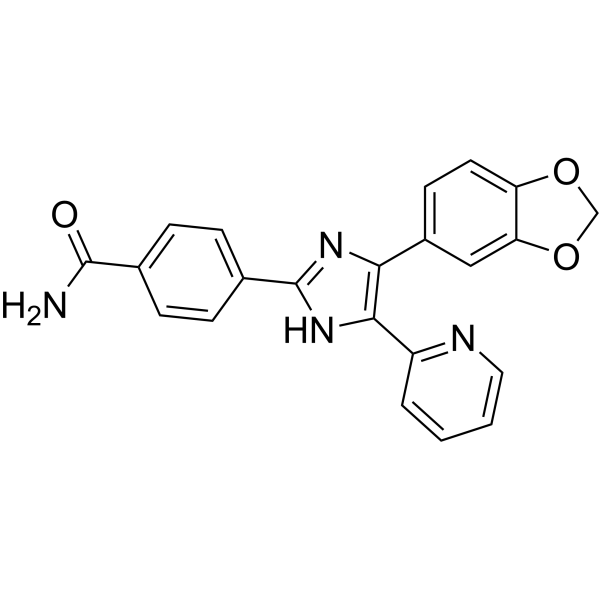
HY-10431
SB-431542TGF-β Receptor Kinase Inhibitor -
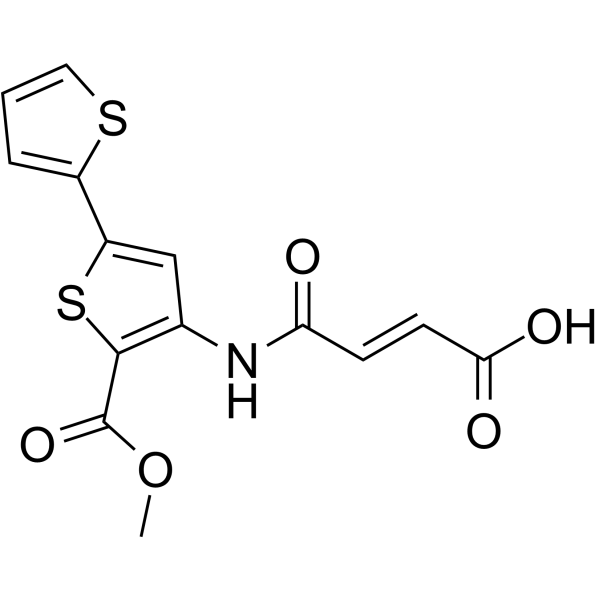
HY-101503
HTS01037AFABP Antagonist -
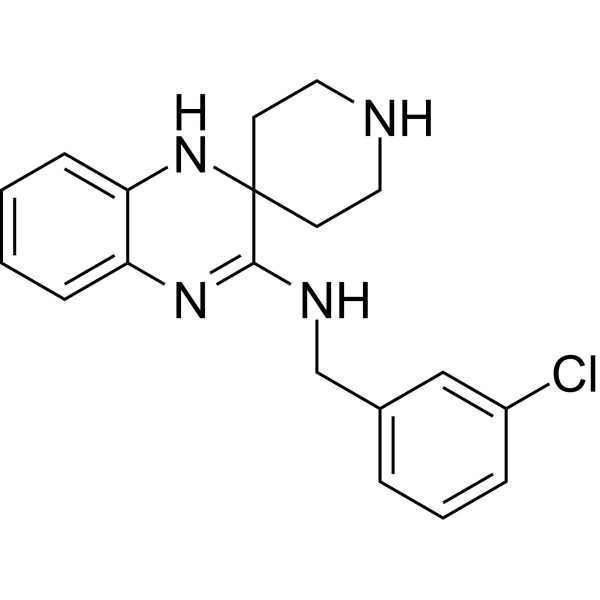
HY-12726
Liproxstatin-1Ferroptosis Inhibitor -
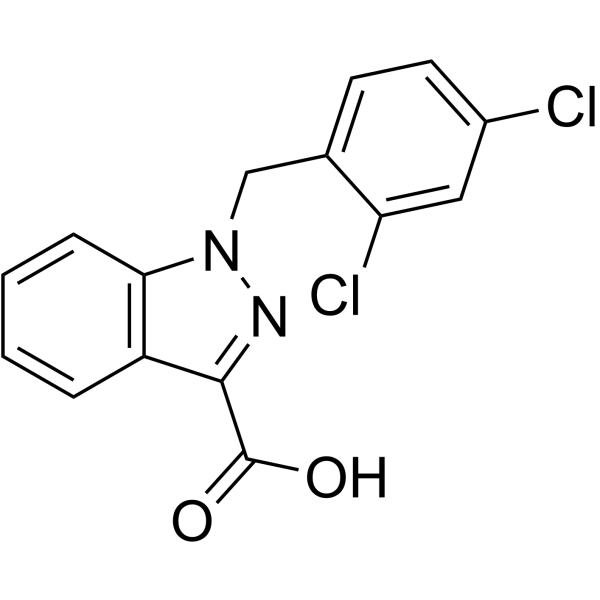
HY-B0486
LonidamineHexokinase Inhibitor -
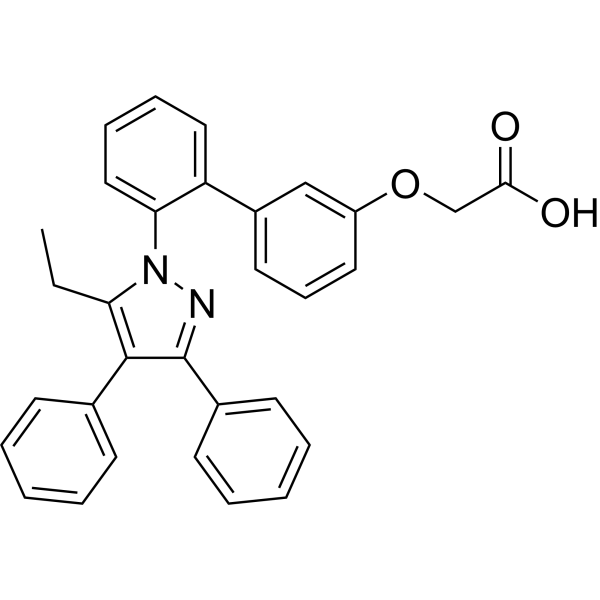
HY-101903
BMS-309403FABP4 Inhibitor -
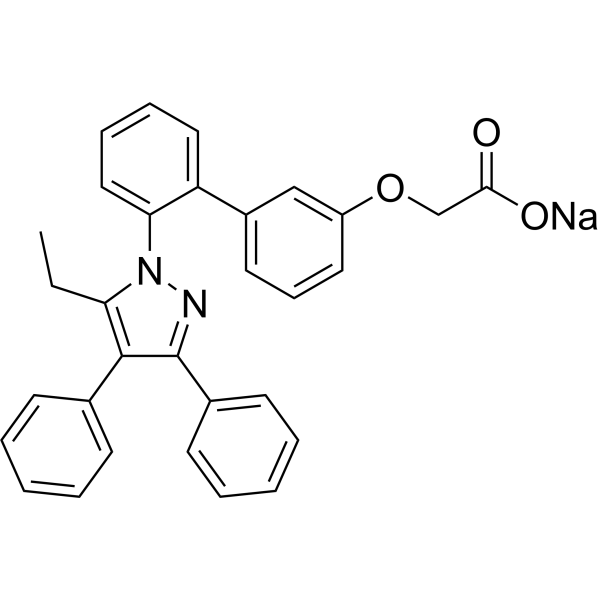
HY-101903A
BMS-309403 sodiumFABP4 Inhibitor -

HY-101903R
BMS-309403 (Standard)FABP4 Inhibitor -

HY-101503R
HTS01037 (Standard)AFABP Antagonist -

HY-101903AR
BMS-309403 sodium (Standard)FABP4 Inhibitor -
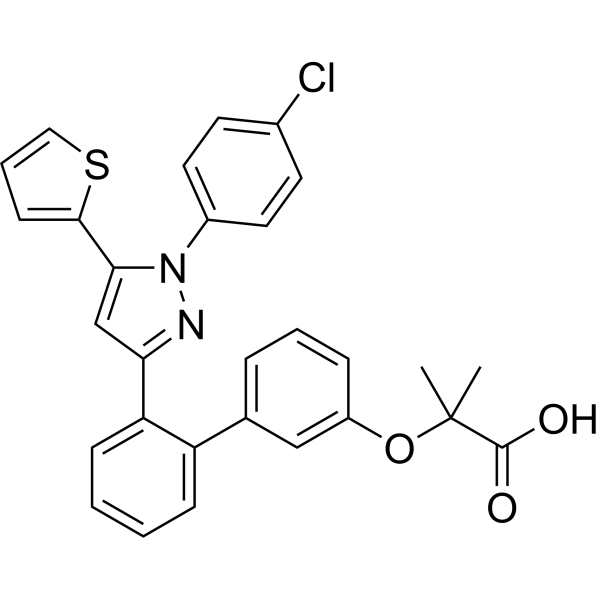
HY-117562
a-FABP-IN-1a-FABP Inhibitor
Publications Citing Use of MedChemExpress (MCE) FABPs ligand 6
More

Biological Activity
Description
IC50 & Target
KD: 20 nM (FABP7), 874 nM (FABP5)[1]
In Vitro
FABPs ligand 6 (MF6) rescues mitochondrial function by blocking voltagedependent anion channel (VDAC)-1-dependent mitochondrial macropore formation induced by psychosine in KG-1C cells, a FABP5- mediated injury[1].
MedChemExpress (MCE) has not independently confirmed the accuracy of these methods. They are for reference only.
In Vivo
MedChemExpress (MCE) has not independently confirmed the accuracy of these methods. They are for reference only.
-
Animal Model:8-10-week-old female C57BMF/6J mice with MOG35-55-administered experimental autoimmune encephalomyelitis (EAE) mouse model[1]
-
Dosage:1 mg/kg
-
Administration:Intragastric administration, daily for 4 weeks
-
Result:Attenuated EAE symptoms, decreased oxidative stress, inhibited astrocyte activation and protected oligodendrocytes.


Chemical Information
-
CAS No. 2988135-14-2
-
Appearance Solid
-
Molecular Weight 458.52
-
Formula C28H27FN2O3
-
Color Off-white to light yellow
-
SMILES
CC(C)C1=CC=C(N2C(C3=CC=CC=C3)=CC(C4=C(OCCCC(O)=O)C=CC(F)=C4)=N2)C=C1
-
Synonyms
MF6
-
Shipping
Room temperature in continental US; may vary elsewhere.
-
Storage
4°C, protect from light
* In solvent : -80°C, 6 months; -20°C, 1 month (protect from light)


Publications (2)
-
Journal Impact Factor
-
Most Recent
-
Science
2025 Mar 14;387(6739):eadm9805. PMID: 40080571 -
Adv Sci (Weinh)
Lilrb4a Suppression Reprograms Microglia to Mitigate APOE4-Associated Amyloid Plaques and Cerebral Amyloid Angiopathy in Association With a PPAR-Linked Pro-Clearance State. [Abstract]2026 Jun 22:e24167. PMID: 42330346


Solvent & Solubility
In Vitro:
DMSO : 125 mg/mL (272.62 mM; Need ultrasonic; Hygroscopic DMSO has a significant impact on the solubility of product, please use newly opened DMSO)
Please refer to the solubility information to select the appropriate solvent. Once prepared, please aliquot and store the solution to prevent product inactivation from repeated freeze-thaw cycles.
Storage method and period of stock solution: -80°C, 6 months; -20°C, 1 month (protect from light). When stored at -80°C, please use it within 6 months. When stored at -20°C, please use it within 1 month.
Please refer to the solubility information to select the appropriate solvent. Once prepared, please aliquot and store the solution to prevent product inactivation from repeated freeze-thaw cycles.
Storage method and period of stock solution: -80°C, 6 months; -20°C, 1 month (protect from light). When stored at -80°C, please use it within 6 months. When stored at -20°C, please use it within 1 month.
Concentration (start) × Volume (start) = Concentration (final) × Volume (final)
In Vivo:
Select the appropriate dissolution method based on your experimental animal and administration route.
- For the following dissolution methods, please ensure to first prepare a clear stock solution using an In Vitro approach and then sequentially add co-solvents:
- To ensure reliable experimental results, the clarified stock solution can be appropriately stored based on storage conditions. As for the working solution for In Vivo experiments, it is recommended to prepare freshly and use it on the same day.
- The percentages shown for the solvents indicate their volumetric ratio in the final prepared solution. If precipitation or phase separation occurs during preparation, heat and/or sonication can be used to aid dissolution.
Add each solvent one by one: 10% DMSO 40% PEG300 5% Tween-80 45% Saline
Solubility: ≥ 2.5 mg/mL (5.45 mM); Clear solution
This protocol yields a clear solution of ≥ 2.5 mg/mL (saturation unknown).
Taking 1 mL working solution as an example, add 100 μL DMSO stock solution (25.0 mg/mL) to 400 μL PEG300, and mix evenly; then add 50 μL Tween-80 and mix evenly; then add 450 μL Saline to adjust the volume to 1 mL.
Preparation of Saline: Dissolve 0.9 g sodium chloride in ddH₂O and dilute to 100 mL to obtain a clear Saline solution.
Add each solvent one by one: 10% DMSO 90% (20% SBE-β-CD in Saline)
Solubility: 2.5 mg/mL (5.45 mM); Suspended solution; Need ultrasonic
This protocol yields a suspended solution of 2.5 mg/mL. Suspended solution can be used for oral and intraperitoneal injection.
Taking 1 mL working solution as an example, add 100 μL DMSO stock solution (25.0 mg/mL) to 900 μL 20% SBE-β-CD in Saline, and mix evenly.
Preparation of 20% SBE-β-CD in Saline (4°C, storage for one week): 2 g SBE-β-CD powder is dissolved in 10 mL Saline, completely dissolve until clear.
For the following dissolution methods, please prepare the working solution directly:
It is recommended to prepare fresh solutions and use them promptly within a short period of time.
The percentages shown for the solvents indicate their volumetric ratio in the final prepared solution. If precipitation or phase separation occurs during preparation, heat and/or sonication can be used to aid dissolution.
Add each solvent one by one: 0.5% CMC-Na/saline water
Solubility: 5 mg/mL (10.90 mM); Suspended solution; Need ultrasonic
In Vivo Dissolution Calculator
Please enter the basic information of animal experiments:
-
-
-
-
Recommended: Prepare an additional quantity of animals to account for potential losses during experiments.
Please enter your animal formula composition:
-
%DMSO +
Recommended: Keep the proportion of DMSO in working solution below 2% if your animal is weak.
-
%+
-
+%Tween-80 + +
-
%Saline +
The co-solvents required include: DMSO, . All of co-solvents are available by MedChemExpress (MCE). , Tween 80. All of co-solvents are available by MedChemExpress (MCE).
Working solution concentration: 0.22 mg/mL
Method for preparing stock solution: mg drug dissolved in μL DMSO. Stock solution concentration: mg/mL. * In solvent : -80°C, 6 months; -20°C, 1 month (protect from light)
1. Take μL DMSO stock solution;
2. Add μL .
μL , mix evenly;
3. Then add μL Tween 80, mix evenly;
4. Then add μL
Please ensure that the stock solution in the first step is dissolved to a clear state, and add co-solvents in sequence. You can use ultrasonic heating (ultrasonic cleaner, recommended frequency 20-40 kHz), vortexing, etc. to assist dissolution.


Purity & Documentation
-
Data Sheet (275 KB)
-
SDS (252 KB)
- English - EN (252 KB)
- Français - FR (252 KB)
- Deutsch - DE (252 KB)
- Norwegian - NO (252 KB)
- Español - ES (252 KB)
- Swedish - SV (252 KB)
- Italian - IT (252 KB)
- Korean - KR (252 KB)
- Portuguese - PT (252 KB)
-
Handling Instructions (2659 KB)
References


Complete Stock Solution Preparation Table
Please refer to the solubility information to select the appropriate solvent. Once prepared, please aliquot and store the solution to prevent product inactivation from repeated freeze-thaw cycles.
Storage method and period of stock solution: -80°C, 6 months; -20°C, 1 month (protect from light). When stored at -80°C, please use it within 6 months. When stored at -20°C, please use it within 1 month.
| Optional Solvent | Concentration Solvent Mass | 1 mg | 5 mg | 10 mg | 25 mg |
|---|---|---|---|---|---|
| DMSO | 1 mM | 2.1809 mL | 10.9047 mL | 21.8093 mL | 54.5233 mL |
| 5 mM | 0.4362 mL | 2.1809 mL | 4.3619 mL | 10.9047 mL | |
| 10 mM | 0.2181 mL | 1.0905 mL | 2.1809 mL | 5.4523 mL | |
| 15 mM | 0.1454 mL | 0.7270 mL | 1.4540 mL | 3.6349 mL | |
| 20 mM | 0.1090 mL | 0.5452 mL | 1.0905 mL | 2.7262 mL | |
| 25 mM | 0.0872 mL | 0.4362 mL | 0.8724 mL | 2.1809 mL | |
| 30 mM | 0.0727 mL | 0.3635 mL | 0.7270 mL | 1.8174 mL | |
| 40 mM | 0.0545 mL | 0.2726 mL | 0.5452 mL | 1.3631 mL | |
| 50 mM | 0.0436 mL | 0.2181 mL | 0.4362 mL | 1.0905 mL | |
| 60 mM | 0.0363 mL | 0.1817 mL | 0.3635 mL | 0.9087 mL | |
| 80 mM | 0.0273 mL | 0.1363 mL | 0.2726 mL | 0.6815 mL | |
| 100 mM | 0.0218 mL | 0.1090 mL | 0.2181 mL | 0.5452 mL |


FABPs ligand 6 Related Classifications
HY-145990 Related Classifications
 Powered by Bioz