



COH34
Based on 2 publication(s) in Google Scholar
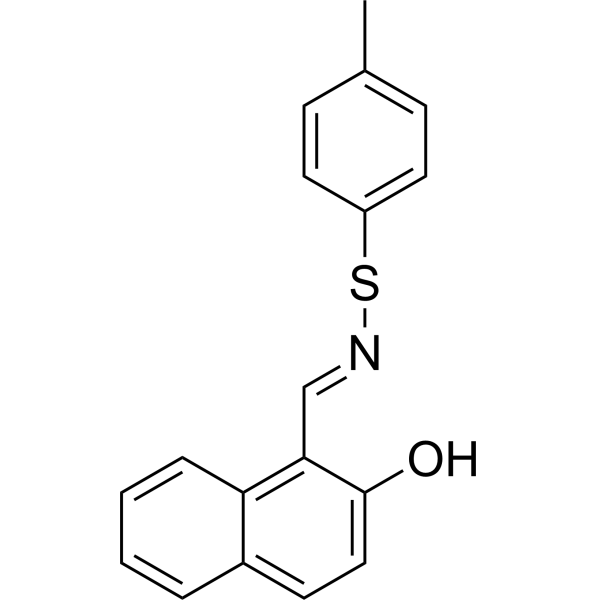
COH34 is a potent and specific poly(ADP-ribose) glycohydrolase (PARG) inhibitor with an IC50 of 0.37 nM. COH34 binds to the catalytic domain of PARG (Kd=0.547 μM), thereby prolonging PARylation at DNA lesions and trapping DNA repair factors.
For research use only. We do not sell to patients.
- Purity : 99.97%
- CAS No.: 906439-72-3
- Formula: C18H15NOS
- Molecular Weight:293.38
-
Storage:Powder -20°C, 3 years , 4°C, 2 years
* The compound is unstable in solutions, freshly prepared is recommended.

To place orders, for customer services and technical support, please contact: MedChemExpress USA
Tel: 609-228-6898 E-mail: [email protected] [email protected]


-
 Biological Activity
-
Chemical Information
-
Solvent & Solubility
- Protocols
- Purity & Documentation
- References
-
 Help & FAQs


-
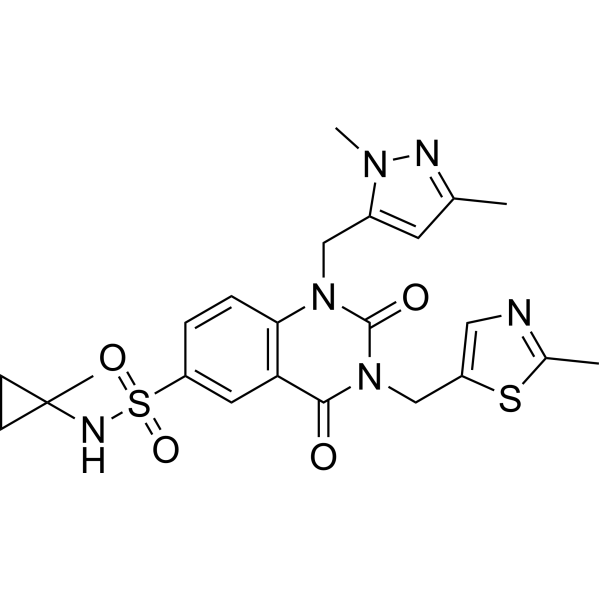
HY-108360
PDD 00017273PARG Inhibitor -
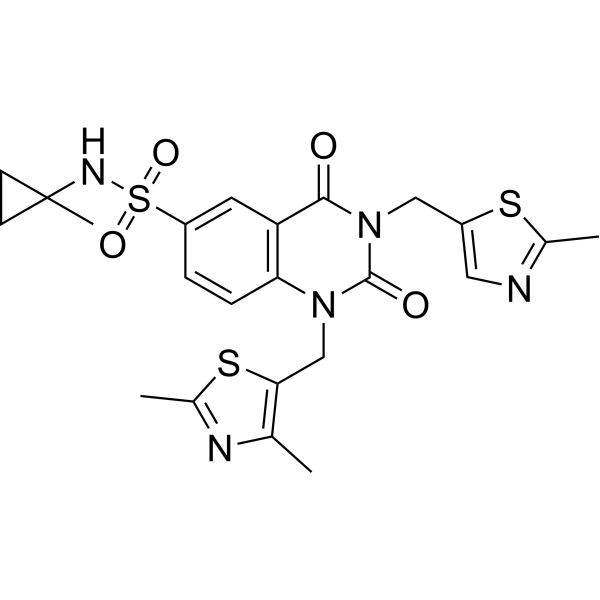
HY-133531
PDD00017272PARG Inhibitor -
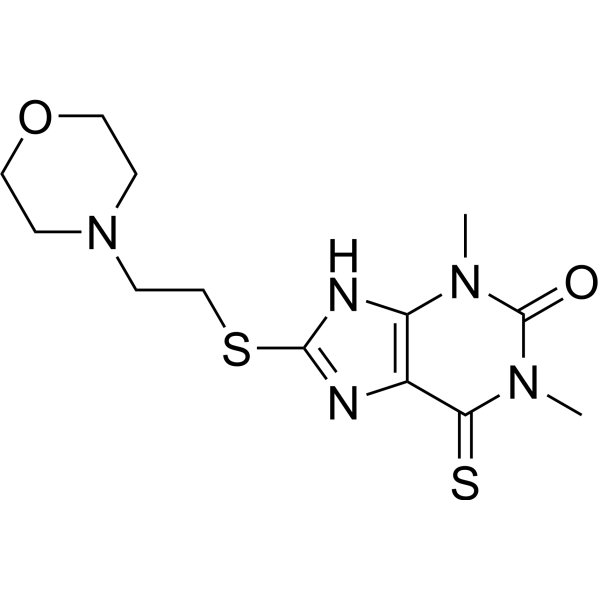
HY-137924
JA2131PARG Inhibitor -
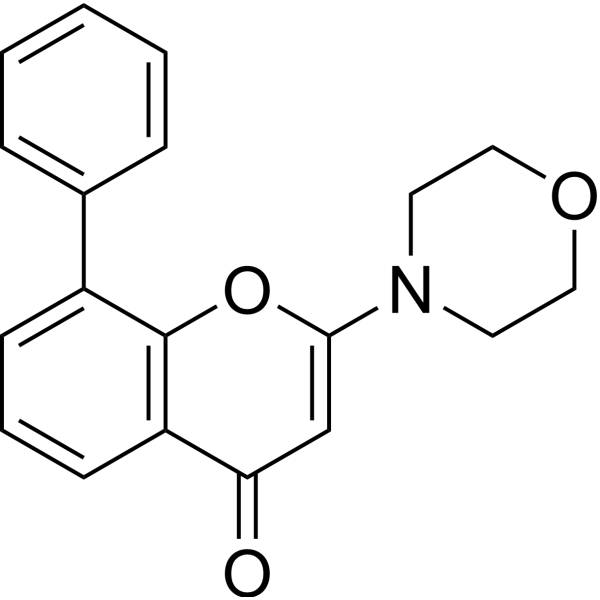
HY-10108
LY294002PI3K Inhibitor -
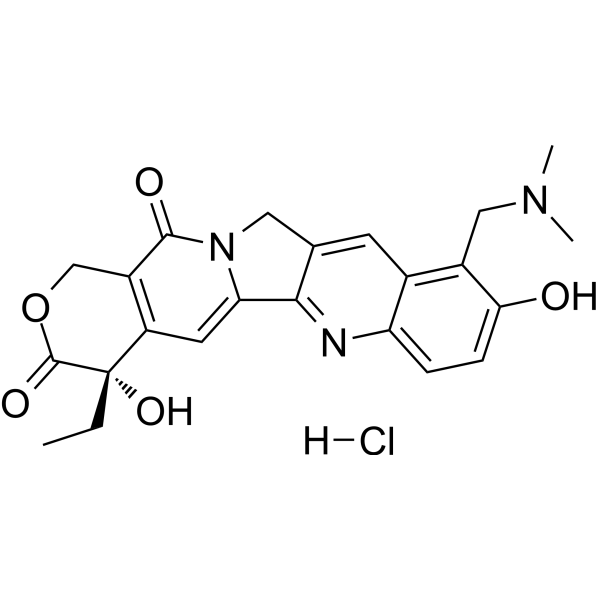
HY-13768A
Topotecan hydrochlorideTopoisomerase I Inhibitor -
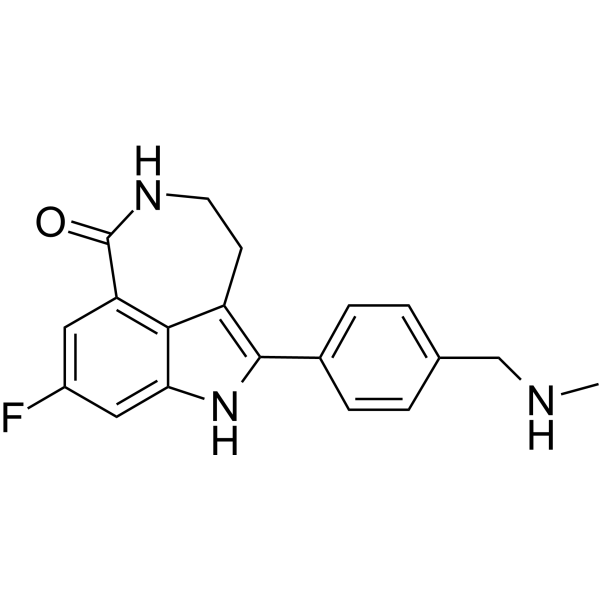
HY-10617A
RucaparibPARP Inhibitor -

HY-108360R
PDD 00017273 (Standard)Reference Standard -
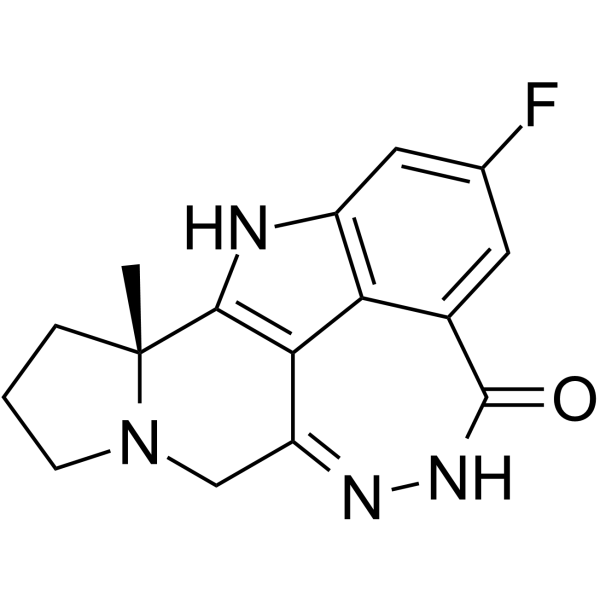
HY-104044
PamiparibPARP1/2 Inhibitor -
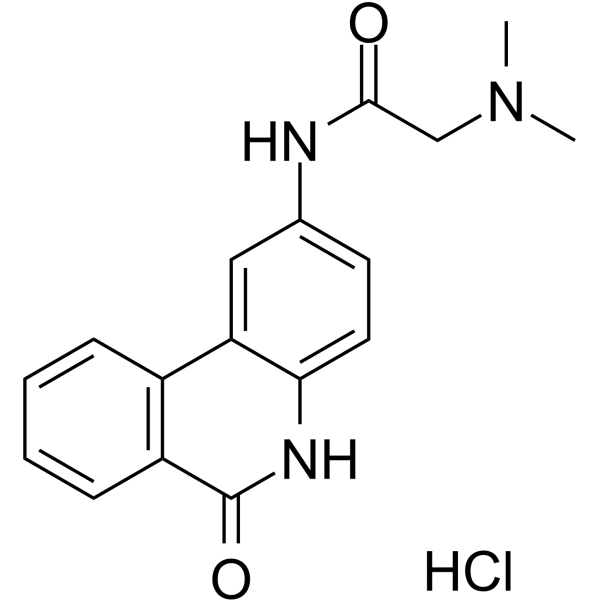
HY-13688
PJ34 hydrochloridePARP Inhibitor -
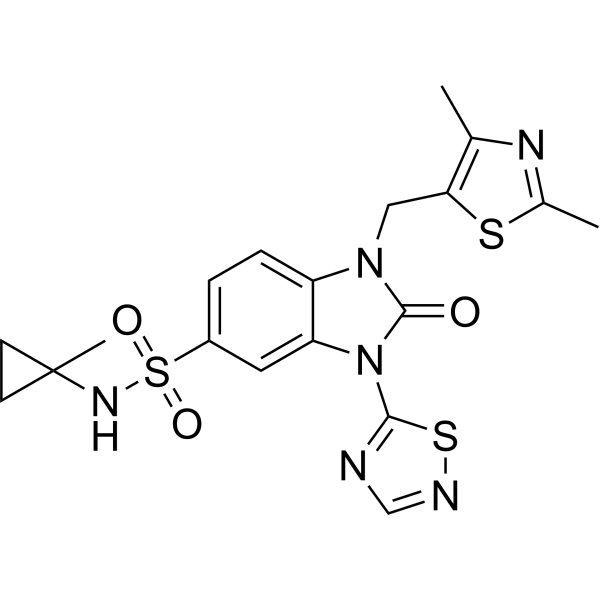
HY-133530
PDD00017238PARG Inhibitor -

HY-122041
EthacridinePARG Inhibitor -
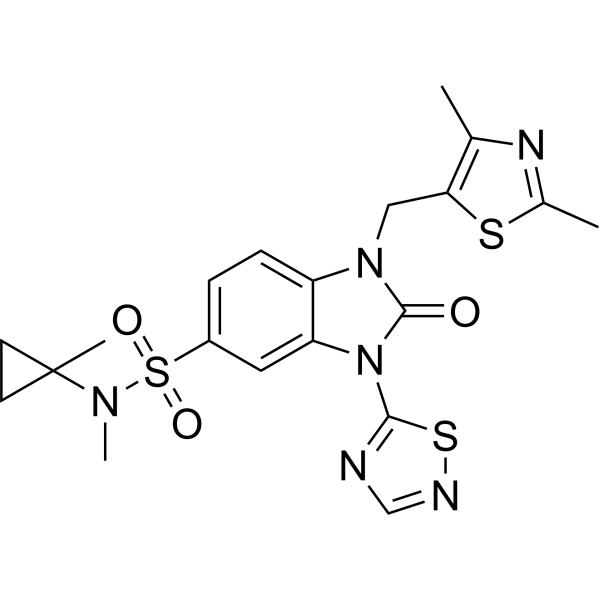
HY-135846
PDD00031705PARG Inhibitor
Publications Citing Use of MedChemExpress (MCE) COH34
More

Biological Activity
Description
IC50 & Target
IC50: 0.37 nM (PARG)[1]
In Vitro
In Vivo
MedChemExpress (MCE) has not independently confirmed the accuracy of these methods. They are for reference only.


Chemical Information
-
CAS No. 906439-72-3
-
Appearance Solid
-
Molecular Weight 293.38
-
Formula C18H15NOS
-
Color Light yellow to yellow
-
SMILES
CC1=CC=C(S/N=C/C2=C3C=CC=CC3=CC=C2O)C=C1
-
Shipping
Room temperature in continental US; may vary elsewhere.
-
Storage
Powder -20°C 3 years 4°C 2 years * The compound is unstable in solutions, freshly prepared is recommended.


Publications (2)
-
Journal Impact Factor
-
Most Recent
-
-
Cancer Rep (Hoboken)
Genomic and biological aspects of resistance to selective poly(ADP-ribose) glycohydrolase inhibitor PDD00017273 in human colorectal cancer cells. [Abstract]2023 Feb;6(2):e1709. PMID: 36053937


Solvent & Solubility
In Vitro:
DMSO : 16.67 mg/mL (56.82 mM; Need ultrasonic; Hygroscopic DMSO has a significant impact on the solubility of product, please use newly opened DMSO)
Please refer to the solubility information to select the appropriate solvent. The compound is unstable in solutions, freshly prepared is recommended.
Please refer to the solubility information to select the appropriate solvent. The compound is unstable in solutions, freshly prepared is recommended.
Concentration (start) × Volume (start) = Concentration (final) × Volume (final)
In Vivo:
Select the appropriate dissolution method based on your experimental animal and administration route.
- For the following dissolution methods, please ensure to first prepare a clear stock solution using an In Vitro approach and then sequentially add co-solvents:
- To ensure reliable experimental results, the clarified stock solution can be appropriately stored based on storage conditions. As for the working solution for In Vivo experiments, it is recommended to prepare freshly and use it on the same day.
- The percentages shown for the solvents indicate their volumetric ratio in the final prepared solution. If precipitation or phase separation occurs during preparation, heat and/or sonication can be used to aid dissolution.
Add each solvent one by one: 10% DMSO 40% PEG300 5% Tween-80 45% Saline
Solubility: ≥ 1.67 mg/mL (5.69 mM); Clear solution
This protocol yields a clear solution of ≥ 1.67 mg/mL (saturation unknown).
Taking 1 mL working solution as an example, add 100 μL DMSO stock solution (16.7 mg/mL) to 400 μL PEG300, and mix evenly; then add 50 μL Tween-80 and mix evenly; then add 450 μL Saline to adjust the volume to 1 mL.
Preparation of Saline: Dissolve 0.9 g sodium chloride in ddH₂O and dilute to 100 mL to obtain a clear Saline solution.
In Vivo Dissolution Calculator
Please enter the basic information of animal experiments:
-
-
-
-
Recommended: Prepare an additional quantity of animals to account for potential losses during experiments.
Please enter your animal formula composition:
-
%DMSO +
Recommended: Keep the proportion of DMSO in working solution below 2% if your animal is weak.
-
%+
-
+%Tween-80 + +
-
%Saline +
The co-solvents required include: DMSO, . All of co-solvents are available by MedChemExpress (MCE). , Tween 80. All of co-solvents are available by MedChemExpress (MCE).
Working solution concentration: 0.22 mg/mL
Method for preparing stock solution: mg drug dissolved in μL DMSO. Stock solution concentration: mg/mL. * The compound is unstable in solutions, freshly prepared is recommended.
1. Take μL DMSO stock solution;
2. Add μL .
μL , mix evenly;
3. Then add μL Tween 80, mix evenly;
4. Then add μL
Please ensure that the stock solution in the first step is dissolved to a clear state, and add co-solvents in sequence. You can use ultrasonic heating (ultrasonic cleaner, recommended frequency 20-40 kHz), vortexing, etc. to assist dissolution.

Protocols
-
Cell Cytotoxicity Assay
Cytotoxicity assays are usually based on the assessment of cell membrane damage, which can also be indirectly detected by measuring cell viability. Detection methods include MTT assay, CKK-8 assay, LDH assay and ATP assay, etc.


Purity & Documentation
-
Data Sheet (273 KB)
-
SDS (252 KB)
- English - EN (252 KB)
- Français - FR (252 KB)
- Deutsch - DE (252 KB)
- Norwegian - NO (252 KB)
- Español - ES (252 KB)
- Swedish - SV (252 KB)
- Italian - IT (252 KB)
- Korean - KR (252 KB)
- Portuguese - PT (252 KB)
-
Handling Instructions (2659 KB)
References


Complete Stock Solution Preparation Table
Please refer to the solubility information to select the appropriate solvent. The compound is unstable in solutions, freshly prepared is recommended.
| Optional Solvent | Concentration Solvent Mass | 1 mg | 5 mg | 10 mg | 25 mg |
|---|---|---|---|---|---|
| DMSO | 1 mM | 3.4085 mL | 17.0427 mL | 34.0855 mL | 85.2137 mL |
| 5 mM | 0.6817 mL | 3.4085 mL | 6.8171 mL | 17.0427 mL | |
| 10 mM | 0.3409 mL | 1.7043 mL | 3.4085 mL | 8.5214 mL | |
| 15 mM | 0.2272 mL | 1.1362 mL | 2.2724 mL | 5.6809 mL | |
| 20 mM | 0.1704 mL | 0.8521 mL | 1.7043 mL | 4.2607 mL | |
| 25 mM | 0.1363 mL | 0.6817 mL | 1.3634 mL | 3.4085 mL | |
| 30 mM | 0.1136 mL | 0.5681 mL | 1.1362 mL | 2.8405 mL | |
| 40 mM | 0.0852 mL | 0.4261 mL | 0.8521 mL | 2.1303 mL | |
| 50 mM | 0.0682 mL | 0.3409 mL | 0.6817 mL | 1.7043 mL |


COH34 Related Classifications
HY-128760 Related Classifications
 Powered by Bioz