



4-Hydroxychalcone
Based on 2 publication(s) in Google Scholar
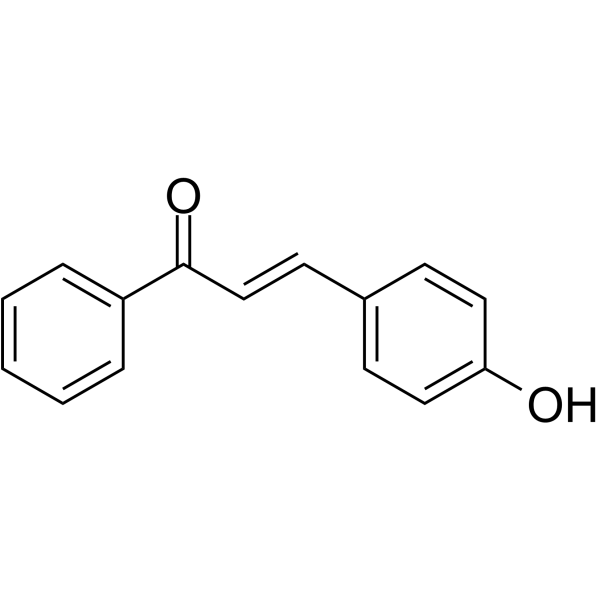
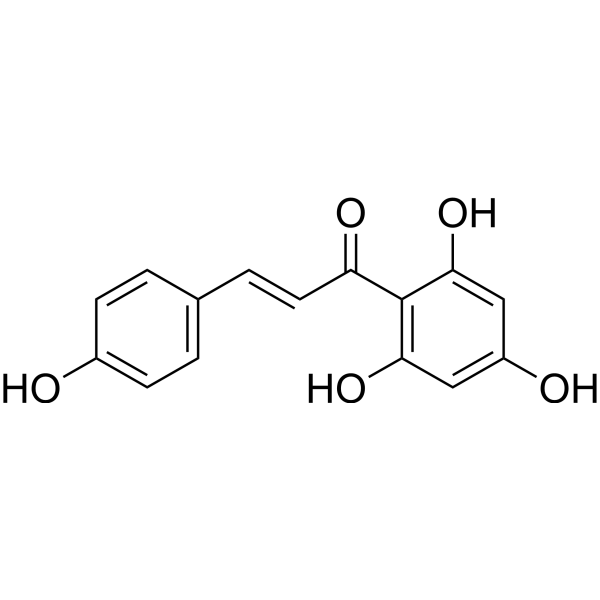
4-Hydroxychalcone is an orally active flavonoid precursor. 4-Hydroxychalcone inhibits VEGF- and bFGF-induced phosphorylation of ERK1/2 and Akt. 4-Hydroxychalcone suppresses resistant hypertension by alleviating hyperaldosteronism, inflammation and renal injury in cryptochrome gene knockout mice. 4-Hydroxychalcone possesses anti-angiogenic activity.
For research use only. We do not sell to patients.
- Purity: 99.29%
- CAS No.: 20426-12-4
- Formula: C15H12O2
- Molecular Weight:224.25
-
Storage:
4°C, protect from light
* In solvent : -80°C, 6 months; -20°C, 1 month (protect from light)

To place orders, for customer services and technical support, please contact: MedChemExpress USA
Tel: 609-228-6898 E-mail: [email protected] [email protected]


-
 Biological Activity
-
Chemical Information
-
Solvent & Solubility
- Purity & Documentation
- References
-
 Help & FAQs



Publications Citing Use of MedChemExpress (MCE) 4-Hydroxychalcone
More

Biological Activity
|
ERK1 |
ERK2 |
|
Cell Line

|
Type | Value | Description | References |
|---|---|---|---|---|
| A549 | IC50 |
>20 μM
Compound: 9e
|
Inhibition of TNFalpha induced NF-kappaB activation in human A549 cells by luciferase reporter gene assay
Inhibition of TNFalpha induced NF-kappaB activation in human A549 cells by luciferase reporter gene assay
|
[PMID: 19883086] |
| A549 | IC50 |
26.6 μM
Compound: 2
|
Antiproliferative activity against human A549 cells assessed as cell growth inhibition measured after 48 hrs by CellTiter Aqueous One Solution MTS assay
Antiproliferative activity against human A549 cells assessed as cell growth inhibition measured after 48 hrs by CellTiter Aqueous One Solution MTS assay
|
[PMID: 37666364] |
| CCRF-CEM | IC50 |
9.31 μM
Compound: 32
|
Concentration required to inhibit 50% growth of Human CEM T-lymphocytes cells
Concentration required to inhibit 50% growth of Human CEM T-lymphocytes cells
|
[PMID: 9544201] |
| DLD-1 | EC50 |
51 μM
Compound: 8
|
Cytotoxicity against human DLD-1 cells assessed as reduction in cell viability incubated for 48 hrs by AlamarBlue-based assay
Cytotoxicity against human DLD-1 cells assessed as reduction in cell viability incubated for 48 hrs by AlamarBlue-based assay
|
[PMID: 36356534] |
| FHC | CC50 |
>100 μM
Compound: 8
|
Cytotoxicity against human FHC cells assessed as reduction in cell viability incubated for 48 hrs by AlamarBlue-based assay
Cytotoxicity against human FHC cells assessed as reduction in cell viability incubated for 48 hrs by AlamarBlue-based assay
|
[PMID: 36356534] |
| HCT-116 | EC50 |
32 μM
Compound: 8
|
Cytotoxicity against human HCT-116 cells assessed as reduction in cell viability incubated for 48 hrs by AlamarBlue-based assay
Cytotoxicity against human HCT-116 cells assessed as reduction in cell viability incubated for 48 hrs by AlamarBlue-based assay
|
[PMID: 36356534] |
| HCT-116 | EC50 |
32 μM
Compound: 8
|
Cytotoxicity against p53-/- human HCT-116 cells assessed as reduction in cell viability incubated for 48 hrs by AlamarBlue-based assay
Cytotoxicity against p53-/- human HCT-116 cells assessed as reduction in cell viability incubated for 48 hrs by AlamarBlue-based assay
|
[PMID: 36356534] |
| HEK293 | IC50 |
>50 μM
Compound: 2
|
Blockade of human K+ channel in HEK293 cells assessed as inhibition of outward delayed rectifying K+ current
Blockade of human K+ channel in HEK293 cells assessed as inhibition of outward delayed rectifying K+ current
|
[PMID: 18032041] |
| HT-29 | EC50 |
39 μM
Compound: 8
|
Cytotoxicity against human HT-29 cells assessed as reduction in cell viability incubated for 48 hrs by AlamarBlue-based assay
Cytotoxicity against human HT-29 cells assessed as reduction in cell viability incubated for 48 hrs by AlamarBlue-based assay
|
[PMID: 36356534] |
| HT-29 | IC50 |
24.6 μM
Compound: 16
|
Cytotoxicity against Homo sapiens (human) HT-29 cells after 72 hr by MTT assay
Cytotoxicity against Homo sapiens (human) HT-29 cells after 72 hr by MTT assay
|
10.1007/s00044-011-9549-9 |
| K562 | IC50 |
24 μM
Compound: 4-Hydroxychalcone
|
Inhibition of NF-kappaB transactivation in TNF-alpha-stimulated human K562 cells preincubated for 2 hrs followed by TNF-alpha challenge measured after 6 hrs by dual luciferase reporter gene assay
Inhibition of NF-kappaB transactivation in TNF-alpha-stimulated human K562 cells preincubated for 2 hrs followed by TNF-alpha challenge measured after 6 hrs by dual luciferase reporter gene assay
|
[PMID: 24775915] |
| L1210 | IC50 |
37.9 μM
Compound: 32
|
Concentration required to inhibit 50% growth of L1210 leukemia cells
Concentration required to inhibit 50% growth of L1210 leukemia cells
|
[PMID: 9544201] |
| Neutrophil | IC50 |
11.6 μM
Compound: 25
|
Inhibition of PMA-induce ROS/RNS generation in human neutrophils measured up to 30 mins in presence of 30 mM glucose by luminol-amplified chemiluminescence method
Inhibition of PMA-induce ROS/RNS generation in human neutrophils measured up to 30 mins in presence of 30 mM glucose by luminol-amplified chemiluminescence method
|
[PMID: 33006891] |
| Neutrophil | IC50 |
8.8 μM
Compound: 25
|
Inhibition of PMA-induce ROS/RNS generation in human neutrophils measured up to 30 mins in presence of 5.5 mM glucose by luminol-amplified chemiluminescence method
Inhibition of PMA-induce ROS/RNS generation in human neutrophils measured up to 30 mins in presence of 5.5 mM glucose by luminol-amplified chemiluminescence method
|
[PMID: 33006891] |
| NIH3T3 | IC50 |
>20 μM
Compound: 1i
|
Inhibition of cobalt chloride-induced HIF-1 activation expressed in mouse NIH3T3 cells after 8 hrs by luciferase reporter gene assay
Inhibition of cobalt chloride-induced HIF-1 activation expressed in mouse NIH3T3 cells after 8 hrs by luciferase reporter gene assay
|
[PMID: 21112783] |
| P388 | IC50 |
14.3 μM
Compound: 32
|
Inhibition of proliferation of murine P388 cells
Inhibition of proliferation of murine P388 cells
|
[PMID: 9544201] |
| SGC-7901 | IC50 |
13.74 μM
Compound: 16
|
Cytotoxicity against Homo sapiens (human) SGC7901 cells after 72 hr by MTT assay
Cytotoxicity against Homo sapiens (human) SGC7901 cells after 72 hr by MTT assay
|
10.1007/s00044-011-9549-9 |
4-hydroxychalcone (22 µg/mL; 6 days) potently inhibits VEGF/TNF-α- and bFGF/TNF-α-induced capillary-like tube formation of hMVEC in 3D fibrin matrices, with no cytotoxicity to endothelial monolayers[1].
4-hydroxychalcone (0.22-22 µg/mL; 24-144 h) exhibits no cytotoxicity toward confluent HUVEC and hMVEC monolayers[1].
4-hydroxychalcone (0.22-22 µg/mL; 48-72 h) exerts a cytostatic effect on the proliferation of HUVEC, but shows no cytostatic effect on HeLa, MCF-7 or A549 tumor cell lines even at a concentration as high as 22 µg/mL with a 72 h treatment[1].
MedChemExpress (MCE) has not independently confirmed the accuracy of these methods. They are for reference only.
-
Cell Line:human umbilical vein endothelial cells (HUVEC)
-
Concentration:2.2-22 µg/mL
-
Incubation Time:1 h pre-incubation
-
Result:Significantly inhibited both bFGF- and VEGF-induced phosphorylation of Akt and ERK1/2 in HUVEC at 22 µg/mL.
Significantly inhibited VEGF-induced phosphorylation of ERK1/2, but not Akt, in HUVEC at 2.2 µg/mL.
-
Cell Line:human umbilical vein endothelial cells (HUVEC)
-
Concentration:22 µg/mL
-
Incubation Time:1 h pre-incubation, followed by 1 h TNF-α stimulation
-
Result:Had no effect on TNF-α-induced nuclear translocation of the p65 subunit of NF-κB in HUVEC.
4-Hydroxychalcone (10-40 mg/kg; p.o.; twice daily; for consecutive 35 days) exerts dose-dependent protective effects against refractory hypertension, hyperaldosteronism, inflammation and renal injury in cryptochrome-knockout mice treated with high salt[2].
MedChemExpress (MCE) has not independently confirmed the accuracy of these methods. They are for reference only.
-
Animal Model:Cryptochrome-null mice (male/female unspecified; high-salt diet-induced hypertension, hyperaldosteronism, inflammation, renal injury model)[2]
-
Dosage:10 mg/kg; 20 mg/kg; 40 mg/kg
-
Administration:p.o.; twice daily; 35 days
-
Result:Produced no significant change in systolic blood pressure compared to untreated cryptochrome-null mice; significantly reduced serum IL-1β levels compared to untreated cryptochrome-null mice (P < 0.05); did not significantly reduce serum TNF-α levels, serum aldosterone levels, renal NF-κB activation, or renal injury.
Produced no significant change in systolic blood pressure compared to untreated cryptochrome-null mice; significantly reduced serum IL-1β levels compared to untreated cryptochrome-null mice (P < 0.01); significantly reduced serum aldosterone levels compared to untreated cryptochrome-null mice (P < 0.05); did not significantly reduce serum TNF-α levels, renal NF-κB activation, or renal injury.
Significantly lowered systolic blood pressure in cryptochrome-null mice compared to untreated controls (P < 0.05); significantly reduced serum aldosterone levels compared to untreated cryptochrome-null mice (P < 0.01); significantly reduced serum IL-1β levels compared to untreated cryptochrome-null mice (P < 0.01); significantly suppressed serum TNF-α production compared to untreated cryptochrome-null mice (P < 0.05); reduced renal NF-κB protein activation in kidney cell nuclei compared to untreated cryptochrome-null mice; dramatically reduced severe glomerulosclerosis, tubulointerstitial injury, and inflammatory cell infiltration in kidney tissue compared to untreated cryptochrome-null mice, resulting in more normal histology.


Chemical Information
-
CAS No. 20426-12-4
-
Appearance Solid
-
Molecular Weight 224.25
-
Formula C15H12O2
-
Color Light yellow to yellow
-
SMILES
O=C(C1=CC=CC=C1)/C=C/C2=CC=C(O)C=C2
-
Structure Classification
-
Initial Source
-
Shipping
Room temperature in continental US; may vary elsewhere.
-
Storage
4°C, protect from light
* In solvent : -80°C, 6 months; -20°C, 1 month (protect from light)


Publications (2)
-
Journal Impact Factor
-
Most Recent
-
Food Chem
Effects of sun drying combined with baking processes on the flavor quality of Chongqing Tuocha raw tea. [Abstract]2025 Dec 30:497:146992. PMID: 41285060 -
Food Chem
Flavonoid-mediated metabolic underpinning quality variation in red bud-sport pear mutants. [Abstract]2025 Oct 15:489:144992. PMID: 40466530


Solvent & Solubility
DMSO : 100 mg/mL (445.93 mM; Need ultrasonic; Hygroscopic DMSO has a significant impact on the solubility of product, please use newly opened DMSO)
Please refer to the solubility information to select the appropriate solvent. Once prepared, please aliquot and store the solution to prevent product inactivation from repeated freeze-thaw cycles.
Storage method and period of stock solution: -80°C, 6 months; -20°C, 1 month (protect from light). When stored at -80°C, please use it within 6 months. When stored at -20°C, please use it within 1 month.
Please refer to the solubility information to select the appropriate solvent. Once prepared, please aliquot and store the solution to prevent product inactivation from repeated freeze-thaw cycles.
Storage method and period of stock solution: -80°C, 6 months; -20°C, 1 month (protect from light). When stored at -80°C, please use it within 6 months. When stored at -20°C, please use it within 1 month.
Concentration (start) × Volume (start) = Concentration (final) × Volume (final)
Select the appropriate dissolution method based on your experimental animal and administration route.
- For the following dissolution methods, please ensure to first prepare a clear stock solution using an In Vitro approach and then sequentially add co-solvents:
- To ensure reliable experimental results, the clarified stock solution can be appropriately stored based on storage conditions. As for the working solution for In Vivo experiments, it is recommended to prepare freshly and use it on the same day.
- The percentages shown for the solvents indicate their volumetric ratio in the final prepared solution. If precipitation or phase separation occurs during preparation, heat and/or sonication can be used to aid dissolution.
Add each solvent one by one: 10% DMSO 40% PEG300 5% Tween-80 45% Saline
Solubility: ≥ 2.08 mg/mL (9.28 mM); Clear solution
This protocol yields a clear solution of ≥ 2.08 mg/mL (saturation unknown).
Taking 1 mL working solution as an example, add 100 μL DMSO stock solution (20.8 mg/mL) to 400 μL PEG300, and mix evenly; then add 50 μL Tween-80 and mix evenly; then add 450 μL Saline to adjust the volume to 1 mL.
Preparation of Saline: Dissolve 0.9 g sodium chloride in ddH₂O and dilute to 100 mL to obtain a clear Saline solution.
Add each solvent one by one: 10% DMSO 90% (20% SBE-β-CD in Saline)
Solubility: ≥ 2.08 mg/mL (9.28 mM); Clear solution
This protocol yields a clear solution of ≥ 2.08 mg/mL (saturation unknown).
Taking 1 mL working solution as an example, add 100 μL DMSO stock solution (20.8 mg/mL) to 900 μL 20% SBE-β-CD in Saline, and mix evenly.
Preparation of 20% SBE-β-CD in Saline (4°C, storage for one week): 2 g SBE-β-CD powder is dissolved in 10 mL Saline, completely dissolve until clear.
Please enter the basic information of animal experiments:
-
-
-
-
Recommended: Prepare an additional quantity of animals to account for potential losses during experiments.
Please enter your animal formula composition:
-
%DMSO +
Recommended: Keep the proportion of DMSO in working solution below 2% if your animal is weak.
-
%+
-
+%Tween-80 + +
-
%Saline +
The co-solvents required include: DMSO, . All of co-solvents are available by MedChemExpress (MCE). , Tween 80. All of co-solvents are available by MedChemExpress (MCE).
Working solution concentration: 0.22 mg/mL
Method for preparing stock solution: mg drug dissolved in μL DMSO. Stock solution concentration: mg/mL. * In solvent : -80°C, 6 months; -20°C, 1 month (protect from light)
1. Take μL DMSO stock solution;
2. Add μL .
μL , mix evenly;
3. Then add μL Tween 80, mix evenly;
4. Then add μL
Please ensure that the stock solution in the first step is dissolved to a clear state, and add co-solvents in sequence. You can use ultrasonic heating (ultrasonic cleaner, recommended frequency 20-40 kHz), vortexing, etc. to assist dissolution.


Purity & Documentation
-
Data Sheet (277 KB)
-
SDS (538 KB)
- English - EN (538 KB)
- Français - FR (538 KB)
- Deutsch - DE (538 KB)
- Norwegian - NO (538 KB)
- Español - ES (538 KB)
- Swedish - SV (538 KB)
- Italian - IT (538 KB)
- Korean - KR (538 KB)
- Portuguese - PT (538 KB)
-
Handling Instructions (2659 KB)
References
[1]. Varinska L, et al. Anti-angiogenic activity of the flavonoid precursor 4-hydroxychalcone. Eur J Pharmacol. 2012;691(1-3):125-133. [Content Brief]
[2]. Qu Q, et al. 4-Hydroxychalcone attenuates hyperaldosteronism, inflammation, and renal injury in cryptochrome-null mice. Biomed Res Int. 2014;2014:603415. [Content Brief]


Complete Stock Solution Preparation Table
Please refer to the solubility information to select the appropriate solvent. Once prepared, please aliquot and store the solution to prevent product inactivation from repeated freeze-thaw cycles.
Storage method and period of stock solution: -80°C, 6 months; -20°C, 1 month (protect from light). When stored at -80°C, please use it within 6 months. When stored at -20°C, please use it within 1 month.
| Optional Solvent | Concentration Solvent Mass | 1 mg | 5 mg | 10 mg | 25 mg |
|---|---|---|---|---|---|
| DMSO | 1 mM | 4.4593 mL | 22.2965 mL | 44.5931 mL | 111.4827 mL |
| 5 mM | 0.8919 mL | 4.4593 mL | 8.9186 mL | 22.2965 mL | |
| 10 mM | 0.4459 mL | 2.2297 mL | 4.4593 mL | 11.1483 mL | |
| 15 mM | 0.2973 mL | 1.4864 mL | 2.9729 mL | 7.4322 mL | |
| 20 mM | 0.2230 mL | 1.1148 mL | 2.2297 mL | 5.5741 mL | |
| 25 mM | 0.1784 mL | 0.8919 mL | 1.7837 mL | 4.4593 mL | |
| 30 mM | 0.1486 mL | 0.7432 mL | 1.4864 mL | 3.7161 mL | |
| 40 mM | 0.1115 mL | 0.5574 mL | 1.1148 mL | 2.7871 mL | |
| 50 mM | 0.0892 mL | 0.4459 mL | 0.8919 mL | 2.2297 mL | |
| 60 mM | 0.0743 mL | 0.3716 mL | 0.7432 mL | 1.8580 mL | |
| 80 mM | 0.0557 mL | 0.2787 mL | 0.5574 mL | 1.3935 mL | |
| 100 mM | 0.0446 mL | 0.2230 mL | 0.4459 mL | 1.1148 mL |


4-Hydroxychalcone Related Classifications
HY-107818 Related Classifications
 Powered by Bioz