



Cevipabulin
Based on 2 publication(s) in Google Scholar
Cevipabulin (TTI-237) is an oral, microtubule-active antitumor compound and inhibits the binding of [3H] vinblastine to tubulin, with an IC50 of 18-40 nM for cytotoxicity in human tumor cell line.
Para uso exclusivo en investigación. No vendemos a pacientes.
- Pureza : 98.57%
- No. CAS: 849550-05-6
- Fòrmula: C18H18ClF5N6O
- Peso molecular:464.82
-
Almacenamiento:Powder -20°C, 3 years ; In solvent -80°C, 6 months , -20°C, 1 month

To place orders, for customer services and technical support, please contact: MedChemExpress USA
Tel: 609-228-6898 E-mail: [email protected] [email protected]


-
 Actividad biológica
-
Chemical Information
-
Solvente y solubilidad
- Protocolo
- Pureza y Documentación
- Referencias
-
 Help & FAQs


-
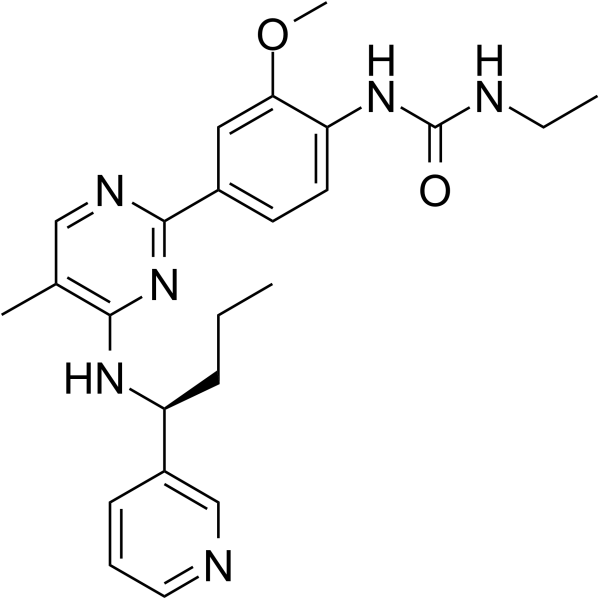
HY-10498
LexibulinTubulin Polymerisation Inhibitor -
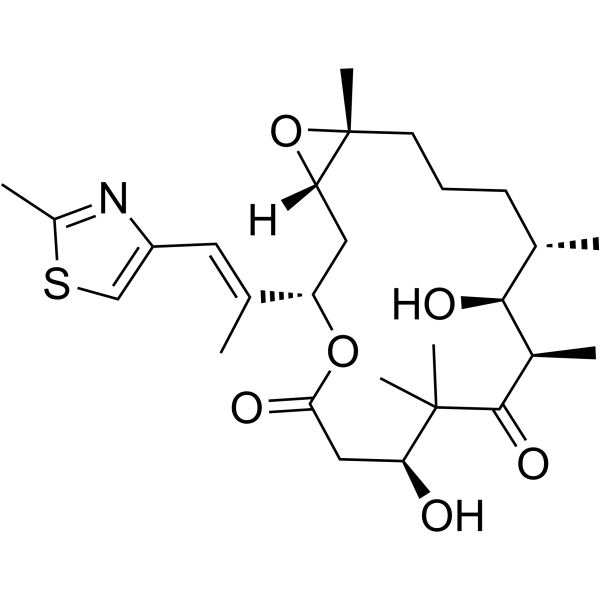
HY-17029
Epothilone BMicrotubule Stabilizer -
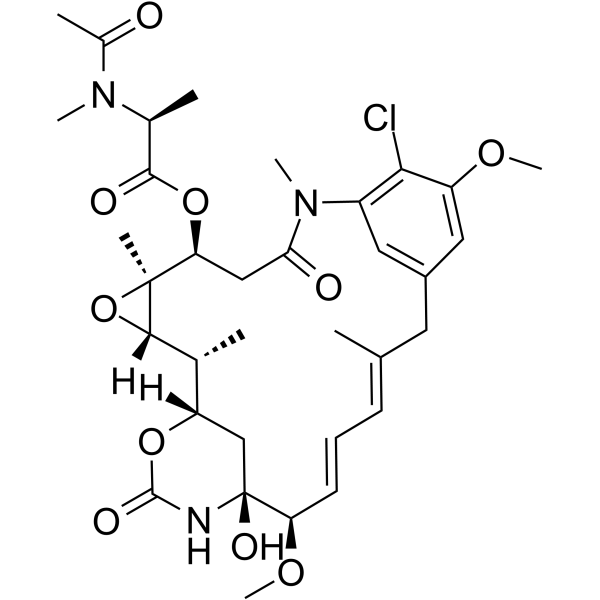
HY-13674
MaytansineMicrotubule/Tubulin Inhibitor -
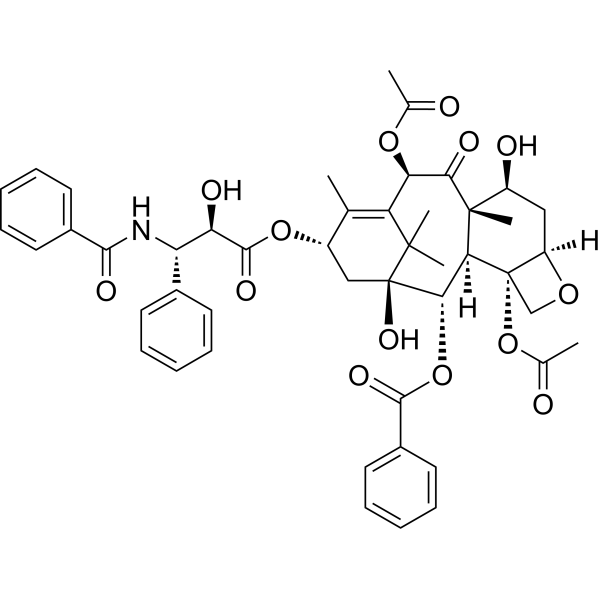
HY-B0015
PaclitaxelAntitumor Agent -
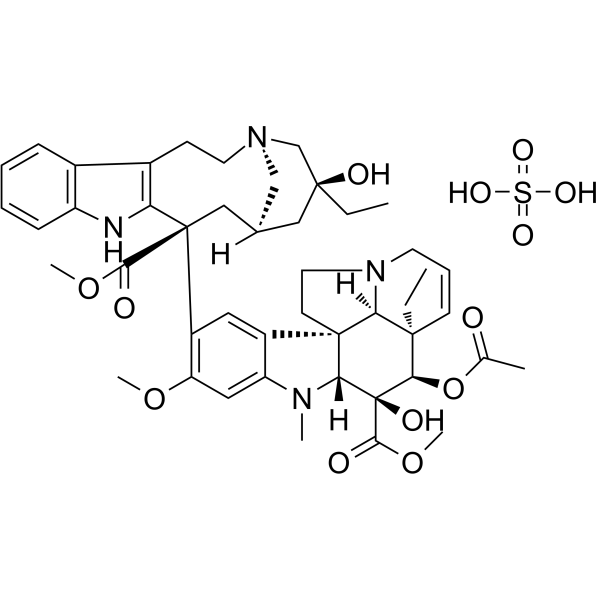
HY-13780
Vinblastine sulfatenAChR Inhibitor -
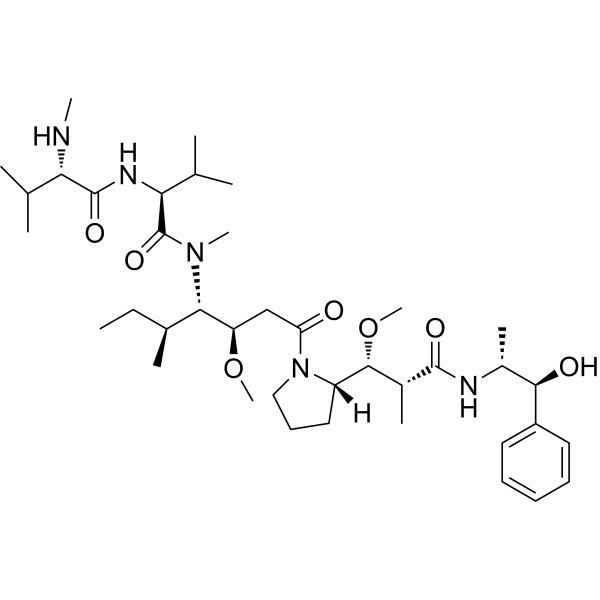
HY-15162
Monomethyl auristatin EAntimitotic Agent -
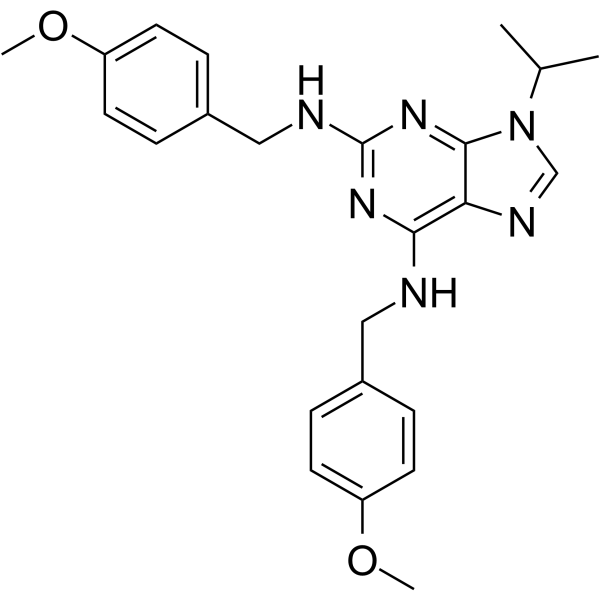
HY-W008956
MyoseverinMicrotubule-Binding Molecule -
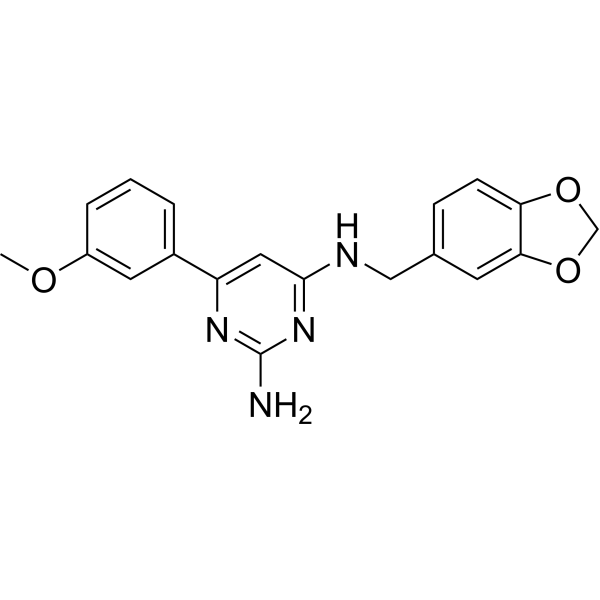
HY-19987
BML-284Wnt Signaling Activator -

HY-15162R
Monomethyl auristatin E (Standard)Analytical Standard -
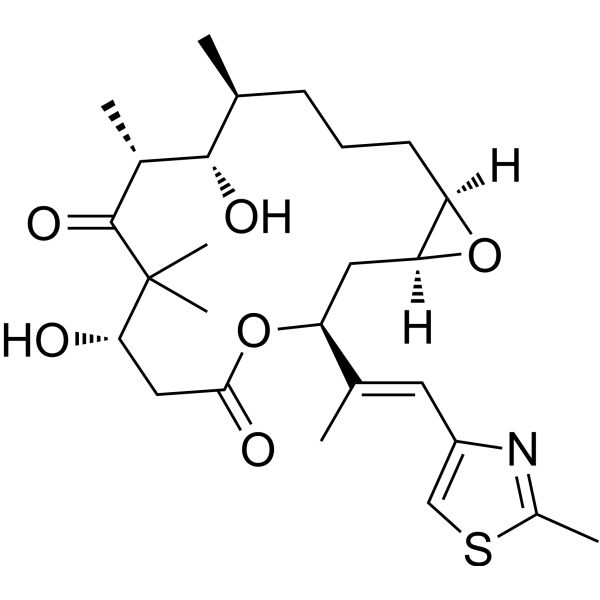
HY-13503
Epothilone ATubulin Competitive Inhibitor -
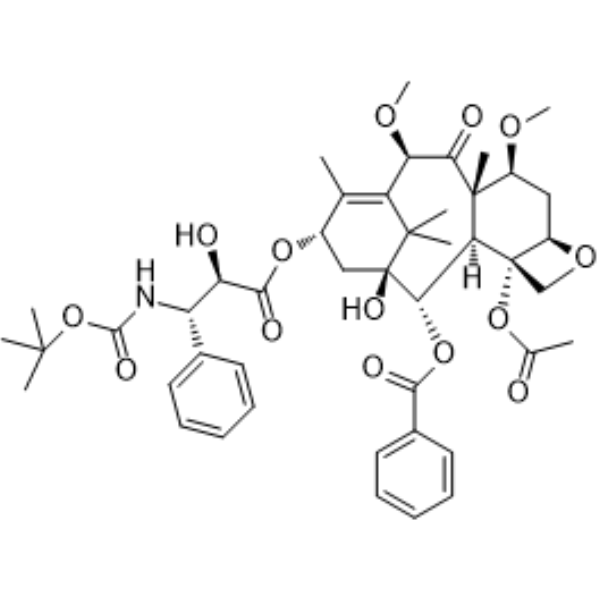
HY-15459
Cabazitaxel -
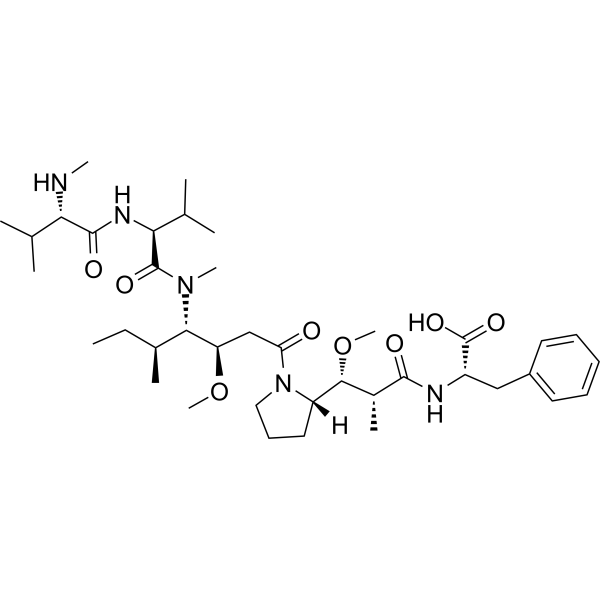
HY-15579
MMAFTubulin Inhibitor
Publications Citing Use of MedChemExpress (MCE) Cevipabulin
More

Actividad biológica
Descripciòn
IC50 & Target
IC50: 18-40 nM (microtubule in human tumor cells)[1].
In Vitro
Cevipabulin (0-50 nM, 72 hours) shows good activity (between 18 and 40 nM IC50 values) on cell lines from ovarian, breast, prostate, and cervical tumors[1].
Flow cytometry experiments reveal that, Cevipabulin (TTI-237) at low concentrations (20-40 nM) produces sub-G1 nuclei and, at concentrations above 50 nM, it causes a strong G2-M block[1].
MedChemExpress (MCE) has not independently confirmed the accuracy of these methods. They are for reference only.
-
Cell Line:Human cancer cell lines (SK-OV-3, MDA-MB-435, MDA-MB-468, LnCaP, and Hela cells).
-
Concentration:0-50 nM
-
Incubation Time:72 hours
-
Result:The IC50 values are 24±8 nM, 21±4 nM, 18±6 nM, 22±7 nM and 40 nM in SK-OV-3, MDA-MB-435, MDA-MB-468, LnCaP and Hela cells.
In Vivo
MedChemExpress (MCE) has not independently confirmed the accuracy of these methods. They are for reference only.
-
Animal Model:Athymic nu/nu female mice implanted s.c. in the flank with 1×10⁷ LoVo human colon adenocarcinoma cells[1]
-
Dosage:5, 10, 15, and 20 mg/kg
-
Administration:I.V. injection every 4 days for 4 cycles.
-
Result:The compound showed dose-dependent effects, with good antitumor activity at 20 and 15 mg/kg.
-
Animal Model:Athymic nu/nu female mice implanted s.c. in the flank with 1×10⁶ U87-MG human glioblastoma cells[1].
-
Dosage:25 mg/kg
-
Administration:P.O. or I.V.
-
Result:The compound was active by p.o. or i.v. administration against human tumor xenografts.


Chemical Information
-
No. CAS 849550-05-6
-
Appearance Solid
-
Peso molecular 464.82
-
Fòrmula C18H18ClF5N6O
-
Color White to off-white
-
SMILES
C[C@@]([H])(C(F)(F)F)NC1=C(C2=C(F)C=C(OCCCNC)C=C2F)C(Cl)=NC3=NC=NN13
-
Synonyms
TTI-237
-
Envío
Room temperature in continental US; may vary elsewhere.
-
Almacenamiento
Powder -20°C 3 years In solvent -80°C 6 months -20°C 1 month


Publications (2)
-
Journal Impact Factor
-
Most Recent
-
-
Biochem Biophys Res Commun
2019 Aug 27;516(3):760-764. PMID: 31253401


Solvente y solubilidad
In Vitro:
DMSO : 50 mg/mL (107.57 mM; Need ultrasonic; Hygroscopic DMSO has a significant impact on the solubility of product, please use newly opened DMSO)
Please refer to the solubility information to select the appropriate solvent. Once prepared, please aliquot and store the solution to prevent product inactivation from repeated freeze-thaw cycles.
Storage method and period of stock solution: -80°C, 6 months; -20°C, 1 month. When stored at -80°C, please use it within 6 months. When stored at -20°C, please use it within 1 month.
Please refer to the solubility information to select the appropriate solvent. Once prepared, please aliquot and store the solution to prevent product inactivation from repeated freeze-thaw cycles.
Storage method and period of stock solution: -80°C, 6 months; -20°C, 1 month. When stored at -80°C, please use it within 6 months. When stored at -20°C, please use it within 1 month.
Concentration (start) × Volume (start) = Concentration (final) × Volume (final)
In Vivo:
Select the appropriate dissolution method based on your experimental animal and administration route.
- For the following dissolution methods, please ensure to first prepare a clear stock solution using an In Vitro approach and then sequentially add co-solvents:
- To ensure reliable experimental results, the clarified stock solution can be appropriately stored based on storage conditions. As for the working solution for In Vivo experiments, it is recommended to prepare freshly and use it on the same day.
- The percentages shown for the solvents indicate their volumetric ratio in the final prepared solution. If precipitation or phase separation occurs during preparation, heat and/or sonication can be used to aid dissolution.
Add each solvent one by one: 10% DMSO 40% PEG300 5% Tween-80 45% Saline
Solubility: ≥ 1.67 mg/mL (3.59 mM); Clear solution
This protocol yields a clear solution of ≥ 1.67 mg/mL (saturation unknown).
Taking 1 mL working solution as an example, add 100 μL DMSO stock solution (16.7 mg/mL) to 400 μL PEG300, and mix evenly; then add 50 μL Tween-80 and mix evenly; then add 450 μL Saline to adjust the volume to 1 mL.
Preparation of Saline: Dissolve 0.9 g sodium chloride in ddH₂O and dilute to 100 mL to obtain a clear Saline solution.
Add each solvent one by one: 10% DMSO 90% (20% SBE-β-CD in Saline)
Solubility: 1.67 mg/mL (3.59 mM); Suspended solution; Need ultrasonic
This protocol yields a suspended solution of 1.67 mg/mL. Suspended solution can be used for oral and intraperitoneal injection.
Taking 1 mL working solution as an example, add 100 μL DMSO stock solution (16.7 mg/mL) to 900 μL 20% SBE-β-CD in Saline, and mix evenly.
Preparation of 20% SBE-β-CD in Saline (4°C, storage for one week): 2 g SBE-β-CD powder is dissolved in 10 mL Saline, completely dissolve until clear.
In Vivo Dissolution Calculator
Please enter the basic information of animal experiments:
-
-
-
-
Recommended: Prepare an additional quantity of animals to account for potential losses during experiments.
Please enter your animal formula composition:
-
%DMSO +
Recommended: Keep the proportion of DMSO in working solution below 2% if your animal is weak.
-
%+
-
+%Tween-80 + +
-
%Saline +
The co-solvents required include: DMSO, . All of co-solvents are available by MedChemExpress (MCE). , Tween 80. All of co-solvents are available by MedChemExpress (MCE).
Working solution concentration: 0.22 mg/mL
Method for preparing stock solution: mg drug dissolved in μL DMSO. Stock solution concentration: mg/mL.
1. Take μL DMSO stock solution;
2. Add μL .
μL , mix evenly;
3. Then add μL Tween 80, mix evenly;
4. Then add μL
Please ensure that the stock solution in the first step is dissolved to a clear state, and add co-solvents in sequence. You can use ultrasonic heating (ultrasonic cleaner, recommended frequency 20-40 kHz), vortexing, etc. to assist dissolution.


Pureza y Documentación
-
Ficha de datos (277 KB)
-
SDS (392 KB)
- English - EN (392 KB)
- Français - FR (392 KB)
- Deutsch - DE (392 KB)
- Norwegian - NO (392 KB)
- Español - ES (392 KB)
- Swedish - SV (392 KB)
- Italian - IT (392 KB)
- Korean - KR (392 KB)
- Portuguese - PT (392 KB)
-
Instrucciones de manejo (2659 KB)
Referencias
[1]. Beyer CF, et al. TTI-237: a novel microtubule-active compound with in vivo antitumor activity. Cancer Res. 2008 Apr 1;68(7):2292-300. [Content Brief]
[2]. Beyer CF, et al. The microtubule-active antitumor compound TTI-237 has both paclitaxel-like and vincristine-like properties. Cancer Chemother Pharmacol. 2009 Sep;64(4):681-9. [Content Brief]


Complete Stock Solution Preparation Table
Please refer to the solubility information to select the appropriate solvent. Once prepared, please aliquot and store the solution to prevent product inactivation from repeated freeze-thaw cycles.
Storage method and period of stock solution: -80°C, 6 months; -20°C, 1 month. When stored at -80°C, please use it within 6 months. When stored at -20°C, please use it within 1 month.
| Optional Solvent | Concentration Solvent Mass | 1 mg | 5 mg | 10 mg | 25 mg |
|---|---|---|---|---|---|
| DMSO | 1 mM | 2.1514 mL | 10.7569 mL | 21.5137 mL | 53.7843 mL |
| 5 mM | 0.4303 mL | 2.1514 mL | 4.3027 mL | 10.7569 mL | |
| 10 mM | 0.2151 mL | 1.0757 mL | 2.1514 mL | 5.3784 mL | |
| 15 mM | 0.1434 mL | 0.7171 mL | 1.4342 mL | 3.5856 mL | |
| 20 mM | 0.1076 mL | 0.5378 mL | 1.0757 mL | 2.6892 mL | |
| 25 mM | 0.0861 mL | 0.4303 mL | 0.8605 mL | 2.1514 mL | |
| 30 mM | 0.0717 mL | 0.3586 mL | 0.7171 mL | 1.7928 mL | |
| 40 mM | 0.0538 mL | 0.2689 mL | 0.5378 mL | 1.3446 mL | |
| 50 mM | 0.0430 mL | 0.2151 mL | 0.4303 mL | 1.0757 mL | |
| 60 mM | 0.0359 mL | 0.1793 mL | 0.3586 mL | 0.8964 mL | |
| 80 mM | 0.0269 mL | 0.1345 mL | 0.2689 mL | 0.6723 mL | |
| 100 mM | 0.0215 mL | 0.1076 mL | 0.2151 mL | 0.5378 mL |


Cevipabulin Related Classifications
HY-14949 Related Classifications
 Powered by Bioz