



QS-21-Api
Based on 8 publication(s) in Google Scholar
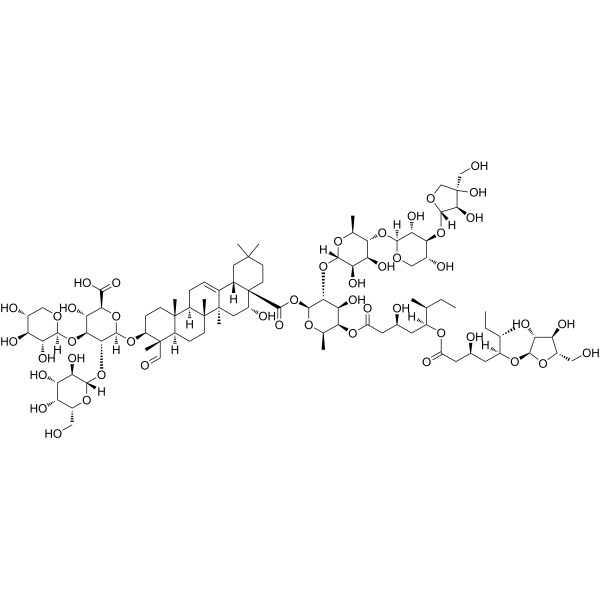
QS-21-Api, an immunostimulatory saponin, could be used as a potent vaccine adjuvant. QS-21-Api stimulates Th2 humoral and Th1 cell-mediated immune responses through action on antigen presenting cells (APCs) and T cells. QS-21-Api can activate the NLRP3 inflammasome with subsequent release of caspase-1 dependent cytokines, IL-1β and IL-18.
Para uso exclusivo en investigación. No vendemos a pacientes.
- Pureza: 99.73%
- No. CAS: 141256-04-4
- Fòrmula: C92H148O46
- Peso molecular:1990.13
-
Almacenamiento:Powder -20°C, 3 years ; In solvent -80°C, 6 months , -20°C, 1 month

To place orders, for customer services and technical support, please contact: MedChemExpress USA
Tel: 609-228-6898 E-mail: [email protected] [email protected]


-
 Actividad biológica
-
Chemical Information
-
Solvente y solubilidad
- Pureza y Documentación
- Referencias
-
 Help & FAQs


-
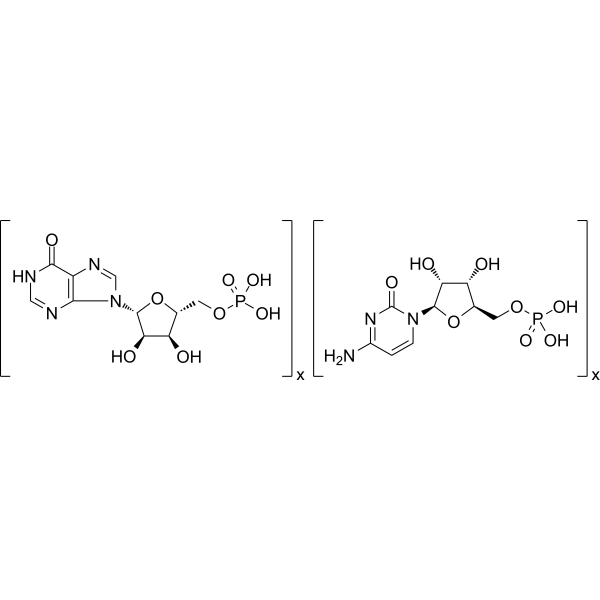
HY-107202
Polyinosinic-polycytidylic acid -

HY-B1521
Aluminum Hydroxide -
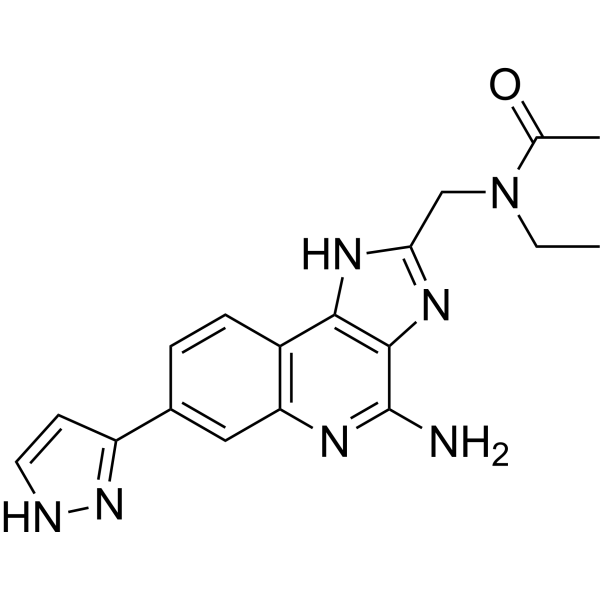
HY-139396
BMS-986299 -

HY-W116335A
Dried aluminum hydroxide gel,United States Pharmacopeia (USP) Reference Standard -
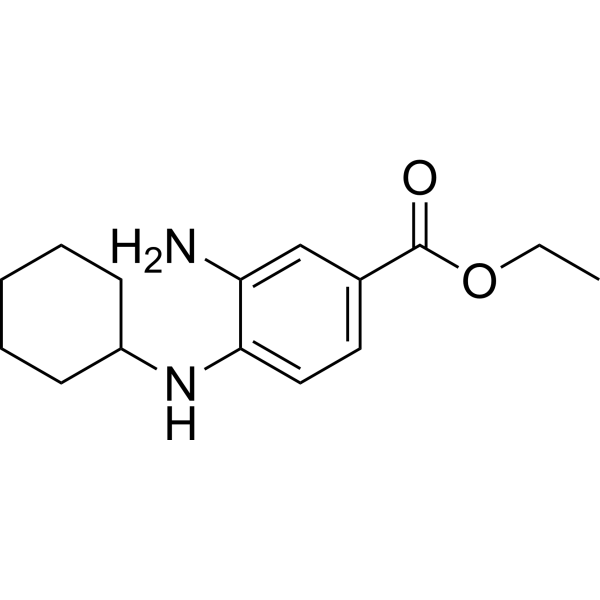
HY-100579
Ferrostatin-1 -
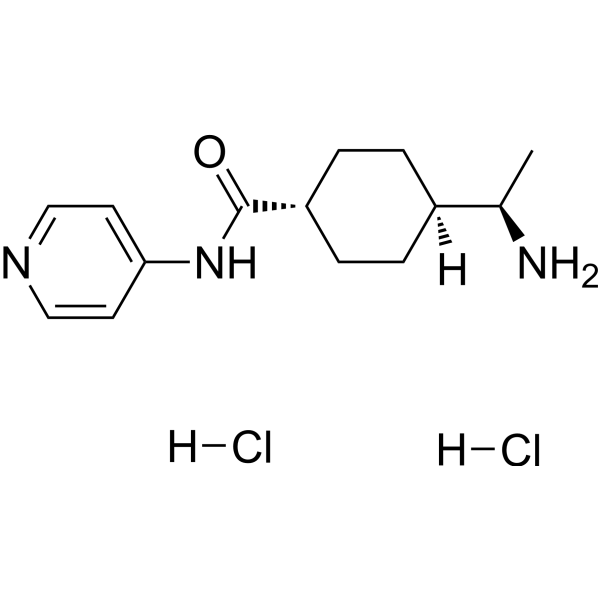
HY-10583
Y-27632 dihydrochloride -
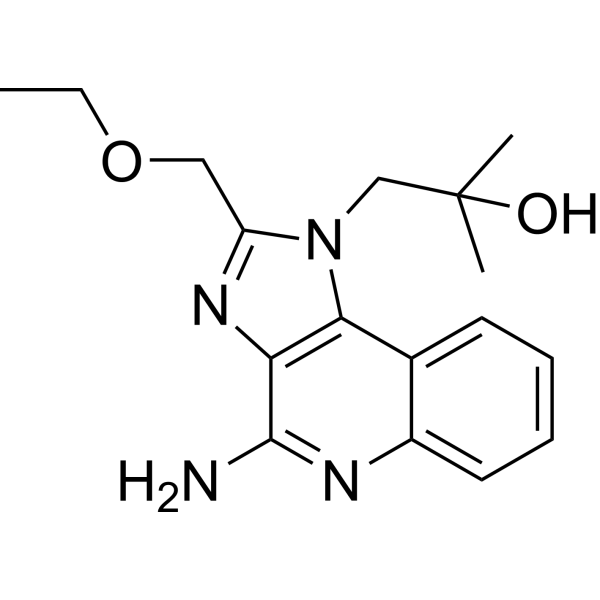
HY-13740
Resiquimod -
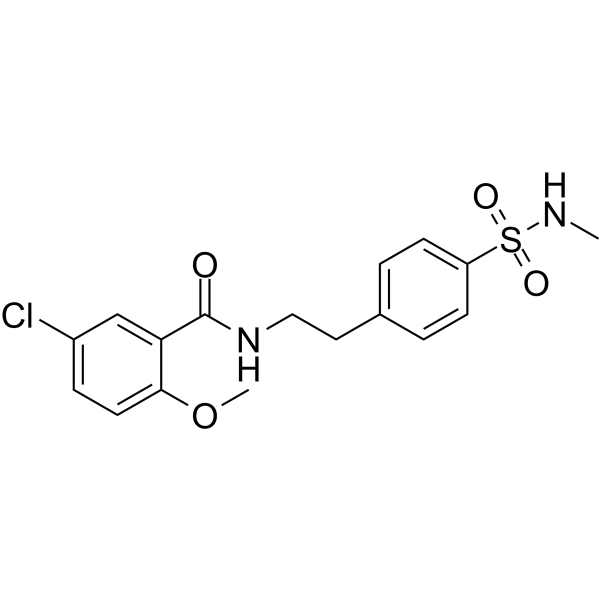
HY-120007
JC124 -
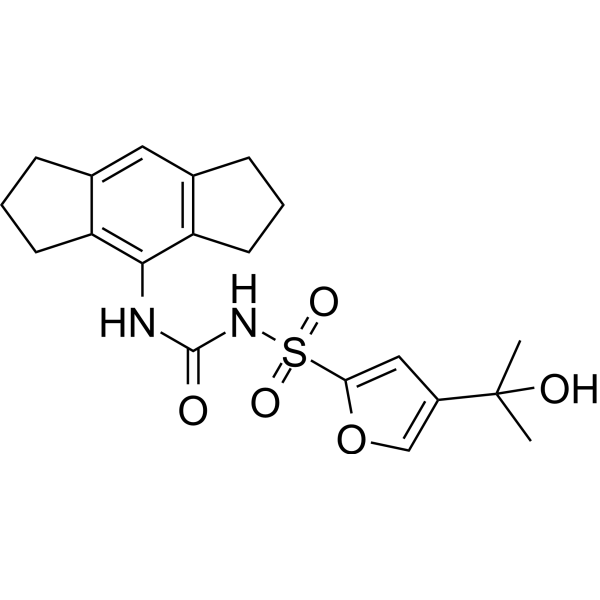
HY-12815
MCC950 -
HY-12815A
MCC950 sodium -
HY-N0139
Troxerutin -
HY-N0633
Muscone
Publications Citing Use of MedChemExpress (MCE) QS-21-Api
More- Exploration. 2025 Dec 18;5(6):20240396. [Abstract]
- J Med Chem. 2026 May 14;69(9):11434-11447. [Abstract]
- CNS Neurosci Ther. 2024 Aug;30(8):e70006. [Abstract]
- Int J Pharm. 2026 Jan 5:687:126372. [Abstract]
- Mol Pharm. 2024 Jun 3;21(6):2993-3005. [Abstract]
- iScience. 2024 Apr 10;27(5):109719. [Abstract]
- Biochem Biophys Res Commun. 2025 Aug 30:776:152184. [Abstract]
- Patent. US20250027036A1.
 Customer Validation & Images

-
Cell Proliferation/Viability Assay
-
Cell Proliferation/Viability Assay
-
Cell Imaging/Staining
-
Flow Cytometry
-
WB


Actividad biológica
Descripciòn
IC50 & Target
|
NLRP3 inflammasome |
In Vivo
MedChemExpress (MCE) has not independently confirmed the accuracy of these methods. They are for reference only.


Chemical Information
-
No. CAS 141256-04-4
-
Appearance Solid
-
Peso molecular 1990.13
-
Fòrmula C92H148O46
-
Color White to light yellow
-
SMILES
O=C([C@]1(CCC(C)(C)C2)[C@]2([H])C3=CC[C@@]4([H])[C@@](C)(CC[C@]5([H])[C@@]4(CC[C@H](O[C@@](O[C@H](C(O)=O)[C@@H](O)[C@@H]6O[C@@](OC[C@@H](O)[C@@H]7O)([H])[C@@H]7O)([H])[C@@H]6O[C@]([C@@H]([C@@H](O)[C@H]8O)O)([H])O[C@@H]8CO)[C@@]5(C)C=O)C)[C@]3(C)C[C@H]1O)O[C@H](O[C@H](C)[C@H](OC(C[C@@H](O)C[C@]([C@@H](C)CC)([H])OC(C[C@@H](O)C[C@]([C@@H](C)CC)([H])O[C@@H]9O[C@@H](CO)[C@H](O)[C@H]9O)=O)=O)[C@@H]%10O)[C@@H]%10O[C@@](O[C@@H](C)[C@H](O[C@@](OC[C@@H](O)[C@@H]%11O[C@@](OC[C@]%12(O)CO)([H])[C@@H]%12O)([H])[C@@H]%11O)[C@H]%13O)([H])[C@@H]%13O
-
Synonyms
Stimulon
-
Structure Classification
-
Initial Source
-
Envío
Room temperature in continental US; may vary elsewhere.
-
Almacenamiento
Powder -20°C 3 years In solvent -80°C 6 months -20°C 1 month


Publications (8)
-
Journal Impact Factor
-
Most Recent
-
Exploration
A Bioorthogonal and Programmable Bacterial Delivery System for Spatiotemporally Targeted Therapy of Solid Tumors. [Abstract]2025 Dec 18;5(6):20240396. PMID: 41476656 -
J Med Chem
Ganglioside GM3 and Lipid A Mimetic Conjugate Combined with EcMPLA and QS-21 as a Potential Vaccine Candidate for Cutaneous Melanoma Immunotherapy. [Abstract]2026 May 14;69(9):11434-11447. PMID: 42077094 -
CNS Neurosci Ther
2024 Aug;30(8):e70006. PMID: 39169794
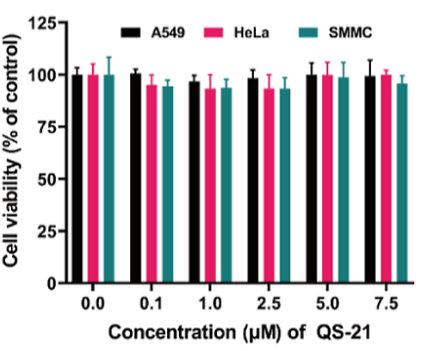
QS-21-Api purchased from MedChemExpress. Usage Cited in: CNS Neurosci Ther. 2024 Aug;30(8):e70006. [Abstract]
Toxicity assay of QS-21-Api (QS-21) at low concentrations in A549, HeLa, and SMMC cells. A549, HeLa, and SMMC cells were incubated with QS-21 (0.1–7.5 μM) for 24 h. Cell viability was detected by MTT assay.
QS-21-Api purchased from MedChemExpress. Usage Cited in: CNS Neurosci Ther. 2024 Aug;30(8):e70006. [Abstract]
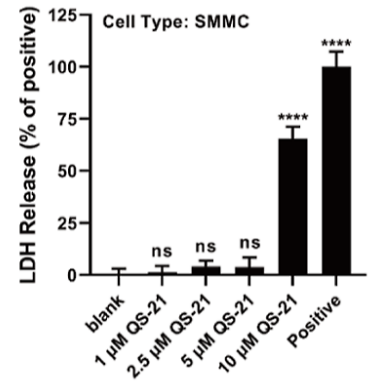
LDH release assay. SMMC cells were incubated with different concentrations (1, 2.5, 5, and 10 μM) of QS-21-Api (QS-21) for 24 h. The LDH concentration in the culture medium was detected colorimetrically.
QS-21-Api purchased from MedChemExpress. Usage Cited in: CNS Neurosci Ther. 2024 Aug;30(8):e70006. [Abstract]
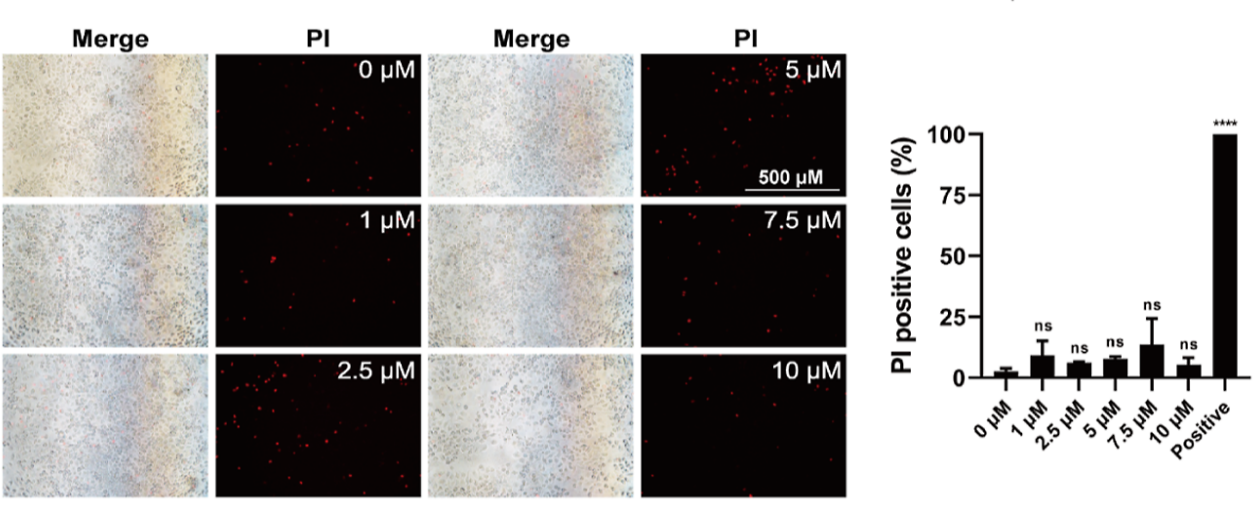
PI staining assay. SMMC cells were incubated with different concentrations (1, 2.5, 5, 7.5, and 10 μM) of QS-21-Api (QS-21) for 24 h. Broken cells were stained with PI, and images were taken by fluorescence microscopy. The proportion of PI-positive cells was quantified by CellProfiler. Treatment of SMMC cells with different concentrations of QS-21 resulted in less than 15% PI-positive cells.
QS-21-Api purchased from MedChemExpress. Usage Cited in: CNS Neurosci Ther. 2024 Aug;30(8):e70006. [Abstract]
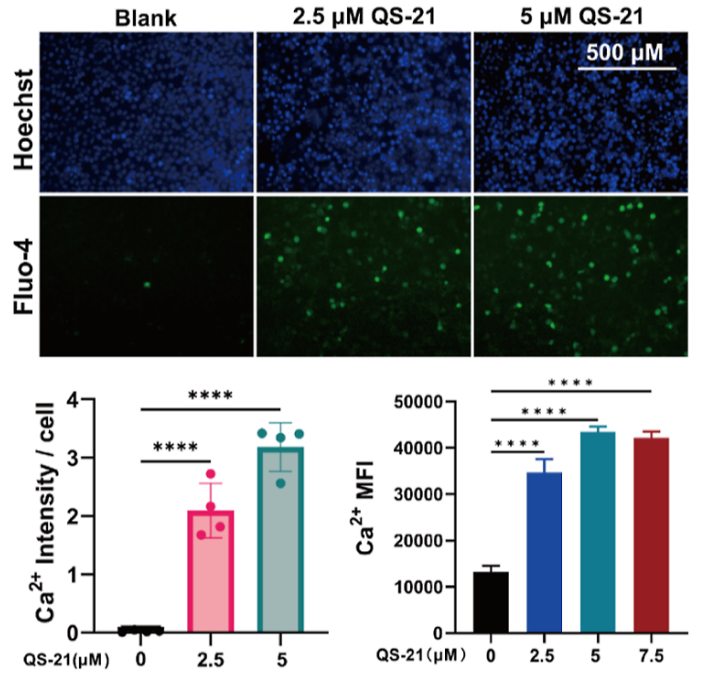
Cytoplasmic Ca2+ assay. HeLa cells were incubated with different concentrations of QS-21-Api (QS-21) for 24 h, followed by staining with Fluo-4 AM. Ca2+ was detected by fluorescence microscopy or flow cytometry. Cytosolic Ca2+ concentrations significantly increased in a concentration-dependent manner after treatment with 2.5–5 μM QS-21.
QS-21-Api purchased from MedChemExpress. Usage Cited in: CNS Neurosci Ther. 2024 Aug;30(8):e70006. [Abstract]
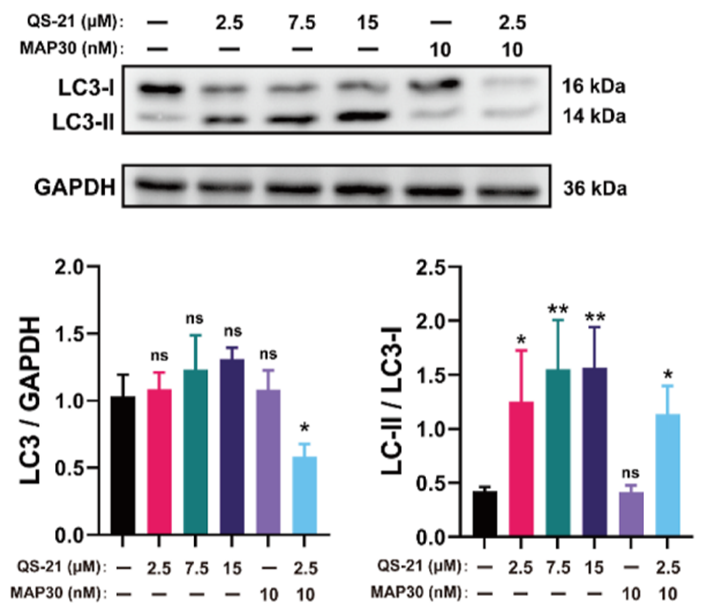
HeLa cells were treated with different concentrations (2.5, 7.5, and 15 μM) of QS-21-Api (QS-21), MAP30 (10 nM), or QS-21 (2.5 μM) + MAP30 (10 nM) for 6 h. The LC3-I and LC3-II levels were detected by Western blot assay. QS-21 could induce the conversion of LC3-I to LC3-II in a dose-dependent manner, which was not observed upon MAP30 treatment, indicating that this autophagy was induced by QS-21.
QS-21-Api purchased from MedChemExpress. Usage Cited in: CNS Neurosci Ther. 2024 Aug;30(8):e70006. [Abstract]
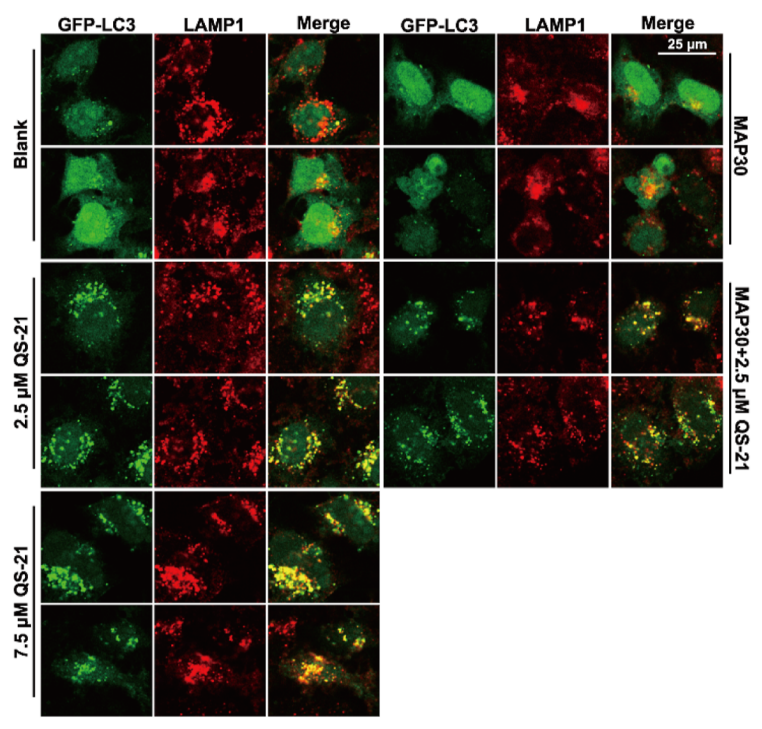
Colocalization detection of lysosomes and autophagosomes. HeLa cells were transfected with the GFP-LC3 plasmid for 24 h, followed by treatment with QS-21-Api (QS-21) (2.5, 7.5 μM), MAP30 (10 nM), or QS-21(2.5 μM) + MAP30 (10 nM) for 6 h. Lysosomes were labeled by the rabbit anti-LAMP1 antibody. Images were captured by CLSM. After treatment with QS-21 or QS-21+MAP30, noticeable autophagosomes appeared in HeLa cells transfected with the LC3 gene and significantly colocalized with lysosomes.
-
Int J Pharm
Successful prophylactic against Brucella melitensis using a vaccine candidate consisting of recombinant antigens OMP19 and L7/L12 loaded in a nanoliposomal adjuvant system in a mouse model. [Abstract]2026 Jan 5:687:126372. PMID: 41218729 -
Mol Pharm
Saponin and Ribosome-Inactivating Protein Synergistically Trigger Lysosome-Dependent Apoptosis by Inhibiting Lysophagy: Potential to Become a New Antitumor Strategy. [Abstract]2024 Jun 3;21(6):2993-3005. PMID: 38722865 -
iScience
2024 Apr 10;27(5):109719. PMID: 38706848 -
Biochem Biophys Res Commun
Engineered MAP30ER: A plant toxin-derived platform for EGFR-Targeted delivery of protein and chemotherapeutic payloads. [Abstract]2025 Aug 30:776:152184. PMID: 40517671 -


Solvente y solubilidad
In Vitro:
H2O : 46.67 mg/mL (23.45 mM; Need ultrasonic)
Please refer to the solubility information to select the appropriate solvent. Once prepared, please aliquot and store the solution to prevent product inactivation from repeated freeze-thaw cycles.
Storage method and period of stock solution: -80°C, 6 months; -20°C, 1 month. When stored at -80°C, please use it within 6 months. When stored at -20°C, please use it within 1 month.
* Note: If you choose water as the stock solution, please dilute it to the working solution, then filter and sterilize it with a 0.22 μm filter before use.
Please refer to the solubility information to select the appropriate solvent. Once prepared, please aliquot and store the solution to prevent product inactivation from repeated freeze-thaw cycles.
Storage method and period of stock solution: -80°C, 6 months; -20°C, 1 month. When stored at -80°C, please use it within 6 months. When stored at -20°C, please use it within 1 month.
* Note: If you choose water as the stock solution, please dilute it to the working solution, then filter and sterilize it with a 0.22 μm filter before use.
Concentration (start) × Volume (start) = Concentration (final) × Volume (final)
In Vivo:
Select the appropriate dissolution method based on your experimental animal and administration route.
- For the following dissolution methods, please ensure to first prepare a clear stock solution using an In Vitro approach and then sequentially add co-solvents:
- To ensure reliable experimental results, the clarified stock solution can be appropriately stored based on storage conditions. As for the working solution for In Vivo experiments, it is recommended to prepare freshly and use it on the same day.
- The percentages shown for the solvents indicate their volumetric ratio in the final prepared solution. If precipitation or phase separation occurs during preparation, heat and/or sonication can be used to aid dissolution.
Add each solvent one by one: 10% DMSO 40% PEG300 5% Tween-80 45% Saline
Solubility: ≥ 2.5 mg/mL (1.26 mM); Clear solution
This protocol yields a clear solution of ≥ 2.5 mg/mL (saturation unknown).
Taking 1 mL working solution as an example, add 100 μL DMSO stock solution (25.0 mg/mL) to 400 μL PEG300, and mix evenly; then add 50 μL Tween-80 and mix evenly; then add 450 μL Saline to adjust the volume to 1 mL.
Preparation of Saline: Dissolve 0.9 g sodium chloride in ddH₂O and dilute to 100 mL to obtain a clear Saline solution.
Add each solvent one by one: 10% DMSO 90% (20% SBE-β-CD in Saline)
Solubility: ≥ 2.5 mg/mL (1.26 mM); Clear solution
This protocol yields a clear solution of ≥ 2.5 mg/mL (saturation unknown).
Taking 1 mL working solution as an example, add 100 μL DMSO stock solution (25.0 mg/mL) to 900 μL 20% SBE-β-CD in Saline, and mix evenly.
Preparation of 20% SBE-β-CD in Saline (4°C, storage for one week): 2 g SBE-β-CD powder is dissolved in 10 mL Saline, completely dissolve until clear.
For the following dissolution methods, please prepare the working solution directly:
It is recommended to prepare fresh solutions and use them promptly within a short period of time.
The percentages shown for the solvents indicate their volumetric ratio in the final prepared solution. If precipitation or phase separation occurs during preparation, heat and/or sonication can be used to aid dissolution.
Add each solvent one by one: PBS
Solubility: 100 mg/mL (50.25 mM); Clear solution; Need ultrasonic
In Vivo Dissolution Calculator
Please enter the basic information of animal experiments:
-
-
-
-
Recommended: Prepare an additional quantity of animals to account for potential losses during experiments.
Working solution concentration: 0.22 mg/mL
This product has good water solubility, please refer to the measured solubility data in water/PBS/Saline for details.


Pureza y Documentación
-
Ficha de datos (278 KB)
-
SDS (393 KB)
- English - EN (393 KB)
- Français - FR (393 KB)
- Deutsch - DE (393 KB)
- Norwegian - NO (393 KB)
- Español - ES (393 KB)
- Swedish - SV (393 KB)
- Italian - IT (393 KB)
- Korean - KR (393 KB)
- Portuguese - PT (393 KB)
-
Instrucciones de manejo (2659 KB)
Referencias
[1]. Fernández-Tejada A, et al. Development of Improved Vaccine Adjuvants Based on the Saponin Natural Product QS-21 through Chemical Synthesis. Acc Chem Res. 2016;49(9):1741-1756. [Content Brief]
[2]. Marty-Roix R, et al. Identification of QS-21 as an Inflammasome-activating Molecular Component of Saponin Adjuvants. J Biol Chem. 2016;291(3):1123-1136 [Content Brief]
[3]. Lacaille-Dubois MA. Updated insights into the mechanism of action and clinical profile of the immunoadjuvant QS-21: A review. Phytomedicine. 2019;60:152905. [Content Brief]


Complete Stock Solution Preparation Table
Please refer to the solubility information to select the appropriate solvent. Once prepared, please aliquot and store the solution to prevent product inactivation from repeated freeze-thaw cycles.
Storage method and period of stock solution: -80°C, 6 months; -20°C, 1 month. When stored at -80°C, please use it within 6 months. When stored at -20°C, please use it within 1 month.
| Optional Solvent | Concentration Solvent Mass | 1 mg | 5 mg | 10 mg | 25 mg |
|---|---|---|---|---|---|
| H2O | 1 mM | 0.5025 mL | 2.5124 mL | 5.0248 mL | 12.5620 mL |
| 5 mM | 0.1005 mL | 0.5025 mL | 1.0050 mL | 2.5124 mL | |
| 10 mM | 0.0502 mL | 0.2512 mL | 0.5025 mL | 1.2562 mL | |
| 15 mM | 0.0335 mL | 0.1675 mL | 0.3350 mL | 0.8375 mL | |
| 20 mM | 0.0251 mL | 0.1256 mL | 0.2512 mL | 0.6281 mL |
* Note: If you choose water as the stock solution, please dilute it to the working solution, then filter and sterilize it with a 0.22 μm filter before use.


QS-21-Api Related Classifications
HY-101092 Related Classifications
 Powered by Bioz