



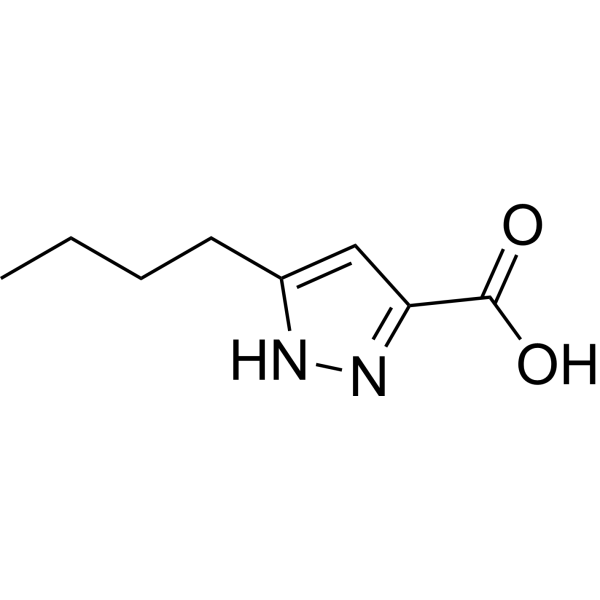
GPR109 receptor agonist-1

Based on 1 Customer Validation
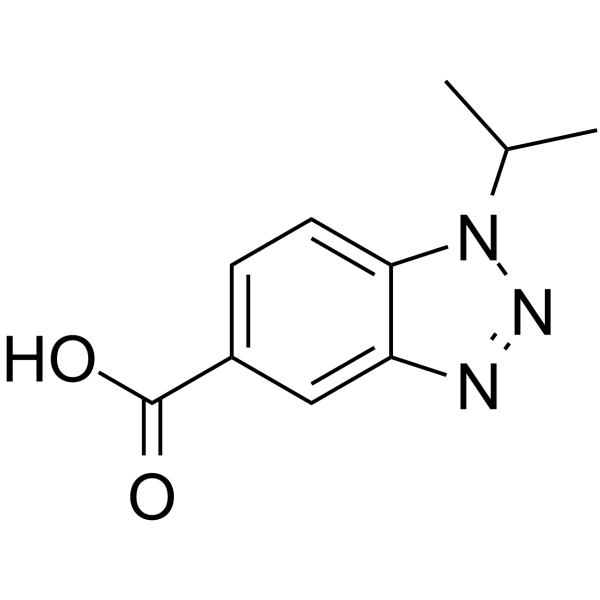
GPR109 receptor agonist-1 is a highly selective agonist of the human orphan G protein-coupled receptor GPR109b, and does not activate the mouse homologous receptor PUMA-G. GPR109 receptor agonist-1 functionally modulates the human GPR109b receptor via the cAMP signaling pathway, with an EC50 of 400 nM. GPR109 receptor agonist-1 inhibits isoproterenol (HY-B0468)-stimulated lipolysis in human subcutaneous adipocytes, with efficacy comparable to that of Niacin (HY-B0143), and does not act on β-adrenergic receptors. GPR109 receptor agonist-1 can be used in studies related to dyslipidemia and atherosclerosis.
For research use only. We do not sell to patients.
- Purity : 99.94%
- CAS No.: 306935-41-1
- Formula: C10H11N3O2
- Molecular Weight:205.22
-
Storage:Powder -20°C, 3 years , 4°C, 2 years ; In solvent -80°C, 6 months , -20°C, 1 month

To place orders, for customer services and technical support, please contact: MedChemExpress USA
Tel: 609-228-6898 E-mail: [email protected] [email protected]


-
 Biological Activity
-
Chemical Information
-
Solvent & Solubility
- Protocols
- Purity & Documentation
- References
-
 Help & FAQs


-
HY-107579
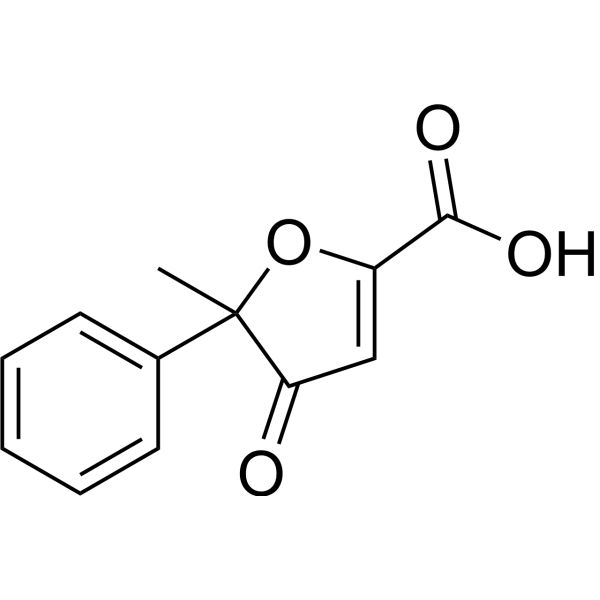
AcifranHypolipidemic Agent -
HY-W015560
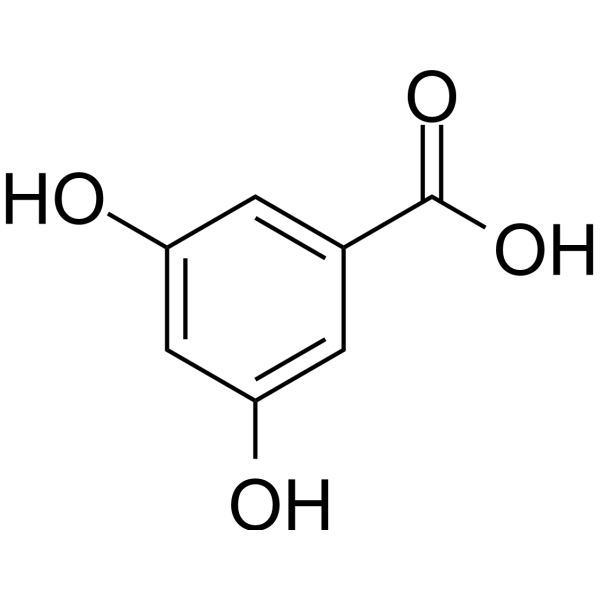
3,5-Dihydroxybenzoic acidGPR81 Agonist -
HY-107581
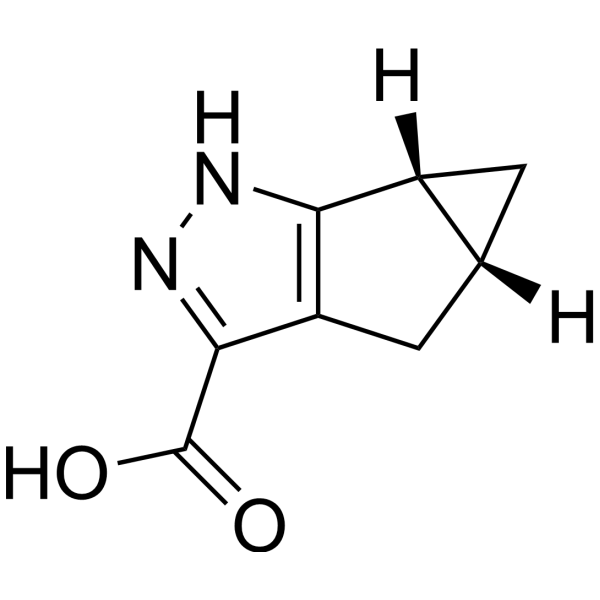
MK-1903GPR109a/HCAR2 Agonist -
HY-100976
LUF6283HCA(2) Agonist -

HY-107579R
Acifran (Standard)Reference Standard -

HY-W015560R
3,5-Dihydroxybenzoic acid (Standard)GPR81 Agonist -

HY-107581R
MK-1903 (Standard)Reference Standard


Biological Activity
Description
IC50 & Target
pEC50: 6.40 ± 0.36 (GPR109b)[1]
In Vitro
GPR109 receptor agonist-1 (compound 3a) (30 pM-100 μM) completely reverses the cAMP elevation effect of Forskolin (HY-15371), and shows no significant activity against the highly homologous GPR109a receptor and non-transfected control cells at a concentration of 1 mM[1].
GPR109 receptor agonist-1 (1-100 nM) dose-dependently inhibits isoproterenol (HY-B0468)-stimulated lipolysis in human cadaveric subcutaneous adipocytes, with efficacy comparable to that of Niacin (HY-B0143), and does not act on β-adrenergic receptors[1].
MedChemExpress (MCE) has not independently confirmed the accuracy of these methods. They are for reference only. Further protocols information, click here.
-
Cell Line:Freshly isolated human cadaver subcutaneous adipocytes
-
Concentration:1 nM to 100 nM
-
Incubation Time:/
-
Result:Dose-dependently inhibited isoproterenol-stimulated lipolysis, which was quantified by measuring glycerol release into the culture medium.
Exhibited comparable efficacy to niacin in reversing the lipolytic effect of isoproterenol, although its intrinsic potency was slightly lower.
Neither GPR109 receptor agonist-1 nor niacin showed any affinity for the β-adrenergic receptor.


Chemical Information
-
CAS No. 306935-41-1
-
Appearance Solid
-
Molecular Weight 205.22
-
Formula C10H11N3O2
-
Color Off-white to light yellow
-
SMILES
O=C(C1=CC=C(N(C(C)C)N=N2)C2=C1)O
-
Shipping
Room temperature in continental US; may vary elsewhere.
-
Storage
Powder -20°C 3 years 4°C 2 years In solvent -80°C 6 months -20°C 1 month


Solvent & Solubility
In Vitro:
DMSO : 100 mg/mL (487.28 mM; Need ultrasonic; Hygroscopic DMSO has a significant impact on the solubility of product, please use newly opened DMSO)
Please refer to the solubility information to select the appropriate solvent. Once prepared, please aliquot and store the solution to prevent product inactivation from repeated freeze-thaw cycles.
Storage method and period of stock solution: -80°C, 6 months; -20°C, 1 month. When stored at -80°C, please use it within 6 months. When stored at -20°C, please use it within 1 month.
Please refer to the solubility information to select the appropriate solvent. Once prepared, please aliquot and store the solution to prevent product inactivation from repeated freeze-thaw cycles.
Storage method and period of stock solution: -80°C, 6 months; -20°C, 1 month. When stored at -80°C, please use it within 6 months. When stored at -20°C, please use it within 1 month.
Concentration (start) × Volume (start) = Concentration (final) × Volume (final)
In Vivo:
Select the appropriate dissolution method based on your experimental animal and administration route.
- For the following dissolution methods, please ensure to first prepare a clear stock solution using an In Vitro approach and then sequentially add co-solvents:
- To ensure reliable experimental results, the clarified stock solution can be appropriately stored based on storage conditions. As for the working solution for In Vivo experiments, it is recommended to prepare freshly and use it on the same day.
- The percentages shown for the solvents indicate their volumetric ratio in the final prepared solution. If precipitation or phase separation occurs during preparation, heat and/or sonication can be used to aid dissolution.
Add each solvent one by one: 10% DMSO 40% PEG300 5% Tween-80 45% Saline
Solubility: ≥ 2.5 mg/mL (12.18 mM); Clear solution
This protocol yields a clear solution of ≥ 2.5 mg/mL (saturation unknown).
Taking 1 mL working solution as an example, add 100 μL DMSO stock solution (25.0 mg/mL) to 400 μL PEG300, and mix evenly; then add 50 μL Tween-80 and mix evenly; then add 450 μL Saline to adjust the volume to 1 mL.
Preparation of Saline: Dissolve 0.9 g sodium chloride in ddH₂O and dilute to 100 mL to obtain a clear Saline solution.
Add each solvent one by one: 10% DMSO 90% (20% SBE-β-CD in Saline)
Solubility: ≥ 2.5 mg/mL (12.18 mM); Clear solution
This protocol yields a clear solution of ≥ 2.5 mg/mL (saturation unknown).
Taking 1 mL working solution as an example, add 100 μL DMSO stock solution (25.0 mg/mL) to 900 μL 20% SBE-β-CD in Saline, and mix evenly.
Preparation of 20% SBE-β-CD in Saline (4°C, storage for one week): 2 g SBE-β-CD powder is dissolved in 10 mL Saline, completely dissolve until clear.
In Vivo Dissolution Calculator
Please enter the basic information of animal experiments:
-
-
-
-
Recommended: Prepare an additional quantity of animals to account for potential losses during experiments.
Please enter your animal formula composition:
-
%DMSO +
Recommended: Keep the proportion of DMSO in working solution below 2% if your animal is weak.
-
%+
-
+%Tween-80 + +
-
%Saline +
The co-solvents required include: DMSO, . All of co-solvents are available by MedChemExpress (MCE). , Tween 80. All of co-solvents are available by MedChemExpress (MCE).
Working solution concentration: 0.22 mg/mL
Method for preparing stock solution: mg drug dissolved in μL DMSO. Stock solution concentration: mg/mL.
1. Take μL DMSO stock solution;
2. Add μL .
μL , mix evenly;
3. Then add μL Tween 80, mix evenly;
4. Then add μL
Please ensure that the stock solution in the first step is dissolved to a clear state, and add co-solvents in sequence. You can use ultrasonic heating (ultrasonic cleaner, recommended frequency 20-40 kHz), vortexing, etc. to assist dissolution.

Protocols
-
How to Select the Route of Administration for Mammals
Route-of-administration selection in mammals is a pharmacokinetic, pharmacodynamic, formulation, animal-welfare, and translational decision, not a default technical choice. The selected route should match the study goal: intravenous dosing is most useful when complete systemic exposure and rapid onset are required, oral dosing is most translational for orally intended medicines but is affected by absorption and first-pass metabolism, subcutaneous or intramuscular dosing can provide slower systemic exposure, and intraperitoneal dosing can be useful in rodent proof-of-concept studies but may have limited clinical translation. Published route-comparison studies show that the same compound can produce different exposure, onset, bioavailability, tissue distribution, and tolerability depending on route; therefore, route choice should be supported by pilot pharmacokinetic or pharmacodynamic evidence when the literature is insufficient. Unresolved questions include how to standardize route sel
-
Large-size fat particle sorting
Large-size fat particle sorting is widely used to isolate cells up to 200 μm in diameter. Single-cell flow sorting will allow greater insight into adipocyte heterogeneity by identifying gene expression, protein composition, and metabolic signatures at the single-cell level.
-
Research Protocol for Cardiovascular Diseases
Cardiovascular disease can be modeled as maladaptive cardiac remodeling, where ischemic injury or pressure overload activates inflammatory signaling, fibroblast activation, extracellular-matrix deposition, cardiomyocyte hypertrophy, vascular remodeling, and progressive ventricular dysfunction. The TGF-β/SMAD axis is a central profibrotic pathway after myocardial injury and pressure overload, while innate immune and cytokine pathways regulate leukocyte recruitment, scar formation, and adverse remodeling. Key unresolved questions include which inflammatory signals are reparative versus harmful, when fibrosis is protective versus maladaptive, and whether pathway inhibition improves function without weakening necessary infarct healing or compensatory remodeling.
-
Research Protocol for Metabolic Diseases
AMP-activated protein kinase, AMPK, is a conserved cellular energy sensor that responds to reduced cellular energy status and coordinates metabolism by increasing ATP-generating catabolic pathways while suppressing ATP-consuming anabolic processes. In metabolic disease research, the AMPK pathway is experimentally relevant because it regulates hepatic lipid synthesis, fatty acid oxidation, glucose production, skeletal-muscle glucose disposal, mTORC1-linked biosynthesis, autophagy, mitochondrial homeostasis, and whole-body energy balance. The central pathway logic is that energy stress, metformin, exercise-like stimulation, or direct AMPK activators increase AMPKα Thr172 phosphorylation and downstream substrate phosphorylation, including ACC and RAPTOR. Phosphorylation of ACC suppresses lipogenesis and supports fatty acid oxidation, whereas phosphorylation of RAPTOR suppresses mTORC1 signaling and links cellular energy status to growth and protein synthesis control. The pathway is linked


Purity & Documentation
-
Data Sheet (274 KB)
-
SDS (393 KB)
- English - EN (393 KB)
- Français - FR (393 KB)
- Deutsch - DE (393 KB)
- Norwegian - NO (393 KB)
- Español - ES (393 KB)
- Swedish - SV (393 KB)
- Italian - IT (393 KB)
- Korean - KR (393 KB)
- Portuguese - PT (393 KB)
-
Handling Instructions (2659 KB)
References


Complete Stock Solution Preparation Table
Please refer to the solubility information to select the appropriate solvent. Once prepared, please aliquot and store the solution to prevent product inactivation from repeated freeze-thaw cycles.
Storage method and period of stock solution: -80°C, 6 months; -20°C, 1 month. When stored at -80°C, please use it within 6 months. When stored at -20°C, please use it within 1 month.
| Optional Solvent | Concentration Solvent Mass | 1 mg | 5 mg | 10 mg | 25 mg |
|---|---|---|---|---|---|
| DMSO | 1 mM | 4.8728 mL | 24.3641 mL | 48.7282 mL | 121.8205 mL |
| 5 mM | 0.9746 mL | 4.8728 mL | 9.7456 mL | 24.3641 mL | |
| 10 mM | 0.4873 mL | 2.4364 mL | 4.8728 mL | 12.1820 mL | |
| 15 mM | 0.3249 mL | 1.6243 mL | 3.2485 mL | 8.1214 mL | |
| 20 mM | 0.2436 mL | 1.2182 mL | 2.4364 mL | 6.0910 mL | |
| 25 mM | 0.1949 mL | 0.9746 mL | 1.9491 mL | 4.8728 mL | |
| 30 mM | 0.1624 mL | 0.8121 mL | 1.6243 mL | 4.0607 mL | |
| 40 mM | 0.1218 mL | 0.6091 mL | 1.2182 mL | 3.0455 mL | |
| 50 mM | 0.0975 mL | 0.4873 mL | 0.9746 mL | 2.4364 mL | |
| 60 mM | 0.0812 mL | 0.4061 mL | 0.8121 mL | 2.0303 mL | |
| 80 mM | 0.0609 mL | 0.3046 mL | 0.6091 mL | 1.5228 mL | |
| 100 mM | 0.0487 mL | 0.2436 mL | 0.4873 mL | 1.2182 mL |


GPR109 receptor agonist-1 Related Classifications
HY-107580 Related Classifications
 Powered by Bioz