



Lucigenin
Based on 8 publication(s) in Google Scholar
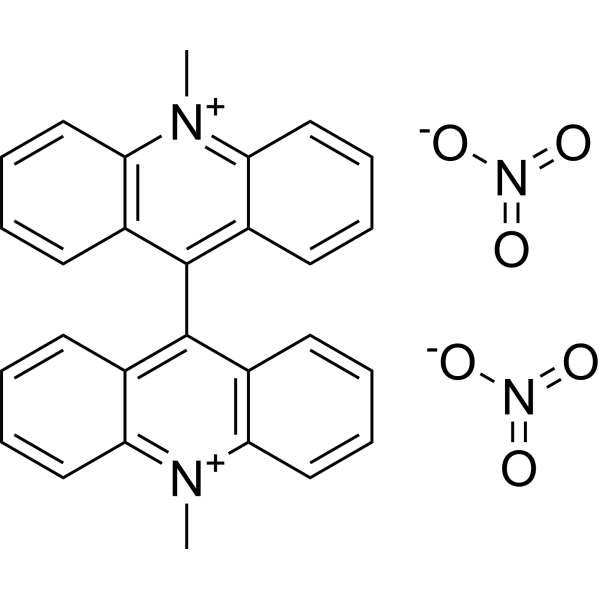
Lucigenin is a chemiluminescence probe. Lucigenin can be used to detect the production of endogenous superoxide anion radical (O2-). Lucigenin is extremely sensitive to chloride ions, while it combined with chloride ions, the fluorescence will be quenched. Lucigenin also can be used as a chloride indicator. Ex/Em=455/505 nm.
For research use only. We do not sell to patients.
- Purity : 99.01%
- CAS No.: 2315-97-1
- Formula: C28H22N4O6
- Molecular Weight:510.50
-
Storage:
4°C, sealed storage, away from moisture and light
* In solvent : -80°C, 6 months; -20°C, 1 month (sealed storage, away from moisture and light)

To place orders, for customer services and technical support, please contact: MedChemExpress USA
Tel: 609-228-6898 E-mail: [email protected] [email protected]


-
 Biological Activity
-
Chemical Information
-
Solvent & Solubility
- Purity & Documentation
- References
-
 Help & FAQs


-
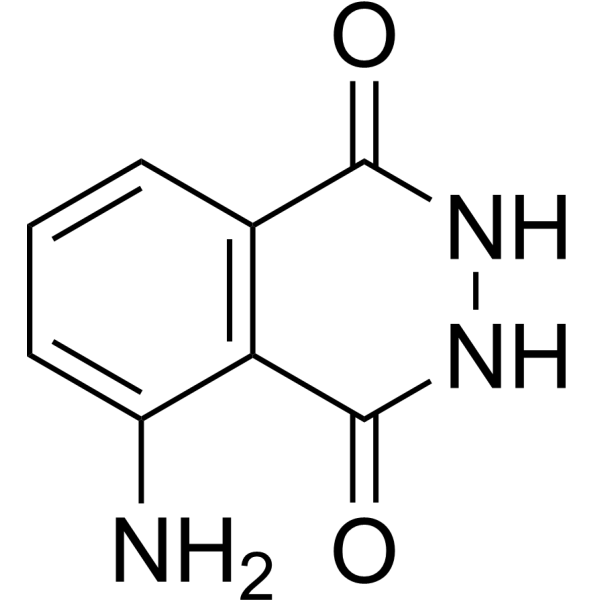
HY-15922
LuminolChemiluminescent Substance -
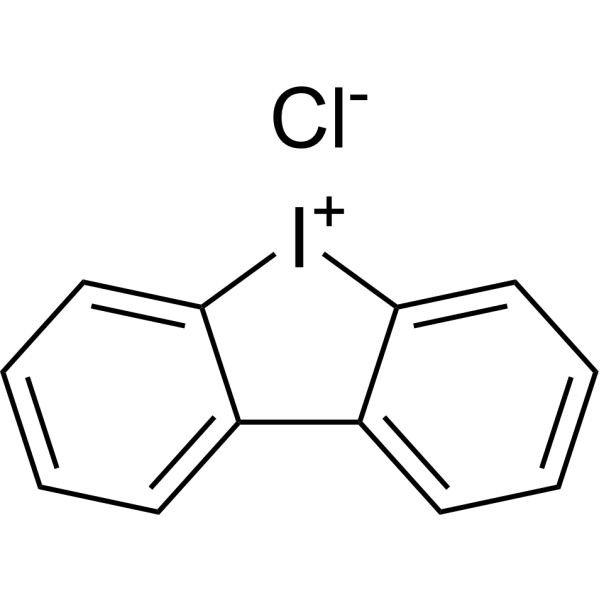
HY-100965
Diphenyleneiodonium chlorideNOX Inhibitor -
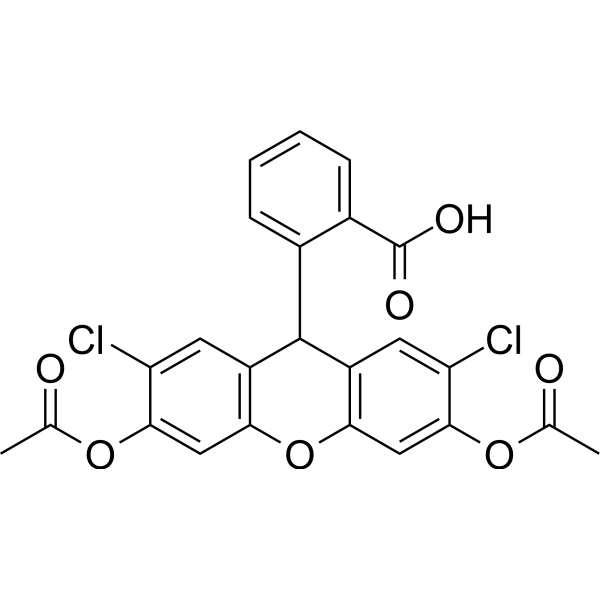
HY-D0940
H2DCFDAROS-Sensitive Probe -
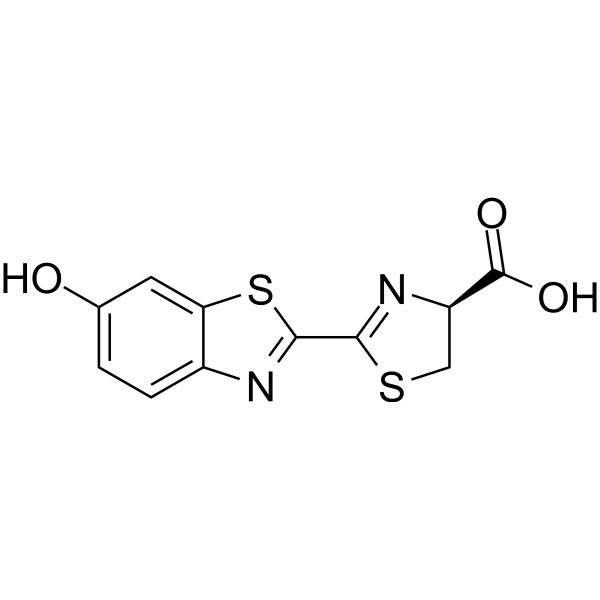
HY-12591A
D-LuciferinSubstrate for Luciferase -
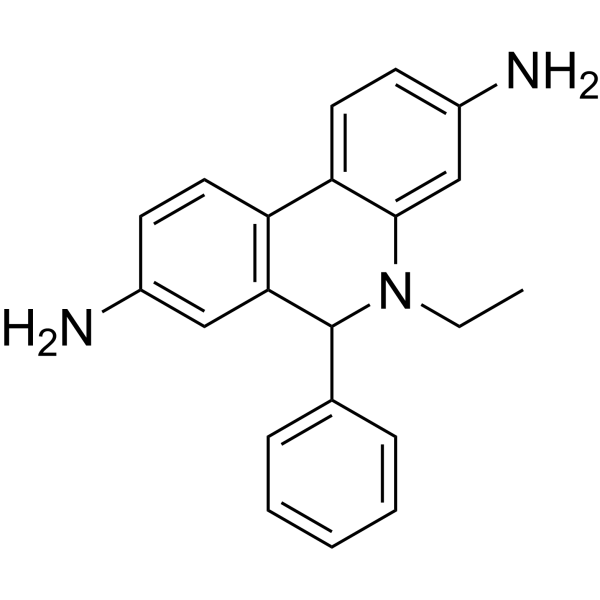
HY-D0079
DihydroethidiumFluorescent -
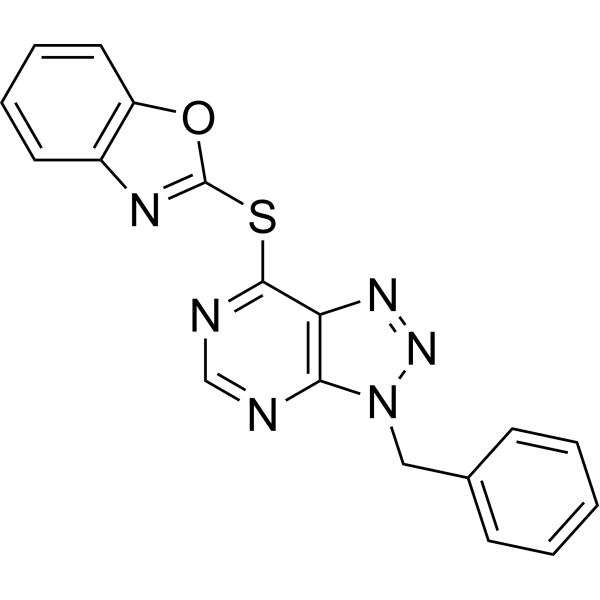
HY-12804
VAS2870Nox Inhibitor -

HY-113324
NADPHReducing Agent -
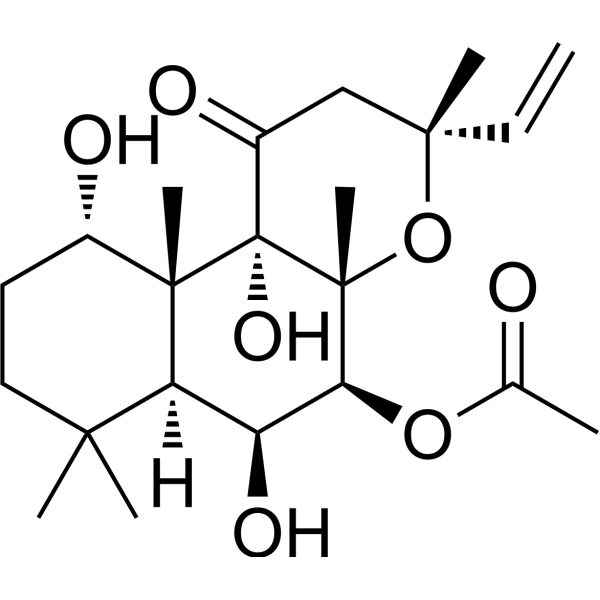
HY-15371
ForskolinAdenylate Cyclase Activator -
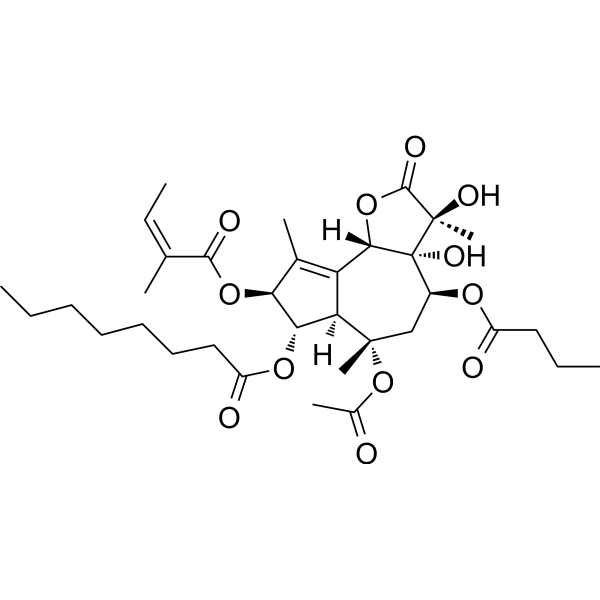
HY-13433
ThapsigarginER Stress Inducer -
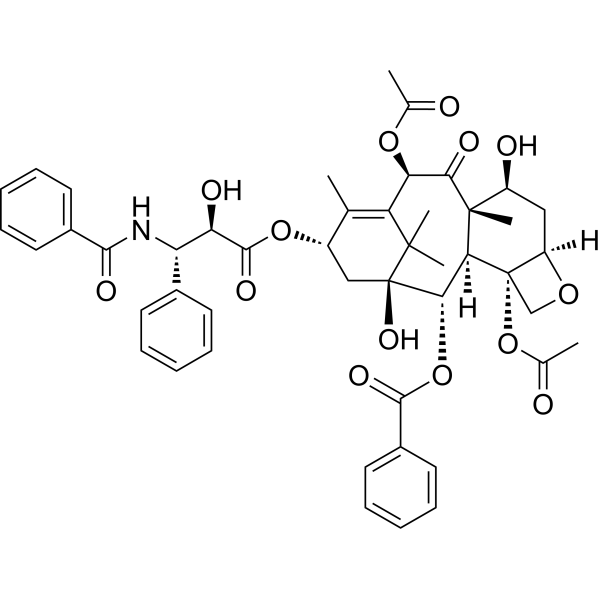
HY-B0015
PaclitaxelAntitumor Agent -
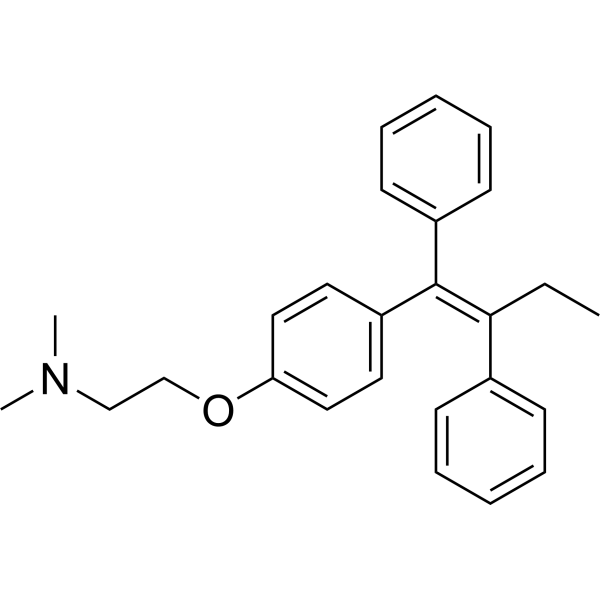
HY-13757A
TamoxifenEstrogen Receptor Modulator -
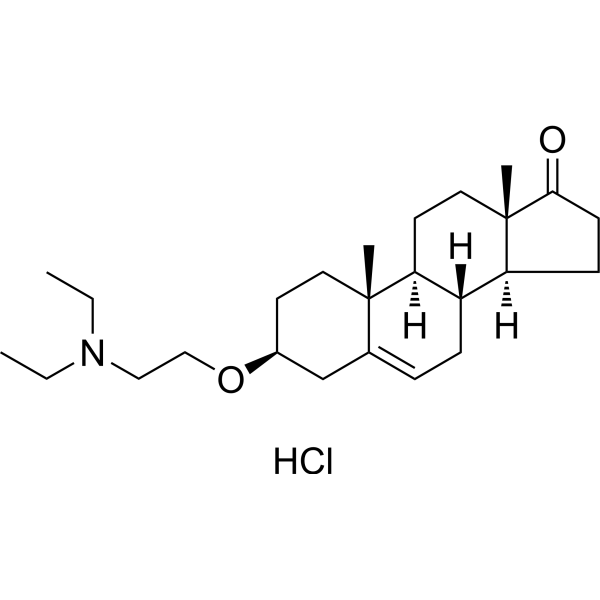
HY-107433
U18666ACholesterol Transport Inhibitor
Publications Citing Use of MedChemExpress (MCE) Lucigenin
More- Redox Biol. 2024 Nov:77:103397. [Abstract]
- Pharmacol Res. 2023 Dec:198:107009. [Abstract]
- Cell Commun Signal. 2025 Jan 13;23(1):21. [Abstract]
- J Transl Med. 2023 Mar 25;21(1):218. [Abstract]
- Int J Mol Med. 2017 Dec;40(6):1803-1817. [Abstract]
- Free Radic Biol Med. 2026 Aug 16:252:132-149. [Abstract]
- Mar Drugs. 2025 Jul 30;23(8):309. [Abstract]
- J Fungi (Basel). 2021 Nov 11;7(11):955. [Abstract]
 Customer Validation & Images

-
Cell Imaging/Staining
-
Cell Imaging/Staining
-
Cell Imaging/Staining
-
Cell Imaging/Staining
-
Cell Imaging/Staining


Biological Activity
Description
In Vitro
Guide (The following is our recommended experimental protocol. This protocol is for reference only and should be modified according to your specific needs).
Preparation of Lucigenin working solution
1.1 Preparation of the stock solution
Dissolve 1 mg of Lucigenin in 0.1959 mL of DMSO to obtain 10 mM of Lucigenin.
Note: It is recommended to store the stock solution at -20 °C -80 °C away from light and avoid repetitive freeze-thaw cycles.
1.2 Preparation of Lucigenin working solution
Dilute the stock solution in serum-free cell culture medium or PBS to obtain 5-10 μM of Lucigenin working solution.
Note: Please adjust the concentration of Lucigenin working solution according to the actual situation.
Cell staining
2.1 Cell preparation.
For suspension cells: Centrifuge at 1000 g at 4°C for 3-5 minutes and then discard the supernatant. Wash twice with PBS, 5 minutes each time.
For adherent cells: Discard the cell culture medium, and add trypsin to dissociate cells to make a single-cell suspension. Centrifuge at 1000 g at 4°C for 3-5 minutes and then discard the supernatant. Wash twice with PBS, 5 minutes each time.
2.2 Add 1 mL of Lucigenin working solution, and then incubate at room temperature for 15 minutes.
2.3 Centrifuge at 400 g at 4°C for 3-4 minutes and then discard the supernatant.
2.4 Wash twice with PBS, 5 minutes each time.
2.5 Resuspend cells with serum-free cell culture medium or PBS, and then detect by fluorescence microscope.
MedChemExpress (MCE) has not independently confirmed the accuracy of these methods. They are for reference only.
Emission (Em)
505
Excitation (Ex)
455
Dyeing Example


Chemical Information
-
CAS No. 2315-97-1
-
Appearance Solid
-
Molecular Weight 510.50
-
Formula C28H22N4O6
-
Color Yellow to orange
-
SMILES
C[N+]1=C2C=CC=CC2=C(C3=C4C=CC=CC4=[N+](C)C5=C3C=CC=C5)C6=C1C=CC=C6.O=N([O-])=O.O=N([O-])=O
-
Synonyms
NSC-151912; L-6868
-
Shipping
Room temperature in continental US; may vary elsewhere.
-
Storage
4°C, sealed storage, away from moisture and light
* In solvent : -80°C, 6 months; -20°C, 1 month (sealed storage, away from moisture and light)


Publications (8)
-
Journal Impact Factor
-
Most Recent
-
Redox Biol
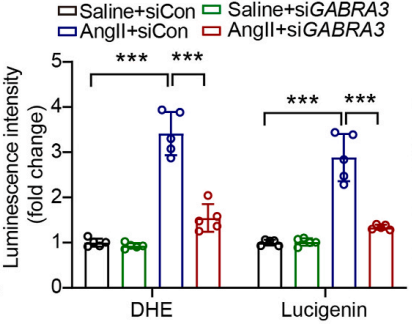
Activation of nuclear receptor pregnane-X-receptor protects against abdominal aortic aneurysm by inhibiting oxidative stress. [Abstract]2024 Nov:77:103397. PMID: 39427444
Lucigenin purchased from MedChemExpress. Usage Cited in: Redox Biol. 2024 Nov:77:103397. [Abstract]
Lucigenin (10 μM, at room temperature for 15 min). The level of ROS production of HASMCs in indicated groups (n = 5 independent experiments).
-
Pharmacol Res
Histone deacetylase 9 exacerbates podocyte injury in hyperhomocysteinemia through epigenetic repression of Klotho. [Abstract]2023 Dec:198:107009. PMID: 37995896 -
Cell Commun Signal
Klebsiella pneumoniae-derived extracellular vesicles impair endothelial function by inhibiting SIRT1. [Abstract]2025 Jan 13;23(1):21. PMID: 39800699 -
J Transl Med
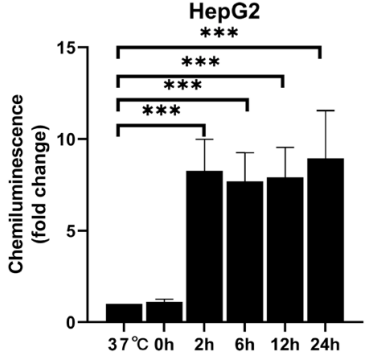
Mitochondrial ROS driven by NOX4 upregulation promotes hepatocellular carcinoma cell survival after incomplete radiofrequency ablation by inducing of mitophagy via Nrf2/PINK1. [Abstract]2023 Mar 25;21(1):218. PMID: 36964576
Lucigenin purchased from MedChemExpress. Usage Cited in: J Transl Med. 2023 Mar 25;21(1):218. [Abstract]
Lucigenin(100 μM). Superoxide production by NADPH oxidase was measured in total cell homogenates.
-
Int J Mol Med
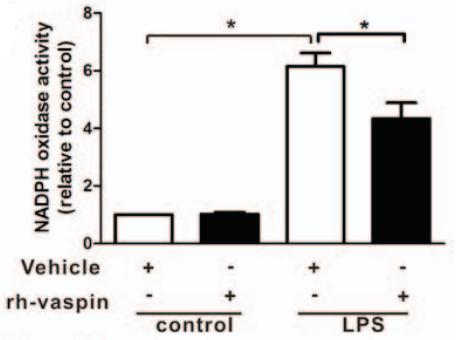
Vaspin protects against LPS‑induced ARDS by inhibiting inflammation, apoptosis and reactive oxygen species generation in pulmonary endothelial cells via the Akt/GSK‑3β pathway. [Abstract]2017 Dec;40(6):1803-1817. PMID: 29039444
Lucigenin purchased from MedChemExpress. Usage Cited in: Int J Mol Med. 2017 Dec;40(6):1803-1817. [Abstract]
Lucigenin(10 µM). Quantitative analysis of NADPH oxidase activity in HPMECs, as determined by lucigenin assay.
-
Free Radic Biol Med
TRIM16 attenuates TDP43-mediated oxidative injury by coordinating Nrf2 activation and TFR1 autophagic degradation. [Abstract]2026 Aug 16:252:132-149. PMID: 42092406 -
Mar Drugs
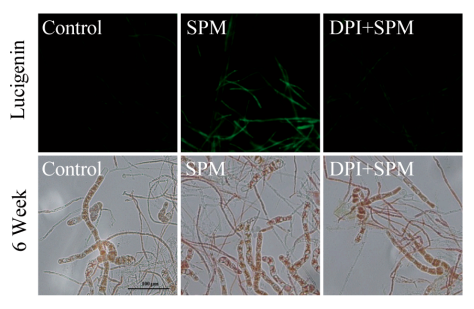
Spermine Promotes the Formation of Conchosporangia in Pyropia haitanensis Through Superoxide Anions. [Abstract]2025 Jul 30;23(8):309. PMID: 40863626
Lucigenin purchased from MedChemExpress. Usage Cited in: Mar Drugs. 2025 Jul 30;23(8):309. [Abstract]
Micrographs of conchocelis stained with lucigenin. Scale bars: 50 μm. Conchocelis was treated with SPM along with NOX inhibitor DPI for 8 h and then stained with Lucigenin (0.1 μM) for 30 min.
-
J Fungi (Basel)
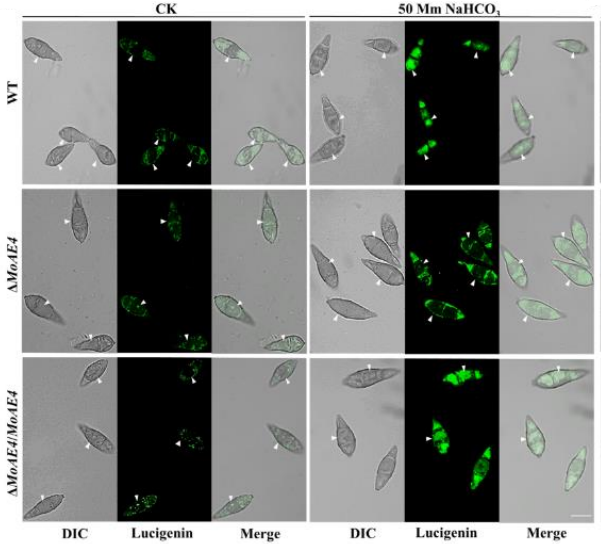
The Bicarbonate Transporter (MoAE4) Localized on Both Cytomembrane and Tonoplast Promotes Pathogenesis in Magnaporthe oryzae. [Abstract]2021 Nov 11;7(11):955. PMID: 34829242
Lucigenin purchased from MedChemExpress. Usage Cited in: J Fungi (Basel). 2021 Nov 11;7(11):955. [Abstract]
Lucigenin (10 mM). The green fluorescence signals in hyphae. The light (left), fluorescence confocal (middle), and merge (right) microscope observations of strains hypha. Bar = 10 µm.


Solvent & Solubility
In Vitro:
DMSO : 57.14 mg/mL (111.93 mM; ultrasonic and warming and heat to 60°C; Hygroscopic DMSO has a significant impact on the solubility of product, please use newly opened DMSO)
Please refer to the solubility information to select the appropriate solvent. Once prepared, please aliquot and store the solution to prevent product inactivation from repeated freeze-thaw cycles.
Storage method and period of stock solution: -80°C, 6 months; -20°C, 1 month (sealed storage, away from moisture and light). When stored at -80°C, please use it within 6 months. When stored at -20°C, please use it within 1 month.
Please refer to the solubility information to select the appropriate solvent. Once prepared, please aliquot and store the solution to prevent product inactivation from repeated freeze-thaw cycles.
Storage method and period of stock solution: -80°C, 6 months; -20°C, 1 month (sealed storage, away from moisture and light). When stored at -80°C, please use it within 6 months. When stored at -20°C, please use it within 1 month.
Concentration (start) × Volume (start) = Concentration (final) × Volume (final)


Purity & Documentation
-
Data Sheet (283 KB)
-
SDS (608 KB)
- English - EN (608 KB)
- Français - FR (608 KB)
- Deutsch - DE (608 KB)
- Norwegian - NO (608 KB)
- Español - ES (608 KB)
- Swedish - SV (608 KB)
- Italian - IT (608 KB)
- Korean - KR (608 KB)
- Portuguese - PT (608 KB)
-
Handling Instructions (2659 KB)
References


Complete Stock Solution Preparation Table
Please refer to the solubility information to select the appropriate solvent. Once prepared, please aliquot and store the solution to prevent product inactivation from repeated freeze-thaw cycles.
Storage method and period of stock solution: -80°C, 6 months; -20°C, 1 month (sealed storage, away from moisture and light). When stored at -80°C, please use it within 6 months. When stored at -20°C, please use it within 1 month.
| Optional Solvent | Concentration Solvent Mass | 1 mg | 5 mg | 10 mg | 25 mg |
|---|---|---|---|---|---|
| DMSO | 1 mM | 1.9589 mL | 9.7943 mL | 19.5886 mL | 48.9716 mL |
| 5 mM | 0.3918 mL | 1.9589 mL | 3.9177 mL | 9.7943 mL | |
| 10 mM | 0.1959 mL | 0.9794 mL | 1.9589 mL | 4.8972 mL | |
| 15 mM | 0.1306 mL | 0.6530 mL | 1.3059 mL | 3.2648 mL | |
| 20 mM | 0.0979 mL | 0.4897 mL | 0.9794 mL | 2.4486 mL | |
| 25 mM | 0.0784 mL | 0.3918 mL | 0.7835 mL | 1.9589 mL | |
| 30 mM | 0.0653 mL | 0.3265 mL | 0.6530 mL | 1.6324 mL | |
| 40 mM | 0.0490 mL | 0.2449 mL | 0.4897 mL | 1.2243 mL | |
| 50 mM | 0.0392 mL | 0.1959 mL | 0.3918 mL | 0.9794 mL | |
| 60 mM | 0.0326 mL | 0.1632 mL | 0.3265 mL | 0.8162 mL | |
| 80 mM | 0.0245 mL | 0.1224 mL | 0.2449 mL | 0.6121 mL | |
| 100 mM | 0.0196 mL | 0.0979 mL | 0.1959 mL | 0.4897 mL |


Lucigenin Related Classifications
HY-D0720 Related Classifications
 Powered by Bioz