



T-2513
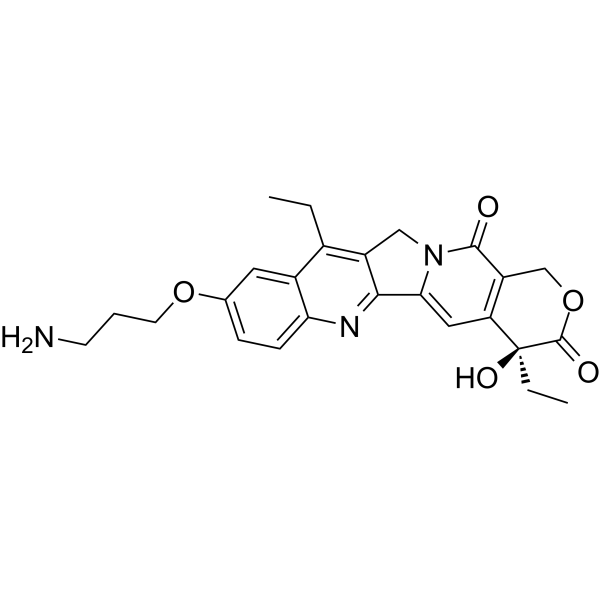
T-2513 is a selective topoisomerase I inhibitor. T-2513 binds covalently to and stabilizes the topoisomerase I-DNA complex and inhibits DNA replication and RNA synthesis, ultimately leading to cell death.
For research use only. We do not sell to patients.
- CAS No.: 288247-87-0
- Formula: C25H27N3O5
- Molecular Weight:449.50
-
Storage:
Please store the product under the recommended conditions in the Certificate of Analysis.

To place orders, for customer services and technical support, please contact: MedChemExpress USA
Tel: 609-228-6898 E-mail: [email protected] [email protected]


-
 Biological Activity
-
Chemical Information
- Protocols
- Purity & Documentation
- References
-
 Help & FAQs




Biological Activity
Description
IC50 & Target
[1]|
Topoisomerase I |
In Vitro
SN-38 is the metabolite of T-2513[1].
T-2513 has a broad cytotoxicity against a range of human tumor cell lines[2].
MedChemExpress (MCE) has not independently confirmed the accuracy of these methods. They are for reference only. Further protocols information, click here.
-
Cell Line:WiDr, HT-29, SK-BR-3, MKN-1, SK-LU-1, LX-1, KB, and HeLaS3 cells
-
Concentration:15.1-111.5 ng/mL
-
Incubation Time:24 hours
-
Result:Exhibited cytotoxicity against a panel of human tumor cell lines with GI50s of 32.1, 97.6, 38.6, 15.6, 111.5, 15.1, 34.0, and 50.9 ng/mL for WiDr, HT-29, SK-BR-3, MKN-1, SK-LU-1, LX-1, KB, and HeLaS3 cells, respectively.
In Vivo
MedChemExpress (MCE) has not independently confirmed the accuracy of these methods. They are for reference only.
-
Animal Model:Rats bearing Walker-256 carcinoma[2]
-
Dosage:1, 10, and 100 mg/kg
-
Administration:
-
Result:The ED50 was 23 mg/kg.


Chemical Information
-
CAS No. 288247-87-0
-
Molecular Weight 449.50
-
Formula C25H27N3O5
-
SMILES
O=C1[C@](O)(CC)C2=C(CO1)C(N3CC4=C(CC)C5=CC(OCCCN)=CC=C5N=C4C3=C2)=O
-
Shipping
Room temperature in continental US; may vary elsewhere.
-
Storage
Please store the product under the recommended conditions in the Certificate of Analysis.

Protocols
-
PCNA Immunodetection Proliferation Assay
PCNA immunodetection measures proliferative activity by detecting proliferating cell nuclear antigen, a nuclear protein associated with DNA polymerase δ function and DNA replication. The assay readout is the proportion of PCNA-positive nuclei among total counted cells, but PCNA labeling is not identical to BrdU labeling because PCNA can mark late G1/early S-associated replication competence and may persist beyond active DNA synthesis depending on fixation and extraction conditions.
-
Cell Cytotoxicity Assay
Cytotoxicity assays are usually based on the assessment of cell membrane damage, which can also be indirectly detected by measuring cell viability. Detection methods include MTT assay, CKK-8 assay, LDH assay and ATP assay, etc.
-
Mammalian live/dead viability and cytotoxicity staining
Live/dead viability and cytotoxicity staining assays are based on the simultaneous detection of intracellular esterase activity in metabolically active (viable) cells and membrane integrity loss in non-viable cells. In commonly used dual-staining approaches, membrane-permeant fluorogenic substrates are converted by intracellular esterases into fluorescent products in live cells, while impermeant DNA-binding dyes selectively enter cells with compromised plasma membranes and label nucleic acids in dead or dying cells, enabling discrimination between viable and non-viable populations by fluorescence microscopy or flow cytometry.
-
Apoptosis Solutions
Apoptosis is a regulated, generally non-lytic cell-death pathway that removes unwanted, damaged, infected, or abnormal cells through coordinated morphological changes, caspase activation, DNA fragmentation, and membrane remodeling. The intrinsic apoptosis pathway is controlled mainly by mitochondrial outer membrane permeabilization, BCL-2 family proteins, cytochrome c release, apoptosome formation, caspase-9 activation, and downstream executioner caspase-3/7 activation. The extrinsic apoptosis pathway is initiated by death receptors such as Fas, TNFR, and TRAIL receptors, which recruit adaptor proteins and activate caspase-8 before engaging executioner caspases or mitochondrial amplification through BID cleavage. Apoptosis is linked to many phenotypes, including cancer cell killing, tissue homeostasis, immune regulation, neurodegeneration, infection response, and treatment-induced cytotoxicity; unresolved questions include how apoptosis interacts with necroptosis, pyroptosis, ferroptos


Purity & Documentation
References
[1]. Stephan A Veltkamp, et al. Clinical and pharmacologic study of the novel prodrug delimotecan (MEN 4901/T-0128) in patients with solid tumors. Clin Cancer Res. 2008 Nov 15;14(22):7535-44. [Content Brief]
[2]. S Okuno, et al. Complete regression of xenografted human carcinomas by camptothecin analogue-carboxymethyl dextran conjugate (T-0128). Cancer Res. 2000 Jun 1;60(11):2988-95. [Content Brief]

Calculators
Concentration (start) × Volume (start) = Concentration (final) × Volume (final)


T-2513 Related Classifications
HY-125930 Related Classifications
 Powered by Bioz