



Ipafricept
Based on 4 publication(s) in Google Scholar
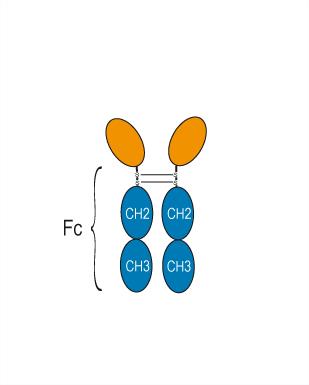
Ipafricept (OMP-54F28; FZD8-Fc) is a first class recombinant fusion protein with the extracellular part of the human frizzled-8 receptor fused to a human IgG1 Fc fragment that binds Wnt ligands, which blocks Wnt signaling. Ipafricept reduces tumor growth and results in a decrease in both liver and lung metastases combined with Gemcitabine (HY-17026) in pancreatic cancer mouse models. Ipafricept shows solid tumor inhibition activity with well tolerance, such as desmoid tumor, germ cell cancer, ovarian cancer.
For research use only. We do not sell to patients.
- Purity : 99.80%
- CAS No.: 1391727-24-4
- Molecular Weight:81.97 kDa
-
Storage:
Please store the product under the recommended conditions in the Certificate of Analysis.


To place orders, for customer services and technical support, please contact: MedChemExpress USA
Tel: 609-228-6898 E-mail: [email protected] [email protected]


-
 Biological Activity
-
Chemical Information
- Protocols
- Purity & Documentation
- References
-
 Help & FAQs


Publications Citing Use of MedChemExpress (MCE) Ipafricept
More

Biological Activity
Description
IC50 & Target
Wnt ligand[1]
In Vitro
Ipafricept (10 μg/mL, 4 h) inhibits the pro-proliferative and and migration effects of peptide RL-QN15 on human embryonic stem cells (hESCs) [3].
Ipafricept (10 μg/mL, 0-48 h) reverses the RL-QN15-induced activation of the Wnt/β-catenin signaling pathway, leading to the reversal of the effects of RL-QN15 on the proliferation, migration and stemness of hESCs[3].
MedChemExpress (MCE) has not independently confirmed the accuracy of these methods. They are for reference only.
-
Cell Line:Human embryonic stem cells
-
Concentration:10 μg/mL
-
Incubation Time:4 h
-
Result:Markedly reduced the RL-QN15-induced increase in TCF7L1, TCF7L2 levels and stemness of hESCs, as well as CK19 protein levels in hESCs.
In Vivo
Ipafricept (45 mg/kg every 2 weeks, i.p., for 42 days) results in greater antitumor activity of WNT blockade and tumor growth inhibition in combination with Nab-paclitaxel (HY-P99974) (7.5 mg/kg every week) than Carboplatin (HY-17393) (30 mg/kg every week) in ovarian cancer xenograft mouse models[2].
Ipafricept (10 mg/kg, s.c., administered on day 0 and 3) competes with RL-QN15 for binding, reducing the interaction of RL-QN15 with FZD8, thereby counteracting its activation of the Wnt/β-catenin signaling pathway in mouse full-thickness skin injury models[3].
MedChemExpress (MCE) has not independently confirmed the accuracy of these methods. They are for reference only.
-
Animal Model:Pancreatic cancer xenograft mouse models[2]
-
Dosage:10 mg/kg weekly or 25 mg/kg every 2 weeks
-
Administration:i.p., weekly or every 2 weeks for 42 days
-
Result:Markedly increased the antitumor activity in combination with Gemcitabine (HY-17026) and Nab-paclitaxel (HY-P99974) in pancreatic cancer xenograft mouse models.
-
Animal Model:Ovarian cancer xenograft mouse models[2]
-
Dosage:45 mg/kg every 2 weeks
-
Administration:i.p., every 2 weeks for 42 days
-
Result:Resulted in greater tumor growth inhibition in combination with Nab-paclitaxel (HY-P99974) than Carboplatin (HY-17393) in ovarian cancer xenograft mouse models.
-
Animal Model:Mouse full-thickness skin injury models[3]
-
Dosage:10 mg/kg
-
Administration:s.c., administered on day 0 and 3
-
Result:Decreased the skin wound healing rate to less than 60% combined with RL-QN15 and inhibited RL-QN15-induced re-epithelialization in mouse full-thickness skin injury models.
Clinical Trial
| NCT Number | Sponsor | Condition | Start Date |
Phase

|
|---|---|---|---|---|
| NCT01329991 | Plexxikon| | 2011-05 | PHASE1 |
Conjugated
Unconjugated
Reconsititution
The product can be reconstituted/diluted with sterile PBS or saline.
Format
-
[FZD8 (frizzled class receptor 8, frizzled family receptor 8, Frizzled-8)]2-IGHG1 Fc (Fragment constant)
Application
ELISA, FACS, Functional assay


Chemical Information
-
CAS No. 1391727-24-4
-
Appearance Liquid
-
Molecular Weight 81.97 kDa
-
Color Colorless to light yellow
-
SMILES
[Ipafricept]
-
Synonyms
OMP-54F28; FZD8-Fc
-
Shipping
Shipping with dry ice.
-
Formulation
Please refer to the lot-specific COA for specific buffer information.
-
Storage
Please store the product under the recommended conditions in the Certificate of Analysis.


Publications (4)
-
Journal Impact Factor
-
Most Recent
-
Nat Biotechnol
Engineering bispecific exosome activators of T cells to target immune checkpoint inhibitor-resistant metastatic melanoma. [Abstract]2026 Jan 5. PMID: 41491256 -
-
-


Purity & Documentation
-
Data Sheet (266 KB)
-
SDS (252 KB)
- English - EN (252 KB)
- Français - FR (252 KB)
- Deutsch - DE (252 KB)
- Norwegian - NO (252 KB)
- Español - ES (252 KB)
- Swedish - SV (252 KB)
- Italian - IT (252 KB)
- Korean - KR (252 KB)
- Portuguese - PT (252 KB)
-
Inhibitory Antibodies User Guide (603 KB)
References
[1]. Jimeno A, et al. A First-in-Human Phase I Study of the Anticancer Stem Cell Agent Ipafricept (OMP-54F28), a Decoy Receptor for Wnt Ligands, in Patients with Advanced Solid Tumors. Clin Cancer Res. 2017 Dec 15;23(24):7490-7497. [Content Brief]
[2]. Fischer MM, et al. WNT antagonists exhibit unique combinatorial antitumor activity with taxanes by potentiating mitotic cell death. Sci Adv. 2017 Jun 21;3(6):e1700090. [Content Brief]

Calculators
Concentration (start) × Volume (start) = Concentration (final) × Volume (final)


Ipafricept Related Classifications
HY-P99667 Related Classifications
 Powered by Bioz