



Ryanodine
Based on 8 publication(s) in Google Scholar
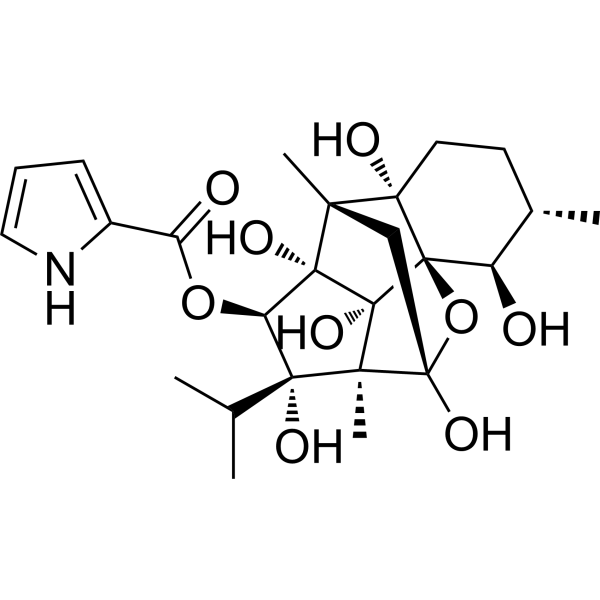
Ryanodine is a cell permeant ryanodine receptor modulator. Ryanodine can either stimulate or inhibit Ryanodine-mediated Ca2+ release depending on its concentrations. Poisonous diterpenoid found in Ryania speciosa.
商品は「研究用試薬」です。人や動物の医療用・臨床診断用・食品用の製品ではありません。
研究用途以外に使用した場合、当社は一切の責任を負いかねます。
- 純度 : 99.91%
- CAS 番号: 15662-33-6
- 分子式: C25H35NO9
- 分子量:493.55
-
保管条件:Powder -20°C, 3 years ; In solvent -80°C, 6 months , -20°C, 1 month

To place orders, for customer services and technical support, please contact: MedChemExpress USA
Tel: 609-228-6898 E-mail: [email protected] [email protected]


-
 生物活性
生物活性
-
化学情報
-
溶剤 & 溶解度
- プロトコル
- 純度とドキュメンテーション
- 参考文献
-
 Help & FAQs


-
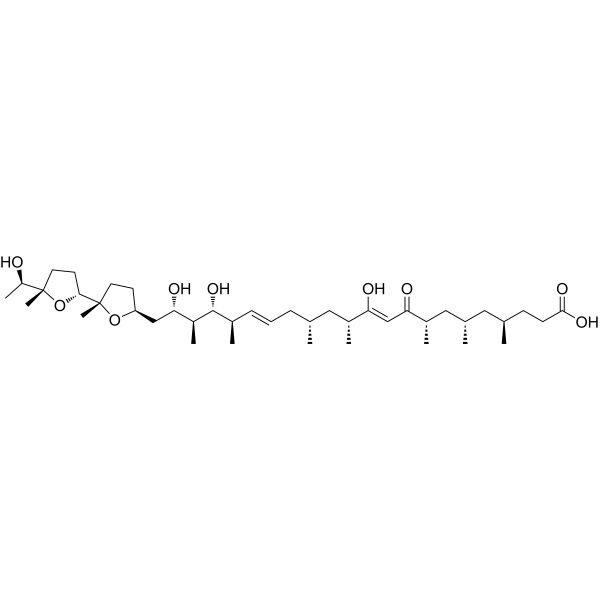
HY-13434
IonomycinCalcium Ionophore -
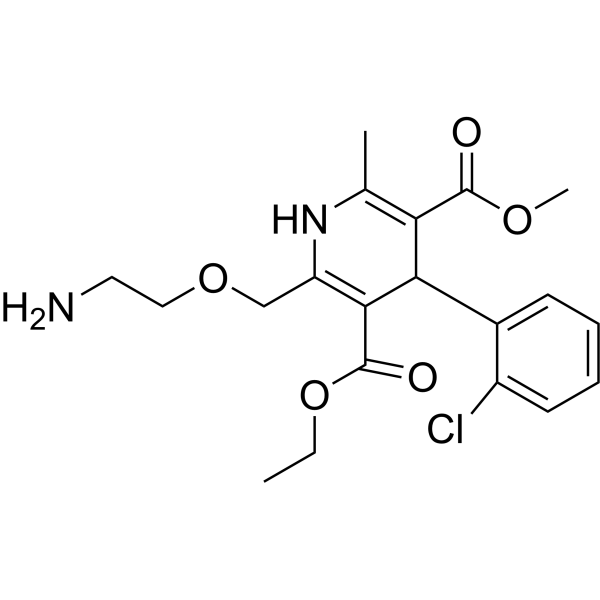
HY-B0317
AmlodipineCalcium Channel Blocker -
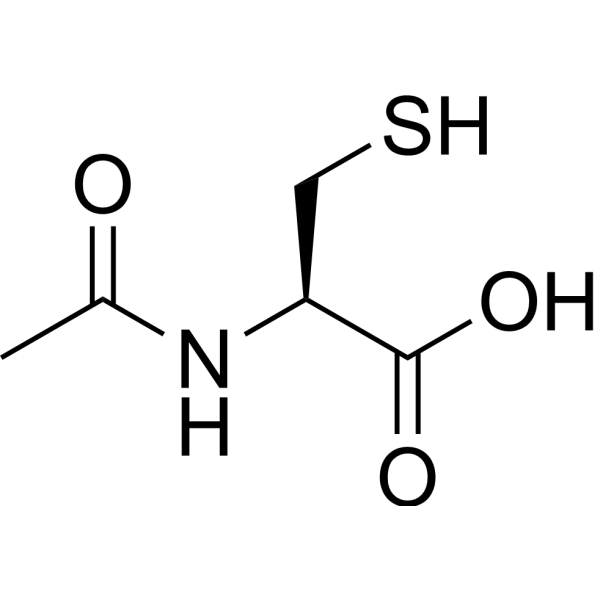
HY-B0215
AcetylcysteineMucolytic Agent -
HY-W009724
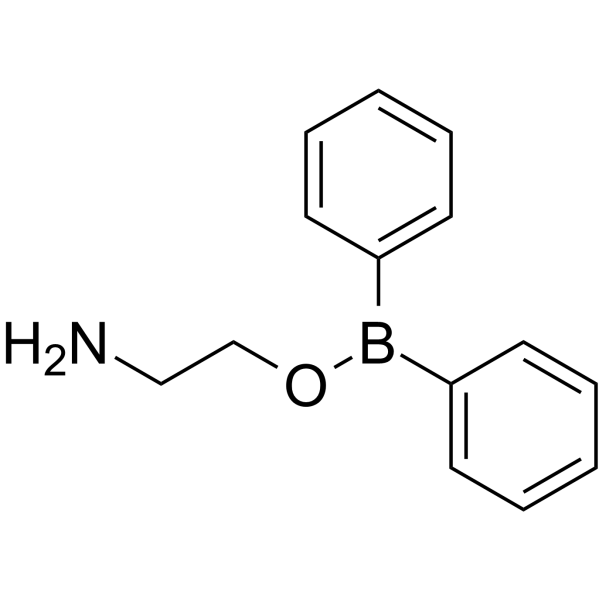
2-Aminoethyl diphenylborinateIP3R Inhibitor -
HY-103312
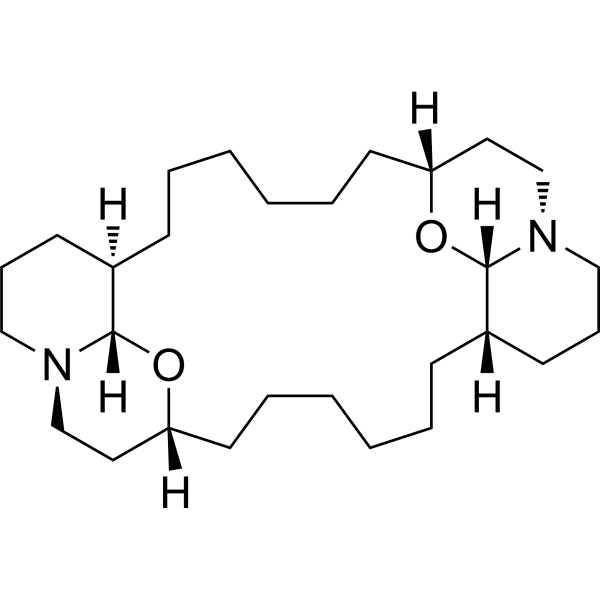
Xestospongin CIP3R Inhibitor -
HY-B0233
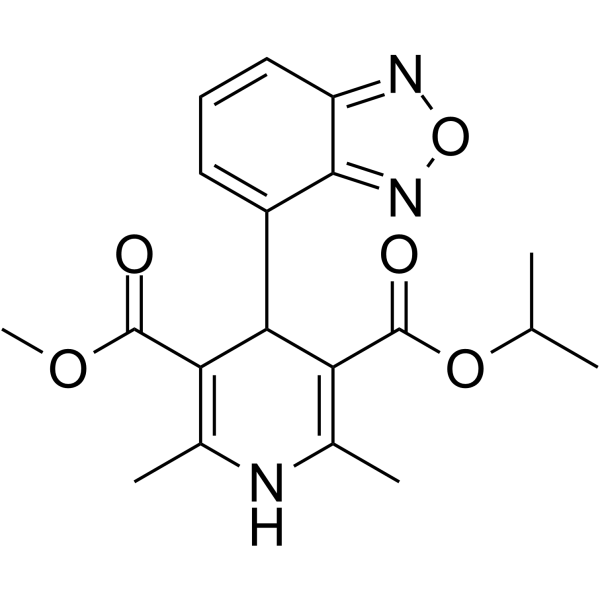
IsradipineL-type Calcium Channel Blocker -
HY-B0424
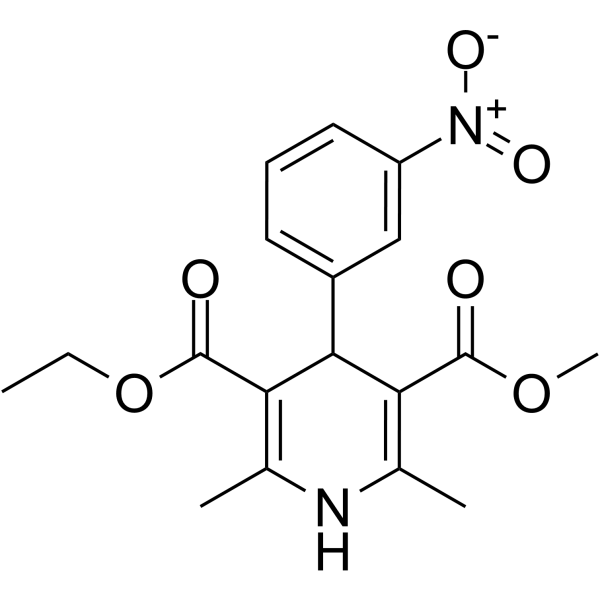
NitrendipineCalcium Channel Blocker -
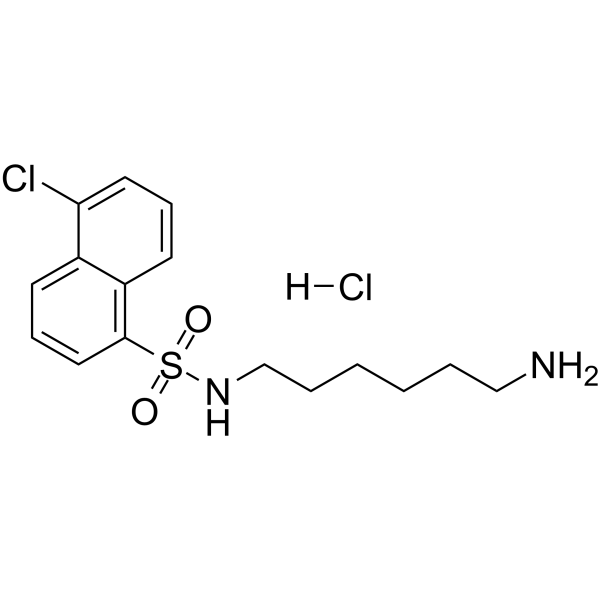
HY-100912
W-7 hydrochlorideCalmodulin Antagonist -

HY-B0424R
Nitrendipine (Standard)Calcium Channel Blocker -
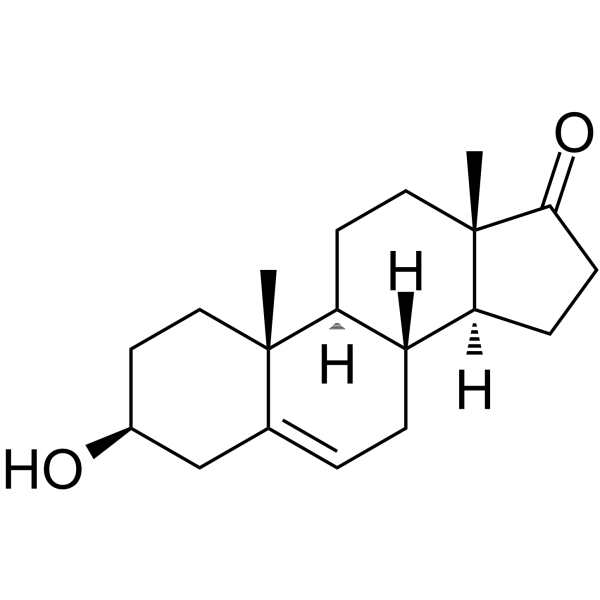
HY-14650
DHEASteroid Hormone -
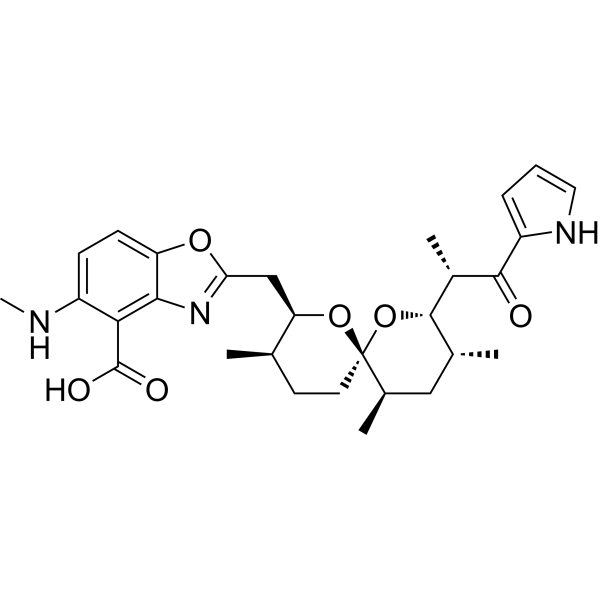
HY-N6687
CalcimycinCation Ionophore -

HY-B0317R
Amlodipine (Standard)Calcium Channel Blocker
MedChemExpress(MCE)の使用を引用している文献 Ryanodine
More- Nat Chem Biol. 2025 Aug;21(8):1238-1249. [Abstract]
- Front Immunol. 2022 Aug 5:13:918241. [Abstract]
- Thromb Haemost. 2025 Mar 6. [Abstract]
- J Cell Mol Med. 2021 Nov;25(21):9953-9971. [Abstract]
- FASEB J. 2025 Sep 30;39(18):e71061. [Abstract]
- Res Sq. 2026 Mar 11.
- bioRxiv. May 21, 2022.
- Oxid Med Cell Longev. 2021 Oct 5:2021:8542809. [Abstract]
Calcium Channel アイソフォーム固有の製品をすべて表示
More

生物活性
製品説明
IC50 & Target
Ryanodine receptor[1]
体内実験
At concentrations above 250 nM, ryanodine induces a slowly developing, dose dependent contracture which could not be blocked by 5 mM Co2+[1].
MedChemExpress (MCE) has not independently confirmed the accuracy of these methods. They are for reference only.
臨床実験
| NCT Number | Sponsor | Condition | Start Date |
Phase

|
|---|---|---|---|---|
| NCT01329991 | Plexxikon| | 2011-05 | PHASE1 |


化学情報
-
CAS 番号 15662-33-6
-
性状 Solid
-
分子量 493.55
-
分子式 C25H35NO9
-
Color White to off-white
-
SMILES
O[C@@]1([C@@]([C@@]2(O)O3)4C)[C@@]35[C@](O)(CC[C@H](C)[C@H]5O)[C@@](C2)(C)[C@@]1([C@H](OC(C6=CC=CN6)=O)[C@]4(O)C(C)C)O
-
別名
ライアノジン
-
Structure Classification
-
Initial Source
-
輸送条件
Room temperature in continental US; may vary elsewhere.
-
保管条件
Powder -20°C 3 years In solvent -80°C 6 months -20°C 1 month


Publications (8)
-
Journal Impact Factor
-
Most Recent
-
Nat Chem Biol
Persistent activation of TRPM4 triggers necrotic cell death characterized by sodium overload. [Abstract]2025 Aug;21(8):1238-1249. PMID: 39915626 -
Front Immunol
DMGV Is a Rheostat of T Cell Survival and a Potential Therapeutic for Inflammatory Diseases and Cancers. [Abstract]2022 Aug 5:13:918241. PMID: 35990633 -
Thromb Haemost
Inhibition of IP3 (Inositol 1,4,5-Trisphosphate) Receptors Retards SARS-CoV-2-Induced Endothelial von Willebrand Factor Secretion and Thrombosis. [Abstract]2025 Mar 6. PMID: 40049586 -
J Cell Mol Med
Dihydromyricetin resists inflammation-induced muscle atrophy via ryanodine receptor-CaMKK-AMPK signal pathway. [Abstract]2021 Nov;25(21):9953-9971. PMID: 34676967 -
FASEB J
Myosin Light Chain Kinase-Mediated Endothelial Hyperpermeability Underlies Temsirolimus-Induced Lung Injury. [Abstract]2025 Sep 30;39(18):e71061. PMID: 40991312 -
-
-
Oxid Med Cell Longev
Dihydromyricetin Ameliorates Inflammation-Induced Insulin Resistance via Phospholipase C-CaMKK-AMPK Signal Pathway. [Abstract]2021 Oct 5:2021:8542809. PMID: 34650665


溶剤 & 溶解度
体外:
DMSO : 50 mg/mL (101.31 mM; Need ultrasonic; Hygroscopic DMSO has a significant impact on the solubility of product, please use newly opened DMSO)
Please refer to the solubility information to select the appropriate solvent. Once prepared, please aliquot and store the solution to prevent product inactivation from repeated freeze-thaw cycles.
Storage method and period of stock solution: -80°C, 6 months; -20°C, 1 month. When stored at -80°C, please use it within 6 months. When stored at -20°C, please use it within 1 month.
Please refer to the solubility information to select the appropriate solvent. Once prepared, please aliquot and store the solution to prevent product inactivation from repeated freeze-thaw cycles.
Storage method and period of stock solution: -80°C, 6 months; -20°C, 1 month. When stored at -80°C, please use it within 6 months. When stored at -20°C, please use it within 1 month.
濃度 (開始) × 体積 (開始) = 濃度 (終了) × 体積 (終了)
体内:
Select the appropriate dissolution method based on your experimental animal and administration route.
- For the following dissolution methods, please ensure to first prepare a clear stock solution using an In Vitro approach and then sequentially add co-solvents:
- To ensure reliable experimental results, the clarified stock solution can be appropriately stored based on storage conditions. As for the working solution for In Vivo experiments, it is recommended to prepare freshly and use it on the same day.
- The percentages shown for the solvents indicate their volumetric ratio in the final prepared solution. If precipitation or phase separation occurs during preparation, heat and/or sonication can be used to aid dissolution.
Add each solvent one by one: 10% DMSO 40% PEG300 5% Tween-80 45% Saline
Solubility: ≥ 1.25 mg/mL (2.53 mM); Clear solution
This protocol yields a clear solution of ≥ 1.25 mg/mL (saturation unknown).
Taking 1 mL working solution as an example, add 100 μL DMSO stock solution (12.5 mg/mL) to 400 μL PEG300, and mix evenly; then add 50 μL Tween-80 and mix evenly; then add 450 μL Saline to adjust the volume to 1 mL.
Preparation of Saline: Dissolve 0.9 g sodium chloride in ddH₂O and dilute to 100 mL to obtain a clear Saline solution.
Add each solvent one by one: 10% DMSO 90% (20% SBE-β-CD in Saline)
Solubility: ≥ 1.25 mg/mL (2.53 mM); Clear solution
This protocol yields a clear solution of ≥ 1.25 mg/mL (saturation unknown).
Taking 1 mL working solution as an example, add 100 μL DMSO stock solution (12.5 mg/mL) to 900 μL 20% SBE-β-CD in Saline, and mix evenly.
Preparation of 20% SBE-β-CD in Saline (4°C, storage for one week): 2 g SBE-β-CD powder is dissolved in 10 mL Saline, completely dissolve until clear.
In Vivo Dissolution Calculator
Please enter the basic information of animal experiments:
-
-
-
-
Recommended: Prepare an additional quantity of animals to account for potential losses during experiments.
Please enter your animal formula composition:
-
%DMSO +
Recommended: Keep the proportion of DMSO in working solution below 2% if your animal is weak.
-
%+
-
+%Tween-80 + +
-
%Saline +
The co-solvents required include: DMSO, . All of co-solvents are available by MedChemExpress (MCE). , Tween 80. All of co-solvents are available by MedChemExpress (MCE).
Working solution concentration: 0.22 mg/mL
Method for preparing stock solution: mg drug dissolved in μL DMSO. Stock solution concentration: mg/mL.
1. Take μL DMSO stock solution;
2. Add μL .
μL , mix evenly;
3. Then add μL Tween 80, mix evenly;
4. Then add μL
Please ensure that the stock solution in the first step is dissolved to a clear state, and add co-solvents in sequence. You can use ultrasonic heating (ultrasonic cleaner, recommended frequency 20-40 kHz), vortexing, etc. to assist dissolution.


純度とドキュメンテーション
-
データシート (284 KB)
-
SDS (537 KB)
- English - EN (537 KB)
- Français - FR (537 KB)
- Deutsch - DE (537 KB)
- Norwegian - NO (537 KB)
- Español - ES (537 KB)
- Swedish - SV (537 KB)
- Italian - IT (537 KB)
- Korean - KR (537 KB)
- Portuguese - PT (537 KB)
-
取扱説明書 (2659 KB)
参考文献
[1]. Meissner G, et al. Ryanodine activation and inhibition of the Ca2+ release channel of sarcoplasmic reticulum. J Biol Chem. 1986 May 15;261(14):6300-6. [Content Brief]
[2]. Fryer MW, et al. The action of ryanodine on rat fast and slow intact skeletal muscles. J Physiol. 1989 Jul;414:399-413. [Content Brief]


Complete Stock Solution Preparation Table
Please refer to the solubility information to select the appropriate solvent. Once prepared, please aliquot and store the solution to prevent product inactivation from repeated freeze-thaw cycles.
Storage method and period of stock solution: -80°C, 6 months; -20°C, 1 month. When stored at -80°C, please use it within 6 months. When stored at -20°C, please use it within 1 month.
| Optional Solvent | Concentration Solvent Mass | 1 mg | 5 mg | 10 mg | 25 mg |
|---|---|---|---|---|---|
| DMSO | 1 mM | 2.0261 mL | 10.1307 mL | 20.2614 mL | 50.6534 mL |
| 5 mM | 0.4052 mL | 2.0261 mL | 4.0523 mL | 10.1307 mL | |
| 10 mM | 0.2026 mL | 1.0131 mL | 2.0261 mL | 5.0653 mL | |
| 15 mM | 0.1351 mL | 0.6754 mL | 1.3508 mL | 3.3769 mL | |
| 20 mM | 0.1013 mL | 0.5065 mL | 1.0131 mL | 2.5327 mL | |
| 25 mM | 0.0810 mL | 0.4052 mL | 0.8105 mL | 2.0261 mL | |
| 30 mM | 0.0675 mL | 0.3377 mL | 0.6754 mL | 1.6884 mL | |
| 40 mM | 0.0507 mL | 0.2533 mL | 0.5065 mL | 1.2663 mL | |
| 50 mM | 0.0405 mL | 0.2026 mL | 0.4052 mL | 1.0131 mL | |
| 60 mM | 0.0338 mL | 0.1688 mL | 0.3377 mL | 0.8442 mL | |
| 80 mM | 0.0253 mL | 0.1266 mL | 0.2533 mL | 0.6332 mL | |
| 100 mM | 0.0203 mL | 0.1013 mL | 0.2026 mL | 0.5065 mL |


Ryanodine 関連分類
HY-103306 関連分類
 Powered by Bioz