



Coenzyme Q6
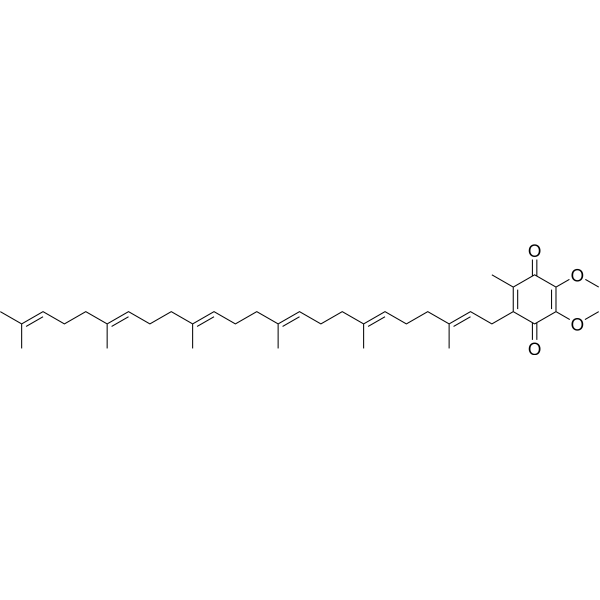
Coenzyme Q6 (Ubiquinone 30) is a redox-active benzoquinone lipid and mitochondrial electron carrier. Coenzyme Q6 can be used in research on MASLD, mitochondrial diseases, pneumococcal diseases, and steroid-resistant nephrotic syndrome with FSGS.
商品は「研究用試薬」です。人や動物の医療用・臨床診断用・食品用の製品ではありません。
研究用途以外に使用した場合、当社は一切の責任を負いかねます。
- CAS 番号: 1065-31-2
- 分子式: C39H58O4
- 分子量:590.88
-
保管条件:
-20°C, stored under nitrogen
* In solvent : -80°C, 6 months; -20°C, 1 month (stored under nitrogen)

To place orders, for customer services and technical support, please contact: MedChemExpress USA
Tel: 609-228-6898 E-mail: [email protected] [email protected]


-
 生物活性
生物活性
-
化学情報
- プロトコル
- 純度とドキュメンテーション
- 参考文献
-
 Help & FAQs


Endogenous Metabolite アイソフォーム固有の製品をすべて表示
More

生物活性
製品説明
体外実験
Coenzyme Q6 inhibits lipid peroxidation in ubiquinone-depleted bovine heart submitochondrial particles independently of vitamin E, and after reduction to ubiquinol, amplifies the antioxidant effect of vitamin E[2].
Coenzyme Q6 (50 μM; 1 h) is integrated into the plasma membrane of wild-type W303.1B and the coq3 mutant CC303.1, and increases ascorbate-stabilizing activity in both strains[3].
MedChemExpress (MCE) has not independently confirmed the accuracy of these methods. They are for reference only. Further protocols information, click here.


化学情報
-
CAS 番号 1065-31-2
-
性状 Oil
-
分子量 590.88
-
分子式 C39H58O4
-
Color Colorless to light yellow
-
SMILES
C/C(C)=C\CC/C(C)=C/CC/C(C)=C/CC/C(C)=C/CC/C(C)=C/CC/C(C)=C/CC(C(C(OC)=C1OC)=O)=C(C)C1=O
-
別名
Ubiquinone 30
-
Structure Classification
-
Initial Source
saccharomyces
-
輸送条件
Room temperature in continental US; may vary elsewhere.
-
保管条件
-20°C, stored under nitrogen
* In solvent : -80°C, 6 months; -20°C, 1 month (stored under nitrogen)

プロトコル
-
ROS/oxidative-stress fluorescent staining
ROS/oxidative-stress fluorescent staining uses cell-permeant fluorogenic probes that become fluorescent after oxidation inside cells or tissues; commonly used examples include DCFH-DA/DCFDA for broad cellular oxidant detection, DHE for superoxide-related signal detection, MitoSOX for mitochondrial superoxide-related signal detection, and CellROX probes for oxidative-stress-associated fluorescence readouts. The assay detects probe oxidation rather than a single ROS species unless the probe and analysis method have been chemically validated for that species. DCFH-DA enters cells, is deacetylated by intracellular esterases to DCFH, and produces fluorescent DCF after oxidation, so the readout is used as an operational measure of total cellular oxidative stress rather than a species-specific ROS measurement. DHE and MitoSOX can report superoxide-related oxidation, but red fluorescence alone can include non-specific ethidium-like oxidation products; HPLC or optimized spectral approaches are


純度とドキュメンテーション
-
データシート (267 KB)
-
SDS (252 KB)
- English - EN (252 KB)
- Français - FR (252 KB)
- Deutsch - DE (252 KB)
- Norwegian - NO (252 KB)
- Español - ES (252 KB)
- Swedish - SV (252 KB)
- Italian - IT (252 KB)
- Korean - KR (252 KB)
- Portuguese - PT (252 KB)
-
取扱説明書 (2659 KB)
参考文献

Calculators
濃度 (開始) × 体積 (開始) = 濃度 (終了) × 体積 (終了)


Coenzyme Q6 関連分類
HY-N9610 関連分類
 Powered by Bioz
Keywords
- Coenzyme Q6
- 1065-31-2
- Ubiquinone 30
- Coenzyme Q 6
- Coenzyme Q-6
- Ubiquinone30
- Ubiquinone-30
- Endogenous Metabolite
- metabolic dysfunction-associated steatotic liver disease
- de novo lipogenesis
- SIRT1
- pneumococcal disease
- lipid peroxidation
- mitochondrial bioenergetics
- Nrf2
- steroid-resistant nephrotic syndrome with FSGS
- gut microbial community composition
- PPARα
- Inhibitor
- inhibitor
- inhibit