



オボアルブミン
Based on 9 publication(s) in Google Scholar
Ovalbumins are the major proteins in egg white. Ovalbumins act as an allergen and inducer, and can be applied to mouse models of allergic diseases. Ovalbumins can induce allergic rhinitis in mice via sensitization and nasal challenge. Ovalbumins can be used to establish asthma models.
Ovalbumin, low endotoxin (HY-W250978A) is recommended for model establishment.
商品は「研究用試薬」です。人や動物の医療用・臨床診断用・食品用の製品ではありません。
研究用途以外に使用した場合、当社は一切の責任を負いかねます。
- 純度 : 99.17%
- CAS 番号: 9006-59-1
-
保管条件:
Please store the product under the recommended conditions in the Certificate of Analysis.

To place orders, for customer services and technical support, please contact: MedChemExpress USA
Tel: 609-228-6898 E-mail: [email protected] [email protected]


-
 生物活性
生物活性
-
化学情報
-
溶剤 & 溶解度
- 純度とドキュメンテーション
- 参考文献
-
 Help & FAQs


-
HY-B1521
Aluminum HydroxideAntacid Aegnt -
HY-P1956
HSA ProteinAntioxidant/Anticoagulant -
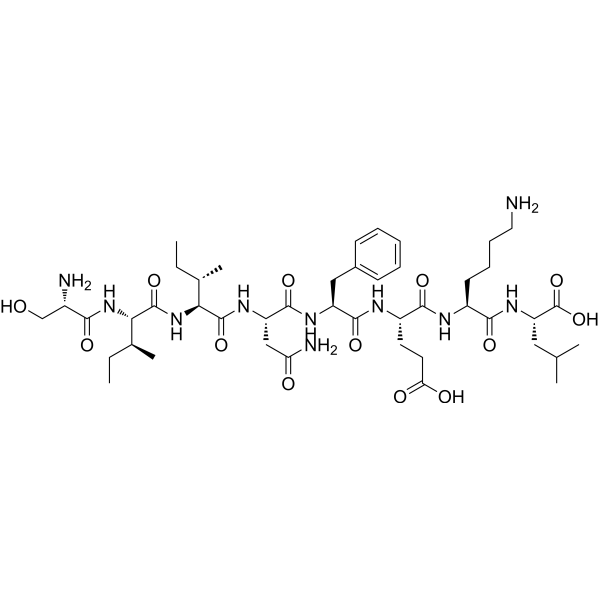
HY-P1489
OVA Peptide(257-264)Octamer Peptide -

HY-W250978A
Ovalbumin, low endotoxinAllergen -
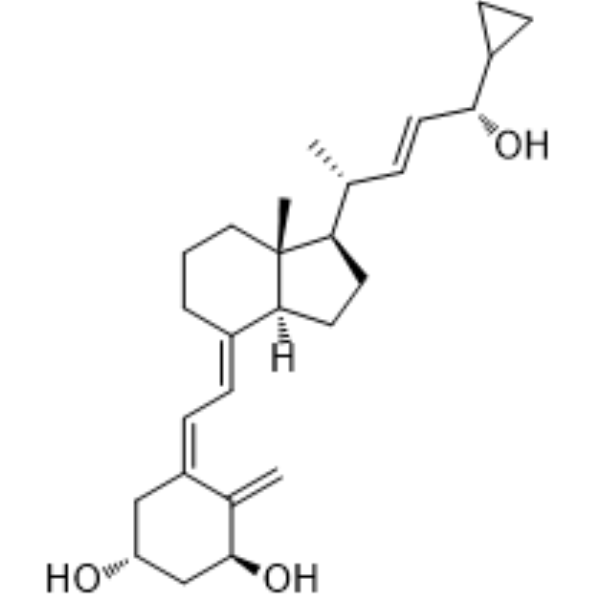
HY-10001
CalcipotriolVitamin D3 Analog -

HY-P2232
ConalbuminIron-binding Protein -
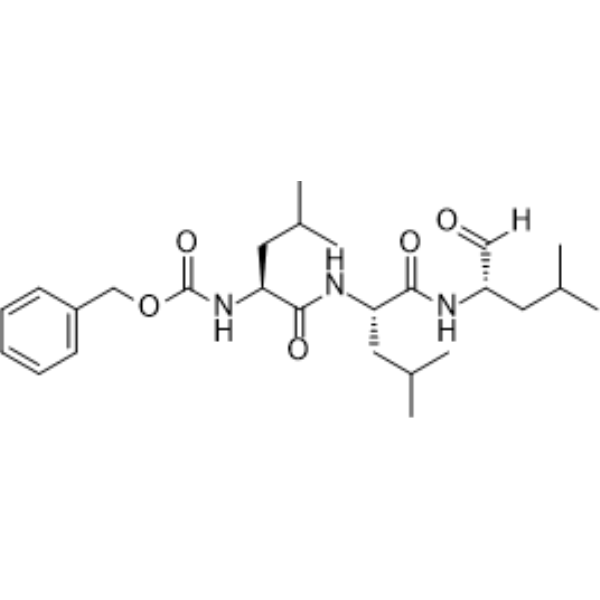
HY-13259
MG-132Proteasome Inhibitor -

HY-NP007
MyoglobinOxygen-binding Hemeprotein -
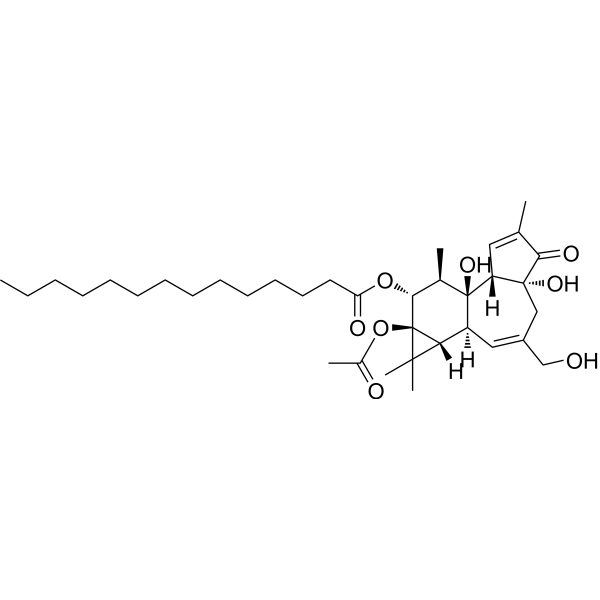
HY-18739
Phorbol 12-myristate 13-acetatePKC Activator -
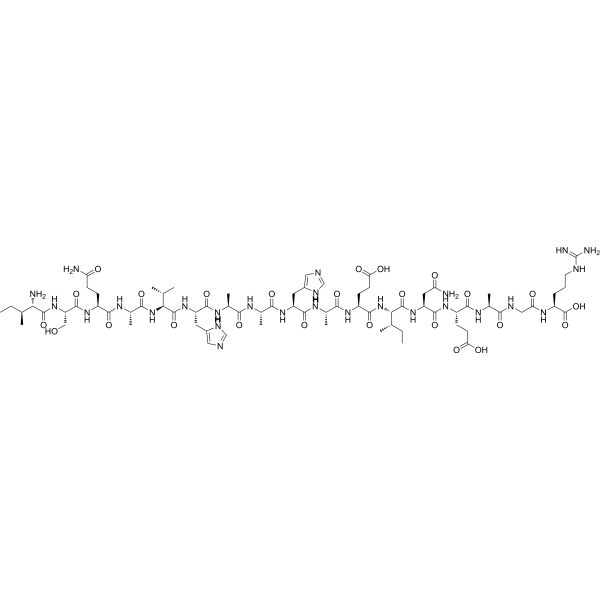
HY-P0286
OVA Peptide (323-339)Kb-Restricted Peptide Epitope -
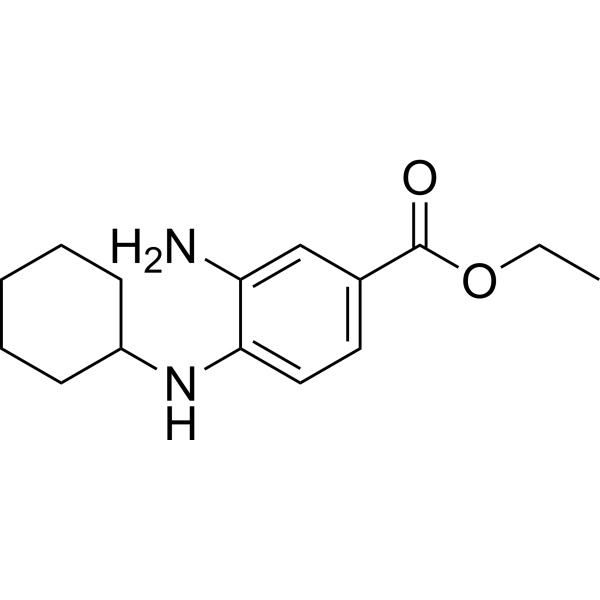
HY-100579
Ferrostatin-1Ferroptosis Inhibitor -
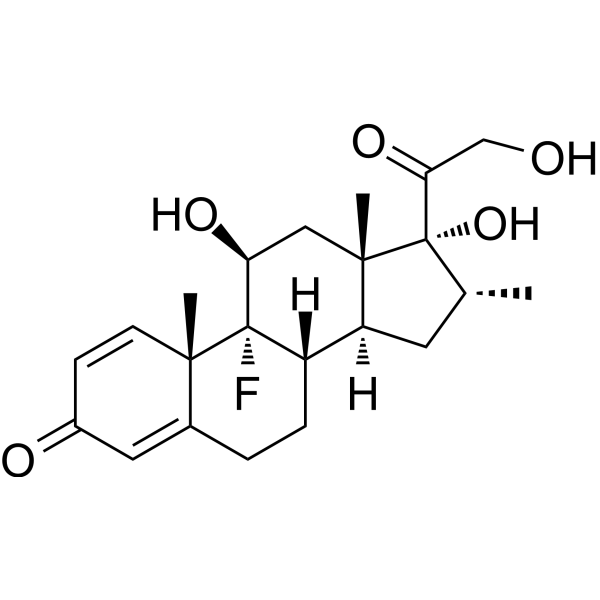
HY-14648
DexamethasoneGR Agonist
MedChemExpress(MCE)の使用を引用している文献 Ovalbumins
More- Cancer Cell. 2026 Jan 8:S1535-6108(25)00545-8. [Abstract]
- Adv Sci (Weinh). 2026 Sep;13(52):e76298.
- Adv Sci (Weinh). 2026 Aug 25:e77358.
- Cell Rep Med. 2026 Apr 21;7(4):102724. [Abstract]
- J Control Release. 2024 Dec:376:167-183. [Abstract]
- Adv Healthc Mater. 2026 Apr 29:e05709. [Abstract]
- EMBO J. 2025 Aug 18. [Abstract]
- Sci Rep. 2026 Aug 13;16(1):25321.
- Chin J Anal Chem. 2026 Jul 21.


生物活性
製品説明
Ovalbumin, low endotoxin (HY-W250978A) is recommended for model establishment[1][2].
体内実験
Ovalbumins (1 mg/kg; i.n.; 6 times over 2 weeks) induces minimal allergic airway inflammation in mice, with no significant airway hyper-responsiveness and only modest increases in inflammatory cells, cytokines, and pathological changes[2].
Ovalbumins (1 mg/kg; i.n.; 6 times over 2 weeks) induces enhanced allergic airway inflammation when co-administered with S-SNPs, as evidenced by significantly higher IL-5 and IL-1β levels, inflammatory cell infiltration, pathological lung changes, and airway hyper-responsiveness compared to ovalbumin alone[2].
Ovalbumins (1 mg/kg; i.n.; 6 times over 2 weeks) induces enhanced allergic airway inflammation when co-administered with M-SNPs, as evidenced by significantly higher IL-1β and IFN-γ levels, inflammatory cell infiltration, pathological lung changes, and airway hyper-responsiveness compared to ovalbumin alone[2].
Ovalbumins (1 mg/kg; i.n.; 6 times over 2 weeks) induces allergic airway inflammation of similar severity when co-administered with P-SNPs as when administered alone, with no significant differences in cytokine levels, inflammatory cell infiltration, pathological changes, or airway hyper-responsiveness[2].
MedChemExpress (MCE) has not independently confirmed the accuracy of these methods. They are for reference only.
-
Animal Model:BALB/c (male, SPF grade, 6-8 weeks old, 25 g)[1]
-
Dosage:50 μg (sensitization); 25 mg/mL (challenge)
-
Administration:i.p. (on days 0, 7, 14); i.n. (daily from days 22 to 28, 20 μL per nostril)
-
Result:Induced a significant increase in nasal symptom scores [6.00 (6.00, 6.00)] compared to the blank control group [1.50 (1.00, 3.50)].
Caused nasal mucosal destruction, ciliary disorder, mucosal thickening, and goblet cell hyperplasia.
Upregulated serum levels of ovalbumin-specific IgE (18.01), histamine (15.14), and IL-33 (152.55) compared to the blank control group.
Increased lung mRNA levels of IL-5, IL-13, and TNF-α, and decreased lung mRNA levels of IFN-γ compared to the blank control group.
Increased nasal mucosa and lung protein/mRNA levels of IL-33 and ST2 compared to the blank control group.
-
Animal Model:BALB/c (female, 5-6 weeks old)[2]
-
Dosage:1 mg/kg
-
Administration:i.n.; 6 times over 2 weeks
-
Result:Did not induce significant airway hyper-responsiveness compared to control.
Resulted in minimal increases in bronchoalveolar lavage fluid total cells and macrophages relative to control, with no significant increases in lymphocytes, eosinophils, or neutrophils.
Increased lung homogenate levels of IL-5, IL-13, IL-1β, and IFN-γ compared to control, but levels were significantly lower than those in all silica nanoparticle/ovalbumin groups.
Showed minimal peribronchial and perivascular inflammation and only a small increase in goblet cell metaplasia relative to control.\nResulted in significantly increased lung homogenate levels of IL-5 and IL-1β compared to ovalbumin administered with saline.
Induced significantly higher bronchoalveolar lavage fluid total cells, macrophages, lymphocytes, eosinophils, and neutrophils than ovalbumin administered with saline.
Caused greater peribronchial/perivascular inflammation and goblet cell metaplasia than ovalbumin administered with saline.
Induced significant airway hyper-responsiveness compared to control, saline/OVA, and P-SNP/OVA groups.\nResulted in significantly increased lung homogenate levels of IL-1β and IFN-γ compared to ovalbumin administered with saline.
Induced significantly higher bronchoalveolar lavage fluid total cells, macrophages, lymphocytes, eosinophils, and neutrophils than ovalbumin administered with saline.
Caused greater peribronchial/perivascular inflammation and goblet cell metaplasia than ovalbumin administered with saline.
Induced significant airway hyper-responsiveness compared to control, saline/OVA, and P-SNP/OVA groups.\nDid not result in significant differences in lung homogenate IL-5, IL-13, IL-1β, or IFN-γ levels compared to ovalbumin administered with saline.
Resulted in bronchoalveolar lavage fluid cell counts, airway hyper-responsiveness, and lung pathological changes comparable to those induced by ovalbumin administered with saline.


化学情報
-
CAS 番号 9006-59-1
-
性状 Solid
-
Color White to light yellow
-
SMILES
[Ovalbumins]
-
別名
Ovalbumins
-
輸送条件
Room temperature in continental US; may vary elsewhere.
-
保管条件
Please store the product under the recommended conditions in the Certificate of Analysis.


Publications (9)
-
Journal Impact Factor
-
Most Recent
-
Cancer Cell
2026 Jan 8:S1535-6108(25)00545-8. PMID: 41512868 -
-
-
Cell Rep Med
Engineered oncolytic virus armed with anti-PCSK9 scFv boosts long-term CD8+ T cell immunity via rewiring MHC-I antigen presentation. [Abstract]2026 Apr 21;7(4):102724. PMID: 41923622 -
J Control Release
An immunostimulatory liponanogel reveals immune activation-enhanced drug delivery and therapeutic efficacy in cancer. [Abstract]2024 Dec:376:167-183. PMID: 39384154 -
Adv Healthc Mater
Synergistic Enhancement of Immunogenic Cell Death Through Photothermal/Photodynamic Effects via Complex Nanoenzymes for Pancreatic Cancer Therapy. [Abstract]2026 Apr 29:e05709. PMID: 42051163 -
EMBO J
Speedy A governs non-homologous XY chromosome desynapsis as a unique prerequisite for XY loop-axis organization. [Abstract]2025 Aug 18. PMID: 40826181 -
-


溶剤 & 溶解度
体外:
H2O : ≥ 100 mg/mL
* "≥" means soluble, but saturation unknown.


純度とドキュメンテーション
-
データシート (275 KB)
-
SDS (418 KB)
- English - EN (418 KB)
- Français - FR (418 KB)
- Deutsch - DE (418 KB)
- Norwegian - NO (418 KB)
- Español - ES (418 KB)
- Swedish - SV (418 KB)
- Italian - IT (418 KB)
- Korean - KR (418 KB)
- Portuguese - PT (418 KB)
-
取扱説明書 (2659 KB)
参考文献
[1]. Xiaochun L, et al. Effect of improved Yupingfeng powder prescription on interleukin-33/suppression of tumorigenicity 2 pathway in mice with ovalbumins-induced allergic rhinitis. Journal of traditional Chinese medicine = Chung i tsa chih ying wen pan. 2025 Dec;45(6):1215-1227. [Content Brief]
[2]. Han H, et al. Toxic and adjuvant effects of silica nanoparticles on ovalbumin-induced allergic airway inflammation in mice. Respiratory research. 2016 May 18;17(1):60. [Content Brief]

Calculators
濃度 (開始) × 体積 (開始) = 濃度 (終了) × 体積 (終了)


Ovalbumins 関連分類
HY-W250978 関連分類
 Powered by Bioz