



Proanthocyanidins
Based on 6 publication(s) in Google Scholar
Proanthocyanidin (Procyanidin) are a class of polyphenolic that are widely distributed in higher plants, consisted of an electrophilic flavanyl unit. Proanthocyanidin can be used as antioxidant and anti-cancers agent. Proanthocyanidin also exhibit anti-inflammatory, cardioprotective, antibacterial and antifungal properties, which can be used in the treatment of chronic venous insufficiency, capillary fragility, sunburn and retinopathy..
商品は「研究用試薬」です。人や動物の医療用・臨床診断用・食品用の製品ではありません。
研究用途以外に使用した場合、当社は一切の責任を負いかねます。
- 純度 : 99.20%
- CAS 番号: 20347-71-1
-
保管条件:Powder -20°C, 3 years , 4°C, 2 years ; In solvent -80°C, 6 months , -20°C, 1 month

To place orders, for customer services and technical support, please contact: MedChemExpress USA
Tel: 609-228-6898 E-mail: [email protected] [email protected]


-
 生物活性
生物活性
-
化学情報
-
溶剤 & 溶解度
- プロトコル
- 純度とドキュメンテーション
- 参考文献
-
 Help & FAQs


-
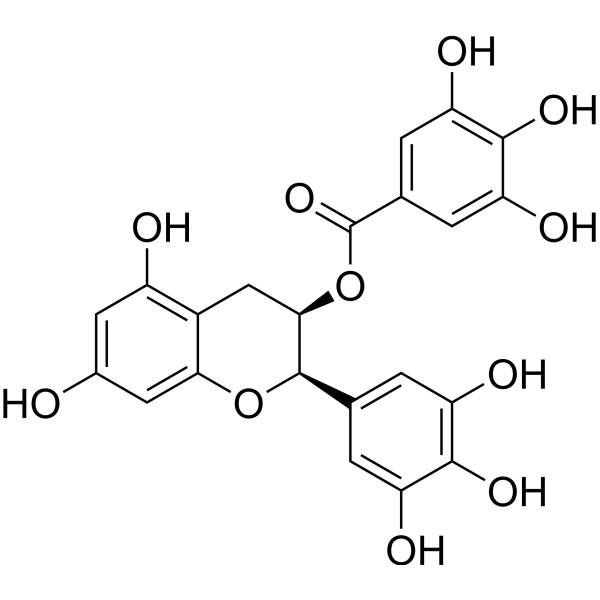
HY-13653
(-)-Epigallocatechin GallateAnticancer Agent -
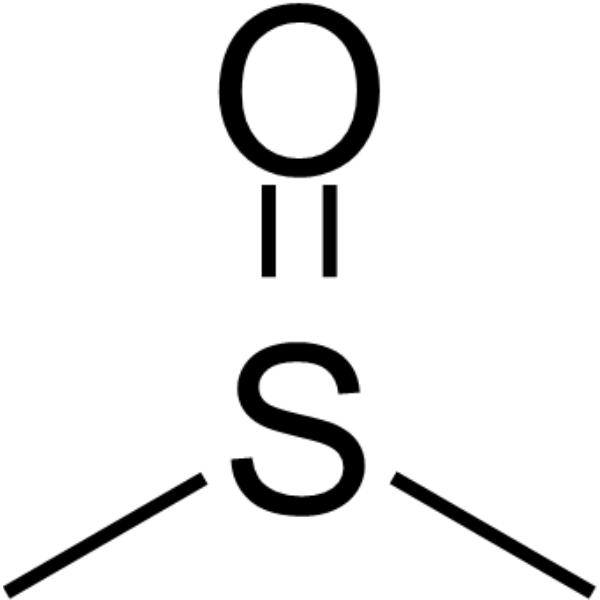
HY-Y0320
Dimethyl sulfoxide, meets analytical specification of Ch.P.Aprotic Solvent -
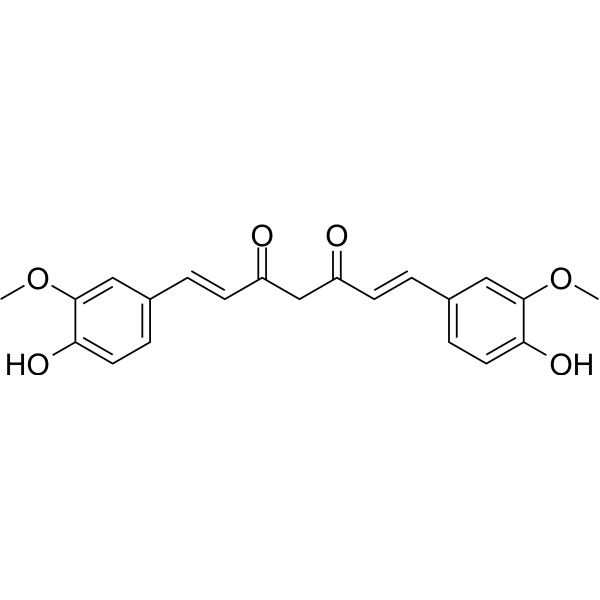
HY-N0005
Curcuminp300 Histone Acetylatransferase Inhibitor -
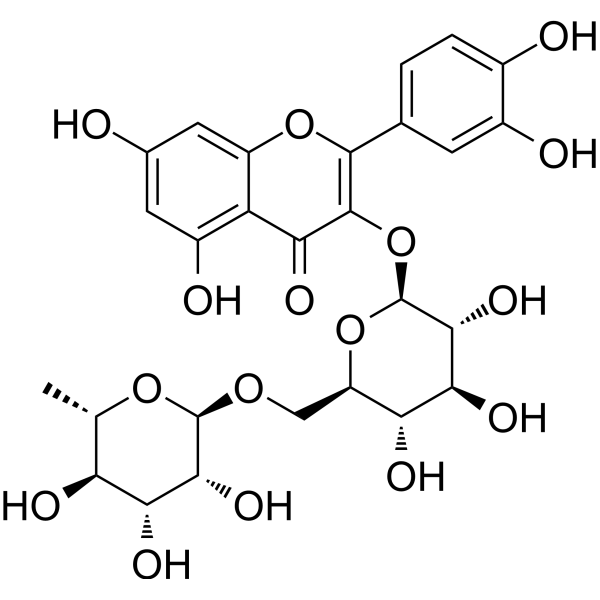
HY-N0148
RutinCBR1 Inhibitor -
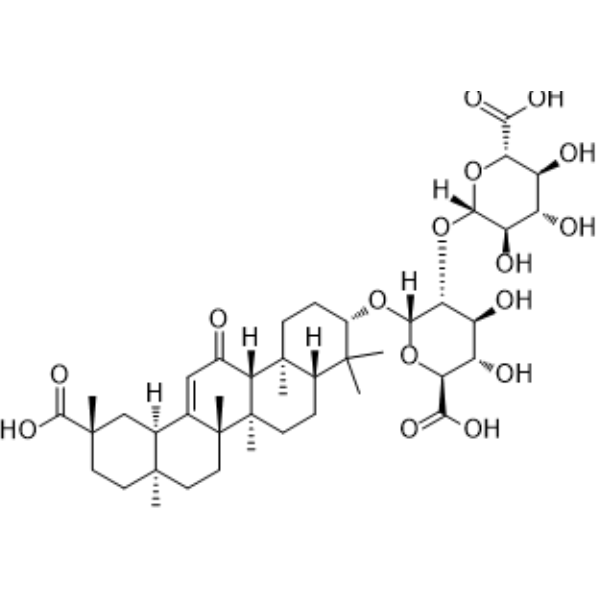
HY-N0184
Glycyrrhizic acidHMGB1 Antagonist -
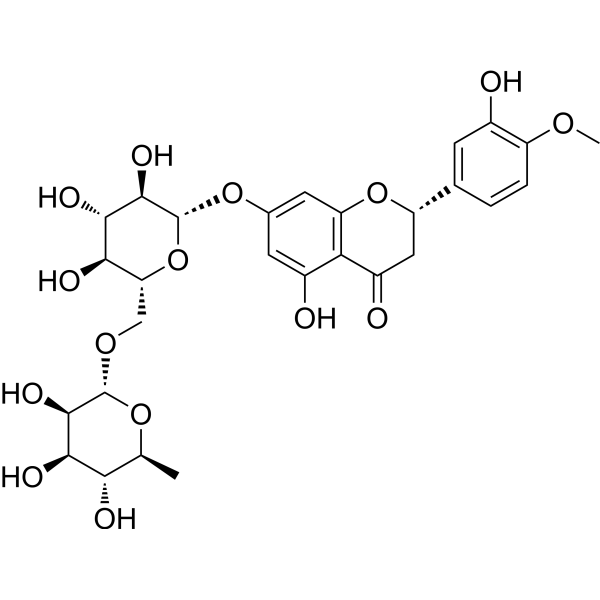
HY-15337
HesperidinAntioxidant -
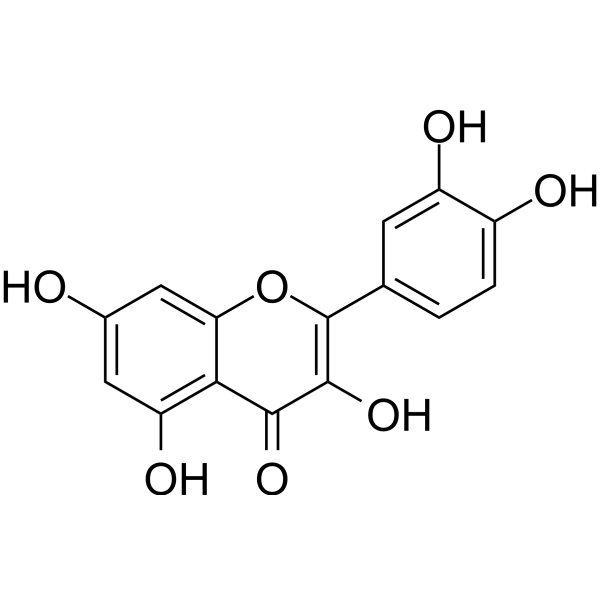
HY-18085
QuercetinFlavonoid Antioxidant -
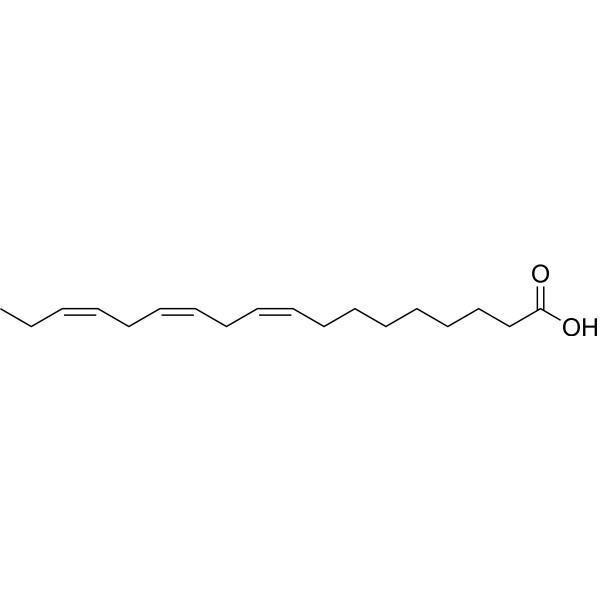
HY-N0728
α-Linolenic acidEssential Fatty Acid -
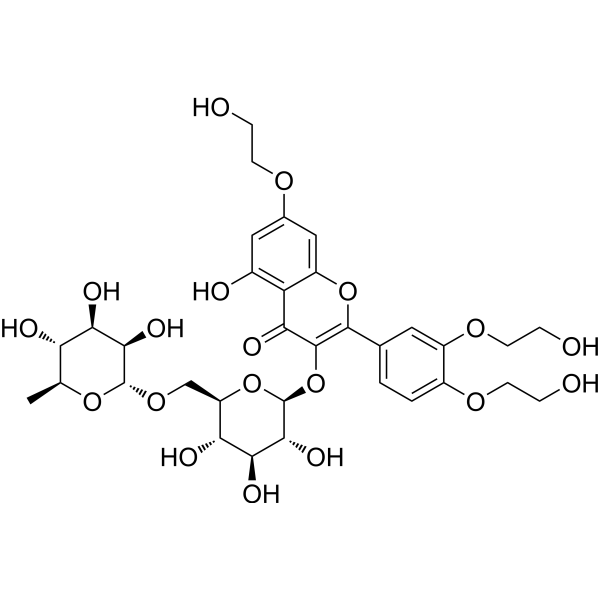
HY-N0139
TroxerutinNOD-like Receptor (NLR) Inhibitor -
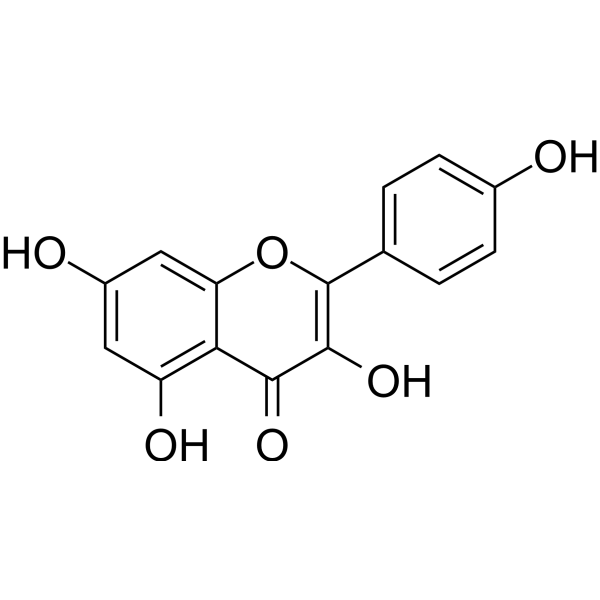
HY-14590
KaempferolEstrogen Receptor α Inhibitor -
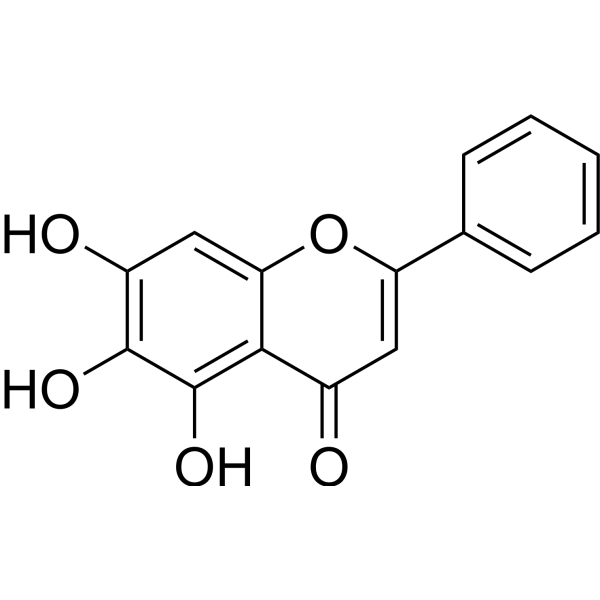
HY-N0196
BaicaleinXanthine Oxidase Inhibitor -
HY-B0089
AcarboseAlpha-Glucosidase Inhibitor
MedChemExpress(MCE)の使用を引用している文献 Proanthocyanidins
More- Microbiome. 2026 May 7. [Abstract]
- Acta Pharmacol Sin. 2022 Apr;43(4):781-787. [Abstract]
- Antioxidants (Basel). 2023 Aug 24;12(9):1667. [Abstract]
- J Anim Sci Biotechnol. 2026 Aug 9;17(1):161.
- Naunyn Schmiedebergs Arch Pharmacol. 2024 Jun;397(6):4055-4067. [Abstract]
- Exp Eye Res. 2026 May:266:110936. [Abstract]
 Customer Validation & Images

-
WB
-
ELISA


生物活性
製品説明
体外実験
Proanthocyanidin are present in plants as complex mixtures of polymers. Predominant food sources are red wine, tea, chocolate and fruits like grapes, apples, pears, and cranberries[1].
The most interesting antibacterial activity of Proanthocyanidin is related to their presence in cranberries (Vaccinium macrocarpon Ait.). A number of clinical trials have demonstrated the effectiveness of cranberry consumption in preventing urinary tract infections (UTIs). Although UTIs can be caused by many microorganisms, more than 85% are caused by Escherichia coli. The presence of P-fimbriae on E. coli, which are proteinaceous fibers on the bacterial cell wall, has been clearly established as a virulence factor, since they are responsible by producing adhesions for adherence to uroepithelial cells. Recently, it is demonstrated that cranberry Proanthocyanidin might inhibit P-fimbriated E. coli from adhering to uroepithelial cells. The antiadhesion activity of cranberry juice appears to be related to the presence of Proanthocyanidin with at least one A-type linkage[1].
MedChemExpress (MCE) has not independently confirmed the accuracy of these methods. They are for reference only.
体内実験
MedChemExpress (MCE) has not independently confirmed the accuracy of these methods. They are for reference only.
臨床実験
| NCT Number | Sponsor | Condition | Start Date |
Phase

|
|---|---|---|---|---|
| NCT01329991 | Plexxikon| | 2011-05 | PHASE1 |


化学情報
-
CAS 番号 20347-71-1
-
性状 Solid
-
Color Brown to reddish brown
-
SMILES
[Proanthocyanidins]
-
Structure Classification
-
Initial Source
-
輸送条件
Room temperature in continental US; may vary elsewhere.
-
保管条件
Powder -20°C 3 years 4°C 2 years In solvent -80°C 6 months -20°C 1 month


Publications (6)
-
Journal Impact Factor
-
Most Recent
-
Microbiome
Proanthocyanidins inhibit methane emissions by interacting with methyl-coenzyme M reductase and reshaping rumen microbiome function. [Abstract]2026 May 7. PMID: 42098876 -
Acta Pharmacol Sin
2022 Apr;43(4):781-787. PMID: 34294887 -
Antioxidants (Basel)
Berry Extracts and Their Bioactive Compounds Mitigate LPS and DNFB-Mediated Dendritic Cell Activation and Induction of Antigen Specific T-Cell Effector Responses. [Abstract]2023 Aug 24;12(9):1667. PMID: 37759970
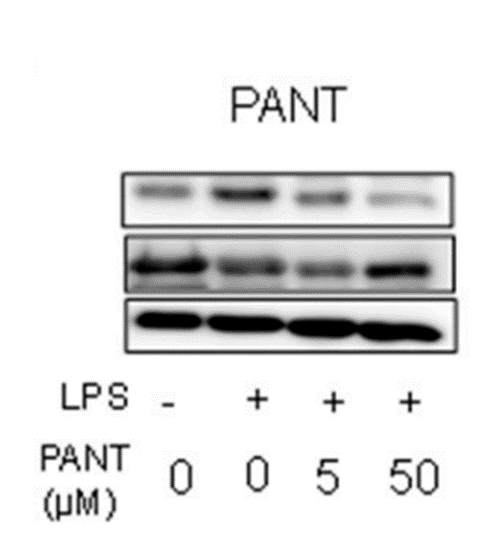
Proanthocyanidins purchased from MedChemExpress. Usage Cited in: Antioxidants (Basel). 2023 Aug 24;12(9):1667. [Abstract]
Decreased protein intensity of p-ERK in DCs after treatment with Proanthocyanidins (PANT) (5, 50 μM).
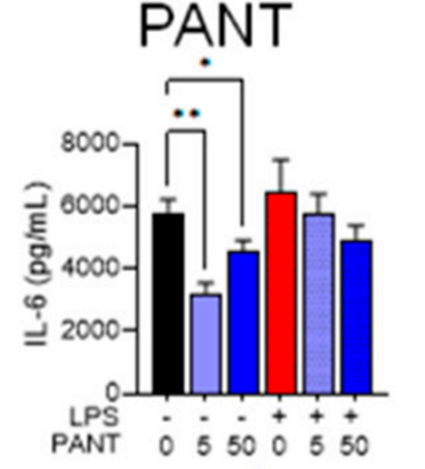
Proanthocyanidins purchased from MedChemExpress. Usage Cited in: Antioxidants (Basel). 2023 Aug 24;12(9):1667. [Abstract]
IL-6 (pg/mL) production by DCs after treatment with Proanthocyanidins (PANT) (5, 50 μM) as determined by ELISA.
-
-
Naunyn Schmiedebergs Arch Pharmacol
Procyanidin alleviates ferroptosis and inflammation of LPS-induced RAW264.7 cell via the Nrf2/HO-1 pathway. [Abstract]2024 Jun;397(6):4055-4067. PMID: 38010399 -
Exp Eye Res
Proanthocyanidins inhibit the inflammation response of dry eye by regulating IRAK4/JAK1/STAT1 signaling pathway. [Abstract]2026 May:266:110936. PMID: 41724228


溶剤 & 溶解度
体外:
DMSO : 100 mg/mL (Need ultrasonic; Hygroscopic DMSO has a significant impact on the solubility of product, please use newly opened DMSO)
H2O : 5 mg/mL (ultrasonic and adjust pH to 11 with Na2CO3)
体内:
Select the appropriate dissolution method based on your experimental animal and administration route.
- For the following dissolution methods, please ensure to first prepare a clear stock solution using an In Vitro approach and then sequentially add co-solvents:
- To ensure reliable experimental results, the clarified stock solution can be appropriately stored based on storage conditions. As for the working solution for In Vivo experiments, it is recommended to prepare freshly and use it on the same day.
- The percentages shown for the solvents indicate their volumetric ratio in the final prepared solution. If precipitation or phase separation occurs during preparation, heat and/or sonication can be used to aid dissolution.
Add each solvent one by one: 10% DMSO 40% PEG300 5% Tween-80 45% Saline
Solubility: 2.5 mg/mL; Suspended solution; Need ultrasonic
This protocol yields a suspended solution of 2.5 mg/mL. Suspended solution can be used for oral and intraperitoneal injection.
Taking 1 mL working solution as an example, add 100 μL DMSO stock solution (25.0 mg/mL) to 400 μL PEG300, and mix evenly; then add 50 μL Tween-80 and mix evenly; then add 450 μL Saline to adjust the volume to 1 mL.
Preparation of Saline: Dissolve 0.9 g sodium chloride in ddH₂O and dilute to 100 mL to obtain a clear Saline solution.
Add each solvent one by one: 10% DMSO 90% (20% SBE-β-CD in Saline)
Solubility: ≥ 2.5 mg/mL; Clear solution
This protocol yields a clear solution of ≥ 2.5 mg/mL (saturation unknown).
Taking 1 mL working solution as an example, add 100 μL DMSO stock solution (25.0 mg/mL) to 900 μL 20% SBE-β-CD in Saline, and mix evenly.
Preparation of 20% SBE-β-CD in Saline (4°C, storage for one week): 2 g SBE-β-CD powder is dissolved in 10 mL Saline, completely dissolve until clear.
In Vivo Dissolution Calculator
Please enter the basic information of animal experiments:
-
-
-
-
Recommended: Prepare an additional quantity of animals to account for potential losses during experiments.
Please enter your animal formula composition:
-
%DMSO +
Recommended: Keep the proportion of DMSO in working solution below 2% if your animal is weak.
-
%+
-
+%Tween-80 + +
-
%Saline +
The co-solvents required include: DMSO, . All of co-solvents are available by MedChemExpress (MCE). , Tween 80. All of co-solvents are available by MedChemExpress (MCE).
Working solution concentration: 0.22 mg/mL
Method for preparing stock solution: mg drug dissolved in μL DMSO. Stock solution concentration: mg/mL.
1. Take μL DMSO stock solution;
2. Add μL .
μL , mix evenly;
3. Then add μL Tween 80, mix evenly;
4. Then add μL
Please ensure that the stock solution in the first step is dissolved to a clear state, and add co-solvents in sequence. You can use ultrasonic heating (ultrasonic cleaner, recommended frequency 20-40 kHz), vortexing, etc. to assist dissolution.


純度とドキュメンテーション
-
データシート (270 KB)
-
SDS (393 KB)
- English - EN (393 KB)
- Français - FR (393 KB)
- Deutsch - DE (393 KB)
- Norwegian - NO (393 KB)
- Español - ES (393 KB)
- Swedish - SV (393 KB)
- Italian - IT (393 KB)
- Korean - KR (393 KB)
- Portuguese - PT (393 KB)
-
取扱説明書 (2659 KB)
参考文献

Calculators
濃度 (開始) × 体積 (開始) = 濃度 (終了) × 体積 (終了)


Proanthocyanidins 関連分類
HY-N0794 関連分類
 Powered by Bioz