



Nerelimomab
Based on 1 publication(s) in Google Scholar
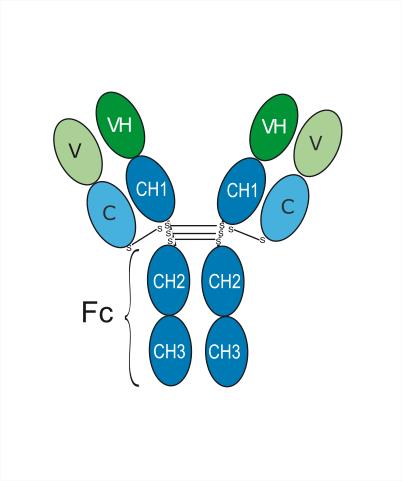
Nerelimomab (BAYX1351) is an anti-TNF-α antibody. Nerelimomab can be used for research of sepsis.
For research use only. We do not sell to patients.
- CAS No.: 162774-06-3
-
Storage:
Please store the product under the recommended conditions in the Certificate of Analysis.

To place orders, for customer services and technical support, please contact: MedChemExpress USA
Tel: 609-228-6898 E-mail: [email protected] [email protected]


-
 Biological Activity
-
Chemical Information
- Protocols
- Purity & Documentation
- References
-
 Help & FAQs


-

HY-P9908
AdalimumabTNF-α Inhibitor -

HY-P9970
InfliximabTNF-α Inhibitor -
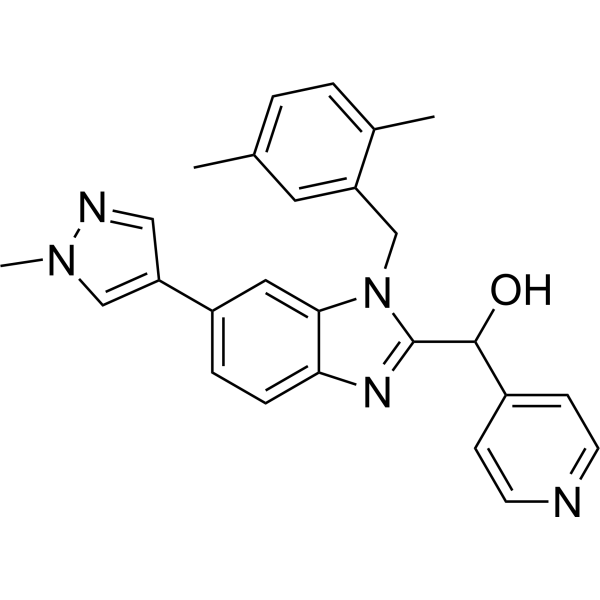
HY-133122
UCB-9260TNF Signaling Inhibitor -
HY-P9953
Certolizumab pegolTNF-α Monoclonal Antibody -

HY-P99111
GolimumabTNFα Antagonist -
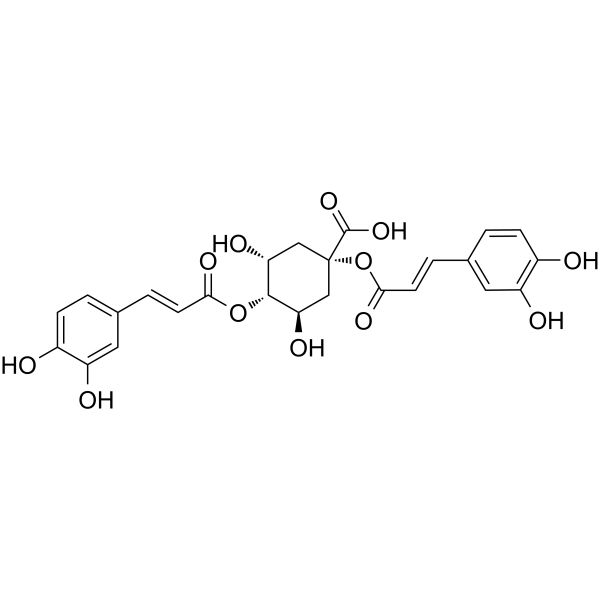
HY-N0358
1,4-Dicaffeoylquinic acidAnti-inflammatory Agent -
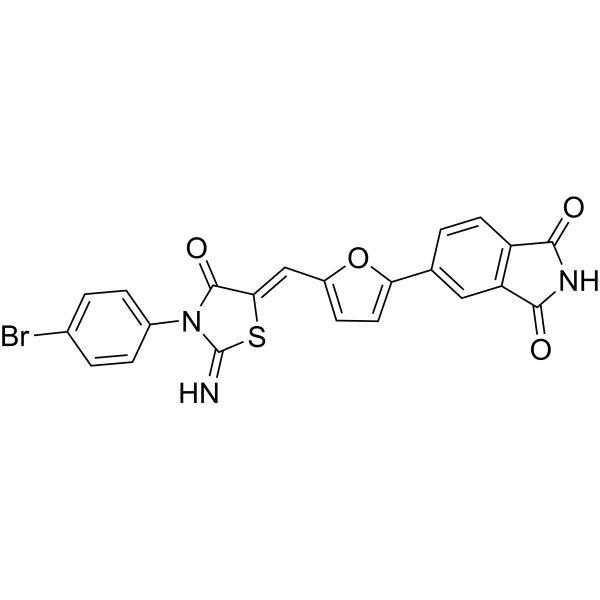
HY-18377
BioymifiDR5 Activator -
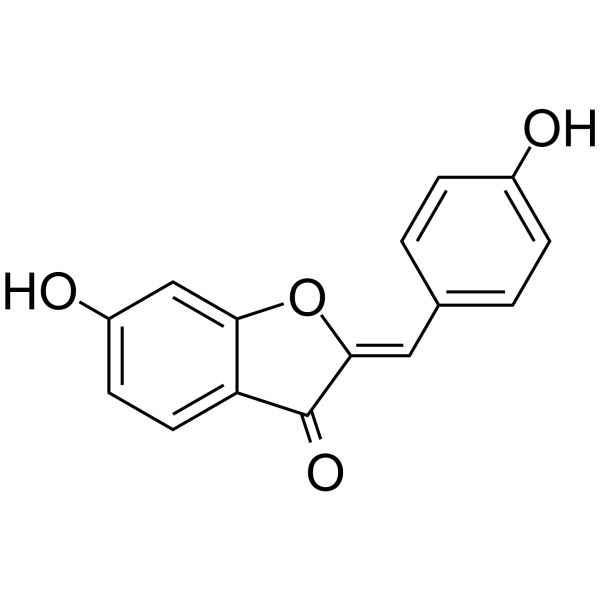
HY-102040
HispidolTNF-α Inhibitor -
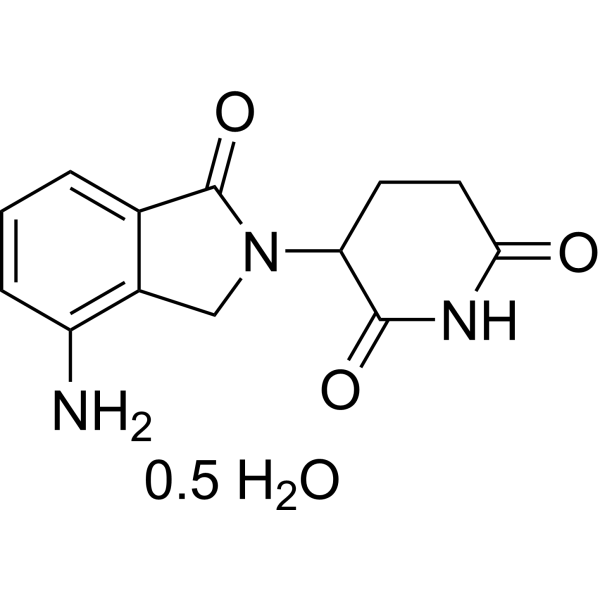
HY-A0003B
Lenalidomide hemihydrateImmunomodulator -
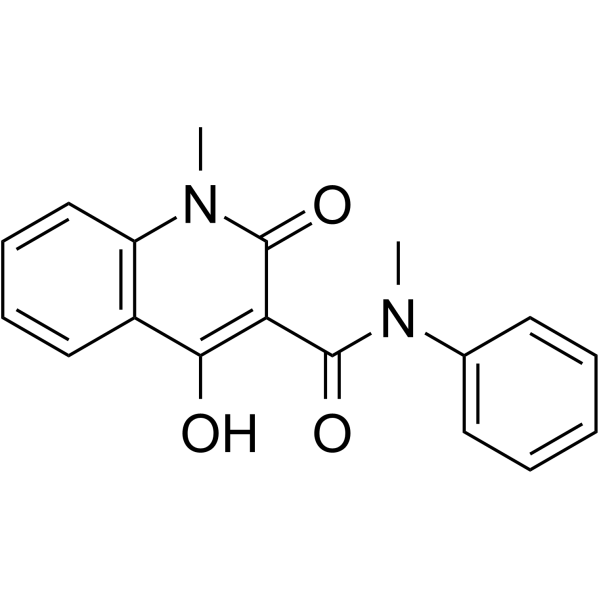
HY-13743
RoquinimexImmunomodulator -
HY-P2612
WP9QYRANKL Inhibitor -
HY-133807A
(Rac)-BenpyrineTNF-α Inhibitor
Publications Citing Use of MedChemExpress (MCE) Nerelimomab
More

Biological Activity
Description
Isotype
Human IgG1 kappa
Recommend Isotype Controls
Species Reactivity
Human
IC50 & Target
TNF
In Vivo
MedChemExpress (MCE) has not independently confirmed the accuracy of these methods. They are for reference only.
-
Animal Model:Baboon model of recurrent bacteremia (Challenged with E.coli)[1]
-
Dosage:7.5 mg/kg
-
Administration:i.v. infusion
-
Result:Improved organ function and attenuated cytokine and plasminogen activator inhibitor release.
Gene ID
Accession
Conjugated
Unconjugated
Reconsititution
The product can be reconstituted/diluted with sterile PBS or saline.
Format
-
IgG1-nd
Application
ELISA, FACS, Functional assay


Chemical Information
-
CAS No. 162774-06-3
-
SMILES
[Nerelimomab]
-
Synonyms
BAYX1351
-
Formulation
Please refer to the lot-specific COA for specific buffer information.
-
Storage
Please store the product under the recommended conditions in the Certificate of Analysis.


Publications (1)
-
Journal Impact Factor
-
Most Recent
-
Pharmaceuticals (Basel)
Nerelimomab Alleviates Capsaicin-Induced Acute Lung Injury by Inhibiting TNF Signaling and Apoptosis. [Abstract]2024 Dec 15;17(12):1694. PMID: 39770536


Purity & Documentation
References
[1]. Schlag G, et al. Anti-tumor necrosis factor antibody treatment of recurrent bacteremia in a baboon model. Shock. 1994 Jul;2(1):10-8; discussion 19-22. [Content Brief]
[2]. Cohen J, et al. INTERSEPT: an international, multicenter, placebo-controlled trial of monoclonal antibody to human tumor necrosis factor-alpha in patients with sepsis. International Sepsis Trial Study Group. Crit Care Med. 1996 Sep;24(9):1431-40. [Content Brief]

Calculators
Concentration (start) × Volume (start) = Concentration (final) × Volume (final)


Nerelimomab Related Classifications
HY-P99753 Related Classifications
 Powered by Bioz