



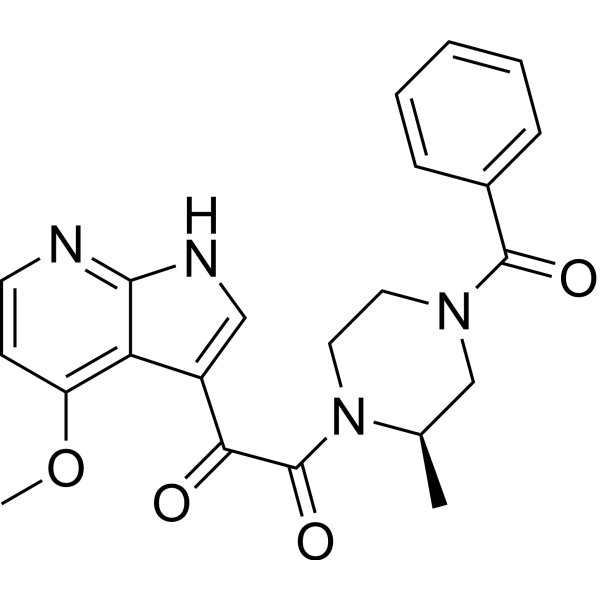
BMS-378806
Based on 7 publication(s) in Google Scholar
BMS-378806 is a potent HIV-1 attachment inhibitor that interferes with CD4-gp120 interactions. BMS-378806 selectively inhibits the binding of HIV-1 gp120 to the CD4 receptor with EC50 of 0.85-26.5 nM in virus.
연구목적의 판매만을 진행합니다. 환자를 대상으로 한 판매는 하지 않습니다.
- Purity : 98.89%
- CAS No.: 357263-13-9
- 화학식: C22H22N4O4
- 분자량:406.43
-
보관:Powder -20°C, 3 years , 4°C, 2 years ; In solvent -80°C, 2 years , -20°C, 1 year

To place orders, for customer services and technical support, please contact: MedChemExpress USA
Tel: 609-228-6898 E-mail: [email protected] [email protected]


-
 Biological Activity
-
Chemical Information
-
용액&용해도
- 순도&문서
- References
-
 Help & FAQs


-
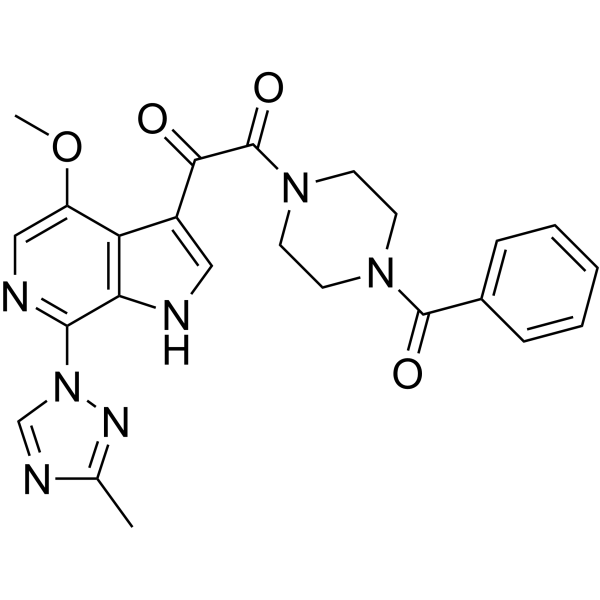
HY-15440
TemsavirHIV Inhibitor -
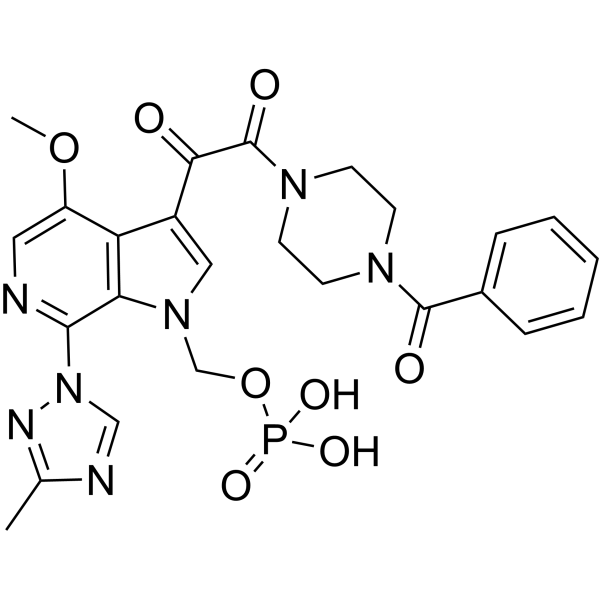
HY-15440A
FostemsavirHIV Inhibitor -
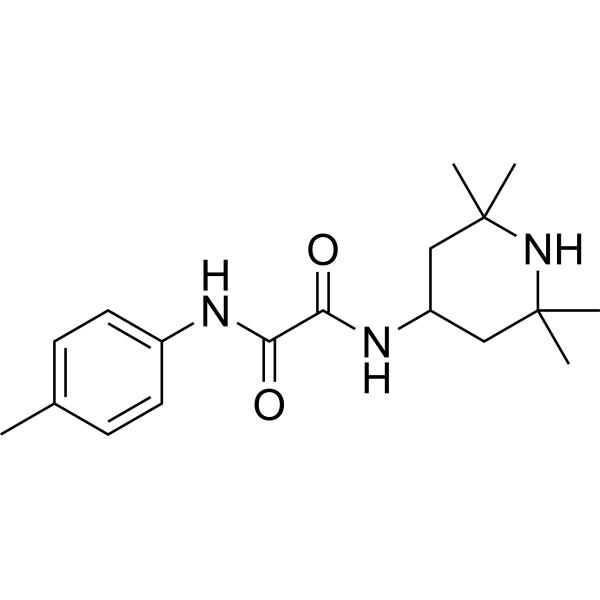
HY-100039
YYA-021CD4-mimic HIV Entry Inhibitor -
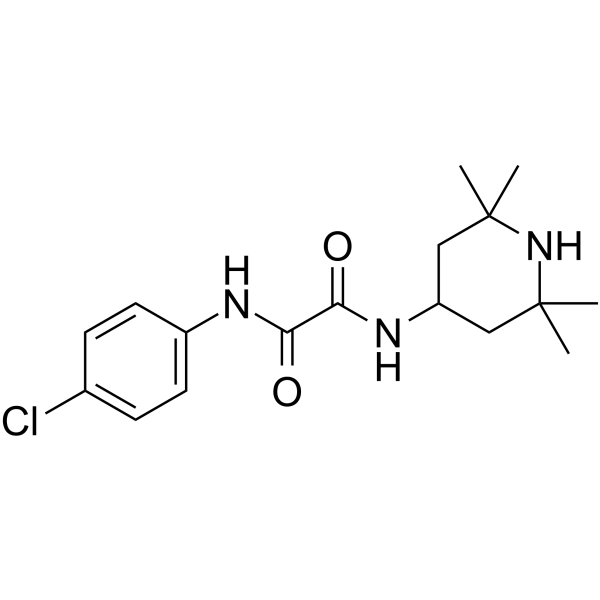
HY-76648
NBD-556HIV Inhibitor -

HY-15440AR
Fostemsavir (Standard)HIV Inhibitor -
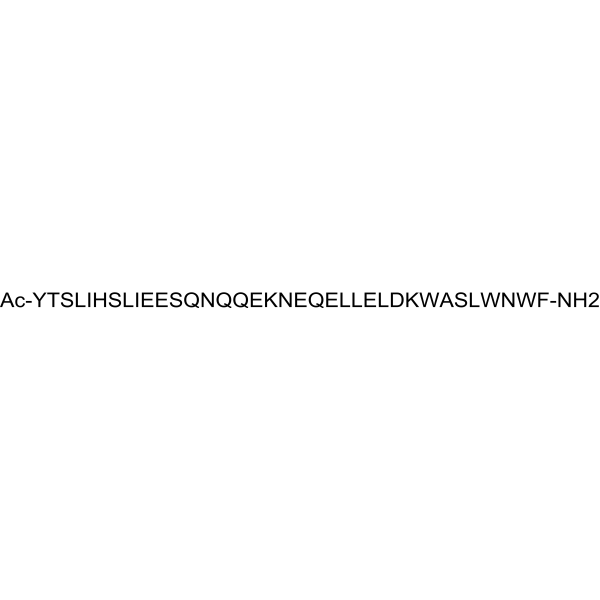
HY-P0052
EnfuvirtideHIV-1 Fusion Inhibitor -
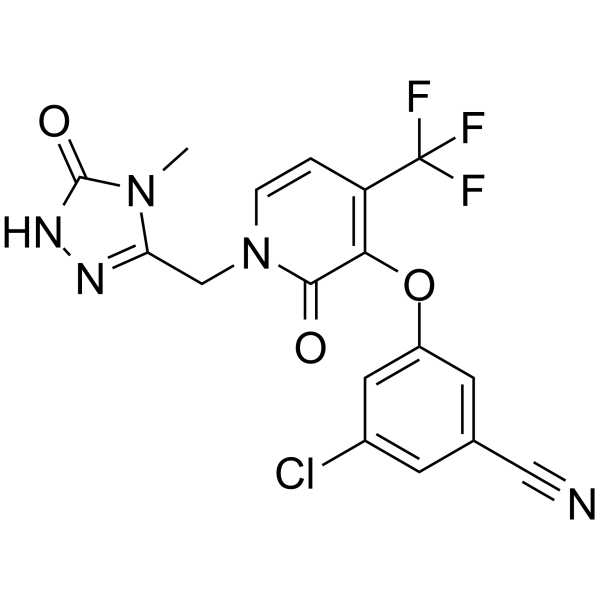
HY-16767
DoravirineNNRTI -
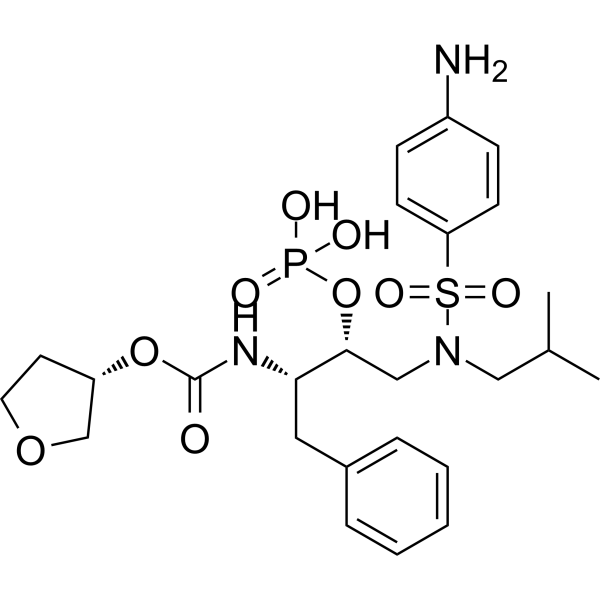
HY-78726
FosamprenavirHIV-1 Inhibitor -
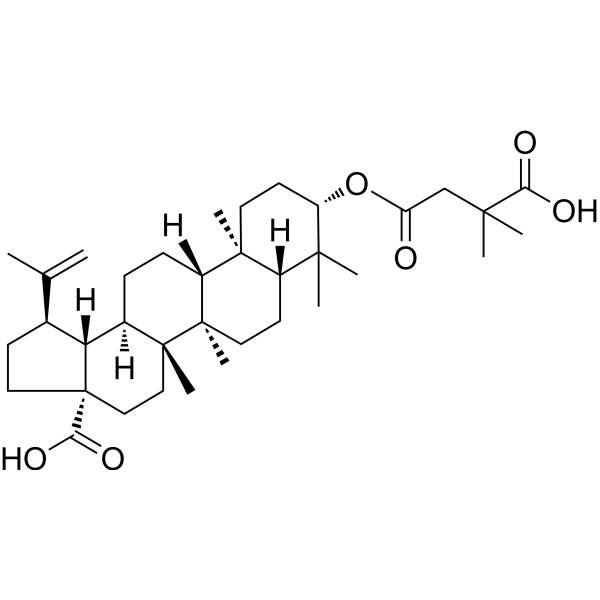
HY-N0842
BevirimatHIV Inhibitor -
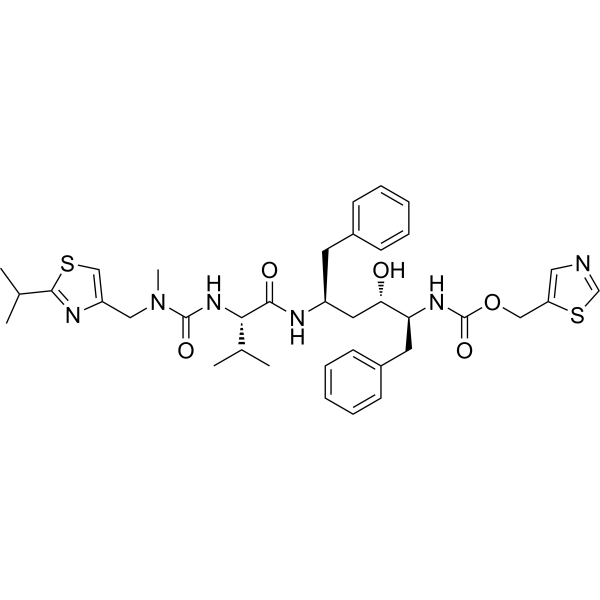
HY-90001
RitonavirHIV Protease Inhibitor -
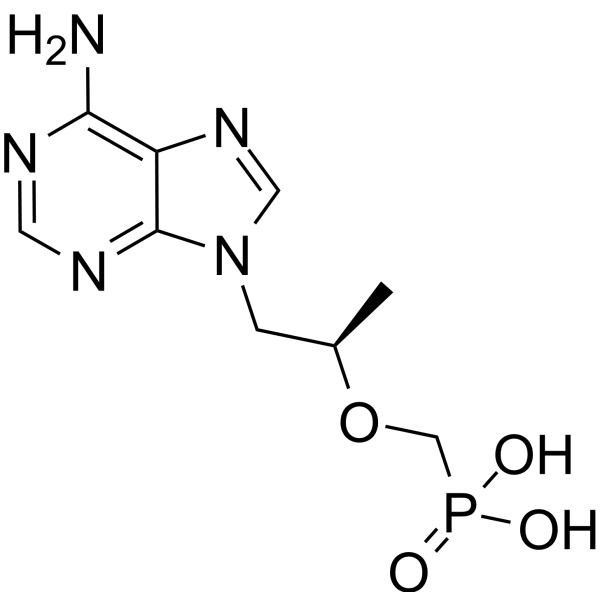
HY-13910
TenofovirNucleotide Reverse Transcriptase Inhibitor -
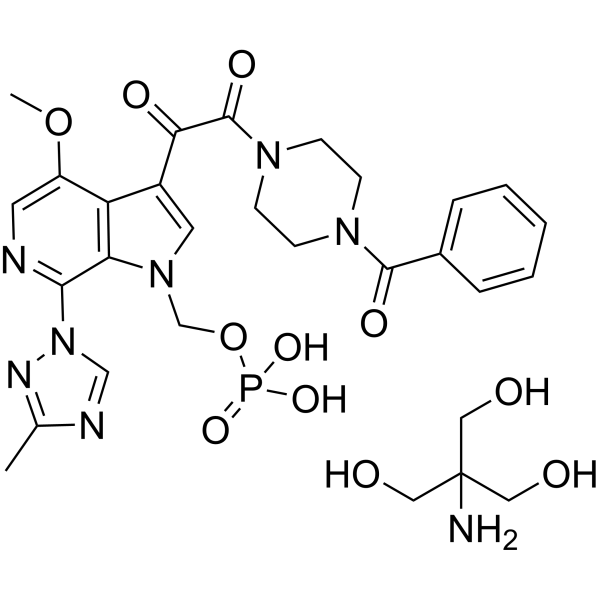
HY-15440B
Fostemsavir TrisHIV Inhibitor
Publications Citing Use of MedChemExpress (MCE) BMS-378806
More- Sci Adv. 2025 Sep 12;11(37):eadz8980. [Abstract]
- Sci Adv. 2024 Mar;10(9):eadn0042. [Abstract]
- EMBO Rep. 2022 Jun 7;23(6):e53932. [Abstract]
- Int J Antimicrob Agents. 2019 Dec;54(6):814-819. [Abstract]
- Anim Cells Syst. 2024 Mar 1;28(1):84-92. [Abstract]
- bioRxiv. 2025 May 18:2025.05.17.654662. [Abstract]
- Patent. US20180263995A1.


Biological Activity
제품 설명
IC50 & Target
|
HIV-1 |
HIV-2 |
Cellular Effect
|
Cell Line

|
Type | Value | Description | References |
|---|---|---|---|---|
| HeLa | CC50 |
>300 μM
Compound: 7, BMS-378806
|
Cytotoxicity against human HeLa cells expressing CD4, CCR5 after 3 days
Cytotoxicity against human HeLa cells expressing CD4, CCR5 after 3 days
|
[PMID: 23200254] |
| HeLa | EC50 |
1 nM
Compound: 7, BMS-378806
|
Antiviral activity against HIV1 JR-FL in human HeLa cells expressing CD4, CCR5 assessed as inhibition of integration of viral DNA into cell genome after 3 days by luciferase reporter gene assay
Antiviral activity against HIV1 JR-FL in human HeLa cells expressing CD4, CCR5 assessed as inhibition of integration of viral DNA into cell genome after 3 days by luciferase reporter gene assay
|
[PMID: 23200254] |
| MT2 | CC50 |
>300 μM
Compound: 3
|
Cytotoxicity activity of compound in MT-2 cells against LAI (T) tropic virus that utilizes the CXCR-4 co-receptor virus was determined
Cytotoxicity activity of compound in MT-2 cells against LAI (T) tropic virus that utilizes the CXCR-4 co-receptor virus was determined
|
[PMID: 13678401] |
| MT2 | CC50 |
>300 μM
Compound: 3
|
Cytotoxicity activity of compound in MT-2 cells against TLAV (dual) virus that utilizes both CXR4 and CCR5 co-receptor virus was determined
Cytotoxicity activity of compound in MT-2 cells against TLAV (dual) virus that utilizes both CXR4 and CCR5 co-receptor virus was determined
|
[PMID: 13678401] |
| MT2 | CC50 |
>300 μM
Compound: 3, BMS-377806
|
Cytotoxicity against human MT2 cells after 3 days by XTT assay
Cytotoxicity against human MT2 cells after 3 days by XTT assay
|
[PMID: 19769332] |
| MT2 | IC50 |
0.032 μM
Compound: 45; BMS-378806
|
Antiviral activity against HIV1 3B infected in MT2 cells assessed as reduction cell viability
Antiviral activity against HIV1 3B infected in MT2 cells assessed as reduction cell viability
|
[PMID: 26509831] |
| U-87MG ATCC | IC50 |
8 nM
Compound: 26, BMS-378806
|
Antiviral activity against HIV1 pseudovirus in U87 cells expressing CD4 and CCR5 after 72 hrs by M33 pseudotyped assay
Antiviral activity against HIV1 pseudovirus in U87 cells expressing CD4 and CCR5 after 72 hrs by M33 pseudotyped assay
|
[PMID: 18052117] |
| U-87MG ATCC | CC50 |
>40000 nM
Compound: 26, BMS-378806
|
Cytotoxicity against human U87 cells expressing CD4 and CXCR4
Cytotoxicity against human U87 cells expressing CD4 and CXCR4
|
[PMID: 18052117] |
| U-87MG ATCC | CC50 |
>40000 nM
Compound: 1, BMS-378806,BMS-806
|
Cytotoxicity against human U87 cells coexpressing CD4, CxCR4 receptors after 72 hrs
Cytotoxicity against human U87 cells coexpressing CD4, CxCR4 receptors after 72 hrs
|
[PMID: 19534463] |
In Vitro
In a series of biochemical assays, BMS-378806 is not an effective inhibitor of HIV integrase, protease, or reverse transcriptase, but did compete with soluble CD4 binding to a monomeric form of gp120 in an ELISA assay with IC50=100 nM. The specificity of BMS-378806 toward inhibition of HIV-1 is confirmed by evaluation against HIV-2, SIV, MuLV, RSV, HCMV, BVDV, VSV, and influenza virus, with no significant inhibitory activity observed at concentrations ranging from 10 to 30 μM and no overt cytotoxicity toward the host cells, CC50>225 μM. BMS-378806 is not a potent inhibitor of any of the five major human CYP isoforms, evaluated as recombinant preparations, with IC50 values of >100 μM for CYP1A2 and CYP2C9, 23 μM for CYP2C19, 20 μM for CYP2D6, and 39 to 81 μM for CYP3A4. Moreover, since BMS-378806 is metabolized by CYP450 1A2, 2D6, and 3A4, it is unlikely to lead to severe drug−drug interactions in a clinical setting[1]. BMS-378806 inhibits viral replication by interfering with the binding interactions of gp120 with the cellular CD4 receptor. The IC50s determined for the gp120s from HIV LAI, BAL, NA420LN40, SF162, NL4-3, NA420B33, YU2, AD8, JRCSF, and 92US15.6 are 0.1, 0.1, 0.3, 0.5, 0.6, 0.7, 0.9, 1.0, 1.1, and 1.6 μM, respectively. A similar observation is also made for BMS-378806 (IC50s range from 0.2 to 9.6 μM)[2]. BMS-378806 binds directly to gp120 at a stoichiometry of approximately 1:1, with a binding affinity similar to that of soluble CD4. The potential BMS-378806 target site is localized to a specific region within the CD4 binding pocket of gp120 by using HIV-1 gp120 variants carrying either compound-selected resistant substitutions or gp120-CD4 contact site mutations[3].
MedChemExpress (MCE) has not independently confirmed the accuracy of these methods. They are for reference only.
In Vivo
MedChemExpress (MCE) has not independently confirmed the accuracy of these methods. They are for reference only.


Chemical Information
-
CAS No. 357263-13-9
-
Appearance Solid
-
분자량 406.43
-
화학식 C22H22N4O4
-
Color White to off-white
-
SMILES
COC1=C2C(NC=C2C(C(N3CCN(C[C@H]3C)C(C4=CC=CC=C4)=O)=O)=O)=NC=C1
-
Synonyms
BMS-806
-
선적
Room temperature in continental US; may vary elsewhere.
-
보관
Powder -20°C 3 years 4°C 2 years In solvent -80°C 2 years -20°C 1 year


Publications (7)
-
Journal Impact Factor
-
Most Recent
-
Sci Adv
Elucidating the mechanism by which HIV-1 nucleocapsid mutations confer resistance to integrase strand transfer inhibitors. [Abstract]2025 Sep 12;11(37):eadz8980. PMID: 40938996 -
Sci Adv
2024 Mar;10(9):eadn0042. PMID: 38427738 -
EMBO Rep
2022 Jun 7;23(6):e53932. PMID: 35403787 -
Int J Antimicrob Agents
2019 Dec;54(6):814-819. PMID: 31479744 -
Anim Cells Syst
Inducing aortic aneurysm/dissection in zebrafish: evaluating the efficacy of β-Aminopropionic Nitrile as a model. [Abstract]2024 Mar 1;28(1):84-92. PMID: 38440122 -
bioRxiv
Elucidating the Mechanism by Which HIV-1 Nucleocapsid Mutations Confer Resistance to Integrase Strand Transfer Inhibitors. [Abstract]2025 May 18:2025.05.17.654662. PMID: 41030995 -


용액&용해도
In Vitro:
DMSO : 50 mg/mL (123.02 mM; Need ultrasonic; Hygroscopic DMSO has a significant impact on the solubility of product, please use newly opened DMSO)
Please refer to the solubility information to select the appropriate solvent. Once prepared, please aliquot and store the solution to prevent product inactivation from repeated freeze-thaw cycles.
Storage method and period of stock solution: -80°C, 2 years; -20°C, 1 year. When stored at -80°C, please use it within 2 years. When stored at -20°C, please use it within 1 year.
Please refer to the solubility information to select the appropriate solvent. Once prepared, please aliquot and store the solution to prevent product inactivation from repeated freeze-thaw cycles.
Storage method and period of stock solution: -80°C, 2 years; -20°C, 1 year. When stored at -80°C, please use it within 2 years. When stored at -20°C, please use it within 1 year.
Concentration (start) × Volume (start) = Concentration (final) × Volume (final)
In Vivo:
Select the appropriate dissolution method based on your experimental animal and administration route.
- For the following dissolution methods, please ensure to first prepare a clear stock solution using an In Vitro approach and then sequentially add co-solvents:
- To ensure reliable experimental results, the clarified stock solution can be appropriately stored based on storage conditions. As for the working solution for In Vivo experiments, it is recommended to prepare freshly and use it on the same day.
- The percentages shown for the solvents indicate their volumetric ratio in the final prepared solution. If precipitation or phase separation occurs during preparation, heat and/or sonication can be used to aid dissolution.
Add each solvent one by one: 10% DMSO 40% PEG300 5% Tween-80 45% Saline
Solubility: ≥ 2.5 mg/mL (6.15 mM); Clear solution
This protocol yields a clear solution of ≥ 2.5 mg/mL (saturation unknown).
Taking 1 mL working solution as an example, add 100 μL DMSO stock solution (25.0 mg/mL) to 400 μL PEG300, and mix evenly; then add 50 μL Tween-80 and mix evenly; then add 450 μL Saline to adjust the volume to 1 mL.
Preparation of Saline: Dissolve 0.9 g sodium chloride in ddH₂O and dilute to 100 mL to obtain a clear Saline solution.
Add each solvent one by one: 10% DMSO 90% (20% SBE-β-CD in Saline)
Solubility: ≥ 2.5 mg/mL (6.15 mM); Clear solution
This protocol yields a clear solution of ≥ 2.5 mg/mL (saturation unknown).
Taking 1 mL working solution as an example, add 100 μL DMSO stock solution (25.0 mg/mL) to 900 μL 20% SBE-β-CD in Saline, and mix evenly.
Preparation of 20% SBE-β-CD in Saline (4°C, storage for one week): 2 g SBE-β-CD powder is dissolved in 10 mL Saline, completely dissolve until clear.
In Vivo Dissolution Calculator
Please enter the basic information of animal experiments:
-
-
-
-
Recommended: Prepare an additional quantity of animals to account for potential losses during experiments.
Please enter your animal formula composition:
-
%DMSO +
Recommended: Keep the proportion of DMSO in working solution below 2% if your animal is weak.
-
%+
-
+%Tween-80 + +
-
%Saline +
The co-solvents required include: DMSO, . All of co-solvents are available by MedChemExpress (MCE). , Tween 80. All of co-solvents are available by MedChemExpress (MCE).
Working solution concentration: 0.22 mg/mL
Method for preparing stock solution: mg drug dissolved in μL DMSO. Stock solution concentration: mg/mL.
1. Take μL DMSO stock solution;
2. Add μL .
μL , mix evenly;
3. Then add μL Tween 80, mix evenly;
4. Then add μL
Please ensure that the stock solution in the first step is dissolved to a clear state, and add co-solvents in sequence. You can use ultrasonic heating (ultrasonic cleaner, recommended frequency 20-40 kHz), vortexing, etc. to assist dissolution.


순도&문서
-
Data Sheet (288 KB)
-
SDS (252 KB)
- English - EN (252 KB)
- Français - FR (252 KB)
- Deutsch - DE (252 KB)
- Norwegian - NO (252 KB)
- Español - ES (252 KB)
- Swedish - SV (252 KB)
- Italian - IT (252 KB)
- Korean - KR (252 KB)
- Portuguese - PT (252 KB)
-
Handling Instructions (2659 KB)
References
[1]. Wang T, et al. Discovery of 4-benzoyl-1-[(4-methoxy-1H- pyrrolo[2,3-b]pyridin-3-yl)oxoacetyl]-2- (R)-methylpiperazine (BMS-378806): a novel HIV-1 attachment inhibitor that interferes with CD4-gp120 interactions. J Med Chem. 2003 Sep 25;46(20):4236-9. [Content Brief]
[2]. Ho HT, et al. Envelope conformational changes induced by human immunodeficiency virus type 1 attachment inhibitors prevent CD4 binding and downstream entry events. J Virol. 2006 Apr;80(8):4017-25. [Content Brief]
[3]. Guo Q, et al. Biochemical and genetic characterizations of a novel human immunodeficiency virus type 1 inhibitor that blocks gp120-CD4 interactions. J Virol. 2003 Oct;77(19):10528-36 [Content Brief]


Complete Stock Solution Preparation Table
Please refer to the solubility information to select the appropriate solvent. Once prepared, please aliquot and store the solution to prevent product inactivation from repeated freeze-thaw cycles.
Storage method and period of stock solution: -80°C, 2 years; -20°C, 1 year. When stored at -80°C, please use it within 2 years. When stored at -20°C, please use it within 1 year.
| Optional Solvent | Concentration Solvent Mass | 1 mg | 5 mg | 10 mg | 25 mg |
|---|---|---|---|---|---|
| DMSO | 1 mM | 2.4604 mL | 12.3022 mL | 24.6045 mL | 61.5112 mL |
| 5 mM | 0.4921 mL | 2.4604 mL | 4.9209 mL | 12.3022 mL | |
| 10 mM | 0.2460 mL | 1.2302 mL | 2.4604 mL | 6.1511 mL | |
| 15 mM | 0.1640 mL | 0.8201 mL | 1.6403 mL | 4.1007 mL | |
| 20 mM | 0.1230 mL | 0.6151 mL | 1.2302 mL | 3.0756 mL | |
| 25 mM | 0.0984 mL | 0.4921 mL | 0.9842 mL | 2.4604 mL | |
| 30 mM | 0.0820 mL | 0.4101 mL | 0.8201 mL | 2.0504 mL | |
| 40 mM | 0.0615 mL | 0.3076 mL | 0.6151 mL | 1.5378 mL | |
| 50 mM | 0.0492 mL | 0.2460 mL | 0.4921 mL | 1.2302 mL | |
| 60 mM | 0.0410 mL | 0.2050 mL | 0.4101 mL | 1.0252 mL | |
| 80 mM | 0.0308 mL | 0.1538 mL | 0.3076 mL | 0.7689 mL | |
| 100 mM | 0.0246 mL | 0.1230 mL | 0.2460 mL | 0.6151 mL |


BMS-378806 Related Classifications
HY-14134 Related Classifications
 Powered by Bioz