



Bromothymol Blue

Based on 1 Customer Validation
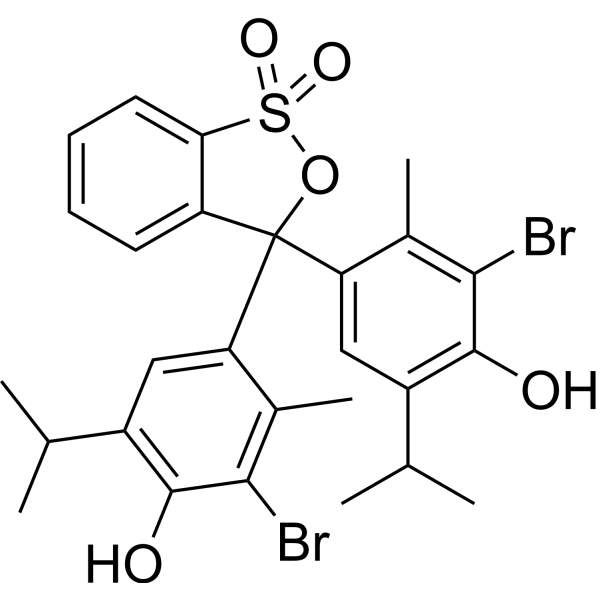
Bromothymol Blue is a pH indicator.
연구목적의 판매만을 진행합니다. 환자를 대상으로 한 판매는 하지 않습니다.
- Purity : 98.0%
- CAS No.: 76-59-5
- 화학식: C27H28Br2O5S
- 분자량:624.38
-
보관:
4°C, protect from light
* In solvent : -80°C, 6 months; -20°C, 1 month (protect from light)

To place orders, for customer services and technical support, please contact: MedChemExpress USA
Tel: 609-228-6898 E-mail: [email protected] [email protected]


-
 Biological Activity
-
Chemical Information
-
용액&용해도
- 순도&문서
- References
-
 Help & FAQs


-
HY-D0908
NinhydrinChromogenic Probe -
HY-D0169
Phenol RedpH Indicator Dye -
HY-B0324A
Crystal VioletFluorochrome -
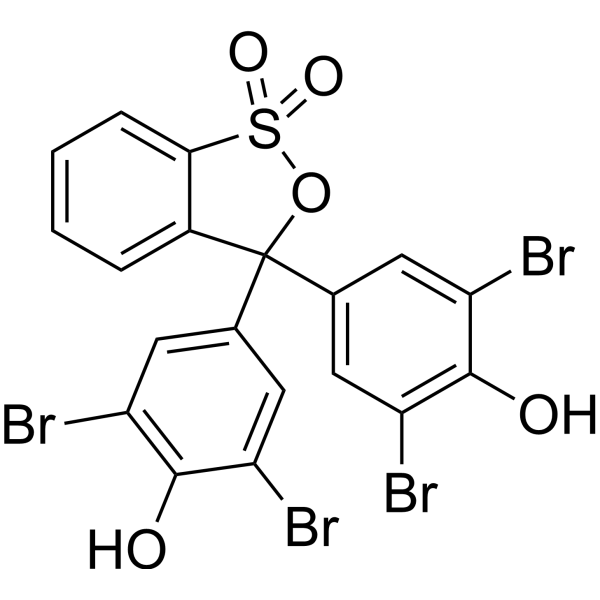
HY-B1571
Bromophenol bluepH Indicator -

HY-DY2001
Crystal Violet (solution)Fluorochrome -
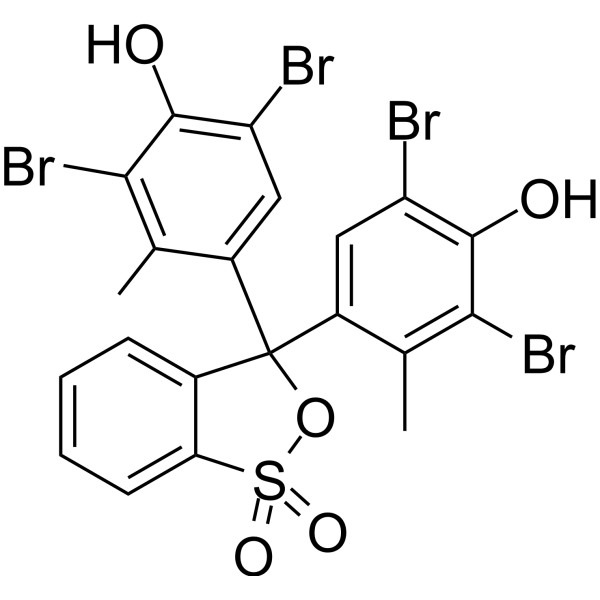
HY-W040144
Bromocresol greenpH Indicator -
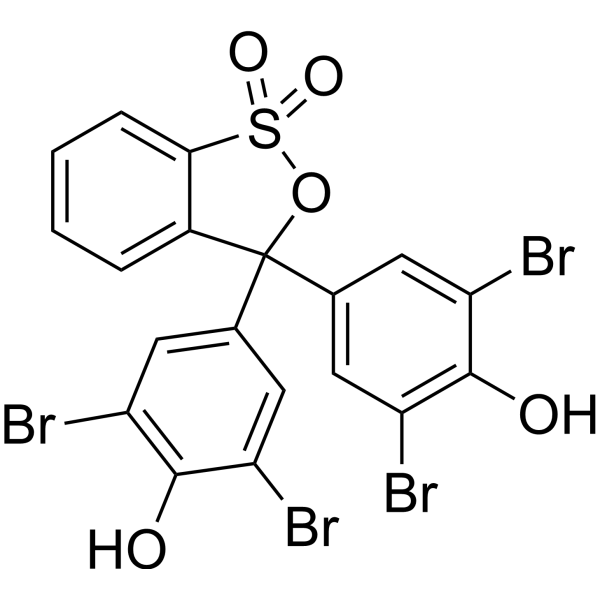
HY-W110798
Bromophenol blue indicator (3.0-4.6)Biochemical Assay Reagent -
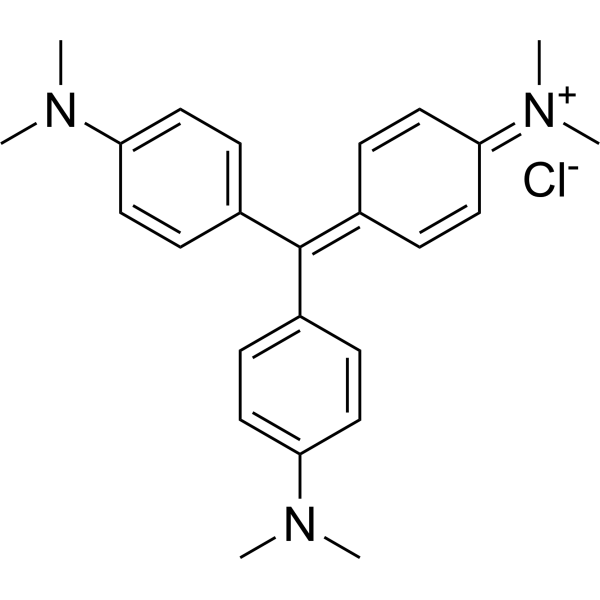
HY-W110794
Crystal violet, IND (0.0-2.0)Biochemical Assay Reagent -

HY-W087928
Bromocresol purplepH Indicator -
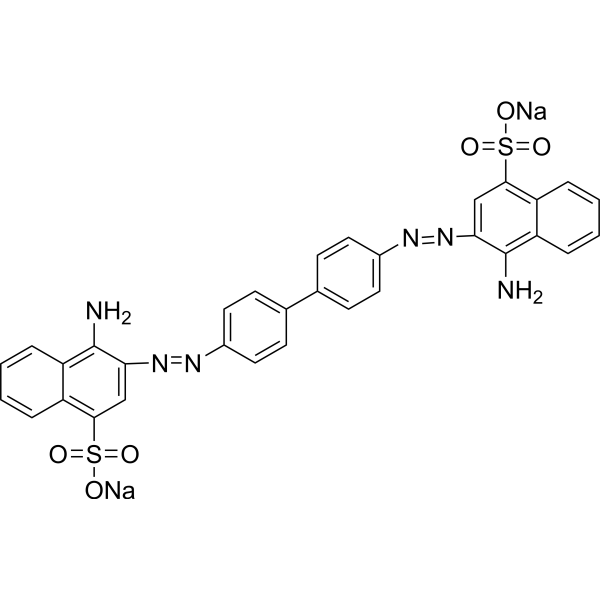
HY-D0236
Congo RedAzo Dye -
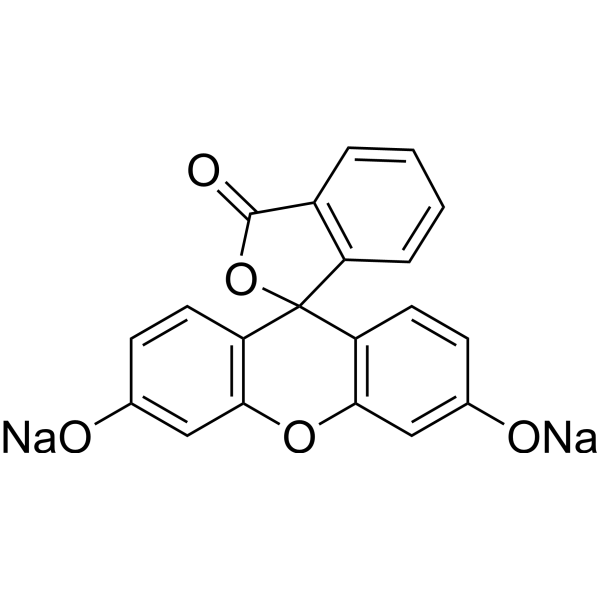
HY-D0208
Fluorescein sodiumFluorescent Tracer -
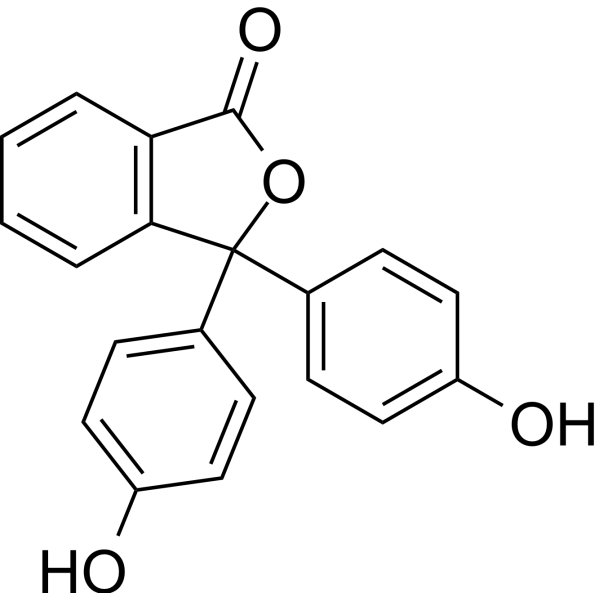
HY-D0211
PhenolphthaleinIndicator Dye


Biological Activity
제품 설명
In Vitro
A first characterization and comparison is done by developing an easy and direct measurement method based on a pH indicator system using Bromothymol Blue (BTB) as the indicator and potassium phosphate as the buffer. A pH-shift assay is developed on the basis of Bromothymol Blue as the pH indicator and potassium phosphate as the buffer component[1].
Three pH indicators are tested for the direct determination of 2- 2-keto-L-gulonic acid (2-KLG) production on a plate. The results show that Bromothymol Blue is superior to the other two indicators in terms of the obvious color change and a suitable pH range (blue to yellow at pH 6.5-7.5). Upon the addition of a Bromothymol Blue solution (0.1%, w/v) to an agar plate, zones surrounding colonies of K. vulgare 07 mutants change their color from blue to yellow because K. vulgare 07 mutants release 2-KLG on agar plates, thereby acidifying surrounding areas around colonies[2].
MedChemExpress (MCE) has not independently confirmed the accuracy of these methods. They are for reference only.


Chemical Information
-
CAS No. 76-59-5
-
Appearance Solid
-
분자량 624.38
-
화학식 C27H28Br2O5S
-
Color Pale purple to purple
-
SMILES
O=S1(OC(C2=CC(C(C)C)=C(O)C(Br)=C2C)(C3=CC(C(C)C)=C(O)C(Br)=C3C)C4=CC=CC=C41)=O
-
선적
Room temperature in continental US; may vary elsewhere.
-
보관
4°C, protect from light
* In solvent : -80°C, 6 months; -20°C, 1 month (protect from light)


용액&용해도
In Vitro:
DMSO : 100 mg/mL (160.16 mM; Need ultrasonic; Hygroscopic DMSO has a significant impact on the solubility of product, please use newly opened DMSO)
H2O : < 0.1 mg/mL (insoluble)
Please refer to the solubility information to select the appropriate solvent. Once prepared, please aliquot and store the solution to prevent product inactivation from repeated freeze-thaw cycles.
Storage method and period of stock solution: -80°C, 6 months; -20°C, 1 month (protect from light). When stored at -80°C, please use it within 6 months. When stored at -20°C, please use it within 1 month.
Please refer to the solubility information to select the appropriate solvent. Once prepared, please aliquot and store the solution to prevent product inactivation from repeated freeze-thaw cycles.
Storage method and period of stock solution: -80°C, 6 months; -20°C, 1 month (protect from light). When stored at -80°C, please use it within 6 months. When stored at -20°C, please use it within 1 month.
Concentration (start) × Volume (start) = Concentration (final) × Volume (final)


순도&문서
-
Data Sheet (286 KB)
-
SDS (393 KB)
- English - EN (393 KB)
- Français - FR (393 KB)
- Deutsch - DE (393 KB)
- Norwegian - NO (393 KB)
- Español - ES (393 KB)
- Swedish - SV (393 KB)
- Italian - IT (393 KB)
- Korean - KR (393 KB)
- Portuguese - PT (393 KB)
-
Handling Instructions (2659 KB)
References
[1]. Pick A, et al. Identification and characterization of two new 5-keto-4-deoxy-D-Glucarate Dehydratases/Decarboxylases. BMC Biotechnol. 2016 Nov 17;16(1):80. [Content Brief]
[2]. Yang W, et al. A plate method for rapid screening of Ketogulonicigenium vulgare mutants for enhanced 2-keto-l-gulonic acid production. Braz J Microbiol. 2017 Jul - Sep;48(3):397-402. [Content Brief]


Complete Stock Solution Preparation Table
Please refer to the solubility information to select the appropriate solvent. Once prepared, please aliquot and store the solution to prevent product inactivation from repeated freeze-thaw cycles.
Storage method and period of stock solution: -80°C, 6 months; -20°C, 1 month (protect from light). When stored at -80°C, please use it within 6 months. When stored at -20°C, please use it within 1 month.
| Optional Solvent | Concentration Solvent Mass | 1 mg | 5 mg | 10 mg | 25 mg |
|---|---|---|---|---|---|
| DMSO | 1 mM | 1.6016 mL | 8.0079 mL | 16.0159 mL | 40.0397 mL |
| 5 mM | 0.3203 mL | 1.6016 mL | 3.2032 mL | 8.0079 mL | |
| 10 mM | 0.1602 mL | 0.8008 mL | 1.6016 mL | 4.0040 mL | |
| 15 mM | 0.1068 mL | 0.5339 mL | 1.0677 mL | 2.6693 mL | |
| 20 mM | 0.0801 mL | 0.4004 mL | 0.8008 mL | 2.0020 mL | |
| 25 mM | 0.0641 mL | 0.3203 mL | 0.6406 mL | 1.6016 mL | |
| 30 mM | 0.0534 mL | 0.2669 mL | 0.5339 mL | 1.3347 mL | |
| 40 mM | 0.0400 mL | 0.2002 mL | 0.4004 mL | 1.0010 mL | |
| 50 mM | 0.0320 mL | 0.1602 mL | 0.3203 mL | 0.8008 mL | |
| 60 mM | 0.0267 mL | 0.1335 mL | 0.2669 mL | 0.6673 mL | |
| 80 mM | 0.0200 mL | 0.1001 mL | 0.2002 mL | 0.5005 mL | |
| 100 mM | 0.0160 mL | 0.0801 mL | 0.1602 mL | 0.4004 mL |


Bromothymol Blue Related Classifications
HY-D0012 Related Classifications
 Powered by Bioz