



D-64131
Based on 2 publication(s) in Google Scholar
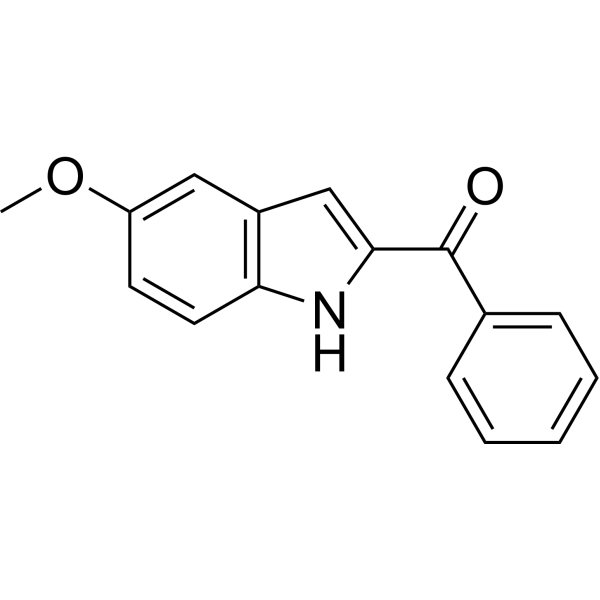
D-64131 is an orally active tubulin inhibitor, with an IC50 of 0.53 μM for tubulin polymerization. D-64131 has antimitotic activity. D-64131 can be used for cancer research.
연구목적의 판매만을 진행합니다. 환자를 대상으로 한 판매는 하지 않습니다.
- Purity : 99.68%
- CAS No.: 74588-78-6
- 화학식: C16H13NO2
- 분자량:251.28
-
보관:Powder -20°C, 3 years , 4°C, 2 years ; In solvent -80°C, 2 years , -20°C, 1 year

To place orders, for customer services and technical support, please contact: MedChemExpress USA
Tel: 609-228-6898 E-mail: [email protected] [email protected]


-
 Biological Activity
-
Chemical Information
-
용액&용해도
- 순도&문서
- References
-
 Help & FAQs


-
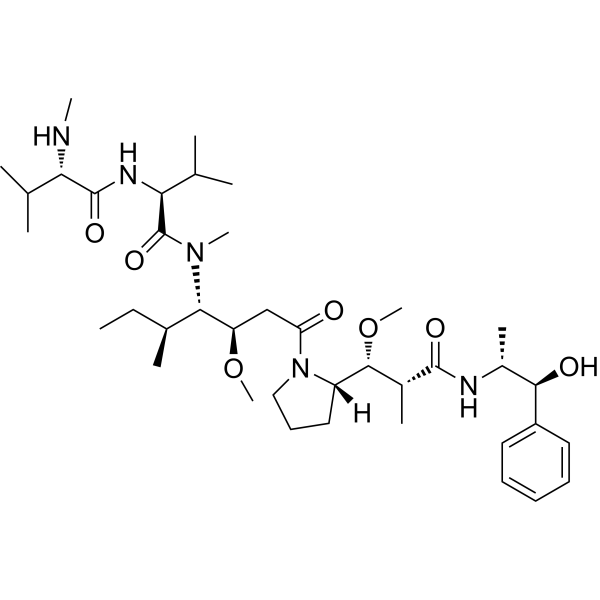
HY-15162
Monomethyl auristatin EAntimitotic Agent -
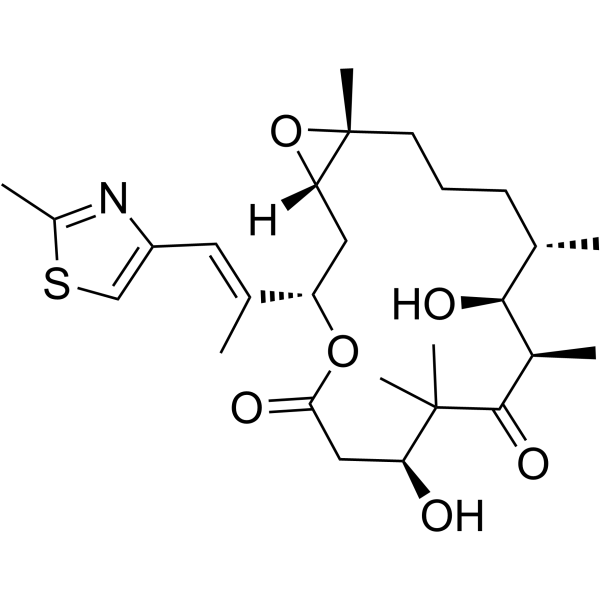
HY-17029
Epothilone BMicrotubule Stabilizer -
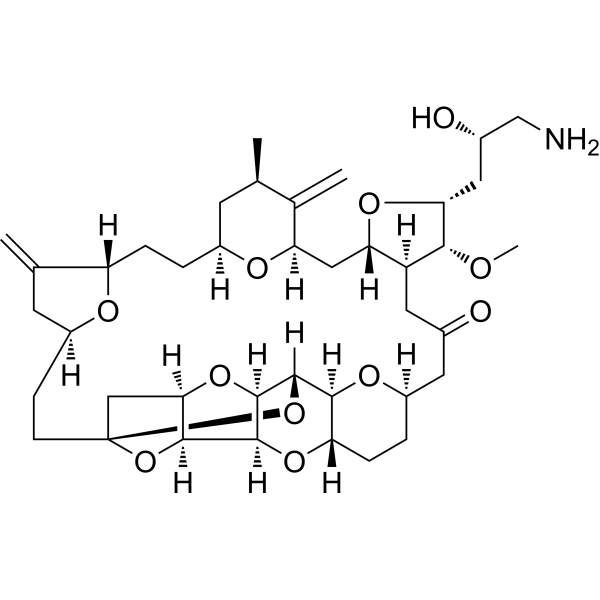
HY-13442
EribulinMicrotubule Inhibitor -
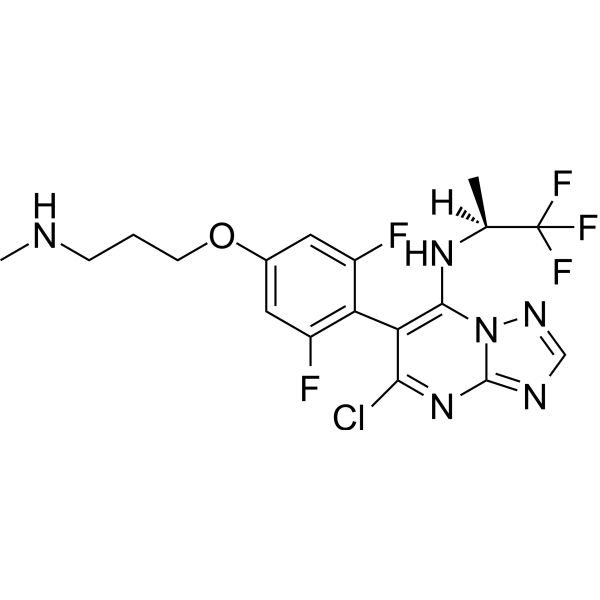
HY-14949
Cevipabulin -
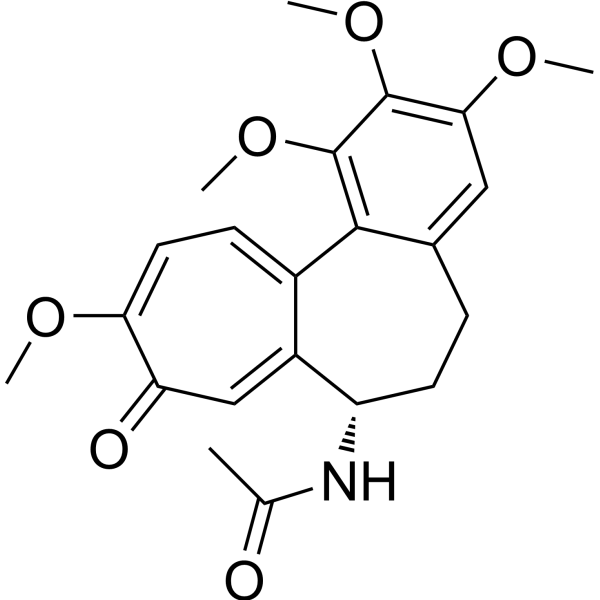
HY-16569
ColchicineTubulin Inhibitor -
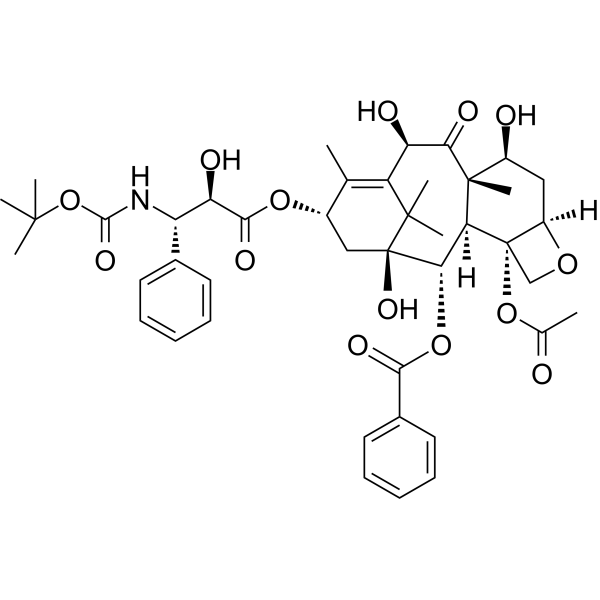
HY-B0011
DocetaxelMicrotubule Depolymerization Inhibitor -

HY-15162R
Monomethyl auristatin E (Standard)Analytical Standard -
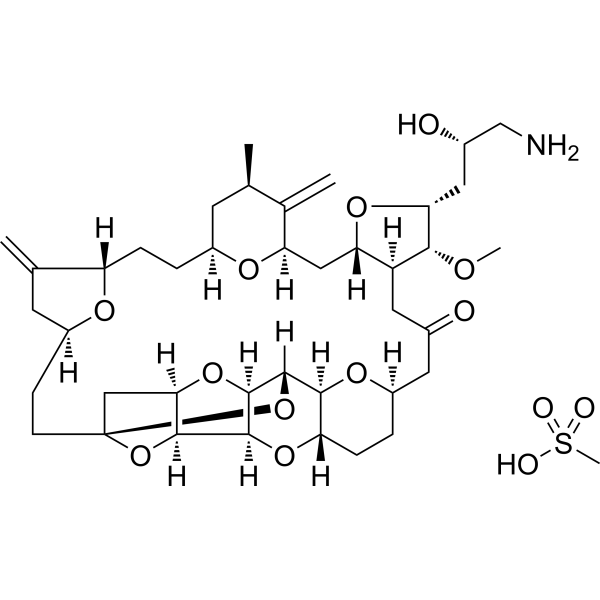
HY-13442A
Eribulin mesylateMicrotubule Inhibitor -
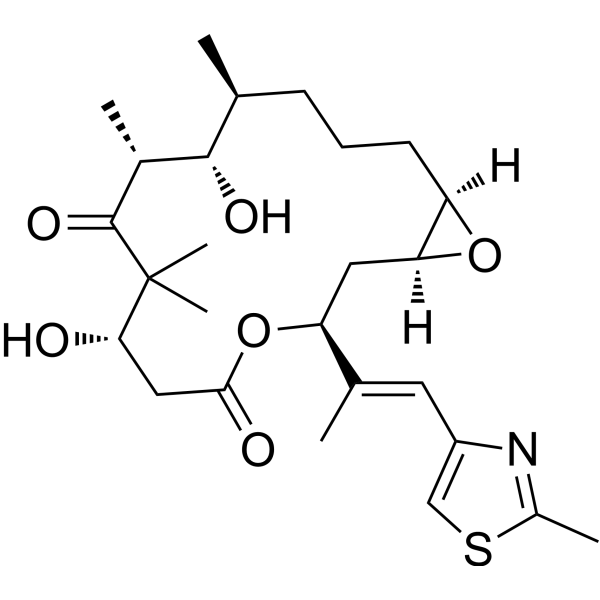
HY-13503
Epothilone ATubulin Competitive Inhibitor -
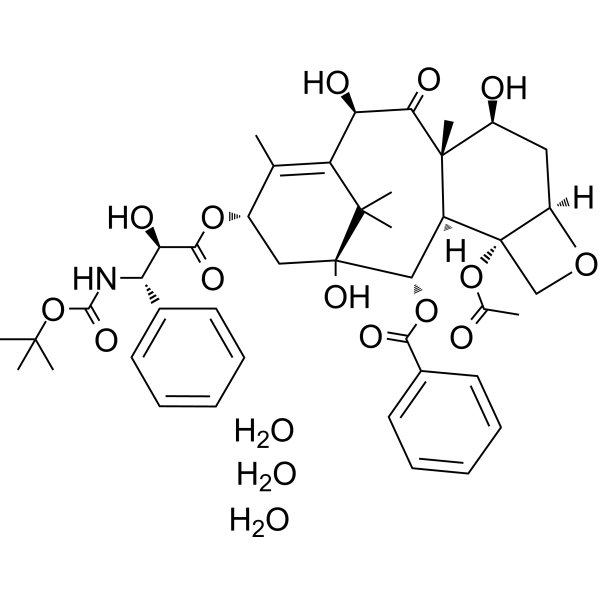
HY-B0011A
Docetaxel TrihydrateMicrotubule Depolymerization Inhibitor -
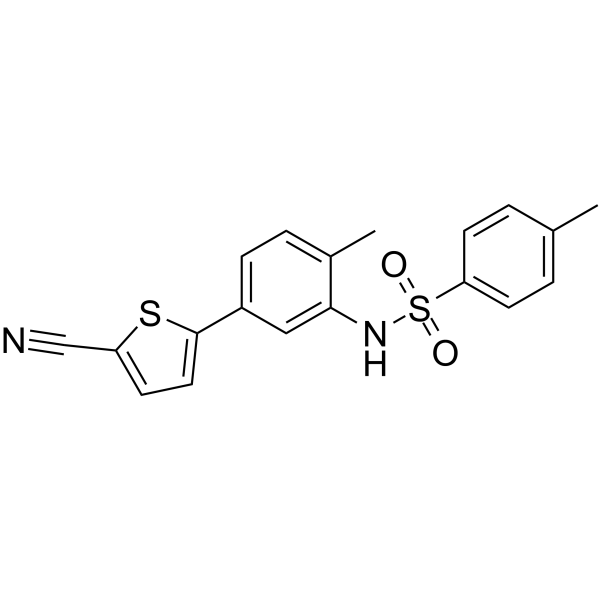
HY-16191
ELR510444Tubulin Inhibitor -
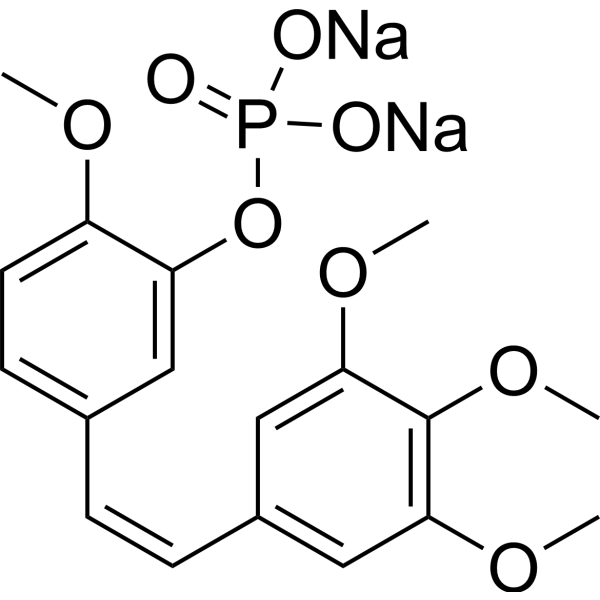
HY-17449
Fosbretabulin disodiumTubulin Destabilizing Agent
Publications Citing Use of MedChemExpress (MCE) D-64131
More

Biological Activity
제품 설명
IC50 & Target
IC50: 0.53 μM (tubulin polymerization)[2]
Cellular Effect
|
Cell Line

|
Type | Value | Description | References |
|---|---|---|---|---|
| HeLa | IC50 |
0.068 μM
Compound: 1
|
In vitro inhibitory activity against HeLa/KB cells using XTT proliferation assay.
In vitro inhibitory activity against HeLa/KB cells using XTT proliferation assay.
|
[PMID: 11741473] |
| SK-OV-3 | IC50 |
0.68 μM
Compound: 1
|
In vitro inhibitory activity against SK-OV-3 cells using XTT proliferation assay.
In vitro inhibitory activity against SK-OV-3 cells using XTT proliferation assay.
|
[PMID: 11741473] |
| U-373MG ATCC | IC50 |
62.7 nM
Compound: 1
|
Cell cycle arrest activity against U373 astrocytoma cells.
Cell cycle arrest activity against U373 astrocytoma cells.
|
[PMID: 11741473] |
| U-373MG ATCC | IC50 |
72 nM
Compound: D-64131
|
Antiproliferative activity against human U373 cells
Antiproliferative activity against human U373 cells
|
[PMID: 19743863] |
| U-373MG ATCC | IC50 |
74 nM
Compound: 1
|
Cytotoxicity against U373 astrocytoma cells.
Cytotoxicity against U373 astrocytoma cells.
|
[PMID: 11741473] |
In Vitro
D-64131 is antimitotic by binding to β-tubulin, thereby destabilizing microtubules and arresting mitotic cells in the M-phase[1].
D-64131 inhibits the proliferation of tumor cells from 12 of 14 different organs and tissues with mean IC50s of 62 nM[1].
D-64131 is cytotoxic toward MDR/MRP tumor cell lines[1].
D-64131 suppresses U373 proliferation and cell cycle with IC50s of 74 nM and 62.7nM, respectively[2].
MedChemExpress (MCE) has not independently confirmed the accuracy of these methods. They are for reference only. .
-
Cell Line:HeLa/KB cervical carcinoma cells
-
Concentration:1 nM-1 μM
-
Incubation Time:48 hours
-
Result:Induced dose-dependently arrested in G2-M before induction of apoptotic cell death.
In Vivo
D-64131 has oral bioavailability and is well tolerated at efficacious doses[1].
MedChemExpress (MCE) has not independently confirmed the accuracy of these methods. They are for reference only.
-
Animal Model:Outbred nude mice (6-8 weeks), human amelanoic melanoma MEXF 989 tumor xenograft model[1]
-
Dosage:200 mg/kg, 400 mg/kg
-
Administration:Oral administration, daily, on days 1-5, 8-9, and 15-18 after xenograft
-
Result:Resulted in significant tumor growth inhibition during treatment.


Chemical Information
-
CAS No. 74588-78-6
-
Appearance Solid
-
분자량 251.28
-
화학식 C16H13NO2
-
Color Light yellow to yellow
-
SMILES
O=C(C(N1)=CC2=C1C=CC(OC)=C2)C3=CC=CC=C3
-
선적
Room temperature in continental US; may vary elsewhere.
-
보관
Powder -20°C 3 years 4°C 2 years In solvent -80°C 2 years -20°C 1 year


Publications (2)
-
Journal Impact Factor
-
Most Recent
-
FEBS Lett
Structural insights into the design of indole derivatives as tubulin polymerization inhibitors. [Abstract]2020 Jan;594(1):199-204. PMID: 31369682 -


용액&용해도
In Vitro:
DMSO : ≥ 100 mg/mL (397.96 mM; Hygroscopic DMSO has a significant impact on the solubility of product, please use newly opened DMSO)
* "≥" means soluble, but saturation unknown.
Please refer to the solubility information to select the appropriate solvent. Once prepared, please aliquot and store the solution to prevent product inactivation from repeated freeze-thaw cycles.
Storage method and period of stock solution: -80°C, 2 years; -20°C, 1 year. When stored at -80°C, please use it within 2 years. When stored at -20°C, please use it within 1 year.
Please refer to the solubility information to select the appropriate solvent. Once prepared, please aliquot and store the solution to prevent product inactivation from repeated freeze-thaw cycles.
Storage method and period of stock solution: -80°C, 2 years; -20°C, 1 year. When stored at -80°C, please use it within 2 years. When stored at -20°C, please use it within 1 year.
Concentration (start) × Volume (start) = Concentration (final) × Volume (final)
In Vivo:
Select the appropriate dissolution method based on your experimental animal and administration route.
- For the following dissolution methods, please ensure to first prepare a clear stock solution using an In Vitro approach and then sequentially add co-solvents:
- To ensure reliable experimental results, the clarified stock solution can be appropriately stored based on storage conditions. As for the working solution for In Vivo experiments, it is recommended to prepare freshly and use it on the same day.
- The percentages shown for the solvents indicate their volumetric ratio in the final prepared solution. If precipitation or phase separation occurs during preparation, heat and/or sonication can be used to aid dissolution.
Add each solvent one by one: 10% DMSO 40% PEG300 5% Tween-80 45% Saline
Solubility: ≥ 2.5 mg/mL (9.95 mM); Clear solution
This protocol yields a clear solution of ≥ 2.5 mg/mL (saturation unknown).
Taking 1 mL working solution as an example, add 100 μL DMSO stock solution (25.0 mg/mL) to 400 μL PEG300, and mix evenly; then add 50 μL Tween-80 and mix evenly; then add 450 μL Saline to adjust the volume to 1 mL.
Preparation of Saline: Dissolve 0.9 g sodium chloride in ddH₂O and dilute to 100 mL to obtain a clear Saline solution.
In Vivo Dissolution Calculator
Please enter the basic information of animal experiments:
-
-
-
-
Recommended: Prepare an additional quantity of animals to account for potential losses during experiments.
Please enter your animal formula composition:
-
%DMSO +
Recommended: Keep the proportion of DMSO in working solution below 2% if your animal is weak.
-
%+
-
+%Tween-80 + +
-
%Saline +
The co-solvents required include: DMSO, . All of co-solvents are available by MedChemExpress (MCE). , Tween 80. All of co-solvents are available by MedChemExpress (MCE).
Working solution concentration: 0.22 mg/mL
Method for preparing stock solution: mg drug dissolved in μL DMSO. Stock solution concentration: mg/mL.
1. Take μL DMSO stock solution;
2. Add μL .
μL , mix evenly;
3. Then add μL Tween 80, mix evenly;
4. Then add μL
Please ensure that the stock solution in the first step is dissolved to a clear state, and add co-solvents in sequence. You can use ultrasonic heating (ultrasonic cleaner, recommended frequency 20-40 kHz), vortexing, etc. to assist dissolution.


순도&문서
-
Data Sheet (276 KB)
-
SDS (254 KB)
- English - EN (254 KB)
- Français - FR (254 KB)
- Deutsch - DE (254 KB)
- Norwegian - NO (254 KB)
- Español - ES (254 KB)
- Swedish - SV (254 KB)
- Italian - IT (254 KB)
- Korean - KR (254 KB)
- Portuguese - PT (254 KB)
-
Handling Instructions (2659 KB)
References
[1]. Thomas Beckers, et al. 2-Aroylindoles, a novel class of potent, orally active small molecule tubulin inhibitors. Cancer Research (2002), 62(11), 3113-3119. [Content Brief]
[2]. S Mahboobi, et al. Synthetic 2-aroylindole derivatives as a new class of potent tubulin-inhibitory, antimitotic agents. J Med Chem. 2001 Dec 20;44(26):4535-53. [Content Brief]


Complete Stock Solution Preparation Table
Please refer to the solubility information to select the appropriate solvent. Once prepared, please aliquot and store the solution to prevent product inactivation from repeated freeze-thaw cycles.
Storage method and period of stock solution: -80°C, 2 years; -20°C, 1 year. When stored at -80°C, please use it within 2 years. When stored at -20°C, please use it within 1 year.
| Optional Solvent | Concentration Solvent Mass | 1 mg | 5 mg | 10 mg | 25 mg |
|---|---|---|---|---|---|
| DMSO | 1 mM | 3.9796 mL | 19.8981 mL | 39.7962 mL | 99.4906 mL |
| 5 mM | 0.7959 mL | 3.9796 mL | 7.9592 mL | 19.8981 mL | |
| 10 mM | 0.3980 mL | 1.9898 mL | 3.9796 mL | 9.9491 mL | |
| 15 mM | 0.2653 mL | 1.3265 mL | 2.6531 mL | 6.6327 mL | |
| 20 mM | 0.1990 mL | 0.9949 mL | 1.9898 mL | 4.9745 mL | |
| 25 mM | 0.1592 mL | 0.7959 mL | 1.5918 mL | 3.9796 mL | |
| 30 mM | 0.1327 mL | 0.6633 mL | 1.3265 mL | 3.3164 mL | |
| 40 mM | 0.0995 mL | 0.4975 mL | 0.9949 mL | 2.4873 mL | |
| 50 mM | 0.0796 mL | 0.3980 mL | 0.7959 mL | 1.9898 mL | |
| 60 mM | 0.0663 mL | 0.3316 mL | 0.6633 mL | 1.6582 mL | |
| 80 mM | 0.0497 mL | 0.2487 mL | 0.4975 mL | 1.2436 mL | |
| 100 mM | 0.0398 mL | 0.1990 mL | 0.3980 mL | 0.9949 mL |


D-64131 Related Classifications
HY-15482 Related Classifications
 Powered by Bioz