



Alkyne-phenol
Based on 4 publication(s) in Google Scholar
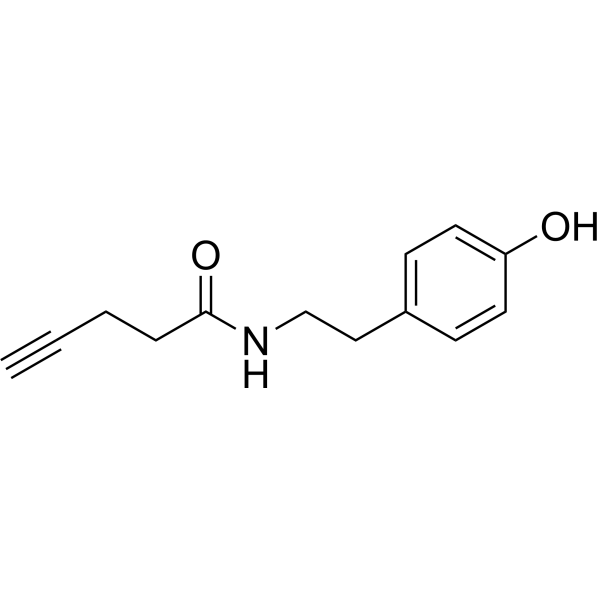
Alkyne-phenol (Alk-Ph) is a clickable ascorbate peroxidase 2 (APEX2) probe. Alkyne-phenol substantially improves APEX-labeling efficiency in intact yeast cells, as it is more cell wall-permeant than APEX2 substrate biotin-phenol (BP). Alkyne-phenol also facilitates the identification of APEX-labeling sites, allowing the unambiguous assignment of membrane topology of mitochondrial proteins. Alkyne-phenol is a click chemistry reagent, it contains an Alkyne group and can undergo copper-catalyzed azide-alkyne cycloaddition (CuAAc) with molecules containing Azide groups.
연구목적의 판매만을 진행합니다. 환자를 대상으로 한 판매는 하지 않습니다.
- Purity : 99.72%
- CAS No.: 1694495-59-4
- 화학식: C13H15NO2
- 분자량:217.26
-
보관:Powder -20°C, 3 years , 4°C, 2 years ; In solvent -80°C, 6 months , -20°C, 1 month

To place orders, for customer services and technical support, please contact: MedChemExpress USA
Tel: 609-228-6898 E-mail: [email protected] [email protected]


-
 Biological Activity
-
Chemical Information
-
용액&용해도
- Protocol
- 순도&문서
- References
-
 Help & FAQs


-
HY-100486
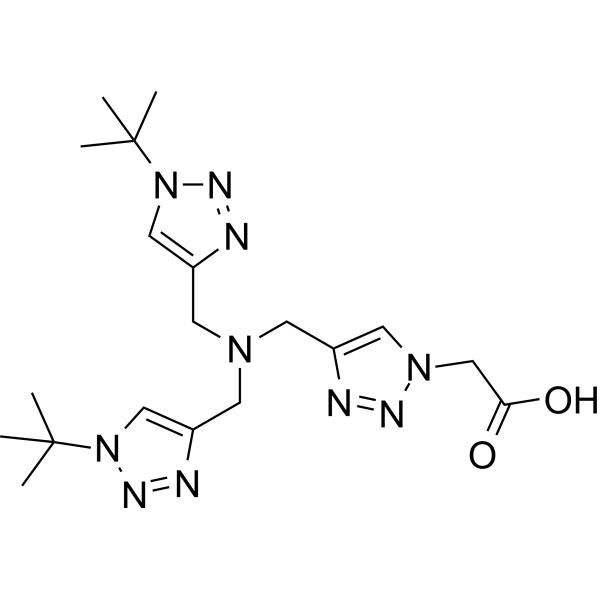
BTTAACu(I)-stabilizing Ligand -
HY-B0511
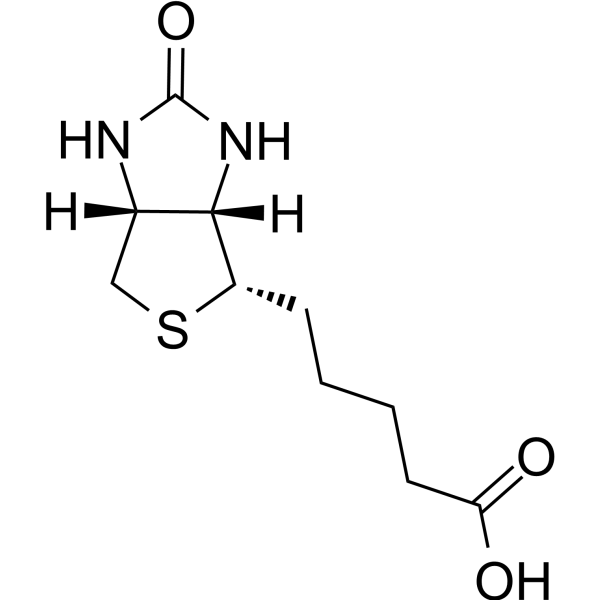
BiotinVitamin B7 -
HY-130143
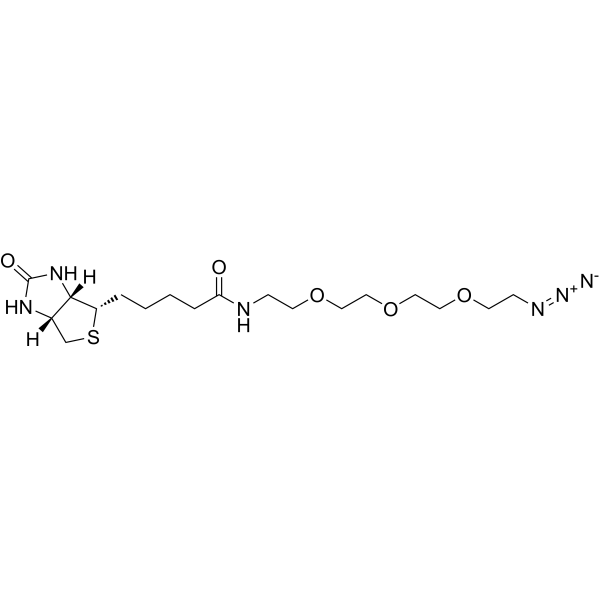
Biotin-PEG3-azidePROTAC Linker -
HY-10219
RapamycinmTOR Inhibitor -
HY-B0166A
L-Ascorbic acid sodium saltCalcium Channel Inhibitor -
HY-125658
Biotinyl tyramideBiotin Derivative/Reagent -
HY-100218A
RSL3GPX4 Inhibitor -
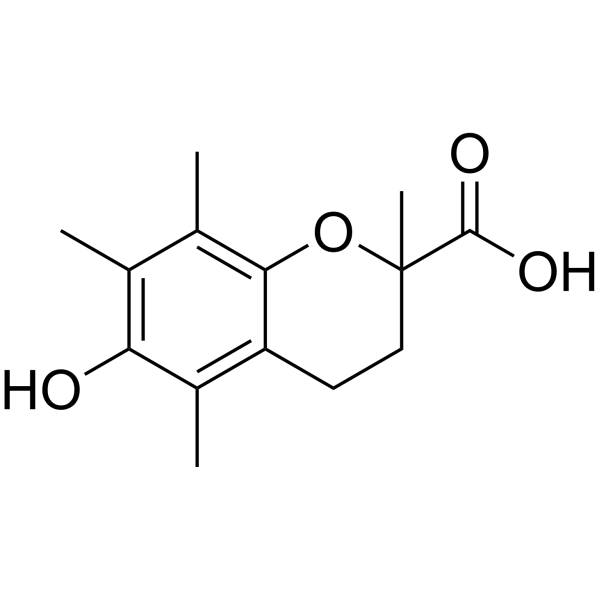
HY-101445
TroloxAntioxidant -
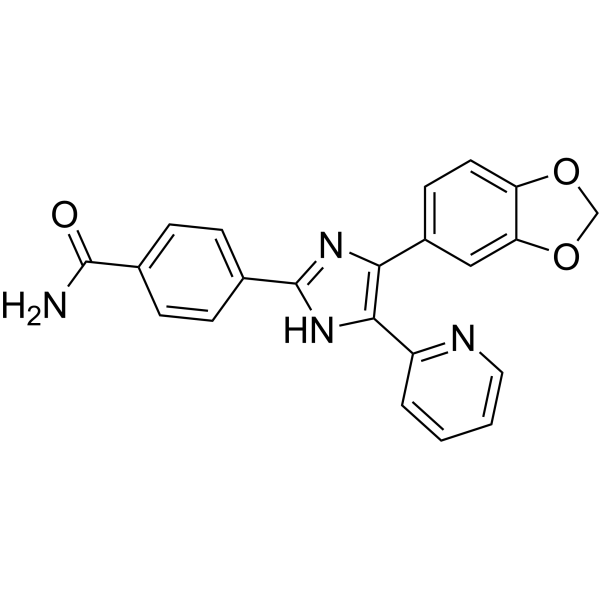
HY-10431
SB-431542TGF-β Receptor Kinase Inhibitor -

HY-K0301
Cell Counting Kit-8 -
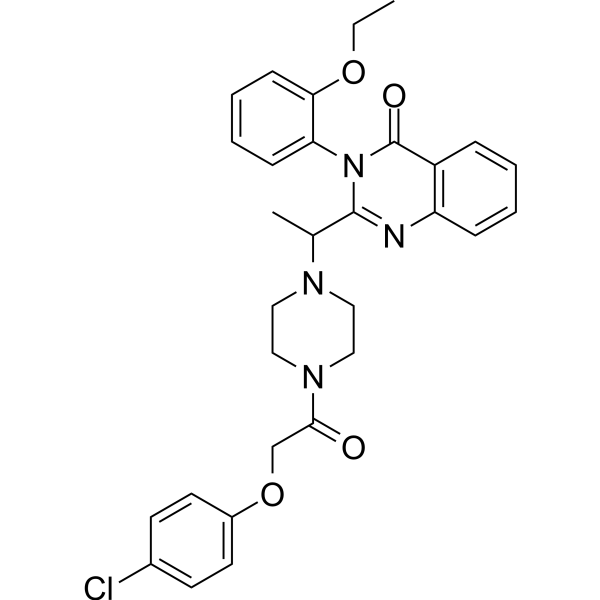
HY-15763
ErastinFerroptosis Inducer -
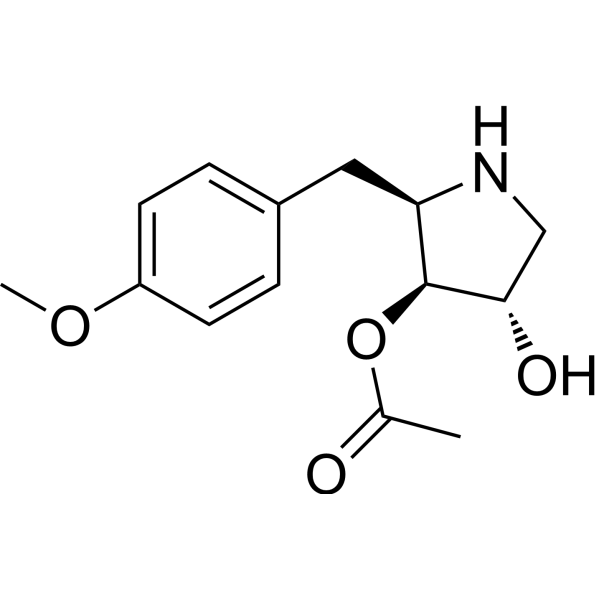
HY-18982
AnisomycinProtein Synthesis Inhibitor
Publications Citing Use of MedChemExpress (MCE) Alkyne-phenol
More Customer Validation & Images

-
Bio/Physico-chemical Assay
-
WB
-
Bio/Physico-chemical Assay


Biological Activity
제품 설명
In Vitro
Yeast cells expressing Su9-APEX2 are incubated with each probe at 2.5 mM final concentration for half an hour, and the labeling reaction is initiated by the addition of 1 mM H2O2. Alkyne-phenol is the most reactive APEX2 substrate for labeling the yeast proteome[1].
APEX2-mediated Alkyne-phenol labeling in the yeast mitochondria is more effective at probe concentrations above 1 mM[1].
Alkyne-phenol enables proteomic profiling in the mitochondrial matrix of intact yeast cells with exceptionally high specificity (94%), and offers higher coverage than the traditional APEX2 substrate biotin-phenol (BP)[1].
MedChemExpress (MCE) has not independently confirmed the accuracy of these methods. They are for reference only. Further protocols information, click here.


Chemical Information
-
CAS No. 1694495-59-4
-
Appearance Solid
-
분자량 217.26
-
화학식 C13H15NO2
-
Color White to off-white
-
SMILES
C#CCCC(NCCC1=CC=C(O)C=C1)=O
-
Synonyms
Alkyne tyramide; Alk-Ph
-
선적
Room temperature in continental US; may vary elsewhere.
-
보관
Powder -20°C 3 years 4°C 2 years In solvent -80°C 6 months -20°C 1 month


Publications (4)
-
Journal Impact Factor
-
Most Recent
-
Biochem Biophys Res Commun
A click-compatible BmTyr platform for biotin-free proximity labeling and subcellular proteome profiling in primary T cells. [Abstract]2026 Jul 16:822:153918. PMID: 42119177 -
bioRxiv
2025 Nov 17:2025.11.17.688896. PMID: 41332707 -
bioRxiv
Proximity labeling defines the phagosome lumen proteome of murine and primary human macrophages. [Abstract]2024 Sep 8:2024.09.04.611277. PMID: 39282337
Alkyne-phenol purchased from MedChemExpress. Usage Cited in: bioRxiv. 2024 Sep 8:2024.09.04.611277. [Abstract]
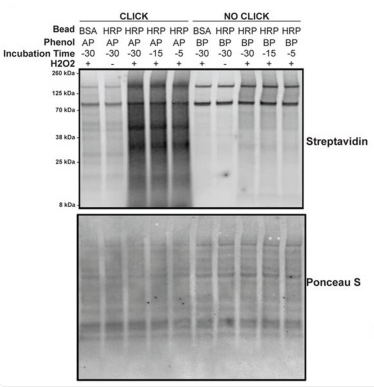
iBMDMs phagocytosed HRP- or BSA-conjugated beads for 30 minutes at 37° C, followed by washing away extracellular beads and another 30 minutes of incubation at 37° C for phagosome progression. The indicated phenolic labeling substrate (500 μM alkyne phenol (AP) or BP) was added post-wash either 30, 15, or 5 minutes prior to labeling. Labeling was catalyzed with H2O2, click reactions were completed where indicated, and lysates were analyzed by western blot to assess ability of substrate to access the phagosome (representative blot from 3 independent replicates).
-
bioRxiv
2024 Sep 18:2024.09.18.612050. PMID: 39345536
Alkyne-phenol purchased from MedChemExpress. Usage Cited in: bioRxiv. 2024 Sep 18:2024.09.18.612050. [Abstract]
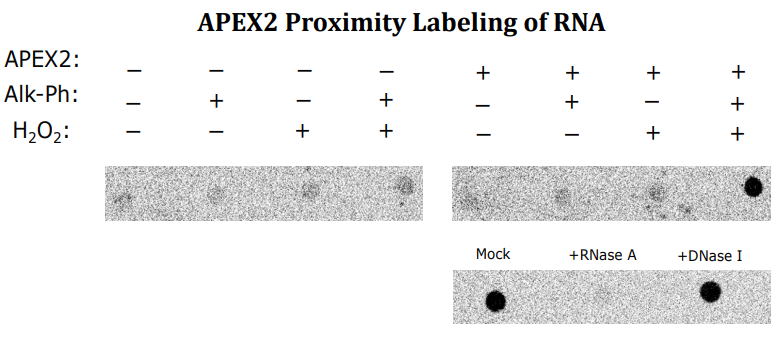
APEX2 labeling requires H2O2 and alkyne-phenol (1.2, 2.5 mM, 30 min) to label RNAs. RNA labeling reactions were placed on a nylon membrane to bind to the RNA in a dot blot apparatus and scanned for Cy5 fluorescence in a gel imager. As a control, the RNA samples were incubated for 2 hours with DNase I and RNase A. The RNA was then precipitated before being subjected to the azide-Cy5 click chemistry reaction and was re-precipitated before being filtered on the nylon membrane in the dot blot apparatus.
Alkyne-phenol purchased from MedChemExpress. Usage Cited in: bioRxiv. 2024 Sep 18:2024.09.18.612050. [Abstract]
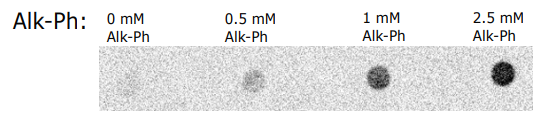
Optimization of APEX2 labeling of RNA with Alkyne-Phenol. Alkyne-phenol titration reveals that peak labeling occurs with 2.5 mM Alkyne-Phenol. The Cy5 intensity was measured in a gel imager.


용액&용해도
In Vitro:
DMSO : 50 mg/mL (230.14 mM; Need ultrasonic; Hygroscopic DMSO has a significant impact on the solubility of product, please use newly opened DMSO)
Please refer to the solubility information to select the appropriate solvent. Once prepared, please aliquot and store the solution to prevent product inactivation from repeated freeze-thaw cycles.
Storage method and period of stock solution: -80°C, 6 months; -20°C, 1 month. When stored at -80°C, please use it within 6 months. When stored at -20°C, please use it within 1 month.
Please refer to the solubility information to select the appropriate solvent. Once prepared, please aliquot and store the solution to prevent product inactivation from repeated freeze-thaw cycles.
Storage method and period of stock solution: -80°C, 6 months; -20°C, 1 month. When stored at -80°C, please use it within 6 months. When stored at -20°C, please use it within 1 month.
Concentration (start) × Volume (start) = Concentration (final) × Volume (final)
In Vivo:
Select the appropriate dissolution method based on your experimental animal and administration route.
- For the following dissolution methods, please ensure to first prepare a clear stock solution using an In Vitro approach and then sequentially add co-solvents:
- To ensure reliable experimental results, the clarified stock solution can be appropriately stored based on storage conditions. As for the working solution for In Vivo experiments, it is recommended to prepare freshly and use it on the same day.
- The percentages shown for the solvents indicate their volumetric ratio in the final prepared solution. If precipitation or phase separation occurs during preparation, heat and/or sonication can be used to aid dissolution.
Add each solvent one by one: 10% DMSO 40% PEG300 5% Tween-80 45% Saline
Solubility: ≥ 2.5 mg/mL (11.51 mM); Clear solution
This protocol yields a clear solution of ≥ 2.5 mg/mL (saturation unknown).
Taking 1 mL working solution as an example, add 100 μL DMSO stock solution (25.0 mg/mL) to 400 μL PEG300, and mix evenly; then add 50 μL Tween-80 and mix evenly; then add 450 μL Saline to adjust the volume to 1 mL.
Preparation of Saline: Dissolve 0.9 g sodium chloride in ddH₂O and dilute to 100 mL to obtain a clear Saline solution.
Add each solvent one by one: 10% DMSO 90% (20% SBE-β-CD in Saline)
Solubility: ≥ 2.5 mg/mL (11.51 mM); Clear solution
This protocol yields a clear solution of ≥ 2.5 mg/mL (saturation unknown).
Taking 1 mL working solution as an example, add 100 μL DMSO stock solution (25.0 mg/mL) to 900 μL 20% SBE-β-CD in Saline, and mix evenly.
Preparation of 20% SBE-β-CD in Saline (4°C, storage for one week): 2 g SBE-β-CD powder is dissolved in 10 mL Saline, completely dissolve until clear.
In Vivo Dissolution Calculator
Please enter the basic information of animal experiments:
-
-
-
-
Recommended: Prepare an additional quantity of animals to account for potential losses during experiments.
Please enter your animal formula composition:
-
%DMSO +
Recommended: Keep the proportion of DMSO in working solution below 2% if your animal is weak.
-
%+
-
+%Tween-80 + +
-
%Saline +
The co-solvents required include: DMSO, . All of co-solvents are available by MedChemExpress (MCE). , Tween 80. All of co-solvents are available by MedChemExpress (MCE).
Working solution concentration: 0.22 mg/mL
Method for preparing stock solution: mg drug dissolved in μL DMSO. Stock solution concentration: mg/mL.
1. Take μL DMSO stock solution;
2. Add μL .
μL , mix evenly;
3. Then add μL Tween 80, mix evenly;
4. Then add μL
Please ensure that the stock solution in the first step is dissolved to a clear state, and add co-solvents in sequence. You can use ultrasonic heating (ultrasonic cleaner, recommended frequency 20-40 kHz), vortexing, etc. to assist dissolution.

Protocol
-
EdU Incorporation Assay (Click Chemistry-Based DNA Synthesis Measurement)
The EdU incorporation assay measures DNA synthesis by adding the thymidine analog 5-ethynyl-2′-deoxyuridine to cells or tissues, where it is incorporated into newly synthesized DNA during S phase. Incorporated EdU is detected by copper-catalyzed azide-alkyne cycloaddition, in which a fluorescent azide covalently reacts with the ethynyl group on EdU, allowing S-phase cells to be detected by fluorescence microscopy, flow cytometry, or high-content imaging. EdU detection does not require DNA denaturation or anti-BrdU antibody access, which preserves sample structure and improves compatibility with immunostaining and multiparameter cytometry compared with BrdU-based detection. EdU can be cytotoxic in a cell-type- and exposure-dependent manner, so pulse duration, concentration, and continuous-labeling designs should be validated for each cell type.


순도&문서
-
Data Sheet (270 KB)
-
SDS (254 KB)
- English - EN (254 KB)
- Français - FR (254 KB)
- Deutsch - DE (254 KB)
- Norwegian - NO (254 KB)
- Español - ES (254 KB)
- Swedish - SV (254 KB)
- Italian - IT (254 KB)
- Korean - KR (254 KB)
- Portuguese - PT (254 KB)
-
Handling Instructions (2659 KB)
References


Complete Stock Solution Preparation Table
Please refer to the solubility information to select the appropriate solvent. Once prepared, please aliquot and store the solution to prevent product inactivation from repeated freeze-thaw cycles.
Storage method and period of stock solution: -80°C, 6 months; -20°C, 1 month. When stored at -80°C, please use it within 6 months. When stored at -20°C, please use it within 1 month.
| Optional Solvent | Concentration Solvent Mass | 1 mg | 5 mg | 10 mg | 25 mg |
|---|---|---|---|---|---|
| DMSO | 1 mM | 4.6028 mL | 23.0139 mL | 46.0278 mL | 115.0695 mL |
| 5 mM | 0.9206 mL | 4.6028 mL | 9.2056 mL | 23.0139 mL | |
| 10 mM | 0.4603 mL | 2.3014 mL | 4.6028 mL | 11.5070 mL | |
| 15 mM | 0.3069 mL | 1.5343 mL | 3.0685 mL | 7.6713 mL | |
| 20 mM | 0.2301 mL | 1.1507 mL | 2.3014 mL | 5.7535 mL | |
| 25 mM | 0.1841 mL | 0.9206 mL | 1.8411 mL | 4.6028 mL | |
| 30 mM | 0.1534 mL | 0.7671 mL | 1.5343 mL | 3.8357 mL | |
| 40 mM | 0.1151 mL | 0.5753 mL | 1.1507 mL | 2.8767 mL | |
| 50 mM | 0.0921 mL | 0.4603 mL | 0.9206 mL | 2.3014 mL | |
| 60 mM | 0.0767 mL | 0.3836 mL | 0.7671 mL | 1.9178 mL | |
| 80 mM | 0.0575 mL | 0.2877 mL | 0.5753 mL | 1.4384 mL | |
| 100 mM | 0.0460 mL | 0.2301 mL | 0.4603 mL | 1.1507 mL |


Alkyne-phenol Related Classifications
HY-131442 Related Classifications
 Powered by Bioz