



Methylene blue (purity≥70%)

Based on 1 Customer Validation
Methylene blue (purity≥70%) is a guanylyl cyclase (sGC), monoamine oxidase A (MAO-A) and NO synthase (NOS) inhibitor. Methylene blue (purity≥70%) is a vasopressor and is often used as a dye in several medical procedures. Methylene blue (purity≥70%) through the nitric oxide syntase/guanylate cyclase signalling pathway to reduce prepulse inhibition. Methylene blue (purity≥70%) is a REDOX cycling compound and able to cross the blood-brain barrier. Methylene blue (purity≥70%) is a Tau aggregation inhibitor. Methylene blue reduces cerebral edema, attenuated microglial activation and reduced neuroinflammation.
For research use only. We do not sell to patients.
- Purity : 95.0%
- CAS No.: 61-73-4
- Formula: C16H18ClN3S
- Molecular Weight:319.86
-
Storage:
4°C, protect from light, stored under nitrogen
* In solvent : -80°C, 6 months; -20°C, 1 month (protect from light, stored under nitrogen)


To place orders, for customer services and technical support, please contact: MedChemExpress USA
Tel: 609-228-6898 E-mail: [email protected] [email protected]


-
 Biological Activity
-
Chemical Information
-
Solvent & Solubility
- Protocols
- Purity & Documentation
- References
-
 Help & FAQs


-
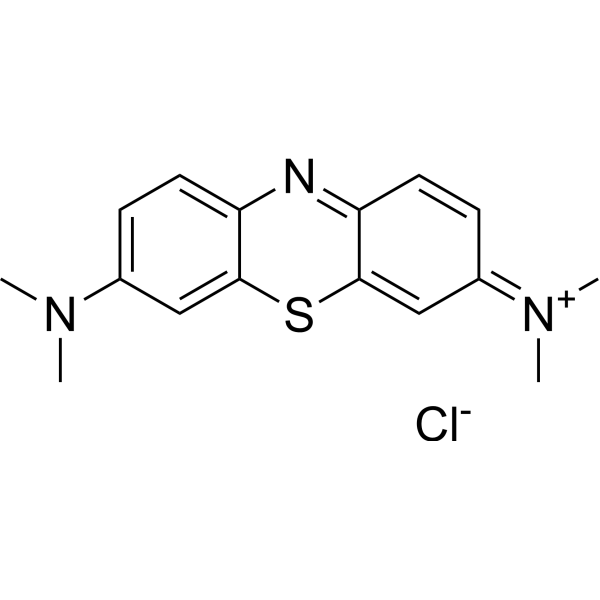
HY-14536
Methylene BluesGC Inhibitor -

HY-14536R
Methylene Blue (Standard)sGC Inhibitor -
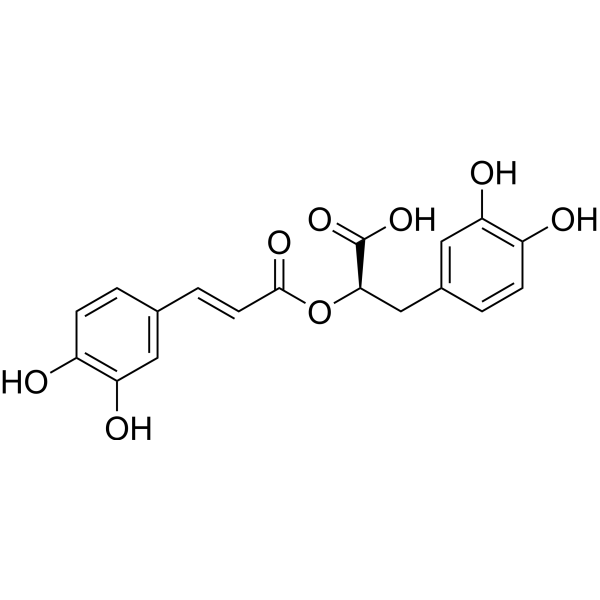
HY-N0529
Rosmarinic acidAnti-Inflammatory Agent -
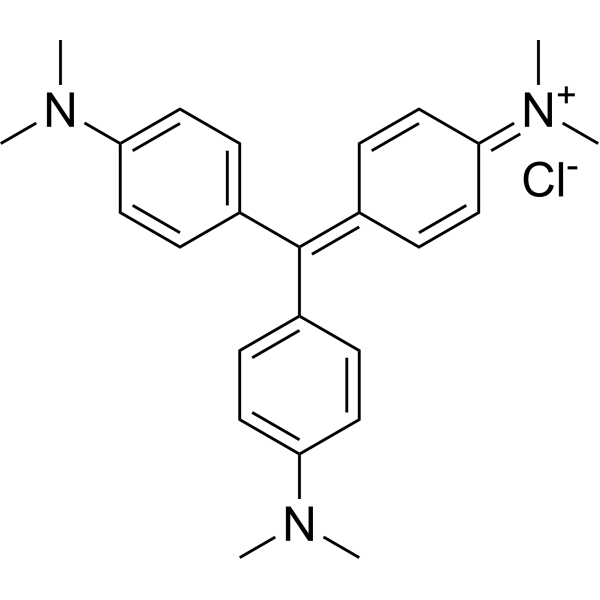
HY-B0324A
Crystal VioletFluorochrome -

HY-N0529R
Rosmarinic acid (Standard)Anti-Inflammatory Agent -

HY-DY2001
Crystal Violet (solution)Fluorochrome -
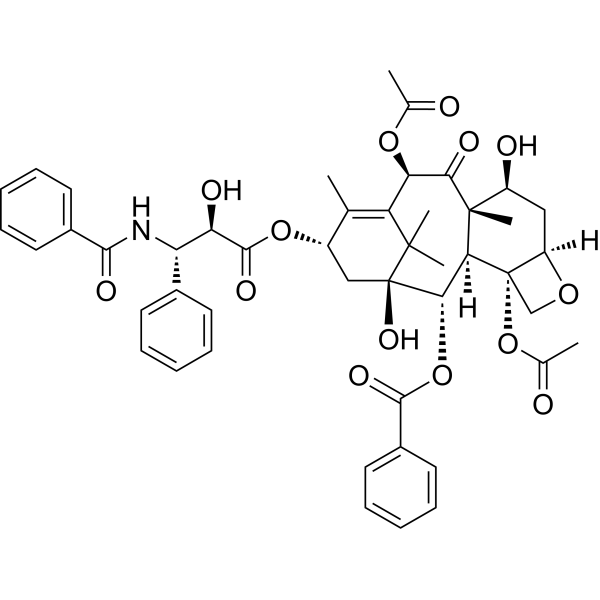
HY-B0015
PaclitaxelAntitumor Agent -
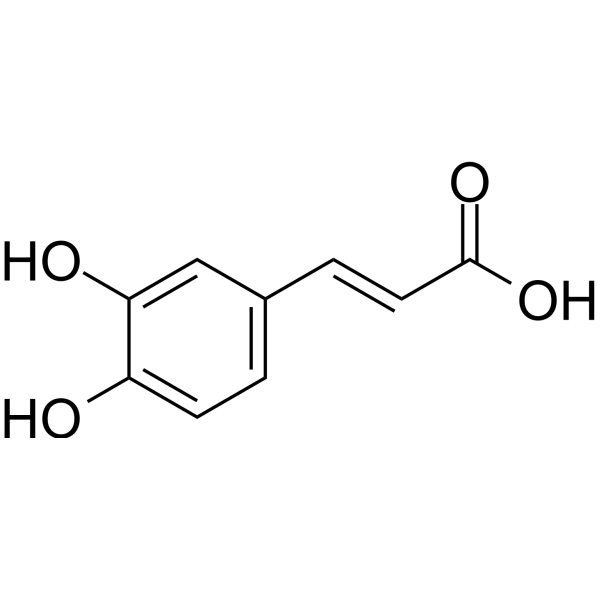
HY-N0172
Caffeic acidEndogenous Metabolite -
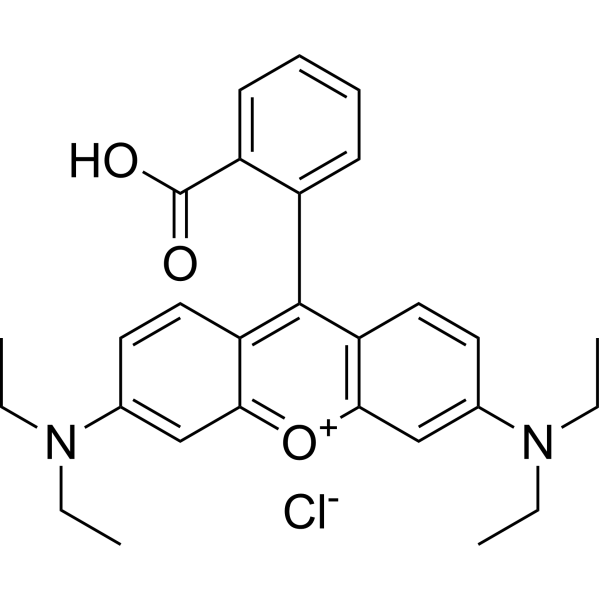
HY-Y0016
Rhodamine BFluorescent Dye -
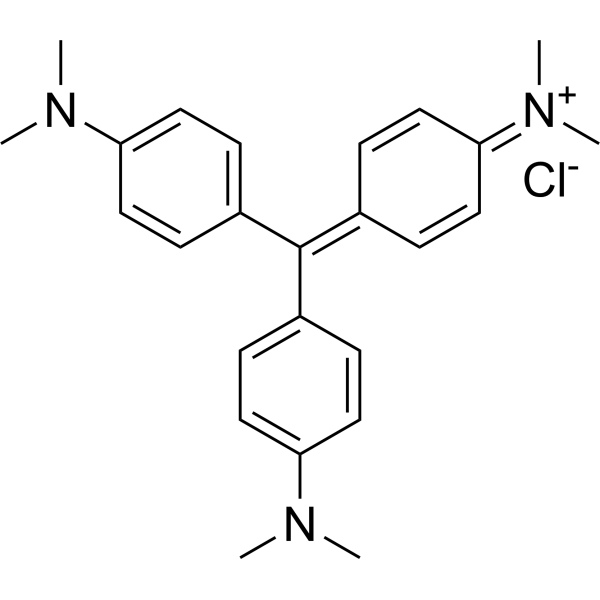
HY-W110794
Crystal violet, IND (0.0-2.0)Biochemical Assay Reagent -
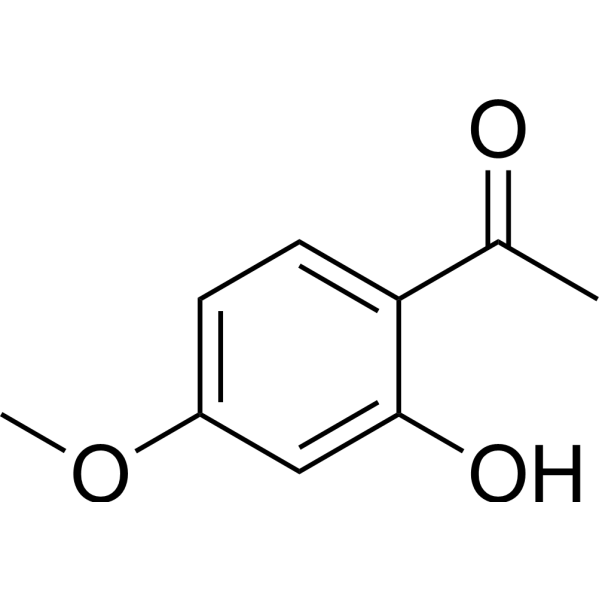
HY-N0159
PaeonolAutophagy Inducer -
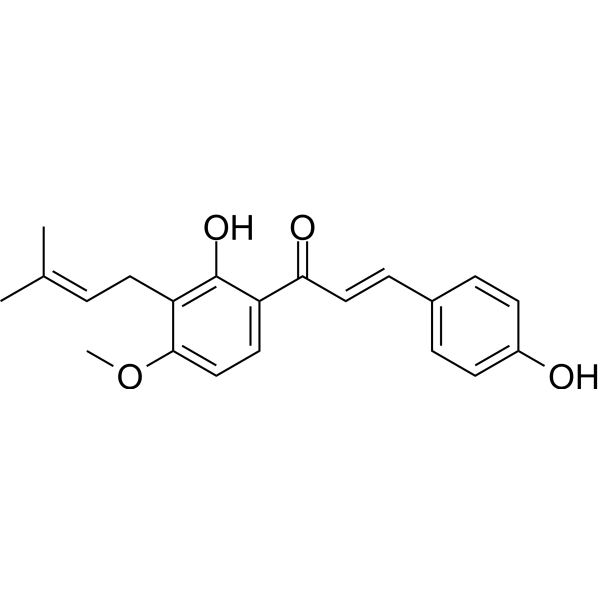
HY-N7204
4-HydroxyderricinMonoamine Oxidase Inhibitor


Biological Activity
Description
Cellular Effect
|
Cell Line

|
Type | Value | Description | References |
|---|---|---|---|---|
| B16-F10 | IC50 |
5.48 μM
Compound: MB
|
Antiproliferative activity against mouse B16-F10 cells assessed as cell viability in light irradiation and measured for 48 hrs by MTT assay
Antiproliferative activity against mouse B16-F10 cells assessed as cell viability in light irradiation and measured for 48 hrs by MTT assay
|
[PMID: 34871840] |
| B16-F10 | IC50 |
7.02 μM
Compound: MB
|
Antiproliferative activity against mouse B16-F10 cells assessed as cell viability in dark incubated for 48 hrs by MTT assay
Antiproliferative activity against mouse B16-F10 cells assessed as cell viability in dark incubated for 48 hrs by MTT assay
|
[PMID: 34871840] |
| Fibroblast | EC50 |
43 nM
Compound: MB
|
Inhibition of erastin-induced cell death in FRDA patient-derived fibroblast assessed as depletion of cellular ATP incubated for 12 hrs followed by erastin stimulation and measured after by luciferase-linked ATPase enzymatic assay
Inhibition of erastin-induced cell death in FRDA patient-derived fibroblast assessed as depletion of cellular ATP incubated for 12 hrs followed by erastin stimulation and measured after by luciferase-linked ATPase enzymatic assay
|
[PMID: 33214825] |
| HepG2 | IC50 |
<1 μM
Compound: Methylene blue
|
Antimalarial activity against sporozoite stage of Plasmodium yoelii assessed as invasion of human HepG2 cells expressing CD81 incubated for 2 hrs prior to inoculation measured after 1 hr by immunofluorescence assay in presence of penicillin/streptomycin
Antimalarial activity against sporozoite stage of Plasmodium yoelii assessed as invasion of human HepG2 cells expressing CD81 incubated for 2 hrs prior to inoculation measured after 1 hr by immunofluorescence assay in presence of penicillin/streptomycin
|
[PMID: 23927658] |
| HepG2 | IC50 |
6 μM
Compound: MB
|
Anticancer activity against human HepG2 cells
Anticancer activity against human HepG2 cells
|
[PMID: 33460833] |
| HT-29 | IC50 |
>10 μM
Compound: MB
|
Cytotoxicity against human HT-29 cells assessed as reduction in cell viability incubated for 24 hrs in dark by MTT assay
Cytotoxicity against human HT-29 cells assessed as reduction in cell viability incubated for 24 hrs in dark by MTT assay
|
[PMID: 32267685] |
| HT-29 | IC50 |
9.2 μM
Compound: MB
|
Cytotoxicity against human HT-29 cells assessed as reduction in cell viability preincubated for 1 hr followed by light irradiation at 3.2 J/cm2 for 30 sec and measured after 24 hrs by MTT assay
Cytotoxicity against human HT-29 cells assessed as reduction in cell viability preincubated for 1 hr followed by light irradiation at 3.2 J/cm2 for 30 sec and measured after 24 hrs by MTT assay
|
[PMID: 32267685] |
| Lymphocyte | EC50 |
88 nM
Compound: MB
|
Anti-ferroptotic activity in FRDA patient-derived Lymphocyte assessed as reduction in RSL3-induced lipid peroxidation incubated for overnight followed by RSL3 stimulation and measured after 90 mins by FACS analysis
Anti-ferroptotic activity in FRDA patient-derived Lymphocyte assessed as reduction in RSL3-induced lipid peroxidation incubated for overnight followed by RSL3 stimulation and measured after 90 mins by FACS analysis
|
[PMID: 33214825] |
| MCF7 | IC50 |
10.58 μM
Compound: MB
|
Antiproliferative activity against human MCF7 cells assessed as cell viability in light irradiation and measured after 48 hrs by MTT assay
Antiproliferative activity against human MCF7 cells assessed as cell viability in light irradiation and measured after 48 hrs by MTT assay
|
[PMID: 34871840] |
| MCF7 | IC50 |
14.64 μM
Compound: MB
|
Antiproliferative activity against human MCF7 cells assessed as cell viability in dark incubated for 48 hrs by MTT assay
Antiproliferative activity against human MCF7 cells assessed as cell viability in dark incubated for 48 hrs by MTT assay
|
[PMID: 34871840] |
In Vitro
Guidelines (The following is our recommended protocol. This protocol is provided for reference only and should be modified according to your specific needs).
1. Sample treatment
1.1 For paraffin sections: dewax and rehydrate as usual.
1.2 For frozen sections: distilled water for 2 min.
1.3 For cultured cells: Fix with 4% paraformaldehyde. Wash with distilled water for 2 min. Replace with fresh distilled water and wash for another 2 min.
2. Methylene blue staining
2.1 Stain with 0.1% Methylene blue for 2 min.
2.2 Wash thoroughly with distilled water, observe and take photos.
2.3 Staining results:
Tissue or cells: blue
MedChemExpress (MCE) has not independently confirmed the accuracy of these methods. They are for reference only. Further protocols information, click here.


Chemical Information
-
CAS No. 61-73-4
-
Appearance Solid
-
Molecular Weight 319.86
-
Formula C16H18ClN3S
-
Color Brown to black
-
SMILES
CN(C)C1=CC2=[S+]C3=CC(N(C)C)=CC=C3N=C2C=C1.[Cl-]
-
Synonyms
Basic Blue 9 (purity≥70%); CI-52015 (purity≥70%); Methylthioninium chloride (purity≥70%)
-
Shipping
Room temperature in continental US; may vary elsewhere.
-
Storage
4°C, protect from light, stored under nitrogen
* In solvent : -80°C, 6 months; -20°C, 1 month (protect from light, stored under nitrogen)


Solvent & Solubility
In Vitro:
DMSO : 20 mg/mL (62.53 mM; Need ultrasonic; Hygroscopic DMSO has a significant impact on the solubility of product, please use newly opened DMSO)
Please refer to the solubility information to select the appropriate solvent. Once prepared, please aliquot and store the solution to prevent product inactivation from repeated freeze-thaw cycles.
Storage method and period of stock solution: -80°C, 6 months; -20°C, 1 month (protect from light, stored under nitrogen). When stored at -80°C, please use it within 6 months. When stored at -20°C, please use it within 1 month.
Please refer to the solubility information to select the appropriate solvent. Once prepared, please aliquot and store the solution to prevent product inactivation from repeated freeze-thaw cycles.
Storage method and period of stock solution: -80°C, 6 months; -20°C, 1 month (protect from light, stored under nitrogen). When stored at -80°C, please use it within 6 months. When stored at -20°C, please use it within 1 month.
Concentration (start) × Volume (start) = Concentration (final) × Volume (final)

Protocols
-
ROS/oxidative-stress fluorescent staining
ROS/oxidative-stress fluorescent staining uses cell-permeant fluorogenic probes that become fluorescent after oxidation inside cells or tissues; commonly used examples include DCFH-DA/DCFDA for broad cellular oxidant detection, DHE for superoxide-related signal detection, MitoSOX for mitochondrial superoxide-related signal detection, and CellROX probes for oxidative-stress-associated fluorescence readouts. The assay detects probe oxidation rather than a single ROS species unless the probe and analysis method have been chemically validated for that species. DCFH-DA enters cells, is deacetylated by intracellular esterases to DCFH, and produces fluorescent DCF after oxidation, so the readout is used as an operational measure of total cellular oxidative stress rather than a species-specific ROS measurement. DHE and MitoSOX can report superoxide-related oxidation, but red fluorescence alone can include non-specific ethidium-like oxidation products; HPLC or optimized spectral approaches are
-
Research Protocol for Neurological Diseases
PINK1/Parkin-mediated mitophagy pathway is a mitochondrial quality-control signaling axis in which mitochondrial depolarization stabilizes PINK1 on damaged mitochondria, activates Parkin recruitment and E3 ubiquitin ligase activity, promotes ubiquitination of outer mitochondrial membrane proteins, recruits selective autophagy adaptors, and drives lysosomal degradation of damaged mitochondria. In neurological disease research, this pathway is experimentally important because neurons, especially dopaminergic neurons, are highly dependent on mitochondrial integrity, and defective mitochondrial turnover can lead to mitochondrial dysfunction, oxidative stress, impaired neuronal survival, α-synuclein accumulation, and neuroinflammatory damage-associated signals. The genetic disease link is strongest in Parkinson’s disease because mutations in PRKN/parkin cause autosomal recessive juvenile parkinsonism, mutations in PINK1 cause hereditary early-onset Parkinson’s disease, and Drosophila studie


Purity & Documentation
-
Data Sheet (273 KB)
-
SDS (397 KB)
- English - EN (397 KB)
- Français - FR (397 KB)
- Deutsch - DE (397 KB)
- Norwegian - NO (397 KB)
- Español - ES (397 KB)
- Swedish - SV (397 KB)
- Italian - IT (397 KB)
- Korean - KR (397 KB)
- Portuguese - PT (397 KB)
-
Handling Instructions (2659 KB)
References
[1]. Klamer D, et, al. Phencyclidine-induced behaviour in mice prevented by methylene blue. Basic Clin Pharmacol Toxicol. 2004 Feb;94(2):65-72. [Content Brief]
[2]. Hochgräfe K, et, al. Preventive methylene blue treatment preserves cognition in mice expressing full-length pro-aggregant human Tau. Acta Neuropathol Commun. 2015 May 10;3:25. [Content Brief]
[3]. Fenn AM, et, al. Methylene blue attenuates traumatic brain injury-associated neuroinflammation and acute depressive-like behavior in mice. J Neurotrauma. 2015 Jan 15;32(2):127-38. [Content Brief]


Complete Stock Solution Preparation Table
Please refer to the solubility information to select the appropriate solvent. Once prepared, please aliquot and store the solution to prevent product inactivation from repeated freeze-thaw cycles.
Storage method and period of stock solution: -80°C, 6 months; -20°C, 1 month (protect from light, stored under nitrogen). When stored at -80°C, please use it within 6 months. When stored at -20°C, please use it within 1 month.
| Optional Solvent | Concentration Solvent Mass | 1 mg | 5 mg | 10 mg | 25 mg |
|---|---|---|---|---|---|
| DMSO | 1 mM | 3.1264 mL | 15.6318 mL | 31.2637 mL | 78.1592 mL |
| 5 mM | 0.6253 mL | 3.1264 mL | 6.2527 mL | 15.6318 mL | |
| 10 mM | 0.3126 mL | 1.5632 mL | 3.1264 mL | 7.8159 mL | |
| 15 mM | 0.2084 mL | 1.0421 mL | 2.0842 mL | 5.2106 mL | |
| 20 mM | 0.1563 mL | 0.7816 mL | 1.5632 mL | 3.9080 mL | |
| 25 mM | 0.1251 mL | 0.6253 mL | 1.2505 mL | 3.1264 mL | |
| 30 mM | 0.1042 mL | 0.5211 mL | 1.0421 mL | 2.6053 mL | |
| 40 mM | 0.0782 mL | 0.3908 mL | 0.7816 mL | 1.9540 mL | |
| 50 mM | 0.0625 mL | 0.3126 mL | 0.6253 mL | 1.5632 mL | |
| 60 mM | 0.0521 mL | 0.2605 mL | 0.5211 mL | 1.3027 mL |


Methylene blue (purity≥70%) Related Classifications
HY-14536A Related Classifications
 Powered by Bioz
Keywords
- Methylene blue (purity≥70%)
- 61-73-4
- Basic Blue 9 (purity≥70%)
- CI-52015 (purity≥70%)
- Methylthioninium chloride (purity≥70%)
- Environmental Pollutants
- Microtubule/Tubulin
- Guanylate Cyclase
- Monoamine Oxidase
- NO Synthase
- vasopressor
- dye
- antinociception
- antimalarial
- antidepressant
- anxiolytic
- methemoglobinemias
- cGMP
- Inhibitor
- inhibitor
- inhibit