



Poliumoside
Based on 11 publication(s) in Google Scholar
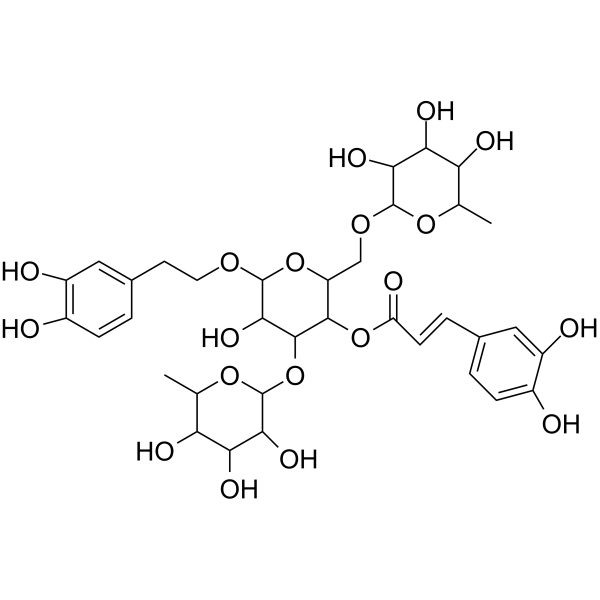
Poliumoside, a caffeoylated phenylpropanoid glycoside, is isolated from Brandisia hancei stems and leaves. Poliumoside is an advanced glycation end product (AGE) formation and rat lens aldose reductase (RLAR) inhibitor, with IC50s of 19.69 and 8.47 μM, respectively. Poliumoside also has antiinflammatory and antioxidant activity.
For research use only. We do not sell to patients.
- Purity : 99.69%
- CAS No.: 94079-81-9
- Formula: C35H46O19
- Molecular Weight:770.73
-
Storage:Powder -20°C, 3 years , 4°C, 2 years ; In solvent -80°C, 6 months , -20°C, 1 month

To place orders, for customer services and technical support, please contact: MedChemExpress USA
Tel: 609-228-6898 E-mail: [email protected] [email protected]


-
 Biological Activity
-
Chemical Information
-
Solvent & Solubility
- Purity & Documentation
- References
-
 Help & FAQs


-
HY-N0020
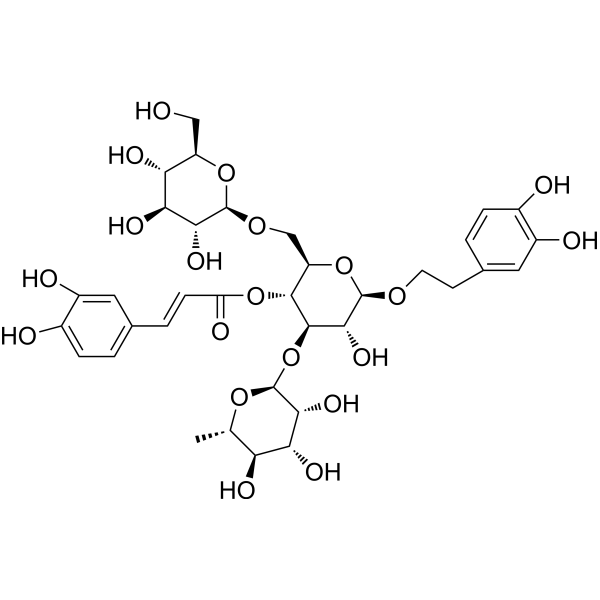
EchinacosideWnt/β-catenin Signaling Inhibitor -
HY-N0029
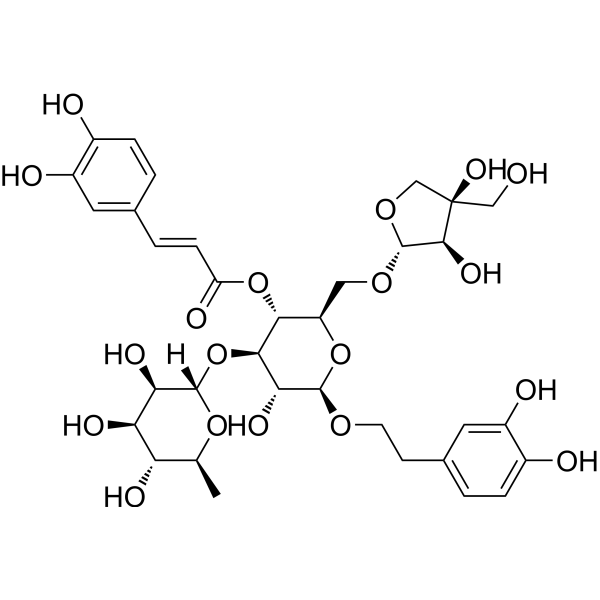
Forsythoside BTNF Inhibitor -
HY-N0102
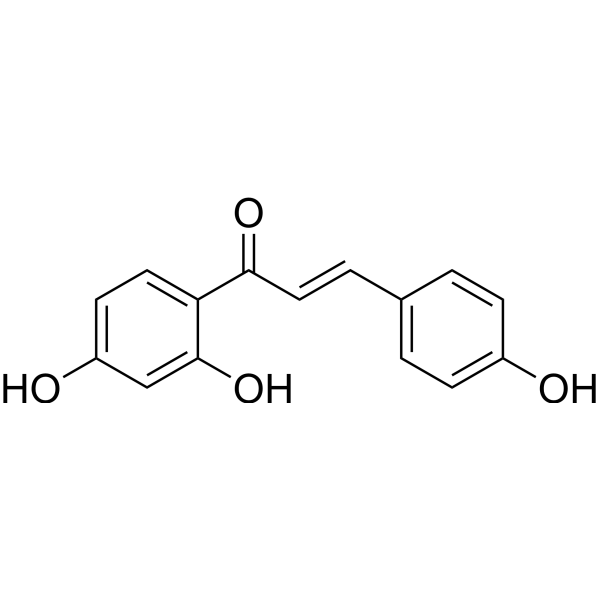
IsoliquiritigeninAutophagy Inducer -
HY-N2155
Tubuloside AHepatoprotective Agent -
HY-N0148
RutinCBR1 Inhibitor -
HY-N1362
Salvianolic acid BAntioxidant -
HY-N0022
IsoacteosideNatural Product -
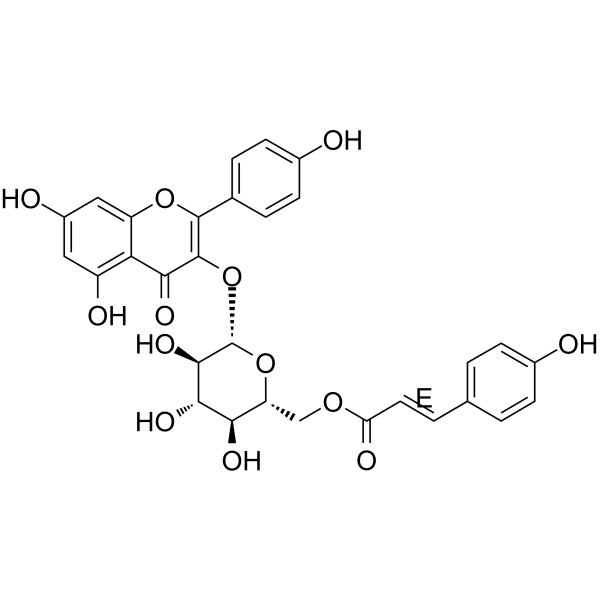
HY-N1425
Tilirosideα-amylase Inhibitor -
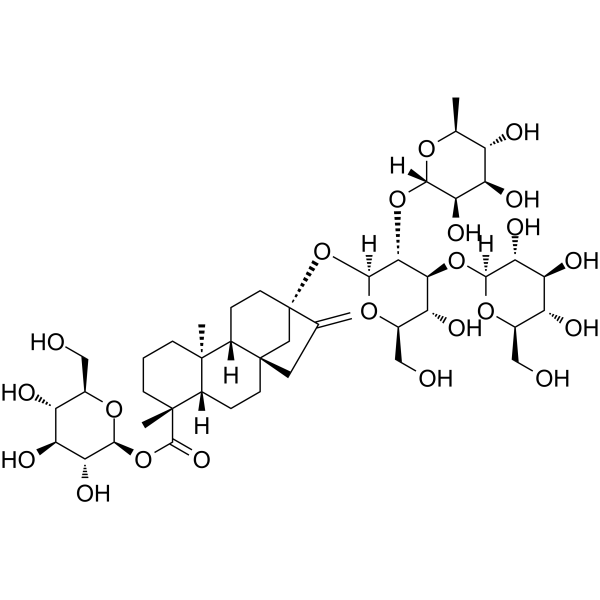
HY-N0467
Rebaudioside CTAS1R2/TAS1R3 Activator -
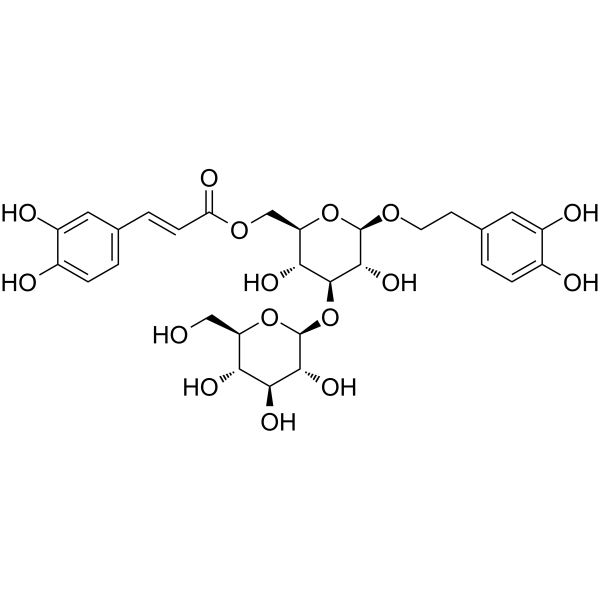
HY-N5063
Plantainoside DACE/IKK-β/PKC Inhibitor -
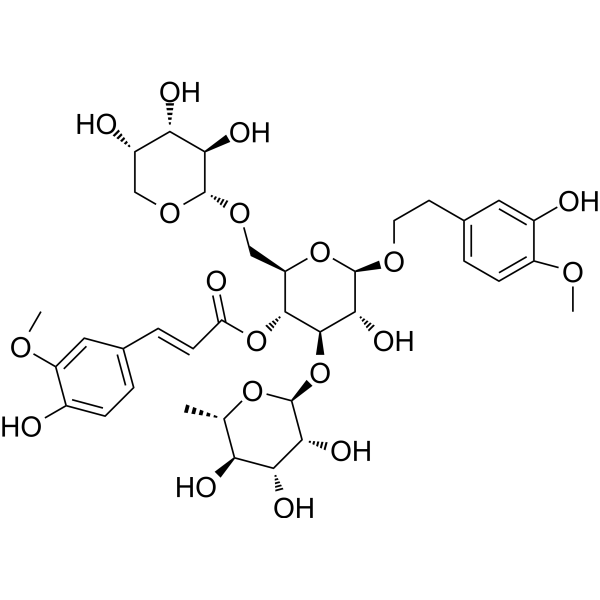
HY-N0062
Angoroside CAnti-inflammatory Agent -
HY-N4089
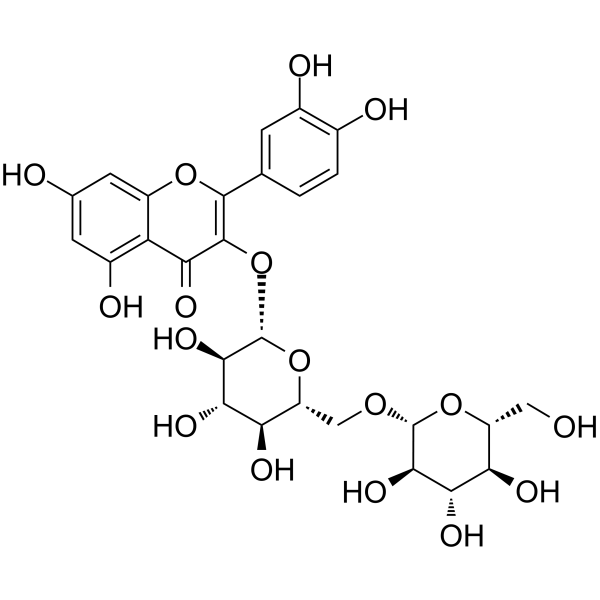
Quercetin 3-gentiobiosideAromatase Inhibitor
Publications Citing Use of MedChemExpress (MCE) Poliumoside
More- J Adv Res. 2026 Apr 13:S2090-1232(26)00338-3. [Abstract]
- Sci Transl Med. 2025 Jan;17(779):eadp9805. [Abstract]
- Theranostics. 2025 Mar 18;15(9):4188-4211. [Abstract]
- Phytomedicine. 2026 Jan:150:157747. [Abstract]
- Phytomedicine. 2025 Jul 25:143:156881. [Abstract]
- Phytomedicine. 2024 Mar:125:155342. [Abstract]
- Int Immunopharmacol. 2026 Mar 15:173:116211. [Abstract]
- ACS Chem Neurosci. 2025 Apr 28. [Abstract]
- Microbiol Spectr. 2023 Sep 21;11(5):e0267123. [Abstract]
- Ren Fail. 2026 Dec;48(1):2670806. [Abstract]
- J Integr Neurosci. 2025 Oct 29;24(10):43900. [Abstract]
 Customer Validation & Images

-
Cell Proliferation/Viability Assay
-
IF
-
Flow Cytometry
-
WB
-
IHC



Biological Activity
Description
IC50 & Target
IC50: 8.47 μM (aldose reductase)[1]
In Vitro
Poliumoside inhibits AGE formation and RLAR, with IC50s of 19.69, and 8.47 μM, respectively[1].
Poliumoside (5-30 μM; 3 h) inhibits AAPH-induced hemolysis of rat red blood cells in vitro[2].
Poliumoside (12.5-100 μM; pretreated 2 h) inhibits the release of TNF-α and IL-6 in LPS-induced RAW 264.7 cells[3].
MedChemExpress (MCE) has not independently confirmed the accuracy of these methods. They are for reference only. .
In Vivo
MedChemExpress (MCE) has not independently confirmed the accuracy of these methods. They are for reference only.


Chemical Information
-
CAS No. 94079-81-9
-
Appearance Solid
-
Molecular Weight 770.73
-
Formula C35H46O19
-
Color Light yellow to yellow
-
SMILES
OC1=C(O)C=CC(CCOC2C(C(OC3OC(C)C(O)C(O)C3O)C(OC(/C=C/C4=CC=C(O)C(O)=C4)=O)C(COC5OC(C)C(O)C(O)C5O)O2)O)=C1
-
Structure Classification
-
Shipping
Room temperature in continental US; may vary elsewhere.
-
Storage
Powder -20°C 3 years 4°C 2 years In solvent -80°C 6 months -20°C 1 month


Publications (11)
-
Journal Impact Factor
-
Most Recent
-
J Adv Res
A "DUBTAC" targeting GLUL deubiquitination promotes BMSC osteogenic differentiation and implant osseointegration in type 2 diabetes. [Abstract]2026 Apr 13:S2090-1232(26)00338-3. PMID: 41980623 -
Sci Transl Med
Glutamic-pyruvic transaminase 1 deficiency-mediated metabolic reprogramming facilitates colorectal adenoma-carcinoma progression. [Abstract]2025 Jan;17(779):eadp9805. PMID: 39742507 -
Theranostics
Activation of FANCC attenuates mitochondrial ROS-driven necroptosis by targeting TBK1-dependent mitophagy in astrocytes after spinal cord injury. [Abstract]2025 Mar 18;15(9):4188-4211. PMID: 40213654 -
Phytomedicine
Unveiling poliumoside: A herbal-derived FAK kinase inhibitor with anti-proliferative and anti-metastatic efficacy. [Abstract]2026 Jan:150:157747. PMID: 41485292 -
Phytomedicine
Poliumoside alleviates microglia-mediated inflammation and blood-brain barrier disruption via modulating the polarization of microglia after ischemic stroke in mice. [Abstract]2025 Jul 25:143:156881. PMID: 40446580 -
Phytomedicine
Poliumoside protects against type 2 diabetes-related osteoporosis by suppressing ferroptosis via activation of the Nrf2/GPX4 pathway. [Abstract]2024 Mar:125:155342. PMID: 38295665
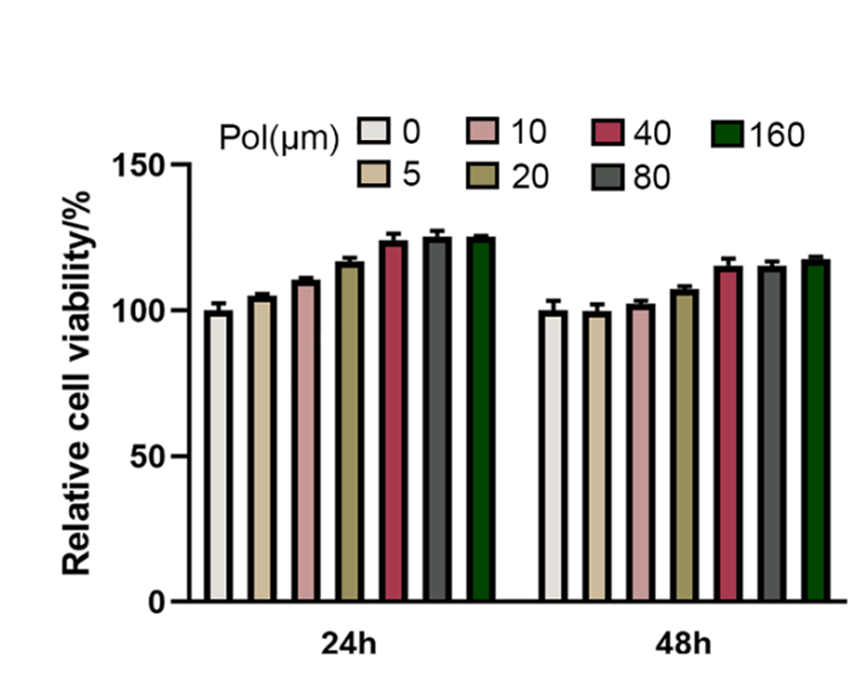
Poliumoside purchased from MedChemExpress. Usage Cited in: Phytomedicine. 2024 Mar:125:155342. [Abstract]
Cell viability percentages post exposure to varied Poliumoside (Pol) (0, 5, 10, 20, 40, 80, 160 μM) concentrations over durations of 24/48 h.
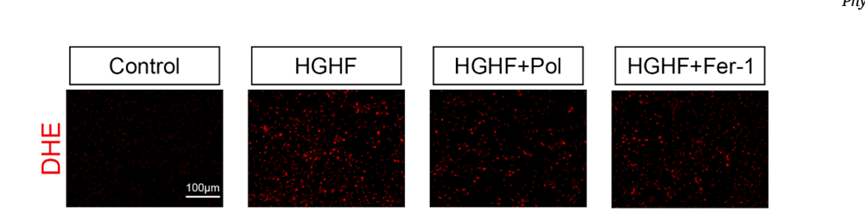
Poliumoside purchased from MedChemExpress. Usage Cited in: Phytomedicine. 2024 Mar:125:155342. [Abstract]
Imagery highlighting and corresponding quantification from DHE staining procedures treated with Poliumoside (Pol) (40 μM).
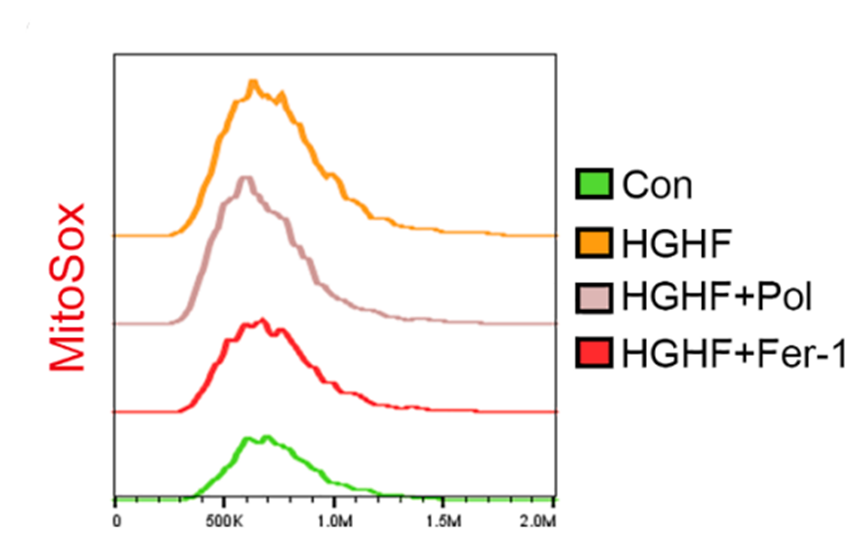
Poliumoside purchased from MedChemExpress. Usage Cited in: Phytomedicine. 2024 Mar:125:155342. [Abstract]
Flow cytometry assessment illustrating MitoSox’s relative mean fluorescence intensity treated with Poliumoside (Pol) (40 μM).
Poliumoside purchased from MedChemExpress. Usage Cited in: Phytomedicine. 2024 Mar:125:155342. [Abstract]
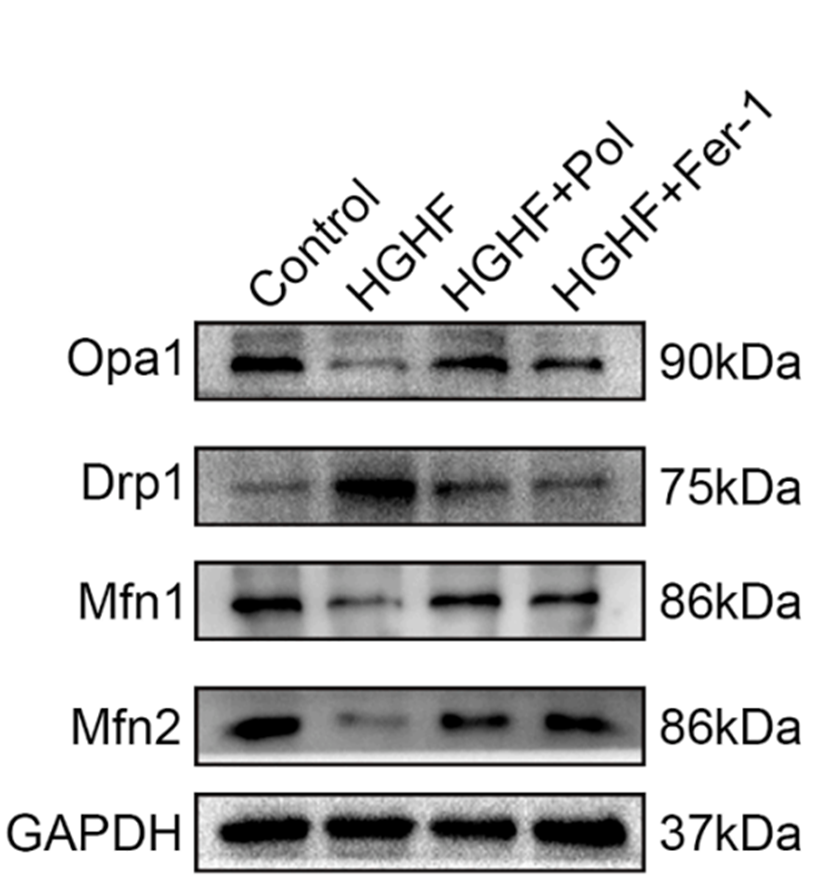
Protein expression levels of Opa1, Drp1, Mfn1, and Mfn2 as discerned via western blotting techniques treated with Poliumoside (Pol) (40 μM).
Poliumoside purchased from MedChemExpress. Usage Cited in: Phytomedicine. 2024 Mar:125:155342. [Abstract]
Imagery from Nrf2 immunohistochemical staining focused on the thigh’s metaphyseal tissue treated with Poliumoside (Pol) (7.5, 15 mg/kg, i.p.)
-
Int Immunopharmacol
Poliumoside attenuates endothelial senescence and atherosclerosis by regulating MKRN2-mediated autophagy via the PI3K/AKT/ mTOR pathway. [Abstract]2026 Mar 15:173:116211. PMID: 41587514 -
ACS Chem Neurosci
Poliumoside Exhibits Neuroprotective Effects against Cerebral Ischemia-Reperfusion Injury by Relieving Microglia-Mediated Neuronal Damage and Astrocytic Activation. [Abstract]2025 Apr 28. PMID: 40295176 -
Microbiol Spectr
Potential quorum-sensing inhibitor of Hafnia alvei H4-theaflavin-3,3´-digallate analyzed by virtual screening and molecular simulation. [Abstract]2023 Sep 21;11(5):e0267123. PMID: 37732782 -
Ren Fail
Targeting LRH-1 alleviates diabetes-induced lipotoxicity in podocytes: role of PLIN5-mediated lipid droplet turnover. [Abstract]2026 Dec;48(1):2670806. PMID: 42135621 -
J Integr Neurosci
Poliumoside Alleviates Neuroinflammation and Oxidative Stress After Spinal Cord Injury by Activating the PI3K/AKT/mTOR Signaling Pathway. [Abstract]2025 Oct 29;24(10):43900. PMID: 41200989


Solvent & Solubility
In Vitro:
DMSO : 100 mg/mL (129.75 mM; Need ultrasonic; Hygroscopic DMSO has a significant impact on the solubility of product, please use newly opened DMSO)
Ethanol : 50 mg/mL (64.87 mM; Need ultrasonic)
H2O : 50 mg/mL (64.87 mM; Need ultrasonic)
Please refer to the solubility information to select the appropriate solvent. Once prepared, please aliquot and store the solution to prevent product inactivation from repeated freeze-thaw cycles.
Storage method and period of stock solution: -80°C, 6 months; -20°C, 1 month. When stored at -80°C, please use it within 6 months. When stored at -20°C, please use it within 1 month.
* Note: If you choose water as the stock solution, please dilute it to the working solution, then filter and sterilize it with a 0.22 μm filter before use.
Please refer to the solubility information to select the appropriate solvent. Once prepared, please aliquot and store the solution to prevent product inactivation from repeated freeze-thaw cycles.
Storage method and period of stock solution: -80°C, 6 months; -20°C, 1 month. When stored at -80°C, please use it within 6 months. When stored at -20°C, please use it within 1 month.
* Note: If you choose water as the stock solution, please dilute it to the working solution, then filter and sterilize it with a 0.22 μm filter before use.
Concentration (start) × Volume (start) = Concentration (final) × Volume (final)
In Vivo:
Select the appropriate dissolution method based on your experimental animal and administration route.
- For the following dissolution methods, please ensure to first prepare a clear stock solution using an In Vitro approach and then sequentially add co-solvents:
- To ensure reliable experimental results, the clarified stock solution can be appropriately stored based on storage conditions. As for the working solution for In Vivo experiments, it is recommended to prepare freshly and use it on the same day.
- The percentages shown for the solvents indicate their volumetric ratio in the final prepared solution. If precipitation or phase separation occurs during preparation, heat and/or sonication can be used to aid dissolution.
Add each solvent one by one: 10% DMSO 40% PEG300 5% Tween-80 45% Saline
Solubility: ≥ 2.5 mg/mL (3.24 mM); Clear solution
This protocol yields a clear solution of ≥ 2.5 mg/mL (saturation unknown).
Taking 1 mL working solution as an example, add 100 μL DMSO stock solution (25.0 mg/mL) to 400 μL PEG300, and mix evenly; then add 50 μL Tween-80 and mix evenly; then add 450 μL Saline to adjust the volume to 1 mL.
Preparation of Saline: Dissolve 0.9 g sodium chloride in ddH₂O and dilute to 100 mL to obtain a clear Saline solution.
Add each solvent one by one: 10% DMSO 90% (20% SBE-β-CD in Saline)
Solubility: ≥ 2.5 mg/mL (3.24 mM); Clear solution
This protocol yields a clear solution of ≥ 2.5 mg/mL (saturation unknown).
Taking 1 mL working solution as an example, add 100 μL DMSO stock solution (25.0 mg/mL) to 900 μL 20% SBE-β-CD in Saline, and mix evenly.
Preparation of 20% SBE-β-CD in Saline (4°C, storage for one week): 2 g SBE-β-CD powder is dissolved in 10 mL Saline, completely dissolve until clear.
In Vivo Dissolution Calculator
Please enter the basic information of animal experiments:
-
-
-
-
Recommended: Prepare an additional quantity of animals to account for potential losses during experiments.
Working solution concentration: 0.22 mg/mL
This product has good water solubility, please refer to the measured solubility data in water/PBS/Saline for details.


Purity & Documentation
-
Data Sheet (278 KB)
-
SDS (251 KB)
- English - EN (251 KB)
- Français - FR (251 KB)
- Deutsch - DE (251 KB)
- Norwegian - NO (251 KB)
- Español - ES (251 KB)
- Swedish - SV (251 KB)
- Italian - IT (251 KB)
- Korean - KR (251 KB)
- Portuguese - PT (251 KB)
-
Handling Instructions (2659 KB)
References
[1]. Yu SY, et al. Caffeoylated phenylpropanoid glycosides from Brandisia hancei inhibit advanced glycation end product formation and aldose reductase in vitro and vessel dilation in larval zebrafish in vivo. Planta Med. 2013 Dec;79(18):1705-9. [Content Brief]
[2]. He ZD, et, al. Antioxidant activity of phenylethanoid glycosides from Brandisia hancei. J Ethnopharmacol. 2000 Aug;71(3):483-6. [Content Brief]
[3]. Wu A, et, al. Natural phenylethanoid glycosides isolated from Callicarpa kwangtungensis suppressed lipopolysaccharide-mediated inflammatory response via activating Keap1/Nrf2/HO-1 pathway in RAW 264.7 macrophages cell. J Ethnopharmacol. 2020 Aug 10;258:112857. [Content Brief]


Complete Stock Solution Preparation Table
Please refer to the solubility information to select the appropriate solvent. Once prepared, please aliquot and store the solution to prevent product inactivation from repeated freeze-thaw cycles.
Storage method and period of stock solution: -80°C, 6 months; -20°C, 1 month. When stored at -80°C, please use it within 6 months. When stored at -20°C, please use it within 1 month.
| Optional Solvent | Concentration Solvent Mass | 1 mg | 5 mg | 10 mg | 25 mg |
|---|---|---|---|---|---|
| Ethanol / H2O / DMSO | 1 mM | 1.2975 mL | 6.4874 mL | 12.9747 mL | 32.4368 mL |
| 5 mM | 0.2595 mL | 1.2975 mL | 2.5949 mL | 6.4874 mL | |
| 10 mM | 0.1297 mL | 0.6487 mL | 1.2975 mL | 3.2437 mL | |
| 15 mM | 0.0865 mL | 0.4325 mL | 0.8650 mL | 2.1625 mL | |
| 20 mM | 0.0649 mL | 0.3244 mL | 0.6487 mL | 1.6218 mL | |
| 25 mM | 0.0519 mL | 0.2595 mL | 0.5190 mL | 1.2975 mL | |
| 30 mM | 0.0432 mL | 0.2162 mL | 0.4325 mL | 1.0812 mL | |
| 40 mM | 0.0324 mL | 0.1622 mL | 0.3244 mL | 0.8109 mL | |
| 50 mM | 0.0259 mL | 0.1297 mL | 0.2595 mL | 0.6487 mL | |
| 60 mM | 0.0216 mL | 0.1081 mL | 0.2162 mL | 0.5406 mL | |
| DMSO | 80 mM | 0.0162 mL | 0.0811 mL | 0.1622 mL | 0.4055 mL |
| 100 mM | 0.0130 mL | 0.0649 mL | 0.1297 mL | 0.3244 mL |
* Note: If you choose water as the stock solution, please dilute it to the working solution, then filter and sterilize it with a 0.22 μm filter before use.


Poliumoside Related Classifications
HY-N0033 Related Classifications
 Powered by Bioz