



N-Acetyltryptamine

Based on 1 Customer Validation
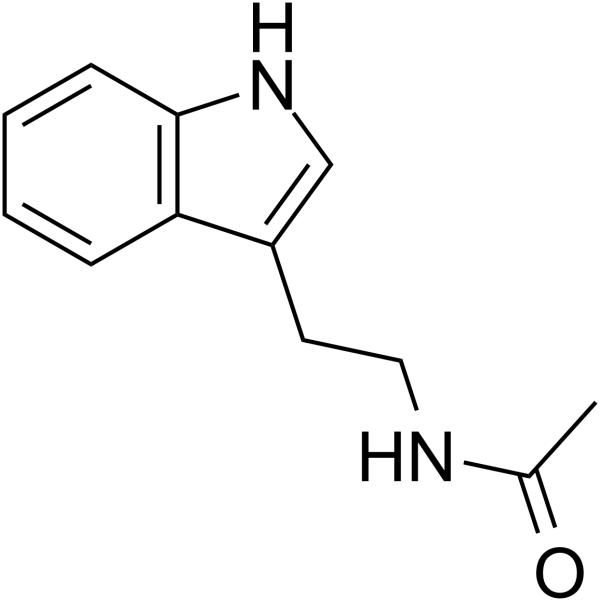
N-Acetyltryptamine (N10-Acetyltryptamine) is a mixed agonist-antagonist of the melatonin receptor. N-Acetyltryptamine inhibits acetylserotonin methyltransferase, blocks the conversion of N-acetylserotonin to melatonin, and inhibits neuronal firing activity in suprachiasmatic nucleus neurons. N-Acetyltryptamine is a physiological constituent of mammalian blood. N-Acetyltryptamine is a metabolite of tryptamine in Bacillus cereus.
연구목적의 판매만을 진행합니다. 환자를 대상으로 한 판매는 하지 않습니다.
- Purity : 97.0%
- CAS No.: 1016-47-3
- 화학식: C12H14N2O
- 분자량:202.26
-
보관:Powder -20°C, 3 years , 4°C, 2 years ; In solvent -80°C, 6 months , -20°C, 1 month

To place orders, for customer services and technical support, please contact: MedChemExpress USA
Tel: 609-228-6898 E-mail: [email protected] [email protected]


-
 Biological Activity
-
Chemical Information
-
용액&용해도
- 순도&문서
- References
-
 Help & FAQs


-
HY-101254
LuzindoleMelatonin Receptor Antagonist -

HY-100908R
N-Acetyltryptamine (Standard)Reference Standard -
HY-100609
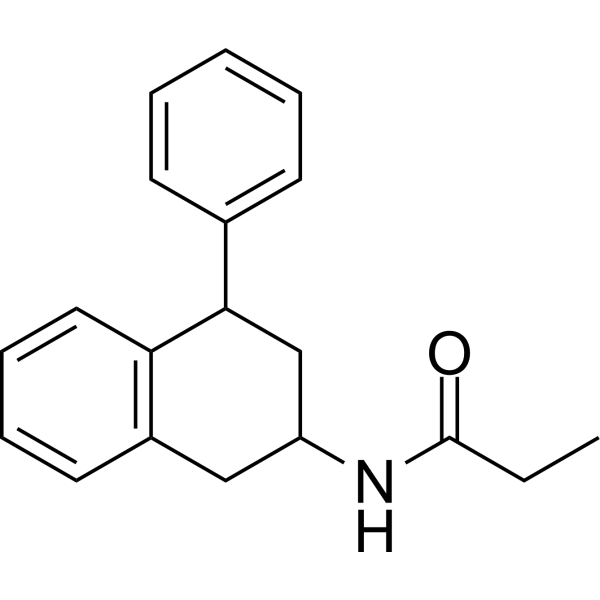
4-P-PDOTMT2 Receptor Antagonist -
HY-A0014
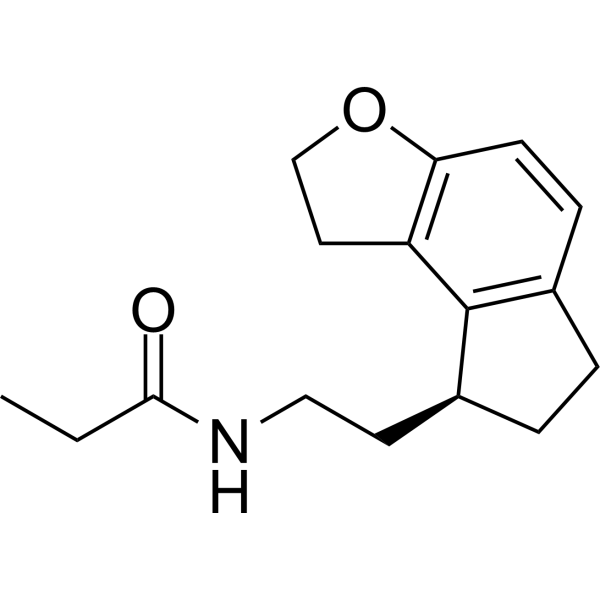
RamelteonMT1/2 Inhibitor -
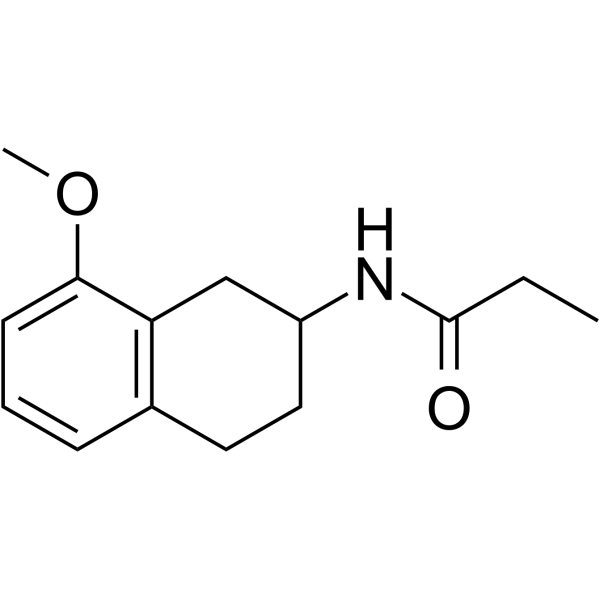
HY-101358
8-M-PDOTMT2 Receptor Agonist -
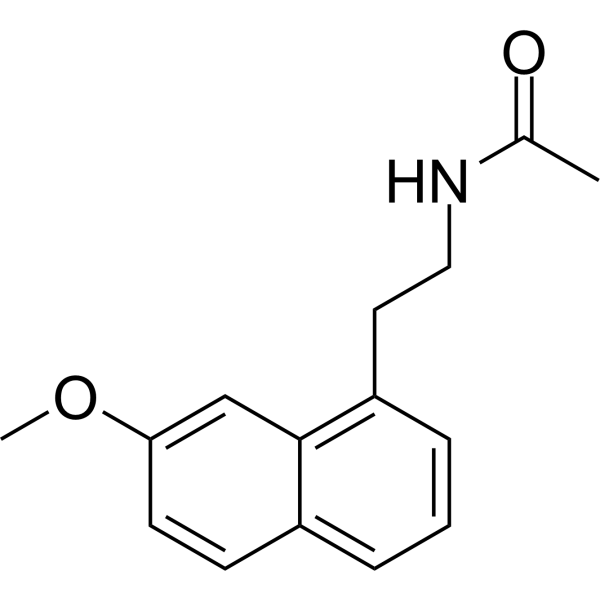
HY-17038
AgomelatineMT1/2 Agonist -
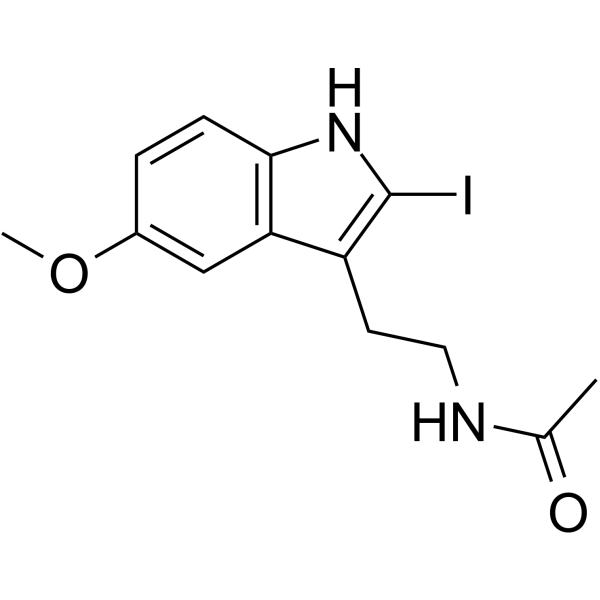
HY-101176
2-IodomelatoninMT1 Agonist -
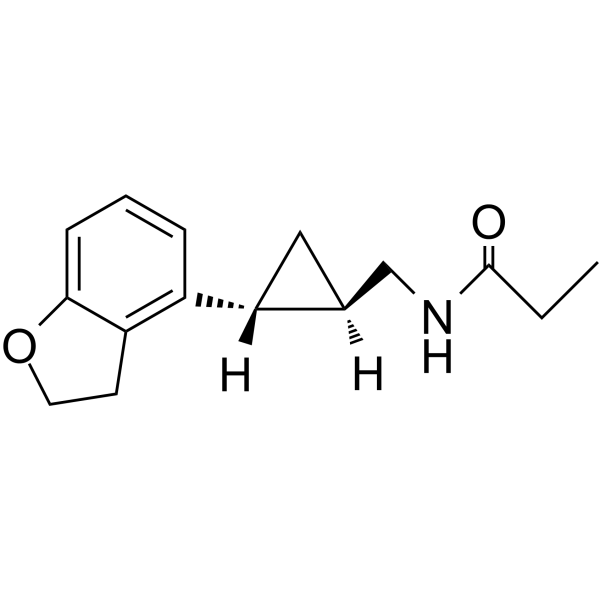
HY-14803
TasimelteonDual Melatonin Receptor Agonist -
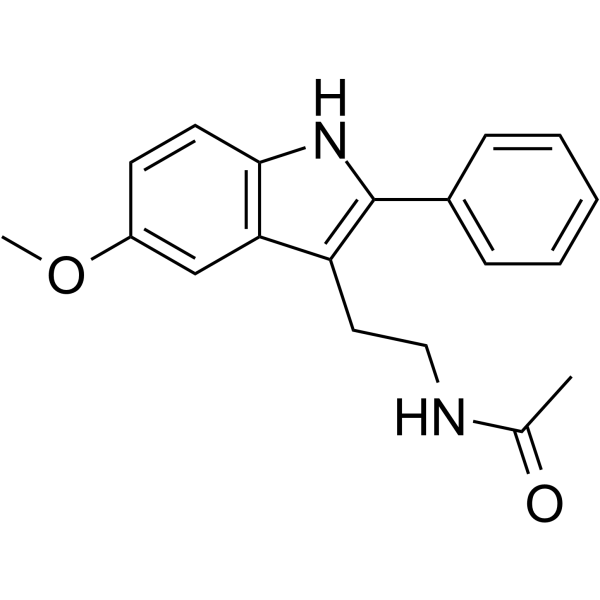
HY-101074
UCM 608Melatonin Agonist -
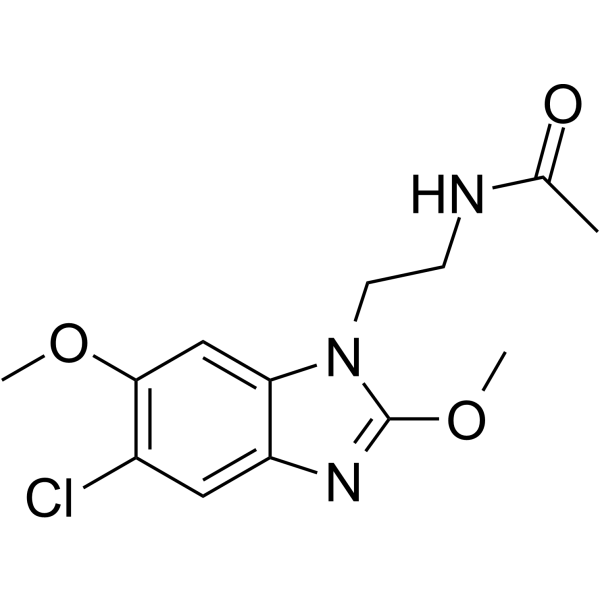
HY-138626
ACH-000143Melatonin Receptor Agonist -
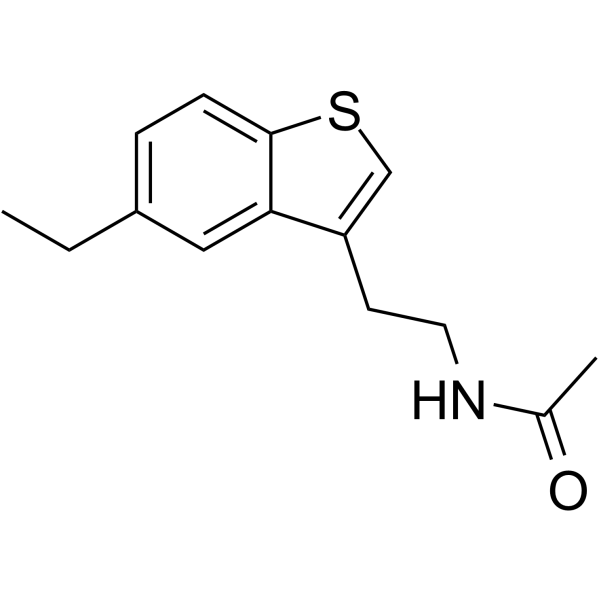
HY-114962
S-22153MT1/MT2 Receptor Antagonist -
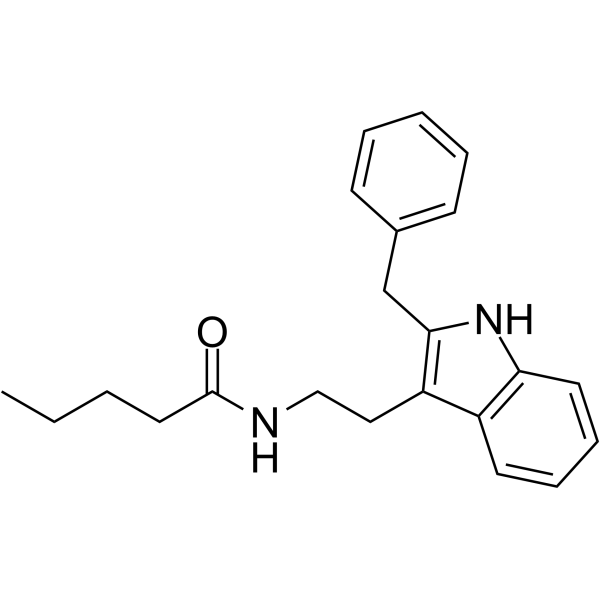
HY-107628
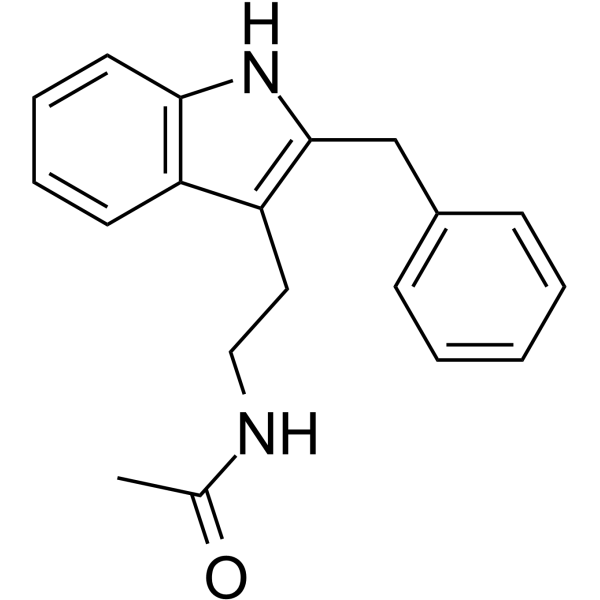
N-Pentanoyl 2-benzyltryptamineMT2 Antagonist


Biological Activity
제품 설명
Cellular Effect
|
Cell Line

|
Type | Value | Description | References |
|---|---|---|---|---|
| BV-2 | IC50 |
>20 μM
Compound: 11
|
Antineuroinflammatory activity in LPS induced mouse BV-2 cells assessed as inhibition of NO production pretreated for 3 hrs followed by LPS addition and measured after 21 hrs by griess reagent based assay
Antineuroinflammatory activity in LPS induced mouse BV-2 cells assessed as inhibition of NO production pretreated for 3 hrs followed by LPS addition and measured after 21 hrs by griess reagent based assay
|
[PMID: 39140432] |
In Vitro
N-acetyltryptamine is present in daytime plasma of rats, rhesus macaques, and humans, establishing it as a physiological constituent of mammalian blood[1].
N-acetyltryptamine (100 μM-10 mM) exhibits concentration-dependent mixed agonist-antagonist effects on Melatonin (HY-B0075)-evoked responses in rat SCN neurones, acting as an antagonist at 100 μM (blocking Melatonin-evoked responses with a smaller reduction in firing) and as an agonist at 1-10 mM (suppressing neuronal discharge)[2].
N-Acetyltryptamine acts as a noncompetitive inhibitor versus Tryptamine (HY-B2132) and an uncompetitive inhibitor versus Acetyl-CoA (Acetyl coenzyme A) (HY-114293) in the GST-AANAT-catalyzed reaction, supporting an ordered BiBi ternary complex mechanism where N-acetyltryptamine is the first product released[3].
N-Acetyltryptamine is formed as an artifact during the extraction of Tryptamine with ethyl acetate under mild basic conditions via base-catalyzed aminolysis, as confirmed by TLC, mass spectrometry, and comparison with the authentic synthetic complex[4].
N-Acetyltryptamine during senescence completely inhibits melatonin synthesis without altering N-acetylserotonin levels in detached Asahi rice leaves[5].
N-Acetyltryptamine is a genuine metabolite of tryptamine in Bacillus cereus, not an extraction artifact[4].
MedChemExpress (MCE) has not independently confirmed the accuracy of these methods. They are for reference only.


Chemical Information
-
CAS No. 1016-47-3
-
Appearance Solid
-
분자량 202.26
-
화학식 C12H14N2O
-
Color Off-white to yellow
-
SMILES
CC(NCCC1=CNC2=C1C=CC=C2)=O
-
Synonyms
N10-Acetyltryptamine; Nb-Acetyltryptamine; Nω-Acetyltryptamine
-
선적
Room temperature in continental US; may vary elsewhere.
-
보관
Powder -20°C 3 years 4°C 2 years In solvent -80°C 6 months -20°C 1 month


용액&용해도
In Vitro:
Ethanol : 100 mg/mL (494.41 mM; Need ultrasonic)
Please refer to the solubility information to select the appropriate solvent. Once prepared, please aliquot and store the solution to prevent product inactivation from repeated freeze-thaw cycles.
Storage method and period of stock solution: -80°C, 6 months; -20°C, 1 month. When stored at -80°C, please use it within 6 months. When stored at -20°C, please use it within 1 month.
Please refer to the solubility information to select the appropriate solvent. Once prepared, please aliquot and store the solution to prevent product inactivation from repeated freeze-thaw cycles.
Storage method and period of stock solution: -80°C, 6 months; -20°C, 1 month. When stored at -80°C, please use it within 6 months. When stored at -20°C, please use it within 1 month.
Concentration (start) × Volume (start) = Concentration (final) × Volume (final)
In Vivo:
Select the appropriate dissolution method based on your experimental animal and administration route.
- For the following dissolution methods, please ensure to first prepare a clear stock solution using an In Vitro approach and then sequentially add co-solvents:
- To ensure reliable experimental results, the clarified stock solution can be appropriately stored based on storage conditions. As for the working solution for In Vivo experiments, it is recommended to prepare freshly and use it on the same day.
- The percentages shown for the solvents indicate their volumetric ratio in the final prepared solution. If precipitation or phase separation occurs during preparation, heat and/or sonication can be used to aid dissolution.
Add each solvent one by one: 10% EtOH 40% PEG300 5% Tween-80 45% Saline
Solubility: ≥ 5 mg/mL (24.72 mM); Clear solution
This protocol yields a clear solution of ≥ 5 mg/mL (saturation unknown).
Taking 1 mL working solution as an example, add 100 μL EtOH stock solution (50.0 mg/mL) to 400 μL PEG300, and mix evenly; then add 50 μL Tween-80 and mix evenly; then add 450 μL Saline to adjust the volume to 1 mL.
Preparation of Saline: Dissolve 0.9 g sodium chloride in ddH₂O and dilute to 100 mL to obtain a clear Saline solution.
Add each solvent one by one: 10% EtOH 90% (20% SBE-β-CD in Saline)
Solubility: ≥ 5 mg/mL (24.72 mM); Clear solution
This protocol yields a clear solution of ≥ 5 mg/mL (saturation unknown).
Taking 1 mL working solution as an example, add 100 μL EtOH stock solution (50.0 mg/mL) to 900 μL 20% SBE-β-CD in Saline, and mix evenly.
Preparation of 20% SBE-β-CD in Saline (4°C, storage for one week): 2 g SBE-β-CD powder is dissolved in 10 mL Saline, completely dissolve until clear.
Add each solvent one by one: 10% EtOH 90% Corn Oil
Solubility: ≥ 5 mg/mL (24.72 mM); Clear solution
This protocol yields a clear solution of ≥ 5 mg/mL (saturation unknown). If the continuous dosing period exceeds half a month, please choose this protocol carefully.
Taking 1 mL working solution as an example, add 100 μL EtOH stock solution (50.0 mg/mL) to 900 μL Corn oil, and mix evenly.
In Vivo Dissolution Calculator
Please enter the basic information of animal experiments:
-
-
-
-
Recommended: Prepare an additional quantity of animals to account for potential losses during experiments.
Working solution concentration: 0.22 mg/mL


순도&문서
-
Data Sheet (289 KB)
-
SDS (477 KB)
- English - EN (477 KB)
- Français - FR (477 KB)
- Deutsch - DE (477 KB)
- Norwegian - NO (477 KB)
- Español - ES (477 KB)
- Swedish - SV (477 KB)
- Italian - IT (477 KB)
- Korean - KR (477 KB)
- Portuguese - PT (477 KB)
-
Handling Instructions (2659 KB)
References


Complete Stock Solution Preparation Table
Please refer to the solubility information to select the appropriate solvent. Once prepared, please aliquot and store the solution to prevent product inactivation from repeated freeze-thaw cycles.
Storage method and period of stock solution: -80°C, 6 months; -20°C, 1 month. When stored at -80°C, please use it within 6 months. When stored at -20°C, please use it within 1 month.
| Optional Solvent | Concentration Solvent Mass | 1 mg | 5 mg | 10 mg | 25 mg |
|---|---|---|---|---|---|
| Ethanol | 1 mM | 4.9441 mL | 24.7207 mL | 49.4413 mL | 123.6033 mL |
| 5 mM | 0.9888 mL | 4.9441 mL | 9.8883 mL | 24.7207 mL | |
| 10 mM | 0.4944 mL | 2.4721 mL | 4.9441 mL | 12.3603 mL | |
| 15 mM | 0.3296 mL | 1.6480 mL | 3.2961 mL | 8.2402 mL | |
| 20 mM | 0.2472 mL | 1.2360 mL | 2.4721 mL | 6.1802 mL | |
| 25 mM | 0.1978 mL | 0.9888 mL | 1.9777 mL | 4.9441 mL | |
| 30 mM | 0.1648 mL | 0.8240 mL | 1.6480 mL | 4.1201 mL | |
| 40 mM | 0.1236 mL | 0.6180 mL | 1.2360 mL | 3.0901 mL | |
| 50 mM | 0.0989 mL | 0.4944 mL | 0.9888 mL | 2.4721 mL | |
| 60 mM | 0.0824 mL | 0.4120 mL | 0.8240 mL | 2.0601 mL | |
| 80 mM | 0.0618 mL | 0.3090 mL | 0.6180 mL | 1.5450 mL | |
| 100 mM | 0.0494 mL | 0.2472 mL | 0.4944 mL | 1.2360 mL |


N-Acetyltryptamine Related Classifications
HY-100908 Related Classifications
 Powered by Bioz