



NT219
Based on 1 publication(s) in Google Scholar
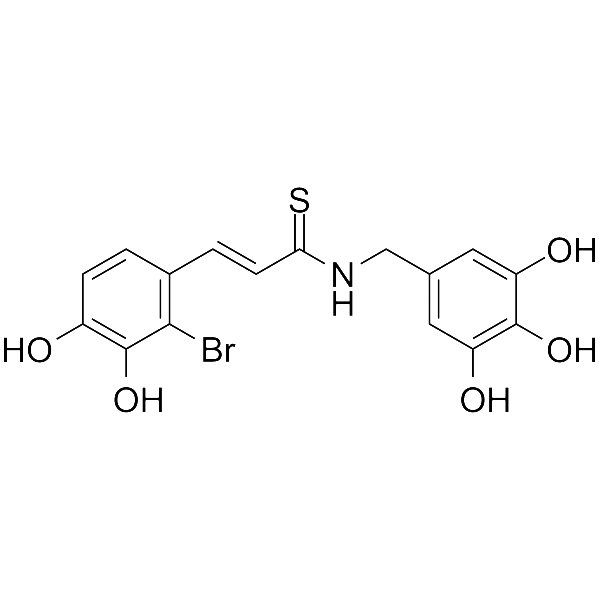
NT219 is a potent and dual inhibitor of insulin receptor substrates 1/2 (IRS1/2) and STAT3. IRS1/2 and STAT3 are major signaling junctions regulated by various oncogenes. NT219 affects IRS1/2 degradation and inhibits STAT3 phosphorylation. NT219 has the potential for the research of cancer diseases.
For research use only. We do not sell to patients.
- Purity : 98.57%
- CAS No.: 1198078-60-2
- Formula: C16H14BrNO5S
- Molecular Weight:412.26
-
Storage:
-20°C, sealed storage, away from moisture and light
* In solvent : -80°C, 6 months; -20°C, 1 month (sealed storage, away from moisture and light)

To place orders, for customer services and technical support, please contact: MedChemExpress USA
Tel: 609-228-6898 E-mail: [email protected] [email protected]


-
 Biological Activity
-
Chemical Information
-
Solvent & Solubility
- Protocols
- Purity & Documentation
- References
-
 Help & FAQs


-
HY-112288
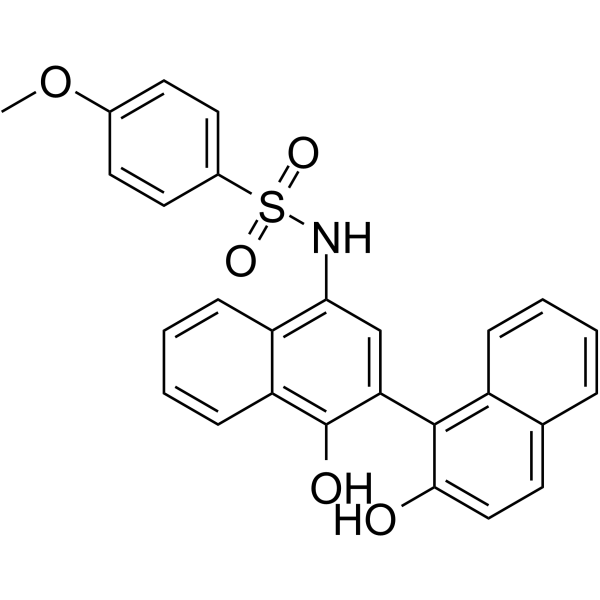
C188-9STAT3 Inhibitor -
HY-13919
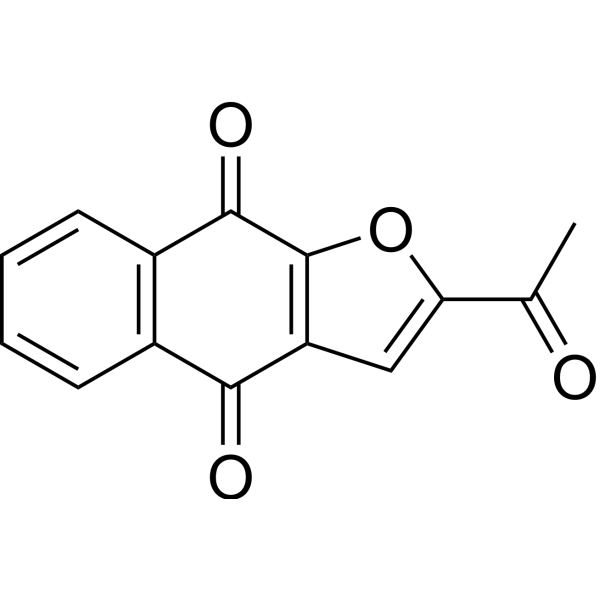
NapabucasinSTAT3 Inhibitor -

HY-156730
KT-333STAT3 Degrader -

HY-108743
Insulin degludecInsulin Analogue -

HY-P99665
Insulin efsitora alfaInsulin Receptor Agonist -

HY-169360
SD-436STAT3 PROTAC Degrader -

HY-164546
WB436BSTAT3 Inhibitor -
HY-15481
KU14RKATP Channel Inhibitor -
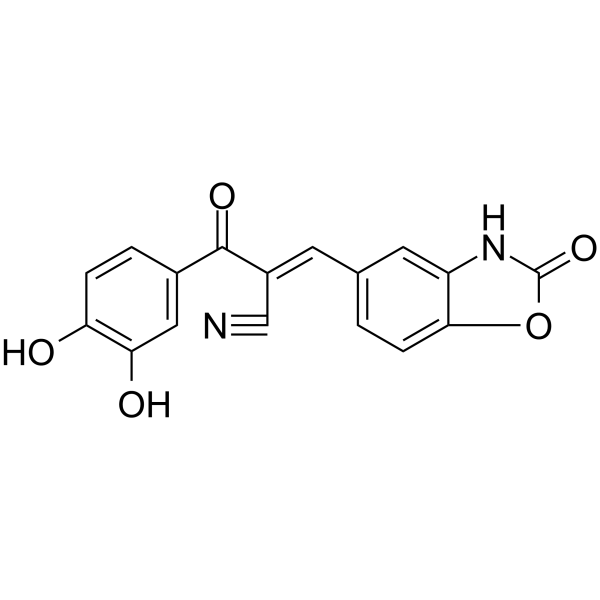
HY-112720
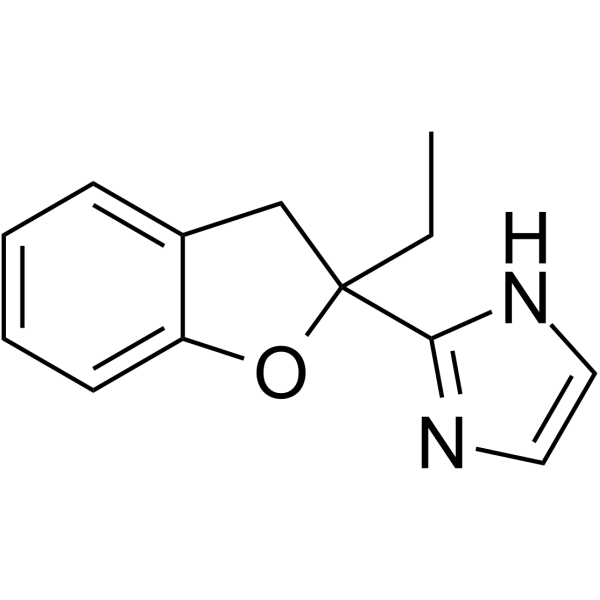
AGL-2263Insulin Receptor Inhibitor -
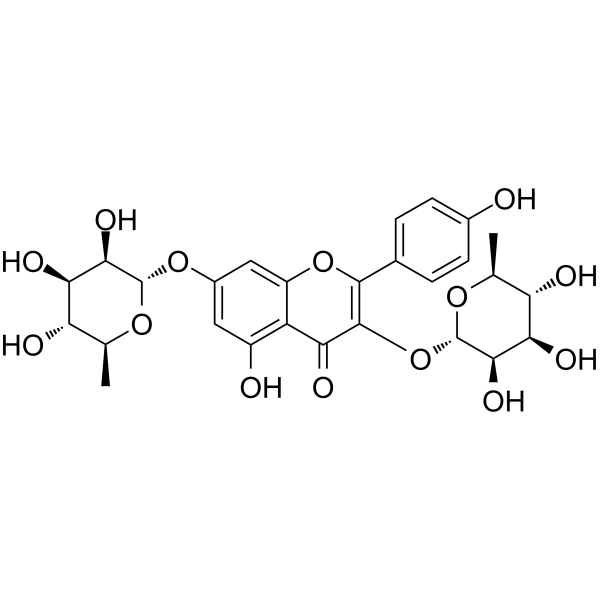
HY-N0628
KaempferitrinInsulin Receptor Activator -
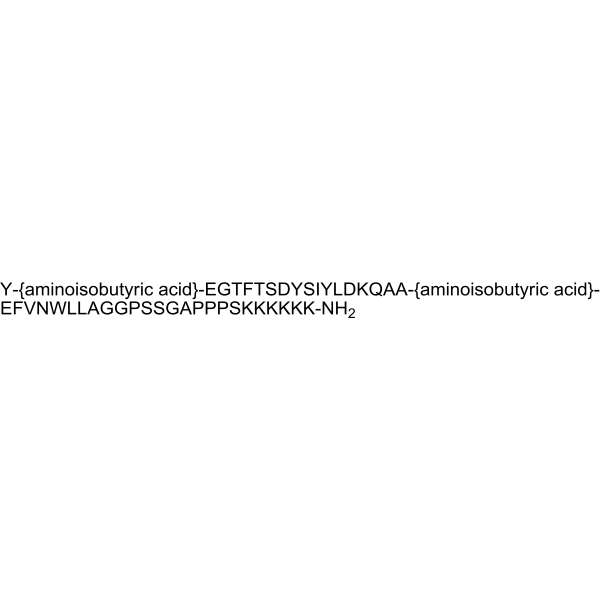
HY-P3255
DA-JC4GLP-1/GIP Receptor Agonist -

HY-P99530
Valanafusp alfaAnti-HIR IDUA-Fusion mAb
Publications Citing Use of MedChemExpress (MCE) NT219
More

Biological Activity
Description
In Vitro
NT219 (5 μM, 8 or 12 days) suppresses cancer stem cell viability as monotherapy and synergizes with sotorasib to induce disintegration of established mKRAS (G12C) NSCLC spheroids[2].
MedChemExpress (MCE) has not independently confirmed the accuracy of these methods. They are for reference only. Further protocols information, click here.
-
Cell Line:H358 (NSCLC) cells
-
Concentration:5 µM
-
Incubation Time:8 or 12 h
-
Result:Synergized with sotorasib to suppress established spheroids. Demonstrated a significant effect on cell viability in monotherapy treatment of established H358 (NSCLC) spheroids harboring G12C KRAS mutation.
In Vivo
MedChemExpress (MCE) has not independently confirmed the accuracy of these methods. They are for reference only.
Clinical Trial
| NCT Number | Sponsor | Condition | Start Date |
Phase

|
|---|---|---|---|---|
| NCT01329991 | Plexxikon| | 2011-05 | PHASE1 |


Chemical Information
-
CAS No. 1198078-60-2
-
Appearance Solid
-
Molecular Weight 412.26
-
Formula C16H14BrNO5S
-
Color Yellow to brown
-
SMILES
OC(C=C1CNC(/C=C/C2=C(C(O)=C(C=C2)O)Br)=S)=C(C(O)=C1)O
-
Shipping
Room temperature in continental US; may vary elsewhere.
-
Storage
-20°C, sealed storage, away from moisture and light
* In solvent : -80°C, 6 months; -20°C, 1 month (sealed storage, away from moisture and light)


Publications (1)
-
Journal Impact Factor
-
Most Recent
-
Neurotherapeutics
Reticuline modulates astrocyte and microglial responses to enhance prognosis after traumatic brain injury. [Abstract]2025 Aug 5:e00709. PMID: 40769849


Solvent & Solubility
In Vitro:
DMSO : ≥ 100 mg/mL (242.57 mM; Hygroscopic DMSO has a significant impact on the solubility of product, please use newly opened DMSO)
* "≥" means soluble, but saturation unknown.
Please refer to the solubility information to select the appropriate solvent. Once prepared, please aliquot and store the solution to prevent product inactivation from repeated freeze-thaw cycles.
Storage method and period of stock solution: -80°C, 6 months; -20°C, 1 month (sealed storage, away from moisture and light). When stored at -80°C, please use it within 6 months. When stored at -20°C, please use it within 1 month.
Please refer to the solubility information to select the appropriate solvent. Once prepared, please aliquot and store the solution to prevent product inactivation from repeated freeze-thaw cycles.
Storage method and period of stock solution: -80°C, 6 months; -20°C, 1 month (sealed storage, away from moisture and light). When stored at -80°C, please use it within 6 months. When stored at -20°C, please use it within 1 month.
Concentration (start) × Volume (start) = Concentration (final) × Volume (final)

Protocols
-
Kinase activity and phosphorylation assays
Kinase activity assays measure the ability of kinases to transfer phosphate groups from ATP to specific substrates, while phosphorylation assays detect the presence and levels of phosphorylated proteins. Common methods include radiolabeled ATP incorporation (e. g. ,), ADP release detection via bioluminescence (e. g. ,[3]), enzyme-linked immunosorbent assays (ELISA) for phospho-specific epitopes (e. g. ,[6]), and microtiter-based formats for high-throughput screening (e. g. ,[8]). The ADP-Glo assay quantifies kinase activity by measuring ADP produced during phosphorylation using a luciferase-based system. Radiometric assays involve autoradiography or scintillation counting after incorporation of 32P-labeled ATP into substrate proteins. ELISA-based approaches rely on phospho-specific antibodies to detect activated kinases in cell lysates or purified samples.
-
Western Blot
Western blotting (WB) is a commonly used experimental method in molecular biology, biochemistry, and immunogenetics for identifying and quantifying target proteins. It combines gel electrophoresis with immunoassay, enabling researchers to analyze protein expression, post-translational modifications, and molecular weight.
-
Research Protocol for Endocrine Diseases
Endocrine diseases often arise from disrupted hormone production, hormone signaling, or target-tissue responsiveness; for diabetes-focused endocrine disease models, insulin signaling regulates glucose uptake, hepatic glucose output, lipid metabolism, and β-cell compensation. Type 2 diabetes develops through interacting defects in insulin resistance, β-cell dysfunction, adipose inflammation, hepatic glucose overproduction, altered incretin signaling, and ectopic lipid metabolism. A major unresolved question is whether endocrine dysfunction is driven primarily by target-tissue insulin resistance, intrinsic β-cell failure, immune/inflammatory stress, or combined multi-organ failure that differs by disease stage.
-
Protocol for Kinase activity and phosphorylation assays
Kinase activity assays measure transfer of phosphate from ATP to a protein or peptide substrate, generating phosphorylated substrate, ADP, or incorporated radiolabeled phosphate as the readout; phosphorylation assays measure site-specific phosphorylation in cells or tissues as a proxy for kinase-pathway activation, inhibition, or substrate regulation. Phosphorylation can be detected by phospho-specific Western blot, immunoprecipitation kinase assay, phospho-immunofluorescence, phospho-flow cytometry, luminescent ADP detection, radiolabeled ATP incorporation, or reporter-based pathway assays, and these readouts can be applied to cancer cells, primary neurons, mouse tumors, organoids, inflammatory macrophages, ferroptosis studies, and mitophagy studies when the kinase target is biologically relevant.


Purity & Documentation
-
Data Sheet (274 KB)
-
SDS (252 KB)
- English - EN (252 KB)
- Français - FR (252 KB)
- Deutsch - DE (252 KB)
- Norwegian - NO (252 KB)
- Español - ES (252 KB)
- Swedish - SV (252 KB)
- Italian - IT (252 KB)
- Korean - KR (252 KB)
- Portuguese - PT (252 KB)
-
Handling Instructions (2659 KB)
References


Complete Stock Solution Preparation Table
Please refer to the solubility information to select the appropriate solvent. Once prepared, please aliquot and store the solution to prevent product inactivation from repeated freeze-thaw cycles.
Storage method and period of stock solution: -80°C, 6 months; -20°C, 1 month (sealed storage, away from moisture and light). When stored at -80°C, please use it within 6 months. When stored at -20°C, please use it within 1 month.
| Optional Solvent | Concentration Solvent Mass | 1 mg | 5 mg | 10 mg | 25 mg |
|---|---|---|---|---|---|
| DMSO | 1 mM | 2.4257 mL | 12.1283 mL | 24.2565 mL | 60.6413 mL |
| 5 mM | 0.4851 mL | 2.4257 mL | 4.8513 mL | 12.1283 mL | |
| 10 mM | 0.2426 mL | 1.2128 mL | 2.4257 mL | 6.0641 mL | |
| 15 mM | 0.1617 mL | 0.8086 mL | 1.6171 mL | 4.0428 mL | |
| 20 mM | 0.1213 mL | 0.6064 mL | 1.2128 mL | 3.0321 mL | |
| 25 mM | 0.0970 mL | 0.4851 mL | 0.9703 mL | 2.4257 mL | |
| 30 mM | 0.0809 mL | 0.4043 mL | 0.8086 mL | 2.0214 mL | |
| 40 mM | 0.0606 mL | 0.3032 mL | 0.6064 mL | 1.5160 mL | |
| 50 mM | 0.0485 mL | 0.2426 mL | 0.4851 mL | 1.2128 mL | |
| 60 mM | 0.0404 mL | 0.2021 mL | 0.4043 mL | 1.0107 mL | |
| 80 mM | 0.0303 mL | 0.1516 mL | 0.3032 mL | 0.7580 mL | |
| 100 mM | 0.0243 mL | 0.1213 mL | 0.2426 mL | 0.6064 mL |


NT219 Related Classifications
HY-145935 Related Classifications
 Powered by Bioz