



RO-9187
Based on 5 publication(s) in Google Scholar
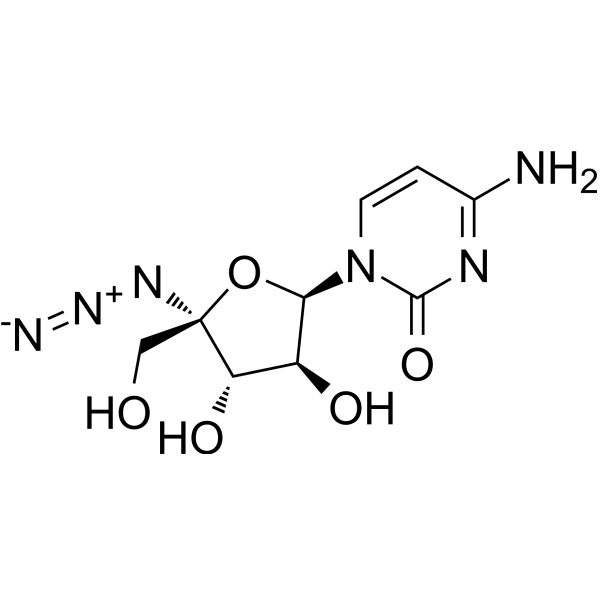
RO-9187 is a potent inhibitor of HCV virus replication with an IC50 of 171 nM. RO-9187 is a click chemistry reagent, it contains an Azide group and can undergo copper-catalyzed azide-alkyne cycloaddition reaction (CuAAc) with molecules containing Alkyne groups. It can also undergo strain-promoted alkyne-azide cycloaddition (SPAAC) reactions with molecules containing DBCO or BCN groups.
For research use only. We do not sell to patients.
- Purity : 98.39%
- CAS No.: 876708-03-1
- Formula: C9H12N6O5
- Molecular Weight:284.23
-
Storage:Powder -20°C, 3 years , 4°C, 2 years ; In solvent -80°C, 2 years , -20°C, 1 year

To place orders, for customer services and technical support, please contact: MedChemExpress USA
Tel: 609-228-6898 E-mail: [email protected] [email protected]


-
 Biological Activity
-
Chemical Information
-
Solvent & Solubility
- Protocols
- Purity & Documentation
- References
-
 Help & FAQs


-
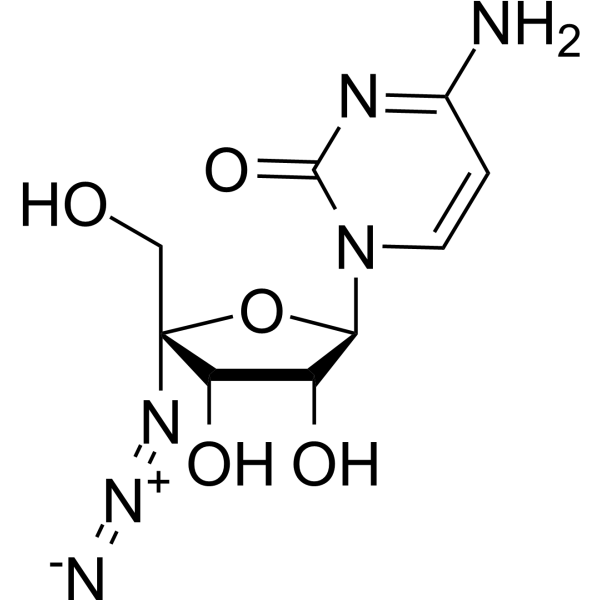
HY-10444
R-1479RdRp Inhibitor -
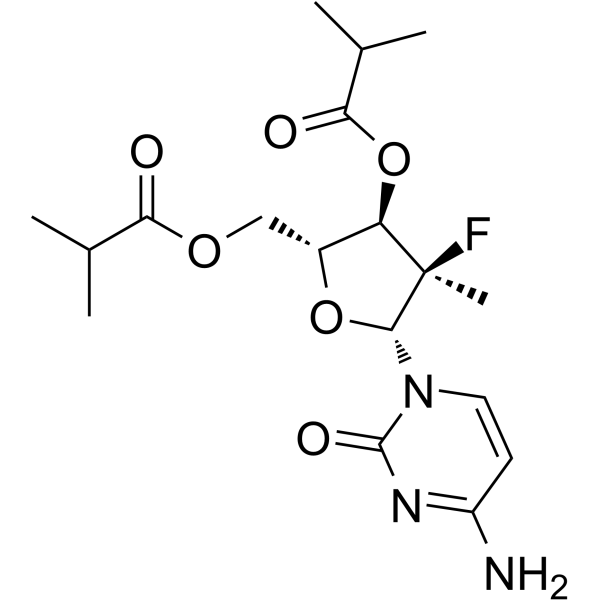
HY-10240
Mericitabine -
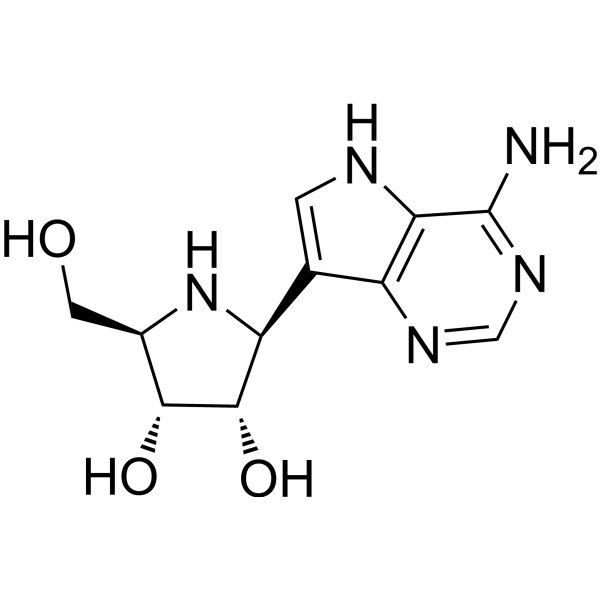
HY-18649A
GalidesivirRdRp Inhibitor -
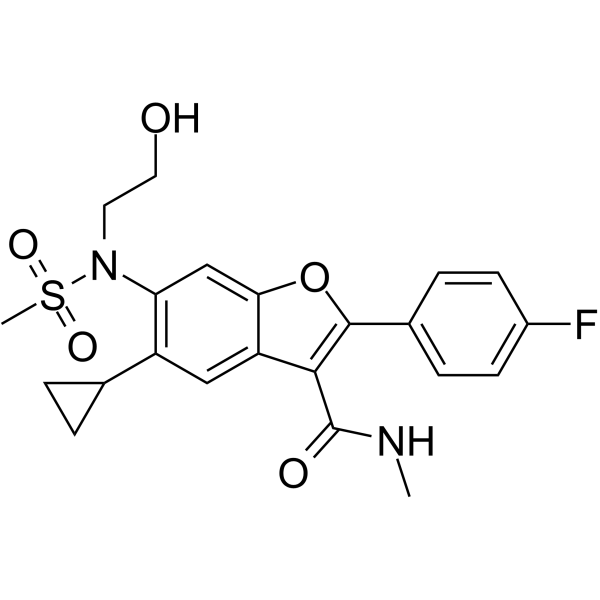
HY-14775
NesbuvirHCV Inhibitor -
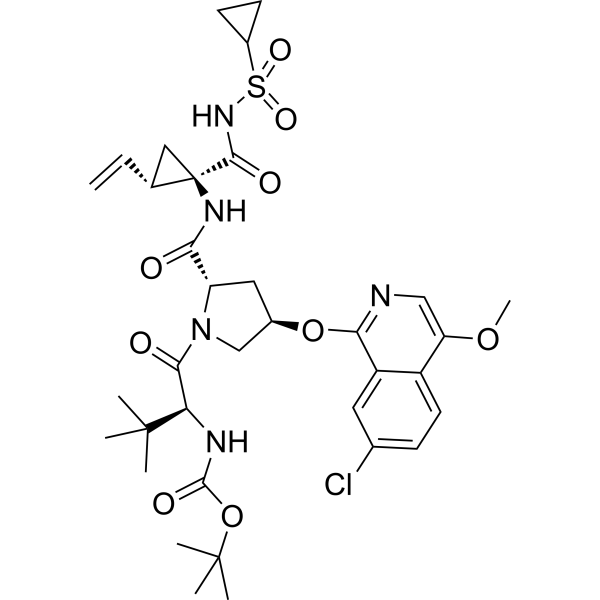
HY-14434
AsunaprevirHCV Protease Inhibitor -
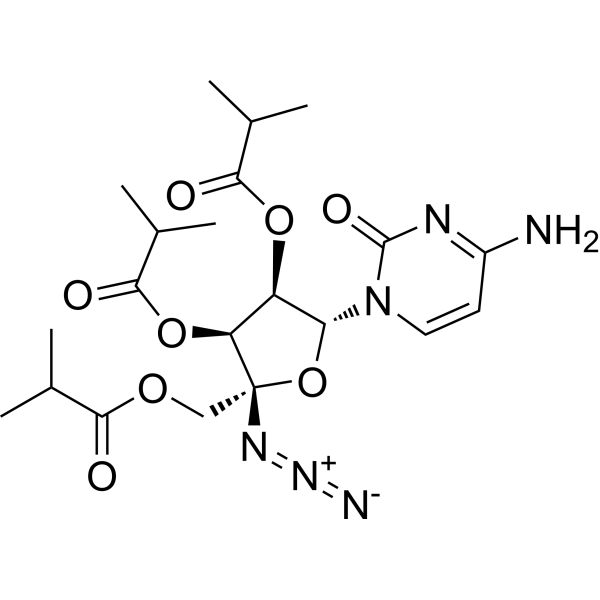
HY-10443
BalapiravirAnti-HCV Agent -
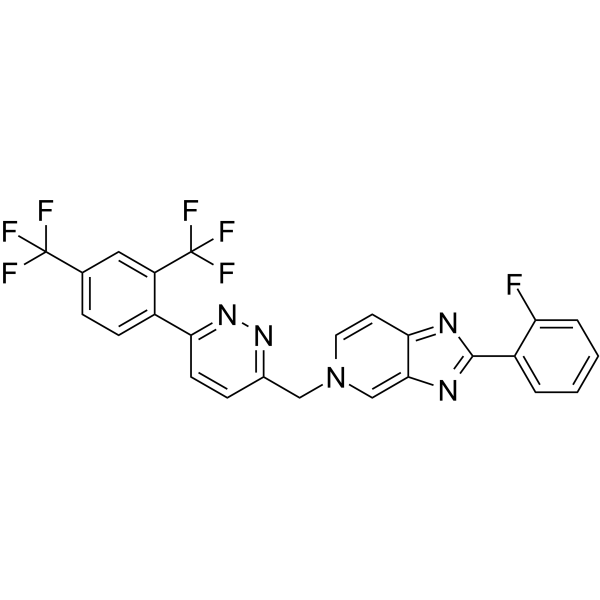
HY-10544
Tegobuvir -
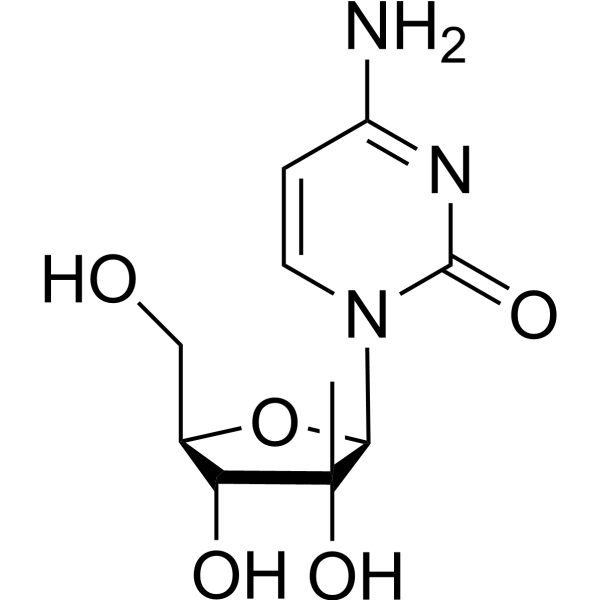
HY-10468
NM107HCV NS5B Polymerase Inhibitor -
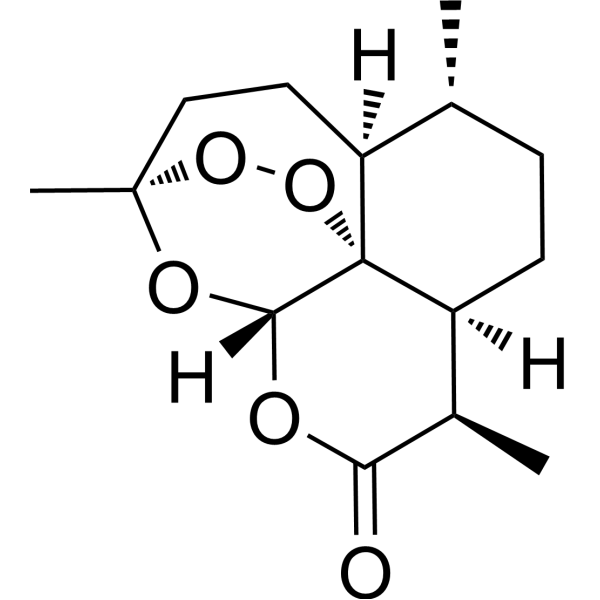
HY-B0094
ArtemisininParasite Inhibitor -
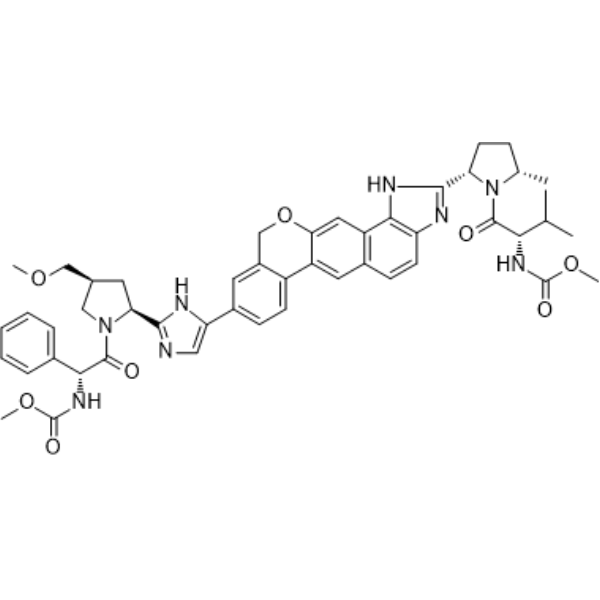
HY-12530
VelpatasvirHCV NS5A Inhibitor -
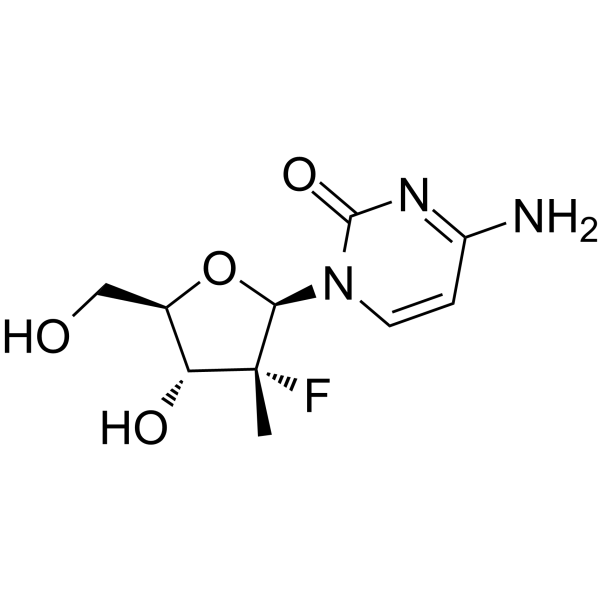
HY-10165
PSI-6130HCV NS5B Polymerase Inhibitor -
HY-10241
SimeprevirHCV NS3/4A Inhibitor
Publications Citing Use of MedChemExpress (MCE) RO-9187
More

Biological Activity
Description
IC50 & Target
IC50: 171 nM (HCV)[1]
Cellular Effect
|
Cell Line

|
Type | Value | Description | References |
|---|---|---|---|---|
| HeLa | CC50 |
>100 μM
Compound: 1c
|
Cytotoxicity against human HeLa cells assessed as cell viability by CellTiter-Glo luminescent assay
Cytotoxicity against human HeLa cells assessed as cell viability by CellTiter-Glo luminescent assay
|
[PMID: 25667954] |
| HeLa | EC50 |
0.52 μM
Compound: 1c
|
Antiviral activity against Respiratory syncytial virus subgenomic replicon system in 395 HeLa cells assessed as reduction in viral replication after 7 days by renilla luciferase assay
Antiviral activity against Respiratory syncytial virus subgenomic replicon system in 395 HeLa cells assessed as reduction in viral replication after 7 days by renilla luciferase assay
|
[PMID: 25667954] |
| PBMC | EC50 |
0.018 nM
Compound: RO-9187
|
Antiviral activity against HIV-2 D194 infected in PBMC assessed as inhibition of viral growth
Antiviral activity against HIV-2 D194 infected in PBMC assessed as inhibition of viral growth
|
[PMID: 37229831] |
In Vitro
RO-9187 is excellent substrates for deoxycytidine kinase and is phosphorylated with efficiencies up to 3-fold higher than deoxycytidine. RO-9187 inhibits RNA synthesis by HCV polymerases from either HCV genotypes 1a and 1b or containing S96T or S282T point mutations with similar potencies, suggesting no cross-resistance with either R1479 (4′-azidocytidine) or 2′-C-methyl nucleosides. The formation of RO-9187-TP increased in a time- and dose-dependent manner. The maximal triphosphate concentration at 24 h is 87 pmol/106 cells with half-maximal triphosphate formation achieved at 12 μM RO-9187[1].
MedChemExpress (MCE) has not independently confirmed the accuracy of these methods. They are for reference only.
In Vivo
MedChemExpress (MCE) has not independently confirmed the accuracy of these methods. They are for reference only.


Chemical Information
-
CAS No. 876708-03-1
-
Appearance Solid
-
Molecular Weight 284.23
-
Formula C9H12N6O5
-
Color Light yellow to yellow
-
SMILES
O=C1N=C(N)C=CN1[C@H]2[C@@H](O)[C@H](O)[C@](CO)(N=[N+]=[N-])O2
-
Shipping
Room temperature in continental US; may vary elsewhere.
-
Storage
Powder -20°C 3 years 4°C 2 years In solvent -80°C 2 years -20°C 1 year


Publications (5)
-
Journal Impact Factor
-
Most Recent
-
Antiviral Res
Development and characterization of recombinant tick-borne encephalitis virus expressing mCherry reporter protein: A new tool for high-throughput screening of antiviral compounds, and neutralizing antibody assays. [Abstract]2021 Jan:185:104968. PMID: 33157129 -
Antiviral Res
Antiviral candidates against the hepatitis E virus (HEV) and their combinations inhibit HEV growth in in vitro. [Abstract]2019 Oct:170:104570. PMID: 31362004 -
Antiviral Res
Structure-activity relationships of nucleoside analogues for inhibition of tick-borne encephalitis virus. [Abstract]2016 Sep:133:119-29. PMID: 27476046 -
J Virol
Escape of Tick-Borne Flavivirus from 2'- C-Methylated Nucleoside Antivirals Is Mediated by a Single Conservative Mutation in NS5 That Has a Dramatic Effect on Viral Fitness. [Abstract]2017 Oct 13;91(21):e01028-17. PMID: 28814513 -
J Infect Dis
2016 Sep 1;214(5):707-11. PMID: 27234417


Solvent & Solubility
In Vitro:
DMSO : 100 mg/mL (351.83 mM; Need ultrasonic; Hygroscopic DMSO has a significant impact on the solubility of product, please use newly opened DMSO)
H2O : 5 mg/mL (17.59 mM; ultrasonic and warming and heat to 60°C)
Please refer to the solubility information to select the appropriate solvent. Once prepared, please aliquot and store the solution to prevent product inactivation from repeated freeze-thaw cycles.
Storage method and period of stock solution: -80°C, 2 years; -20°C, 1 year. When stored at -80°C, please use it within 2 years. When stored at -20°C, please use it within 1 year.
* Note: If you choose water as the stock solution, please dilute it to the working solution, then filter and sterilize it with a 0.22 μm filter before use.
Please refer to the solubility information to select the appropriate solvent. Once prepared, please aliquot and store the solution to prevent product inactivation from repeated freeze-thaw cycles.
Storage method and period of stock solution: -80°C, 2 years; -20°C, 1 year. When stored at -80°C, please use it within 2 years. When stored at -20°C, please use it within 1 year.
* Note: If you choose water as the stock solution, please dilute it to the working solution, then filter and sterilize it with a 0.22 μm filter before use.
Concentration (start) × Volume (start) = Concentration (final) × Volume (final)
In Vivo:
Select the appropriate dissolution method based on your experimental animal and administration route.
- For the following dissolution methods, please ensure to first prepare a clear stock solution using an In Vitro approach and then sequentially add co-solvents:
- To ensure reliable experimental results, the clarified stock solution can be appropriately stored based on storage conditions. As for the working solution for In Vivo experiments, it is recommended to prepare freshly and use it on the same day.
- The percentages shown for the solvents indicate their volumetric ratio in the final prepared solution. If precipitation or phase separation occurs during preparation, heat and/or sonication can be used to aid dissolution.
Add each solvent one by one: 10% DMSO 40% PEG300 5% Tween-80 45% Saline
Solubility: 2.5 mg/mL (8.80 mM); Clear solution; Need ultrasonic
This protocol yields a clear solution of 2.5 mg/mL.
Taking 1 mL working solution as an example, add 100 μL DMSO stock solution (25.0 mg/mL) to 400 μL PEG300, and mix evenly; then add 50 μL Tween-80 and mix evenly; then add 450 μL Saline to adjust the volume to 1 mL.
Preparation of Saline: Dissolve 0.9 g sodium chloride in ddH₂O and dilute to 100 mL to obtain a clear Saline solution.
Add each solvent one by one: 10% DMSO 90% (20% SBE-β-CD in Saline)
Solubility: 2.5 mg/mL (8.80 mM); Clear solution; Need ultrasonic
This protocol yields a clear solution of 2.5 mg/mL.
Taking 1 mL working solution as an example, add 100 μL DMSO stock solution (25.0 mg/mL) to 900 μL 20% SBE-β-CD in Saline, and mix evenly.
Preparation of 20% SBE-β-CD in Saline (4°C, storage for one week): 2 g SBE-β-CD powder is dissolved in 10 mL Saline, completely dissolve until clear.
For the following dissolution methods, please prepare the working solution directly:
It is recommended to prepare fresh solutions and use them promptly within a short period of time.
The percentages shown for the solvents indicate their volumetric ratio in the final prepared solution. If precipitation or phase separation occurs during preparation, heat and/or sonication can be used to aid dissolution.
Add each solvent one by one: PBS
Solubility: 5.88 mg/mL (20.69 mM); Clear solution; Need ultrasonic and warming and heat to 60°C
In Vivo Dissolution Calculator
Please enter the basic information of animal experiments:
-
-
-
-
Recommended: Prepare an additional quantity of animals to account for potential losses during experiments.
Please enter your animal formula composition:
-
%DMSO +
Recommended: Keep the proportion of DMSO in working solution below 2% if your animal is weak.
-
%+
-
+%Tween-80 + +
-
%Saline +
The co-solvents required include: DMSO, . All of co-solvents are available by MedChemExpress (MCE). , Tween 80. All of co-solvents are available by MedChemExpress (MCE).
Working solution concentration: 0.22 mg/mL
Method for preparing stock solution: mg drug dissolved in μL DMSO. Stock solution concentration: mg/mL.
1. Take μL DMSO stock solution;
2. Add μL .
μL , mix evenly;
3. Then add μL Tween 80, mix evenly;
4. Then add μL
Please ensure that the stock solution in the first step is dissolved to a clear state, and add co-solvents in sequence. You can use ultrasonic heating (ultrasonic cleaner, recommended frequency 20-40 kHz), vortexing, etc. to assist dissolution.


Purity & Documentation
-
Data Sheet (277 KB)
-
SDS (251 KB)
- English - EN (251 KB)
- Français - FR (251 KB)
- Deutsch - DE (251 KB)
- Norwegian - NO (251 KB)
- Español - ES (251 KB)
- Swedish - SV (251 KB)
- Italian - IT (251 KB)
- Korean - KR (251 KB)
- Portuguese - PT (251 KB)
-
Handling Instructions (2659 KB)
References


Complete Stock Solution Preparation Table
Please refer to the solubility information to select the appropriate solvent. Once prepared, please aliquot and store the solution to prevent product inactivation from repeated freeze-thaw cycles.
Storage method and period of stock solution: -80°C, 2 years; -20°C, 1 year. When stored at -80°C, please use it within 2 years. When stored at -20°C, please use it within 1 year.
| Optional Solvent | Concentration Solvent Mass | 1 mg | 5 mg | 10 mg | 25 mg |
|---|---|---|---|---|---|
| H2O / DMSO | 1 mM | 3.5183 mL | 17.5914 mL | 35.1828 mL | 87.9569 mL |
| 5 mM | 0.7037 mL | 3.5183 mL | 7.0366 mL | 17.5914 mL | |
| 10 mM | 0.3518 mL | 1.7591 mL | 3.5183 mL | 8.7957 mL | |
| 15 mM | 0.2346 mL | 1.1728 mL | 2.3455 mL | 5.8638 mL | |
| DMSO | 20 mM | 0.1759 mL | 0.8796 mL | 1.7591 mL | 4.3978 mL |
| 25 mM | 0.1407 mL | 0.7037 mL | 1.4073 mL | 3.5183 mL | |
| 30 mM | 0.1173 mL | 0.5864 mL | 1.1728 mL | 2.9319 mL | |
| 40 mM | 0.0880 mL | 0.4398 mL | 0.8796 mL | 2.1989 mL | |
| 50 mM | 0.0704 mL | 0.3518 mL | 0.7037 mL | 1.7591 mL | |
| 60 mM | 0.0586 mL | 0.2932 mL | 0.5864 mL | 1.4659 mL | |
| 80 mM | 0.0440 mL | 0.2199 mL | 0.4398 mL | 1.0995 mL | |
| 100 mM | 0.0352 mL | 0.1759 mL | 0.3518 mL | 0.8796 mL |
* Note: If you choose water as the stock solution, please dilute it to the working solution, then filter and sterilize it with a 0.22 μm filter before use.


RO-9187 Related Classifications
HY-10870 Related Classifications
 Powered by Bioz