



UPF 1069
Based on 1 publication(s) in Google Scholar
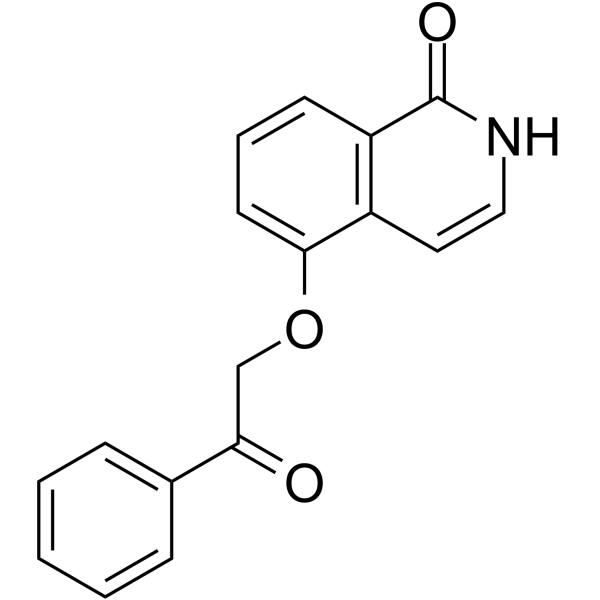
UPF 1069 is a PARP inhibitor, with IC50s of 8 and 0.3 μM for PARP-1 and PARP-2, respectively.
For research use only. We do not sell to patients.
- Purity : 99.02%
- CAS No.: 1048371-03-4
- Formula: C17H13NO3
- Molecular Weight:279.29
-
Storage:Powder -20°C, 3 years , 4°C, 2 years ; In solvent -80°C, 2 years , -20°C, 1 year

To place orders, for customer services and technical support, please contact: MedChemExpress USA
Tel: 609-228-6898 E-mail: [email protected] [email protected]


-
 Biological Activity
-
Chemical Information
-
Solvent & Solubility
- Purity & Documentation
- References
-
 Help & FAQs


-
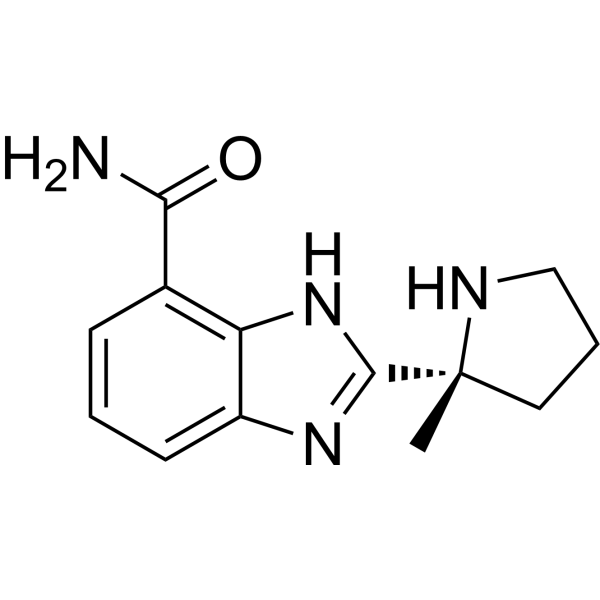
HY-10129
VeliparibPARP Inhibitor -
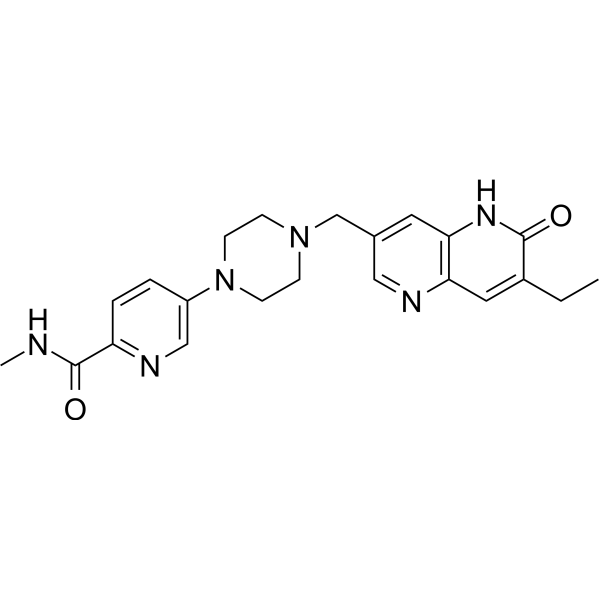
HY-132167
SaruparibPARP Inhibitor -
HY-13536
AZD-2461PARP Inhibitor -
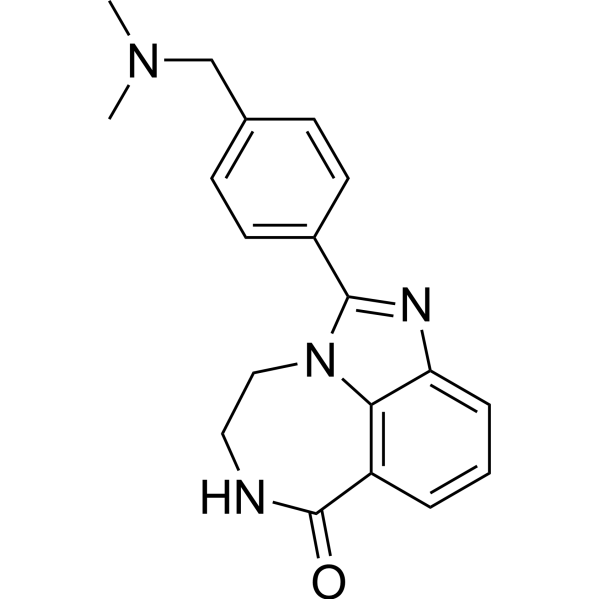
HY-12032
AG14361PARP Inhibitor -
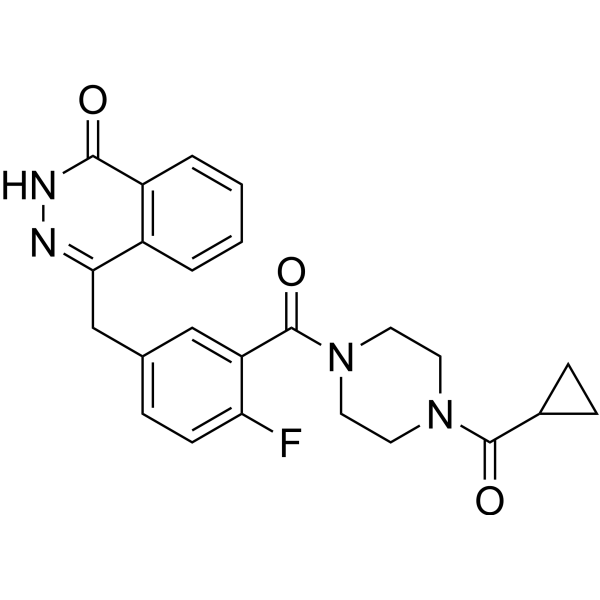
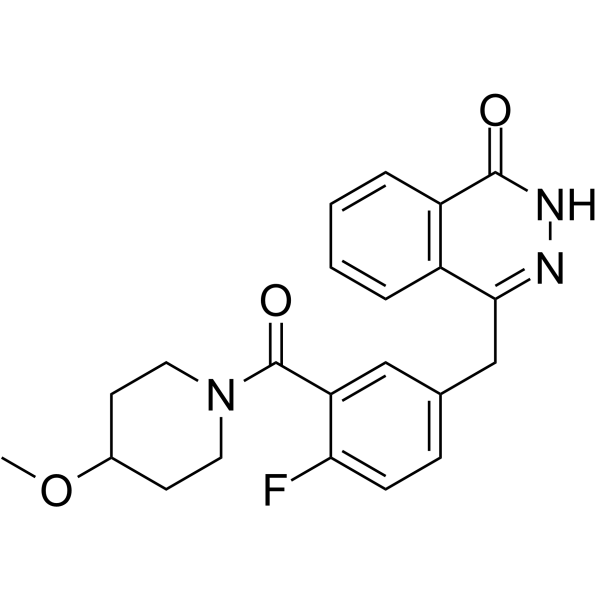
HY-10162
OlaparibPARP Inhibitor -
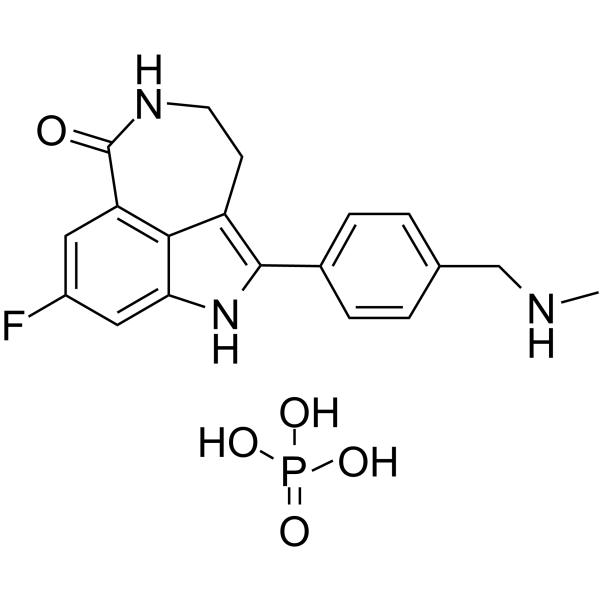
HY-10617
Rucaparib phosphatePARP Inhibitor -
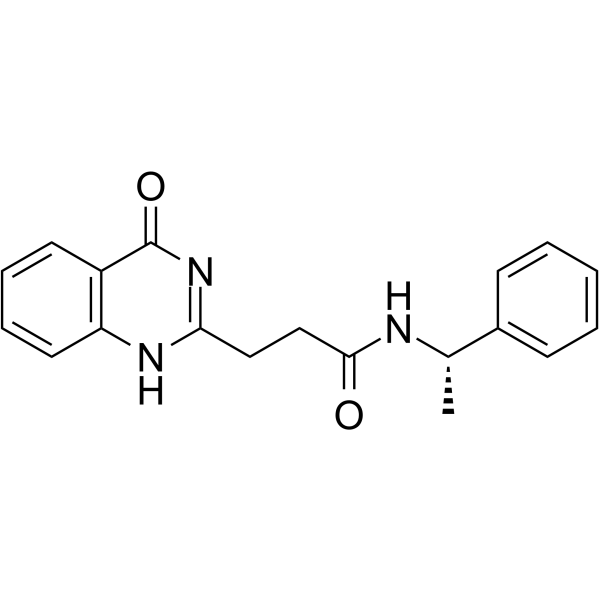
HY-100225
ME0328ARTD3/PARP3 Inhibitor -
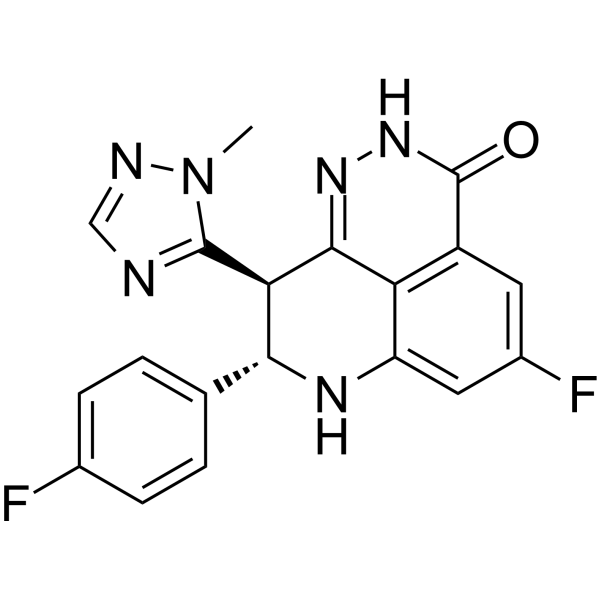
HY-16106
TalazoparibPARP Inhibitor -
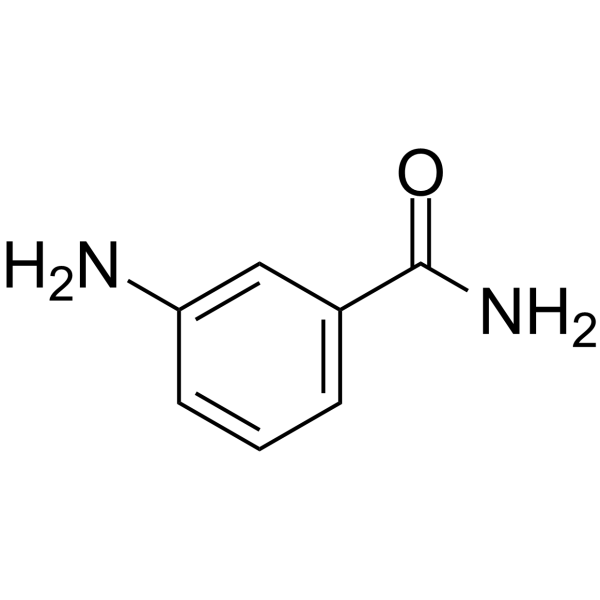
HY-12022
3-AminobenzamidePARP Inhibitor -
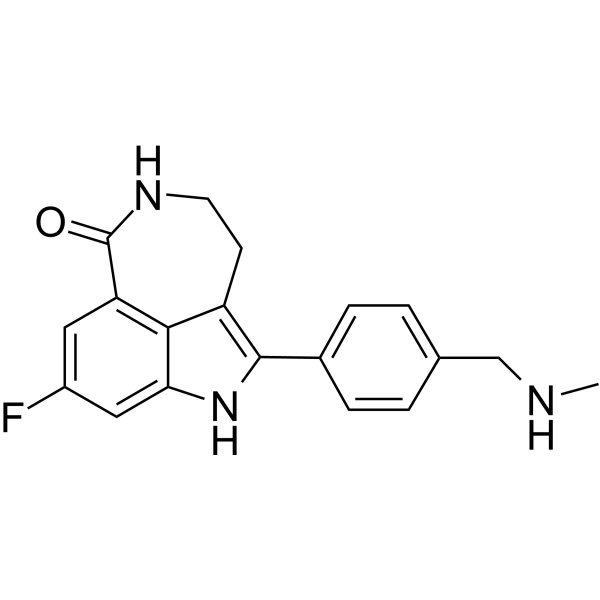
HY-10617A
RucaparibPARP Inhibitor -
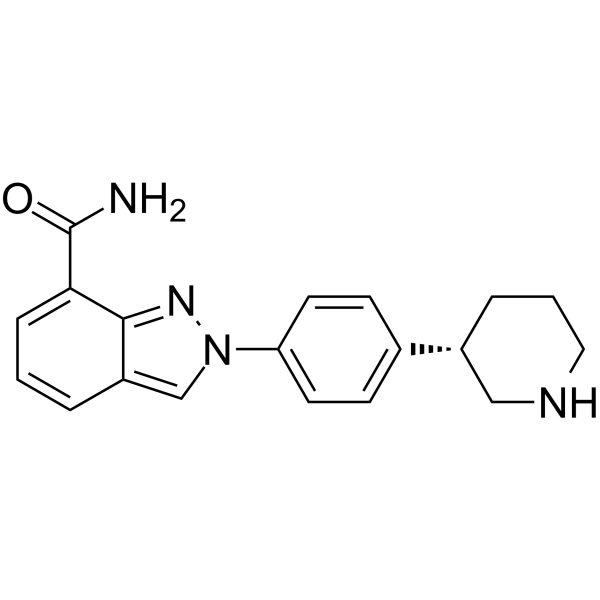
HY-10619
NiraparibPARP Inhibitor -
HY-13688A
PJ34PARP Inhibitor
Publications Citing Use of MedChemExpress (MCE) UPF 1069
More

Biological Activity
Description
|
PARP-2 0.3 μM (IC50) |
PARP-1 8 μM (IC50) |
In Vitro
UPF 1069 (Compound 55) is a PARP inhibitor, with IC50s of 8 and 0.3 μM for PARP-1 and PARP-2, respectively[1]. UPF 1069 (1 μM) reduces the residual PARP activity by approximately 80% of PARP-1-deficient fibroblasts, but only slightly inhibits the enzymic activity in wild-type fibroblasts. UPF 1069 (0.1-1 μM) markedly enhances CA1 hippocampal damage. UPF 1069 (10 μM) also exacerbates oxygen-glucose deprivation (OGD) damage in organotypic hippocampal slices. However, UPF 1069 alleviates the damage cuased by OGD in mixed cortical cell cultures, shows a potent neuroprotective activity both at a concentration (1 μM) selectively acting on PARP-2 and at a concentration (10 μM) inhibiting both PARP-1 and PARP-2 activities[2].
MedChemExpress (MCE) has not independently confirmed the accuracy of these methods. They are for reference only.


Chemical Information
-
CAS No. 1048371-03-4
-
Appearance Solid
-
Molecular Weight 279.29
-
Formula C17H13NO3
-
Color White to off-white
-
SMILES
O=C1NC=CC2=C1C=CC=C2OCC(C3=CC=CC=C3)=O
-
Shipping
Room temperature in continental US; may vary elsewhere.
-
Storage
Powder -20°C 3 years 4°C 2 years In solvent -80°C 2 years -20°C 1 year


Publications (1)
-
Journal Impact Factor
-
Most Recent
-
J Mol Med (Berl)
2019 Aug;97(8):1183-1193. PMID: 31201471


Solvent & Solubility
In Vitro:
DMSO : ≥ 100 mg/mL (358.05 mM; Hygroscopic DMSO has a significant impact on the solubility of product, please use newly opened DMSO)
* "≥" means soluble, but saturation unknown.
Please refer to the solubility information to select the appropriate solvent. Once prepared, please aliquot and store the solution to prevent product inactivation from repeated freeze-thaw cycles.
Storage method and period of stock solution: -80°C, 2 years; -20°C, 1 year. When stored at -80°C, please use it within 2 years. When stored at -20°C, please use it within 1 year.
Please refer to the solubility information to select the appropriate solvent. Once prepared, please aliquot and store the solution to prevent product inactivation from repeated freeze-thaw cycles.
Storage method and period of stock solution: -80°C, 2 years; -20°C, 1 year. When stored at -80°C, please use it within 2 years. When stored at -20°C, please use it within 1 year.
Concentration (start) × Volume (start) = Concentration (final) × Volume (final)
In Vivo:
Select the appropriate dissolution method based on your experimental animal and administration route.
- For the following dissolution methods, please ensure to first prepare a clear stock solution using an In Vitro approach and then sequentially add co-solvents:
- To ensure reliable experimental results, the clarified stock solution can be appropriately stored based on storage conditions. As for the working solution for In Vivo experiments, it is recommended to prepare freshly and use it on the same day.
- The percentages shown for the solvents indicate their volumetric ratio in the final prepared solution. If precipitation or phase separation occurs during preparation, heat and/or sonication can be used to aid dissolution.
Add each solvent one by one: 10% DMSO 40% PEG300 5% Tween-80 45% Saline
Solubility: ≥ 2.5 mg/mL (8.95 mM); Clear solution
This protocol yields a clear solution of ≥ 2.5 mg/mL (saturation unknown).
Taking 1 mL working solution as an example, add 100 μL DMSO stock solution (25.0 mg/mL) to 400 μL PEG300, and mix evenly; then add 50 μL Tween-80 and mix evenly; then add 450 μL Saline to adjust the volume to 1 mL.
Preparation of Saline: Dissolve 0.9 g sodium chloride in ddH₂O and dilute to 100 mL to obtain a clear Saline solution.
In Vivo Dissolution Calculator
Please enter the basic information of animal experiments:
-
-
-
-
Recommended: Prepare an additional quantity of animals to account for potential losses during experiments.
Please enter your animal formula composition:
-
%DMSO +
Recommended: Keep the proportion of DMSO in working solution below 2% if your animal is weak.
-
%+
-
+%Tween-80 + +
-
%Saline +
The co-solvents required include: DMSO, . All of co-solvents are available by MedChemExpress (MCE). , Tween 80. All of co-solvents are available by MedChemExpress (MCE).
Working solution concentration: 0.22 mg/mL
Method for preparing stock solution: mg drug dissolved in μL DMSO. Stock solution concentration: mg/mL.
1. Take μL DMSO stock solution;
2. Add μL .
μL , mix evenly;
3. Then add μL Tween 80, mix evenly;
4. Then add μL
Please ensure that the stock solution in the first step is dissolved to a clear state, and add co-solvents in sequence. You can use ultrasonic heating (ultrasonic cleaner, recommended frequency 20-40 kHz), vortexing, etc. to assist dissolution.


Purity & Documentation
-
Data Sheet (276 KB)
-
SDS (393 KB)
- English - EN (393 KB)
- Français - FR (393 KB)
- Deutsch - DE (393 KB)
- Norwegian - NO (393 KB)
- Español - ES (393 KB)
- Swedish - SV (393 KB)
- Italian - IT (393 KB)
- Korean - KR (393 KB)
- Portuguese - PT (393 KB)
-
Handling Instructions (2659 KB)
References
[1]. Pellicciari R, et al. On the way to selective PARP-2 inhibitors. Design, synthesis, and preliminary evaluation of a series of isoquinolinone derivatives. ChemMedChem. 2008 Jun;3(6):914-23. [Content Brief]
[2]. Moroni F, et al. Selective PARP-2 inhibitors increase apoptosis in hippocampal slices but protect cortical cells in models of post-ischaemic brain damage. [Content Brief]


Complete Stock Solution Preparation Table
Please refer to the solubility information to select the appropriate solvent. Once prepared, please aliquot and store the solution to prevent product inactivation from repeated freeze-thaw cycles.
Storage method and period of stock solution: -80°C, 2 years; -20°C, 1 year. When stored at -80°C, please use it within 2 years. When stored at -20°C, please use it within 1 year.
| Optional Solvent | Concentration Solvent Mass | 1 mg | 5 mg | 10 mg | 25 mg |
|---|---|---|---|---|---|
| DMSO | 1 mM | 3.5805 mL | 17.9025 mL | 35.8051 mL | 89.5127 mL |
| 5 mM | 0.7161 mL | 3.5805 mL | 7.1610 mL | 17.9025 mL | |
| 10 mM | 0.3581 mL | 1.7903 mL | 3.5805 mL | 8.9513 mL | |
| 15 mM | 0.2387 mL | 1.1935 mL | 2.3870 mL | 5.9675 mL | |
| 20 mM | 0.1790 mL | 0.8951 mL | 1.7903 mL | 4.4756 mL | |
| 25 mM | 0.1432 mL | 0.7161 mL | 1.4322 mL | 3.5805 mL | |
| 30 mM | 0.1194 mL | 0.5968 mL | 1.1935 mL | 2.9838 mL | |
| 40 mM | 0.0895 mL | 0.4476 mL | 0.8951 mL | 2.2378 mL | |
| 50 mM | 0.0716 mL | 0.3581 mL | 0.7161 mL | 1.7903 mL | |
| 60 mM | 0.0597 mL | 0.2984 mL | 0.5968 mL | 1.4919 mL | |
| 80 mM | 0.0448 mL | 0.2238 mL | 0.4476 mL | 1.1189 mL | |
| 100 mM | 0.0358 mL | 0.1790 mL | 0.3581 mL | 0.8951 mL |


UPF 1069 Related Classifications
HY-14478 Related Classifications
 Powered by Bioz