



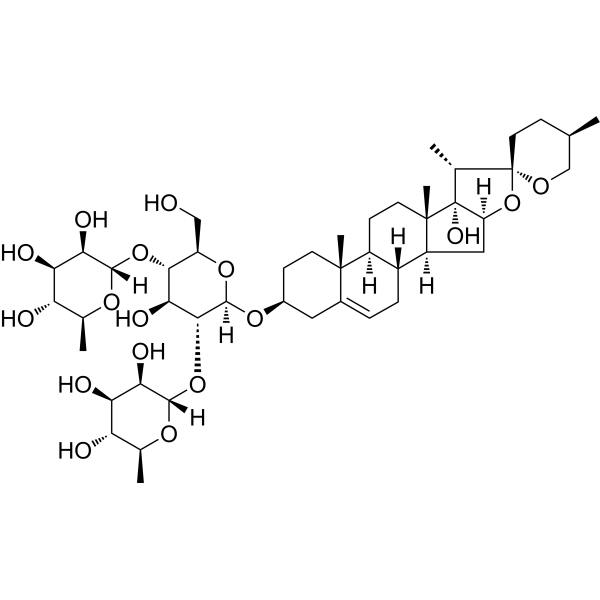
Pennogenin 3-O-beta-chacotrioside
Based on 1 publication(s) in Google Scholar
Pennogenin 3-O-beta-chacotrioside is an autophagy (autophagy) inducer. Pennogenin 3-O-beta-chacotrioside exhibits strong binding affinity for the pro-apoptotic proteins CYTC, AIF1 and BAX. Pennogenin 3-O-beta-chacotrioside triggers reactive oxygen species-induced autophagy in cancer cells. Pennogenin 3-O-beta-chacotrioside can be used in studies related to colorectal cancer.
For research use only. We do not sell to patients.
- Purity : 99.91%
- CAS No.: 55916-52-4
- Formula: C45H72O17
- Molecular Weight:885.04
-
Storage:Powder -20°C, 3 years , 4°C, 2 years ; In solvent -80°C, 6 months , -20°C, 1 month

To place orders, for customer services and technical support, please contact: MedChemExpress USA
Tel: 609-228-6898 E-mail: [email protected] [email protected]


-
 Biological Activity
-
Chemical Information
-
Solvent & Solubility
- Protocols
- Purity & Documentation
- References
-
 Help & FAQs


-
HY-112698
CA-5fLate-Stage Autophagy Inhibitor -
HY-N8441
NeriifolinApoptosis Inhibitor -
HY-N0124
DioscinAnticancer Agent -
HY-N2389
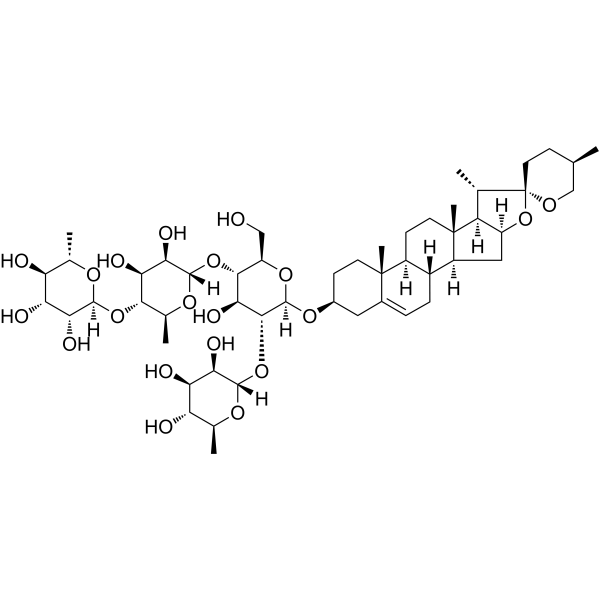
Formosanin CApoptosis/Autophagy Inducer -
HY-128892
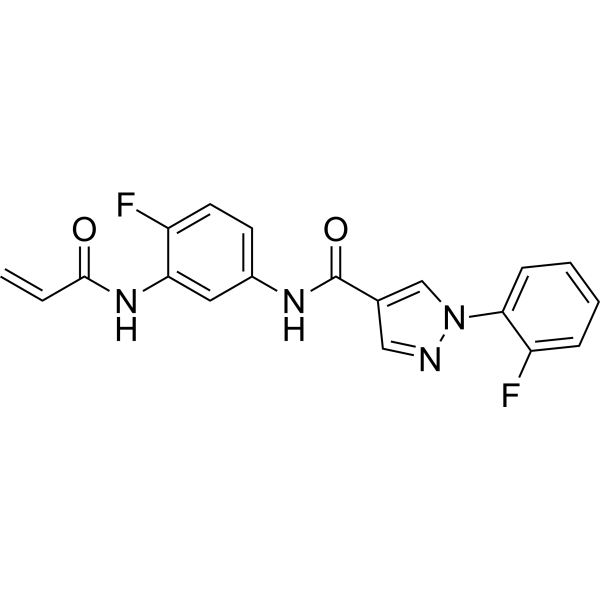
EN6Autophagy Activator -
HY-16561
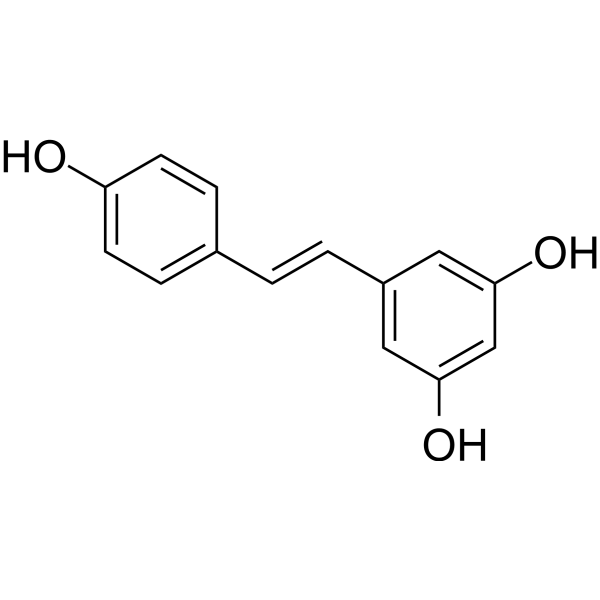
ResveratrolPolyphenolic Phytoalexin -
HY-130258
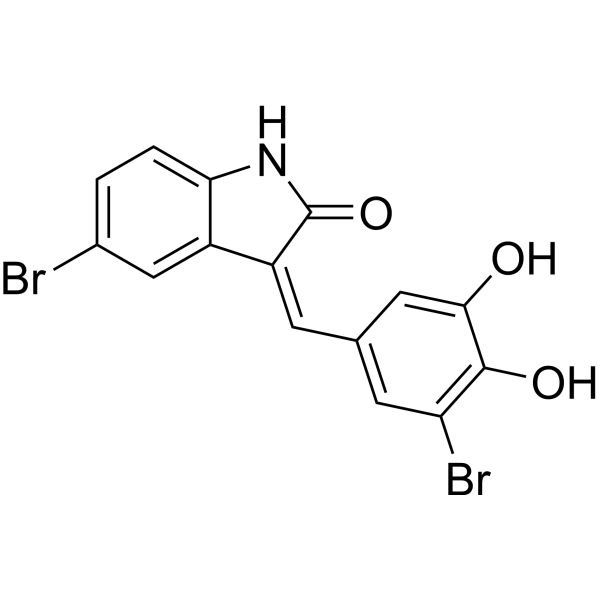
LC3-mHTT-IN-AN1mHTT-LC3 Linker Compound -
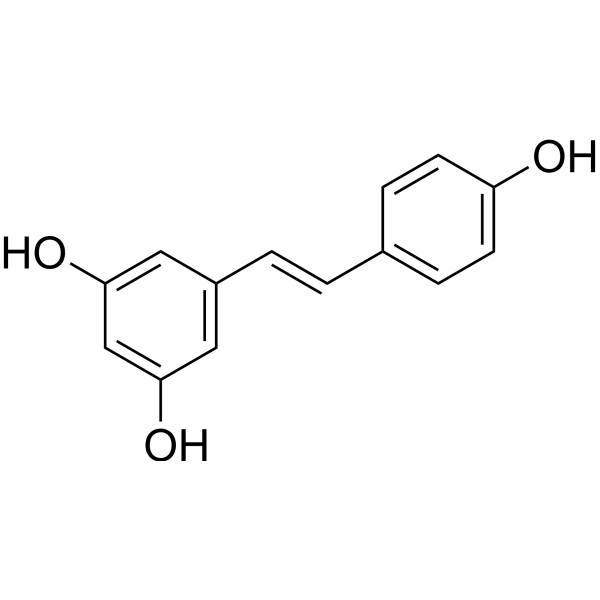
HY-16561R
Resveratrol (Standard) -
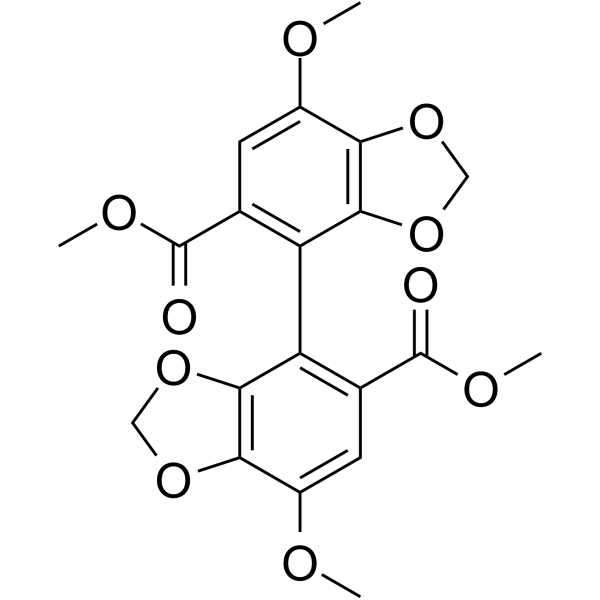
HY-W018791
BifendateAntioxidant, Anti-HBV Agent -
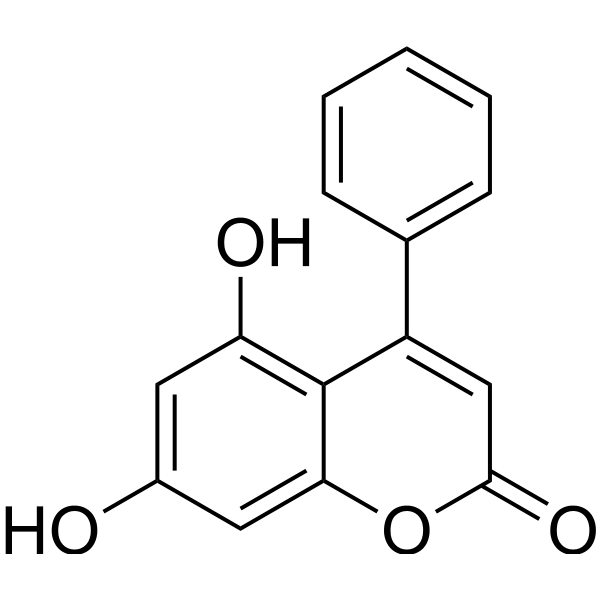
HY-130259
LC3-mHTT-IN-AN2mHTT-LC3 Linker Compound -
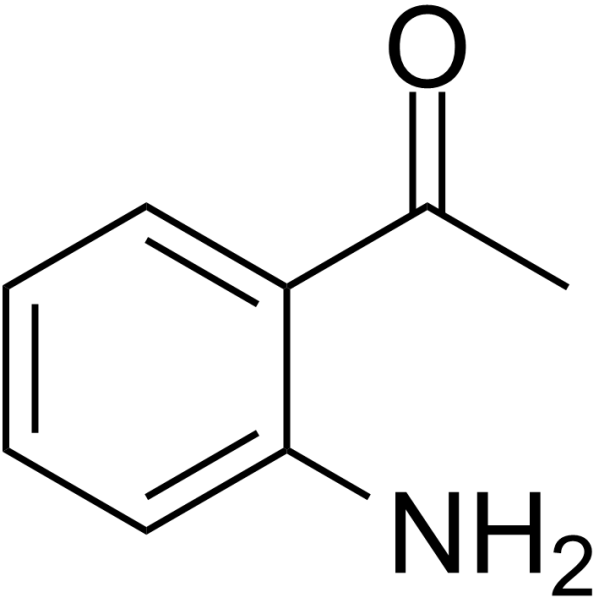
HY-I0501
2'-AminoacetophenoneApoptosis Inducer -

HY-I0501R
2'-Aminoacetophenone (Standard)Apoptosis Inducer
Publications Citing Use of MedChemExpress (MCE) Pennogenin 3-O-beta-chacotrioside
More

Biological Activity
Description
Cellular Effect
|
Cell Line

|
Type | Value | Description | References |
|---|---|---|---|---|
| HL-60 | IC50 |
4.2 μg/mL
Compound: 6
|
Cytotoxicity against human HL60 cells by MTT assay
Cytotoxicity against human HL60 cells by MTT assay
|
[PMID: 11000027] |
In Vitro
Pennogenin 3-O-beta-chacotrioside (1.5-1.8 μM; 24 h) inhibits the viability of human colorectal cancer cell line DLD-1 and induces its autophagy[2].
Pennogenin 3-O-beta-chacotrioside triggers ROS-induced autophagy in human colorectal cancer DLD-1 and HCT-116 cells[3].
MedChemExpress (MCE) has not independently confirmed the accuracy of these methods. They are for reference only. Further protocols information, click here.
-
Cell Line:DLD-1 human colorectal carcinoma cells
-
Concentration:1.5 μM (autophagy marker analysis); 1.8 μM (cell viability assay)
-
Incubation Time:24 h
-
Result:Decreased DLD-1 cell viability (1.8 μM, 24 h).
Markedly increased the expression levels of autophagy markers LC3 and Beclin-1 (1.5 μM, 24 h).


Chemical Information
-
CAS No. 55916-52-4
-
Appearance Solid
-
Molecular Weight 885.04
-
Formula C45H72O17
-
Color White to off-white
-
SMILES
O[C@@]12[C@@]3([C@@]([C@@]4([H])[C@]([C@@]5(C(C[C@@H](O[C@@]6([H])[C@@H]([C@H]([C@H](O[C@@]7([H])[C@@H]([C@@H]([C@@H](O)[C@H](C)O7)O)O)[C@@H](CO)O6)O)O[C@@]8([H])[C@@H]([C@@H]([C@@H](O)[C@H](C)O8)O)O)CC5)=CC4)C)([H])CC3)([H])C[C@]1([H])O[C@]9(CC[C@@H](C)CO9)[C@H]2C)C
-
Structure Classification
-
Initial Source
-
Shipping
Room temperature in continental US; may vary elsewhere.
-
Storage
Powder -20°C 3 years 4°C 2 years In solvent -80°C 6 months -20°C 1 month


Publications (1)
-
Journal Impact Factor
-
Most Recent
-
Mol Nutr Food Res
Improvement of Glucose Metabolism by Pennogenin 3-O-β-Chacotrioside via Activation of IRS/PI3K/Akt Signaling and Mitochondrial Respiration in Insulin-Resistant Hepatocytes. [Abstract]2025 May;69(9):e70010. PMID: 40103416


Solvent & Solubility
In Vitro:
DMSO : 100 mg/mL (112.99 mM; Need ultrasonic; Hygroscopic DMSO has a significant impact on the solubility of product, please use newly opened DMSO)
Please refer to the solubility information to select the appropriate solvent. Once prepared, please aliquot and store the solution to prevent product inactivation from repeated freeze-thaw cycles.
Storage method and period of stock solution: -80°C, 6 months; -20°C, 1 month. When stored at -80°C, please use it within 6 months. When stored at -20°C, please use it within 1 month.
Please refer to the solubility information to select the appropriate solvent. Once prepared, please aliquot and store the solution to prevent product inactivation from repeated freeze-thaw cycles.
Storage method and period of stock solution: -80°C, 6 months; -20°C, 1 month. When stored at -80°C, please use it within 6 months. When stored at -20°C, please use it within 1 month.
Concentration (start) × Volume (start) = Concentration (final) × Volume (final)
In Vivo:
Select the appropriate dissolution method based on your experimental animal and administration route.
- For the following dissolution methods, please ensure to first prepare a clear stock solution using an In Vitro approach and then sequentially add co-solvents:
- To ensure reliable experimental results, the clarified stock solution can be appropriately stored based on storage conditions. As for the working solution for In Vivo experiments, it is recommended to prepare freshly and use it on the same day.
- The percentages shown for the solvents indicate their volumetric ratio in the final prepared solution. If precipitation or phase separation occurs during preparation, heat and/or sonication can be used to aid dissolution.
Add each solvent one by one: 10% DMSO 40% PEG300 5% Tween-80 45% Saline
Solubility: ≥ 2.5 mg/mL (2.82 mM); Clear solution
This protocol yields a clear solution of ≥ 2.5 mg/mL (saturation unknown).
Taking 1 mL working solution as an example, add 100 μL DMSO stock solution (25.0 mg/mL) to 400 μL PEG300, and mix evenly; then add 50 μL Tween-80 and mix evenly; then add 450 μL Saline to adjust the volume to 1 mL.
Preparation of Saline: Dissolve 0.9 g sodium chloride in ddH₂O and dilute to 100 mL to obtain a clear Saline solution.
Add each solvent one by one: 10% DMSO 90% (20% SBE-β-CD in Saline)
Solubility: ≥ 2.5 mg/mL (2.82 mM); Clear solution
This protocol yields a clear solution of ≥ 2.5 mg/mL (saturation unknown).
Taking 1 mL working solution as an example, add 100 μL DMSO stock solution (25.0 mg/mL) to 900 μL 20% SBE-β-CD in Saline, and mix evenly.
Preparation of 20% SBE-β-CD in Saline (4°C, storage for one week): 2 g SBE-β-CD powder is dissolved in 10 mL Saline, completely dissolve until clear.
In Vivo Dissolution Calculator
Please enter the basic information of animal experiments:
-
-
-
-
Recommended: Prepare an additional quantity of animals to account for potential losses during experiments.
Please enter your animal formula composition:
-
%DMSO +
Recommended: Keep the proportion of DMSO in working solution below 2% if your animal is weak.
-
%+
-
+%Tween-80 + +
-
%Saline +
The co-solvents required include: DMSO, . All of co-solvents are available by MedChemExpress (MCE). , Tween 80. All of co-solvents are available by MedChemExpress (MCE).
Working solution concentration: 0.22 mg/mL
Method for preparing stock solution: mg drug dissolved in μL DMSO. Stock solution concentration: mg/mL.
1. Take μL DMSO stock solution;
2. Add μL .
μL , mix evenly;
3. Then add μL Tween 80, mix evenly;
4. Then add μL
Please ensure that the stock solution in the first step is dissolved to a clear state, and add co-solvents in sequence. You can use ultrasonic heating (ultrasonic cleaner, recommended frequency 20-40 kHz), vortexing, etc. to assist dissolution.

Protocols
-
Apoptosis
Apoptosis, also called programmed cell death, is generally characterized by distinct morphological characteristics.
-
ROS/oxidative-stress fluorescent staining
ROS/oxidative-stress fluorescent staining uses cell-permeant fluorogenic probes that become fluorescent after oxidation inside cells or tissues; commonly used examples include DCFH-DA/DCFDA for broad cellular oxidant detection, DHE for superoxide-related signal detection, MitoSOX for mitochondrial superoxide-related signal detection, and CellROX probes for oxidative-stress-associated fluorescence readouts. The assay detects probe oxidation rather than a single ROS species unless the probe and analysis method have been chemically validated for that species. DCFH-DA enters cells, is deacetylated by intracellular esterases to DCFH, and produces fluorescent DCF after oxidation, so the readout is used as an operational measure of total cellular oxidative stress rather than a species-specific ROS measurement. DHE and MitoSOX can report superoxide-related oxidation, but red fluorescence alone can include non-specific ethidium-like oxidation products; HPLC or optimized spectral approaches are
-
Autophagy
Autophagy is a process in which eukaryotic cells use lysosomes to degrade their own cytoplasmic proteins and damaged organelles under the regulation of autophagy related gene (Atg). Microtubule-associated proteins light chain 3 (LC3) is recognized as autophagy marker, which transfers from cytoplasmic LC3 (LC3-I) to membrane type (LC3-II). LC3-II/I ratio could be detected by Western Blot and fluorescence microscopy.
-
Apoptosis Solutions
Apoptosis is a regulated, generally non-lytic cell-death pathway that removes unwanted, damaged, infected, or abnormal cells through coordinated morphological changes, caspase activation, DNA fragmentation, and membrane remodeling. The intrinsic apoptosis pathway is controlled mainly by mitochondrial outer membrane permeabilization, BCL-2 family proteins, cytochrome c release, apoptosome formation, caspase-9 activation, and downstream executioner caspase-3/7 activation. The extrinsic apoptosis pathway is initiated by death receptors such as Fas, TNFR, and TRAIL receptors, which recruit adaptor proteins and activate caspase-8 before engaging executioner caspases or mitochondrial amplification through BID cleavage. Apoptosis is linked to many phenotypes, including cancer cell killing, tissue homeostasis, immune regulation, neurodegeneration, infection response, and treatment-induced cytotoxicity; unresolved questions include how apoptosis interacts with necroptosis, pyroptosis, ferroptos
-
Lysosome and acidic-vesicle live-cell staining
Lysosome and acidic-vesicle live-cell staining detects acidic intracellular compartments by using membrane-permeant acidotropic probes that accumulate in low-pH vesicles, including lysosomes, late endosomes, autolysosomes, and acidic phagosomes. LysoTracker staining is commonly used as an intensity-based readout of acidic lysosomal compartment abundance or enlargement, while acridine orange produces green fluorescence in less concentrated compartments and red fluorescence after concentration-dependent accumulation in acidic vesicular organelles. Loss or reduction of acridine-orange red signal can be used as a readout of lysosomal membrane permeabilization or reduced acidic-vesicle integrity. This protocol is designed for live cultured cells and can be adapted for fluorescence microscopy, high-content imaging, plate-reader readout, or flow cytometry when the selected literature supports the readout. Because these dyes report acidotropic accumulation rather than lysosome identity alone,
-
Macroautophagy Solutions
Macroautophagy is a conserved lysosome-dependent degradation pathway in which cytoplasmic material is sequestered into double-membrane autophagosomes and delivered to lysosomes for degradation and recycling. The pathway supports cellular homeostasis during nutrient limitation, organelle stress, protein-aggregate accumulation, infection, differentiation, and tissue remodeling by coupling cargo sequestration, autophagosome maturation, lysosomal fusion, and degradation of cargo-derived macromolecules. The core molecular sequence includes initiation by nutrient- and stress-regulated autophagy machinery, autophagosome nucleation, LC3/ATG8-family conjugation to autophagosomal membranes, cargo selection through receptors such as SQSTM1/p62, autophagosome-lysosome fusion, and lysosomal degradation. LC3 was identified as a mammalian homolog of yeast Atg8 that localizes to autophagosomal membranes after processing, and p62/SQSTM1 was shown to connect ubiquitinated cargo with autophagic degradati


Purity & Documentation
-
Data Sheet (279 KB)
-
SDS (251 KB)
- English - EN (251 KB)
- Français - FR (251 KB)
- Deutsch - DE (251 KB)
- Norwegian - NO (251 KB)
- Español - ES (251 KB)
- Swedish - SV (251 KB)
- Italian - IT (251 KB)
- Korean - KR (251 KB)
- Portuguese - PT (251 KB)
-
Handling Instructions (2659 KB)
References
[1]. Li Y, et al. Protective Effect of Trillium tschonoskii Maxim Components Against Glutamate-Induced SH-SY5Y Cells Damage Through Regulating Apoptosis. Dose Response. 2023;21(2):15593258231169585. Published 2023 May 29. [Content Brief]
[2]. Lin LT, et al. Paris Polyphylla Inhibits Colorectal Cancer Cells via Inducing Autophagy and Enhancing the Efficacy of Chemotherapeutic Drug Doxorubicin. Molecules. 2019 Jun 3;24(11):2102. [Content Brief]
[3]. Kshetrimayum V, et al. Paris polyphylla Sm. Induces Reactive Oxygen Species and Caspase 3-Mediated Apoptosis in Colorectal Cancer Cells In Vitro and Potentiates the Therapeutic Significance of Fluorouracil and Cisplatin. Plants (Basel). 2023;12(7):1446. Published 2023 Mar 25. [Content Brief]


Complete Stock Solution Preparation Table
Please refer to the solubility information to select the appropriate solvent. Once prepared, please aliquot and store the solution to prevent product inactivation from repeated freeze-thaw cycles.
Storage method and period of stock solution: -80°C, 6 months; -20°C, 1 month. When stored at -80°C, please use it within 6 months. When stored at -20°C, please use it within 1 month.
| Optional Solvent | Concentration Solvent Mass | 1 mg | 5 mg | 10 mg | 25 mg |
|---|---|---|---|---|---|
| DMSO | 1 mM | 1.1299 mL | 5.6495 mL | 11.2989 mL | 28.2473 mL |
| 5 mM | 0.2260 mL | 1.1299 mL | 2.2598 mL | 5.6495 mL | |
| 10 mM | 0.1130 mL | 0.5649 mL | 1.1299 mL | 2.8247 mL | |
| 15 mM | 0.0753 mL | 0.3766 mL | 0.7533 mL | 1.8832 mL | |
| 20 mM | 0.0565 mL | 0.2825 mL | 0.5649 mL | 1.4124 mL | |
| 25 mM | 0.0452 mL | 0.2260 mL | 0.4520 mL | 1.1299 mL | |
| 30 mM | 0.0377 mL | 0.1883 mL | 0.3766 mL | 0.9416 mL | |
| 40 mM | 0.0282 mL | 0.1412 mL | 0.2825 mL | 0.7062 mL | |
| 50 mM | 0.0226 mL | 0.1130 mL | 0.2260 mL | 0.5649 mL | |
| 60 mM | 0.0188 mL | 0.0942 mL | 0.1883 mL | 0.4708 mL | |
| 80 mM | 0.0141 mL | 0.0706 mL | 0.1412 mL | 0.3531 mL | |
| 100 mM | 0.0113 mL | 0.0565 mL | 0.1130 mL | 0.2825 mL |


Pennogenin 3-O-beta-chacotrioside Related Classifications
HY-N4180 Related Classifications
 Powered by Bioz