



Pseudouridine 5'-triphosphate
Based on 1 publication(s) in Google Scholar
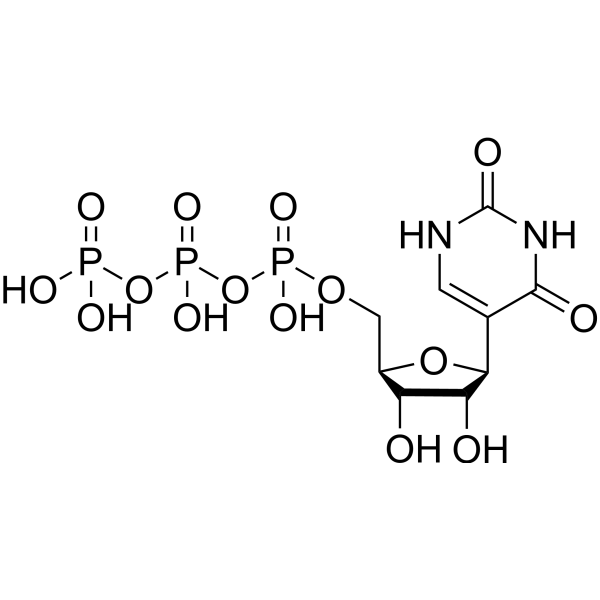
Pseudouridine 5'-triphosphate (Pseudo-UTP) is a modified ribonucleoside triphosphate and uracil base-modified UTP derivative. Pseudouridine 5'-triphosphate enhances translational properties and stability of mRNA, reduces innate immune responses in mammalian cells, and inhibits signal-dependent transcription termination of vaccinia virus early gene transcription while supporting transcription elongation. Pseudouridine 5'-triphosphate can be used for the research of vaccinia virus infection.
For research use only. We do not sell to patients.
- CAS No.: 1175-34-4
- Formula: C9H15N2O15P3
- Molecular Weight:484.14
-
Storage:
Please store the product under the recommended conditions in the Certificate of Analysis.

To place orders, for customer services and technical support, please contact: MedChemExpress USA
Tel: 609-228-6898 E-mail: [email protected] [email protected]


-
 Biological Activity
-
Chemical Information
- Protocols
- Purity & Documentation
- References
-
 Help & FAQs


-
HY-W013093
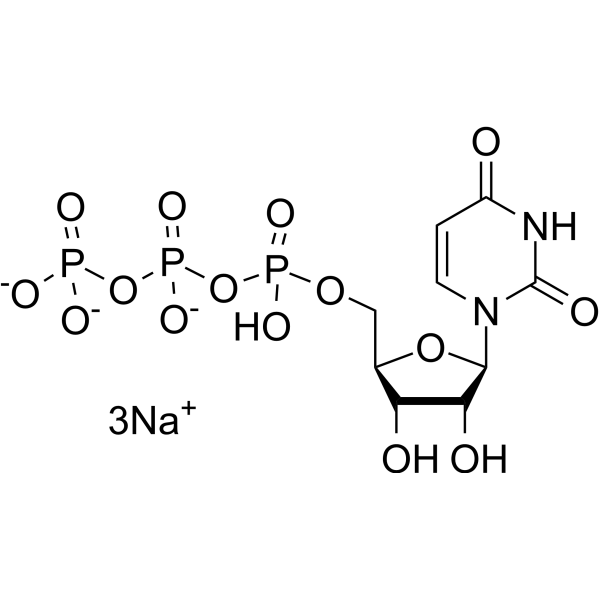
Uridine triphosphate trisodium saltUTP -
HY-12695
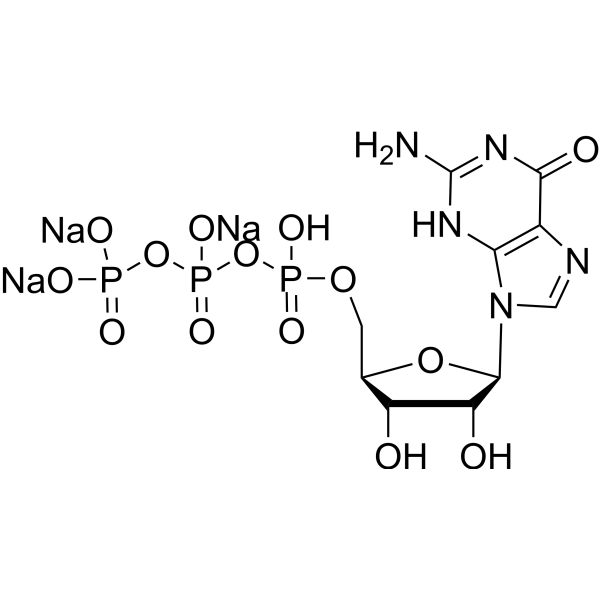
Guanosine triphosphate trisodiumCellular Metabolism Regulator -
HY-101981
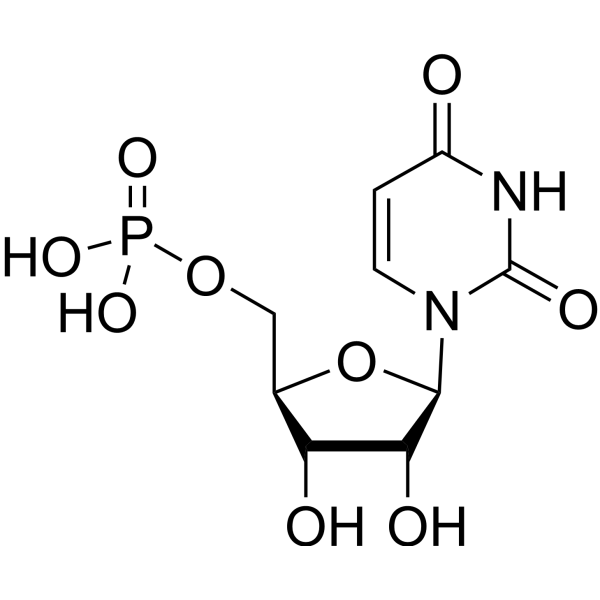
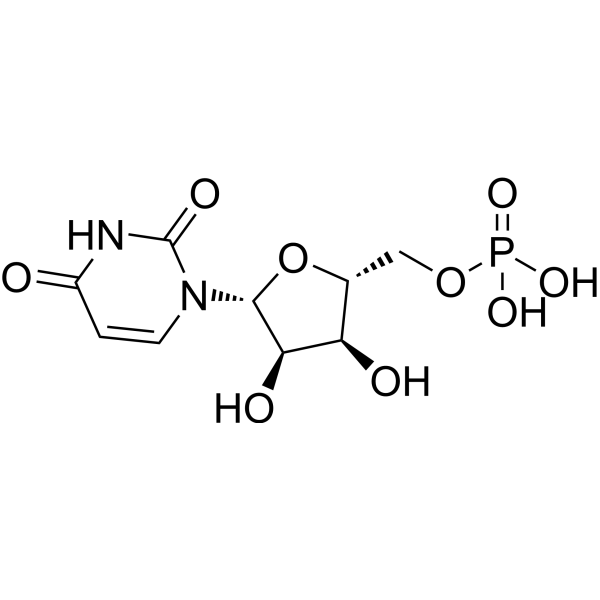
Uridine 5'-monophosphateNucleotide Analogue -

HY-113225H
GTP trisodium salt, 100 mM Solution, PCR GradeSolution Prepared by GTP -
HY-101981R
Uridine 5'-monophosphate (Standard)Nucleotide Analogue -

HY-107372H
UTP trisodium salt, 100 mM Solution, PCR GradeUTP -

HY-W416291
Polyadenylic acid potassiumPolyribonucleotide -
HY-112582A
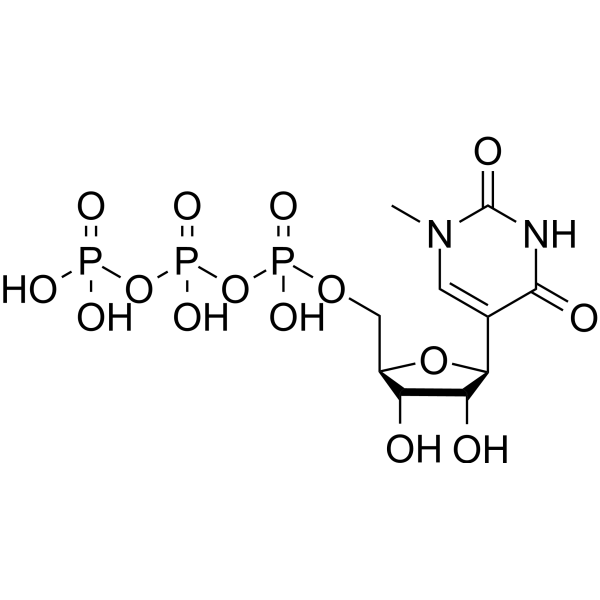
N1-Methylpseudouridine-5′-triphosphate solution (100 mM)Nucleobase-modified Nucleotide -
HY-B2176
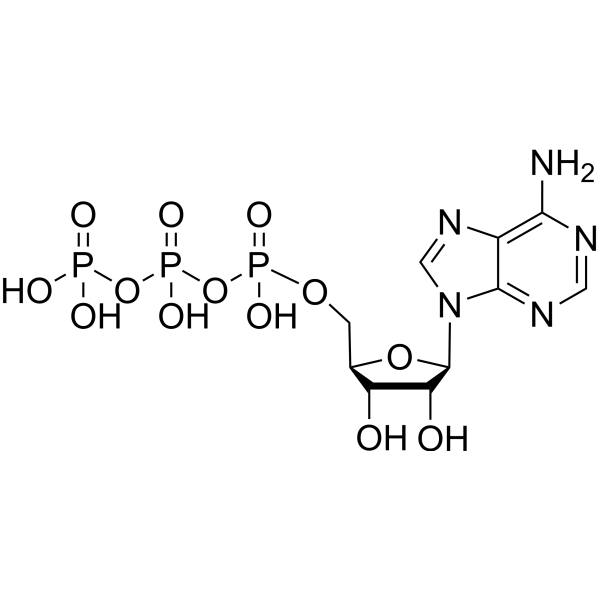
ATPEndogenous Metabolite -
HY-W008940
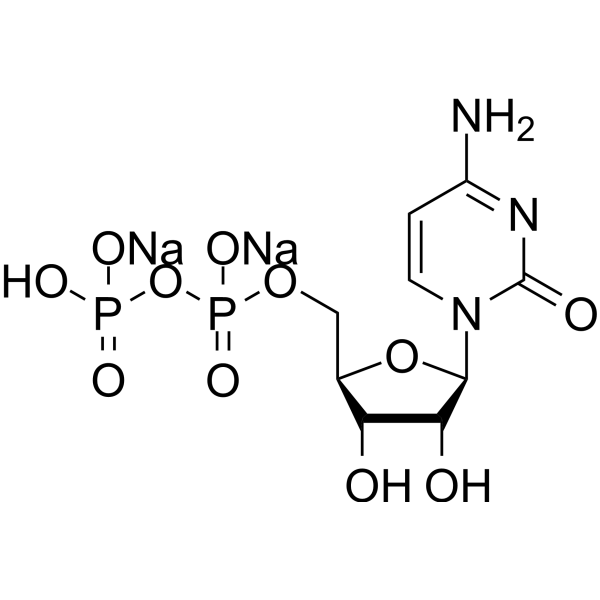
Cytidine 5'-diphosphate disodium saltNucleotide -
HY-125818
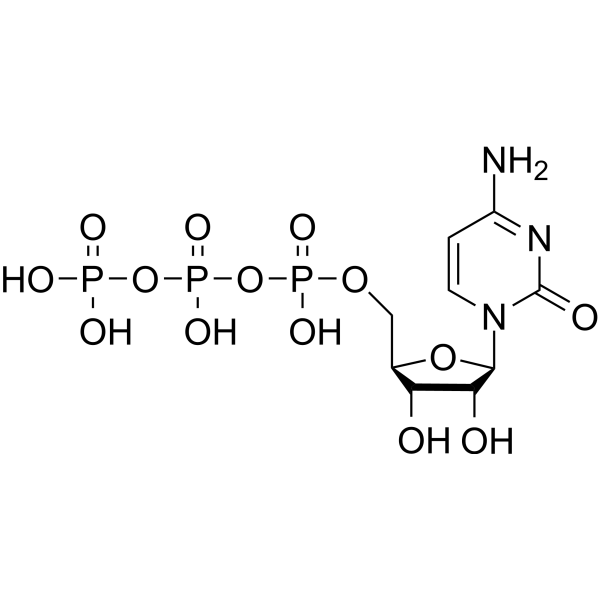
Cytidine-5'-triphosphateNucleoside Triphosphate -

HY-B2176R
ATP (Standard)Reference Standard
Publications Citing Use of MedChemExpress (MCE) Pseudouridine 5'-triphosphate
MoreAll DNA/RNA Synthesis Isoforms
More

Biological Activity
Description
In Vitro
Pseudouridine 5'-triphosphate (1 mM) supports full transcription elongation of vaccinia virus early genes in vitro but dramatically inhibits VTF-dependent transcription termination, reducing termination efficiency to 25% in the bead-bound G21(TER29)A78 template system[2].
MedChemExpress (MCE) has not independently confirmed the accuracy of these methods. They are for reference only. Further protocols information, click here.


Chemical Information
-
CAS No. 1175-34-4
-
Molecular Weight 484.14
-
Formula C9H15N2O15P3
-
SMILES
O[C@H]1[C@@H](O)[C@H](C(C(N2)=O)=CNC2=O)O[C@@H]1COP(OP(OP(O)(O)=O)(O)=O)(O)=O
-
Synonyms
Pseudo-UTP
-
Shipping
Room temperature in continental US; may vary elsewhere.
-
Storage
Please store the product under the recommended conditions in the Certificate of Analysis.


Publications (1)
-
Journal Impact Factor
-
Most Recent
-
Cell Rep
Depletion of CUL4B in macrophages ameliorates diabetic kidney disease via miR-194-5p/ITGA9 axis. [Abstract]2023 May 23;42(6):112550. PMID: 37224018

Protocols
-
RNA extraction experimental
By lysing cells, releasing RNA, and removing impurities such as proteins and DNA, high-purity RNA products are finally obtained. The commonly used traditional method is the guanidine isothiocyanate/phenol/chloroform method (Trizol), which is suitable for a variety of animal materials including animal tissues, microorganisms, cultured cells, etc., and most plant materials.
-
Research Protocol for Infectious Diseases
Infectious-disease experiments test how pathogens interact with host barriers, innate immune receptors, inflammatory signaling, pathogen replication, and tissue injury; pattern-recognition receptors such as TLRs, RIG-I-like receptors, NOD-like receptors, and inflammasomes detect microbial molecules and activate NF-κB, interferon, and cytokine responses. The central hypothesis is that infection severity reflects the balance between pathogen burden and host response: protective inflammation restricts pathogen growth, whereas excessive or mislocalized inflammation contributes to tissue damage and disease phenotype. Unresolved questions include which host pathways are protective versus pathogenic, why some infection models fail to translate to human disease, and which combined readouts best predict clinically relevant infection outcomes.


Purity & Documentation
References
[1]. Shanmugasundaram M, et al. An Efficient Protection-Free One-Pot Chemical Synthesis of Modified Nucleoside-5'-Triphosphates. Nucleosides Nucleotides Nucleic Acids. 2016;35(7):356-362. [Content Brief]
[2]. Mohamed MR, et al. Effect of UTP sugar and base modifications on vaccinia virus early gene transcription. Virology. 2006;349(2):359-370. [Content Brief]

Calculators
Concentration (start) × Volume (start) = Concentration (final) × Volume (final)


Pseudouridine 5'-triphosphate Related Classifications
HY-141567 Related Classifications
 Powered by Bioz
Keywords
- Pseudouridine 5'-triphosphate
- 1175-34-4
- Pseudo-UTP
- DNA/RNA Synthesis
- vaccinia virus early gene transcription
- mRNA
- signal-dependent transcription termination
- transcription elongation
- vaccinia virus infection
- uracil base-modified UTP derivative
- modified ribonucleoside triphosphate
- innate immune responses
- mammalian cells
- Inhibitor
- inhibitor
- inhibit