



Resolvin D3
Resolvin D3 (RvD3) is a docosahexaenoic acid (DHA) derived mediator. Resolvin D3 is dysregulated in arthritis and reduces arthritic inflammation.
For research use only. We do not sell to patients.
- CAS No.: 916888-47-6
- Formula: C22H32O5
- Molecular Weight:376.49
-
Storage:
Solution, -20°C, 2 years

To place orders, for customer services and technical support, please contact: MedChemExpress USA
Tel: 609-228-6898 E-mail: [email protected] [email protected]


-
 Biological Activity
-
Chemical Information
- Protocols
- Purity & Documentation
- References
-
 Help & FAQs


-
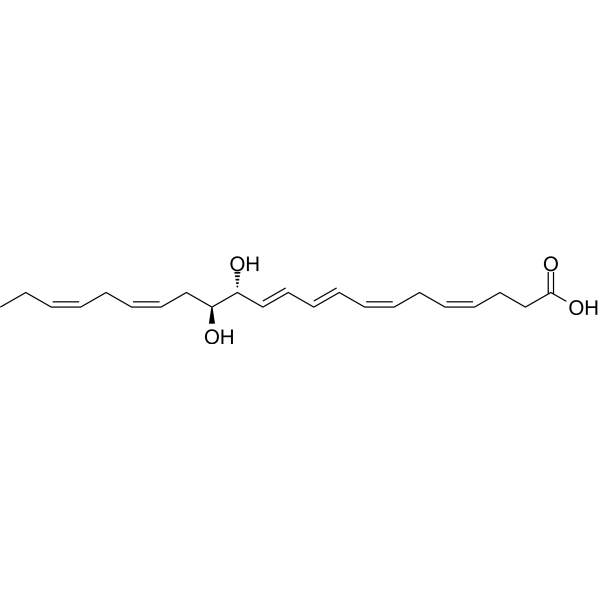
HY-119684
Maresin 2Anti-inflammatory And Pro-resolving Mediator -
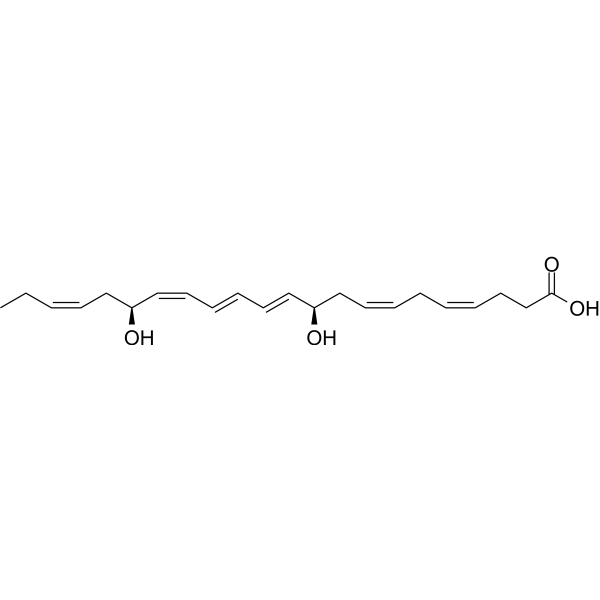
HY-130413
Protectin D1Neuroprotectin D1 -
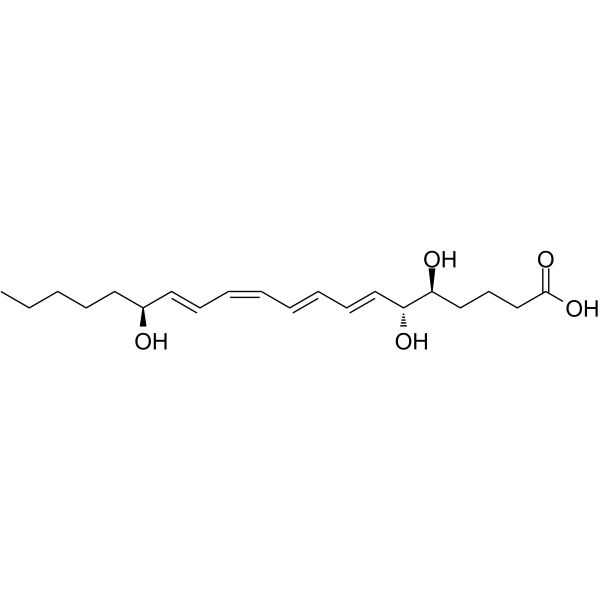
HY-113509
Lipoxin A4Anti-inflammatory Agent -
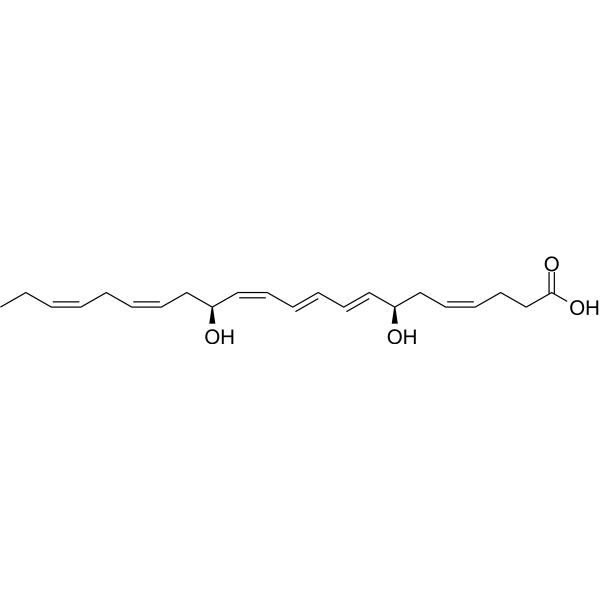
HY-116429
Maresin 1Ca2+ Stimulator -

HY-134123
Lipoxin B4 methyl ester -
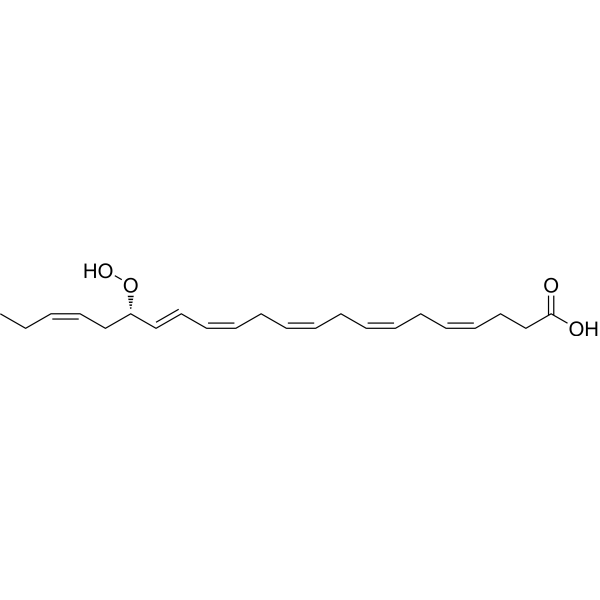
HY-116124
17(S)-HpDHAHydrolyzate -
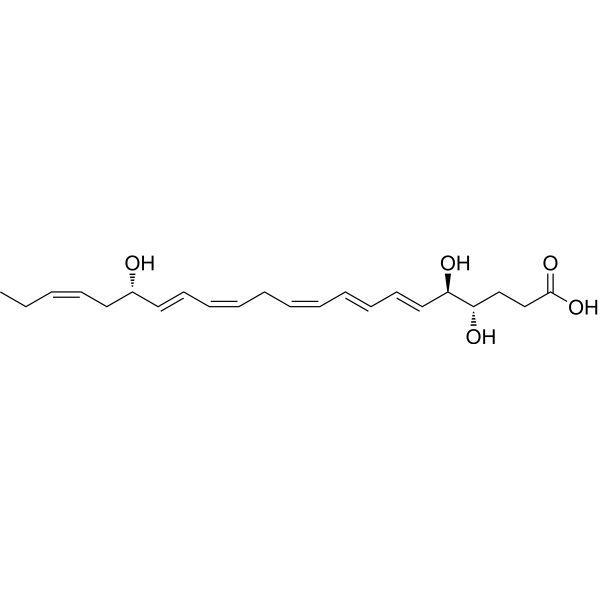
HY-113533
Resolvin D4Proresolving Mediator -
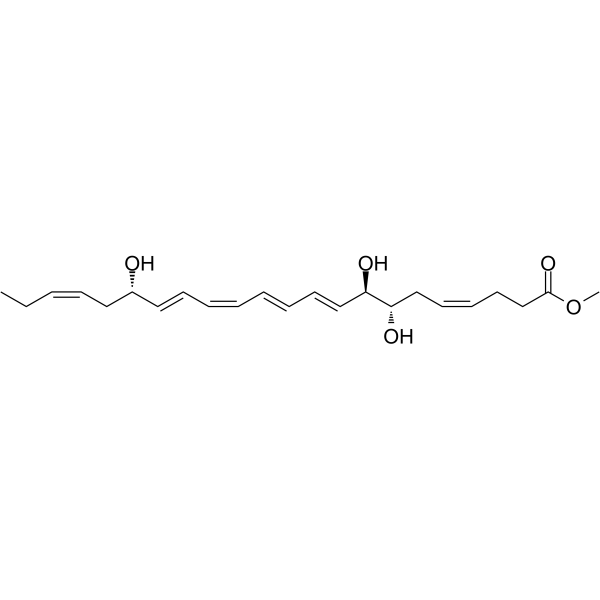
HY-128031
Resolvin D1 methyl esterTriglyceride Inhibitor -
HY-116429A
7(S)-Maresin 1Maresin 1 Exomer -
HY-113533A
17(R)-Resolvin D4Resolvin D4 R-enantiomer -

HY-125408
Maresin conjugates in tissue regeneration 1cytokine -

HY-130322
Maresin Conjugates in Tissue Regeneration 2Specialized Pro-resolving Mediator
All AMPK Isoforms
More

Biological Activity
Description
In Vitro
In Vivo
MedChemExpress (MCE) has not independently confirmed the accuracy of these methods. They are for reference only.
-
Animal Model:Male C57Bl/6 mice (12 weeks old) or ALX/fpr2/3 KO mice[1]
-
Dosage:100 ng/100 µl
-
Administration:IP; daily for 6 days
-
Result:Alleviated arthritis progression, reduced edema and limited leukocyte numbers in murine K/BxN-serum induced arthritis.


Chemical Information
-
CAS No. 916888-47-6
-
Appearance Liquid
-
Molecular Weight 376.49
-
Formula C22H32O5
-
Color Colorless to light yellow
-
SMILES
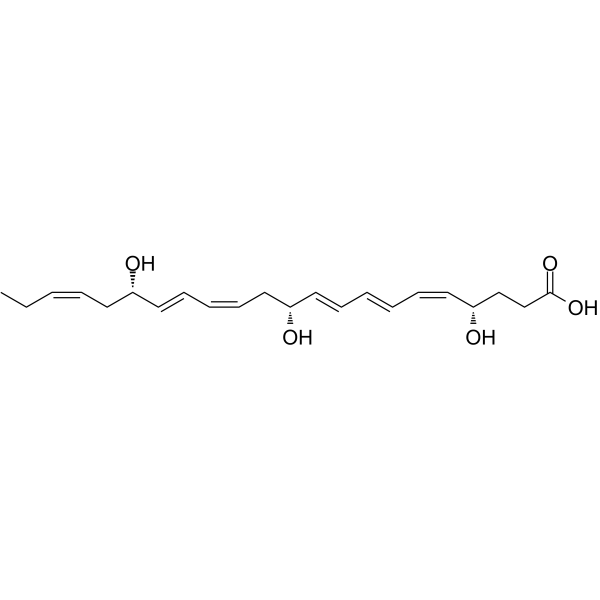
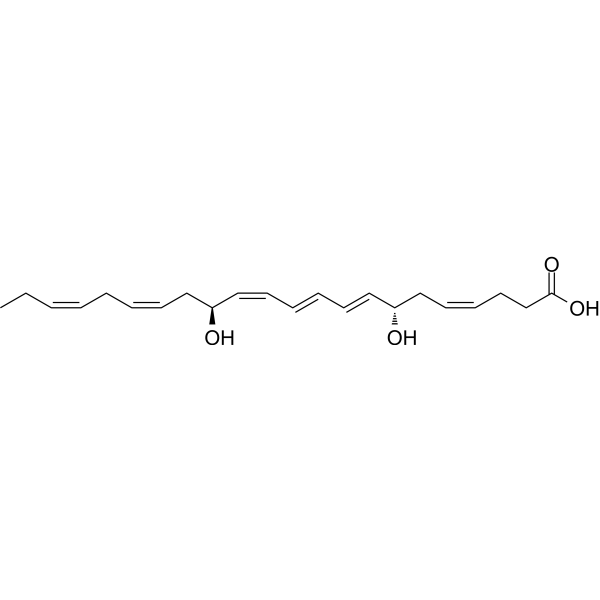
CC/C=C\C[C@H](O)/C=C/C=C\C[C@@H](O)/C=C/C=C/C=C\[C@@H](O)CCC(O)=O
-
Synonyms
RvD3
-
Shipping
Room temperature in continental US; may vary elsewhere.
-
Storage
Solution, -20°C, 2 years

Protocols
-
Collagen-Induced Arthritis
Collagen-induced arthritis (CIA) is an autoimmune murine model of rheumatoid arthritis in which immunization with type II collagen (CII) emulsified in an adjuvant induces a T cell- and autoantibody-driven inflammatory arthritis characterized by synovial hyperplasia, immune cell infiltration, and joint destruction. The model typically relies on genetically susceptible mouse strains (e. g. , DBA/1) and reproduces key features of human rheumatoid arthritis, including anti-collagen immune responses and progressive joint inflammation. Disease onset generally occurs within ~3-4 weeks after immunization, depending on antigen/adjuvant combinations and protocol variation. The immunopathology is driven by adaptive immune activation against CII, leading to systemic and local joint inflammation mediated by pro-inflammatory cytokines and effector immune cells, making CIA a standard preclinical platform for evaluating immunomodulatory and anti-arthritic interventions.
-
Research Protocol for Inflammation-related Diseases
The NLRP3 inflammasome is a cytosolic innate immune signaling platform that integrates priming signals and danger-signal activation to promote caspase-1 activation, maturation of IL-1β and IL-18, and gasdermin D-mediated pyroptotic cell death. The core experimental logic is to determine whether inflammatory disease phenotypes are driven by increased NLRP3 expression, ASC-containing inflammasome assembly, caspase-1 cleavage, GSDMD cleavage, and extracellular release of IL-1β/IL-18 rather than by nonspecific cell injury alone. The pathway is strongly linked to inflammation-related disease phenotypes because monosodium urate crystals activate NALP3/NLRP3 inflammasome signaling in gout-like crystal inflammation, cholesterol crystals activate NLRP3 inflammasomes in atherogenesis models, and DSS-induced intestinal inflammation has been reported to involve NLRP3 inflammasome activity. However, experimental colitis studies also show context-dependent protective effects of NLRP3 inflammasome co


Purity & Documentation
-
Data Sheet (262 KB)
-
SDS (251 KB)
- English - EN (251 KB)
- Français - FR (251 KB)
- Deutsch - DE (251 KB)
- Norwegian - NO (251 KB)
- Español - ES (251 KB)
- Swedish - SV (251 KB)
- Italian - IT (251 KB)
- Korean - KR (251 KB)
- Portuguese - PT (251 KB)
-
Handling Instructions (2659 KB)
References
[1]. Hildur H Arnardottir, et al. Resolvin D3 Is Dysregulated in Arthritis and Reduces Arthritic Inflammation. J Immunol. 2016 Sep 15;197(6):2362-8. [Content Brief]
[2]. Jennifer K Colby, et al. Resolvin D3 and Aspirin-Triggered Resolvin D3 Are Protective for Injured Epithelia. Am J Pathol. 2016 Jul;186(7):1801-1813. [Content Brief]

Calculators
Concentration (start) × Volume (start) = Concentration (final) × Volume (final)


Resolvin D3 Related Classifications
HY-136540 Related Classifications
 Powered by Bioz