



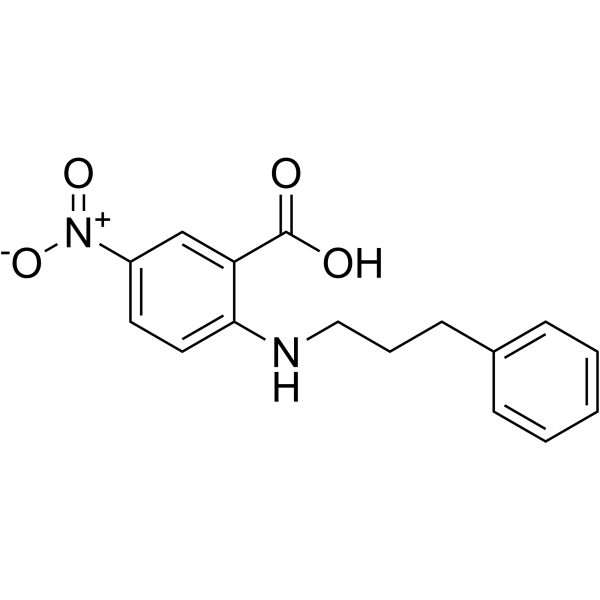
NPPB
Based on 6 publication(s) in Google Scholar
NPPB is a blocker of the outwardly rectifying chloride channel (ORCC).
For research use only. We do not sell to patients.
- Purity : 99.78%
- CAS No.: 107254-86-4
- Formula: C16H16N2O4
- Molecular Weight:300.31
-
Storage:Powder -20°C, 3 years , 4°C, 2 years ; In solvent -80°C, 2 years , -20°C, 1 year

To place orders, for customer services and technical support, please contact: MedChemExpress USA
Tel: 609-228-6898 E-mail: [email protected] [email protected]


-
 Biological Activity
-
Chemical Information
-
Solvent & Solubility
- Purity & Documentation
- References
-
 Help & FAQs


-
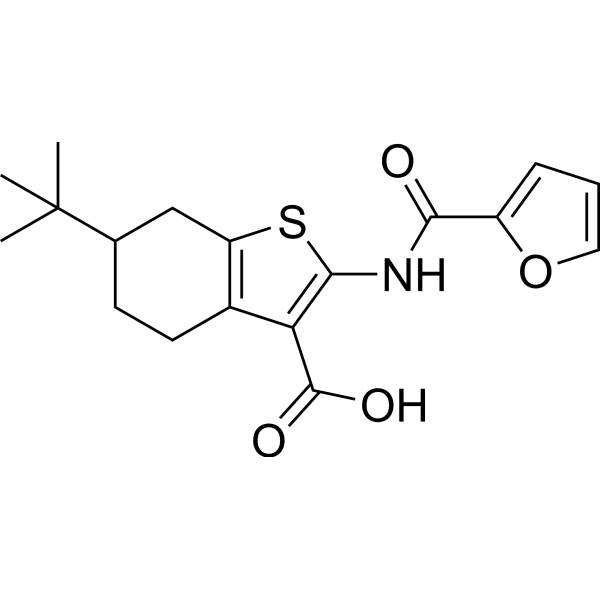
HY-100611
CaCCinh-A01TMEM16A Inhibitor -
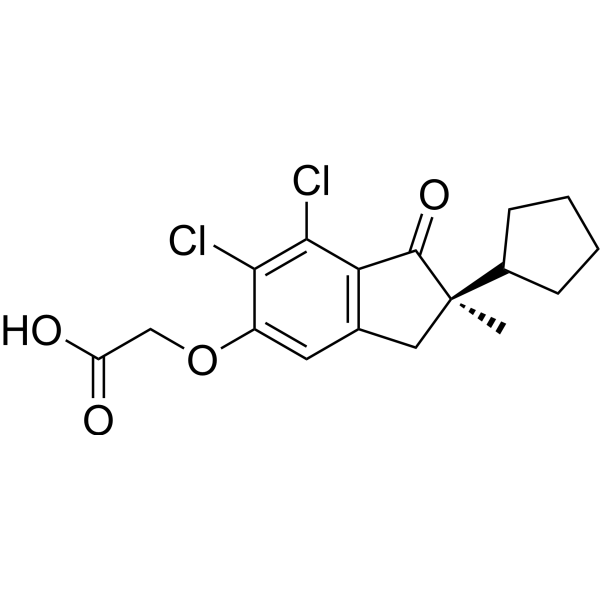
HY-12693
R(+)-MethylindazoneChloride Channel Inhibitor -
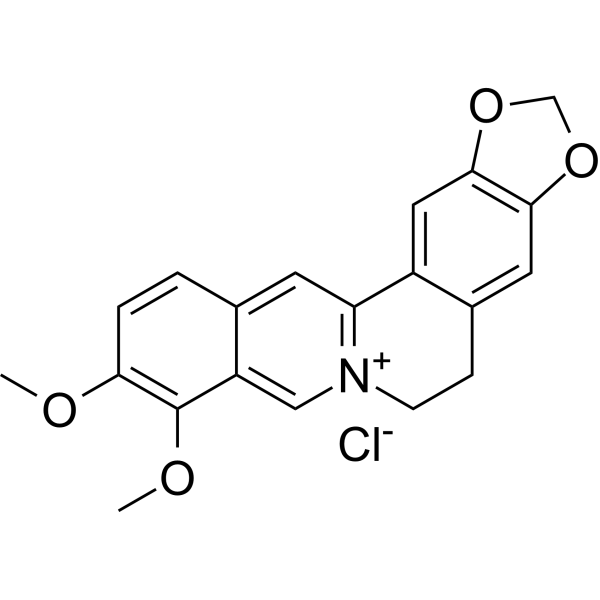
HY-18258
Berberine chlorideAntibiotic -
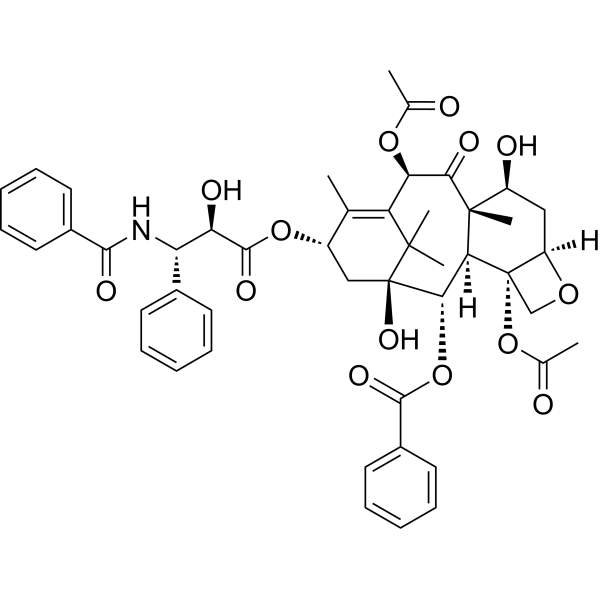
HY-B0015
PaclitaxelAntitumor Agent -
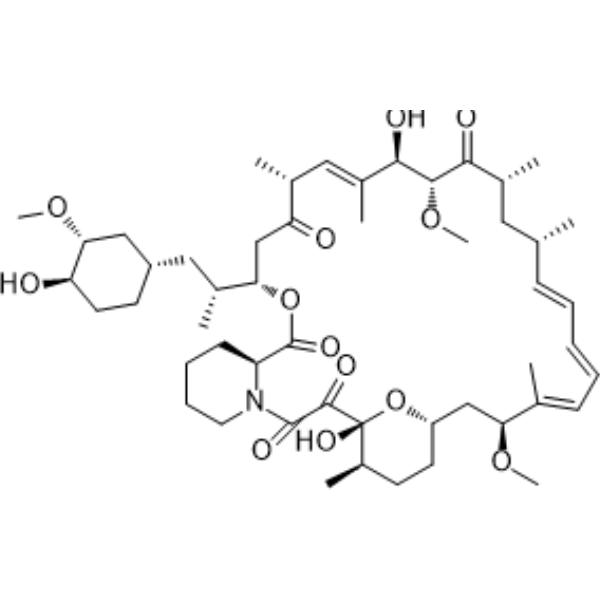
HY-10219
RapamycinmTOR Inhibitor -
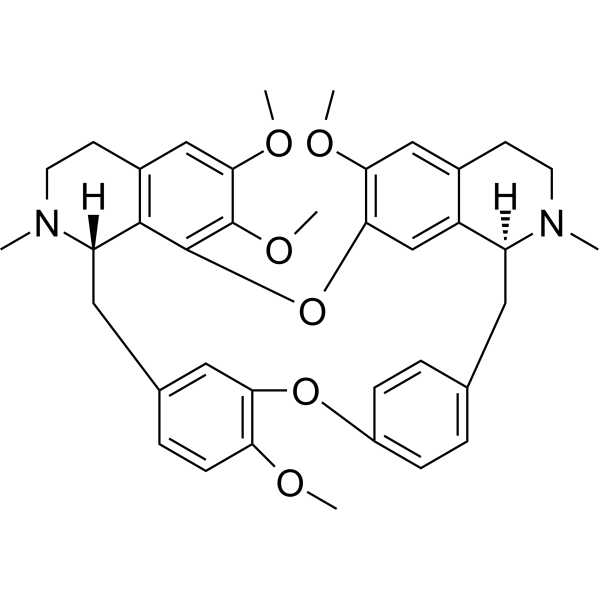
HY-13764
TetrandrineCalcium Channel Inhibitor -
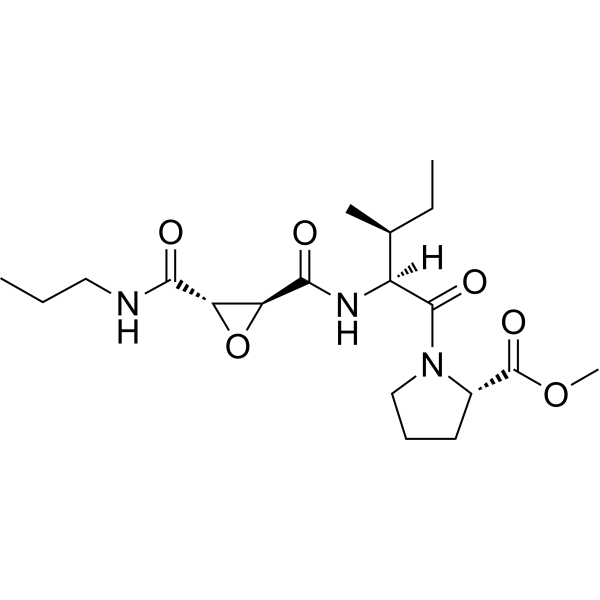
HY-100350
CA-074 methyl esterCathepsin B Inhibitor -
HY-101329
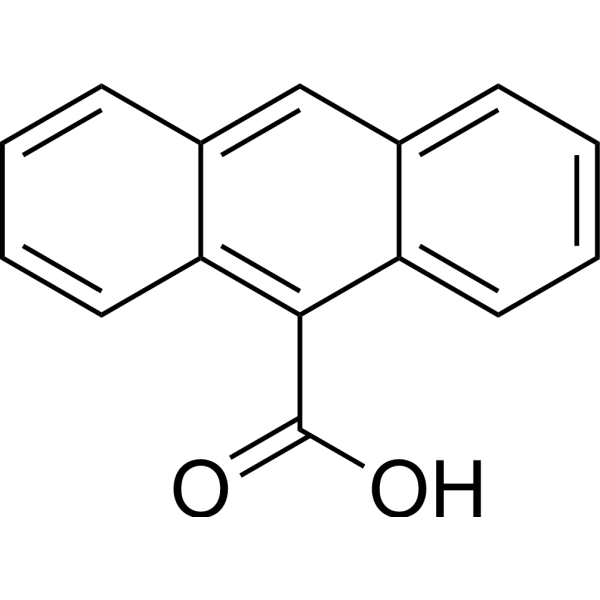
Anthracene-9-carboxylic acidChloride Current Blocker -
HY-N6682
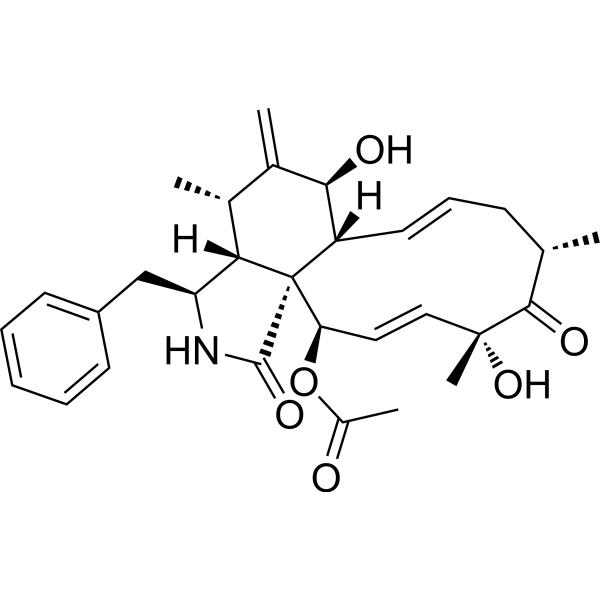
Cytochalasin DActin Polymerization Inhibitor -
HY-146320
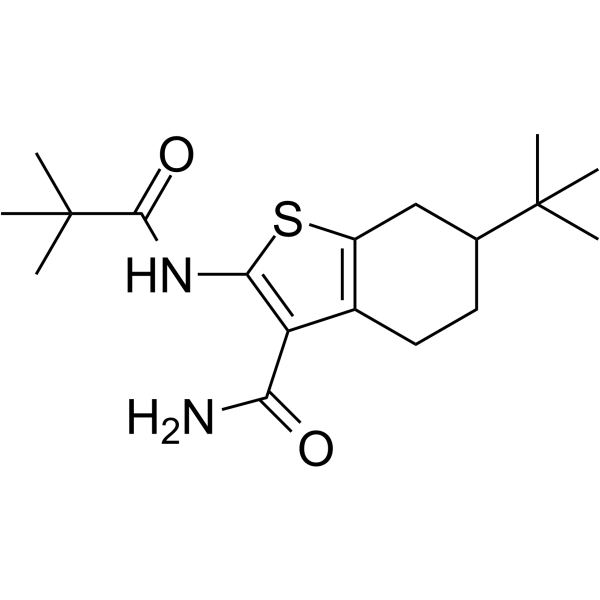
ANO1-IN-1ANO1 Inhibitor -
HY-B0413
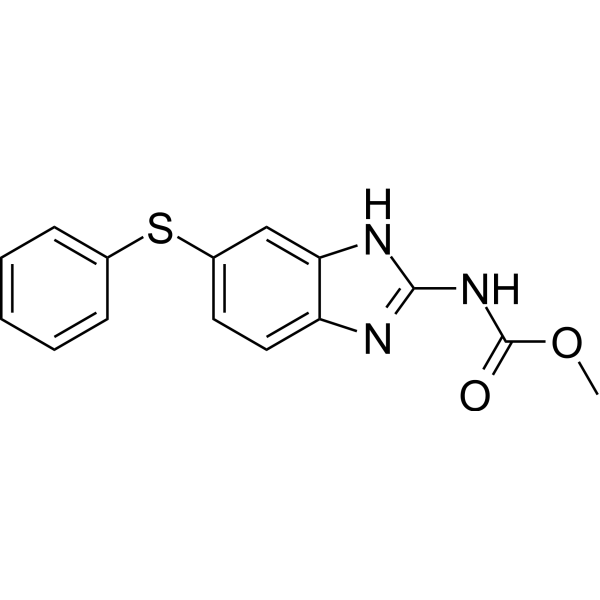
FenbendazoleAntibiotic -
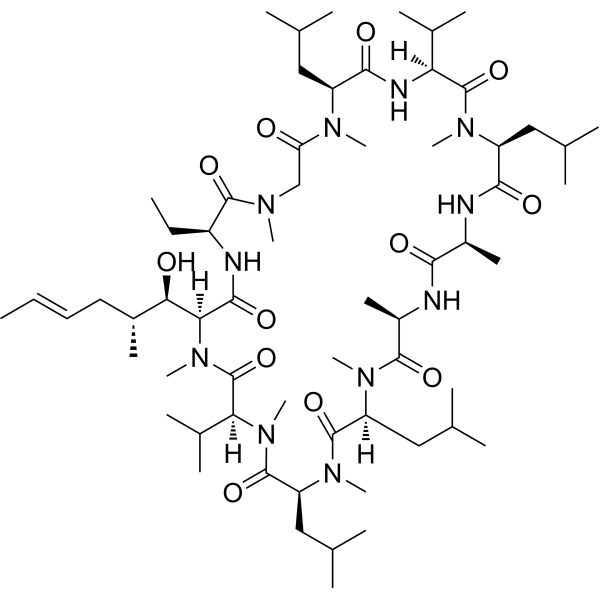
HY-B0579
Cyclosporin ACalcineurin Inhibitor
Publications Citing Use of MedChemExpress (MCE) NPPB
More

Biological Activity
Description
IC50 & Target
ORCC[1]
Cellular Effect
|
Cell Line

|
Type | Value | Description | References |
|---|---|---|---|---|
| HEK293 | EC50 |
0.32 μM
Compound: NPPB
|
Agonist activity at human TRPA1 expressed in HEK293 cells assessed as increase in calcium influx by FLIPR analysis
Agonist activity at human TRPA1 expressed in HEK293 cells assessed as increase in calcium influx by FLIPR analysis
|
[PMID: 30878828] |
| HEK293 | EC50 |
0.6 μM
Compound: NPPB
|
Agonist activity at human TRPA1 expressed in HEK293 cells assessed as increase in calcium influx by Fluo-4-AM dye based fluorescence assay
Agonist activity at human TRPA1 expressed in HEK293 cells assessed as increase in calcium influx by Fluo-4-AM dye based fluorescence assay
|
[PMID: 30878828] |
| Oocyte | IC50 |
240 μM
Compound: 5-Nitro-2-(3-phenylpropylamino)benzoate
|
TP_TRANSPORTER: inhibition of L-Lactate uptake (L-Lactate:30mM) in Xenopus laevis oocytes
TP_TRANSPORTER: inhibition of L-Lactate uptake (L-Lactate:30mM) in Xenopus laevis oocytes
|
[PMID: 11101640] |
In Vitro
0.1 mM NPPB in the bath solution reduces channel open probability from 0.89±0.06 to 0.11±0.04 (n=5, P<0.01)[1]. Dose-dependent inhibition of chloride currents is observed with a 50% inhibitory concentration (IC50) of 125 μM NPPB. NPPB itself also shows cytotoxicity against glioma cells with a GI50 of approximately 500 μM[2].
MedChemExpress (MCE) has not independently confirmed the accuracy of these methods. They are for reference only.


Chemical Information
-
CAS No. 107254-86-4
-
Appearance Solid
-
Molecular Weight 300.31
-
Formula C16H16N2O4
-
Color Light yellow to yellow
-
SMILES
O=C(O)C1=CC([N+]([O-])=O)=CC=C1NCCCC2=CC=CC=C2
-
Shipping
Room temperature in continental US; may vary elsewhere.
-
Storage
Powder -20°C 3 years 4°C 2 years In solvent -80°C 2 years -20°C 1 year


Publications (6)
-
Journal Impact Factor
-
Most Recent
-
Nat Commun
In vivo imaging in mouse spinal cord reveals that microglia prevent degeneration of injured axons. [Abstract]2024 Oct 13;15(1):8837. PMID: 39397028 -
Cell Death Dis
Pictilisib and nutrient stress synergize to induce methuosis via PI(4,5)P2-dependent macropinocytic dysregulation in cancer cells. [Abstract]2026 Jun 16. PMID: 42303628 -
J Biol Chem
Nitric oxide mediates ET-1-induced-inhibition of NPPB-sensitive Cl- currents in the early distal convoluted tubule of the mouse kidney. [Abstract]2026 Jan 23;302(3):111202. PMID: 41581878 -
Biochem J
LRRC8A is responsible for exosome biogenesis and volume regulation in colon cancer cells. [Abstract]2023 May 17;480(9):701-713. PMID: 37129855 -
-


Solvent & Solubility
In Vitro:
DMSO : 100 mg/mL (332.99 mM; Need ultrasonic; Hygroscopic DMSO has a significant impact on the solubility of product, please use newly opened DMSO)
H2O : < 0.1 mg/mL (insoluble)
Please refer to the solubility information to select the appropriate solvent. Once prepared, please aliquot and store the solution to prevent product inactivation from repeated freeze-thaw cycles.
Storage method and period of stock solution: -80°C, 2 years; -20°C, 1 year. When stored at -80°C, please use it within 2 years. When stored at -20°C, please use it within 1 year.
Please refer to the solubility information to select the appropriate solvent. Once prepared, please aliquot and store the solution to prevent product inactivation from repeated freeze-thaw cycles.
Storage method and period of stock solution: -80°C, 2 years; -20°C, 1 year. When stored at -80°C, please use it within 2 years. When stored at -20°C, please use it within 1 year.
Concentration (start) × Volume (start) = Concentration (final) × Volume (final)
In Vivo:
Select the appropriate dissolution method based on your experimental animal and administration route.
- For the following dissolution methods, please ensure to first prepare a clear stock solution using an In Vitro approach and then sequentially add co-solvents:
- To ensure reliable experimental results, the clarified stock solution can be appropriately stored based on storage conditions. As for the working solution for In Vivo experiments, it is recommended to prepare freshly and use it on the same day.
- The percentages shown for the solvents indicate their volumetric ratio in the final prepared solution. If precipitation or phase separation occurs during preparation, heat and/or sonication can be used to aid dissolution.
Add each solvent one by one: 10% DMSO 40% PEG300 5% Tween-80 45% Saline
Solubility: ≥ 2.5 mg/mL (8.32 mM); Clear solution
This protocol yields a clear solution of ≥ 2.5 mg/mL (saturation unknown).
Taking 1 mL working solution as an example, add 100 μL DMSO stock solution (25.0 mg/mL) to 400 μL PEG300, and mix evenly; then add 50 μL Tween-80 and mix evenly; then add 450 μL Saline to adjust the volume to 1 mL.
Preparation of Saline: Dissolve 0.9 g sodium chloride in ddH₂O and dilute to 100 mL to obtain a clear Saline solution.
In Vivo Dissolution Calculator
Please enter the basic information of animal experiments:
-
-
-
-
Recommended: Prepare an additional quantity of animals to account for potential losses during experiments.
Please enter your animal formula composition:
-
%DMSO +
Recommended: Keep the proportion of DMSO in working solution below 2% if your animal is weak.
-
%+
-
+%Tween-80 + +
-
%Saline +
The co-solvents required include: DMSO, . All of co-solvents are available by MedChemExpress (MCE). , Tween 80. All of co-solvents are available by MedChemExpress (MCE).
Working solution concentration: 0.22 mg/mL
Method for preparing stock solution: mg drug dissolved in μL DMSO. Stock solution concentration: mg/mL.
1. Take μL DMSO stock solution;
2. Add μL .
μL , mix evenly;
3. Then add μL Tween 80, mix evenly;
4. Then add μL
Please ensure that the stock solution in the first step is dissolved to a clear state, and add co-solvents in sequence. You can use ultrasonic heating (ultrasonic cleaner, recommended frequency 20-40 kHz), vortexing, etc. to assist dissolution.


Purity & Documentation
-
Data Sheet (275 KB)
-
SDS (396 KB)
- English - EN (396 KB)
- Français - FR (396 KB)
- Deutsch - DE (396 KB)
- Norwegian - NO (396 KB)
- Español - ES (396 KB)
- Swedish - SV (396 KB)
- Italian - IT (396 KB)
- Korean - KR (396 KB)
- Portuguese - PT (396 KB)
-
Handling Instructions (2659 KB)
References
[1]. Li J, et al. Enhancement of an outwardly rectifying chloride channel in hippocampal pyramidal neurons after cerebral ischemia. Brain Res. 2016 Aug 1;1644:107-17. [Content Brief]
[2]. Park M, et al. Double Blockade of Glioma Cell Proliferation and Migration by Temozolomide Conjugated withNPPB, a Chloride Channel Blocker. ACS Chem Neurosci. 2016 Mar 16;7(3):275-85. [Content Brief]


Complete Stock Solution Preparation Table
Please refer to the solubility information to select the appropriate solvent. Once prepared, please aliquot and store the solution to prevent product inactivation from repeated freeze-thaw cycles.
Storage method and period of stock solution: -80°C, 2 years; -20°C, 1 year. When stored at -80°C, please use it within 2 years. When stored at -20°C, please use it within 1 year.
| Optional Solvent | Concentration Solvent Mass | 1 mg | 5 mg | 10 mg | 25 mg |
|---|---|---|---|---|---|
| DMSO | 1 mM | 3.3299 mL | 16.6495 mL | 33.2989 mL | 83.2473 mL |
| 5 mM | 0.6660 mL | 3.3299 mL | 6.6598 mL | 16.6495 mL | |
| 10 mM | 0.3330 mL | 1.6649 mL | 3.3299 mL | 8.3247 mL | |
| 15 mM | 0.2220 mL | 1.1100 mL | 2.2199 mL | 5.5498 mL | |
| 20 mM | 0.1665 mL | 0.8325 mL | 1.6649 mL | 4.1624 mL | |
| 25 mM | 0.1332 mL | 0.6660 mL | 1.3320 mL | 3.3299 mL | |
| 30 mM | 0.1110 mL | 0.5550 mL | 1.1100 mL | 2.7749 mL | |
| 40 mM | 0.0832 mL | 0.4162 mL | 0.8325 mL | 2.0812 mL | |
| 50 mM | 0.0666 mL | 0.3330 mL | 0.6660 mL | 1.6649 mL | |
| 60 mM | 0.0555 mL | 0.2775 mL | 0.5550 mL | 1.3875 mL | |
| 80 mM | 0.0416 mL | 0.2081 mL | 0.4162 mL | 1.0406 mL | |
| 100 mM | 0.0333 mL | 0.1665 mL | 0.3330 mL | 0.8325 mL |


NPPB Related Classifications
HY-101012 Related Classifications
 Powered by Bioz