
246 Results for "

complexing agent

" in MedChemExpress (MCE) Product Catalog:
Products (246)

246 Results for "complexing agent" in MCE Product Catalog:

Cat. No.: HY-16397R
CAS No.: 114-86-3
Synonyms: Phenethylbiguanide (Standard)
Phenformin (Phenethylbiguanide) (Standard) is the analytical standard of Phenformin (HY-16397). This product is intended for research and analytical applications. Phenformin (Phenethylbiguanide) is an orally active biguanide hypoglycemic agent. Phenformin inhibits mitochondrial respiratory chain complex I, leading to an increased AMP/ATP ratio, activation of AMPK, and subsequent inhibition of the mTOR pathway, thereby suppressing cell proliferation, inducing apoptosis and autophagy. Phenformin inhibits cancer stem cells (CSCs) and possesses potent antitumor potential.
loading...
    loading...
Cat. No.: HY-182272
Target:  

FAP

Research Areas:  

Cancer

FAP-IN-9 (compound P12) is a fibroblast activation protein (FAP) inhibitor with an IC50 of 0.38 nM against human FAP. FAP-IN-9 functionally inhibits FAP activity, and its specific binding is verified by in vitro and in vivo blocking assays. FAP-IN-9 forms stable complexes and acts as a tumor-targeting agent. When labeled with 99mTc, FAP-IN-9 serves as a SPECT probe and is applicable to research related to glioblastoma .
loading...
    loading...
Cat. No.: HY-184810
CAS No.: 22426-18-2
Target:  

Others

Research Areas:  

Infection

1,10-Phenanthrolin-2-amine is an antimycoplasmal agent whose anti-mycoplasmal activity depends on the presence of non-toxic copper. 1,10-Phenanthrolin-2-amine forms a complex with copper, thereby transporting copper into mycoplasma cells, where copper inhibits energy-supplying metabolic processes. 1,10-Phenanthrolin-2-amine can be used in studies of Mycoplasma gallisepticum infection .
loading...
    loading...
Cat. No.: HY-19211
CAS No.: 207862-44-0
Research Areas:  

Cancer

KW-2170 hydrochloride is an alkylating agent and topoisomerase II inhibitor. KW-2170 hydrochloride stabilizes the topoisomerase II-DNA complex, causing DNA double-strand breaks, thereby preventing DNA replication and transcription, and ultimately leading to the death of tumor cells. KW-2170 hydrochloride exhibits potent and broad-spectrum anti-tumor activity in various mouse and human tumor models. KW-2170 hydrochloride can be used in the research of solid tumors .
loading...
    loading...
Cat. No.: HY-59137S2
CAS No.: 4166-68-1
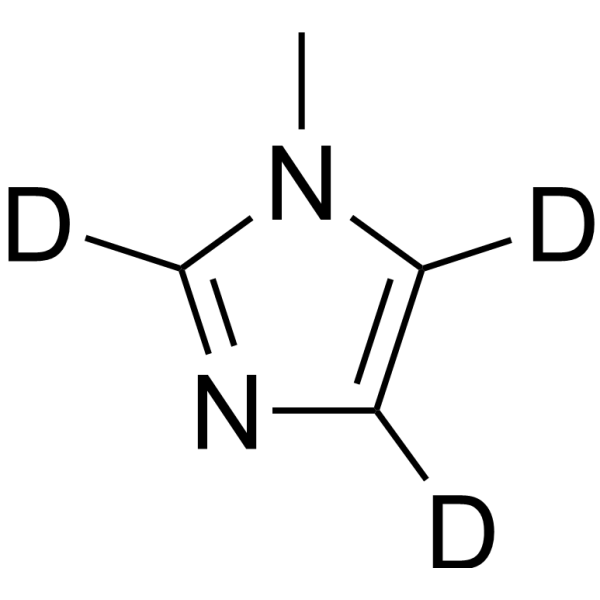
1-Methylimidazole-d3-1 is the deuterium labeled 1-Methylimidazole. 1-Methylimidazole acts as a membrane performance regulator that promotes the formation of reverse osmosis membranes with a dense ultra-thin polyamide layer. Such membranes exhibit higher flux and salt rejection rate, while also conferring excellent pH stability to the membrane. 1-Methylimidazole can serve as a ligand for ruthenium (II) complexes to construct metal-based anticancer agents.
loading...
    loading...
Cat. No.: HY-B0682S
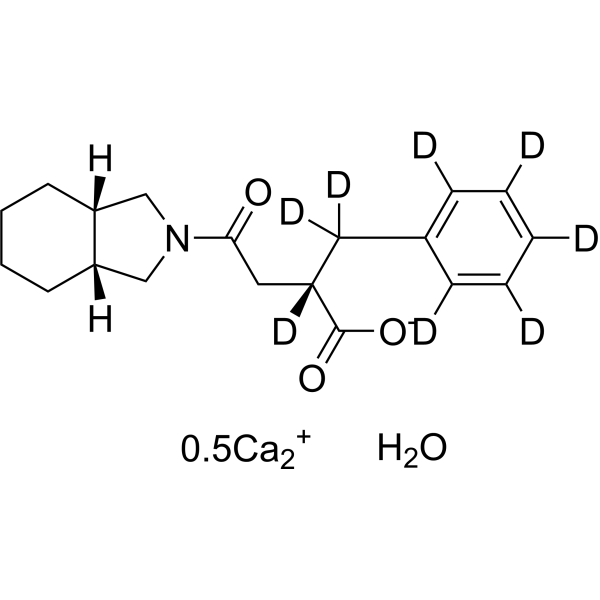
Mitiglinide-d8 calcium hydrate (KAD-1229-d8) is the deuterium labeled Mitiglinide calcium hydrate. Mitiglinide calcium hydrate (KAD-1229), an insulinotropic agent, is an ATP-sensitive K+ (KATP) channel antagonist. Mitiglinide calcium hydrate is highly specific to the Kir6.2/SUR1 complex (the pancreatic beta-cell KATP channel). Mitiglinide Calcium hydrate can be used for the research of type 2 diabetes .
loading...
    loading...
Cat. No.: HY-W002016
CAS No.: 253-52-1
Phthalazine is a chemical scaffold. Phthalazine derivatives act as VEGFR-2 inhibitors, PARP-1 inhibitors, and anticancer agents. The complex of phthalazine with silver exhibits broad-spectrum antibacterial and antifungal activities against Staphylococcus aureus, Enterococcus faecalis, Escherichia coli, Pseudomonas aeruginosa PAO1, and Candida albicans. Phthalazine derivatives possess potent vasodilatory activity. Phthalazine can be used in research related to colon adenocarcinoma, breast cancer, hypertension, diabetes, and microbial infections .
loading...
    loading...
Cat. No.: HY-W010854
CAS No.: 72003-83-9
Synonyms: dADP disodium
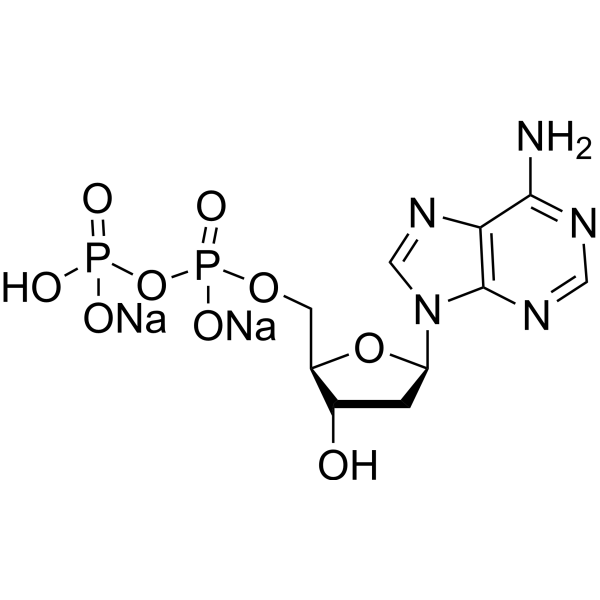
2'-Deoxyadenosine 5'-diphosphate disodium (dADP disodium) is an inhibitor of Polynucleotide phosphorylase and Polyadenylate polymerase. 2'-Deoxyadenosine 5'-diphosphate disodium inhibits polyadenylate synthesis in permeabilized bacterial cells. As a chelating agent, 2'-Deoxyadenosine 5'-diphosphate disodium forms 1:1 complexes with trivalent lanthanides, Manganese (II) and Copper (II) ions, with unique coordination modes and structural conformations for each ion type .
loading...
    loading...
Cat. No.: HY-W110793
CAS No.: 60-10-6
Synonyms: Diphenylthiocarbazone
Research Areas:  

Metabolic Disease

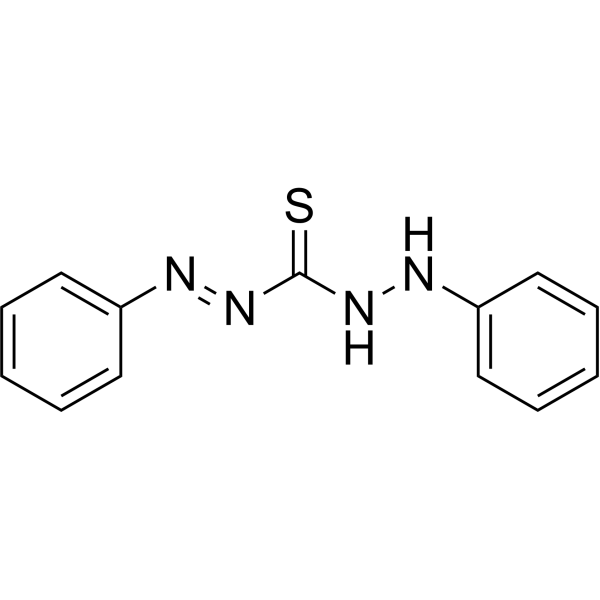
Dithizone can be toxic to pancreatic islet cells and cause experimental diabetes. Dithizone can be used for in vitro in vivo staining of transplanted islets and cytoplasmic granules of bone marrow cells. Dithizone can be used as a chelating agent and colorimetric indicator for the detection and extraction of various heavy metals, including lead and mercury, in analytical and biochemical applications. Dithizone forms stable colored complexes with metal ions and can be quantitatively analyzed by methods such as spectrophotometry .
loading...
    loading...
Cat. No.: HY-W115718R
CAS No.: 370-81-0
Cuprizone is a copper chelating agent that forms a deep blue copper ketone complex with copper (II). The copper ketone reaction can be used in colorimetric tests for the presence of trace copper. Cuprizone can be used to induce some schizophrenia-like behavior in mice. Cuprizone acts on copper enzymes, including SOD1, cytochrome oxidase, and DβH, thereby causing oxidative stress and increasing DA levels in certain brain regions such as the medial prefrontal cortex (PFC) .
loading...
    loading...
Cat. No.: HY-W777434
Mitiglinide (calcium hydrate)-d8 is the deuterium labeled Mitiglinide (calcium hydrate) (HY-B0682A). Mitiglinide calcium hydrate (KAD-1229), an insulinotropic agent, is an ATP-sensitive K+ (KATP) channel antagonist. Mitiglinide calcium hydrate is highly specific to the Kir6.2/SUR1 complex (the pancreatic beta-cell KATP channel). Mitiglinide Calcium hydrate can be used for the research of type 2 diabetes .
loading...
    loading...
Cat. No.: HY-106539
CAS No.: 182815-44-7
Purity:  ≥95.0%
Colesevelam hydrochloride is an orally active bile acid sequestrant, lipid-lowering agent, and glycemic control agent. Colesevelam hydrochloride binds bile acids in the gastrointestinal tract to form nonabsorbable complexes, interrupts enterohepatic recirculation and increases fecal bile acid elimination. Colesevelam hydrochloride modulates FXR, TGR5, and Cyp7a1 activity and triggers cAMP signaling and GLP-1 release. Colesevelam hydrochloride alters hepatic lipid and glucose metabolism, suppresses hepatic glycogenolysis, reduces hepatic triglyceride and cholesterol levels, and increases LDL-C (low-density lipoprotein cholesterol) clearance. Colesevelam hydrochloride can be used for the research of type 2 diabetes mellitus, hypercholesterolemia, and alcohol-related liver disease .
loading...
    loading...
Cat. No.: HY-W110910
CAS No.: 1787-61-7
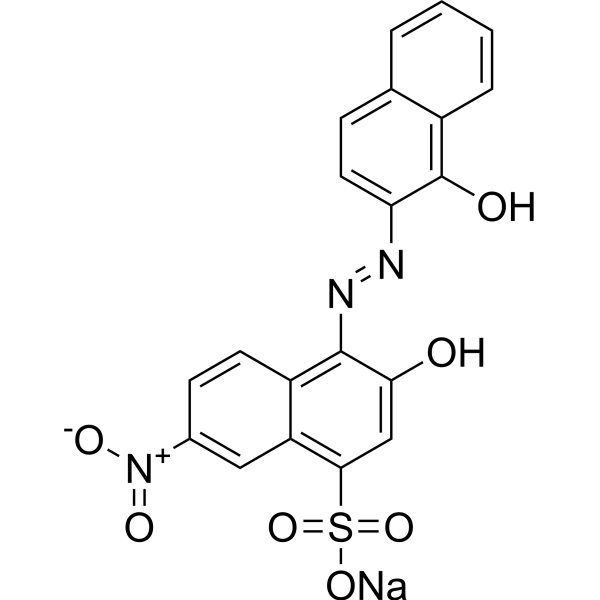
Eriochrome black T, Indicator is a complexing agent for metal ions (e.g., Ca 2+, Mg 2+) and is used as an indicator in complexometric titrations. Eriochrome black T, Indicator forms colored complexes with metal ions through covalent coordination bonds, and indicates the endpoint of the titration by color change. Eriochrome black T, Indicator can be used as an anionic azo dye in photocatalytic degradation studies to evaluate the performance of photocatalysts. The reaction solution of Eriochrome black T, Indicator combined with Mg 2+ is initially purple. During loop-mediated isothermal amplification (LAMP), the color changes from purple to sky blue due to the consumption of Mg 2+ by the formation of magnesium pyrophosphate, indicating a positive reaction. The optimal concentration of Eriochrome black T, Indicator in LAMP is 60 μM, and the detection limit for Mycobacterium tuberculosis is 1 pg DNA/reaction .
loading...
    loading...
Cat. No.: HY-105904
CAS No.: 54824-20-3
Research Areas:  

Cancer

Pinafide is an orally active anticancer agent. Pinafide binds to double-stranded DNA via intercalation, stabilizes the DNA-topoisomerase II complex, induces photo-induced DNA damage and ROS production, causes lysosomal and mitochondrial dysfunction, impairs DNA and RNA synthesis, and blocks cell growth. Pinafide binds to human serum albumin in vitro, undergoes biotransformation via reduction and acetylation in rats, and can cross the placental barrier of pregnant rats. Pinafide can be used in cancer-related research such as hepatocellular carcinoma .
loading...
    loading...
Cat. No.: HY-126222B
Synonyms: MitoTax iodide, hydriodide
Research Areas:  

Cancer

(E/Z)-MitoTam (iodide, hydriodide) (MitoTam (iodide, hydriodide)) is the E/Z mixture of MitoTam iodide, hydriodide. MitoTam iodide, hydriodide is a Tamoxifen derivative , an electron transport chain (ETC) inhibitor, spreduces mitochondrial membrane potential in senescent cells and affects mitochondrial morphology . MitoTam iodide, hydriodide is an effective anticancer agent, suppresses respiratory complexes (CI-respiration) and disrupts respiratory supercomplexes (SCs) formation in breast cancer cells . MitoTam iodide, hydriodide causes apoptosis .
loading...
    loading...
Cat. No.: HY-145649A
CAS No.: 2380166-34-5
Synonyms: AD-85481 sodium; ALN-AGT sodium
Zilebesiran (AD-85481; ALN-AGT) sodium is a long-acting liver-targeted small interfering RNA (siRNA) antihypertensive agent. Zilebesiran sodium binds to the hepatic asialoglycoprotein receptor (ASGPR), activates the RNA-induced silencing complex to degrade hepatic angiotensinogen mRNA, thereby inhibiting the gene expression and synthesis of angiotensinogen. Zilebesiran sodium dose-dependently reduces serum angiotensinogen levels and 24-hour ambulatory blood pressure, with its effect persisting throughout the circadian cycle. Zilebesiran sodium is applicable to research related to hypertension .
loading...
    loading...
Cat. No.: HY-N15327
CAS No.: 138355-07-4
Hyrtiosal, found in the marine sponge Hyrtios erectus, is an inhibitor of the N-terminal domain (NTD) of HIV-1 integrase (HIV-1 IN) with an IC50 value of 9.60-0.86 μM. Hyrtiosal binds to the Ser17, Trp19, and Lys34 sites on the NTD of HIV-1 IN, inhibiting the binding of HIV-1 viral DNA to integrase and interfering with the formation of the pre-integrated complex of HIV-1. Hyrtiosal is promising for research of anti-HIV agents .
loading...
    loading...
Cat. No.: HY-P4284
CAS No.: 35172-59-9
Target:  

Proteasome ClpP Bacterial

Research Areas:  

Infection

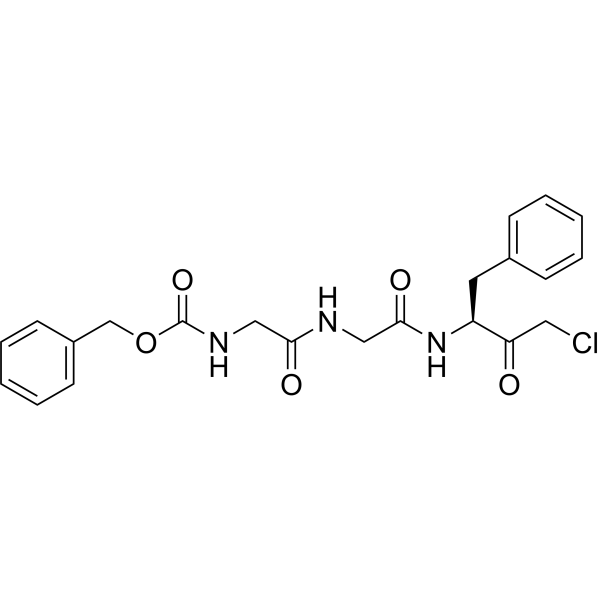
Z-GGF-CMK is an Antibacterial agent, an inhibitor of the ClpP1P2 serine protease complex (with an IC50 of 50 μM against intracellular ClpP1P2 protease activity in Mycobacterium bovis BCG), and a selective inhibitor of the mycobacterial Proteasome (with an IC50 of 50 μM against the proteasome in M. bovis BCG). Z-GGF-CMK inhibits the growth of mycobacteria. Z-GGF-CMK exhibits cytotoxic activity against liver cancer cells. Z-GGF-CMK can be used in the research of tuberculosis .
loading...
    loading...
Cat. No.: HY-W012572R
CAS No.: 351-50-8
D-Histidine (Standard) is the analytical standard of D-Histidine (HY-W012572). This product is intended for research and analytical applications. D-Histidine is an anti-biofilm agent that targets bacterial quorum sensing systems (such as RhlI/RhlR pathway) and has antibacterial activity. D-Histidine works by non-covalently binding to bacterial regulatory factors or copper ion complexes, selectively inhibiting bacterial biofilm formation and motility. D-Histidine downregulates quorum sensing-related gene expression, reduces the synthesis of virulence factors (such as alginate and proteases), and interferes with bacterial membrane stability, inhibiting biofilm formation, promoting the disintegration of mature biofilms, and enhancing antibiotic sensitivity. D-Histidine is also an efficient catalyst for the salt-induced peptide formation (SIPF) reaction, which promotes the condensation of amino acids to form dipeptides (such as dialanine and dilysine) by forming a complex with copper ions (Cu 2+) .
loading...
    loading...
Cat. No.: HY-13552
CAS No.: 80841-48-1
Synonyms: CI-921 isethionate; NSC 343499 isethionate
Asulacrine isethionate (CI-921 isethionate) is a derivative of Amsacrine (HY-13551), a Topoisomerase II inhibitor and an anticancer agent. Asulacrine isethionate binds to DNA via intercalation, forming stable complexes with long residence times at DNA sites. Asulacrine isethionate mediates DNA breakage and DNA-protein cross-linking. Asulacrine isethionate exhibits anticancer activity against leukemia or lung cancer. Asulacrine isethionate can be used in research related to breast cancer, lung cancer, mouse solid tumors and leukemia .
loading...
    loading...

