195 Results for "

fluorogenic substrates

" in MedChemExpress (MCE) Product Catalog:
Products (195)

195 Results for "fluorogenic substrates" in MCE Product Catalog:

Cat. No.: HY-P3699
CAS No.: 202273-56-1
Target:  

MMP Fluorescent Dye

Research Areas:  

Others

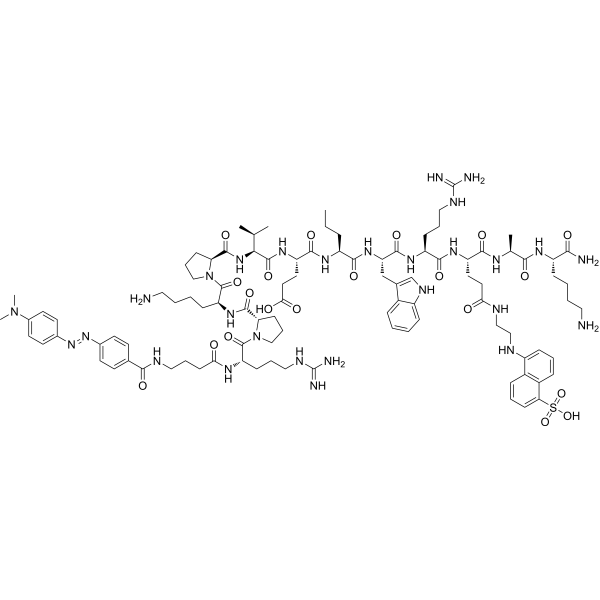
TNO003 is a selective fluorogenic substrate for stromelysin-1 (MMP-3). TNO003 has higher selectivity for MMP-3 than MMP-1, MMP-2, MMP-7, MMP-8, MMP-9 and MMP-13. TNO003 can be used for the determination of stromelysin activity (Ex/Em = 360/490 nm) .
loading...
    loading...
Cat. No.: HY-W776853
CAS No.: 53643-14-4
4-Methylumbelliferyl β-DN,N',N'',N'''-tetraacetylchitotetraoside is a fluorogenic substrate with activity for lysozyme assays. 4-Methylumbelliferyl β-DN,N',N'',N'''-tetraacetylchitotetraoside can be used to study enzyme activity and its applications in biomedicine. 4-Methylumbelliferyl β-DN,N',N'',N'''-tetraacetylchitotetraoside exhibits high sensitivity in analyzing enzyme reactions in biological samples.
loading...
    loading...
Cat. No.: HY-P3098
CAS No.: 256394-94-2
Target:  

MMP

Research Areas:  

Others

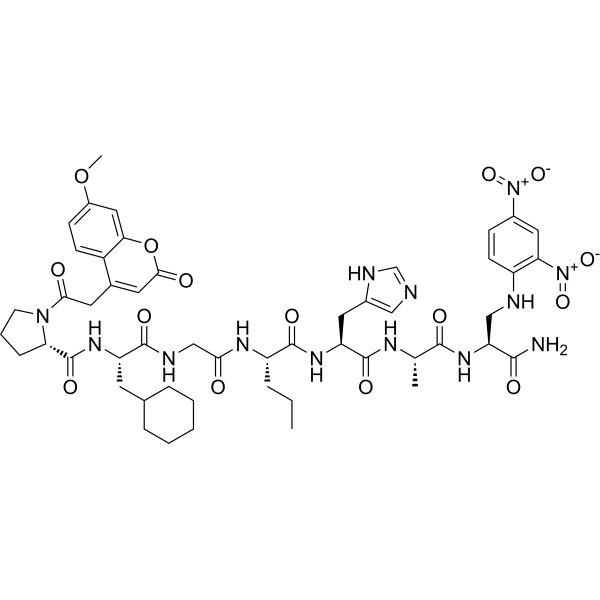
Mca-P-Cha-G-Nva-HA-Dap(DNP)-NH2 is a fluorogenic substrate for matrix metalloproteinase-1 (MMP-1), MMP-3, and MMP-26. Mca-P-Cha-G-Nva-HA-Dap(DNP)-NH2 can be used to quantify MMP-1, MMP-3 and MMP-26 activity .
loading...
    loading...
Cat. No.: HY-P3699A
Target:  

MMP Fluorescent Dye

Research Areas:  

Others

TNO003 TFA is a selective fluorogenic substrate for stromelysin-1 (MMP-3). TNO003 TFA has higher selectivity for MMP-3 than MMP-1, MMP-2, MMP-7, MMP-8, MMP-9 and MMP-13. TNO003 TFA can be used for the determination of stromelysin activity (Ex/Em = 360/490 nm) .
loading...
    loading...
Cat. No.: HY-P3120
CAS No.: 1926163-82-7
Target:  

MMP Fluorescent Dye

Research Areas:  

Others

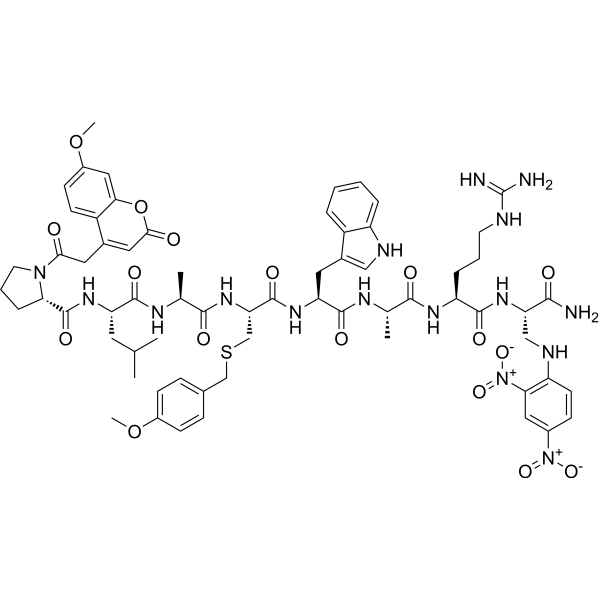
Mca-Pro-Leu-Ala-Cys(Mob)-Trp-Ala-Arg-Dap(Dnp)-NH2 is a fluorogenic substrate for matrix metalloproteinase-14 (MMP-14). Mca-Pro-Leu-Ala-Cys(Mob)-Trp-Ala-Arg-Dap(Dnp)-NH2, upon cleavage by MMP-14, releases 7-methoxycoumarin-4-acetyl (Mca) (Ex/Em = 328/420 nm).
loading...
    loading...
Cat. No.: HY-P3120A
CAS No.: 2237216-67-8
Target:  

MMP Fluorescent Dye

Research Areas:  

Others

Mca-Pro-Leu-Ala-Cys(Mob)-Trp-Ala-Arg-Dap(Dnp)-NH2 TFA is a fluorogenic substrate for matrix metalloproteinase-14 (MMP-14). Mca-Pro-Leu-Ala-Cys(Mob)-Trp-Ala-Arg-Dap(Dnp)-NH2 TFA, upon cleavage by MMP-14, releases 7-methoxycoumarin-4-acetyl (Mca) (Ex/Em = 328/420 nm).
loading...
    loading...
Cat. No.: HY-116862
CAS No.: 97744-44-0
Purity:  99.54%
Synonyms: DBF
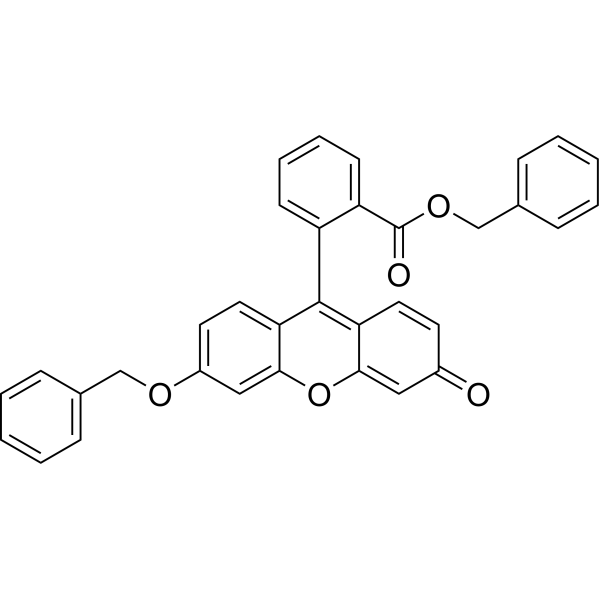
Dibenzylfluorescein (DBF) is a fluorogenic probe (Fluoresecent dye) that acts as a substrate for specific cytochrome P450 (CYP) isoforms, including CYP3A4, CYP2C8, CYP2C9, CYP2C19, and aromatase (CYP19). Dibenzylfluorescein is typically used near its Km value of 0.87-1.9 μM (Ex=485 nm,Em=535 nm). Dibenzylfluorescein is used to detect changes in CYP catalytic activity caused by drugs or disease .
loading...
    loading...
Cat. No.: HY-123633
CAS No.: 18997-57-4
Purity:  99.87%
Target:  

Glycosidase

Research Areas:  

Others

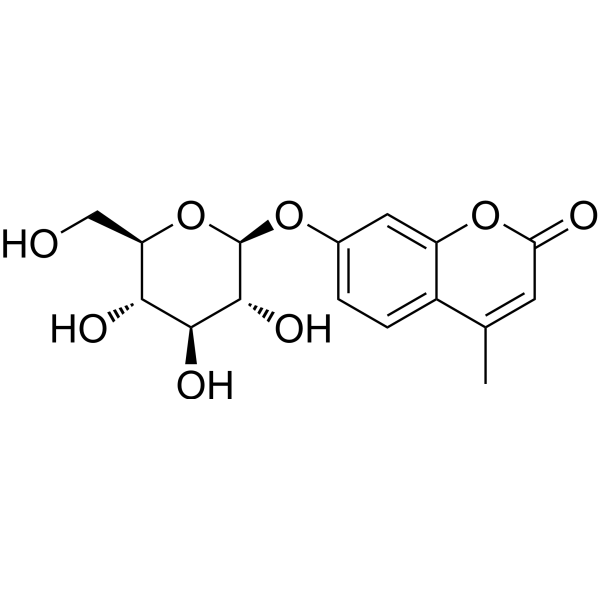
4-Methylumbelliferyl β-D-Glucopyranoside, a β-D-glucoside, is a fluorogenic substrate for β-glucosidase, utilizes to assay β-glucosidase activity . 4-Methylumbelliferyl β-D-Glucopyranoside releases the highly fluorescent 4-methylumbelliferyl (4-MU), which has an emission maximum at 445-454 nm. The excitation maximum for 4-MU is pH-dependent: 330, 370, and 385 nm at pH 4.6, 7.4, and 10.4, respectively .
loading...
    loading...
Cat. No.: HY-W654272
CAS No.: 2181774-46-7
Synonyms: 4-MU-α-idoa 2-sulfate sodium
Target:  

Fluorescent Dye

Research Areas:  

Metabolic Disease

4-Methylumbelliferyl-α-L-iduronide 2-sulfate (4-MU-α-idoa 2-sulfate) sodium is a fluorogenic substrate of iduronate-2-sulfatase (I2S). 4-Methylumbelliferyl-α-L-iduronide 2-sulfate sodium can be hydrolyzed by lysosomal enzyme α-l-iduronidase (IDUA) and release the fluorophore 4-Methylumbelliferone (HY-N0187). 4-Methylumbelliferyl-α-L-iduronide 2-sulfate sodium can be used to detect Hurler syndrome .
loading...
    loading...
Cat. No.: HY-123000
CAS No.: 124223-99-0
Purity:  ≥99.0%
4-Methylumbelliferyl 2-acetamido-2-deoxy-α-D-galactopyranoside is a fluorogenic substrate for studying the enzymatic activity of α-galactosidase. 4-Methylumbelliferyl 2-acetamido-2-deoxy-α-D-galactopyranoside is used to analyze enzyme activity in various biological samples, helping scientists gain insight into the function of the enzyme in vivo. 4-Methylumbelliferyl 2-acetamido-2-deoxy-α-D-galactopyranoside can also be used to screen potential compounds to inhibit or activate this enzyme.
loading...
    loading...
Cat. No.: HY-D1632
CAS No.: 460085-45-4
Target:  

Fluorescent Dye

Research Areas:  

Metabolic Disease

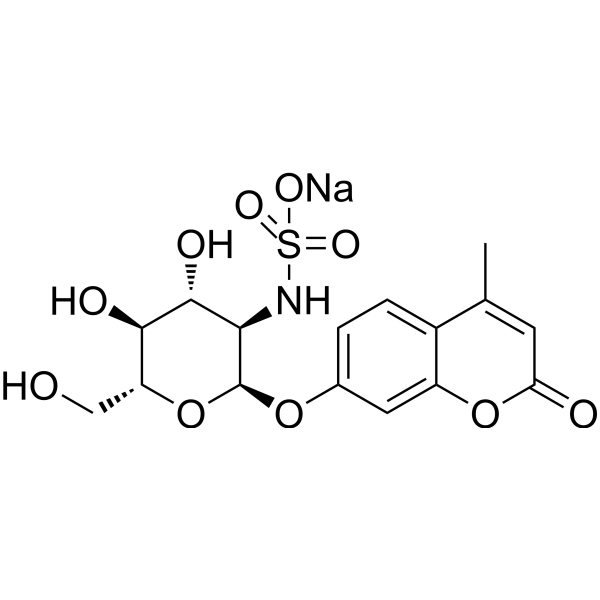
4-MU-α-GlcNS sodium is a fluorogenic substrate for heparan sulfate sulfamidase, with apparent Km values of 4 mM and 8 mM for fibroblast and leukocyte enzymes, respectively. 4-MU-α-GlcNS sodium undergoes enzymatic desulfation to generate an intermediate, which requires a second incubation with yeast α-glucosidase to hydrolyze and release 4-methylumbelliferone, detected by fluorescence at Ex/Em = 365/450 nm. 4-MU-α-GlcNS sodium is suitable for fibroblast homogenates, leukocytes, and dried leukocyte filter paper samples, and can be used for the detection and study of enzyme activity in mucopolysaccharidosis type IIIA .
loading...
    loading...
Cat. No.: HY-131026
Synonyms: JF635, SE; JF635, NHS
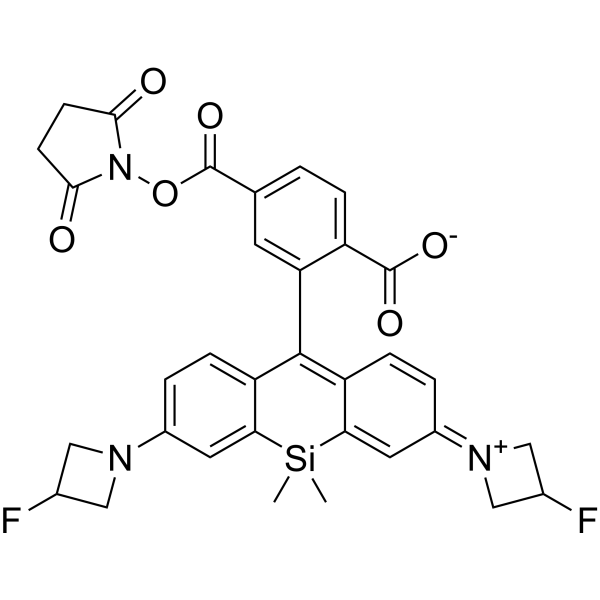
Janelia Fluor 635, SE (JF635, SE) is a red fluorogenic fluorescent dye containing an NHS ester that can be conjugated with primary amine groups. JF635, SE can be used for live cell imaging . Janelia Fluor fluorescent dyes can be chemically conjugated to the specific HaloTag substrate (a chloroalkane ligand) to form a fluorescent ligand, rather than binding directly to the HaloTag protein itself. Janelia Fluor products are licensed under U.S. Pat. Nos. 9,933,417, 10,018,624 and 10,161,932 and other patents from Howard Hughes Medical Institute (Ex/Em = 635/652 nm).
loading...
    loading...
Cat. No.: HY-131028
Purity:  ≥95.0%
Synonyms: JF646 TFA
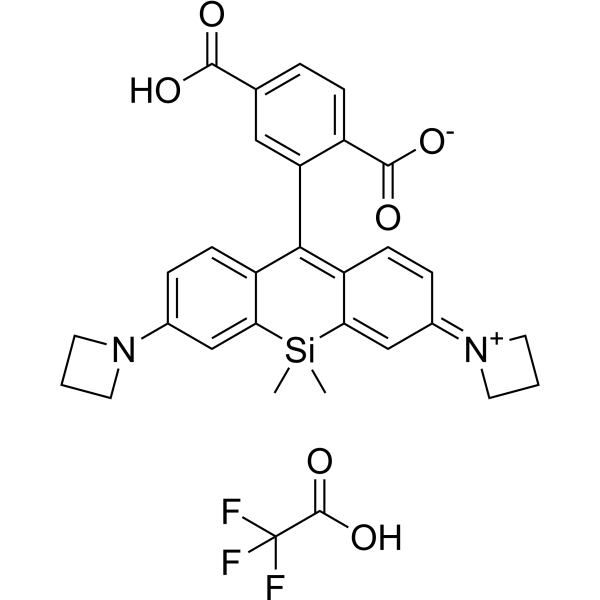
Janelia Fluor 646 TFA (JF646 TFA), a red fluorogenic fluorescent dye, can be used in the synthesis of Janelia Fluor 646 HaloTag and SNAP-Tag ligands. JF646 TFA is used in live cell imaging experiments . Janelia Fluor fluorescent dyes can be chemically conjugated to the specific HaloTag substrate (a chloroalkane ligand) to form a fluorescent ligand, rather than binding directly to the HaloTag protein itself. Janelia Fluor products are licensed under U.S. Pat. Nos. 9,933,417, 10,018,624 and 10,161,932 and other patents from Howard Hughes Medical Institute (Ex/Em = 646/664 nm).
loading...
    loading...
Cat. No.: HY-N15826
CAS No.: 3077081-47-8
Research Areas:  

Cancer

RBM1-151, a 1-deoxy derivative and vinilog of RBM14-C12 (HY-150163), as a fluorogenic substrate of Amidases (HY-P2736) (Ex/Em). RBM1-151 is hydrolyzed by acid ceramidase (AC) (( appKm = 7.0 μM; appVmax = 99.3 nM/min), N-acylethanolamine-hydrolyzing acid amidase ( appKm = 0.73 μM; appVmax = 0.24 nM/min), and fatty Acid amide hydrolase (FAAH) ( appKm = 3.6 μM; appVmax = 7.6 nM/min) but not by other ceramidases. RBM1-151 is applicable for basic biological studies of lipid amidase function, as well as potential diagnostic/prognostic evaluations of diseases involving dysregulated AC, NAAA, or FAAH (Farber disease, cancer) .
loading...
    loading...
Cat. No.: HY-131027
Purity:  99.87%
Synonyms: JF646, Azide
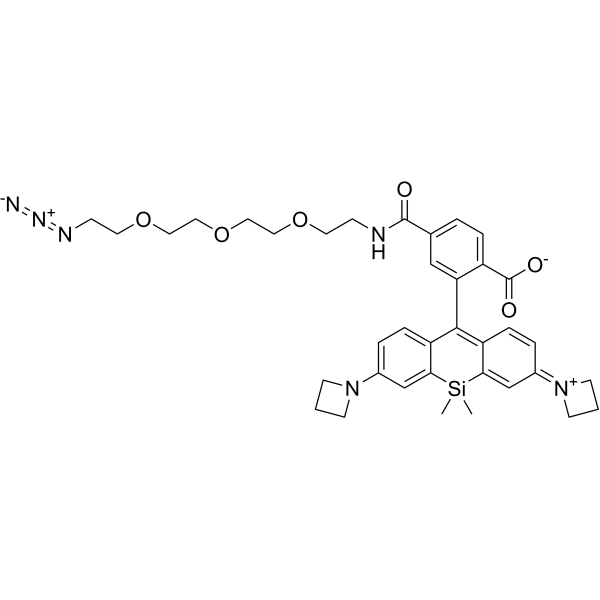
Janelia Fluor 646, Azide (JF646, Azide) is a red fluorogenic fluorescent dye containing a click chemistry group Azide. Janelia Fluor 646, Azide can be used for live-cell imaging experiments . Janelia Fluor fluorescent dyes can be chemically conjugated to the specific HaloTag substrate (a chloroalkane ligand) to form a fluorescent ligand, rather than binding directly to the HaloTag protein itself. Janelia Fluor products are licensed under U.S. Pat. Nos. 9,933,417, 10,018,624 and 10,161,932 and other patents from Howard Hughes Medical Institute. Janelia Fluor 646, Azide is a click chemistry reagent, it contains an Azide group and can undergo copper-catalyzed azide-alkyne cycloaddition reaction (CuAAc) with molecules containing Alkyne groups. It can also undergo strain-promoted alkyne-azide cycloaddition (SPAAC) reactions with molecules containing DBCO or BCN groups (Ex/Em = 646/664 nm).
loading...
    loading...

