2087 Results for "

Probe L

" in MedChemExpress (MCE) Product Catalog:
Products (2087)

2087 Results for "Probe L" in MCE Product Catalog:

Cat. No.: HY-151744
CAS No.: 1993119-45-1
Target:  

ADC Linkers

Research Areas:  

Others

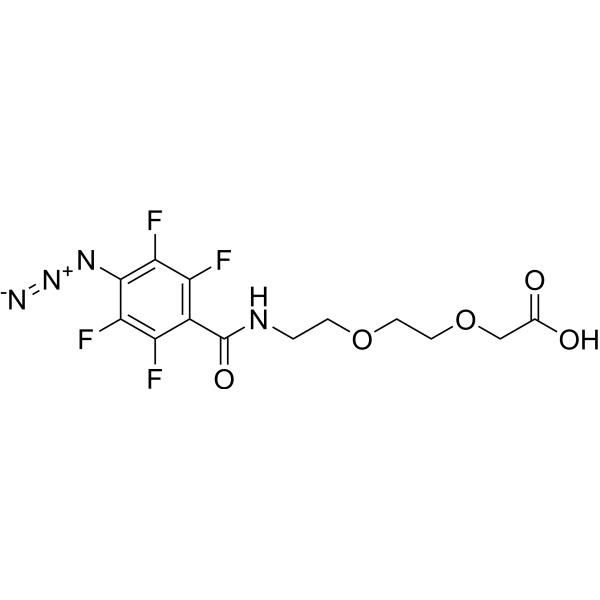
N3-TFBA-O2Oc is a click chemistry reagent containing an azide group and an aryl group. Aryl azides are well-known precursors of nitrenes and have been introduced by Fleet et al. as versatile photoaffinity labeling agents to probe biological receptors. This type of compounds has been used as photo-cross linker (λmax=258 nm) in estrogen receptor studies and for direct surface coating of carbon and organic based polymers . N3-TFBA-O2Oc is a click chemistry reagent, it contains an Azide group and can undergo copper-catalyzed azide-alkyne cycloaddition reaction (CuAAc) with molecules containing Alkyne groups. It can also undergo strain-promoted alkyne-azide cycloaddition (SPAAC) reactions with molecules containing DBCO or BCN groups.
loading...
    loading...
Cat. No.: HY-175238
CAS No.: 1309288-83-2
Research Areas:  

Neurological Disease Cancer

KI-DX-014 is a DDX21 inhibitor with high RNA-binding inhibitory activity (IC50 of 3.31 μM). KI-DX-014 targets DDX21’s intrinsically disordered C-terminal domain, inhibits DDX21-structured RNA interaction, modulates DDX21’s RNA-dependent ATPase activity, and disrupts DDX21 biomolecular condensate formation. KI-DX-014 attenuates in vitro P-TEFb release from the 7SK snRNP complex, suppresses P-TEFb-dependent RNA polymerase II CTD phosphorylation, and induces developmental defects in zebrafish embryos. KI-DX-014 acts as a chemical probe for dissecting DDX21 functions in normal physiology and disease states. KI-DX-014 can be used for cancers and neurodegenerative disorders research .
loading...
    loading...
Cat. No.: HY-178122
THNAN69 is a PROTAC degrader targeting LIMK2, which efficiently degrades ectopically expressed EGFP-LIMK2 in live HuCCT1 cells with a DC50 of 1 nM. THNAN69 induces isoform-specific ubiquitin-mediated degradation of LIMK2 by recruiting the CRBN E3 ligase, forming a stable ternary complex with LIMK2 and CRBN; this degradation process depends on the activity of cullin-RING ligase. THNAN69 does not reduce phosphorylated cofilin levels, as LIMK1 can compensate for the loss of LIMK2; it also stimulates compensatory activation of the Rho signaling pathway including PAK1/2 and ROCK1/2. THNAN69 serves as a selective chemical probe for dissecting the LIMK2 isoform-dependent biological mechanisms. THNAN69 can be used in the research of cholangiocellular carcinoma and acute lymphoblastic leukemia .
loading...
    loading...
Cat. No.: HY-18542
CAS No.: 1402612-58-1
KT195 is a serine hydrolase inhibitor that targets ABHD6 (IC50 = 10 nM) and ABHD2, with no significant activity against DAGLβ. KT195 inhibits endoplasmic reticulum calcium release and mitochondrial calcium uptake by targeting ABHD2, thereby blocking A23187 (HY-N6687) and H2O2-induced necrotic cell death and apoptosis. By inhibiting ABHD6 activity, KT195 significantly induces 2-AG accumulation in Neuro2A cells and reduces IL-1β secretion in lipopolysaccharide-treated macrophages. KT195 has been used as a negative control probe for DAGLβ and can be applied in studies of ABHD6 and ABHD2 in calcium signaling, lipid metabolism, neuronal function, and inflammatory .
loading...
    loading...
Cat. No.: HY-186341
Research Areas:  

Metabolic Disease

PAB-QMSF2-PEG2-Biotin is a biotin probe for the CAT-S photocatalytic proximity labeling system. PAB-QMSF2-PEG2-Biotin undergoes uncaging under the action of a mitochondria-targeted iridium photocatalyst and blue light (450 nm) to release difluorothioquinone methide (thioQM), which covalently labels nucleophilic residues (Lys/Tyr/Glu/Asp/Trp, etc.) of neighboring proteins. PAB-QMSF2-PEG2-Biotin preferentially labels mitochondrial matrix proteins in live cells. PAB-QMSF2-PEG2-Biotin is conjugated with a biotin tag, enabling detection or isolation of captured proteins. PAB-QMSF2-PEG2-Biotin can be used for research related to type 2 diabetes .
loading...
    loading...
Cat. No.: HY-79602
CAS No.: 70-55-3
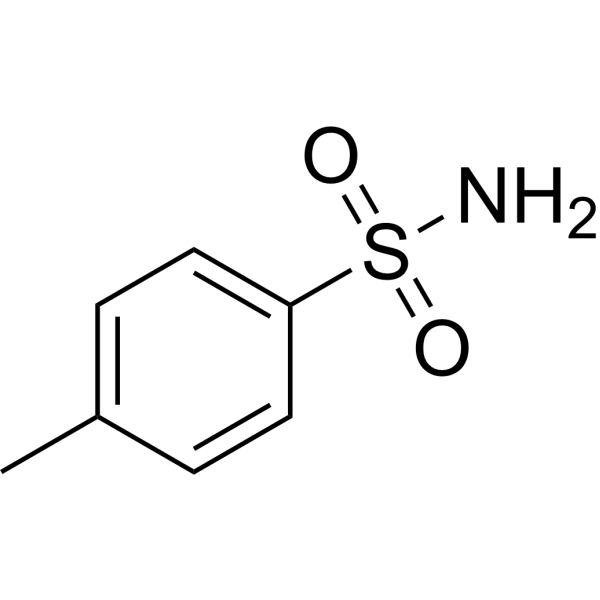
p-Toluenesulfonamide is a small-molecule anticancer agent and plasticizer. p-Toluenesulfonamide exerts antitumor activity by inducing lysosomal membrane permeabilization, cathepsin B release and lysosome-mediated cell death. p-Toluenesulfonamide modulates cholesterol distribution in lipid rafts of tumor cell membranes and the Akt/mTOR/p70S6K pathway. p-Toluenesulfonamide shows activity against various cancers including hepatocellular carcinoma, non-small cell lung cancer and tongue squamous cell carcinoma; intrapleural injection effectively reduces malignant pleural effusion without causing pleural adhesion. p-Toluenesulfonamide is also the main degradation product of the disinfectant Chloramine-T (HY-B0959) in water. p-Toluenesulfonamide facilitates the localization of fluorescent probes to the endoplasmic reticulum. p-Toluenesulfonamide can be used in cancer-related research .
loading...
    loading...
Cat. No.: HY-D3075
CAS No.: 2490504-23-7
Target:  

Fluorescent Dye

Research Areas:  

Others

TPE-2E N-oxide is a fluorescent probe used for hypoxia detection and tumor hypoxia imaging. Due to its active intramolecular motion, TPE-2E N-oxide shows no fluorescence in aqueous solution. In hypoxic environments, its N-oxide group undergoes two-electron reduction by CYP450 reductase and other heme protein reductases expressed under hypoxia, forming hydrophobic aggregates that trigger aggregation-induced emission through the restriction of intramolecular motion. TPE-2E N-oxide exhibits selective lipid droplet localization in cells. The absorption wavelength of TPE-2E N-oxide in dichloromethane is 313 nm; in a 99% hexane/dichloromethane mixed system, its excitation wavelength is 330 nm and emission wavelength is 460 nm. For in vitro cell imaging, excitation is performed at 405 nm, with an emission wavelength range of 430-560 nm .
loading...
    loading...
Cat. No.: HY-D3080
Target:  

Fluorescent Dye

Research Areas:  

Others

CR-1 is a ratiometric photoacoustic (PA) probe for in-situ real-time imaging of Zn 2+ in deep living tissues. CR-1 is formed by coupling the near-infrared cyanine dye IR825 with the Zn 2+ ligand tris (2-pyridylmethyl) amine (TMPA). Upon binding to Zn 2+, the five N atoms on TMPA coordinate with Zn 2+, leading to double bond rearrangement of IR825 and attenuation of its π-electron conjugated system. The absorption peak of CR-1 blue-shifts from 710 nm to 532 nm, enabling quantitative detection of Zn 2+ via the PA532/PA710 ratio. Free CR-1 generates a strong PA signal at 710 nm, while CR-1 bound to Zn 2+ produces a strong PA signal at 532 nm .
loading...
    loading...
Cat. No.: HY-D3090
CAS No.: 2757682-04-3
Target:  

Fluorescent Dye

Research Areas:  

Others

NRLD is a lipid droplet-targeting solvatochromic fluorescent probe developed based on Nile Red (HY-D0718), which can target lipid droplets and sense the non-polar lipid microenvironment inside lipid droplets. NRLD exhibits superior lipid droplet-targeting selectivity compared to the parent Nile Red dye in HeLa cell imaging. NRLD achieves detection relying on the solvatochromic effect generated by excited-state charge transfer, and its emission wavelength shifts according to the local polarity changes of the microenvironment it locates in: the more compact and ordered the lipid packing and the lower the environmental polarity, the more blue-shifted the emission; the looser the lipid packing or the stronger the hydration and the higher the environmental polarity, the more red-shifted the emission. NRLD shows blue shift in the non-polar oil core of lipid droplets and red shift in high-polarity environments such as phosphate buffer .
loading...
    loading...
Cat. No.: HY-D3102
CAS No.: 1015251-87-2
Target:  

Fluorescent Dye

Research Areas:  

Others

CGTDP is a fluorescent probe used for selective labeling of active-site arginine residues, detection of local polarity, and monitoring of conformational changes in enzyme active sites. CGTDP contains a neutral red moiety serving as a polarity-sensitive fluorophore, and a phenylglyoxal unit acting as an arginine-specific labeling group; it undergoes a selective reaction via its α-dicarbonyl moiety with the guanidyl group of arginine residues in enzyme active sites to form a covalent linkage, thereby enabling the reporting of the local microenvironment at the labeled site. The excitation/emission wavelengths are Ex/Em = 398/607 nm and Ex/Em = 507/607 nm; these wavelengths blue-shift in organic solvents, such as Ex/Em = 375/569 nm and Ex/Em = 469/569 nm in THF, and Ex/Em = 375/587 nm and Ex/Em = 470/587 nm in acetonitrile. When labeled onto creatine kinase, its excitation/emission wavelengths are Ex/Em = 493/590 nm .
loading...
    loading...
Cat. No.: HY-D3144
CAS No.: 2713577-11-6
Target:  

Fluorescent Dye

Research Areas:  

Others

RhBIV is a thermosensitive rhodamine B (RhB)-derived fluorescent probe that fluorescently labels cellular mitochondria and detects mitochondrial temperature in vitro and in vivo. RhBIV contains a quaternized rhodamine B core, which confers a positive charge for binding to the negatively charged mitochondrial membrane, and an ortho-substituted electron-donating piperidine group; at lower temperatures, RhBIV forms an unstable ion pair form under kinetic control and exhibits strong fluorescence, whereas elevated temperature disrupts or partially interrupts the ion pair form, favoring formation of the conjugated RhBV form and leading to loss of fluorescence. RhBIV exhibits decreased fluorescence responsiveness with increasing temperature over the range of 20-42°C. RhBIV enables biological imaging of cells and mice, mitochondrial thermogenesis imaging, dynamic observation in mitochondrial thermogenesis imaging experiments, and non-invasive imaging of mitochondrial function in living animals (Ex/Em = 520/592 nm) .
loading...
    loading...
Cat. No.: HY-D3210
CAS No.: 2098632-04-1
Target:  

Fluorescent Dye

Research Areas:  

Inflammation/Immunology

DCM-KPV is a fluorescent probe targeting the human intestinal oligopeptide transporter PEPT1/SLC15A1 receptor (λex=480 nm, λem=620-670 nm). DCM-KPV specifically binds to PepT1 via its KPV domain and mediates receptor-targeted internalization, thus effectively accumulating in the cytoplasm and nucleus of cells overexpressing this receptor. DCM-KPV has the advantages of long emission wavelength, high emission efficiency, low photobleaching, and negligible cytotoxicity. DCM-KPV maintains stable fluorescence intensity under continuous illumination, exhibiting extremely high live cell compatibility. DCM-KPV can specifically accumulate at colonic inflammatory sites through the intestinal mucosa, enabling direct non-invasive visual differentiation between chronic and acute ulcerative colitis groups and the normal group .
loading...
    loading...
Cat. No.: HY-D3525
Target:  

Fluorescent Dye

Research Areas:  

Others

BDL-E5 is a fluorescent probe for detecting live induced pluripotent stem cells at the early reprogramming stage. Its detection mechanism involves specific binding to authentic reprogramming cells, which exhibit increased expression of pluripotency and epithelial genes and decreased expression of mesenchymal genes compared to non-reprogramming cells; it appears to co-localize more significantly with the Golgi complex than other organelle markers in reprogramming cells, and it does not require washing after staining to reduce background signals; fluorescence is generated upon binding to these early reprogramming cells, with positive cells appearing 7 days before iPS colonies are visible and stain positive for the conventional pluripotent marker TRA-1-60, and sorting BDL-E5-positive cells enriches populations that generate higher numbers and quality of iPS colonies. Its detection wavelength is Ex/Em = 578/599 nm .
loading...
    loading...
Cat. No.: HY-W035399S
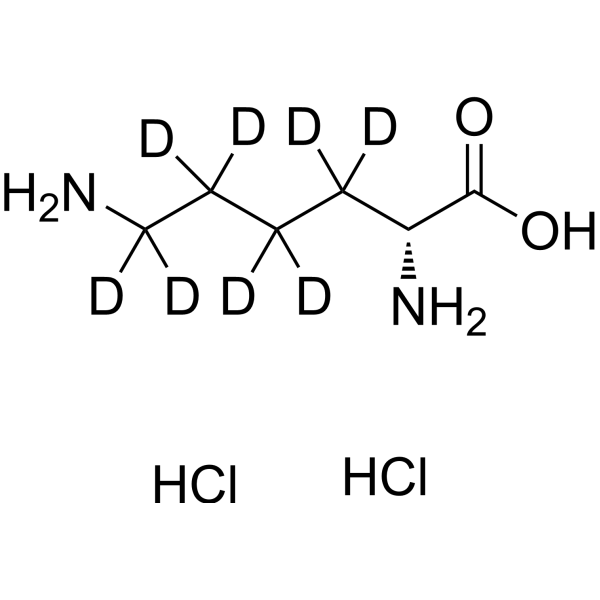
D-Lysine-d8 dihydrochloride is the d8-labeled D-Lysine (HY-Y1091). D-Lysine is the D-enantiomer of L-Lysine (HY-N0469). D-Lysine is metabolically inert and not utilized for protein synthesis by mammalian ribosomes. D-Lysine blocks renal uptake of 111In/ 90Y-Octreotide (HY-P0036)-based probes without inhibiting uptake by tumor/receptor tissues, and thus acts as a renoprotective agent in diagnostic imaging and peptide receptor radionuclide therapy (PRRT). D-Lysine specifically inhibits the early steps of non-enzymatic glycation by competing with glucose via its free amino group, theoretically, it can serve as a glycation competitor that "does not interfere with protein synthesis" under chronic hyperglycemia in diabetes. D-Lysine can be used in research related to cancer and diabetes .
loading...
    loading...
Cat. No.: HY-W035399S1
CAS No.: 2708340-91-2
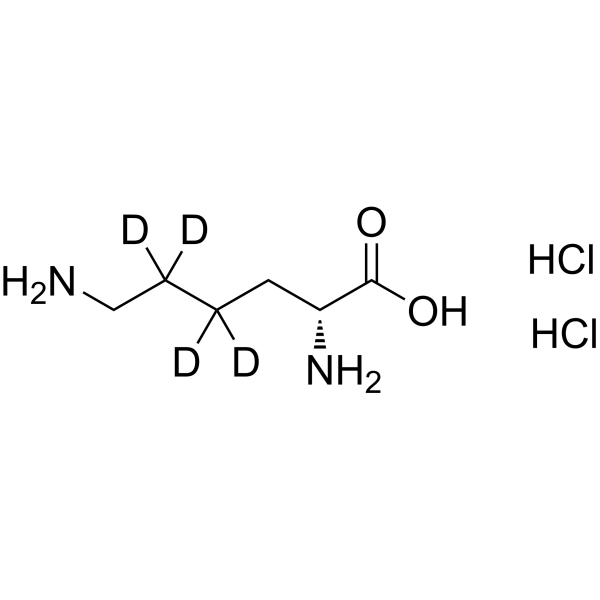
D-Lysine-d4 dihydrochloride is the d4-labeled D-Lysine (HY-Y1091). D-Lysine is the D-enantiomer of L-Lysine (HY-N0469). D-Lysine is metabolically inert and not utilized for protein synthesis by mammalian ribosomes. D-Lysine blocks renal uptake of 111In/ 90Y-Octreotide (HY-P0036)-based probes without inhibiting uptake by tumor/receptor tissues, and thus acts as a renoprotective agent in diagnostic imaging and peptide receptor radionuclide therapy (PRRT). D-Lysine specifically inhibits the early steps of non-enzymatic glycation by competing with glucose via its free amino group, theoretically, it can serve as a glycation competitor that "does not interfere with protein synthesis" under chronic hyperglycemia in diabetes. D-Lysine can be used in research related to cancer and diabetes .
loading...
    loading...
Cat. No.: HY-W040129R
CAS No.: 7059-24-7
Chromomycin A3 (Standard) is the analytical standard of Chromomycin A3 (HY-W040129). This product is intended for research and analytical applications. Chromomycin A3 is an inhibitor that selectively binds to GC-rich DNA sequences. Chromomycin A3 targets the DNA minor groove after forming a dimer with Mg 2+. Chromomycin A3 inhibits DNA replication and transcription, blocks the binding of Sp1 transcription factor to target gene promoters, downregulates the expression of anti-apoptotic proteins such as FLIP, Mcl-1, and XIAP, and induces S-phase cycle arrest and caspase-dependent apoptosis in tumor cells. Chromomycin A3 can antagonize oxidative stress induced by glutathione depletion and neuronal apoptosis induced by Camptothecin (HY-15660). Chromomycin A3 can be used in basic research on malignant tumors such as cholangiocarcinoma, and is a potential chemosensitizer and GC-rich region probe .
loading...
    loading...
Cat. No.: HY-W127719
CAS No.: 96087-38-6
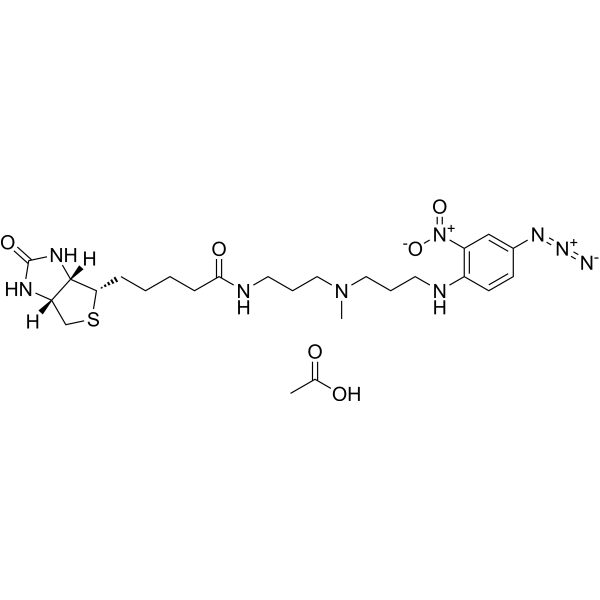
Photobiotin (acetate)It is a biological probe used to study biochemical processes such as protein interactions and enzymatic reactions. It is a molecule containing a photosensitive group, which can be combined with specific target molecules (such as proteins, nucleic acids, etc.) through photochemical cross-linking technology, so as to realize the labeling and detection of these molecules. During the photosensitive crosslinking process, Photobiotin (acetate)Can participate in the formation of covalent bonds and form stable compounds. In addition, the compound also has high biocompatibility and biological activity, so it is widely used in the field of biomedical research, such as enzymatic research, proteomics, western blotting and other aspects. Photobiotin (acetate) is a click chemistry reagent, it contains an Azide group and can undergo copper-catalyzed azide-alkyne cycloaddition reaction (CuAAc) with molecules containing Alkyne groups. It can also undergo strain-promoted alkyne-azide cycloaddition (SPAAC) reactions with molecules containing DBCO or BCN groups.
loading...
    loading...
Cat. No.: HY-Y1804S
CAS No.: 2714413-18-8
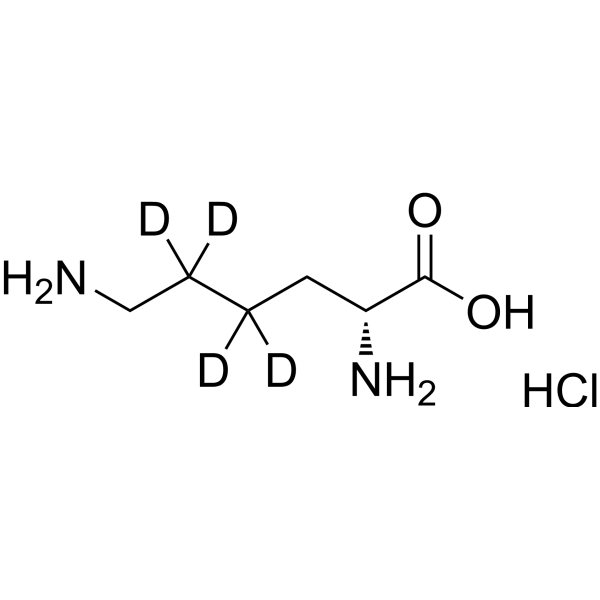
D-Lysine-d4 monohydrochloride is the d4 D-Lysine monohydrochloride (HY-Y1804). D-Lysine monohydrochloride is the D-enantiomer of L-Lysine (HY-N0469). D-Lysine monohydrochloride is metabolically inert and not utilized for protein synthesis by mammalian ribosomes. D-Lysine monohydrochloride blocks renal uptake of 111In/ 90Y-Octreotide (HY-P0036)-based probes without inhibiting uptake by tumor/receptor tissues, and thus acts as a renoprotective agent in diagnostic imaging and peptide receptor radionuclide therapy (PRRT). D-Lysine monohydrochloride specifically inhibits the early steps of non-enzymatic glycation by competing with glucose via its free amino group, theoretically, it can serve as a glycation competitor that "does not interfere with protein synthesis" under chronic hyperglycemia in diabetes. D-Lysine monohydrochloride can be used in research related to cancer and diabetes .
loading...
    loading...
Cat. No.: HY-L032
41,368 compounds

Fragment-based drug discovery (FBDD) is well suited for discovering both drug leads and chemical probes of protein function; it can cover broad swaths of chemical space and allows the use of creative chemistry. Fragment-based drug discovery is well-established in industry and has resulted in a variety of drugs entering clinical trials, with two, vemurafenib and venetoclax, already approved. FBDD also has key attractions for academia. Notably, it is able to tackle difficult or novel targets for which no chemical matter may be found in existing HTS collections.

MCE designs a unique collection of 41,368 fragment compounds, all of which obey a heuristic rule called the “Rule of Three (RO3) ”, in which molecular weight ≤300 Da, the number of hydrogen bond donors (H-donors) ≤3, the number of hydrogen bond acceptors (H-acceptors) is ≤3 and cLogP is ≤3. This library is an important source of lead-like drugs.

Cat. No.: HY-L256
100 compounds

In modern drug discovery and chemical biology research, the azide group (-N3) is an important functional moiety that is widely used in click chemistry, biomolecular labeling, drug delivery systems, and prodrug design due to its unique reactivity and bioorthogonality.

The MCE Azide Structural Compound Library contains 100 compounds featuring -N3 functional groups. It is designed for the construction of click chemistry reaction systems and the subsequent development of functional molecules. This library enables the rapid assembly of targeting ligands, linkers, and functional molecular modules, thereby accelerating PROTAC assembly, optimization of antibody-drug conjugate (ADC) linkers, and the development of biological labeling probes. In addition, the high reaction selectivity and excellent biocompatibility of the azide group allow it to maintain stable reactivity even in complex biological environments, improving controllability and efficiency in drug design. It serves as an indispensable molecular tool in modern medicinal chemistry and chemical biology research.

